How to Keep Towels Soft Without Fabric Softener
There is nothing quite like stepping out of a warm shower and wrapping yourself in a thick, cloud-like towel. It is a vital sensory boundary between your private sanctuary and the outside demands of your schedule. However, that premium experience quickly fades when your once-plush linens transform into a scratchy, sand-paper-like surface over time.
When facing rigid fabric, the instinctive reaction is to dump an extra capful of commercial liquid softener into the washing machine. But here is the paradox: fabric softener is actually the primary culprit behind your rigid, non-absorbent linens. To protect your investment and maintain that high-endTurkish cotton robes and towel feel, you have to look beyond chemical shortcuts. Embracing a few natural laundry tips will fundamentally restore the microscopic fibers of your textiles, ensuring they remain fluffy, clean, and incredibly welcoming after every single wash.
Why Are My Towels Stiff? (Root Causes)
Before you can fix the texture of your linens, you need to understand the science behind why they lose their plush elasticity. If you are constantly wondering, "why are my towels stiff?", the answer usually lies in invisible chemical buildup and water minerals.
Commercial fabric softeners work by coating fabric fibers with a thin, slick layer of silicone or chemical polymers. While this creates a temporary illusion of slick smoothness on standard clothes, it is disastrous for high-pile cotton loops. This chemical coating clogs the natural hollow core of the cotton threads, locking them down flat and suffocating their ability to absorb water. Over multiple wash cycles, this accumulation turns into a water-repellent barrier that traps old detergent residues and body oils. Combined with hard water minerals like calcium and magnesium, the fibers weld together, resulting in a heavy, stiff, and scratchy texture that irritates your skin.
6 Natural Methods to Keep Towels Soft
Breaking the cycle of chemical buildup requires a strategy focused on breaking down residues rather than masking them. Here is how to soften towels naturally using simple, conscious household alternatives.
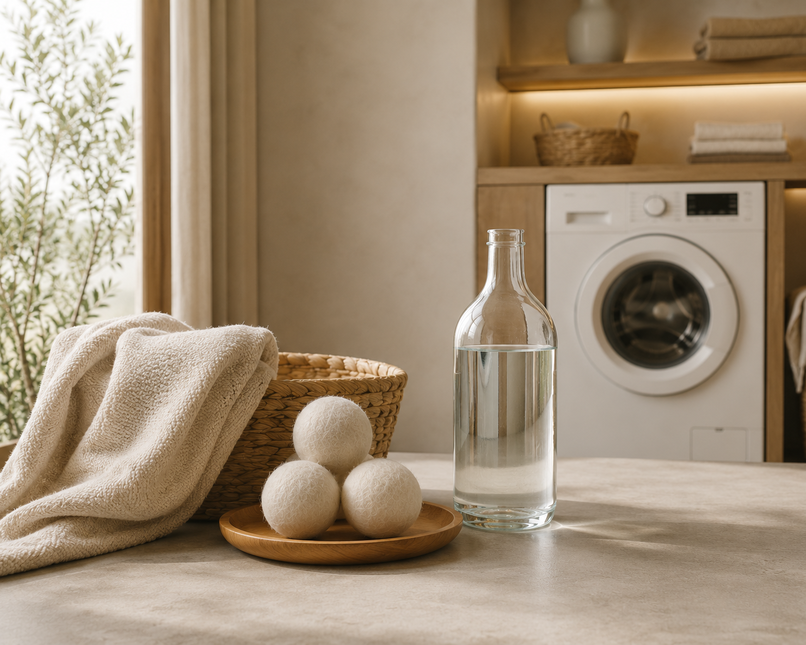
The White Vinegar Reset: Replace your liquid fabric softener with half a cup of distilled white vinegar in the softener compartment. The natural acetic acid cuts through accumulated detergent scum and hard water deposits, acting as a natural de-gunking agent that liberates compressed cotton loops.
The Baking Soda Boost: Add half a cup of baking soda directly into the washing drum with your towels. Baking soda neutralizes pH levels in the water, loosens fabric fibers, and eradicates locked-in musty odors without relying on artificial, heavy synthetic fragrances.
Deploy Wool Dryer Balls: Toss three to four organic wool dryer balls into your dryer cycle. As they bounce around, they physically agitate and separate the heavy wet towels, allowing hot air to circulate faster. This natural friction fluffs up the loops and reduces drying time significantly.
Lower the Washing Temperature: High heat bakes residual detergent directly into the fabric strands, making them brittle. Wash your linens on a warm or cold cycle (around 30°C to 40°C) to gently lift oils without cooking the natural fibers.
Cut Detergent in Half: Modern laundry detergents are highly concentrated. Using too much soap means the rinse cycle cannot fully flush it away. Cutting your usual detergent dose in half ensures a clean wash without leaving crunchy soap residues behind.
The Shakeout Ritual: Give every towel a firm, aggressive snap before tossing it into the dryer, and another shake when pulling it out. This physical snap uncoils the compressed pile loops, setting them up to dry in an open, aerated configuration.
Best Long-Term Towel Care Habits
Restoring your linens is only half the battle; maintaining their luxury lifespan requires a shift in your weekly laundry mechanics. Integrating smart habits into your home routine prevents stiffness from taking root in the first place.
First, never overload your washing machine drum. Towels require plenty of space to tumble, absorb water, and rinse cleanly. When crammed together, they simply rub against each other, grinding old soap deeper into the fabric. Secondly, avoid over-drying at extreme temperatures, which dries out the natural moisture retention of premium cotton, making it brittle.
If you prefer to line-dry your laundry outdoors, pick a breezy, shaded spot rather than direct, baking sunlight. For a deeper understanding of how pure, untreated fiber structures behave under proper care, exploring the strict criteria ofunderstanding GOTS: the gold standard in organic textiles provides a flawless blueprint for maintaining chemical-free fabric health. If you love a highly breathable texture that naturally resists clumping altogether, transitioning your bathroom lineup to lightweightwaffle robes and waffle towels offers a geometric weave that dries exceptionally fast and stays soft without complex maintenance.
When Should You Replace Your Towels?
Even with the most meticulous, conscious care routine, no textile lasts forever. Constant friction, daily water exposure, and dozens of laundry cycles will eventually degrade even the highest-grade cotton fibers.
A good rule of thumb is to evaluate your linens every two years. If your towels have completely lost their absorbency—meaning they simply push water around your skin rather than drawing it in—the inner fiber core has broken down entirely. Other telltale signs include frayed, structural edge seams that cannot hold their shape, or a persistent, sour damp smell that lingers even after a deep white-vinegar strip wash. When your linens reach this stage, it is time to responsibly repurpose them as cleaning cloths and treat your skin to a fresh, plush upgrade.
Respect the Daily Touchpoint
Your post-bath transition shouldn't be a rough, hurried afterthought. It is a vital moment of self-care. Learning how to keep towels soft without relying on synthetic chemicals is a direct investment in your skin's health and your home's ecosystem. Ditch the toxic, heavy fabric softeners, lean into pure and natural laundry habits, and keep every single shower ending in an unhurried, cloud-like embrace.