Bathrobe vs. Dressing Gown: Key Differences
- Bathrobe vs. Dressing Gown: What's the Difference?
- Defining the Essentials: What Is Each Garment?
- What Is a Bathrobe?
- What Is a Dressing Gown?
- What Is a Housecoat?
- Key Differences: Fabric, Cut, and Function
- Regional Terminology: US "Robe" vs. UK "Dressing Gown"
- Which One Is Right for You?
- Upgrade Your Private Hours
Bathrobe vs. Dressing Gown: What's the Difference?
Step into any luxury boutique, flip through an upscale homeware catalog, or browse leisurely online, and you will quickly encounter an interchangeable web of terms: bathrobe, dressing gown, housecoat, and morning robe. While they are frequently used as synonyms in modern conversation, each garment historically evolved with an entirely distinct design, functional purpose, and textile requirement.
Confusing a dressing gown with a bathrobe often leads to disappointed expectations such as stepping soaking wet out of a steamy shower straight into a delicate silk wrapper, or trying to entertain breakfast guests in a bulky, sodden towel. Understanding the nuanced differences between a bathrobe, a dressing gown, and a housecoat ensures you choose the exact layer that aligns with your lifestyle, climate, and personal morning rituals.
Defining the Essentials: What Is Each Garment?
To decode the terminology, we must look past casual slang and evaluate how each piece was built to function.
What Is a Bathrobe?
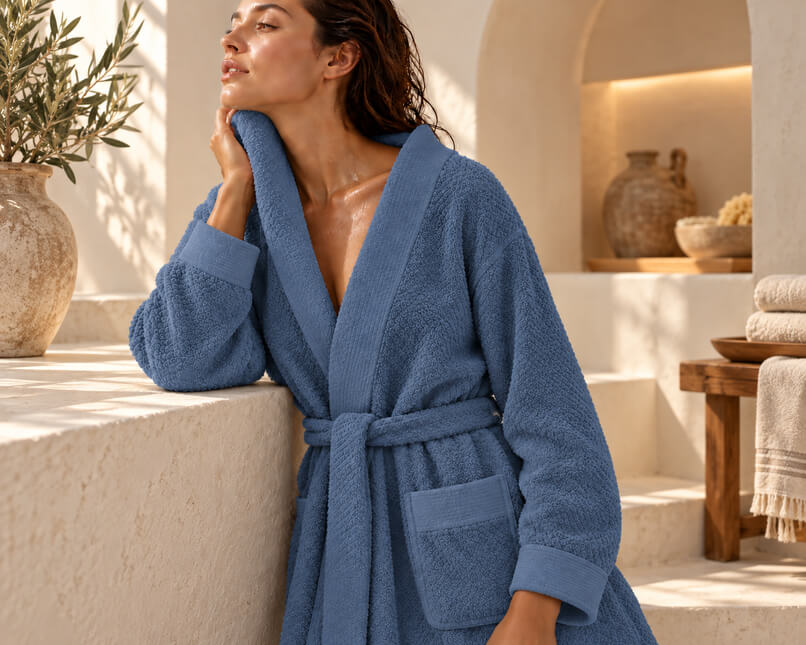
A bathrobe is fundamentally an extension of the bath towel. Designed primarily for absorption and direct post-bath utility, it is engineered to be worn against bare, wet skin immediately after stepping out of the tub, pool, or ocean. The architecture of a true bathrobe prioritizes heavy water absorbency, breathability, and instant thermal insulation against cold bathroom air.
What Is a Dressing Gown?
A dressing gown is an elegant leisure garment traditionally worn over undergarments, sleepwear, or day clothes while grooming, applying cosmetics, or taking morning tea. Historically a staple of British high society and European lounging, a dressing gown was never meant to absorb water. Instead, its job is to provide stylish warmth, decorum, and modest coverage while lounging around the house before getting fully dressed for the day.
What Is a Housecoat?
A housecoat represents utilitarian, everyday practicality. Rooted in mid-century American domestic life, it is an informal, functional layer worn directly over pajamas or casual clothes while doing morning household chores, preparing breakfast, or answering the door. Unlike wrap robes held by a sash belt, housecoats often feature full front closures like buttons, snaps, or zips to keep the wearer covered during active movement.
Key Differences: Fabric, Cut, and Function
Feature | Bathrobe | Dressing Gown | Housecoat |
Primary Purpose | Drying off, absorbing water, warming up post-shower | Leisure, grooming, modesty over sleepwear | Everyday chores, casual coverage at home |
Direct Contact | Bare, wet, or damp skin | Over pajamas, nightgowns, or underwear | Over loungewear or day clothes |
Common Fabrics | Looped terry cloth, honeycomb waffle, Turkish cotton | Silk, satin, cashmere, lightweight flannel, velvet | Quilted cotton, fleece, polyester blends |
Closure Style | Self-fabric tie belt, wrap silhouette | Wrap with tie sash, often decorative belt | Buttons, snap fasteners, front zippers |
Pocket Utility | Deep patch pockets for hands/dry comfort | Subtle in-seam pockets or decorative accents | Large front utility pockets for practical items |
Regional Terminology: US "Robe" vs. UK "Dressing Gown"
Geography adds another layer of nuance to this wardrobe debate. In the United States, "robe" functions as a wide umbrella term. An American might say "grab your robe" whether they mean a heavy looped towel wrap or a slinky satin duster.
Across the Atlantic in the UK and Commonwealth countries, "dressing gown" remains the prevailing everyday term for any belted lounge wear worn over nightclothes. If a British speaker specifically means an absorbent garment intended for after the bath, they will specify "towelling robe" or "bathrobe."
Recognizing this linguistic divide helps explain why high-end lifestyle brands often blend the terms, yet the golden rule of construction holds steady: absorbency defines a bathrobe; tailored presentation defines a dressing gown.
Care, Washing, and Longevity
Because these pieces serve completely different daily roles, their care requirements vary considerably. While silk or wool dressing gowns often demand delicate spot-cleaning or professional dry cleaning, natural cotton bathrobes are built to withstand frequent laundering.
To keep your absorbent cotton soft and fluffy without flattening the loops, review our comprehensive guide on how to wash, store, and care for your robe. Avoiding fabric softeners and harsh detergents ensures your fibers retain their natural capillary action wash after wash.

Which One Is Right for You?
Choosing between these styles comes down to your personal habits and daily rhythms:
Choose a Dressing Gown if: Your main priority is stylish indoor layering. You want an elegant wrap to throw over your pajamas while reading, sipping evening tea, or working comfortably from a home desk without feeling underdressed.
Choose a Housecoat if: You need hands-free, secure coverage that won't slip open while you walk pets, brew coffee, or manage active household tasks before work.
Choose a Bathrobe if: You crave the effortless transition from water to comfort. A high-grade bathrobe eliminates the need to aggressively rub your skin dry with towels, providing immediate warmth and sensory calm.
If genuine tactile comfort and versatile performance are what you seek, explore our curated selection of robes by material.
Opting for an authentic Turkish cotton robe bridges the gap between both worlds effortlessly. A dense Turkish cotton terry robe offers hotel-grade water absorption right out of the bath, while a lightweight Turkish cotton waffle robe delivers the crisp, architectural drape of a sophisticated dressing gown keeping you cool, comfortable, and impeccably styled all morning long.
Upgrade Your Private Hours
A robe is far more than a functional piece of cloth; it is the uniform of your downshift, the boundary between outer demands and personal recovery. Whether you refer to it as a bathrobe or a dressing gown, investing in premium natural textiles turns ordinary morning minutes into unhurried moments of quiet luxury.