Bathrobe Women: Your 2026 Guide to a Perfect Fit
- An Introduction to Everyday Luxury
- Decoding Robe Fabrics From Plush Terry to Airy Waffle
- Finding Your Signature Style Kimono Hooded and More
- How to Choose the Perfect Robe for Your Needs
- Getting the Fit Right and Making It Last
- The Art of the Robe Gifting Hospitality and Sustainability
- Conclusion Invest in Your Daily Comfort
The search often starts in a very ordinary moment. Your hair is still damp, the bathroom mirror is fogged, and the robe on the hook feels either too heavy, too thin, too scratchy, or somehow never secure enough to stay closed while you move around. You don't want a costume. You want comfort that works.
That's why choosing a robe is less about owning “a bathrobe” and more about choosing a feeling you want to return to every day. Some women want a robe that behaves like a towel after a shower. Others want one that feels airy with morning coffee, or polished enough to wear while getting ready for dinner at home. The right choice depends on the ritual.
A lot of shoppers feel overwhelmed because robe advice often stops at fabric names. Terry. Waffle. Kimono. Hooded. Those labels matter, but they only become useful when you connect them to a real moment in your life: drying off, warming up, slowing down, or feeling elegantly put together.
An Introduction to Everyday Luxury
You step out of the shower with damp skin and a cool floor underfoot. The robe waiting nearby can either feel like an afterthought or like the first calm moment of the day. A good one absorbs lingering moisture, holds warmth close without trapping too much heat, and gives you that settled, covered feeling within seconds.
That is the quiet appeal of everyday luxury. It is less about decoration and more about usefulness that feels beautiful in practice. The best robes earn their place through repetition. Morning after morning, evening after evening, they do one job well and make the ritual around them feel easier.
Many women now shop for robes with the same care they give to bedding or towels. The question is no longer only whether a robe feels soft. It is whether that softness suits the moment. Post-shower comfort calls for absorbency. A slow coffee at the kitchen table often feels better in something lighter and more breathable. An evening wind-down may call for more drape, more warmth, or a neater silhouette that still feels relaxed.
A robe works much like good lighting in a room. You notice the effect before you analyze the source. The fabric touches the skin, the weight changes how the robe hangs, and the cut decides whether you feel wrapped or restricted.
This refinement in the category explains why fabric names alone rarely help enough. Terry, waffle, modal, and sateen describe materials or textures, but your daily routine tells you which one will satisfy you. If you are comparing the two most common everyday options, this guide to waffle vs terry cloth robes for daily use gives helpful context before you commit.
A robe earns its place when you reach for it without thinking.
The bathrobe women keep longest is often the one that matches their rhythm, not the one with the most embellishment. A plush robe can feel wonderful on a cold morning and stifling in a warm bedroom. A crisp waffle robe can feel fresh after bathing and a little too light when the house is chilly.
Small construction details matter here. A well-placed belt loop keeps the sash from riding too high or dropping too low. A slightly longer tie gives you enough length to knot it securely, and a simple flat knot with one extra tuck usually stays closed better than a loose bow. Good luxury often looks simple from across the room. Up close, it feels thoughtful on the skin and reliable in daily life.
Decoding Robe Fabrics From Plush Terry to Airy Waffle
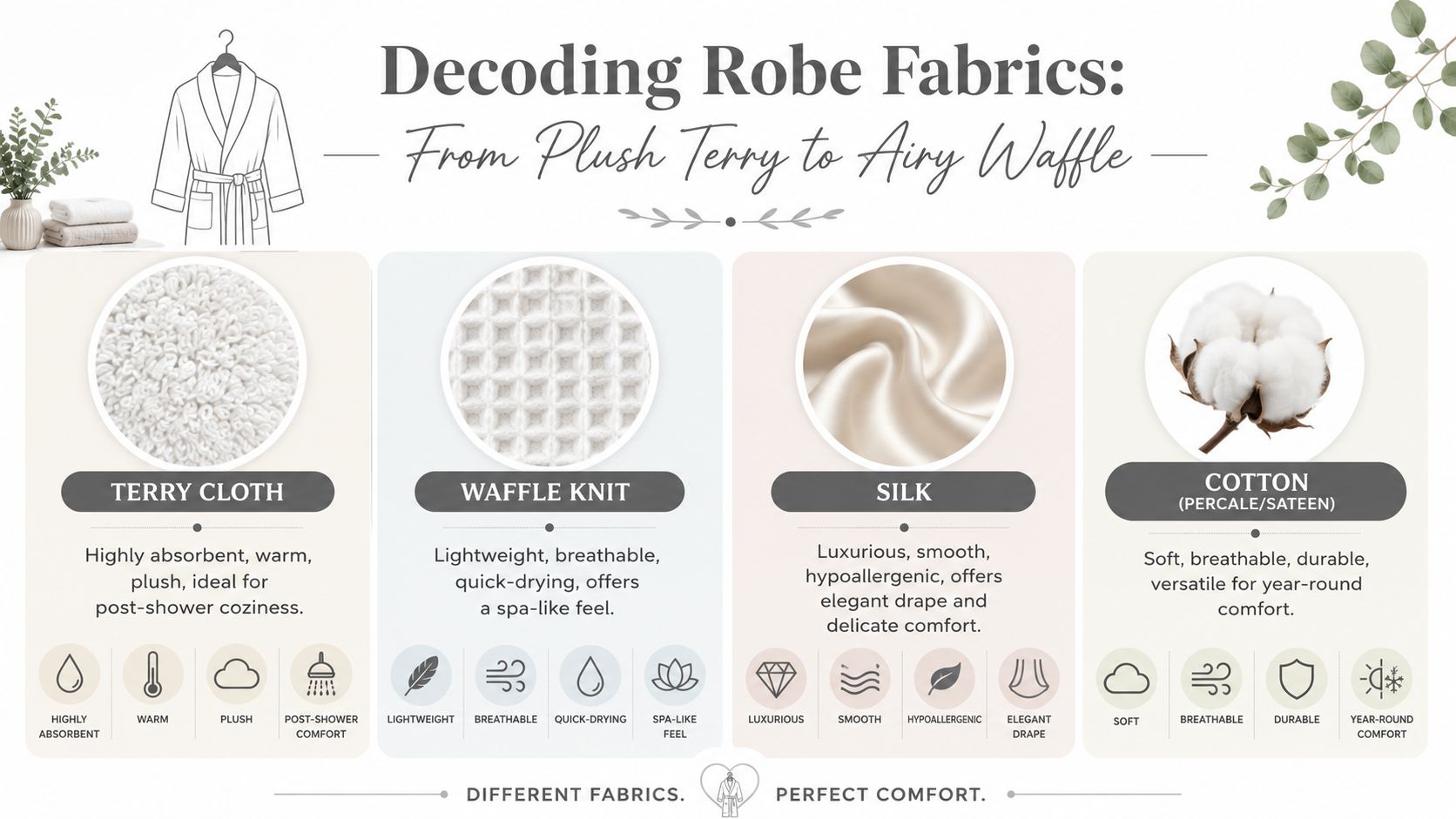
Fabric decides what the robe does. It controls absorbency, weight, drape, warmth, and how the robe feels after repeated washing. If you've ever bought a robe that looked beautiful online and disappointed you in person, fabric was probably the reason.
Terry for the post-shower ritual
Terry is commonly the first robe fabric envisioned, and for good reason. Its looped surface is built to handle moisture. In cotton French terry, the loop structure increases surface area and helps the fabric absorb and move moisture away from the skin, with terry loops capable of absorbing up to three times more moisture than conventional flat fabrics, as explained in this cotton French terry fabric guide.
That translates into a robe that feels useful the second you step out of the bath. It doesn't just cover you. It helps dry you.
If you want your robe to function almost like a wearable towel, terry usually makes the most sense. It tends to feel plush, substantial, and reassuring. The trade-off is weight. Some women love that enveloping heft. Others find it too warm for extended lounging.
Why Turkish cotton feels different
Not all cotton robes age the same way. Turkish Aegean cotton has longer staple fibers than standard cotton, which helps create stronger yarns and a softer, more breathable fabric that improves with use. Studies discussed the explanation of Turkish Aegean cotton also note stronger abrasion resistance and better moisture management in terry fabrics made from long-staple cotton.
In plain terms, that's why a better robe often feels smoother, sheds less roughness over time, and keeps its comfort after repeated wear.
Practical rule: If your main ritual is “shower, dry off, stay warm,” choose absorbency first and appearance second.
Waffle for lightness and breathability
Waffle robes feel different the moment you touch them. Instead of deep plush loops, they have a textured grid that creates airiness. That makes them appealing for warm homes, travel, layered morning routines, and anyone who dislikes heavy fabric on the shoulders.
A waffle robe won't usually mimic the thick hug of terry. What it offers instead is ease. It dries faster, packs smaller, and often feels cleaner and lighter against the skin. For many women, that spa-like texture is exactly the point. If you want a more detailed side-by-side breakdown, this guide to waffle vs terry cloth robes for daily use helps clarify the difference in practical terms.
One example in this category is the SEYANTE Women's Lavender Blue Lightweight Kimono Waffle Spa Robe, which fits the lightweight kimono-waffle profile often chosen for easy lounging and warm-weather comfort.
Silk, velour, and fleece in real life
Some fabrics are less about drying off and more about mood.
| Fabric | How it feels | Best moment |
|---|---|---|
| Silk | Smooth, cool, fluid | Evening wind-down, getting ready |
| Velour | Soft surface with a richer hand feel | Lounging when you want warmth and polish |
| Fleece | Insulating, cozy, soft | Cold mornings, winter comfort |
| Cotton sateen or percale | Breathable and lighter on skin | General lounging, year-round wear |
Silk has elegance and drape, but it isn't the practical answer for a wet post-shower body. Fleece delivers warmth well, though some women find it too insulating for indoor wear unless the room is cool. Velour can feel indulgent, but it doesn't always offer the quick-drying usefulness of terry or waffle.
The easiest way to avoid confusion is simple. Match the fabric to the ritual, not just the label.
Finding Your Signature Style Kimono Hooded and More
You step out of the shower, wrap the robe around yourself, and learn something in five seconds. Does it sit smoothly and comfortably, or does it tug at the neck, swing open at the chest, or bunch behind you when you sit down? Style decides that part of the experience.
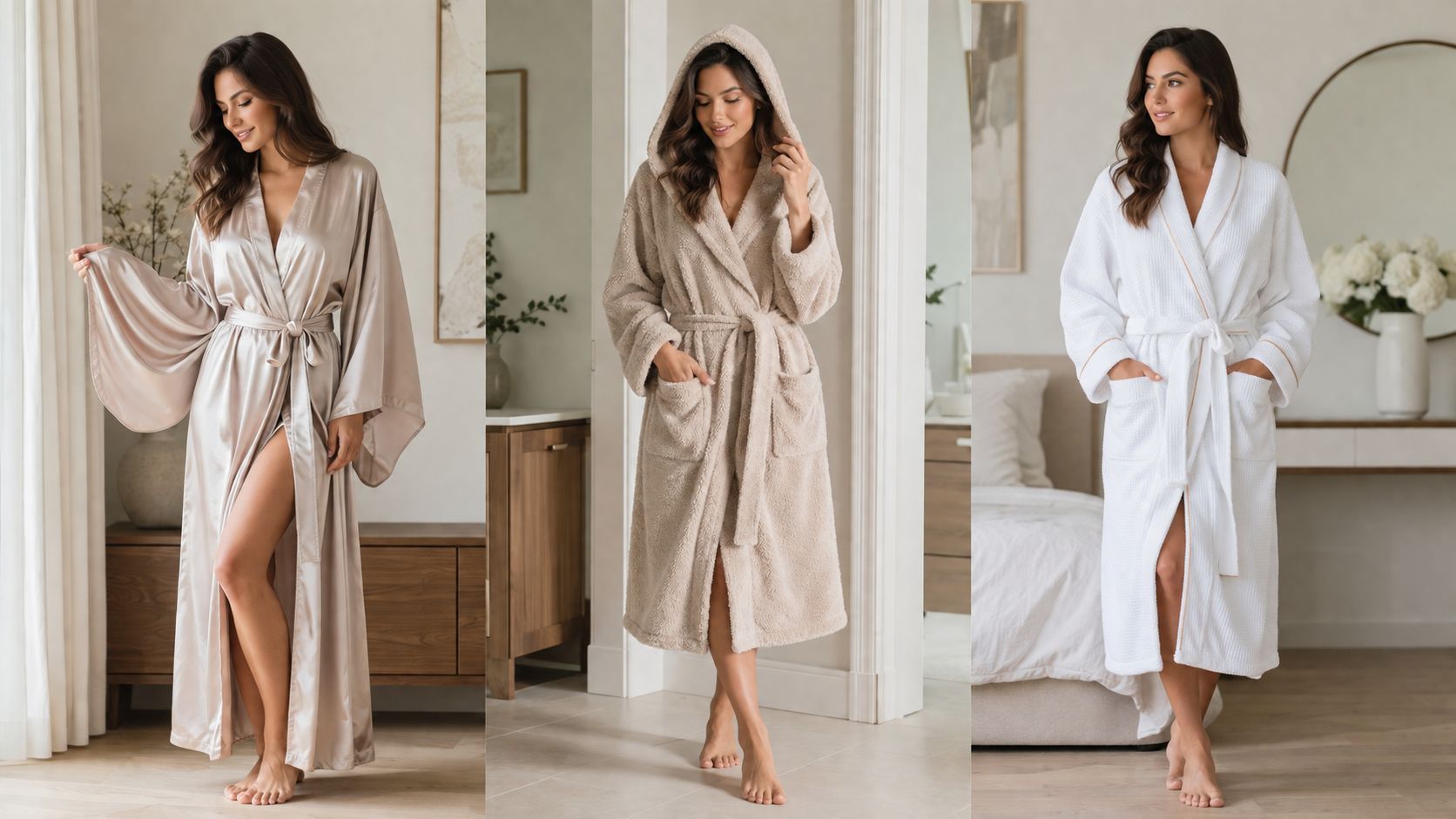
A robe's shape works like the frame around a painting. The fabric still matters, but the cut changes how the robe feels in motion, how much warmth reaches the neck and chest, and whether it suits a quick dry-off, a lazy breakfast, or a quiet evening routine.
Kimono for clean lines
Kimono robes usually feel the least fussy. The collar lies flat, the neckline stays clean, and the whole shape tends to feel lighter on the body. If your robe moment includes skincare, drying your hair, making coffee, or opening windows on a warm morning, that simplicity often feels right.
This style is popular for a reason. It looks polished, but it does not crowd the neck or shoulders. Many women also find kimono sleeves easier to push up while washing their face or applying lotion.
If robes sometimes fall open on you, the issue is often the sash, not the style. Thread the belt through both side loops, cross it firmly at the waist, then make a flat knot before tying the bow. A flatter knot grips better than a loose bow tied over slippery fabric.
Shawl collar for a wrapped-in feeling
A shawl collar robe gives warmth where chill tends to land first: the back of the neck, the upper chest, and the shoulders. The folded collar adds softness around the face too, which is part of why this style feels so familiar in hotels and spas.
For the evening wind-down ritual, shawl collar robes often shine. They create a cocooning effect without the extra volume of a hood. If you read in bed, sit with a cup of tea, or like a robe that feels gently protective, this cut usually delivers more comfort than a straighter kimono shape.
Hooded for post-shower practicality
A hooded robe serves a specific moment well. It helps hold warmth around damp hair and the neck, and it can spare you from balancing a towel on your head while you move through the bathroom.
That does not make it the right choice for every ritual.
If you mainly wear a robe while sitting on the sofa, answering emails, or leaning back in a chair, a hood can feel bulky behind the head and shoulders. If your robe is part of the first ten minutes after bathing, a hood can feel useful rather than decorative. Choose it for your routine, not just the look on the hanger.
Length changes the ritual
Length shifts the mood almost as much as fabric. A shorter robe feels brisk and easy, like something meant for getting ready. Mid-calf length usually gives the best middle ground. You get coverage and warmth without too much weight around the legs. Full-length robes feel richer and more enveloping, especially on cold evenings, but they can feel excessive for quick morning wear.
A simple guide helps:
- For post-shower use: mid-length often balances warmth, coverage, and freedom to move
- For slow mornings: shorter or mid-length styles feel lighter and less clingy
- For evening lounging: longer lengths usually feel calmer and more insulating
- For petite frames: cleaner cuts and moderate lengths often feel easier to wear
- For taller women: longer robes tend to look intentional and feel properly proportioned
The best style is the one that suits your ritual so well you stop adjusting it. You put it on, tie it once, and enjoy the comfort.
How to Choose the Perfect Robe for Your Needs
Most bathrobe women shop by fabric first, then get stuck. A better method is to start with the moment you want the robe to serve.
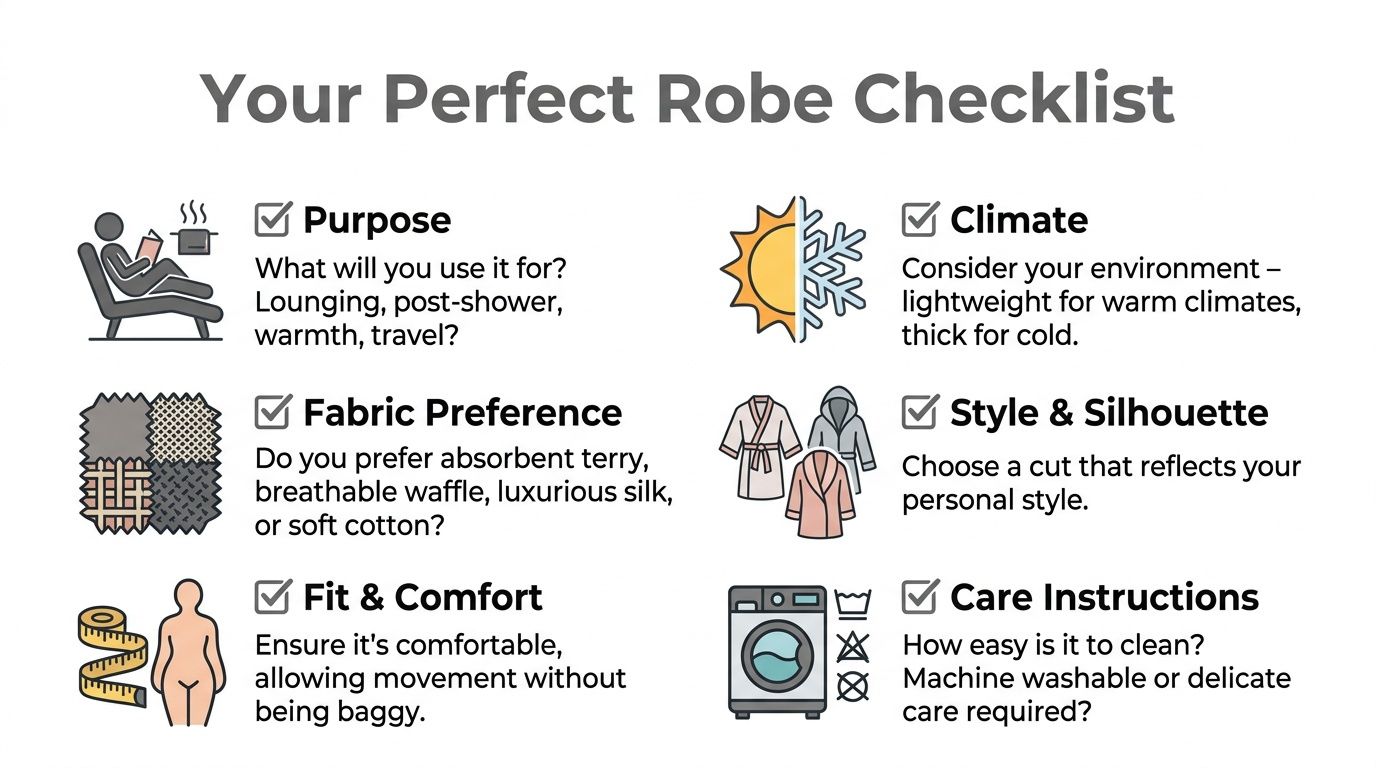
The post-shower quick dry
This woman wants function. She doesn't want to juggle a towel and then switch into a separate layer. She wants one robe that absorbs moisture well, feels soft against damp skin, and gives warmth immediately.
A terry robe usually fits this ritual best. If you prefer less weight, a waffle towel wrap can also work well for the first few minutes after bathing. A practical version of this idea is a white organic Turkish cotton waffle towel wrap, which suits women who want coverage without committing immediately to a heavier full robe.
Best signs you're in this category:
- You step into your robe while still damp
- You care about absorbency more than dramatic drape
- You want warmth fast
The slow morning coffee companion
This ritual is quieter. You're dry. The robe isn't replacing a towel. It's creating ease while you move through the first part of the day. Weight matters here because a robe can feel oppressive if it's too bulky by the time the kettle boils.
A lightweight waffle or soft cotton kimono often suits this moment. Breathability matters more than maximum absorbency. You want something that hangs lightly, lets air move, and feels present without feeling demanding.
The elegant evening wind-down
This robe is less about drying and more about atmosphere. You may wear it after a bath, during skincare, while reading, or while getting ready for bed. Drape, softness, and silhouette become more important than utility.
A kimono shape in a lighter fabric, or a robe with a smoother hand feel, often works well here. The robe should skim rather than overwhelm. If a terry robe feels too daytime or too practical to you, this is why.
The cold-house comfort seeker
Some homes run cool, especially in the morning. In that setting, a robe needs to insulate. You may want a shawl collar or hood, a longer length, and a fabric with more body.
If you're always pulling the front edges tighter around yourself, don't choose the lightest option just because it looks elegant online. Choose one with enough structure and warmth to settle your shoulders.
Matching the robe to your frame
Fit gets easier when you think in proportions rather than labels.
| Body consideration | Often feels most balanced |
|---|---|
| Petite | Kimono or mid-length styles with less collar bulk |
| Tall | Longer hems and sleeves that look intentional |
| Curvier fit preference | Robes with generous wrap coverage and flexible waist placement |
| Broad shoulders or bust | Softer drape and enough front overlap to avoid pulling |
A robe should close easily without strain. If you have to tug constantly at the front, it's not a relaxing garment anymore.
Getting the Fit Right and Making It Last
A robe can be beautifully made and still disappoint if the fit is off. The usual mistake is sizing only by body measurement and forgetting personal preference. Some women want a robe that follows the body neatly. Others want one that feels generously oversized, almost blanket-like.
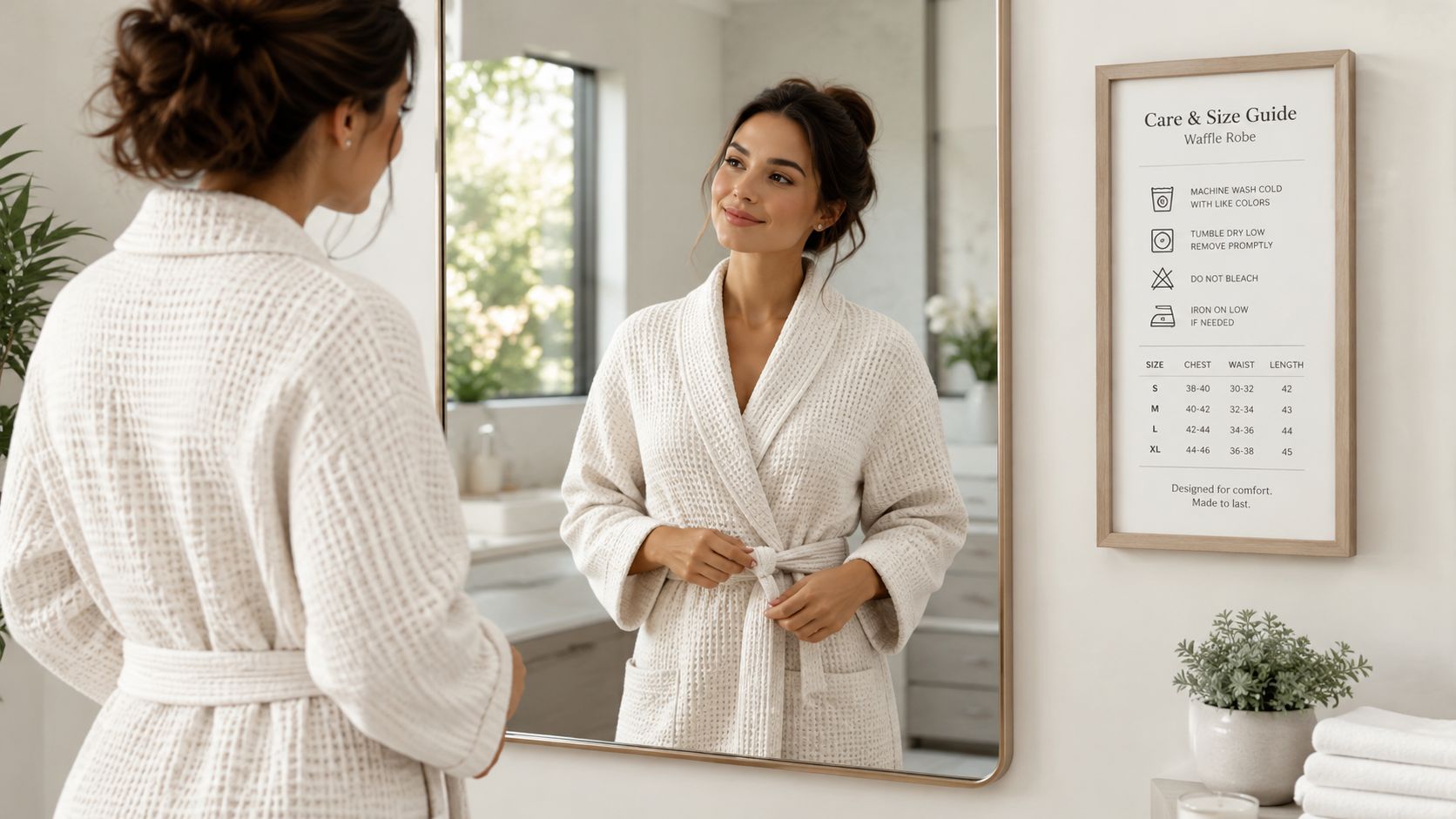
How to judge fit without overthinking it
Focus on three points first:
- Shoulders: The seam or shoulder line shouldn't feel restrictive when you reach forward.
- Wrap coverage: The front panels should overlap comfortably when tied.
- Sleeve and hem length: They should suit your routine, not just your height.
If you're between sizes, the better choice depends on use. For a lounge robe, many women prefer a little extra room. For a get-ready robe, less excess fabric can feel cleaner and easier. A detailed robe size guide for small, medium, large, XL, and XXL can help if you're comparing cuts and deciding how much ease you want.
The sash trick that keeps a robe closed
One of the biggest frustrations with women's robes is simple: they fall open at the worst moment. Tying the belt tighter doesn't always solve it. It often just creates bunching and discomfort.
A useful fix is to thread the sash through the front two loops only, rather than wrapping it fully around the back in the usual way. That creates enough slack for a tight double-knot and helps prevent the robe from slipping open. This user-tested solution is described in Parachute's guide to women's bathrobe materials, sizes, and colors.
Try the front-loop tie once before giving up on a robe. It often solves a problem people blame on sizing.
Care that preserves feel
Good care keeps the robe feeling like itself. Most cotton robes benefit from gentle washing that removes residue without coating the fibers. Heavy fabric softener can leave absorbent fabrics feeling less effective over time.
For everyday upkeep:
- Wash with similar textures: This helps reduce pulling and friction.
- Avoid overloading the machine: Robes need room to rinse well.
- Dry with care: Too much heat can stress fibers and alter the hand feel.
- Store loosely: Don't crush a robe under dense stacks of laundry if you want it to keep its loft.
Waffle robes usually do best when you preserve their airy texture. Terry robes benefit from care that protects their loops and absorbency. If you treat the robe like a working textile rather than a decorative extra, it will usually reward you with better wear.
The Art of the Robe Gifting Hospitality and Sustainability
A robe makes sense as a gift because it combines usefulness with intimacy, but not in a difficult-to-size way like fitted garments. It says, “I want you to rest.” That works for birthdays, bridal gatherings, Mother's Day, and care packages for someone who needs a softer routine.
In hospitality, the robe plays a similar role. It shapes how a stay feels. A guest may not remember every detail in a room, but they remember the robe if it feels scratchy, stiff, too thin, or unexpectedly lovely. That's one reason boutique properties and wellness spaces pay attention to robe texture, absorbency, and how polished the garment looks hanging in the bathroom.
Sustainability has also moved from a niche concern to a practical buying factor. Preference among women for GOTS-certified organic textiles and Turkish cotton terry increased by 22% between 2022 and 2024, reflecting a shift toward eco-conscious and luxury self-care products, according to this bathrobe market outlook discussing organic textiles and Turkish cotton terry.
That increase matters because it changes what buyers ask before purchase. They want to know not only how a robe feels on day one, but what kind of fiber it uses, how it's made, and whether the quality justifies keeping it for years instead of replacing it quickly.
Why certification matters to the buyer
For an eco-conscious shopper, certification isn't decorative language. It gives context to the fabric choice. If you're exploring organic options, it helps to understand why sustainable materials matter in robes, especially if your goal is to balance comfort, gifting value, and longer-term use.
A thoughtful robe gift usually succeeds when these qualities come together:
- Immediate pleasure: It feels soft, calm, and inviting the first time it's worn.
- Daily usefulness: It isn't too precious to become part of a routine.
- Lasting value: The material and construction support repeated wear.
- Intentional sourcing: The buyer feels comfortable with the textile choice.
That combination is why robes continue to work so well across personal use, guest settings, and gift occasions. They're practical, but they still feel ceremonial.
Conclusion Invest in Your Daily Comfort
The easiest way to choose well is to remember three things: fabric, style, and ritual. Fabric decides whether the robe absorbs, breathes, warms, or drapes. Style changes how it moves with your body. Ritual tells you what the robe needs to do in your life.
That's why one woman's ideal robe is a plush terry shawl collar she lives in after every shower, while another wants a lightweight waffle kimono for coffee and skincare. Neither choice is more correct. The robe works when it suits the moment.
Bathrobe women often discover that the best purchase isn't the flashiest one. It's the robe that feels right on the skin, stays closed when tied, washes well, and keeps earning its spot on the hook behind the door. Comfort becomes convincing when it repeats.
A quality robe isn't a grand luxury. It's a daily one. And daily luxuries are often the most worthwhile, because you don't save them for special occasions. You use them on ordinary mornings, tired evenings, and all the in-between hours when a little softness helps.
If you're ready to find a robe that fits your own ritual, explore SEYANTE for Turkish cotton terry, lightweight waffle styles, organic options, and practical guides that make choosing easier.