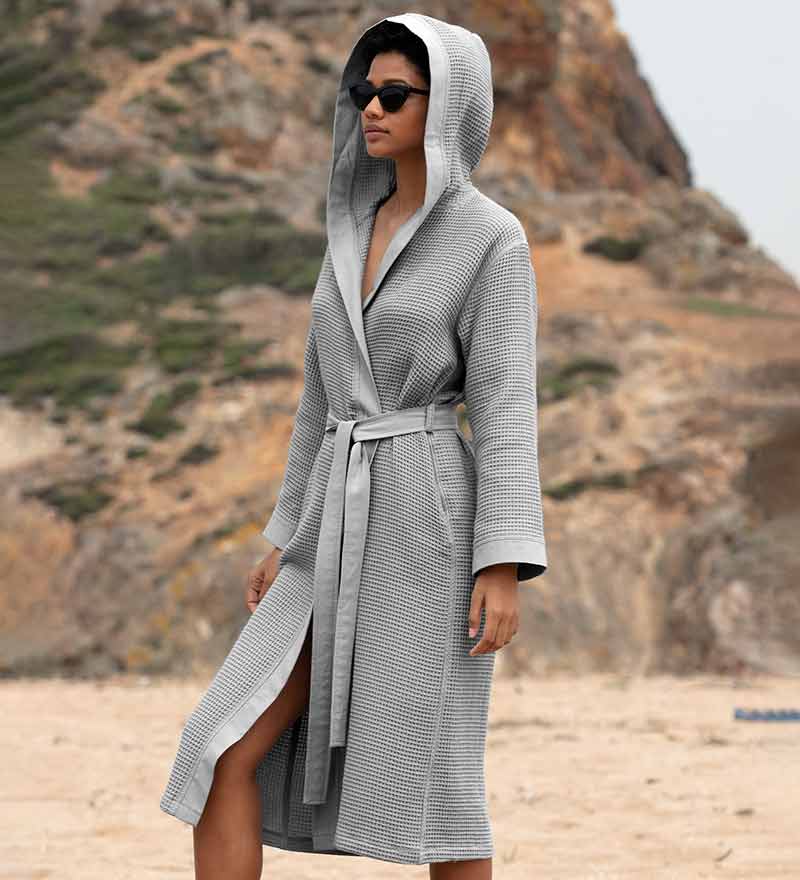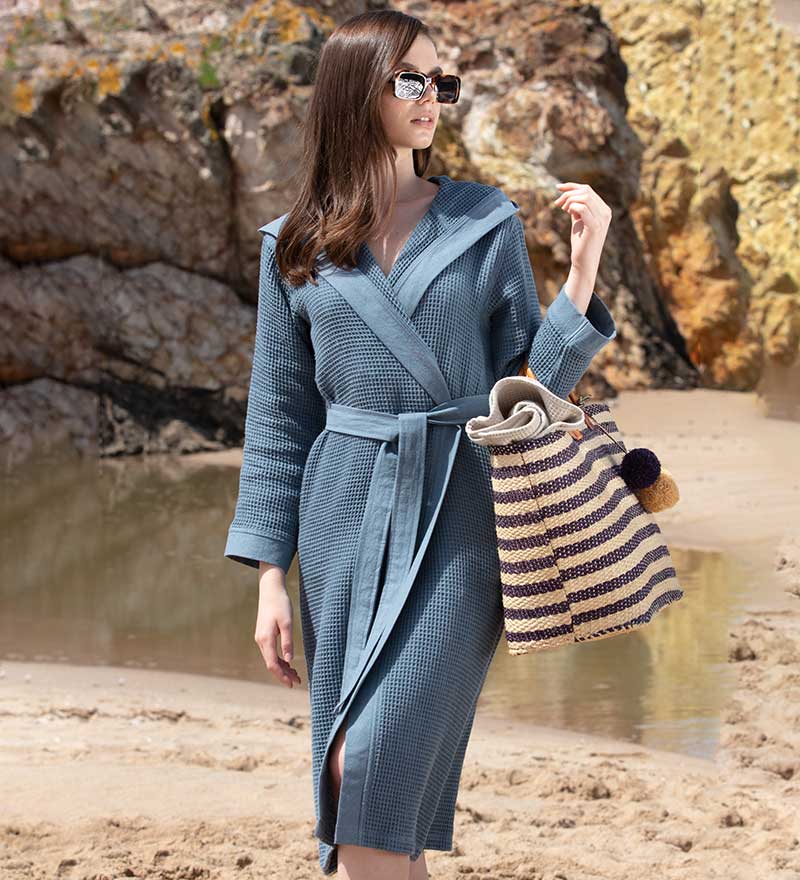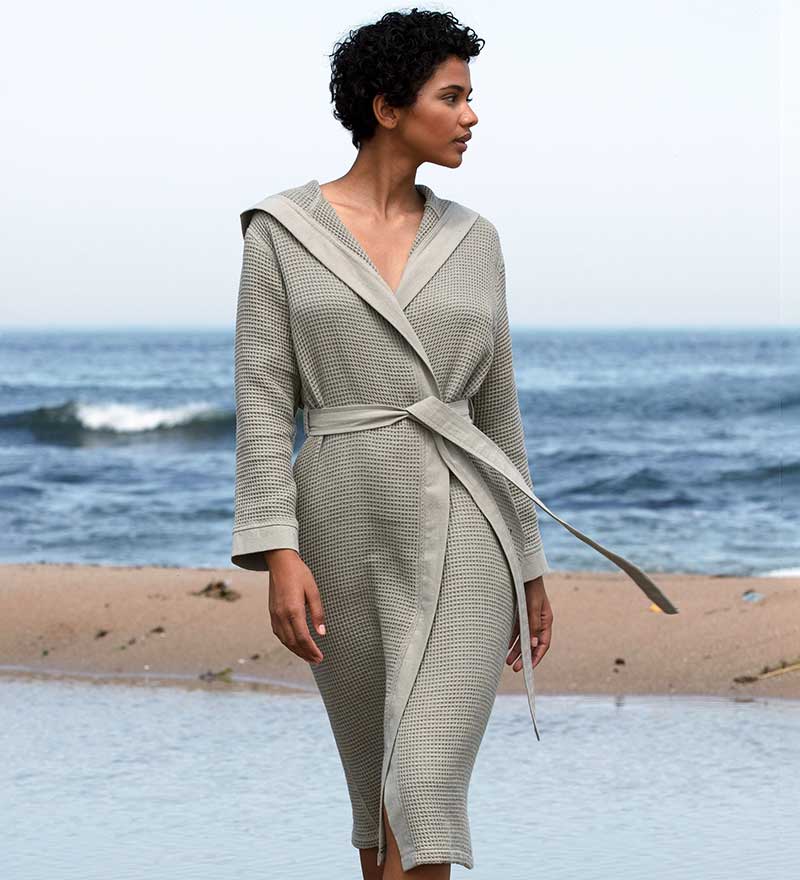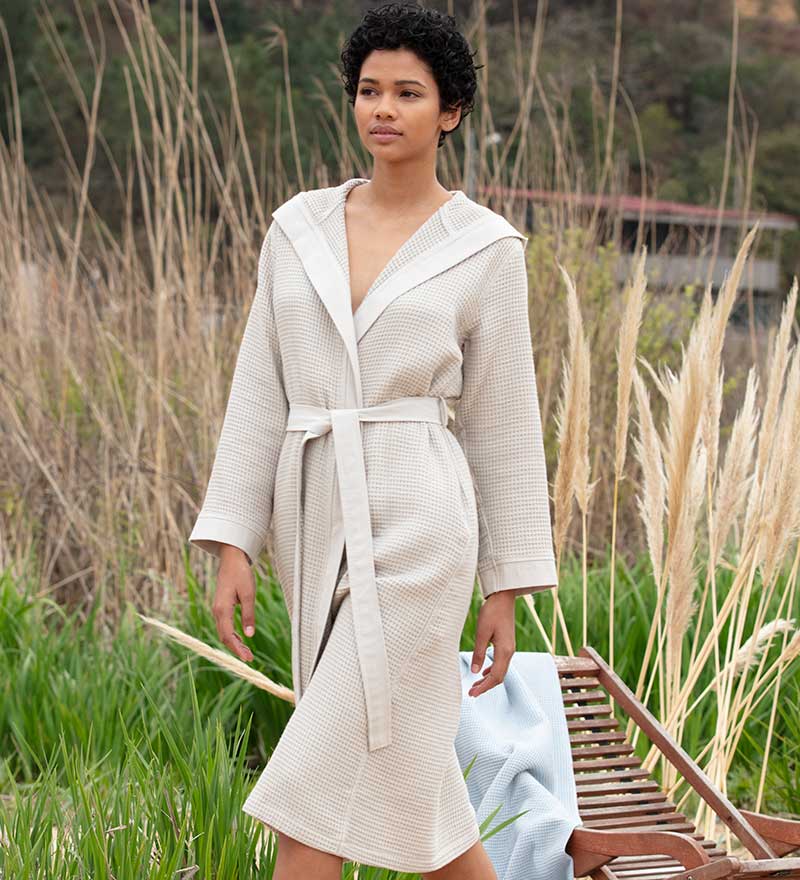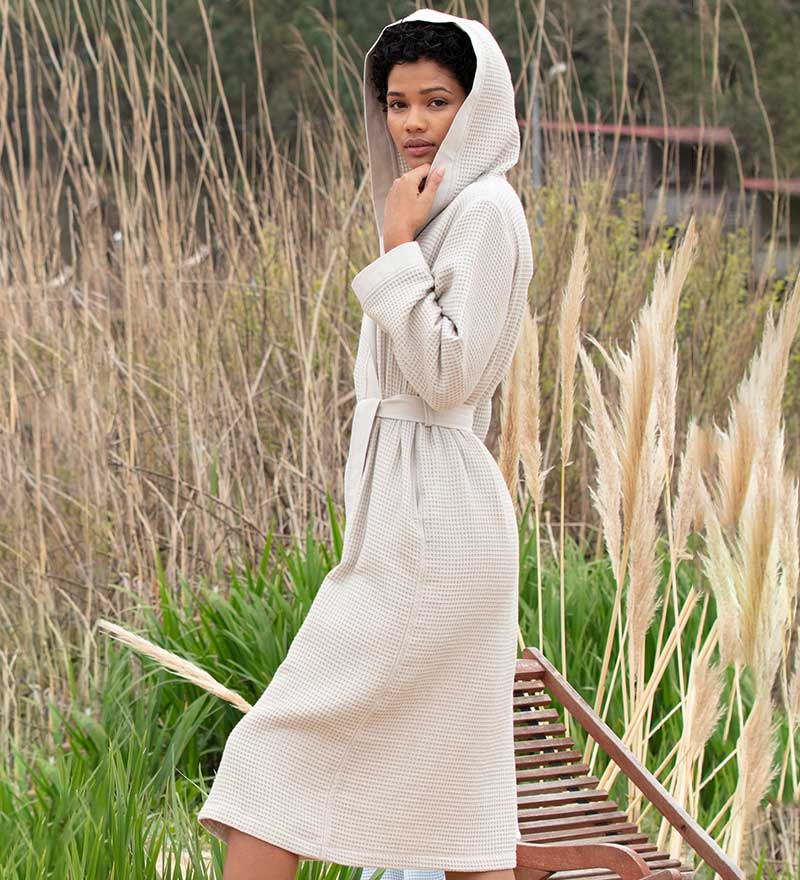



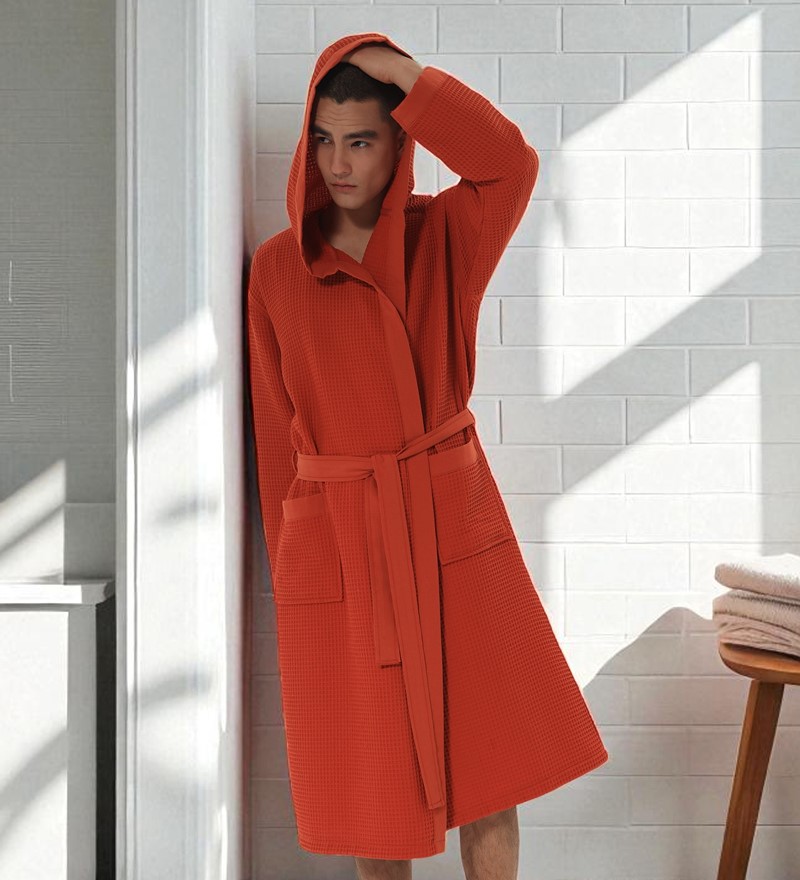
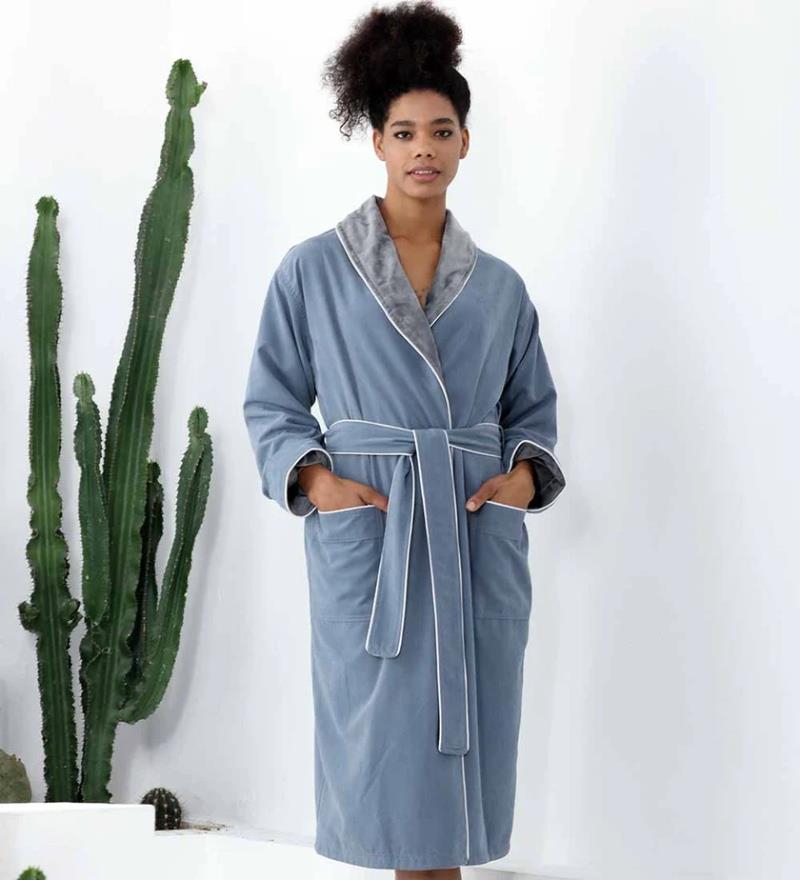
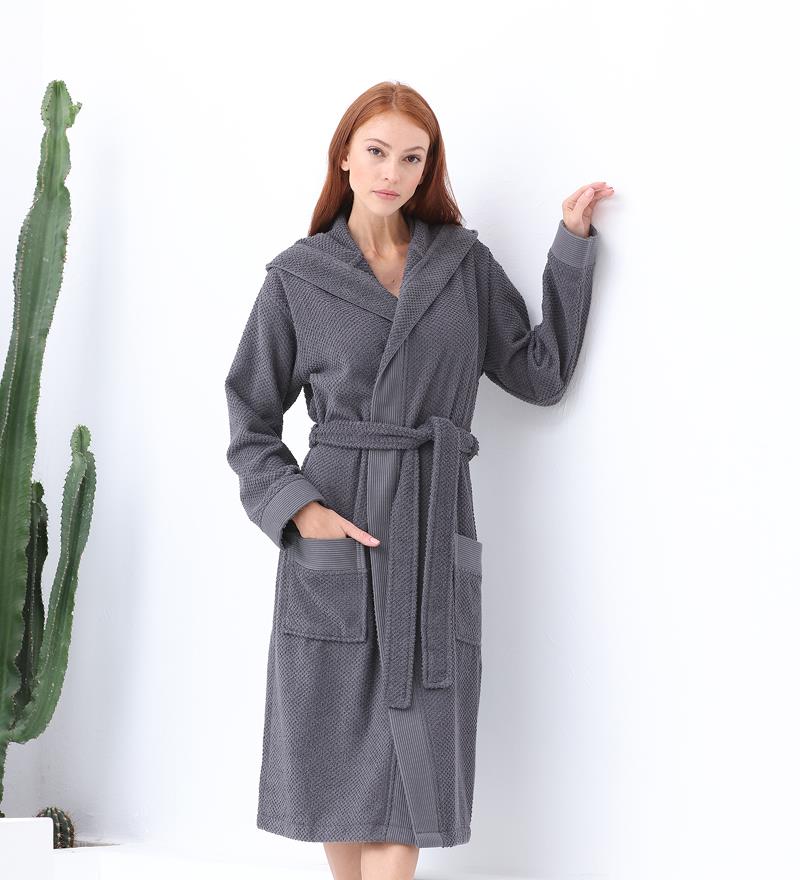
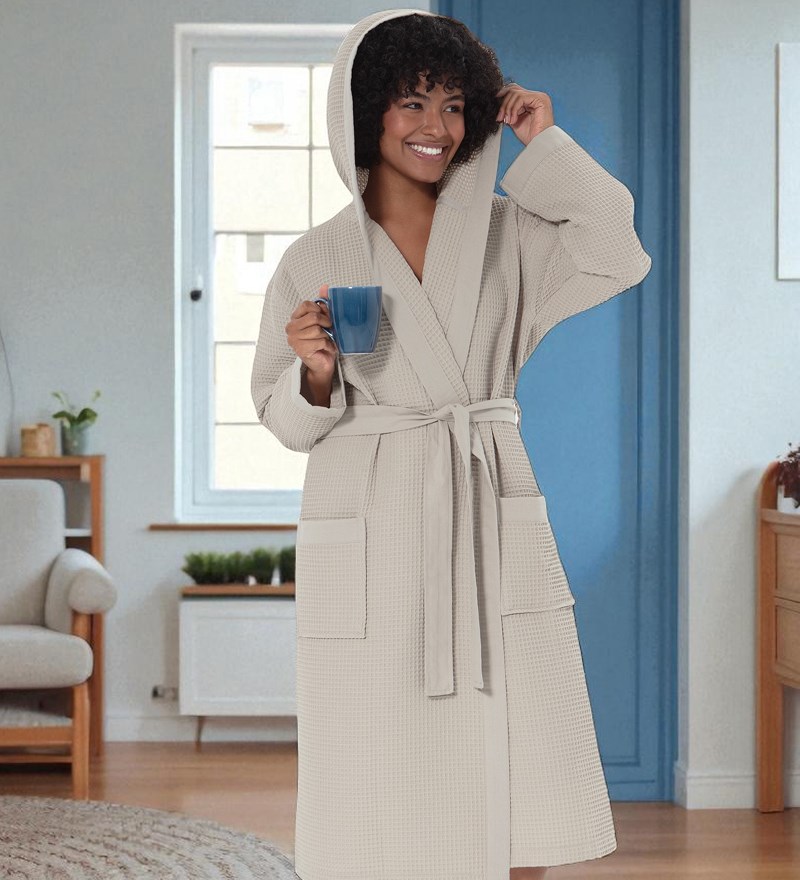
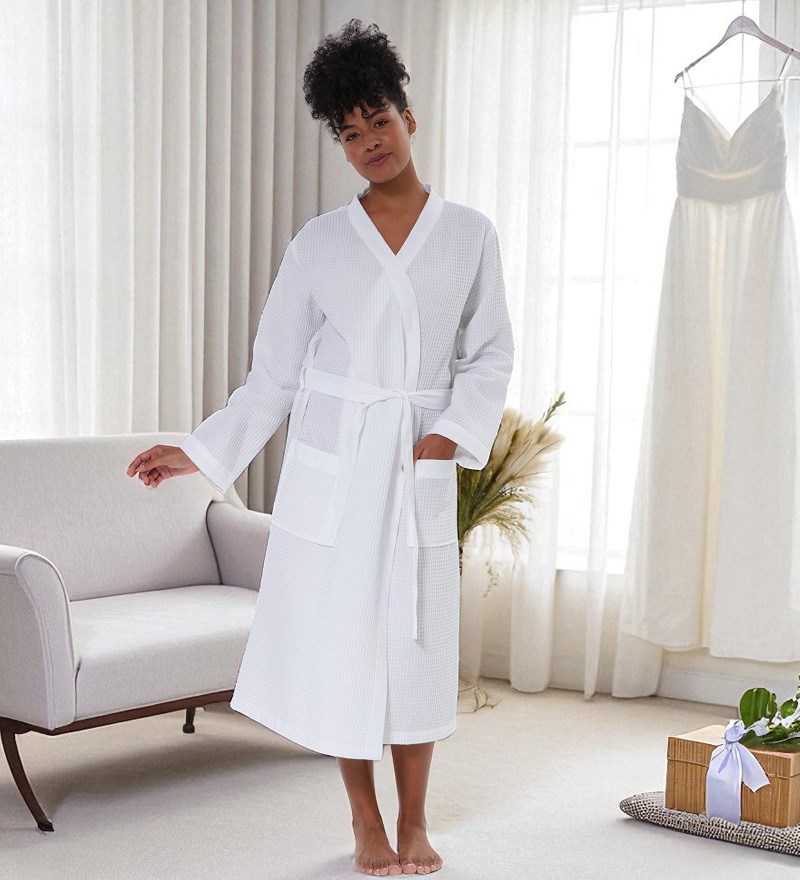
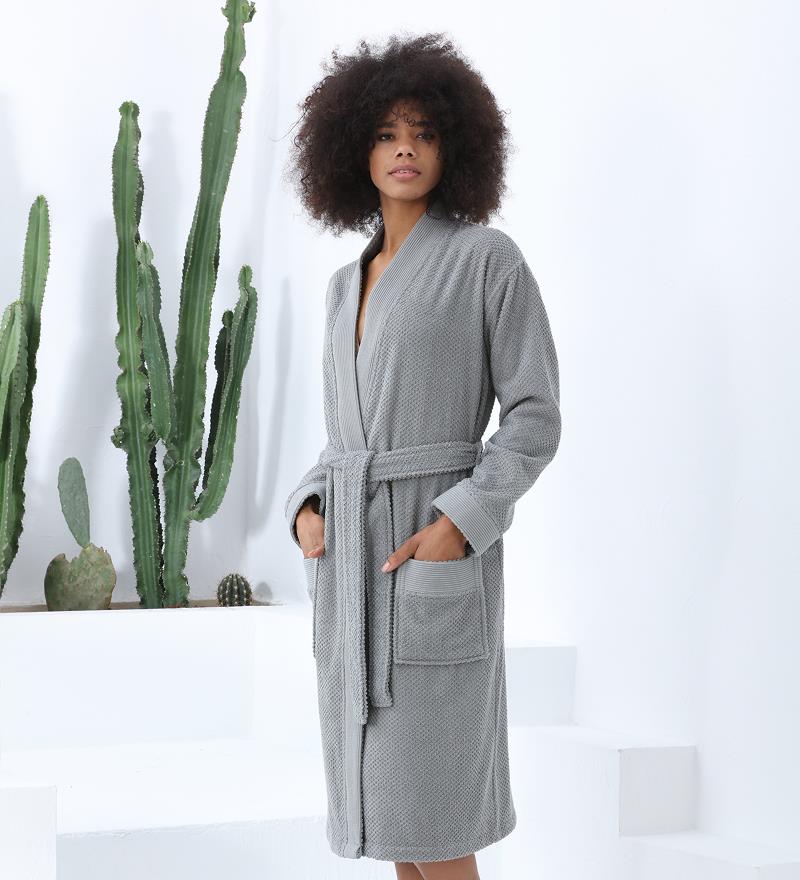
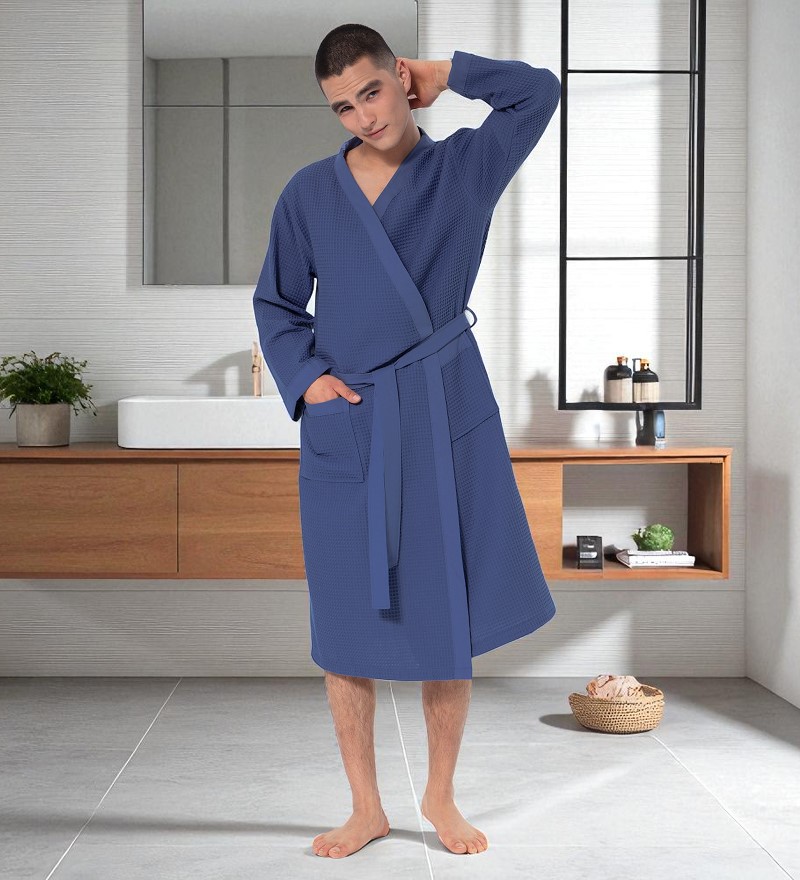
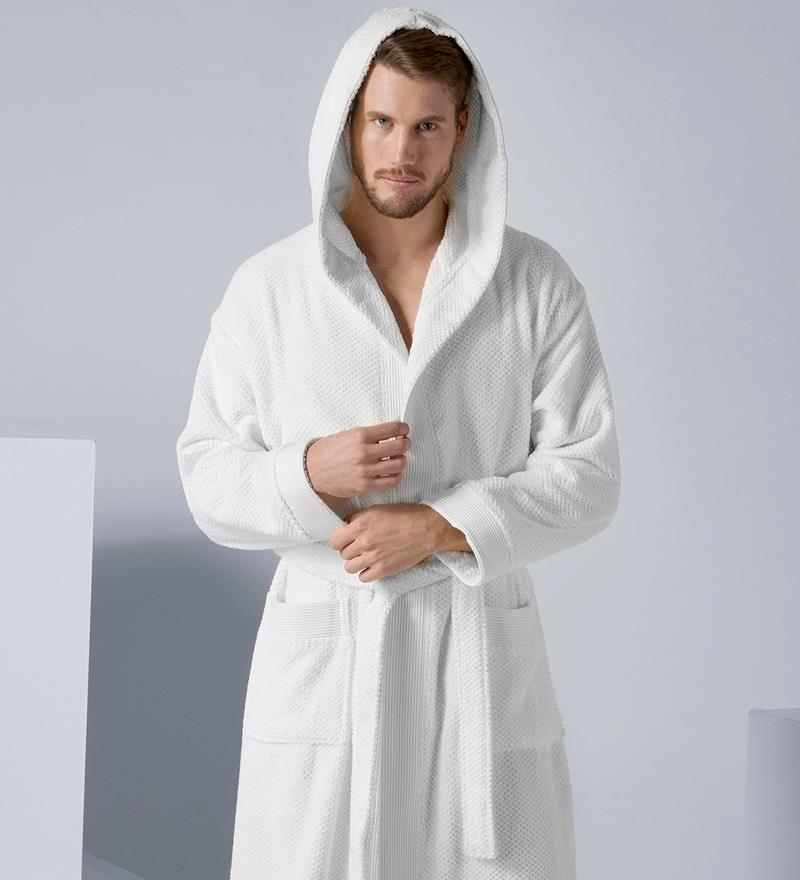
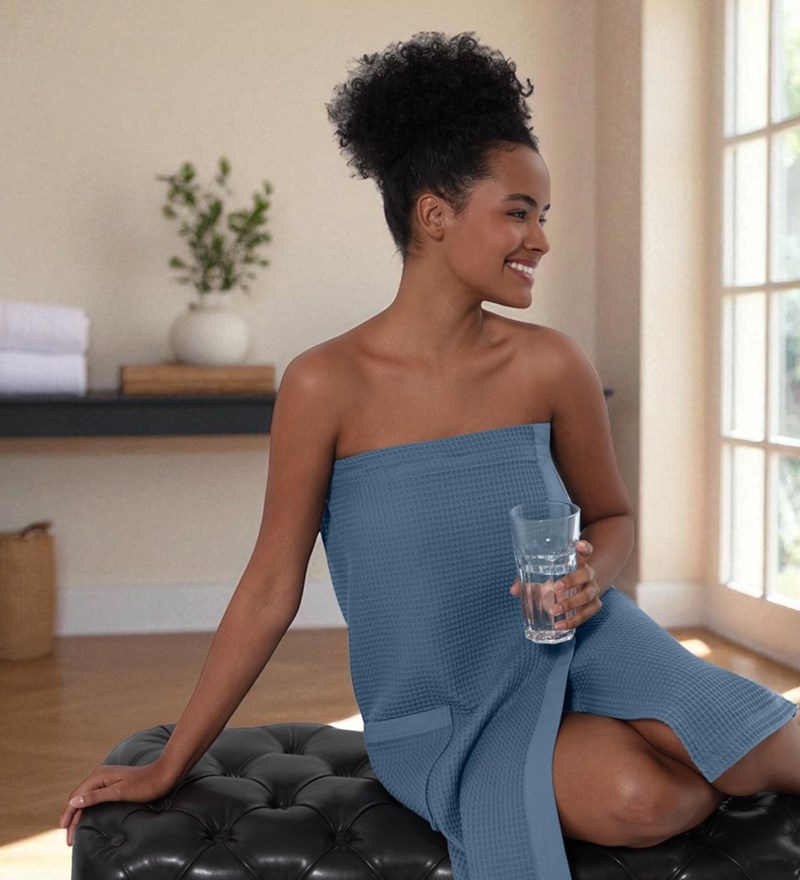


- Waffle Robes
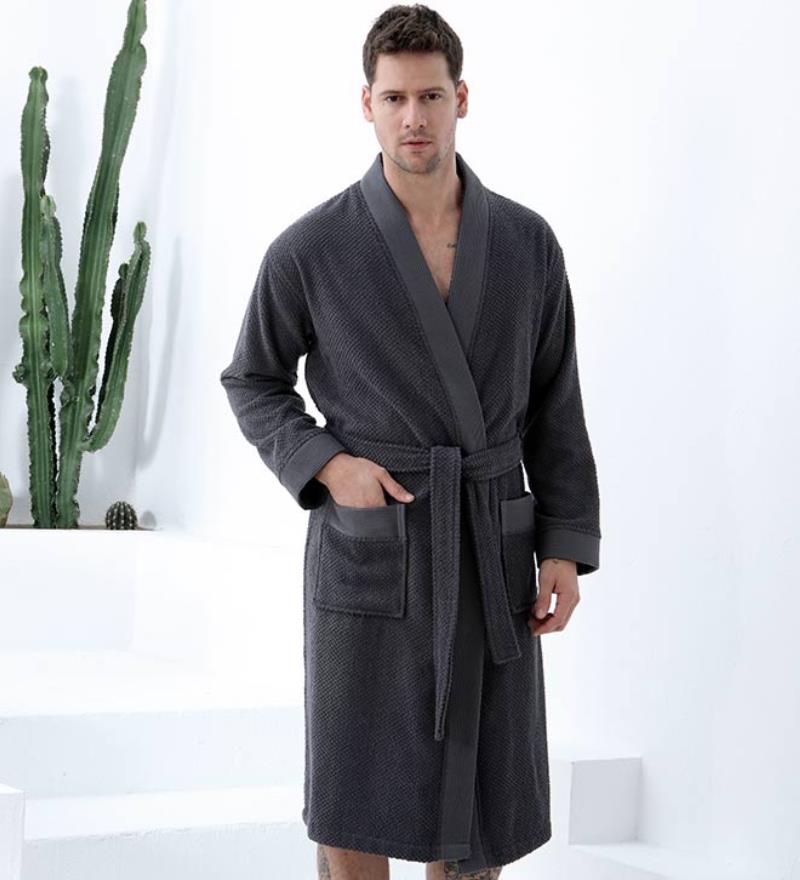
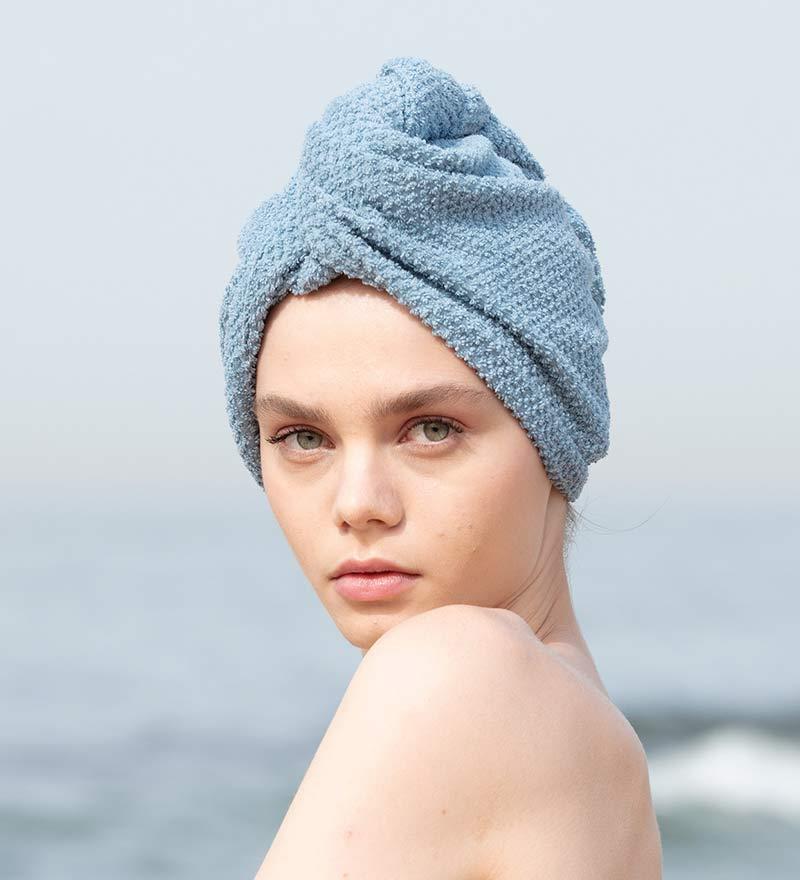
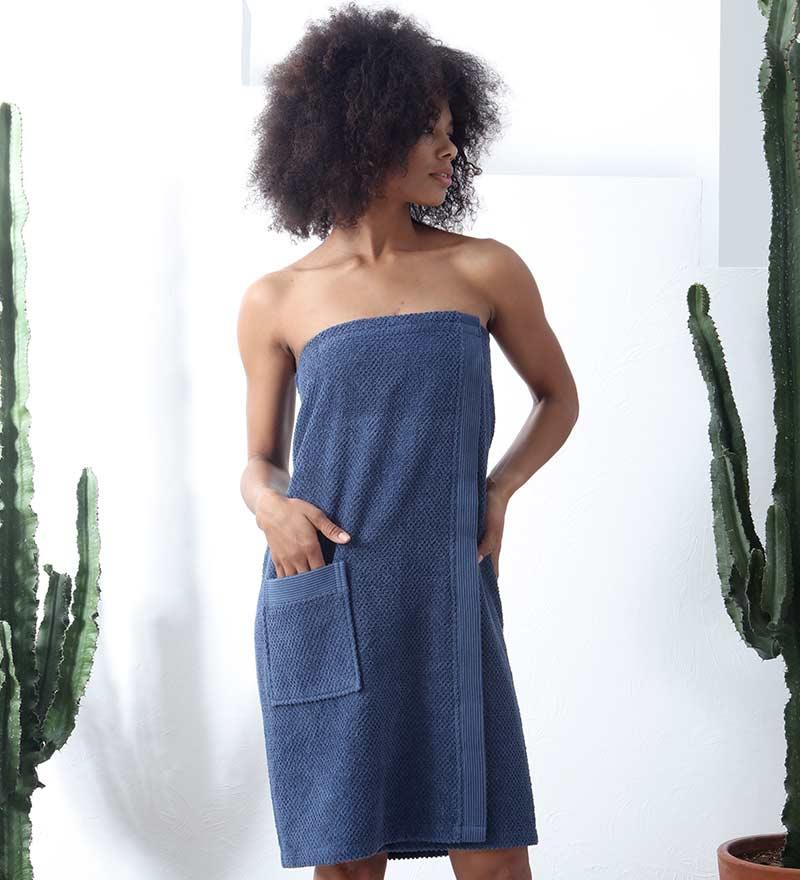
- Terry Cloth Robes
- Microfiber Robes
- Turkish Cotton Robes
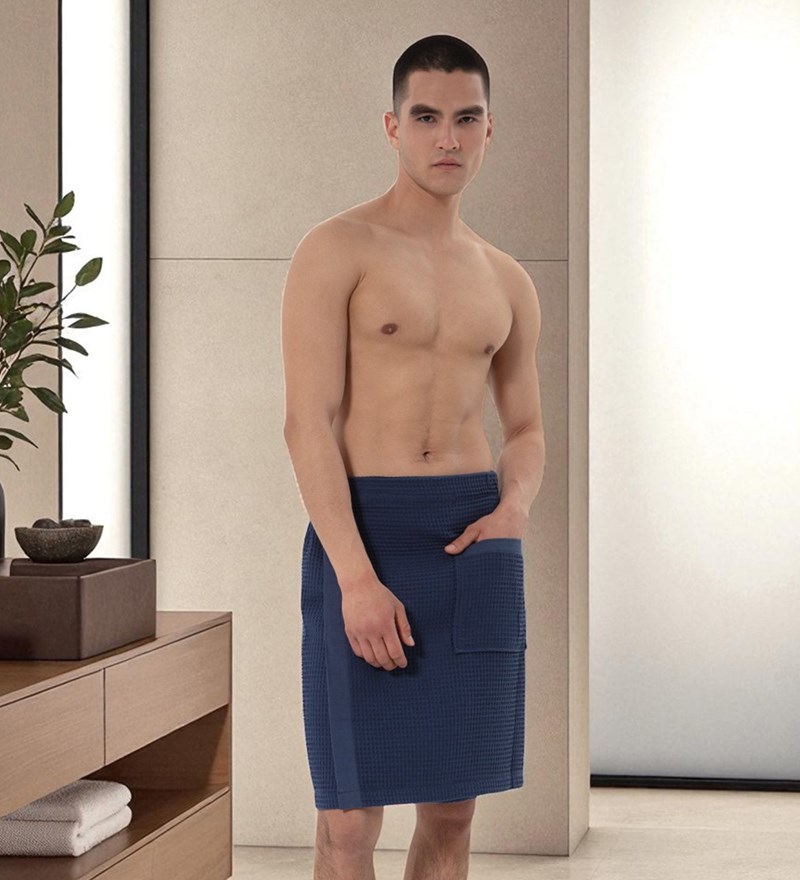
- Towel Robes
- View All Robes by Material
Best Robe Material: A Guide to Ultimate Comfort in 2026 - Seyante
You're probably standing in front of two tempting options right now. One robe feels plush and heavy. Another feels light and airy. A third looks elegant enough for a boutique hotel suite. They all seem soft for the first ten seconds, which is exactly why so many people choose the wrong one.
The best robe material isn't the one that feels nicest on a hanger. It's the one that manages heat, moisture, and weight in a way that matches how you live. A robe that feels indulgent after a shower can become clammy within minutes if it traps too much heat. A robe that dries quickly can still feel uncomfortable if it holds warmth too close to the skin.
That difference matters more than most brands admit. A 2024 Textile Institute finding on microfiber and cotton waffle thermal performance noted that microfiber dries faster, but traps 15% more heat than open-knit cotton waffle, which can create discomfort during active recovery. That's the true measure of comfort. Not showroom softness. Functional performance.
Choosing More Than Just a Robe
A robe sits at the center of small daily rituals. You throw it on after a shower, after skincare, after a workout, on slow mornings, and during cold evenings when you want warmth without bulk. That means fabric choice affects far more than appearance.
The wrong material usually fails in one of three ways:
- It stays damp against the body after a bath or shower
- It overheats you when your skin is already warm
- It loses structure after repeated washing and starts feeling limp or rough
A good robe solves all three. It should absorb or move moisture efficiently, regulate temperature rather than suffocate you, and hold its hand feel over time. That's why I don't recommend choosing a robe based on softness alone. Plenty of soft fabrics perform badly once steam, body heat, and regular laundering enter the picture.
Why thermal regulation matters
Absorbency is commonly understood. Fewer think about thermal regulation, which is what separates true comfort from that sticky, overheated feeling you get ten minutes after stepping out of the bath.
A robe can be:
- Absorbent but too insulating
- Lightweight but not very thirsty
- Smooth and elegant but less suited to post-shower use
- Warm and quick-drying but poor at releasing heat
Practical rule: If your main use is post-bath, prioritize moisture absorption and evaporation. If your main use is lounging, prioritize breathability and temperature balance.
That's why cotton terry, waffle weave, silk, and microfiber all serve different purposes. None is universally perfect. But one will be right for your routine.
What discerning buyers should look for
If you want a robe that feels expensive for more than a month, pay attention to function first.
Focus on these factors:
- Absorbency: How well the fabric takes in water after bathing
- Breathability: How easily heat and moisture escape
- Drying behavior: Whether the robe releases moisture or stays heavy
- Fabric density and structure: Especially important in terry and waffle weaves
- Long-term resilience: Whether repeated washing changes softness, loft, and surface feel
If you judge materials through that lens, the decision gets much easier.
Robe Materials at a Glance

Here's the quick answer most shoppers need before diving deeper.
| Material | Absorbency | Warmth | Breathability | Best use case |
|---|---|---|---|---|
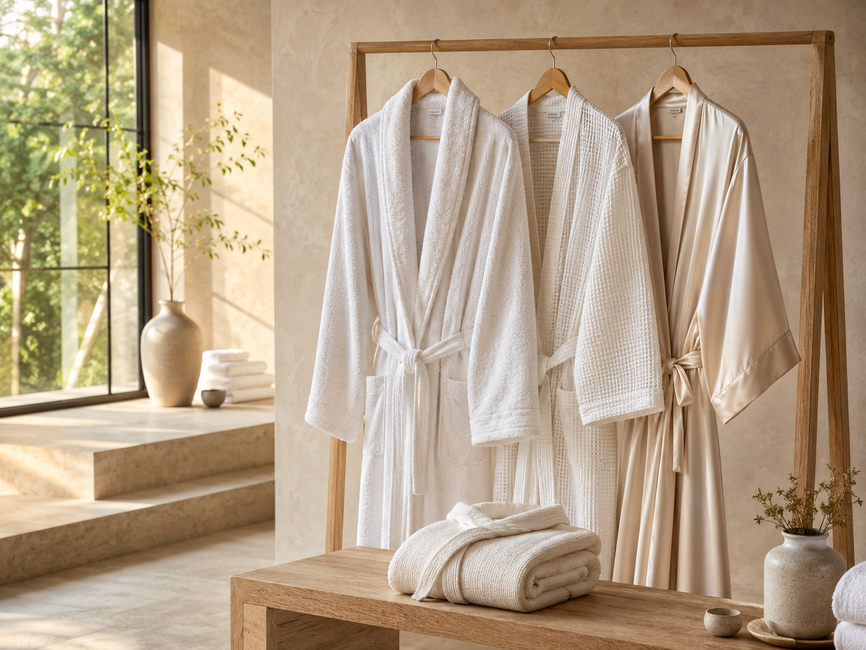
| Turkish cotton terry | High | Moderate to high | Moderate | Post-shower, spa feel, hotel-style comfort |
| Cotton waffle | Moderate | Light | High | Warm climates, daily lounging, travel |
| Silk | Moderate moisture handling with a dry touch | Balanced | High | Sensitive skin, elegant lounging, evening wear |
| Microfiber | Fast initial uptake but can retain moisture feel differently | High | Lower than open-knit cotton | Cold-weather use, quick dry convenience |
That chart gives you the broad answer. The finer choice depends on what kind of comfort you want.
For readers who also care about breathability in everyday clothing, this guide to choosing breathable dress materials is useful because the same principles apply. Airflow, moisture release, and thermal balance matter just as much in robes as they do in summer garments.
What these performance terms actually mean
Absorbency isn't the same as wicking. An absorbent robe behaves more like a towel. It pulls water into the fabric. That's ideal right after a shower.
Breathability is about airflow and heat release. A breathable robe helps you feel settled instead of steamed. That's why waffle weave often feels better in warm apartments or after a hot rinse.
Warmth depends on fiber and structure. Lofty fabrics trap air, which can feel cozy or oppressive depending on your body temperature.
The quickest recommendation
If you want immediate guidance, use this:
- Choose Turkish cotton terry if your robe is part towel, part comfort layer.
- Choose cotton waffle if you run warm or want something easy to wear all day.
- Choose silk if skin feel and elegant temperature balance matter more than bath-level absorbency.
- Choose microfiber only if warmth and quick drying matter more than airflow.
If you're comparing the two cotton classics specifically, this breakdown of waffle vs terry cloth robes for daily use is worth reading because the weave changes the entire wearing experience.
A Deep Dive Into Cotton Robes
You step out of a hot shower, your skin is still damp, and the robe decides whether you feel restored or overheated. Cotton earns its place because it can do both jobs well. It can absorb real moisture after bathing, and it can release excess heat fast enough to stay comfortable once you're dry. The result depends less on the word cotton and more on the weave, weight, and finish.

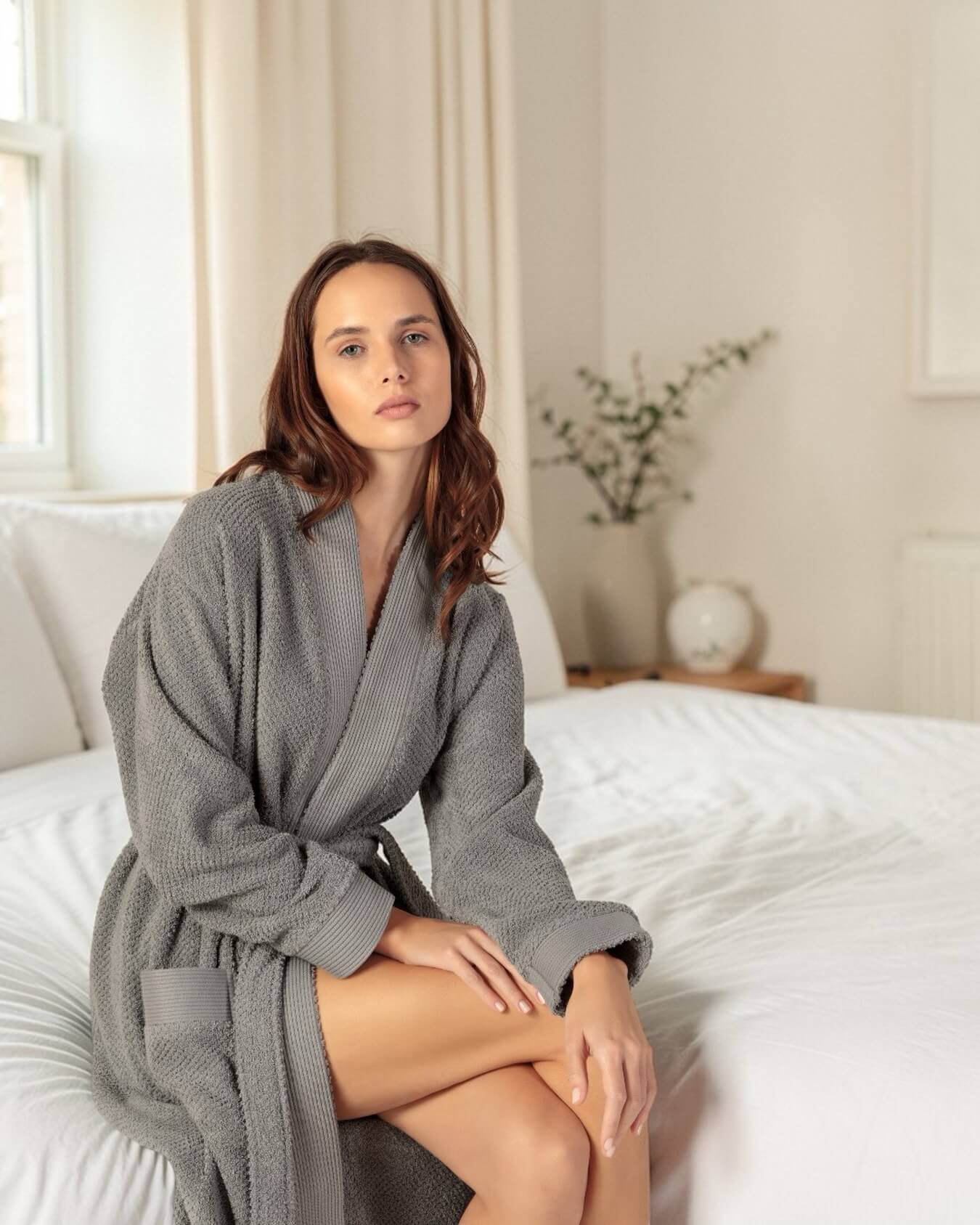
Turkish cotton terry
If you want your robe to function like a refined bath towel, choose Turkish cotton terry.
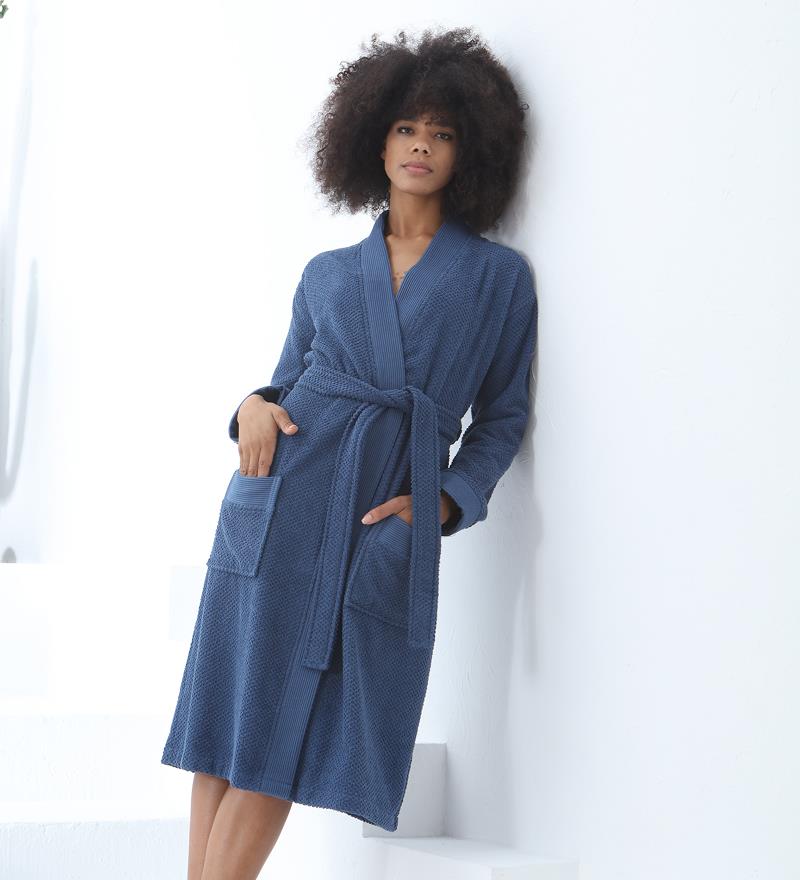
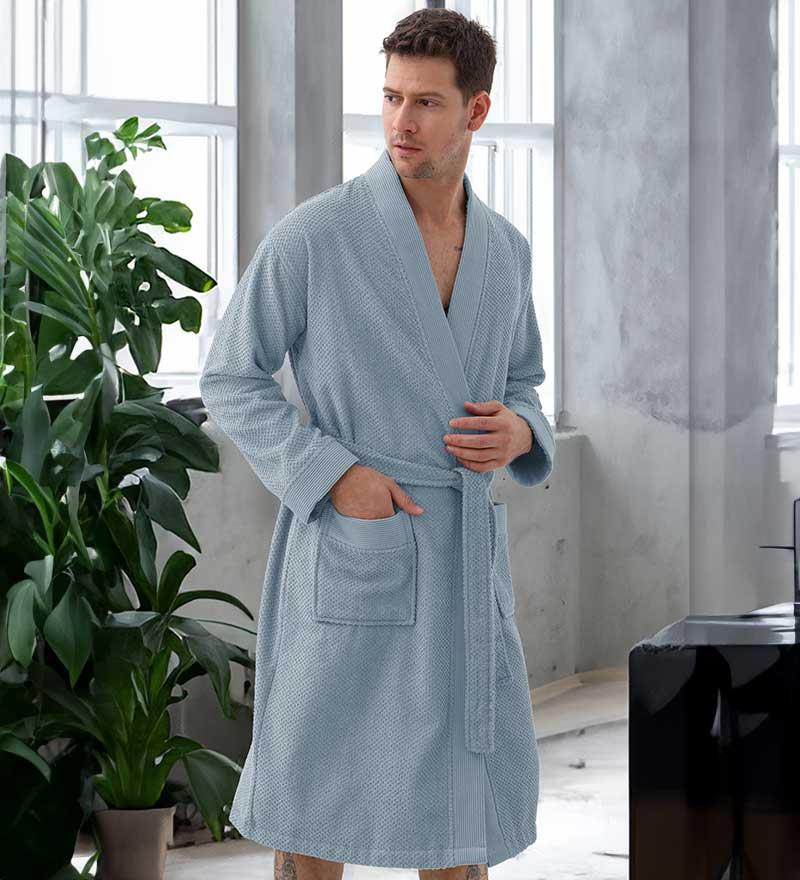
The long staple fibers used in quality Turkish cotton produce smoother, stronger yarns. In a terry construction, those yarns form loops that increase surface area, which helps the fabric pull water off the skin instead of trapping it against you. Premium terry robes often sit in the 450 to 550 GSM range. That is the sweet spot for a robe that feels substantial, absorbent, and polished rather than floppy or suffocating.
According to textile engineering benchmarks for Turkish terry durability and GSM, premium Turkish terry shows stronger tensile performance than microfiber and holds up better through repeated washing.
You notice that in use. The robe keeps its shape. The shawl collar stays full. The pile still feels rich instead of flattened and tired.
Why terry performs after a bath
Terry is built to absorb. The looped pile grabs moisture quickly, which makes the robe useful in the first ten minutes after a shower, not just pleasant once you are already dry.
Choose Turkish terry if you want:
- A robe that dries you off
- A denser, hotel-style hand feel
- More insulation for cool mornings
- A robe with structure that lasts
A good terry robe should feel cocooning and breathable at the same time. If it stays wet for too long or turns heavy on the body, the construction is wrong.
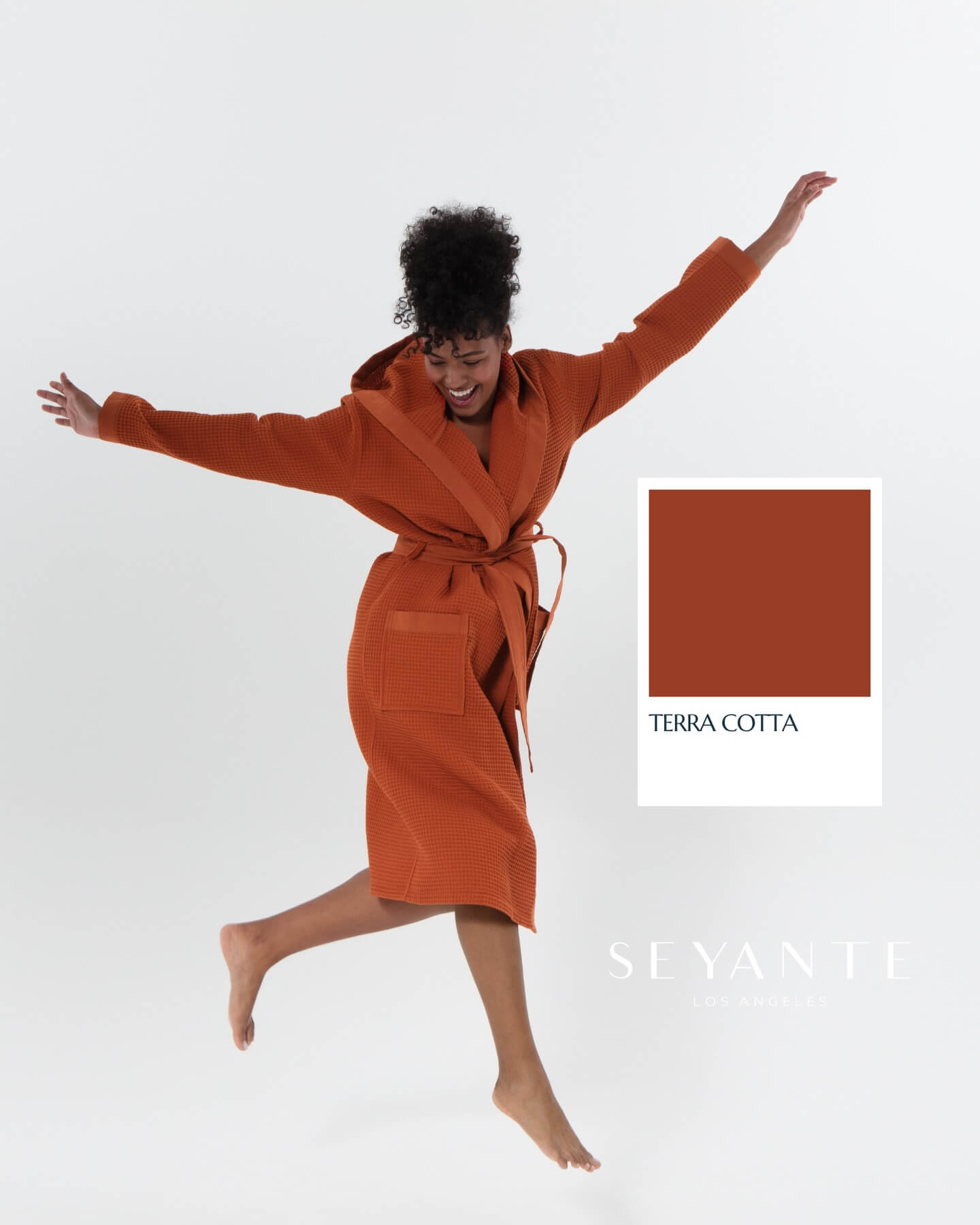
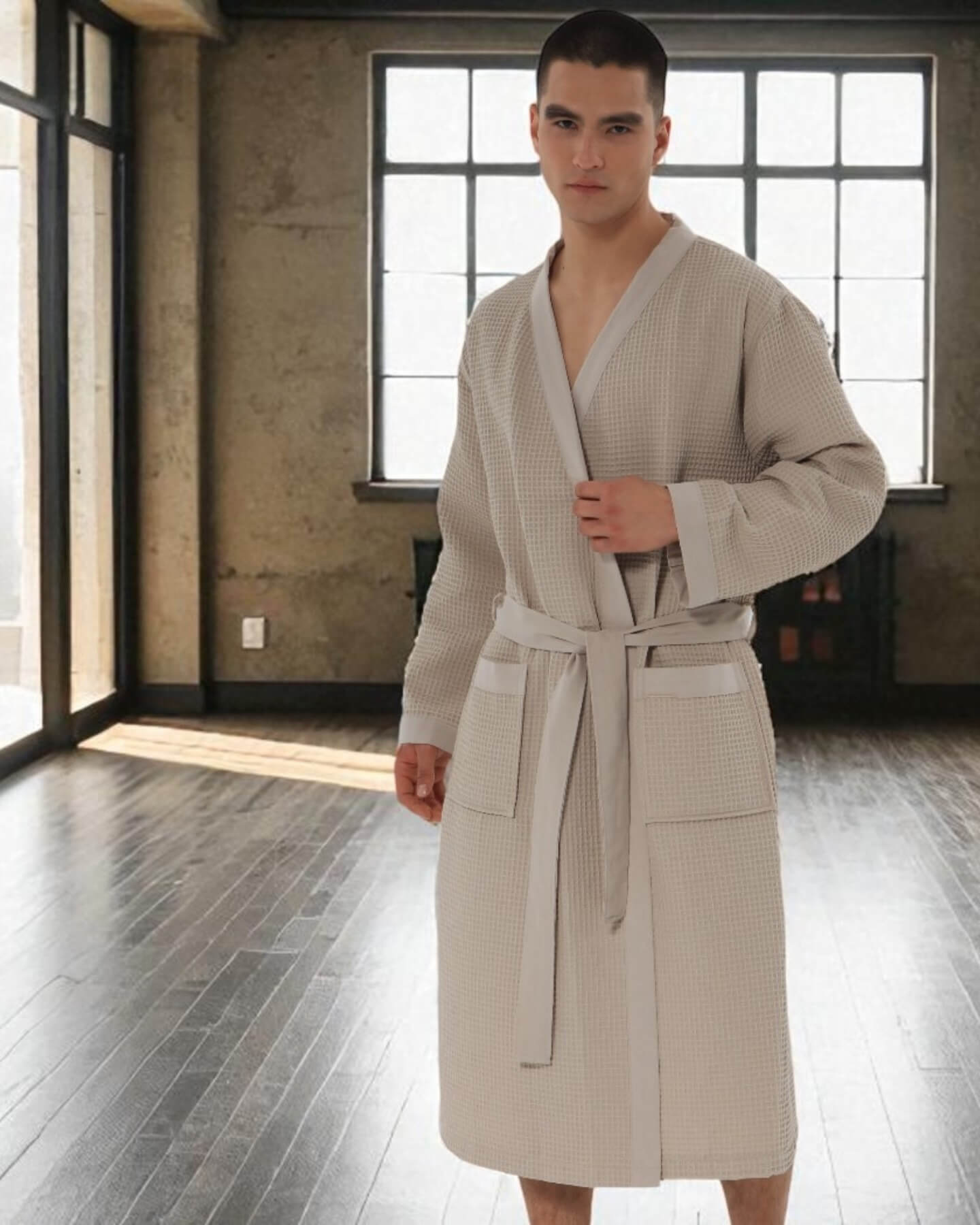
Cotton waffle weave
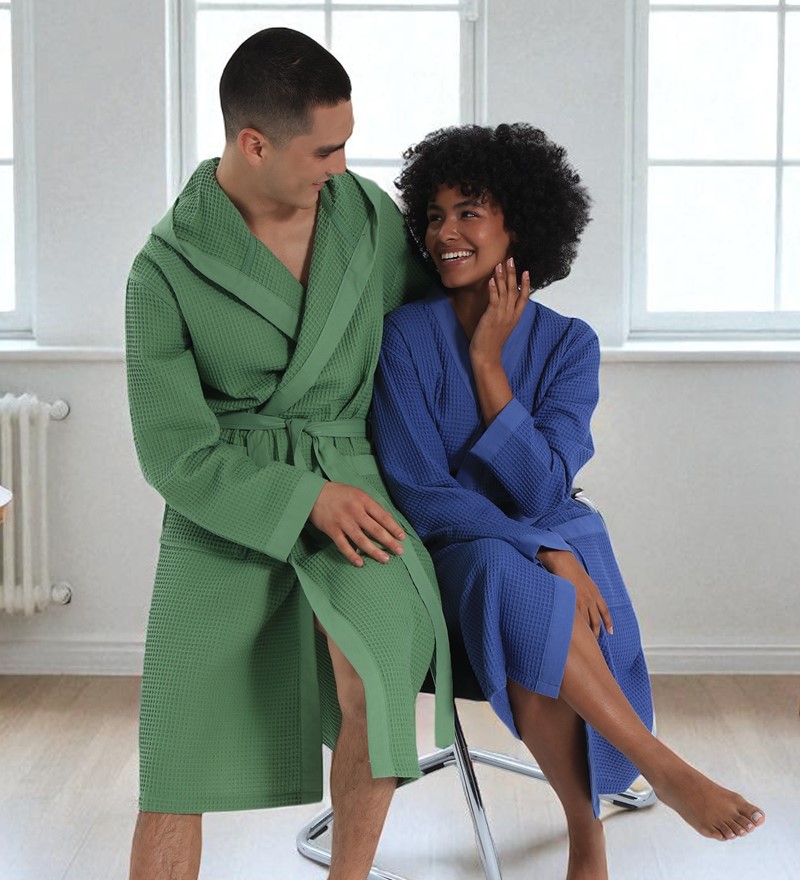
Waffle cotton serves a different purpose. It manages heat better and dries faster, which makes it the smarter everyday robe for many homes.
The recessed grid pattern creates pockets that improve airflow and reduce cling. Because waffle robes are usually lighter in GSM than terry, they feel easier on the body and recover faster after washing. That matters if your bathroom runs warm, your apartment holds heat, or you want a robe you can wear through a full morning without feeling insulated like bedding.
Where waffle earns its place
Waffle is the better cotton choice when comfort depends on moisture release, not maximum absorbency.
It works especially well for:
- Warm climates and heated interiors
- Post-shower wear when you dislike heavy fabric
- Morning coffee, skincare, and getting ready
- Travel, because it packs flatter and dries faster
It also looks cleaner and more refined than terry. The texture reads crisp and intentional rather than plush.
Organic cotton
Organic cotton is a fiber choice, not a robe style. You can get the same practical benefits in organic terry or organic waffle. The primary question is what kind of comfort you want against your skin and how hard you plan to be on the robe.
For personal use, organic cotton is an excellent choice for people with sensitive skin or anyone who wants a more carefully sourced fabric. For a clearer breakdown, read this guide on organic cotton versus conventional cotton for robes.
For home buyers, my advice is simple. Choose organic cotton for skin feel and fiber standards. Choose the weave based on temperature and moisture needs.
My cotton verdict
Here is the direct recommendation:
- Choose Turkish cotton terry if your robe needs to absorb water well and feel richly substantial.
- Choose cotton waffle if you care more about airflow, quicker drying, and lighter all-day wear.
- Choose organic cotton if fiber standards and skin sensitivity matter to you, then pick terry or waffle based on how warm you run.
Cotton stays the benchmark because it gives you real options. Pick the structure that matches how you live, not just the one that feels soft in your hand for five seconds.
Exploring Other Luxury and Synthetic Options
Cotton isn't the whole story. Some people want a robe that feels cooler, sleeker, or more decorative. Others need extra warmth and don't mind a synthetic feel. Those goals can make silk or microfiber the better fit.
Silk
Silk is the most elegant option in this category, and it performs better than many people expect. High-grade mulberry silk isn't only about drape and sheen. It's also excellent at keeping the body comfortable without that wet, clingy sensation some lighter fabrics create. According to global silk and dermatological data on mulberry silk performance, 100% natural mulberry silk maintains body temperature at approximately 32°C (90°F), is 30% more breathable than cotton, and can absorb up to 35% of its weight in moisture without feeling damp.
That combination makes silk especially compelling if your skin is reactive or if you tend to overheat while lounging or sleeping.
When silk is the right call
Silk is excellent for:
- Sensitive skin
- Elegant evening wear
- Warm-to-moderate indoor climates
- People who dislike bulky fabrics
Silk is not the robe I'd choose if you want towel-level absorbency after a bath. It's a refinement fabric, not a utility bath fabric.
If you want your robe to feel cool, smooth, and polished on bare skin, silk is hard to beat.
Bamboo and modal style options
Plant-based rayons such as bamboo-derived viscose and modal appeal to buyers who want drape somewhere between cotton and silk. They usually feel fluid, soft, and less structured than terry or waffle.
I'd place them in the comfort-lounge category. They can be pleasant for quiet mornings, travel, or layering over sleepwear. But they usually don't deliver the same post-shower authority as terry, and they rarely offer the crisp airflow of waffle.
Microfiber and fleece
Microfiber has strengths. It can feel soft immediately, it dries quickly, and it insulates well. If you live in a cold climate and want a robe mainly for warmth, that appeal is obvious.
The drawback is comfort under heat load. Microfiber can hold warmth too close to the body, and it raises practical questions around long-term wear feel and fiber shedding. If you're robe-shopping for winter only, it has a place. If you're shopping for year-round comfort, I'd be cautious.
For readers curious about more fashion-forward cold-weather textures, you can explore luxury faux fur robes to understand how pile, loft, and visual drama change the experience. Just keep in mind that dramatic warmth and balanced thermoregulation aren't the same thing.
Matching the Material to Your Lifestyle
You step out of the shower, put on a robe that feels plush for five minutes, and then start overheating. That is a material mismatch. The best robe for your life is the one that handles moisture and body heat the way you need it to.

For post-shower comfort
Choose Turkish cotton terry.
This is the right fabric if you put your robe on while your skin is still damp and want it to do real work. Terry absorbs surface moisture, adds a cocooning feel, and keeps that just-bathed comfort from turning cold or sticky. If you want the robe equivalent of a spa towel with sleeves, this is the one to buy.
For warm apartments and everyday lounging
Choose cotton waffle.
Waffle works for people who run warm, wear a robe for longer stretches, or want coverage without heat buildup. The grid texture leaves more air space against the skin, so the robe feels lighter and dries faster after use. You get comfort without that heavy, humid feeling dense pile fabrics can create.
For sensitive skin or a lighter luxury feel
Choose based on function, not just hand feel.
Pick silk if you want a smooth robe for calm mornings, low-moisture wear, and a polished look on bare skin. Pick organic cotton if you want a more practical daily robe with a natural feel and better bath-to-lounge versatility. For post-bath use, organic terry is the stronger choice. For reading, coffee, and slow evenings at home, organic waffle usually wears better.
For travel and packing
Pack waffle.
A travel robe should fold small, dry quickly, and recover easily after repeated use. Waffle checks all three boxes. It is the robe I recommend for weekend trips, guest spaces, and warm-weather stays where bulk becomes a nuisance fast.
For hospitality buyers
Commercial use changes the standard.
Guests notice softness first. Operations teams deal with drying time, laundering stress, visual wear, and replacement frequency. For high-turnover settings, premium Turkish terry is the smarter primary bathrobe because it gives immediate substance and handles wet-use expectations well. Waffle also earns a place in warmer climates, in-room layering, and spa settings where quicker drying and easier storage matter.
If your team is comparing options for home or property use, this guide to washing, storing, and caring for your robe will help you connect fabric choice to maintenance reality.
Choose the robe that matches how you live. A good one should regulate warmth, manage moisture, and still feel right an hour later.
How to Care for Your Robe to Ensure Longevity
A premium robe can age beautifully, but only if you treat the fabric according to its structure. Good care protects absorbency, hand feel, and shape.
Caring for cotton terry and waffle
Cotton likes consistent, sensible laundering. Don't overload the wash. Give the fabric enough room to rinse cleanly, especially terry, which can hold detergent if packed too tightly.
Use these habits:
- Wash gently: Stronger cycles create unnecessary friction on loops and texture.
- Skip heavy buildup: Product residue can flatten absorbency and make the robe feel stiff.
- Dry with restraint: Overdrying can roughen the surface over time.
Waffle benefits from being reshaped after washing so the texture stays neat. Terry benefits from proper airflow in the dryer so the pile lifts rather than mats.
Caring for silk
Silk needs a calmer approach. Treat it as a fine textile, not a bath towel. Gentle washing, careful drying, and minimal abrasion preserve its smooth surface and natural drape.
If you want detailed maintenance steps by fabric type, this robe care guide on washing, storing, and caring for your robe is a useful reference.
Store robes where air can circulate. A robe that never fully breathes between wears won't feel fresh, no matter how expensive the fabric is.
Caring for microfiber
Microfiber is easy in some ways, but it benefits from a lighter touch than many people assume. High heat and rough washing can worsen pilling and static. If you choose microfiber for warmth, keep the laundering smooth and moderate so the surface stays pleasant.
Find Your Perfect SEYANTE Robe
If you've read this far, your decision should be clearer.
If you want plush absorbency and a spa-grade post-shower feel, look for a Turkish cotton terry robe with a substantial hand and clean finishing. If your priority is lightweight breathability, choose a waffle weave. If you're shopping for sensitive skin, maternity comfort, or a more considered fiber story, organic cotton is a sensible route. If your robe is more about elegance than bath function, silk remains the refined option.

SEYANTE offers robes in 100% Turkish cotton terry, lightweight waffle weaves, and GOTS-certified organic cotton styles for men and women, including hooded, kimono, hotel-grade, and maternity options. That makes it a practical place to shop when you already know the function you need and want a robe built around that use.
The right robe should feel good on day one. It should still feel right after real use, real laundry, and real mornings.
When you're ready to choose a robe that matches how you bathe, lounge, travel, or host guests, browse SEYANTE for Turkish terry, breathable waffle, and organic cotton options, backed by free standard US shipping and a 90-day return policy.
Related Posts


Related Products
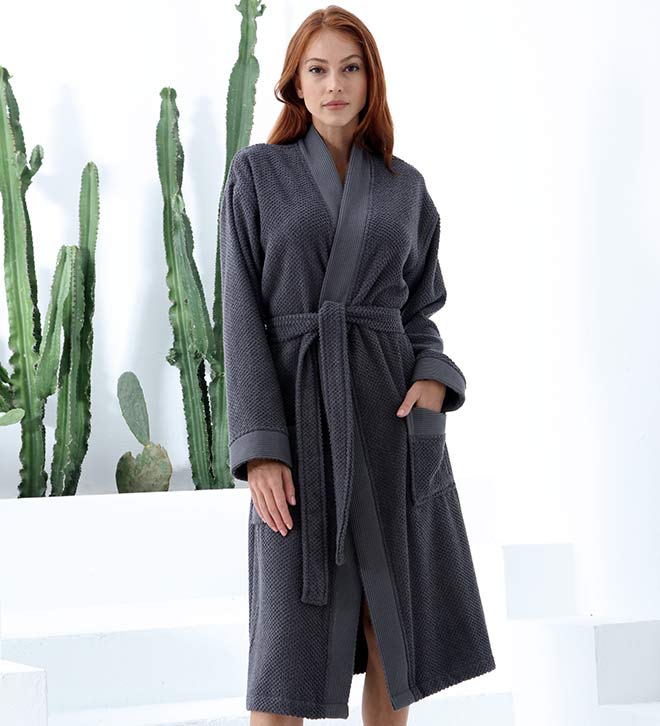

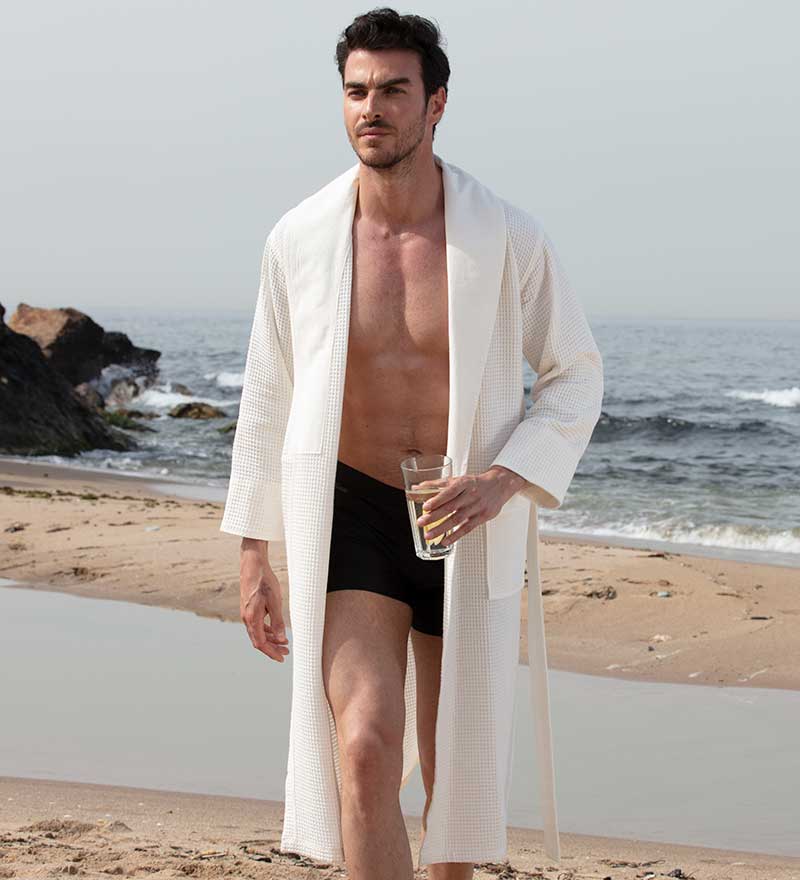

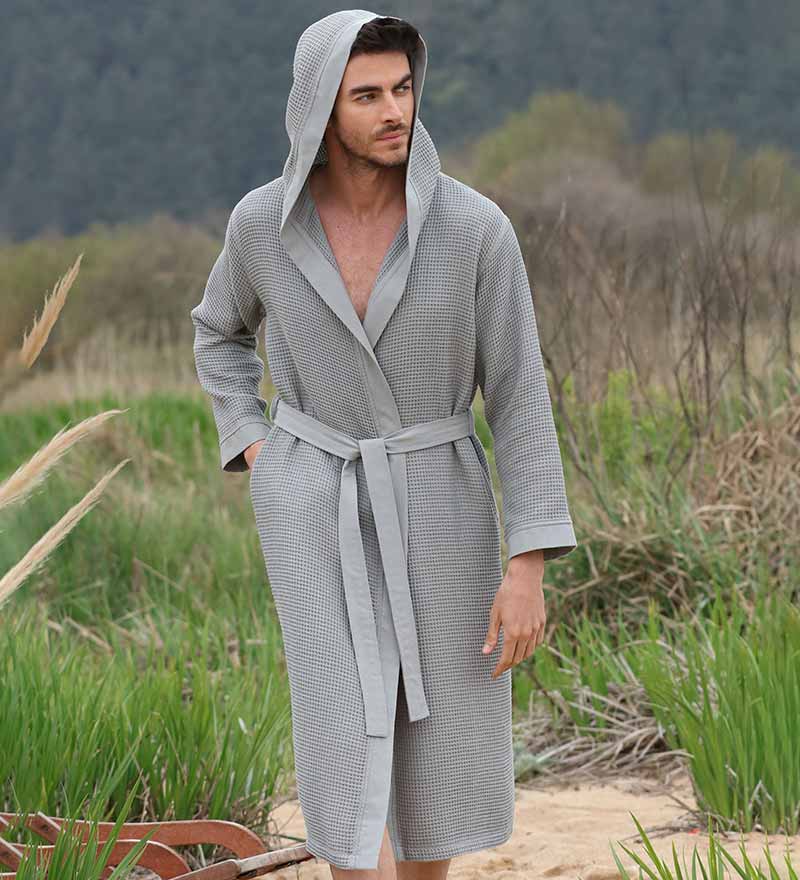

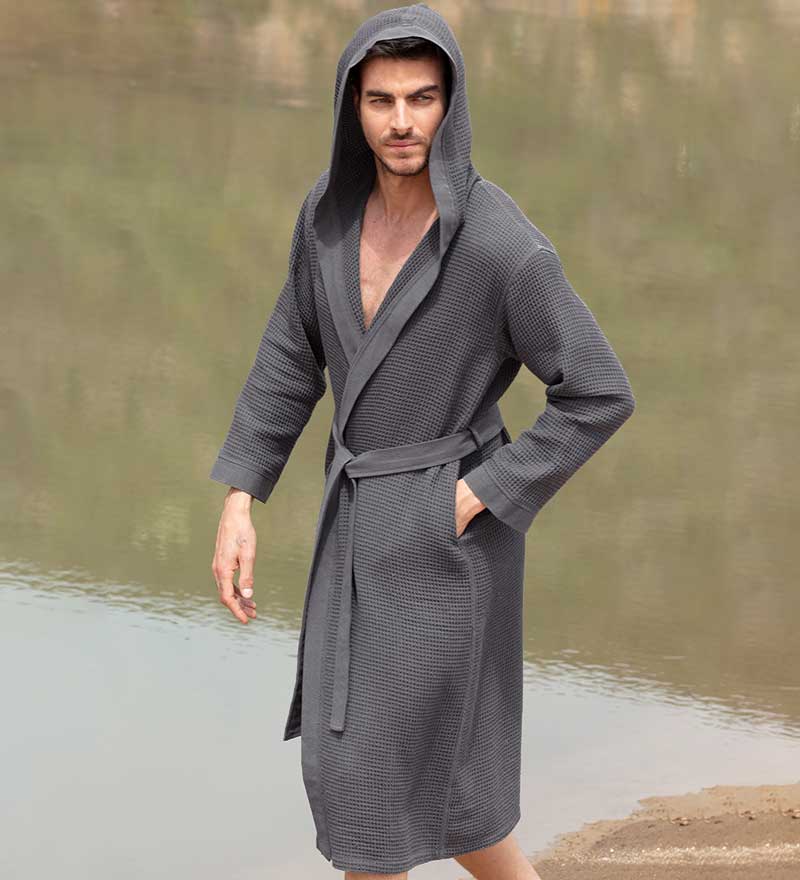

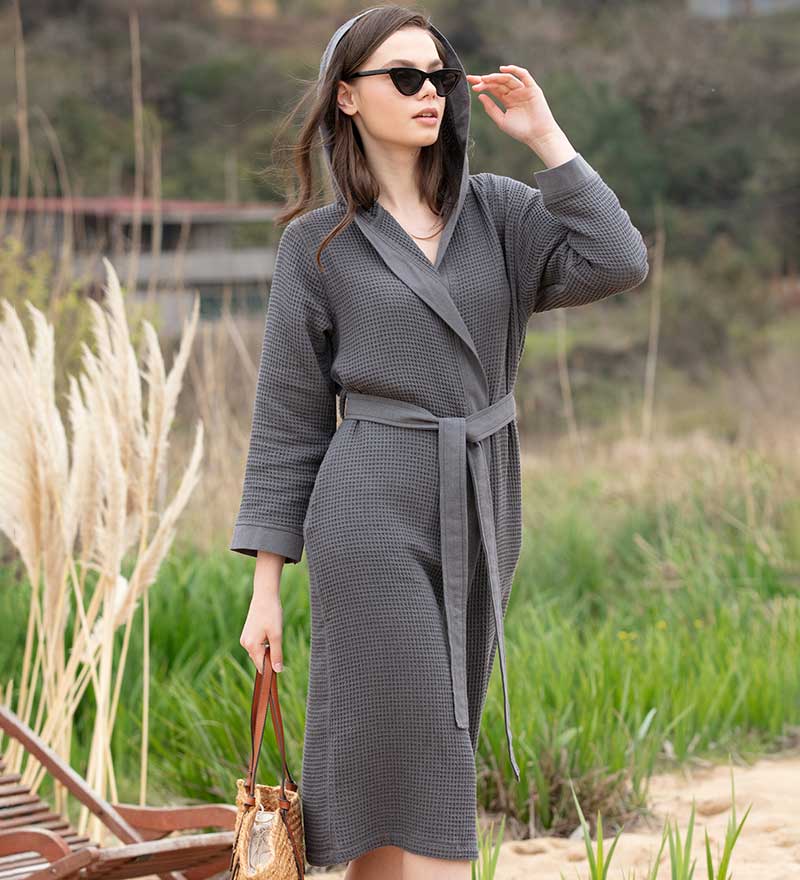
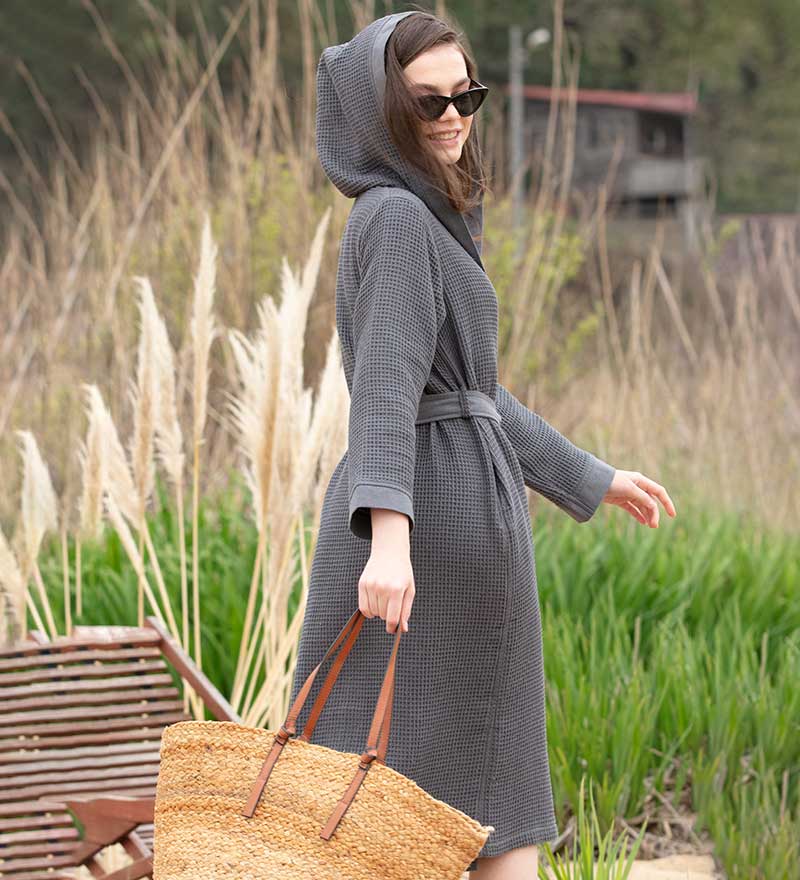
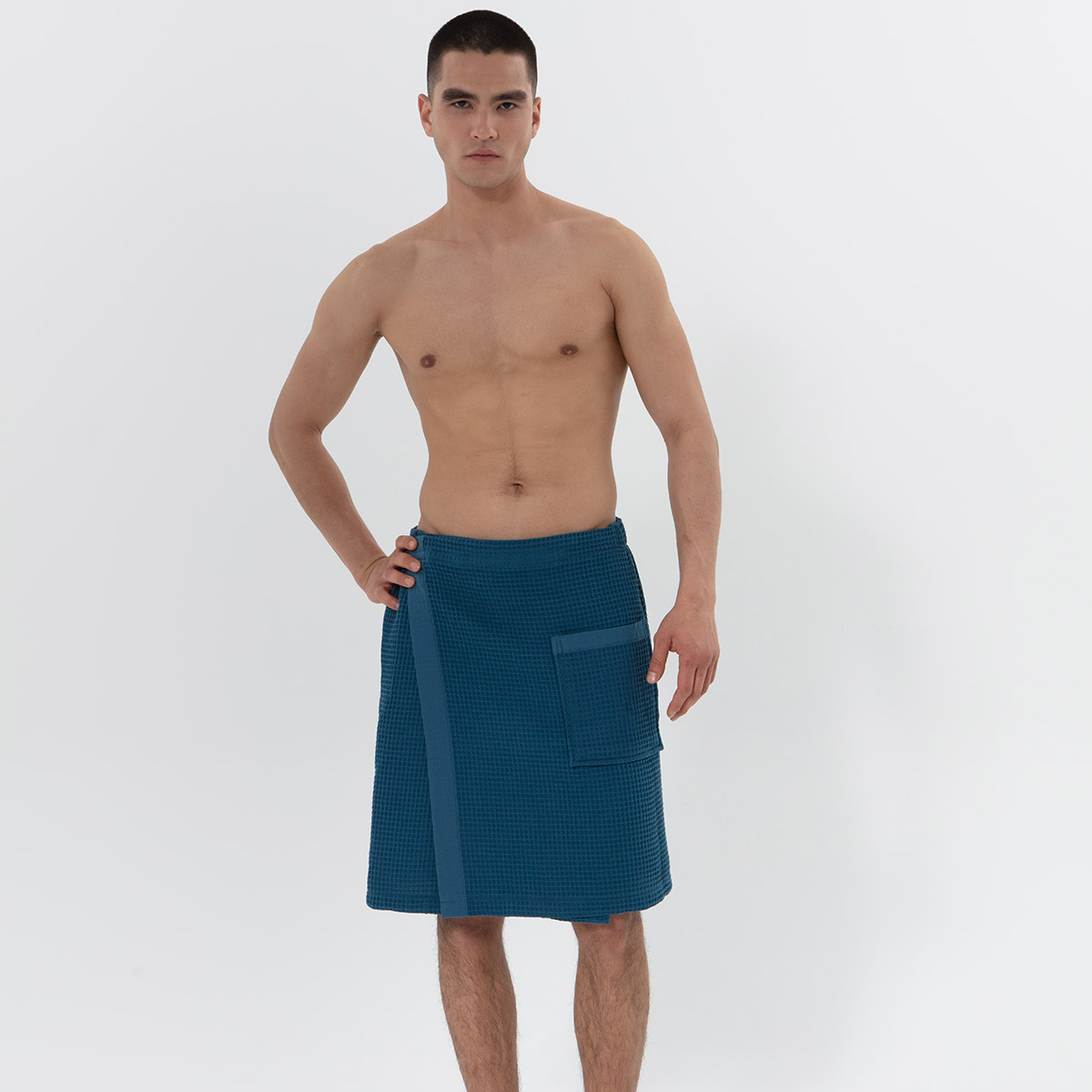

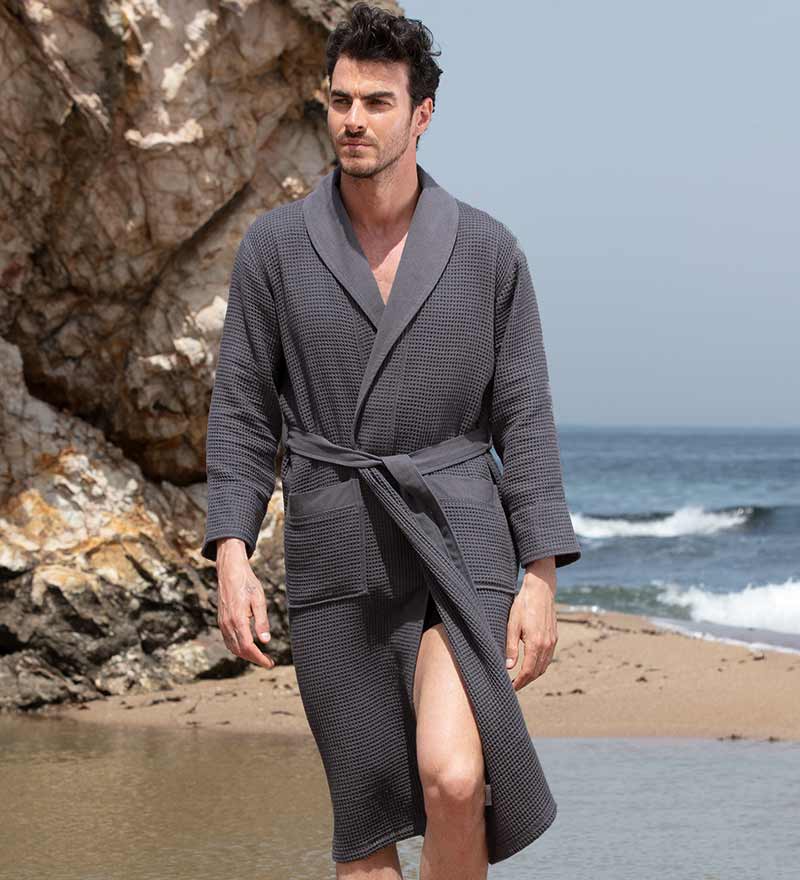

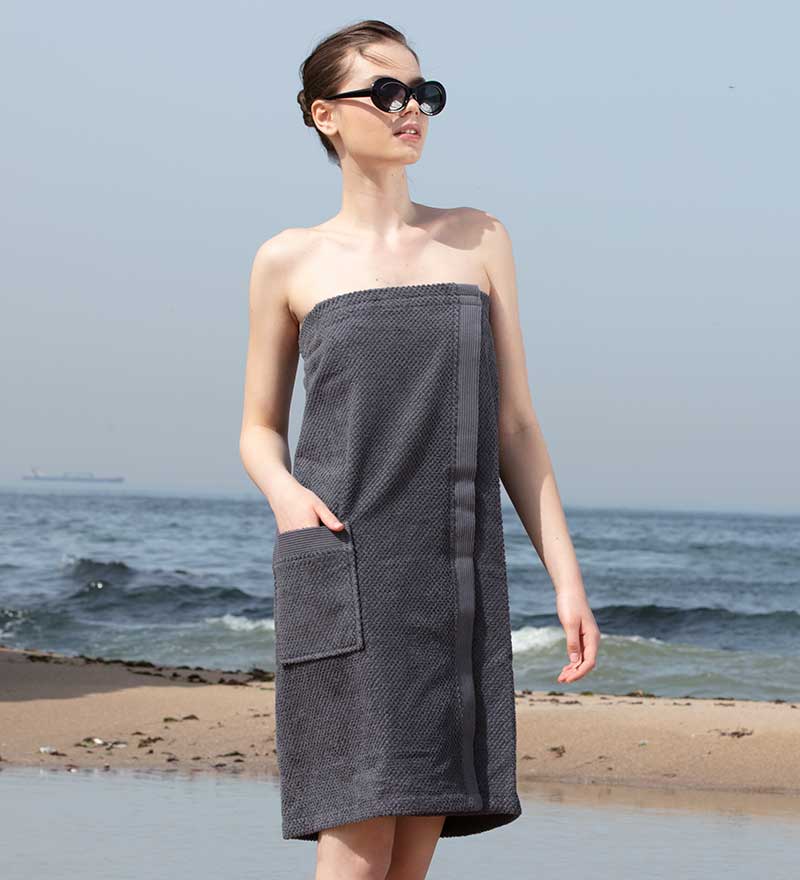


Offering high-quality bathrobes for both women and men with GOTS certification
Our commitment to excellence is reflected in our use of the Global Organic Textile Standard (GOTS) certification for our products. GOTS is a benchmark for organic textiles, ensuring environmentally friendly and socially responsible manufacturing processes.





FREE STANDART DELIVERY
STRESS-FREE SHOPPING
ONLINE CUSTOMER SERVICE