Best Terry Cloth Robes: The Ultimate 2026 Buying Guide
- The Search for the Perfect Post-Shower Embrace
- Understanding Terry Cloth The Science of Softness
- Terry vs Waffle Weave Which Robe Is Right for You
- A Style for Every Ritual Hooded Kimono and More
- Finding Your Perfect Fit and Coverage
- The Hallmarks of a Long-Lasting Terry Robe
- Your Terry Cloth Robe Questions Answered
You step out of the shower, skin still warm, hair damp, and reach for your robe. If what you grab feels thin, clingy, or strangely bad at drying you off, the whole moment falls flat. A robe is supposed to finish the ritual, not interrupt it.
That's why people keep coming back to terry cloth. The right one feels like a soft landing. It takes in moisture, holds warmth without feeling stiff, and turns a rushed routine into something slower and better. If you already care about bath oils, body care, or exfoliation habits, pairing that ritual with the right robe matters just as much. For readers refining the whole post-shower experience, these beautysecrets.agency dry brushing insights fit naturally into the same self-care conversation.
The problem is that most robe guides stop at looks. They sort robes by hooded or kimono, long or short, men's or women's, then call it done. That doesn't help much when you're trying to tell whether a robe will feel plush after washing, whether it will absorb water, or whether it will dry in a reasonable amount of time.
The best terry cloth robes earn their place through performance. You feel it in the density of the loops, the hand of the cotton, the balance between substance and drape, and the way the robe behaves after repeated laundering. A beautiful robe that doesn't hold up is just good packaging.
The Search for the Perfect Post-Shower Embrace
Most robe disappointments are easy to describe. The fabric looks fluffy online but feels flat in person. The robe warms you up but leaves moisture sitting on your skin. Or it absorbs well enough, yet becomes heavy and shapeless after a few washes.
A strong terry robe solves those problems in quiet ways. It pulls water away fast, gives you that cocooned feeling after a bath, and still lets you move around the house without feeling bundled in a blanket. That balance is what shoppers are usually chasing, even if they don't have the technical language for it yet.
What people usually mean by a great robe
When someone says they want a robe that feels “luxurious,” they often mean a mix of practical things:
- Softness against bare skin so it feels comforting right away
- Real absorbency so it can do some of the work of a towel
- Warmth without stiffness so it feels substantial but not bulky
- A shape that stays wearable instead of twisting, sagging, or clinging
Those details matter more than trendy color names or marketing phrases. A robe lives close to the body. You notice every shortcut.
The robe you reach for every day usually isn't the flashiest one. It's the one that feels right within seconds.
Why this category gets confusing fast
Shoppers often compare terry to waffle, organic cotton to Turkish cotton, plushness to breathability, and heavy robes to lighter ones. Then they run into terms like GSM, pile, loop density, and staple length. Those aren't just industry jargon. They help explain why one robe feels like a spa robe and another feels like a costume version of one.
That's where a little textile knowledge helps. Once you understand what makes terry cloth work, you can judge quality for yourself instead of relying on vague words like “premium” or “hotel-inspired.”
Understanding Terry Cloth The Science of Softness
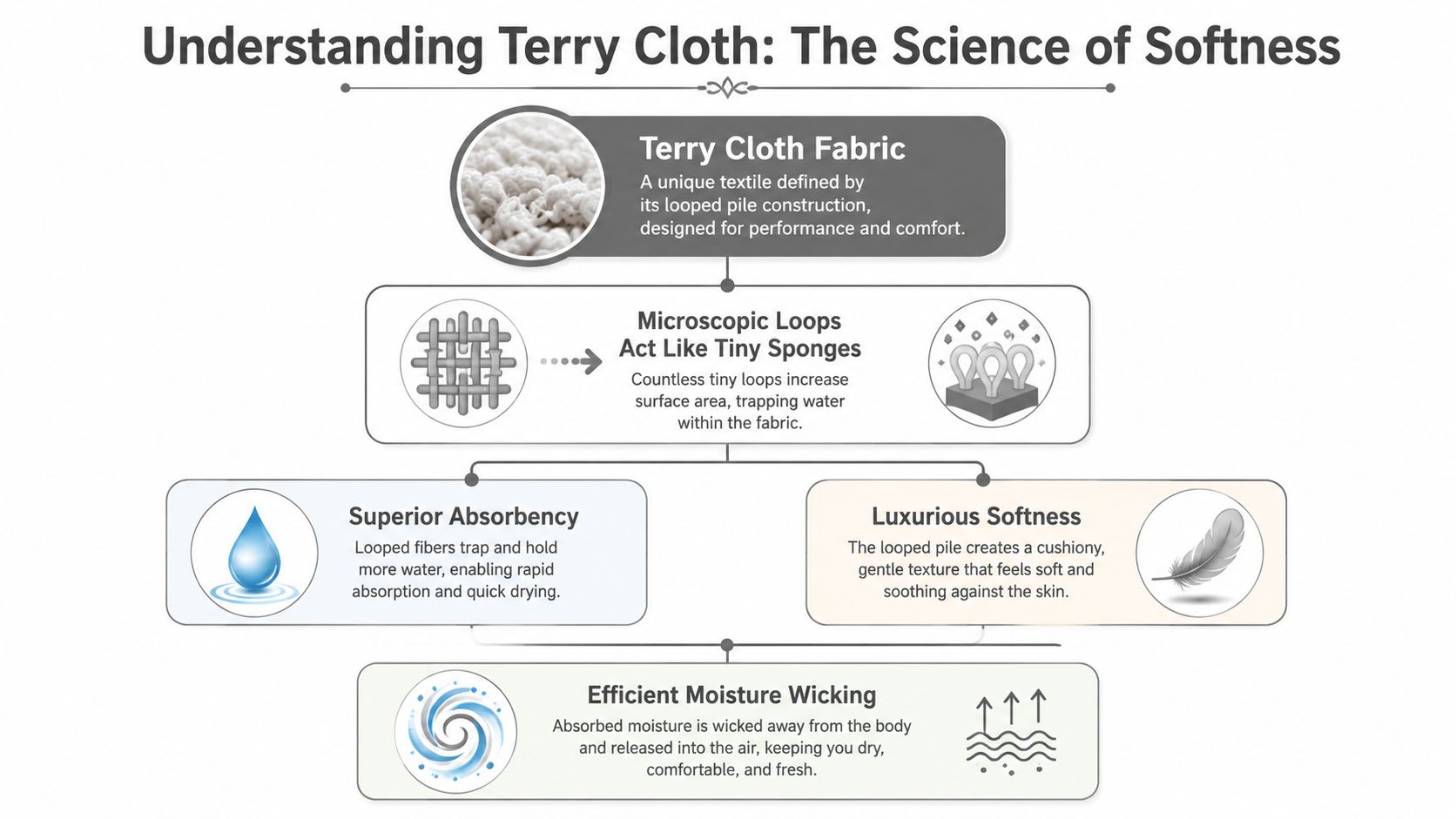
Terry cloth became the standard fabric for towels and bathrobes because of how it's built. It uses looped yarns that increase surface area and water uptake, which is why it remains the benchmark for post-shower use.
Think of the surface like a field of tiny cotton loops standing upright. A flat fabric has less texture to grab moisture. Terry has far more contact points, so water has somewhere to go.
Why the loops matter so much
The most important structural feature in a terry robe is the looped pile. That geometry increases surface area and capillary action, which improves water uptake compared with flat woven fabrics, as explained in SEYANTE's guide to bathrobe fabric types.
In plain language, better loops do more work.
- Dense, well-formed loops tend to feel more absorbent and more spa-like after bathing.
- Thin or loose terry often dries faster, but it usually absorbs less moisture overall.
- Poorly formed loops can flatten sooner, which changes both feel and function.
This is why two robes made from cotton can perform very differently. The fiber matters, but construction decides a lot.
What GSM tells you
One of the few concrete robe specs shoppers can use is GSM, or grams per square meter. It measures the fabric's weight and density, making it a useful benchmark when comparing bathrobes, even though many guides don't explain what the number means in practice.
A higher GSM usually means more body, more warmth, and a fuller hand. But heavier isn't always better for every person.
GSM feel What it usually suggests
Lighter feel Easier drape, less bulk, often better for warmer rooms
Mid-weight feel A balance of absorbency, comfort, and everyday wearability
Heavier feel More cocooning warmth and a stronger towel-like presence
If you want the classic bathrobe experience, many people prefer a mid-weight to substantial terry robe rather than a very light version.
Why Turkish cotton gets so much attention
Shoppers often hear “Turkish cotton” and assume it's just branding. It isn't. In robe buying, Turkish cotton is commonly associated with high absorbency and a smoother, more refined feel, especially when the yarns are long-staple.
That matters because long, smooth fibers can help produce yarns that feel cleaner, stronger, and less rough against the skin. In terry cloth, that translates into loops that feel plush rather than fuzzy or scratchy.
Practical rule: Judge terry by structure first, cotton quality second, and marketing language last.
Terry vs Waffle Weave Which Robe Is Right for You
Terry and waffle robes often get compared as if one must win. That's not how most real buyers use them. They serve different routines.
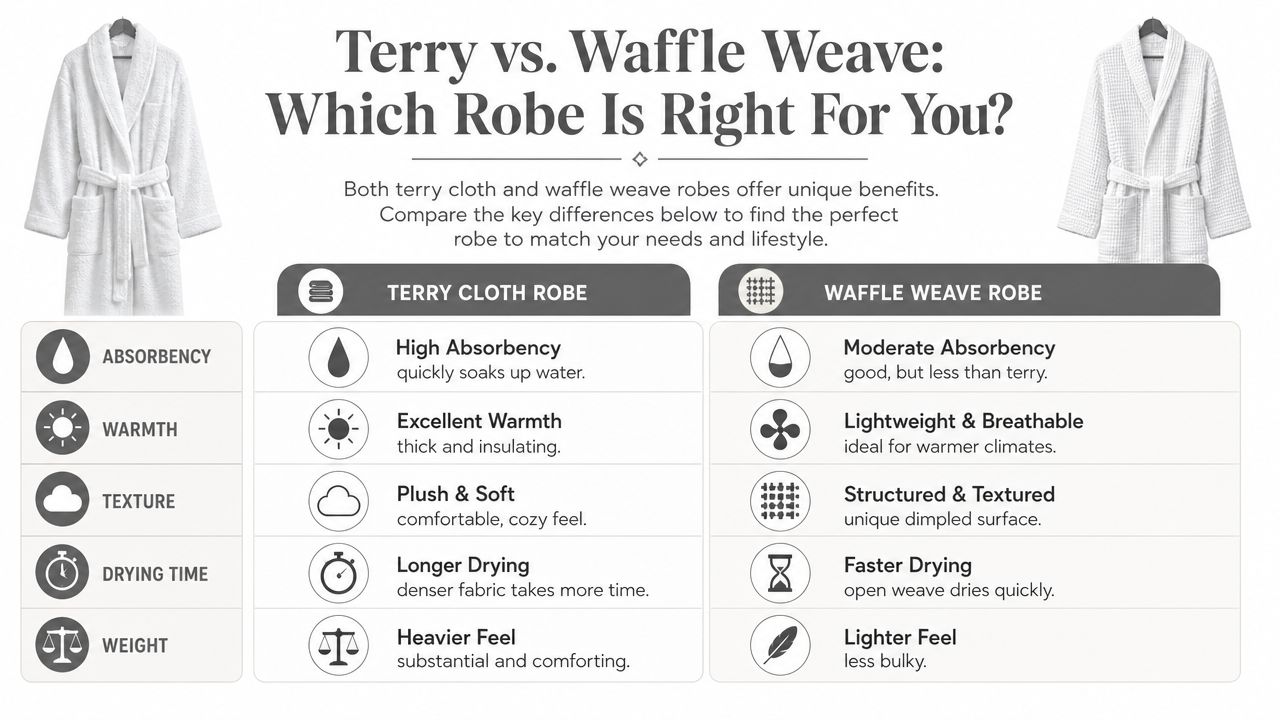
If your robe's main job is to absorb moisture after a shower or bath, terry usually makes more sense. If you want something lighter for warm mornings, travel, or slipping on while getting ready, waffle often feels easier.
Side by side in real life
| Feature | Terry cloth | Waffle weave |
|---|---|---|
| Absorbency | Higher, especially after bathing | Moderate, often enough for light drying |
| Warmth | More insulating | More breathable |
| Feel | Plush, towel-like | Textured, airy |
| Drying time | Longer | Faster |
| Bulk | More substantial | Less bulky |
The key trade-off is simple. Terry gives you the classic enveloping bathrobe experience. Waffle gives you lightness and airflow.
Choose by ritual, not trend
A person in a cool home who showers at night may love a dense terry robe because it finishes the drying process and adds warmth. Someone in a humid climate may find that same robe too heavy and prefer waffle for daily use.
That's why style-only recommendations can mislead people. The better question is, “What do I want the robe to do?”
- After bathing: Terry is usually the stronger option.
- Morning skincare and coffee: Waffle can feel lighter and less bulky.
- Packing for travel: Waffle often wins on ease.
- Spa or hotel feel at home: Terry usually delivers more of that cocooned sensation.
If you want a deeper fabric-by-fabric breakdown before deciding, SEYANTE has a useful comparison in its article on waffle vs terry cloth robes for daily use.
A good lightweight alternative
A high-quality waffle option can make sense even for shoppers focused on the best terry cloth robes, because many people eventually want both categories. For example, a product like the Women's White Organic Turkish Cotton Waffle Towel Wrap fits the lighter, breathable side of the robe spectrum. It's a practical pick for warm weather, getting ready, or stepping out of the bath without committing to a full, heavier robe.
The mistake is expecting waffle to behave like terry. It won't. And terry shouldn't be judged by the standards of a summer wrap.
A Style for Every Ritual Hooded Kimono and More
Fabric decides performance, but silhouette changes how a robe fits into daily life. Two robes made from similar terry can feel completely different once you add a hood, reshape the collar, or alter the length.
Some people want a robe for drying off. Others want one for reading on the sofa, answering the door, or padding through a quiet weekend morning. The cut should match that ritual.

Hooded robes for full cocoon comfort
A hooded terry robe works well for people who want maximum warmth after a bath or shower. The hood adds comfort around the neck and head, and many shoppers like it after washing their hair because it extends that wrapped-up feeling.
This style often feels the most casual and enveloping. It's a strong choice for colder mornings, post-workout showers, or anyone who wants a robe to feel soft and sheltering rather than structured.
Kimono styles for ease and movement
Kimono robes usually feel cleaner and lighter in shape. Without a shawl collar or hood adding bulk, they sit flatter on the body and often layer more easily over sleepwear or loungewear.
They're especially useful for:
- Getting ready routines when you don't want a thick collar near the neck
- Warm interiors where a lighter shape feels more comfortable
- Gift occasions like bridal mornings, when people want elegance and mobility
- Compact storage because the robe folds down more neatly
A kimono terry robe can still feel plush. It just presents that plushness in a less bulky form.
Shawl collar robes for the classic hotel look
If you picture a traditional spa or hotel robe, you're probably thinking of a shawl collar. This style frames the neck, adds visible softness, and usually gives a robe a more timeless look.
It's a good middle ground for shoppers who want warmth without a hood. The collar itself contributes comfort around the neckline, which some people find more refined and less casual than a hooded shape.
A shawl collar robe often feels dressed enough for lounging and practical enough for post-shower wear.
Specialty shapes that solve specific needs
Not every robe has to be all-purpose. Some are best because they serve one moment very well.
A maternity robe, for example, should offer easy wrap coverage, softness at the waist, and flexibility through body changes. A towel wrap can be ideal when you want quick coverage after bathing, especially in a shared bathroom or spa setting. Shorter robes can suit people who prioritize movement, while longer robes create more warmth and drama.
The best choice comes down to what your day looks like. If your robe mostly follows a shower, start with performance and then choose the shape. If it's for lounging, style and mobility may deserve more weight.
Finding Your Perfect Fit and Coverage
A robe can have beautiful fabric and still disappoint if the fit is off. Too narrow, and it pulls open at the front. Too oversized, and it can feel sloppy or heavy. Good robe fit is less about body-hugging precision and more about usable comfort.
Start with coverage. Ask how much wrap you want when the belt is tied, and how much ease you want through the shoulders and sleeves. If you like to layer pajamas underneath, you'll want more room than someone wearing it straight from the shower.
Length changes the experience
Length affects warmth, movement, and where you'll wear the robe most often.
- Shorter lengths feel easier for fast mornings, skincare routines, and warmer homes.
- Mid-calf styles often strike the best balance between coverage and mobility.
- Long robes create the most cocooning effect, especially in cooler conditions.
Sleeve length matters just as much. Sleeves that fall too low can drag at the sink or feel awkward during makeup, hair care, or breakfast prep. Slightly shorter or cuff-friendly sleeves are often more practical than dramatic ones.
Fit preferences are personal
Some shoppers want a robe that skims the body neatly. Others want that generous, wrapped-in-cotton feeling with extra overlap in front. Neither is wrong.
A quick fitting checklist helps:
- Shoulders: They shouldn't feel tight or pull when you reach forward.
- Front overlap: You want enough wrap that the robe stays comfortable when sitting.
- Waist tie position: It should sit where the robe closes most naturally on your frame.
- Hemline: It should support how you move, whether that means stairs, lounging, or getting ready.
For online buying, detailed size charts matter more than broad labels. Return flexibility matters too. A customer-friendly policy removes some of the guesswork, especially for gift buying or first-time robe shoppers.
The Hallmarks of a Long-Lasting Terry Robe
A robe can feel good on day one and still be a poor buy. Longevity is what separates a pleasant purchase from a reliable daily piece. Construction, care, and material choices combine to achieve this.
One gap in robe shopping advice is that many guides focus on softness and appearance but skip the questions buyers ask later. How does it wash? Will the loops flatten quickly? Does the fabric keep its absorbency? That long-term view matters because shoppers often care more about lasting value than luxury language alone.
What to inspect before buying
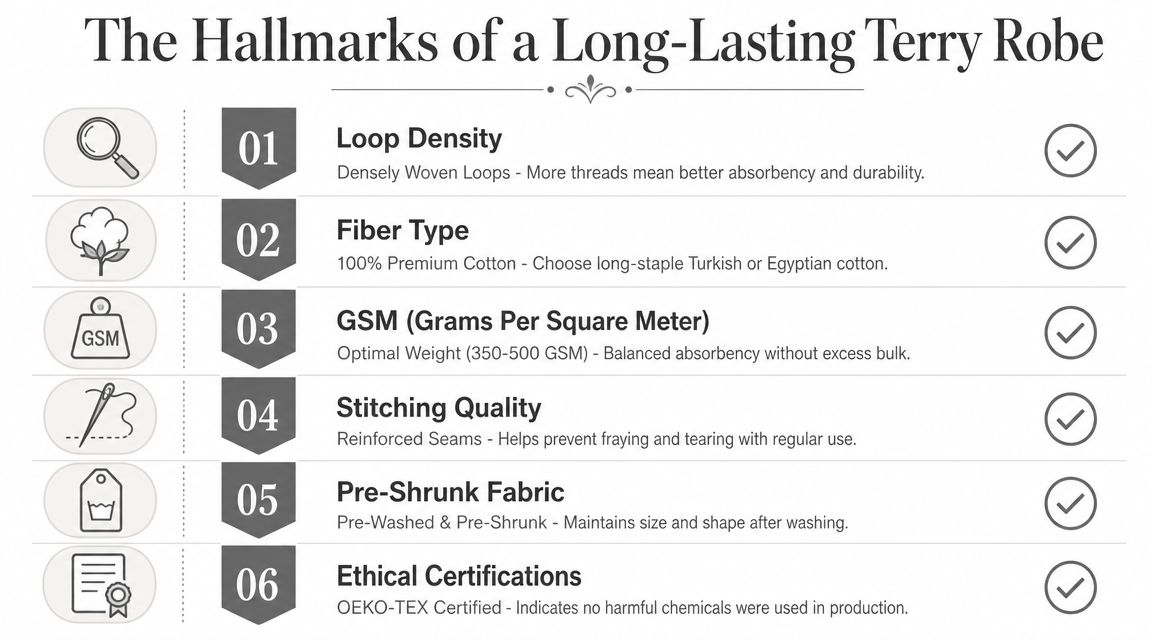
When you're comparing the best terry cloth robes, check for quality signals you can use:
- Loop formation: Dense, even loops usually suggest better absorbency and a more durable surface.
- Cotton quality: Premium cotton, especially Turkish cotton, often feels smoother and more refined.
- Seam strength: Reinforced or neat stitching helps a robe stand up to repeated wear and laundering.
- Balanced weight: A robe should feel substantial enough to absorb well without becoming cumbersome.
- Finishing details: Belt loops, pockets, cuffs, and collar edges should feel secure, not flimsy.
If sustainability and purity matter to you, certifications can also be worth noting. Some shoppers specifically look for organic options or chemical safety standards as part of the overall value equation.
Care habits decide lifespan
Wash habits can shorten or preserve a terry robe's life. Industry guidance warns that bleach speeds up terry-fiber breakdown, while mild detergent, gentle cycles, and low-heat tumble drying help preserve loop structure and reduce pilling and fading over time.
That advice sounds simple, but it has big consequences for how the robe looks and feels months later.
Care shortcut: Treat terry loops gently if you want them to stay springy, absorbent, and soft.
A few habits make the biggest difference:
- Skip bleach: It can be harsh on cotton loops.
- Use mild detergent: Strong chemistry can wear fibers down faster.
- Wash gently: Less agitation helps protect pile structure.
- Dry on low heat: High heat can be rough on both fibers and finish.
For readers comparing fabric specs and quality markers more broadly, this guide on why thread count matters when purchasing a robe adds useful context around construction quality.
One brand mention where it belongs
If you're looking at brands that focus on this combination of material quality, thoughtful construction, and robe-specific guidance, SEYANTE is one option in the category. Its collection includes Turkish cotton terry and lightweight waffle styles, with many organic options and a range of silhouettes that help shoppers match fabric to routine rather than buying by appearance alone.
Your Terry Cloth Robe Questions Answered
Even after you know what makes a robe good, a few practical questions usually remain. These are the issues that show up after purchase, not on product pages.
Why is my new terry robe shedding
A small amount of early linting can happen with natural cotton terry, especially when the robe is new. Loose surface fibers often release during the first washes. That doesn't always mean the robe is defective.
What matters is the pattern. Light initial shedding that settles down is different from ongoing loop damage, unraveling, or rapid thinning. If the robe keeps losing structure, that points more to construction or wash stress than to normal break-in behavior.
How often should I wash a robe
It depends on how you use it. A robe worn right after bathing will usually need more frequent washing than one used only over pajamas for a short morning routine.
The main goal is balance. You want the robe fresh, but you don't want to overwash it unnecessarily. Let it dry fully between uses, avoid leaving it bunched up damp, and wash according to actual wear rather than habit alone.
Can I use fabric softener on Turkish cotton terry
Many people do, then wonder why the robe feels less effective. Fabric softener can coat fibers and interfere with the crisp absorbent behavior people want from terry. If your robe's job is to absorb water, preserving the open, thirsty feel of the loops matters more than adding a perfumed finish.
For a full practical routine, including washing and storage habits, this article on how to wash, store, and care for your robe is a helpful companion.
What makes a terry robe a good gift
A terry robe works well as a gift because it connects comfort with usefulness. It suits life moments when people want a little more ease at home, such as weddings, postpartum recovery, housewarmings, or rebuilding a daily routine around better self-care.
A good gift robe usually gets three things right:
- Texture: It feels comforting immediately
- Function: It can help dry the body after bathing
- Longevity: It has enough construction quality to become part of daily life
The best gift robe doesn't feel like an extra item. It feels like someone upgraded a part of the day the recipient already has.
What should I prioritize if I can't judge fabric in person
Start with the specs and the details that most directly affect performance: fabric type, whether it's terry or waffle, cotton origin, robe weight when available, and care guidance. Then look at shape, collar style, and return flexibility.
If a brand explains absorbency, drying trade-offs, and care clearly, that's usually a better sign than one that relies only on words like plush or premium. Education is often a clue to product seriousness.
If you're ready to choose a robe with more confidence, browse SEYANTE for Turkish cotton terry and lightweight waffle styles designed around real routines, practical comfort, and dependable fit.