Cotton Robe: A Buyer's Guide to Ultimate Comfort
- More Than Just a Robe An Investment in Comfort
- Decoding Cotton Robe Fabrics Terry Versus Waffle
- Finding Your Perfect Cotton Robe Style
- How to Select the Right Size and Fit
- A Robe for Every Ritual Matching Your Robe to Your Life
- Caring for Your Cotton Robe for Lasting Luxury
- Frequently Asked Questions About Cotton Robes
You're probably here because most robes sound perfect until you live with one. One feels lush for five minutes, then stays damp on the hook. Another looks elegant online but barely wraps across the body. A third is called “soft cotton,” yet tells you almost nothing about whether it will work after a shower, in a warm bathroom, in a suitcase, or during a slow Sunday morning.
That's why choosing a cotton robe deserves more thought than many people give it. The right one becomes part of your daily rhythm. It's what you reach for after bathing, before bed, while getting ready, or when guests stay over. A good robe disappears into the ritual. A poor one keeps announcing its flaws.
At SEYANTE, we look past generic claims and focus on construction. Weave, weight, certification, and cut are what determine whether a robe feels calming and effortless or merely acceptable. Softness matters, but softness alone doesn't tell you how a robe will dry, drape, breathe, or wear over time.
More Than Just a Robe An Investment in Comfort
A cotton robe often enters the home as a simple purchase and ends up becoming one of the most-used textiles you own. It's there in the quiet minutes after a shower, in the pause before getting dressed, and in the evenings when you want warmth without stiffness. The value isn't only in how it feels on day one. It's in how naturally it fits your routine.
That lasting appeal isn't accidental. The robe has a long history tied to both ceremony and status. Robes were worn in Ancient Egypt for religious ceremonies, where priests used garments made from exquisite linen or cotton, and in Ancient Greece robe length and color signaled social rank. By the 17th century, European bathrobes had become status symbols for aristocrats. The turning point for the modern cotton robe came with the Industrial Revolution, when cotton became more affordable and accessible, allowing robes to move from elite wardrobes into daily life.
Today, cotton still leads this category in practical terms. Cotton accounts for 62% of the more than 520 million bathrobes produced annually, which makes it the dominant fiber in a very large global market, according to bathrobe market data. That matters because widespread use at this scale usually points to a material that consistently meets real expectations around comfort, absorbency, and everyday function.
Why this choice deserves attention
A robe sits closer to the body than many other home textiles. You notice everything. If the fabric traps heat, you feel it immediately. If the sleeves are awkward, you adjust them all morning. If the cotton is well chosen, the robe becomes reassuring rather than fussy.
A robe isn't a decorative extra. It's a daily-use textile, and daily-use textiles need to perform.
For many shoppers, material values matter too. If you care about how cotton is grown and processed, it's worth understanding what organic cotton means for you and the planet. Certification doesn't replace good design, but it can help you make a cleaner, more informed decision.
Decoding Cotton Robe Fabrics Terry Versus Waffle
“Soft cotton” is too vague to help anyone choose well. The more useful question is this: What is the fabric built to do? A robe can be absorbent, airy, substantial, structured, lofty, quick-drying, or easy to pack. Those qualities come from weave construction, not from marketing language.
This visual makes the distinction easier to understand:
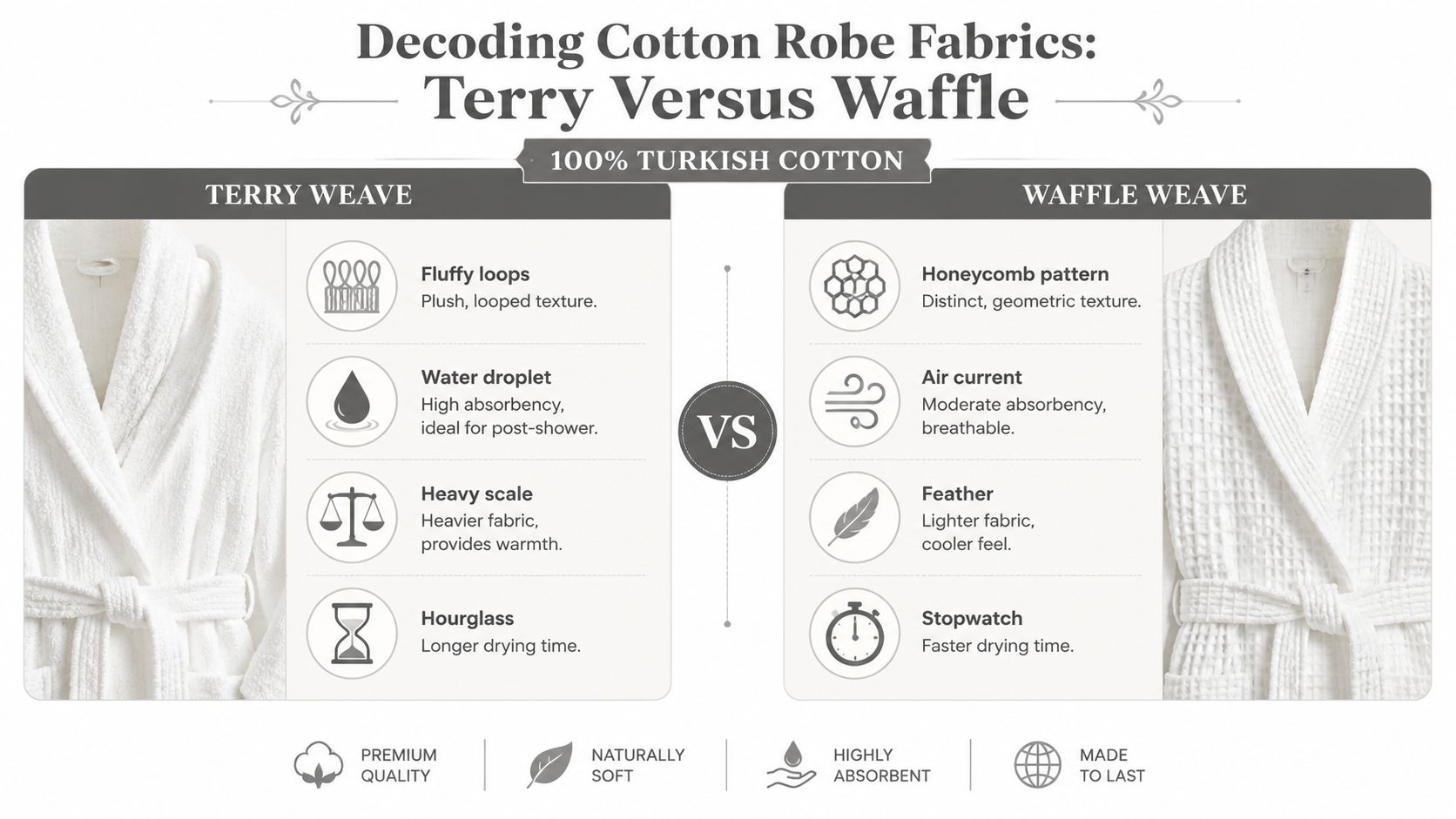
Terry for absorbency and cocooning comfort
Terry is the robe often imagined as a classic bathrobe. Its surface is formed by loops, and those loops create the plush, towel-like hand that makes terry so satisfying after bathing. When you want a robe to continue the drying process rather than just cover the body, terry is usually the stronger choice.
Terry also tends to feel more substantial on the body. That can be wonderful in cooler homes, after an evening bath, or in hospitality settings where guests expect a familiar, enveloping feel. The trade-off is straightforward. More bulk usually means more warmth and a longer drying window.
Waffle for breathability and lighter wear
Waffle weave offers a different kind of luxury. Instead of looped loft, it has a grid-like texture that promotes airflow and keeps the robe feeling lighter and less bulky. A good waffle cotton robe often suits people who dislike heaviness on the shoulders or who run warm indoors.
It also tends to layer better over sleepwear or loungewear because it doesn't crowd the body in the same way a denser robe can. For travel, warmer climates, and morning routines that involve movement, waffle often feels easier to live with.
Practical rule: Choose terry when your robe needs to absorb. Choose waffle when your robe needs to breathe.
For a closer look at how those two constructions behave in everyday use, SEYANTE's guide on waffle vs terry cloth robes for daily use is a useful companion.
A third reference point that clarifies the trade-off
One helpful comparison comes from gauze construction. Robes made from 4-ply gauze with 100% long-staple Turkish cotton are engineered for a lighter drape and less retained moisture than dense terry, as described in this product construction reference for cotton gauze robes. You don't need to buy gauze to learn from it. The lesson is that more open construction usually means less bulk and easier drying, while denser looped surfaces deliver more plush absorbency.
Where organic certification fits
Organic certification doesn't tell you whether a robe is terry or waffle, and it doesn't tell you whether the cut will suit your body. What it does offer is a verifiable standard around the fiber and processing chain. For discerning buyers, that matters.
Here's the simplest way to look at it:
- If skin feel is your priority, focus first on weave and robe weight.
- If values are part of the purchase, add certification to your checklist.
- If you want long-term satisfaction, don't choose certification instead of performance. Choose both when possible.
A beautifully made robe needs integrity in both material and design. When one is missing, the difference shows quickly.
Finding Your Perfect Cotton Robe Style
Fabric determines much of the feel, but silhouette decides how the robe behaves once it's on your body. A cotton robe can be cozy, elegant, practical, or adaptive depending on its cut. The best style is the one that matches how you move through the day.
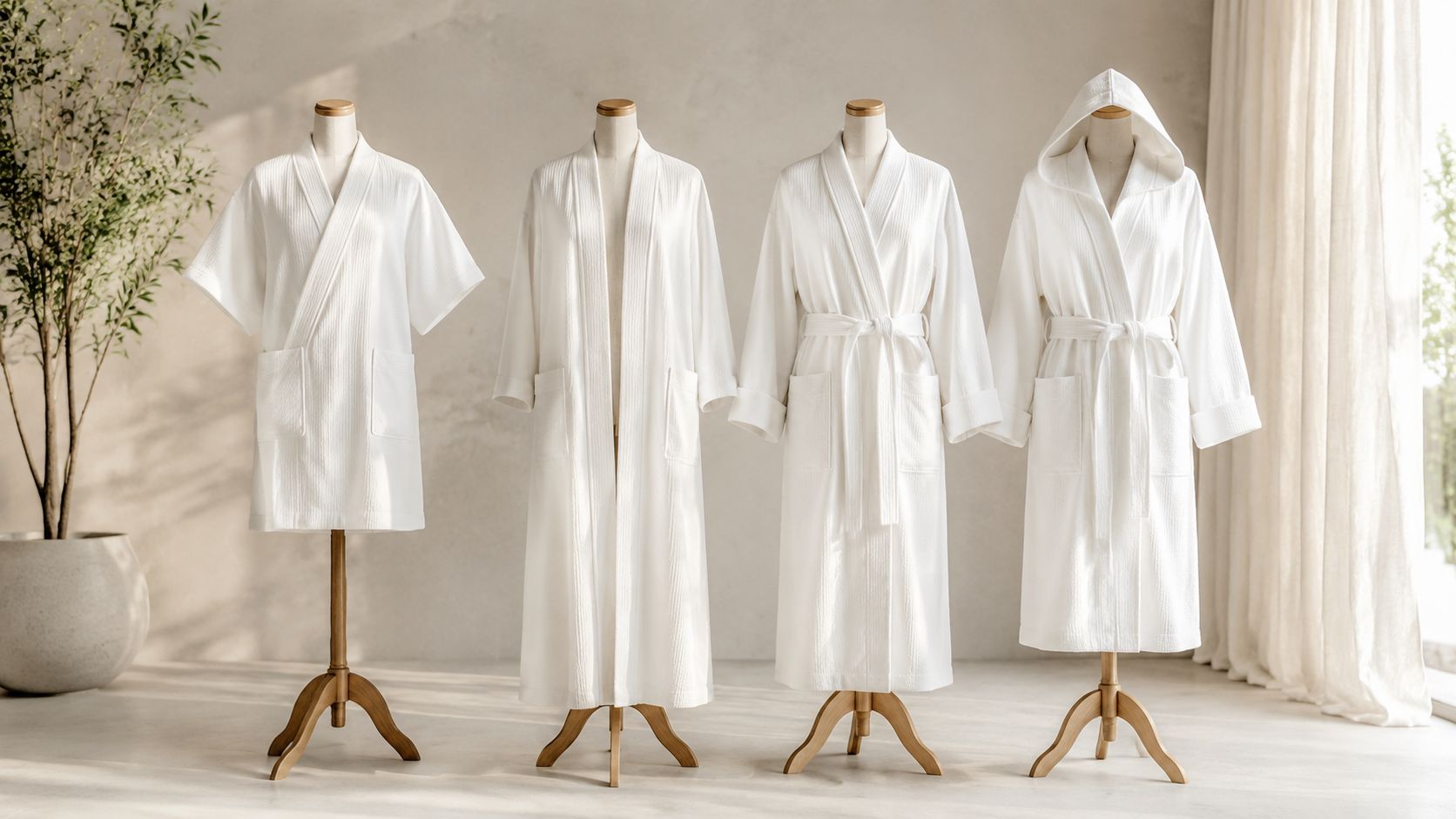
Hooded for warmth and a spa-like feel
A hooded robe creates the most enveloping experience. It adds warmth at the neck and head, which many people appreciate after washing their hair or stepping out into a cooler bedroom. If you want your robe to feel protective and cocooning, a hood often makes the difference.
This style also suits people who use a robe as a real post-bath garment rather than a light layer over pajamas. The hood changes the experience from simple coverage to full-body comfort.
Kimono for drape and freedom of movement
Kimono robes feel more open and sleek. Without a thick collar or hood, they sit flatter on the body and move easily through getting-ready routines. They're especially useful if you style your hair, apply skincare, or want something that layers without adding bulk.
A kimono cut often looks more refined as well. For bridal mornings, spa settings, or warm-weather lounging, that cleaner line can feel polished without trying too hard.
Hotel-style for familiarity and balanced structure
The classic hotel-style robe is usually defined by a shawl collar and an easy, generous wrap. This is the robe many people associate with immediate comfort because it balances softness, modest coverage, and durable everyday wear.
If you want one robe that feels familiar to almost anyone who puts it on, this is often the safest silhouette. It's also practical for guest rooms because the shape is intuitive and forgiving.
Maternity for changing comfort needs
Maternity robes work best when they offer a more adaptable fit, secure wrap coverage, and ease around the waist and bust. The right cut matters because a robe that feels fine early on can become restrictive later.
A few things make maternity styles more functional:
- Adjustable wrap placement so the robe can sit comfortably as the body changes
- Generous overlap for coverage when sitting, feeding, or moving around
- Soft, breathable fabric that won't feel stifling during temperature shifts
How to Select the Right Size and Fit
A luxury robe loses its appeal quickly when the fit is off. Too short, and it feels skimpy. Too narrow, and you keep tugging it closed. Too oversized in the wrong way, and the shoulders slip backward while the sleeves interfere with everything from skincare to coffee.
The simplest way to choose well is to ignore letter sizing at first. Start with your body measurements and the robe's actual dimensions.
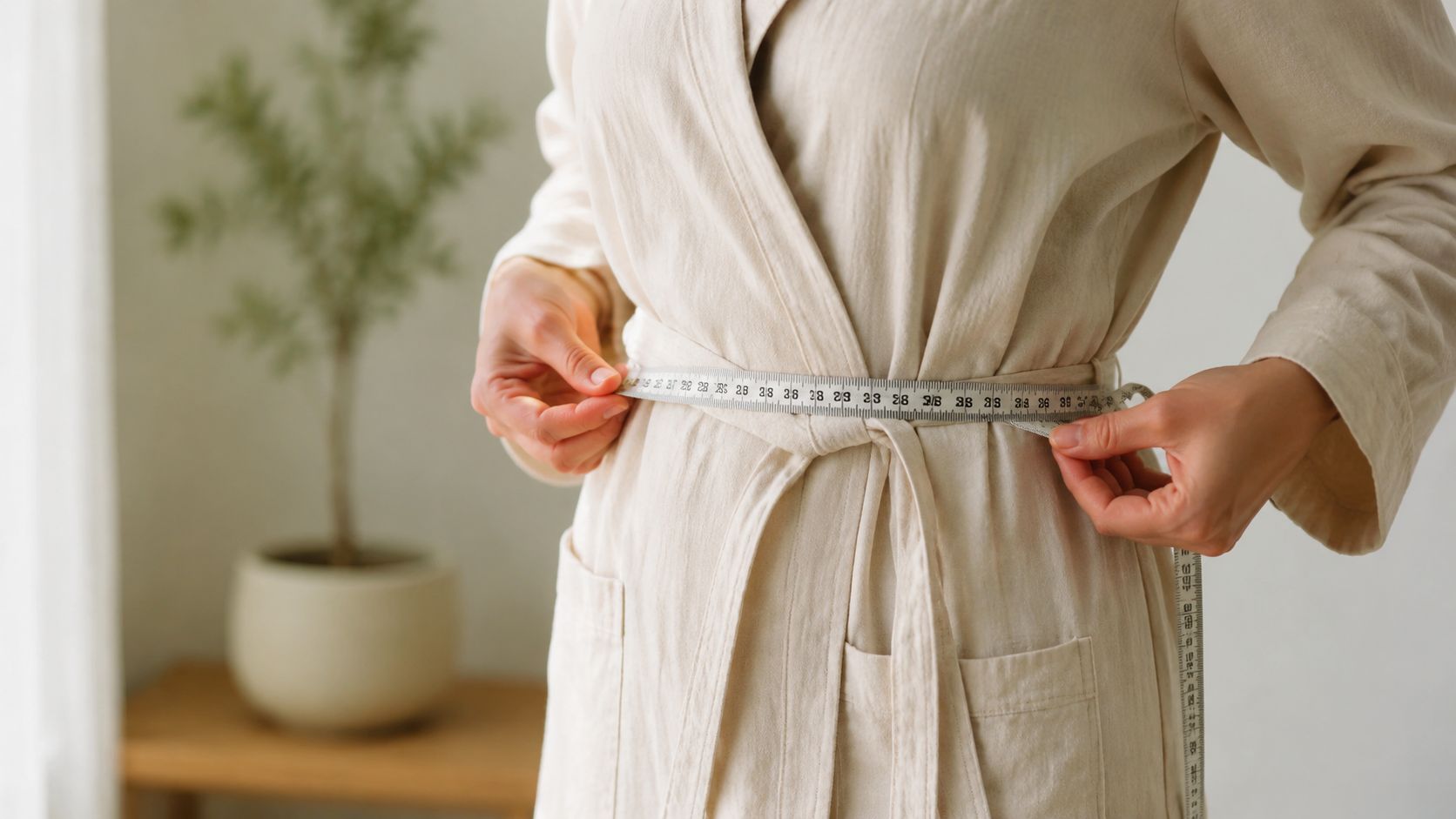
The three fit points that matter most
Most buyers focus on chest or waist alone. That's not enough for a robe. These points tell you more:
- Length matters first. Decide whether you want mid-calf ease, below-calf coverage, or a longer line near the ankle.
- Wrap width matters next. A robe should overlap comfortably when tied, not just meet at the front.
- Sleeve behavior matters every time you wear it. Think about whether you prefer a classic long sleeve, a cuff you can fold back, or a slightly shorter sleeve that stays clear of water and skincare.
How to read a size chart like a professional
A good size chart helps you predict behavior, not just select a label. Look for garment measurements alongside body guidance. If a robe is intended to layer over pajamas or to wrap generously after a shower, that ease should appear in the cut.
Use this process:
- Measure your bust or chest at the fullest point.
- Measure your waist where the belt will naturally sit.
- Compare those numbers to the chart, then check robe length.
- If you're between sizes, decide whether you want a neater or roomier fit.
- For gifting, prioritize wrap coverage and length over a precisely fitted shoulder.
A robe should close comfortably while standing, sitting, and walking. If it only looks right when you're standing still, it isn't the right fit.
Detailed brand guidance makes this much easier. As one practical example, SEYANTE provides fit-focused advice in its blog and product sizing resources rather than relying on vague size labels alone. That's the standard worth looking for when you're comparing options.
Fit preferences that are often overlooked
Some people want a robe to replace a towel for a few minutes. Others want it to function as elegant loungewear. Those are different fit goals.
A quick check helps:
| Preference | Better fit direction |
|---|---|
| Post-shower wrap | More overlap, slightly roomier sleeves |
| Layering over sleepwear | More ease through body and arms |
| Streamlined getting-ready robe | Lighter cut, cleaner sleeve line |
| Guest robe | Forgiving fit with straightforward wrap |
When in doubt, choose the fit that supports how you'll wear it most often, not how it looks folded on a shelf.
A Robe for Every Ritual Matching Your Robe to Your Life
The best cotton robe isn't defined by softness alone. It's defined by context. The same robe that feels perfect after a shower can feel far too heavy in a warm climate. The elegant robe that works beautifully for getting ready may disappoint if you expect it to absorb water like a towel.
The useful question is simple. What ritual is this robe serving?
After the shower
For post-bath use, absorbency and comfort against damp skin matter most. In these instances, terry usually earns its place. It feels reassuring, substantial, and purpose-built for that transition out of the bathroom.
If your bathroom runs warm or your robe needs to dry between frequent uses, weight becomes especially important. A 380 GSM cotton robe sits in the lightweight-to-midweight range and is associated with faster drying and better breathability than heavier robes, making it a practical choice for post-shower use in warm climates or hospitality settings, according to this 380 GSM cotton robe reference.
For spa days and travel
A robe for spa use or packing should feel airy, easy to carry, and simple to rehang without staying heavy with moisture. Waffle and other lighter constructions often fit this role better because they don't create the same dense, wrapped-in-towels sensation.
Choose this direction if your lifestyle includes:
- Weekend travel when suitcase space matters
- Warm-weather lounging where airflow matters more than loft
- Slow mornings when you want ease rather than insulation
For guests and hosting
Guest robes should be intuitive. A classic cut with enough wrap coverage and a fabric that doesn't feel fussy typically offers comfort. In homes, spas, and boutique hospitality, a robe that dries reasonably quickly often proves more practical than an ultra-plush option that remains damp between uses.
This is also one section where a brand's product construction can be relevant. SEYANTE offers cotton robe options in Turkish cotton terry and lightweight waffle, including hooded and hotel-style silhouettes. That kind of range is useful when the goal is matching a robe to a specific ritual rather than assuming one build suits everyone.
A guest robe should feel generous, uncomplicated, and immediately wearable. Nobody wants to “figure out” a robe.
For bridal mornings and gifting
Here, elegance often matters as much as function. Kimono silhouettes work well because they photograph cleanly, layer easily over sleepwear, and feel polished in a group setting. Breathable cotton constructions usually make more sense than heavy, spa-like terry if the robe will be worn while hair and makeup are being done.
For maternity and recovery
Comfort needs become more specific in this stage of life. Softness still matters, but ease of movement, breathable fabric, and adjustable wrap coverage matter more. A robe that feels supportive without trapping heat is usually the better long-term choice.
The strongest purchases come from matching the robe to real use, not idealized use. If your robe will live on a bathroom hook and be worn daily after showering, buy for absorbency and drying rhythm. If it will travel, buy for lightness. If it's a gift, buy for ease and versatility.
Caring for Your Cotton Robe for Lasting Luxury
A fine cotton robe doesn't need complicated care, but it does need consistent care. Most problems people blame on “quality” stem from habits that flatten loops, coat fibers, or bake in shrinkage. If you protect the fabric structure, the robe stays more comfortable for much longer.
This care visual covers the essentials at a glance:
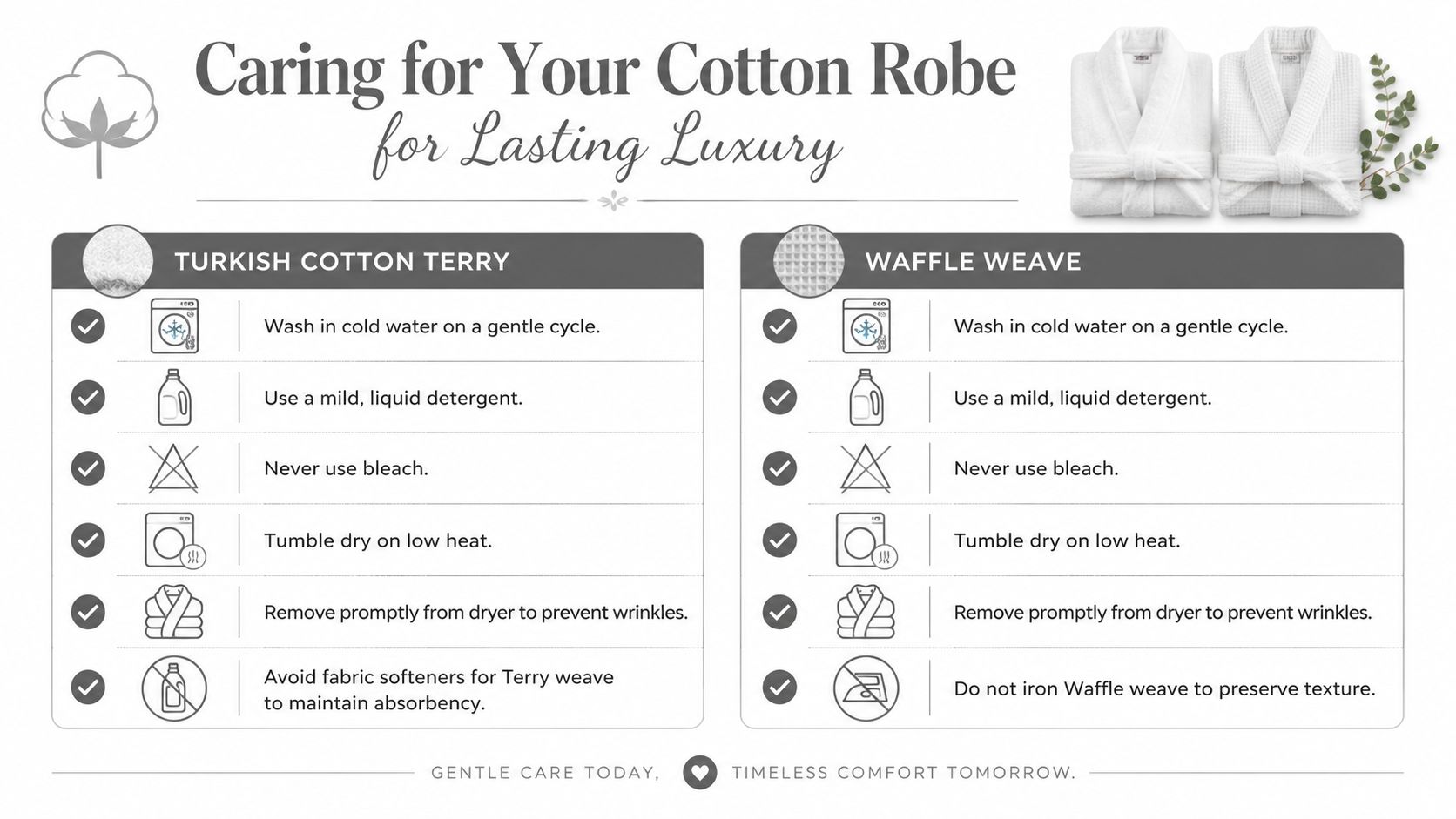
The washing routine that works
Start gently. Cotton responds better to thoughtful care than aggressive laundering.
- Wash in cool to cold water on a gentle cycle to reduce stress on the fibers.
- Use a mild liquid detergent so residue is less likely to sit in the fabric.
- Skip bleach unless the care label specifically allows it because harsh treatments can weaken texture and color.
- Wash robes with similar items rather than heavy garments with rough trims or hardware.
For terry, fabric softener is a common mistake. It can coat the loops and reduce the robe's ability to absorb moisture well.
Drying and storage without damage
Low heat is your friend. High heat is where many robes lose their easy drape and start to feel tired.
Cotton keeps its hand better when you dry it with restraint, not force.
A few habits help preserve the robe's feel:
- Tumble dry on low heat and remove promptly so the fibers don't overdry
- Shake the robe out before hanging or folding to help the fabric settle naturally
- Store fully dry so the robe stays fresh between uses
- Avoid ironing waffle weave if you want to preserve its texture
If you'd like a more detailed reference for washing and storing, SEYANTE's guide on how to wash, store, and care for your robe offers a practical checklist.
Frequently Asked Questions About Cotton Robes
Is a cotton robe suitable for every season
Yes, but not every cotton robe suits every season equally well. Cotton is versatile because it can be woven into very different constructions. A lighter waffle robe often feels comfortable in warm weather or heated interiors, while a denser terry robe feels more satisfying in cooler conditions.
The mistake is assuming “cotton” describes performance on its own. It doesn't. The weave and weight determine the seasonal feel.
Can a waffle robe be as warm as a terry robe
Sometimes, but usually not in the same way. Waffle can feel comfortably insulating because it creates light structure and airflow at once. Terry tends to feel warmer through density and loft.
If you want warmth without much bulk, waffle can be an excellent choice. If you want a more cocooning sensation right after bathing, terry usually feels more substantial.
How often should you wash a robe
That depends on how you use it. A robe worn after showers should be washed more regularly than one used briefly over sleepwear while getting ready. Ultimately, freshness is the standard. If the robe is absorbing moisture often, don't let it sit through repeated wears without laundering.
Hang it properly between uses so it can dry fully. That simple habit makes a noticeable difference.
What's more important, softness or absorbency
For daily satisfaction, function comes first. The softest robe in the world won't feel luxurious if it traps heat, stays damp, or loses structure after washing. Softness should be part of the experience, not the whole decision.
A better buying order is this:
- Choose the use case
- Choose the weave
- Choose the weight
- Choose the style
- Then judge the hand feel
Does organic certification change how a robe feels
Not automatically. Certification speaks to standards behind the cotton and its processing. Feel still depends on fiber quality, weave, finishing, and robe construction. A certified robe can be beautifully made, but certification isn't a shortcut around poor design.
How do you know a robe will actually fit your routine
Ask yourself three plain questions:
- Will I wear this mostly after bathing, while lounging, or while getting ready?
- Do I run warm or cool at home?
- Do I want plushness, breathability, or the easiest possible care?
If you can answer those clearly, your choice becomes much easier. Most robe disappointment starts when buyers shop for a vague fantasy version of comfort instead of the robe they'll use on an ordinary Tuesday.
A well-made robe changes the feel of daily life in small, lasting ways. If you're ready to choose one with more clarity, explore SEYANTE for cotton robe options built around fabric, fit, and real routines rather than generic softness claims.