Hooded Bathrobes for Women: Find Your Perfect Fit
- Beyond the Basics of Coziness
- Why a Hood The Functional Benefits of a Hooded Robe
- Choosing Your Fabric Terry vs Waffle vs Lightweight Weaves
- Finding Your Perfect Fit Sizing and Mobility
- Hooded Robes for Every Moment Styling and Use Cases
- Care Sustainability and The SEYANTE Promise
- Frequently Asked Questions About Hooded Robes
You've probably had this moment recently. You step out of the shower, your skin is warm, your hair is dripping, and the bathroom air suddenly feels cooler than it did a minute ago. A towel helps for the first few seconds, but it doesn't stay put, it doesn't warm your neck, and it certainly doesn't make it easier to move on with your morning.
That's where hooded bathrobes for women earn their place. A good one doesn't just look cozy on a hanger. It helps with drying, coverage, warmth, and the practical little things you only notice once you're wearing it. Can you bend to grab your skincare bag without the robe shifting? Does the hood feel useful or heavy? Does the fabric help after a shower, or is it really just for lounging?
This is the part many shoppers don't get help with. Retail listings often focus on softness, color, and mood. What matters more in daily life is performance. The right robe should match your routine, your climate, and the way you move through your day.
Beyond the Basics of Coziness
Stepping out of a warm shower into cooler air creates a small but familiar problem. Your skin is still damp, your hair may be dripping, and the next ten minutes often involve more than standing still. A hooded robe helps turn that in-between moment into part of a working routine, not just a pause to warm up.
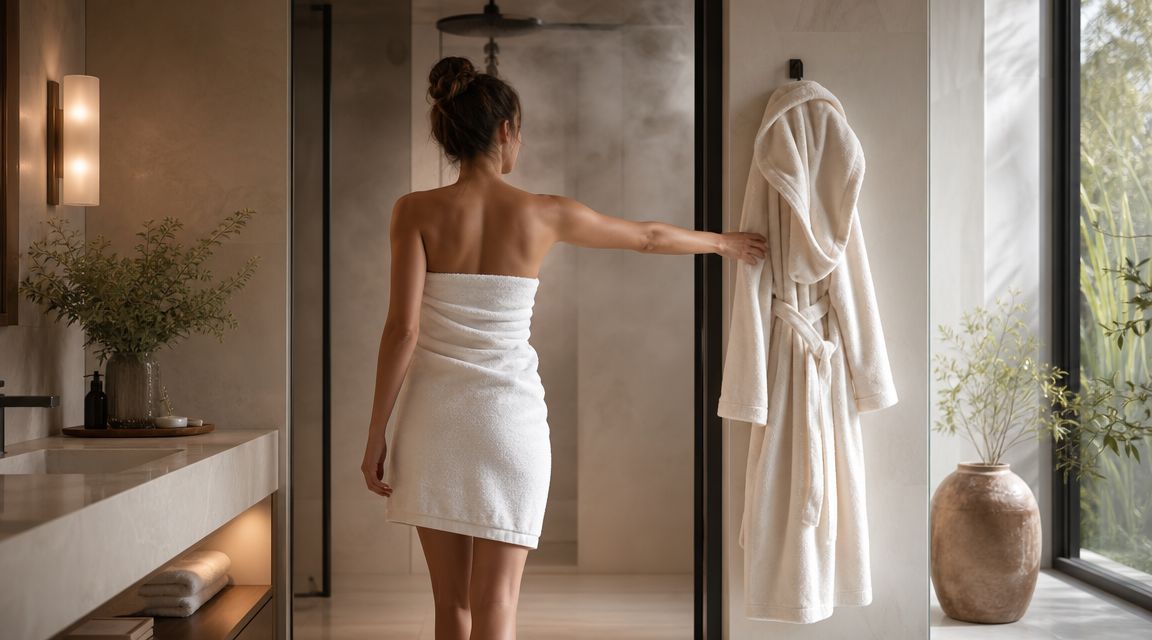
Bathrobes began as practical post-bath garments, and that history still matters. Terry cloth became popular because it could absorb water while adding warmth, and many hooded robes still serve that same post-shower purpose. The category is broader now, with fleece, waffle, satin, and other weaves, but the useful question has stayed the same. What do you need the robe to do once it is on your body?
Why this matters in real life
A robe can feel wonderfully soft in your hands and still disappoint five minutes later.
That usually happens when the robe matches a mood but not a routine. If your robe is for after a shower, fabric performance matters first. If it is for slow weekend mornings, warmth and drape may matter more. If you use it while drying your hair, making coffee, packing lunches, or moving through skincare, the cut has to cooperate with your body instead of sliding, twisting, or bunching.
A better comparison is outerwear. A rain jacket, a fleece zip-up, and a wool coat can all feel comfortable, but each one solves a different problem. Hooded bathrobes for women work the same way. Some are built to absorb moisture. Some are built to hold warmth. Some are light enough to wear while getting ready without feeling bulky.
Some readers also want their robe to support the overall mood of home. If that matters to you, it helps to discover home coziness tips that extend beyond fabric alone.
A robe that works, not just one that photographs well
The most useful shopping shift is simple. Ask how the robe performs during your actual day.
- After-shower use: Does the fabric absorb moisture, or does it only feel soft?
- Temperature comfort: Will it keep you warm without making you overheat?
- Daily movement: Can you reach, bend, and walk around easily?
- Coverage needs: Do you prefer a shorter robe for mobility or a longer one for more warmth and wrap?
That approach makes the choice clearer. You are not only choosing color, length, or a cozy look. You are choosing a layer that needs to dry, warm, cover, and move with you in real life.
Why a Hood The Functional Benefits of a Hooded Robe
Not every robe needs a hood. But when a robe does have one, that feature should do real work.
Neutral buyer guides note that hooded robes are useful for women who air-dry their hair or want extra warmth around the head and neck, though those same guides often stop short of comparing robe fabrics by absorbency, drying speed, and thermal comfort, as reflected in these hooded robe buyer questions.
The hood helps where towels fall short
The first benefit is simple. Wet hair cools you down fast. A hood gives you a soft layer around the head and upper neck without asking you to balance a separate towel wrap.
That matters most if you prefer to let your hair air-dry. Instead of twisting your hair up tightly, you can pull the hood on loosely and let it absorb some of the excess moisture while you move around the house.
Warmth stays where you lose it fastest
The second benefit is temperature control. Many women notice that the chilly feeling after a shower starts at the shoulders, neck, and scalp. A hood closes that gap.
Consider the difference between a sweater and a sweater with a high collar. Both add warmth, but one protects the places that cool first. That's why a hooded robe often feels more complete than a robe with an open neckline.
A hood doesn't just add fabric. It changes how the whole robe holds warmth.
It creates a sense of privacy
The third benefit is less technical, but still real. A hooded robe can feel more sheltered than a flat-collar style. Pulling up the hood softens the outside world a little. That can make a rushed morning feel calmer, or make an evening wind-down feel more intentional.
Who benefits most from a hood
A hooded robe makes extra sense if any of these sound familiar:
- You wash your hair often: The hood helps manage post-shower dampness.
- You feel cold quickly: Extra coverage at the head and neck can make a robe feel much warmer.
- You move around after bathing: It's easier to keep one garment on than juggle a robe and a towel.
- You like a cocooned feel: Some women find a hooded silhouette more comforting.
The key is that the hood should support your routine. If it feels floppy, too heavy, or too shallow to stay on comfortably, it won't deliver the benefits you bought it for.
Choosing Your Fabric Terry vs Waffle vs Lightweight Weaves
Fabric decides how a hooded robe performs in real life. The same robe can feel perfect at 7 a.m. after a shower, then completely wrong if you wear it later while making breakfast or folding laundry. That is why fabric choice matters more than color or trim for many women.
A simple way to sort the options is to ask what job your robe needs to do first. Dry you off. Keep you warm. Stay light while you move. Each fabric handles that job differently.
Terry feels like a wearable towel
If your robe is going on right after bathing, terry is usually the safest starting point.
Terry uses looped yarns that act much like the surface of a bath towel. Those loops help pull moisture away from damp skin and hair, so the robe is doing actual work instead of only covering you up. A hooded terry robe is especially practical if you tend to towel-dry your hair halfway, then continue getting ready around the house.
Terry usually works well for women who want:
- Strong absorbency after showers or baths
- A familiar, spa-style feel
- More coverage and substance
- A robe that can replace part of the towel stage
The tradeoff is weight. The same loops that help with absorbency also add bulk, so terry can feel warm and reassuring to one person, but heavy and slow-drying to another.
Waffle is lighter and easier to live in all day
Waffle weave has a grid-like texture that creates airflow and reduces cling. In daily use, that often means a robe that feels less dense on the body and dries faster after washing or light post-shower wear.
It helps to compare the experience, not just the fabric name. Terry works like your bath towel. Waffle works more like a breathable, textured cover-up that still has some absorbency but does not hold as much water. For many women, that makes waffle the better choice for warm homes, humid climates, travel, or mornings when the robe stays on longer than ten minutes.
Good matches for waffle include:
- Women who dislike heavy robes
- Homes that run warm
- Packing for trips
- Year-round wear with less heat buildup
If you want a closer fabric-by-fabric explanation for everyday use, this waffle vs terry cloth robe guide breaks down how the two compare in practice.
Fleece and plush fabrics are built for warmth first
Fleece answers a different need. It is less about drying off and more about holding heat.
A fleece hooded robe works like a soft throw blanket with sleeves and a belt. It feels warm quickly, which is why many women reach for it on cold evenings, early winter mornings, or drafty weekends at home. If your skin is already dry and comfort is the priority, fleece often feels more satisfying than terry or waffle.
Retail winter robe listings also show a useful pattern. Plush fleece styles are commonly sold with a wide size range and different robe lengths, which reflects how warmth and coverage are tied to cut as much as fabric. A fuller robe can trap more warmth, while a shorter or lighter one feels easier to wear around the house. You can see that sizing-and-fabric pairing in this winter robe listing with fabric and size details.
Terry velour sits somewhere in between. It has a softer, smoother face than standard terry, so it feels cozier against the skin, though it is often chosen more for comfort than maximum absorbency.
Fabric shortcut: Choose terry for moisture, waffle for lighter everyday wear, and fleece for warmth.
Hooded Robe Fabric Comparison
| Fabric Type | Primary Benefit | Weight | Best For |
|---|---|---|---|
| Terry | Absorbency | Medium to heavier | After showers, baths, spa-like use |
| Waffle | Breathability and quicker drying | Lightweight | Warm climates, travel, everyday wear |
| Fleece | Warmth | Medium to plush | Cold evenings, lounging, winter comfort |
| Terry velour | Softer hand feel | Medium | Women who want softness with some substance |
How to choose without overthinking it
Start with your routine, not the marketing label.
If the robe will touch wet skin often, terry usually makes the most sense. If you want something to wear while doing skincare, hair, or chores in a warm house, waffle is often easier. If the robe is mainly for curling up at night, fleece is usually the better fit.
Some women also keep two robes for two different jobs. One handles post-shower function. The other is more about drape or occasion. If you are comparing practical bathrobes with getting-ready styles, these personalised satin robes for brides show the contrast clearly, since satin is chosen for appearance and flow rather than absorbency.
Finding Your Perfect Fit Sizing and Mobility
A robe shouldn't only fit when you're standing still. It should work while you're brushing your teeth, leaning over the sink, reaching into a cabinet, or carrying a coffee cup from room to room.
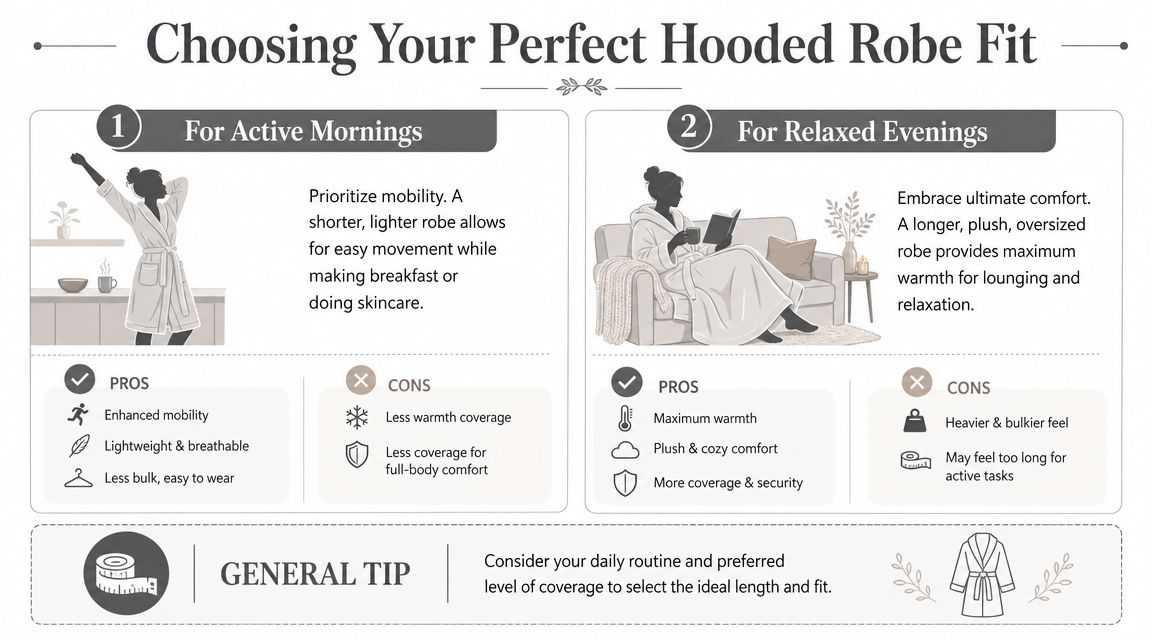
Fit is important for mobility. A robe's structure affects whether a hood sits well, whether sleeves stay out of the way, and whether pockets and belt placement remain usable in motion. That matters for women doing skincare, packing bags, or caring for children, as reflected in this women's hooded bathrobe shopping overview.
Start with your routine, not the label
Many shoppers look at size first and function second. That's backwards.
If you want a robe for active mornings, a true-to-size fit is usually easier to manage. Less extra fabric means less bunching at the waist and shoulders. Sleeves are less likely to slide into the sink, and a shorter or moderate length tends to feel easier when you're moving.
If your robe is mainly for relaxed evenings, extra room can feel inviting. More wrap, more length, and a fuller hood can all contribute to that bundled-up feeling people often want at night.
A simple fit checklist
Use this mental checklist before you buy:
-
Check sleeve behavior
Raise your arms in your mind. Would the sleeves stay back enough for skincare or hair products? -
Think about robe length
Full length can feel luxurious. It can also feel cumbersome if you're petite or constantly in motion. -
Consider shoulder bulk
Thick fabrics plus a hood can create weight around the upper back. Some women love that. Others find it tiring. -
Picture the belt placement
A belt should sit where it secures the robe comfortably, not where it pulls strangely when you bend or sit. -
Don't ignore pocket position
Pockets should still feel usable when the robe is tied. If they sit too far back or too low, they become decorative instead of useful.
For help translating measurements into a practical purchase, this robe size chart guide can make the process less guessy.
Two fit directions that both work
There isn't one correct fit. There are two common good fits.
- Functional fit: Cleaner through the shoulders, easier sleeves, less excess fabric. Good for busy mornings.
- Comfort fit: Looser wrap, more room for layers, longer line. Good for lounging and colder evenings.
If you keep tugging at a robe, it doesn't fit your routine, even if the size tag says it should.
The best test question
Ask, “What will I do in this robe?”
That question is better than “Do I want it oversized?” because it forces you to think about movement. A robe that works for sitting still may not work for doing your hair, answering the door, or making breakfast. The right fit supports your habits instead of interrupting them.
Hooded Robes for Every Moment Styling and Use Cases
The most useful robe is the one that matches a real moment in your life. Not a catalog mood. Not an idealized spa fantasy. A real moment.
After-bath comfort
You've taken a long bath, your skin is warm, and you don't want the comfort to disappear as soon as you leave the bathroom. For this, a more absorbent, substantial robe is invaluable. A hood helps contain warmth near the head and neck, and a robe with a towel-like feel makes the transition gentler.
That use case is about recovery, not appearance. You want a robe that feels reassuring, not slippery or fussy.
Busy mornings at home
Some women need a robe less for lounging and more for the hour between waking up and getting dressed. You're making tea, applying serum, checking your bag, maybe helping someone else get out the door.
This is when lightweight construction matters. A robe that's too plush can feel like carrying bedding around your shoulders. A lighter hooded robe can still give you coverage while staying easier to move in.
The right robe for a busy morning should disappear into your routine, not become another thing to manage.
Travel and humid-climate use
Travel changes what counts as “comfortable.” In a hotel bathroom or a warm destination, heavy fabric can feel like too much. A waffle hooded robe is often easier to pack, easier to hang, and easier to wear when you want a layer but not a blanket.
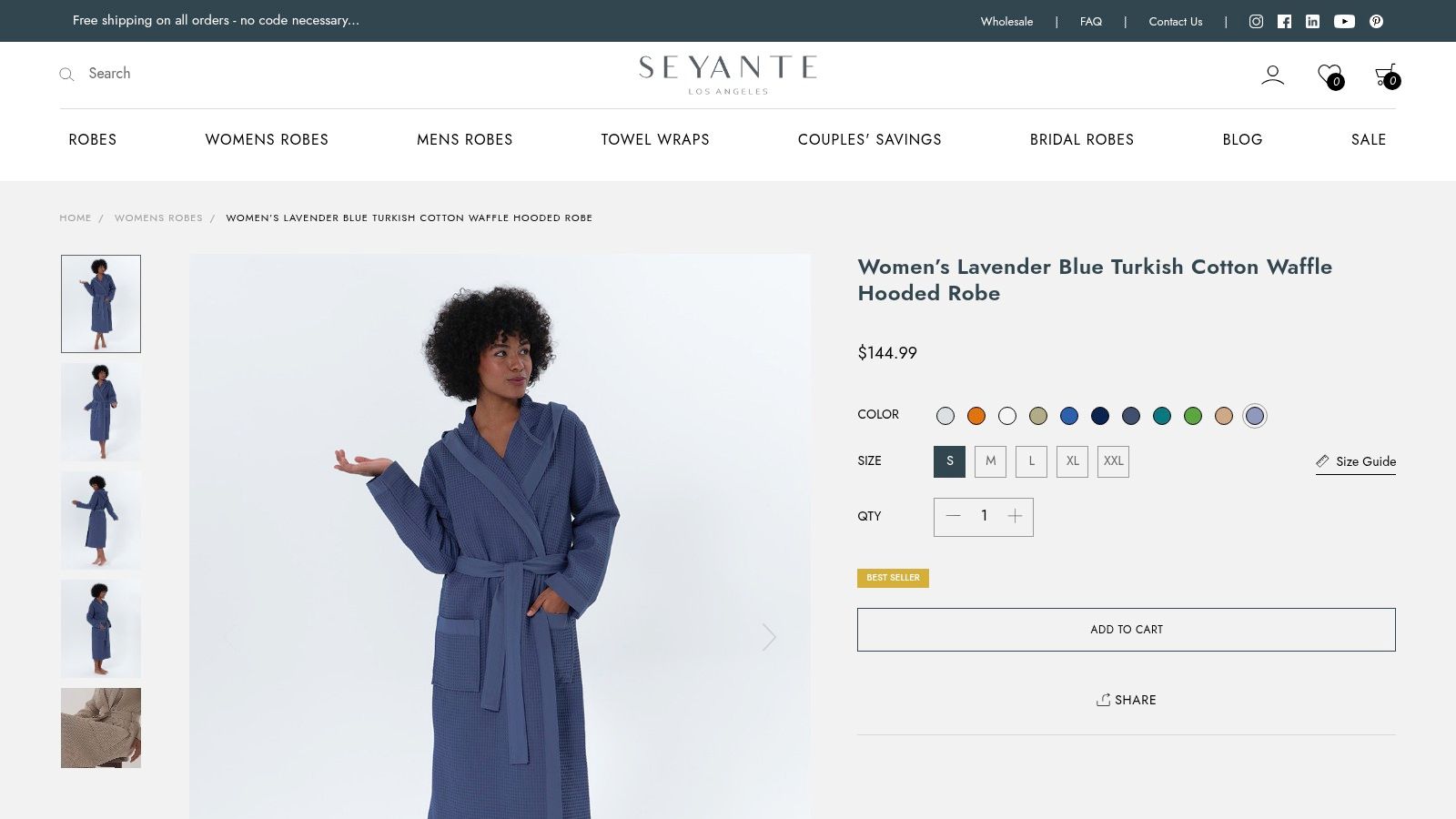
One example is the Women's Lavender Blue Turkish Cotton Waffle Hooded Robe from SEYANTE, a hooded waffle style made from organic Turkish cotton for women who want a lighter, more breathable option for everyday wear.
New-mother and caregiver routines
This is a use case people don't talk about enough. When your day includes frequent interruptions, you need a robe that ties securely, washes easily, and doesn't make movement awkward.
For this kind of wear, look for:
- A manageable length
- Pockets that hold essentials
- A hood that stays comfortable without slipping back
- Fabric that doesn't feel too precious for repeated washing
Softness matters here, but practicality matters more.
Gifting and getting-ready moments
Some robes are bought for private daily use. Others are chosen because they make a moment feel special. Bridal mornings, weekend guests, care packages, and self-care gifts all fall into this category.
For gifting, it helps to match the robe to the recipient's life, not your own taste. A woman who runs warm may prefer waffle over plush terry. Someone who loves long winter evenings may want the opposite. The most thoughtful gift robe is the one that will be worn by the recipient.
Care Sustainability and The SEYANTE Promise
A good robe lasts longer when you care for it according to what the fabric needs. That sounds obvious, but many robe problems come from treating every material the same way.
Care that protects performance
With absorbent cotton robes, harsh washing habits can work against the reason you bought them. Hot water and heavy product buildup can change the feel of the fabric over time, and fabric softeners may interfere with absorbency.
A simpler routine tends to work better:
- Wash with similar items
- Use mild detergent
- Choose cool or warm water instead of very hot
- Dry on lower heat when possible
For a practical walkthrough, this robe care guide for washing and storage is a useful reference.
Quality and sustainability connect
A robe that holds up well is often the more responsible purchase because you keep it in use longer. That's one reason fabric choice and construction matter beyond comfort alone.
Some robes in the market are also made with certified organic cotton. In SEYANTE's case, many robes are described as GOTS-certified organic, which connects the robe purchase to ecological and social criteria from fiber through finished product. For shoppers who care about what touches their skin and how it was made, that can be part of the value.
Trust matters too
Comfort isn't only about fabric. It's also about buying with less friction. SEYANTE states that it offers free standard shipping across all 50 US states and military bases and a 90-day return window. For online robe shopping, that kind of policy support makes it easier to choose thoughtfully instead of rushing.
Frequently Asked Questions About Hooded Robes
Are hooded robes too warm for summer
Not necessarily. The answer depends more on fabric than on the hood itself. A lightweight waffle robe can feel airy and easy in warmer weather, while plush fleece will usually feel better saved for cold rooms and winter evenings.
Which fabric is better after a shower
If your priority is drying off, terry usually makes the most sense because it's generally absorbent. If your priority is staying lightly covered in a warm climate, waffle may feel more comfortable even though it won't behave exactly like a towel.
Should I buy my robe oversized
Only if that suits how you'll wear it. Oversized can be wonderful for lounging, but too much fabric can get annoying during skincare, hair routines, or house tasks. If you want your robe to move with you, a more balanced fit is often better.
Will a hood really help with wet hair
Yes, especially if you air-dry your hair and want to avoid wrapping a separate towel on your head. A hood won't replace every hair towel routine, but it can make the post-shower period more comfortable and less chilly.
What's the difference between a hooded robe and a kimono robe
The main difference is function. A hooded robe adds head and neck coverage and can help after showers. A kimono robe has a flatter, cleaner neckline and often feels lighter visually and structurally.
What should I check before buying
Keep it simple:
- Fabric purpose: After-shower absorbency, light breathability, or warmth
- Fit for movement: Sleeves, length, shoulder comfort
- Useful details: Pockets, belt placement, hood depth
- Care needs: Machine-wash routine and how much maintenance you want
The best hooded bathrobes for women aren't just soft. They fit your habits, your home, and the kind of comfort you reach for.
If you're ready to choose a robe that matches your routine, SEYANTE offers hooded, terry, and waffle options designed around everyday self-care, practical fit, and spa-style comfort at home.