Organic Cotton vs Regular Cotton: Your Ultimate Bathrobe
You're probably doing a familiar kind of comparison. One robe looks plush and classic. Another says organic cotton and costs more. Both promise comfort after a shower, both look soft in photos, and both claim to bring a spa feeling home.
For a bathrobe, that choice matters more than most shoppers expect. The cotton affects how the robe feels on damp skin, how quickly it absorbs water, how breathable it stays during a long morning, and how well it holds up after repeat washing. It also affects how the fiber was grown, processed, and verified before it ever reached your bathroom.
The discussion around organic cotton vs regular cotton often gets stuck at broad sustainability claims. That's useful, but it misses what robe buyers care about in daily life. You want a robe that feels good at 7 a.m., doesn't turn scratchy after laundering, and still looks refined when you pull it on before bed. If you're buying for guests, gifting, or stocking a hospitality setting, you also want confidence that the material matches the experience you're trying to create.
Choosing More Than Just a Robe
A luxury bathrobe sits closer to the skin than almost any other home textile. You wear it when your skin is freshly washed, warm, and often more sensitive. That makes fiber choice less abstract than it sounds.
A robe isn't just judged by appearance. It's judged by the first touch after bathing, the weight on your shoulders, the way it absorbs without feeling heavy, and whether it still feels inviting months later. In that sense, cotton is the product. The cut and style matter, but the fiber decides most of the experience.
That's why organic cotton vs regular cotton is worth understanding before you buy. The distinction starts on the farm, but it doesn't stay there. It shows up in softness, finish, processing, and in the kind of reassurance you get from a certified textile.
If you've been narrowing your options by color, robe length, or weave alone, it helps to widen the lens. A waffle robe and a terry robe can both feel luxurious, but the underlying cotton still influences how clean, airy, and durable that luxury feels over time. For shoppers who care about both comfort and responsible materials, why sustainable robe materials are worth considering gives useful context.
Here's a quick way to think about it before we go deeper:
| What you care about | Organic cotton | Regular cotton |
|---|---|---|
| Feel against skin | Often chosen for a cleaner, gentler hand feel | Can feel soft too, depending on weave and finishing |
| Bathrobe absorbency | Depends on weave and construction, with strong appeal in natural, breathable robe fabrics | Also absorbent, especially in terry, but processing varies |
| Long-term wear | Often bought for durability and consistent softness when well made | Can perform well, but quality varies more by processing |
| Sourcing confidence | Strongest when backed by certification such as GOTS | More variable standards across farms and mills |
| Budget | Usually higher priced | Usually more accessible upfront |
A good robe should solve a daily comfort problem, not create a values dilemma every time you reach for it.
Understanding the Two Worlds of Cotton
The simplest way to understand cotton is this. Organic and regular cotton come from the same plant family, but they're produced through different systems.
Regular cotton, often called conventional cotton, is typically grown with synthetic pesticides and fertilizers. Organic cotton is grown under rules that prohibit genetically modified seeds and require land to be free of prohibited substances for three years before certification, according to a cotton industry fact sheet on conventional and organic production.
How the farming systems differ
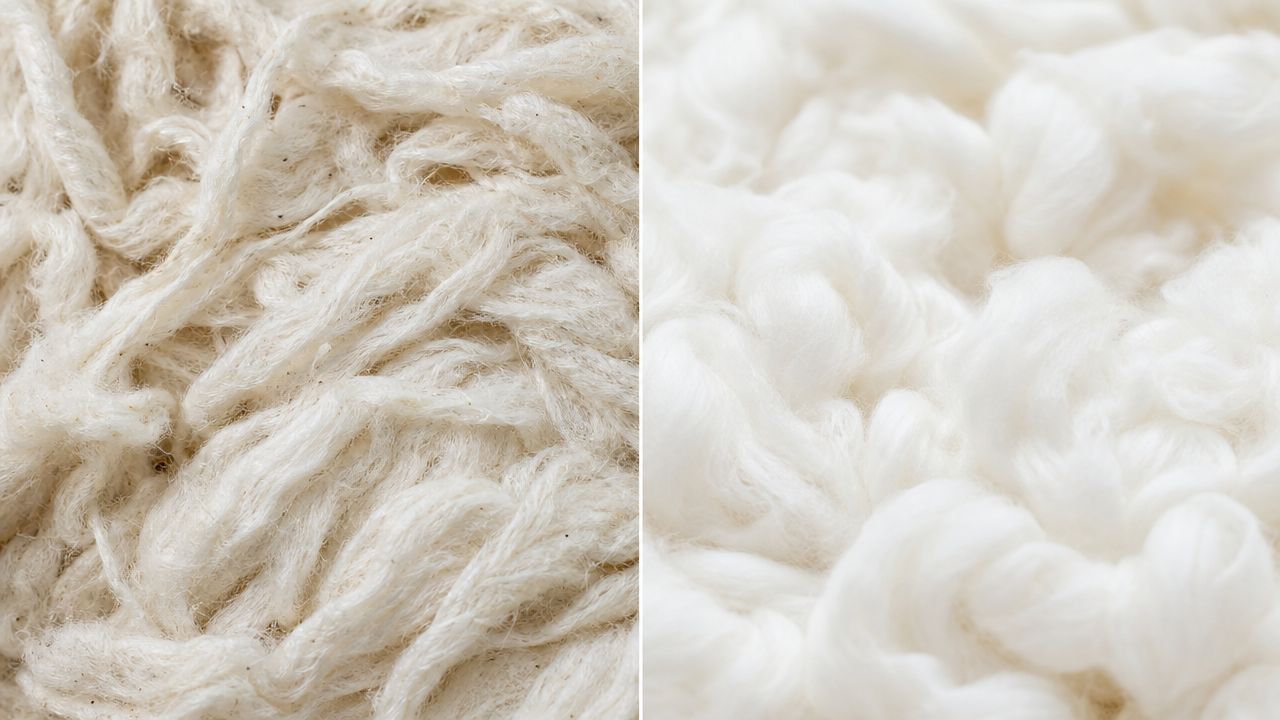
Conventional cotton farming usually focuses on scale, yield consistency, and established industrial inputs. Organic cotton farming relies more on soil stewardship, crop rotation, and biological methods that work within certification rules.
That doesn't mean every regular cotton robe is poor quality, or that every organic robe is luxurious. It means the starting conditions differ. Those differences shape how buyers think about environmental impact, processing decisions, and the level of traceability they want.
For home shoppers, the easiest parallel is household care. Many people who prefer organic textiles also choose lower-impact home products because they want fewer unnecessary chemicals in everyday routines. The same thinking often leads them to resources on choosing effective plant-based cleaners for kitchens and laundry spaces.
Organic cotton is small, but it isn't fringe
Some shoppers assume organic cotton is a tiny experimental category. It isn't. In the 2020/21 harvest year, the world produced 342,265 tons of certified organic cotton fiber, equal to about 1.4% of total global cotton output, grown on 1,536,232 acres across 21 countries, as summarized in these organic cotton market statistics.
That matters because it places organic cotton in a realistic middle ground. It's still a minority of global cotton production, but it has enough scale to support serious apparel and home textile use, including bathrobes, towel wraps, and hospitality textiles.
Why certification changes the conversation
A robe label that says cotton tells you fiber content. It doesn't tell you much about growing standards or processing oversight. Certification is what turns a general material claim into something more specific and verifiable.
If you want a practical primer on what organic textile standards mean in everyday shopping, this guide to the benefits of organic cotton for people and planet is a helpful next read.
A Side-by-Side Comparison of Cotton
You step out of a hot shower and reach for a robe. In that moment, cotton stops being an abstract material choice and becomes something physical. Does it pull moisture away quickly. Does it feel plush or slightly dry. Does it stay comfortable after dozens of washes. Those robe-level differences start much earlier, at the farm and in the finishing process.
Environmental and processing impact
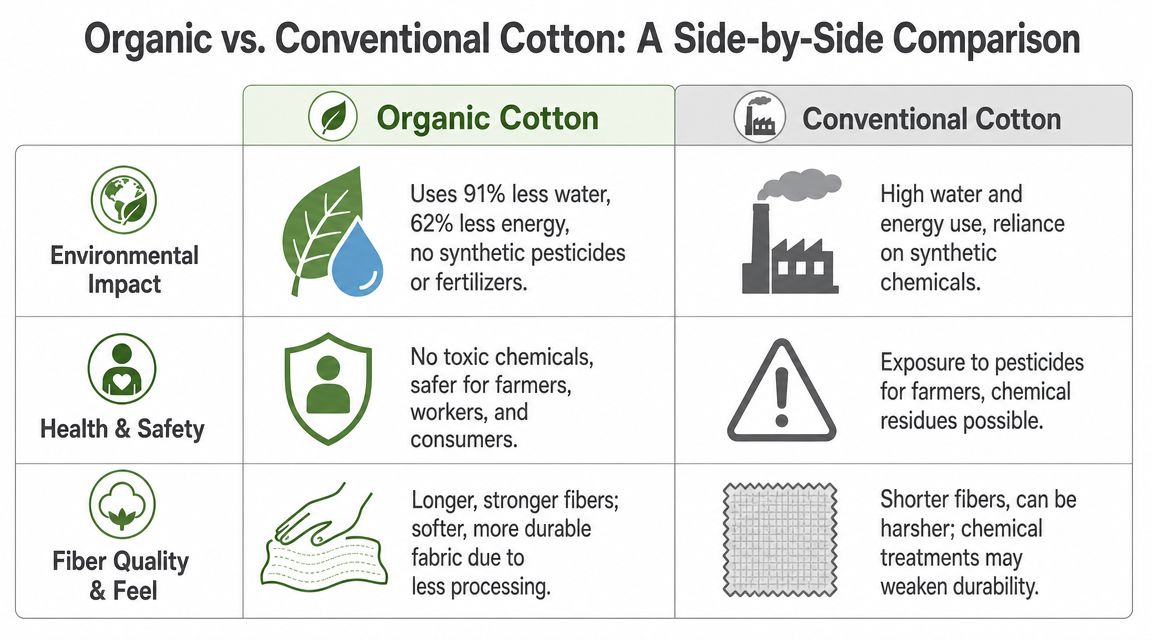
Organic and regular cotton differ first in how the crop is grown and handled. Organic production is built around certified restrictions on synthetic pesticides and fertilizers, while regular cotton follows conventional agricultural methods that can vary widely by region, farm, and supplier.
That difference matters to robe buyers because sourcing affects what kind of product a mill is starting with. A luxury bathrobe is not only about pile height or weave. It is also about whether you want a fabric story centered on lower-input farming and clearer standards, or one centered on cotton as a familiar fiber.
Water claims can also confuse shoppers. Some summaries report meaningful reductions for organic cotton, but results depend on climate, irrigation practices, and where the cotton is grown. This overview of organic and regular cotton differences for consumers is useful on that point because it explains why sourcing context matters more than broad assumptions.
For a discerning buyer, the practical question is straightforward. Do you want a robe whose cotton comes with more explicit production rules and traceability, or are you comfortable with a broader conventional supply chain where practices may be less visible?
Fiber quality and hand feel
This is the part people often oversimplify. Organic cotton is not automatically softer. A robe's feel comes from several layers working together: fiber length, yarn quality, weave or terry construction, finishing, and how the fabric changes after laundering.
A bathrobe makes those differences easy to notice because you use it on clean, damp skin. If the fabric is heavily finished, it may feel unusually slick at first and less appealing later. If the cotton is processed with a lighter hand, the robe can feel more breathable and more natural against the body, especially in waffle weaves and lighter spa styles.
A useful comparison is to treat cotton quality like the foundation of a mattress. The topper changes the first impression, but the base determines how it performs over time. With robes, first-touch softness matters, yet the better test is how the fabric feels after repeated washing, drying, and everyday wear.
Ask these questions when you compare robes:
- How does it behave when wet: Good robe cotton absorbs moisture without feeling swampy or clingy.
- How does it age: Softer after washing is a good sign. Roughness, matting, or pilling is not.
- How heavy does it feel on the body: Dense terry suits a cocooning, hotel-style experience. Lighter waffle cotton suits warmer climates and quick-drying use.
- Does the finish feel natural: Some buyers prefer cotton that softens gradually over cotton that relies on a strong initial finish.
Health, labels, and buyer trust
Both organic and regular cotton can produce a beautiful robe. The sharper difference is how much the label helps you verify what sits behind the fabric.
Organic claims are most useful when they are supported by credible certification. That gives you a clearer basis for understanding what was restricted at the farming stage and, in some cases, what was monitored through processing and manufacturing. For a personal robe, that can bring peace of mind. For a gift, it gives the giver a more meaningful story than softness alone. For hospitality buying, it supports a more consistent sourcing standard across a larger textile program.
If you are paying for a luxury robe, the label should answer real questions. What kind of cotton is this. How much can I verify. Will this robe still feel good, wash well, and reflect the values I want attached to something I use every day.
How Cotton Choice Translates to Bathrobe Performance
A farm-level difference only matters if it changes the robe you live with. For bathrobes, the biggest performance questions are absorbency, softness, durability, and breathability.
A robe meets your skin at a specific moment. You've stepped out of the bath or shower, your body is warm, and you want the fabric to do two things at once. It should remove moisture, and it should feel comforting rather than bulky. That's why bathrobes reveal cotton quality so clearly.
Absorbency after bathing
Absorbency isn't only about how much water a fabric can take in. It's also about how quickly the robe starts working and whether it still feels pleasant while doing it. Dense terry robes create that classic enveloping, hotel-style experience. Waffle robes feel lighter and often suit people who want a robe that dries faster and breathes more easily between uses.
Organic cotton appeals to many robe buyers because the fabric often feels less overfinished. In practical terms, that can mean a more natural interaction with moisture and skin. The robe feels like fabric, not like fabric plus coating.
Softness you notice over time
The first touch in a product photo isn't the full story. The better test is week six, not day one. A bathrobe earns its place when the inner surface still feels smooth after repeated laundering and regular wear.
Many discerning customers prefer organic cotton robes. Not because every organic robe starts softer than every regular one, but because a well-made organic robe often keeps a pleasing hand feel without seeming artificially slick. In luxury loungewear, that matters. Softness should feel relaxed and refined, not waxy or overly treated.
A good example of this lighter, skin-close experience appears in waffle textures designed for post-bath wear.
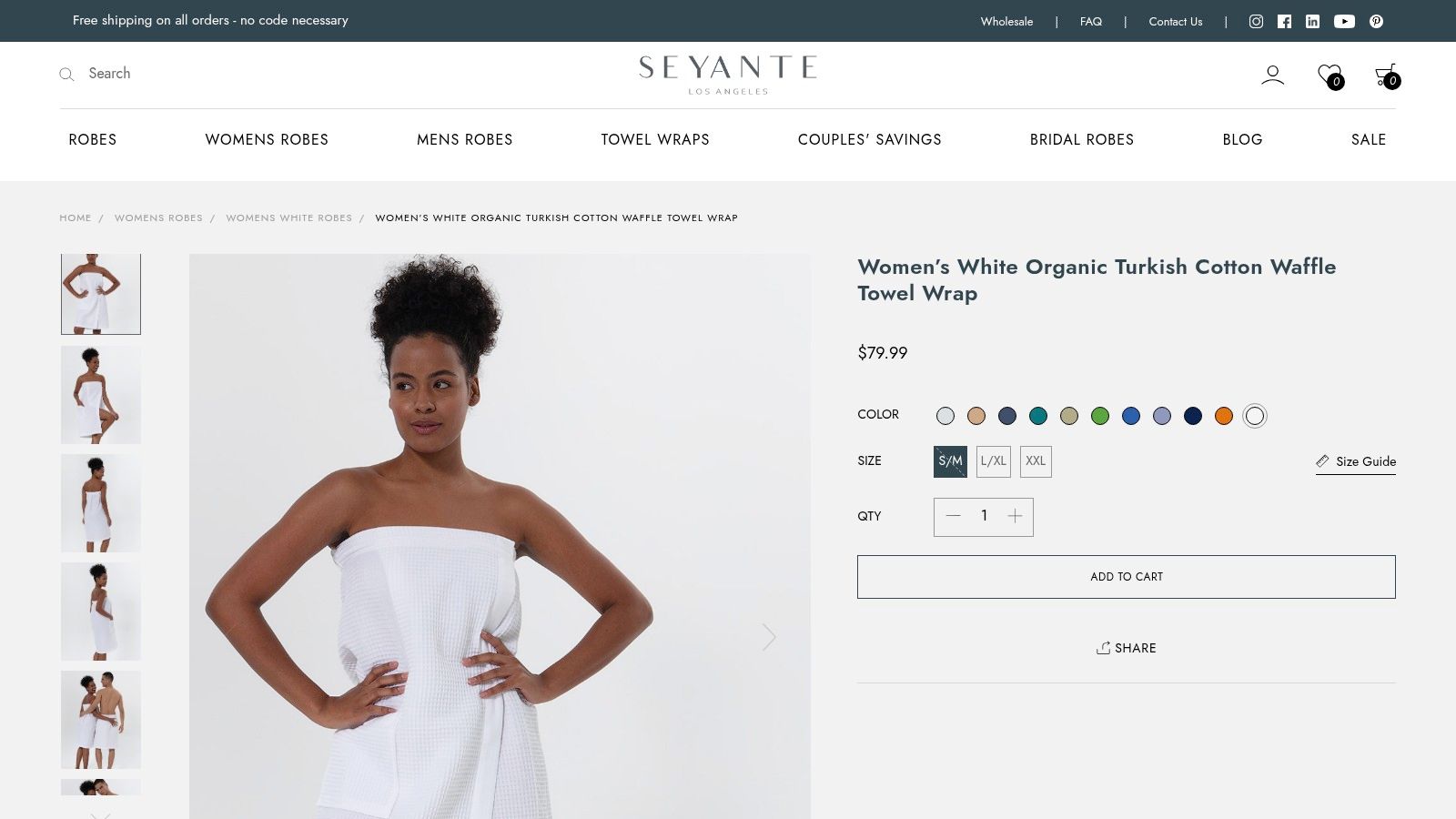
One option in this category is SEYANTE's GOTS-certified organic Turkish cotton waffle towel wrap, which shows how organic cotton is used in a lightweight bath textile intended for direct post-shower comfort rather than heavy lounging.
Durability in real home use
Durability in robes isn't glamorous, but it's part of luxury. A robe that loses shape, stiffens quickly, or develops a tired surface stops feeling special no matter how expensive it was.
Watch for these signs of lasting performance:
- Seam stability: The robe should keep its structure after washing, especially at the belt loops, collar, and pockets.
- Surface consistency: The fabric should age evenly instead of becoming patchy or flattened.
- Balanced weight: A heavier robe can feel sumptuous, but it shouldn't become exhausting when damp.
- Recovery after laundering: The robe should return to a comfortable drape without feeling papery.
Bathrobe luxury is less about thickness alone and more about how the fabric behaves after heat, steam, water, and washing.
Breathability for everyday comfort
The most overlooked robe feature is breathability. Many people buy a plush robe and then stop wearing it because it's too warm for normal mornings. Cotton choice and weave both affect that outcome.
If you want a robe for year-round use, a breathable cotton with a lighter structure often performs better than a very dense style. If you want a robe for winter evenings, a thicker terry can feel wonderful. The key is to match the cotton and construction to the ritual you have, not the fantasy robe you think you should own.
The Cost of Cotton A Look at Price and True Value
Organic robes usually cost more. That's the part shoppers notice first, and it's fair to ask why.
Part of the answer is production. Organic cotton can require more labor and costs more, and the value is best understood through certification rather than a vague eco claim, as explained in this article on GOTS and the broader meaning of organic textiles. A certified robe reflects not just fiber content, but a more controlled chain of sourcing and processing.
Why the price gap exists
The price difference often reflects a mix of factors:
- Certification work: Verified standards add oversight and documentation.
- Farming constraints: Organic production follows stricter input rules.
- Labor intensity: Organic systems can require more hands-on management.
- Smaller supply base: Organic cotton remains a smaller segment of the market.
That doesn't make every higher-priced robe a better buy. It means you should ask what the higher price is paying for.
What value looks like in a bathrobe
Many consumer comparisons focus only on the absence of pesticides, but a better buying lens is total impact. Organic cotton can require more labor and cost more, yet certification gives the value substance because it extends beyond a simple organic-versus-regular binary across the supply chain, according to this discussion of organic cotton, conventional cotton, and certification value.
For robe buyers, true value usually comes down to three questions:
- Will you wear it often enough to justify the purchase?
- Does it stay comfortable and attractive after regular laundering?
- Does the label give you confidence about what you're bringing into your home?
If the answer is yes to all three, a higher initial price can feel reasonable. If not, even a cheaper robe may end up being disappointing value because it spends more time on a hook than on your shoulders.
How to Choose the Right Cotton Robe for You
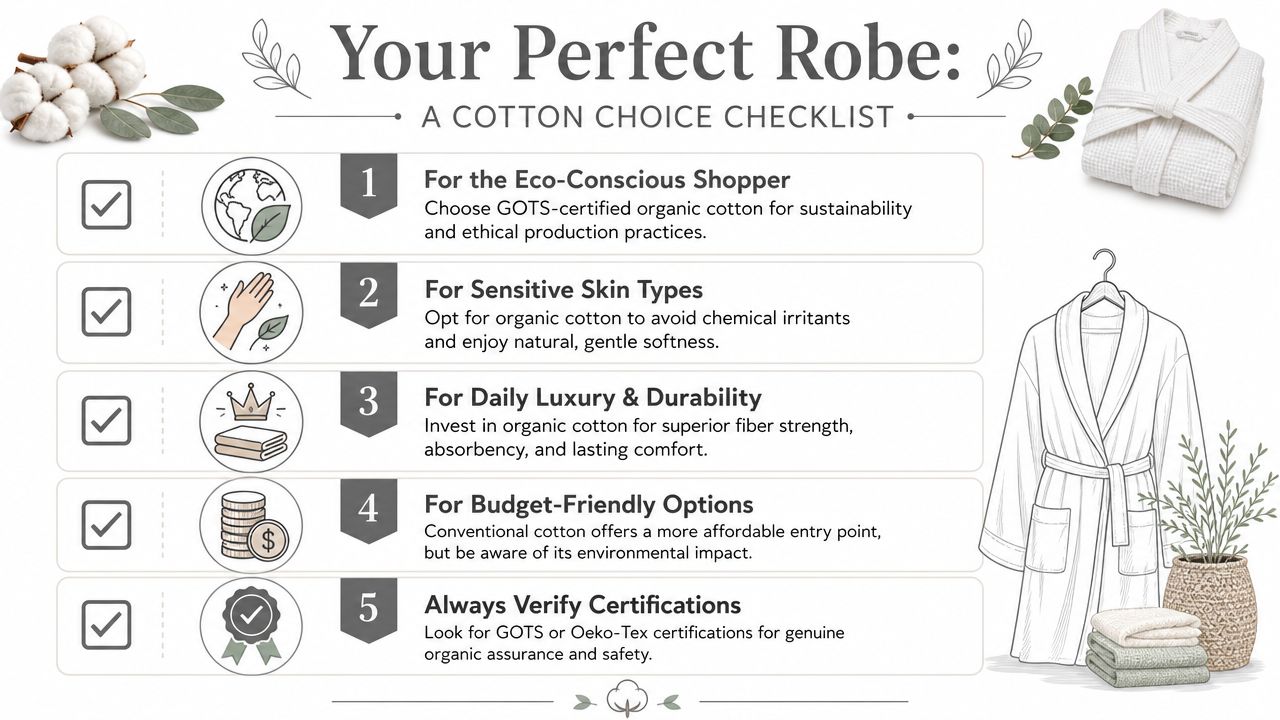
Choosing between organic cotton and regular cotton gets easier when you stop asking which is universally better and start asking which robe fits your use. The right answer for a personal self-care robe isn't always the same as the right answer for a guest gift or a hospitality program.
For personal daily use
If this robe is for your own routine, start with the feeling you want after bathing.
A lighter waffle robe suits someone who wants breathability, quick comfort, and a robe that doesn't feel overwhelming during skincare, coffee, or hair drying. A denser terry robe fits the person who wants a cocooning, classic bath-sheet feeling.
Choose organic cotton if these priorities sound familiar:
- You care about certification: You want the material claim backed up by a recognized standard.
- You prefer a cleaner-feeling fabric: You like textiles that feel less coated and more natural in the hand.
- You're building a lower-impact home routine: The robe is part of a broader shift in what you buy and keep.
Choose regular cotton if your main priority is a lower upfront cost and you've found a robe with excellent construction, a weave you enjoy, and a finish that feels good on your skin.
For gifting
Bathrobes make strong gifts because they feel personal without being difficult to size if the cut is forgiving. They also communicate care in a direct, tactile way. The recipient notices the fabric immediately.
For gifting, organic cotton often carries extra meaning because it combines softness with thoughtfulness. It tells the recipient you paid attention not just to appearance, but to material quality and sourcing. That's especially fitting for bridal gifts, post-partum comfort, spa-themed gifts, or a close friend who values premium basics.
A gift robe should feel generous the first time it's worn, but the better gift is the one that still feels special months later.
For hospitality and guest settings
Hotels, spas, and boutique stays need to balance sensory appeal with repeat laundering and consistent presentation. That means the robe must feel inviting on first use and remain orderly after many wash cycles.
Hospitality buyers usually do well by narrowing decisions around these criteria:
- Guest impression: Does the robe feel substantial, clean, and calming the moment a guest puts it on?
- Climate fit: A heavy robe isn't ideal in every location or season.
- Laundry reality: The fabric has to recover well and maintain a polished look.
- Brand alignment: If the property emphasizes wellness or responsible sourcing, certified organic cotton may strengthen that story.
For some hospitality settings, a regular cotton terry robe can still make sense if the operation prioritizes budget and high turnover. For others, especially boutique wellness properties, organic cotton may better support the guest experience and the brand promise.
Reading the labels well
A lot of confusion disappears once you know what the label is telling you.
Look for these signals:
- Cotton content: This tells you the fiber type, not the farming system.
- Organic claim: Useful, but stronger when paired with recognized certification.
- GOTS mention: This gives many shoppers the clearest confidence when they specifically want certified organic textiles.
- Product construction: Waffle, terry, hooded, kimono, and wrap styles all change the wearing experience.
- Care instructions: A robe that requires realistic care is more likely to stay in regular use.
The right robe is the one that fits your mornings, your climate, your skin preferences, and your values. If you want a robe that feels indulgent but still practical, focus on verified fiber claims, weave, weight, and how you plan to wear it. That combination matters more than a trendy label alone.
If you're looking for a robe that brings together comfort, thoughtful construction, and certified organic options for everyday self-care, explore SEYANTE and compare waffle and terry styles based on how you want your robe to feel after every bath, shower, or slow morning at home.