Terry Cloth Robe: The Ultimate Buyer's Guide for 2026
- The Embrace of a Perfect Terry Cloth Robe
- The Anatomy of Terry Cloth Fabric
- Decoding Terry Robe Quality and Materials
- Choosing Your Perfect Terry Robe Style
- The Ultimate Terry Robe Buyer's Guide
- How to Care for Your Terry Robe for Lasting Softness
- Terry Robes for Hospitality and Gifting
- Investing in Your Everyday Comfort
You step out of a warm shower, skin still carrying heat, hair damp, bathroom mirror fogged. For a few seconds, the room feels colder than it should. A towel helps, but it doesn't quite finish the job. What you want is something that dries, warms, and settles you all at once.
That's where a terry cloth robe earns its place. It isn't just another layer hanging on a hook. It becomes part of a ritual: the few quiet minutes after bathing, the slow weekend morning, the pause before skin care, tea, or bed.
People often shop for robes by color or silhouette first. Then the robe arrives and feels too heavy, too thin, too stiff, or oddly clammy after use. The difference usually comes down to fabric structure, fiber quality, cut, and care. Once you understand those parts, choosing a robe gets much easier.
The Embrace of a Perfect Terry Cloth Robe
A good robe changes the mood of a room. The same bathroom feels more restful when you have a robe that catches moisture quickly and wraps the body without fuss. You notice it most on ordinary days, not special ones.
Think about two common mornings. In the first, you use a thin robe that looks nice but barely dries your arms and shoulders. Ten minutes later, it still feels cold against your neck. In the second, you slip into a terry cloth robe with a soft cotton pile. It absorbs the leftover water, holds warmth near the body, and lets you move into the rest of your routine feeling finished instead of half-dressed.
That's why terry robes show up in spas, hotels, locker rooms, and homes. They solve a specific comfort problem. You're not only covering up. You're extending the feeling of the bath itself.
More than a post-shower layer
The appeal isn't hard to explain once you've worn the right one. Terry cloth has a tactile generosity. It feels substantial in the hand, slightly cushiony on the skin, and reassuringly practical. It says, “you can stay in this moment a little longer.”
A robe becomes part of daily life when it works without asking for attention. It dries well, hangs well, and feels right every time you reach for it.
Why buyers get stuck
Most confusion starts with words like plush, luxury, and spa-quality. Those terms sound useful, but they don't tell you how a robe will perform in your bathroom. A robe can feel plush in a product photo and still miss the mark for absorbency, drying time, or warmth.
The better way to choose is to connect the technical details to the experience you want:
- If you want post-shower drying, pay close attention to terry construction and fiber.
- If you want a lounge robe, focus on cut, length, and how heavy the fabric feels over time.
- If you want both, you'll need to balance absorbency with drying speed and bulk.
That balance is the heart of buying well. Once you understand the fabric, the robe starts making sense.
The Anatomy of Terry Cloth Fabric
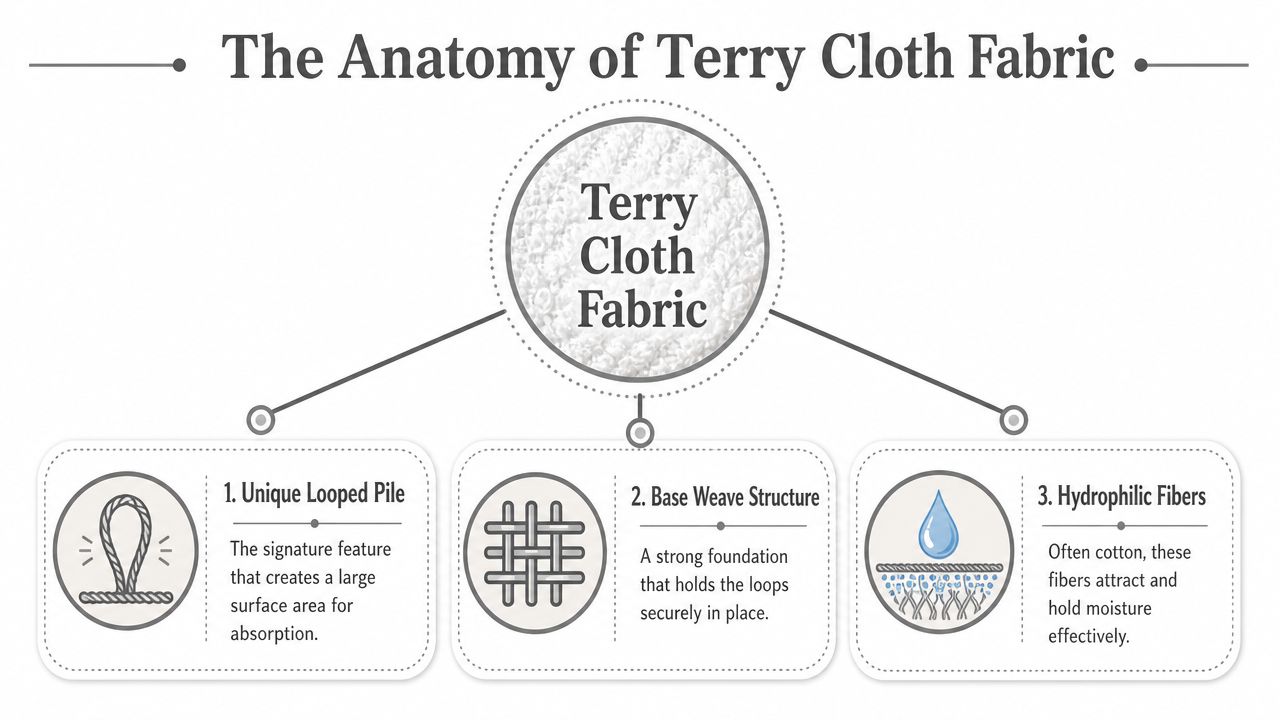
Terry cloth looks simple from a distance. Up close, it's clever. Its performance comes from one defining feature: a looped pile structure.
Why loops matter
Picture the surface of a terry cloth robe as a dense little forest of cotton loops. Each loop adds more exposed fiber. More exposed fiber means more surface area. More surface area gives water more places to land and be held.
That's the key reason terry works so well after bathing. A flat, smooth fabric can feel pleasant, but it doesn't present the same amount of active surface to moisture. Terry does. The loops create a fabric that behaves more like a towel than a standard woven robe.
The same structure also explains a common trade-off. Because those loops hold more water, terry often feels heavier after use and can take longer to dry than a smoother robe fabric. That isn't a flaw. It's the cost of high absorbency.
The three parts to notice
When you strip away the marketing language, terry cloth performance comes from a few basic elements:
- Looped pile: This is the plush surface you feel. It's responsible for much of the robe's absorbency.
- Base weave: Beneath the loops is the fabric foundation that holds the structure together.
- Hydrophilic fiber: Terry robes are often made with cotton, a fiber known for taking in moisture well.
A robe that gets these elements right feels useful the second you put it on. It doesn't just sit on the body. It interacts with water and warmth.
How terry changed bathrobe history
Terry cloth also changed who bathrobes were for. A historical overview of bathrobe development notes that terry cloth became a turning point in bathrobe history in the late 1800s, when looped-fiber cotton fabrics that were especially absorbent became widely available. That shift helped move the bathrobe from a more elite garment toward a mass-market household item, alongside the Industrial Revolution's cheaper, more accessible cotton textiles, as described in this history of bath robes and terry cloth adoption.
In plain terms, terry cloth made the robe more practical for everyday people. It wasn't only decorative or ceremonial anymore. It became useful.
Practical rule: If a robe is meant to dry you after bathing, the fabric structure matters as much as the style. Terry works because the loops do real mechanical work.
That history still shapes modern buying decisions. We're still choosing between more absorbency, more lightness, more warmth, and faster drying. Terry starts from a very strong absorbent base.
Decoding Terry Robe Quality and Materials
Not all terry feels the same on skin, and not all of it ages the same in the wash. The biggest difference often starts with the fiber itself.
Why fiber choice changes the feel
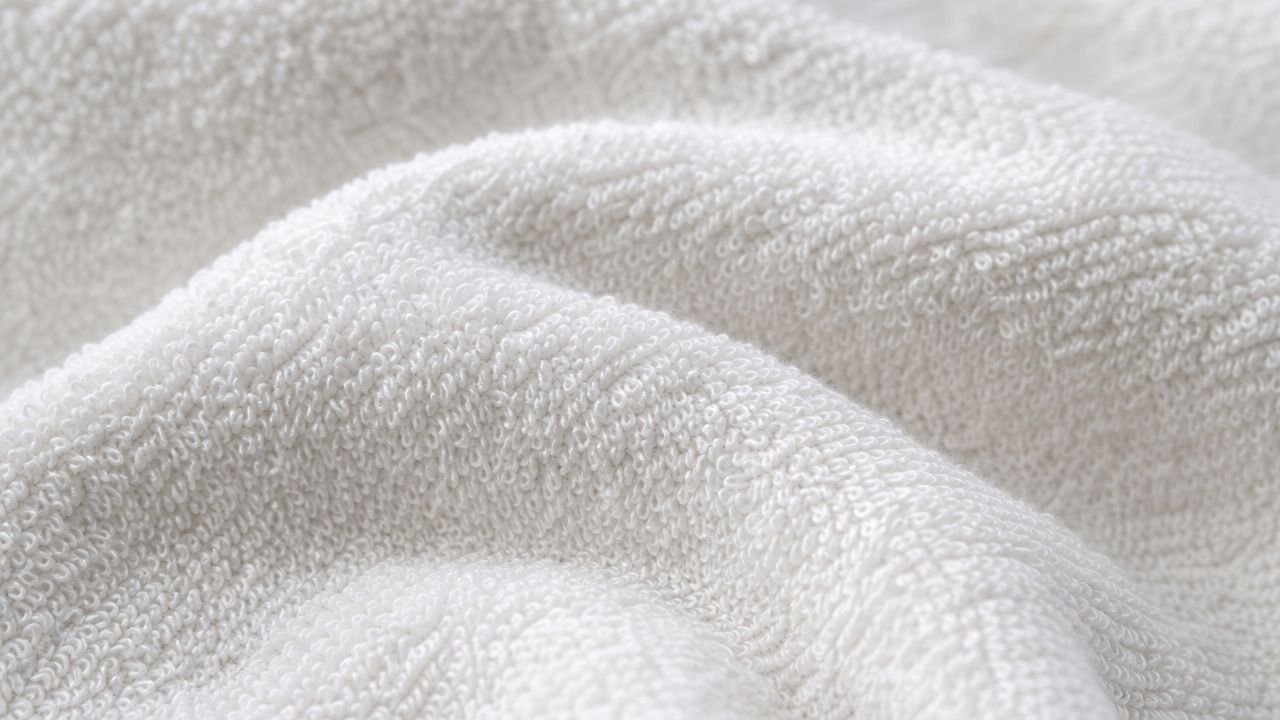
For terry robes, 100% cotton is the benchmark many shoppers look for, especially when softness and absorbency matter. Product guidance and retailer specifications also consistently highlight Turkish cotton, because its long-staple fibers create a softer finish and better resilience than shorter fibers or many blends, as discussed in this guide to the best terry cloth robes and cotton choices.
Long-staple cotton matters because fiber length affects both touch and wear. Longer fibers can produce a smoother, softer yarn with less roughness. In a robe, that translates into a handfeel that's less scratchy and a surface that tends to stay more composed over time.
If you've ever compared two white terry robes that looked almost identical online but felt completely different in person, fiber quality was probably part of the story.
What quality looks like in practice
A better robe usually reveals itself through details that sound unglamorous but matter daily:
- Fiber content: 100% cotton tends to appeal to buyers who want natural softness and absorbency.
- Cotton origin and staple length: Turkish cotton is often chosen for a softer finish and stronger resilience.
- Construction integrity: Loops should feel even and securely held, not sparse or loosely snag-prone.
- Seams and finishing: A robe should hang cleanly at the shoulder and tie comfortably without twisting.
For readers comparing materials across robe categories, this bathrobe fabric guide from SEYANTE gives a useful overview of how terry differs from other common options.
Don't separate material from pattern
Quality isn't only fiber deep. The robe's cut changes how that fabric behaves on the body. Commercial specifications show this clearly. One luxury line lists a kimono version with a 48-inch center-back length and 17-inch sleeves, while a shawl-collar version has a 52-inch center-back length and 25-inch sleeves. Those choices affect coverage, mobility, and warmth.
A dense cotton terry in a shorter kimono shape can feel practical and easy. The same kind of terry in a longer shawl-collar robe can feel cocooning and more insulated.
That's why “good quality” can't mean only “thick.” Good quality means the material and pattern are working toward the same use. A robe for spa movement, post-shower drying, and early-morning lounging may need three different balances of softness, coverage, and bulk.
Choosing Your Perfect Terry Robe Style
Style changes the experience of a terry cloth robe more than many shoppers expect. The same fabric can feel relaxed, formal, sporty, or completely cocooning depending on the cut.
The kimono robe
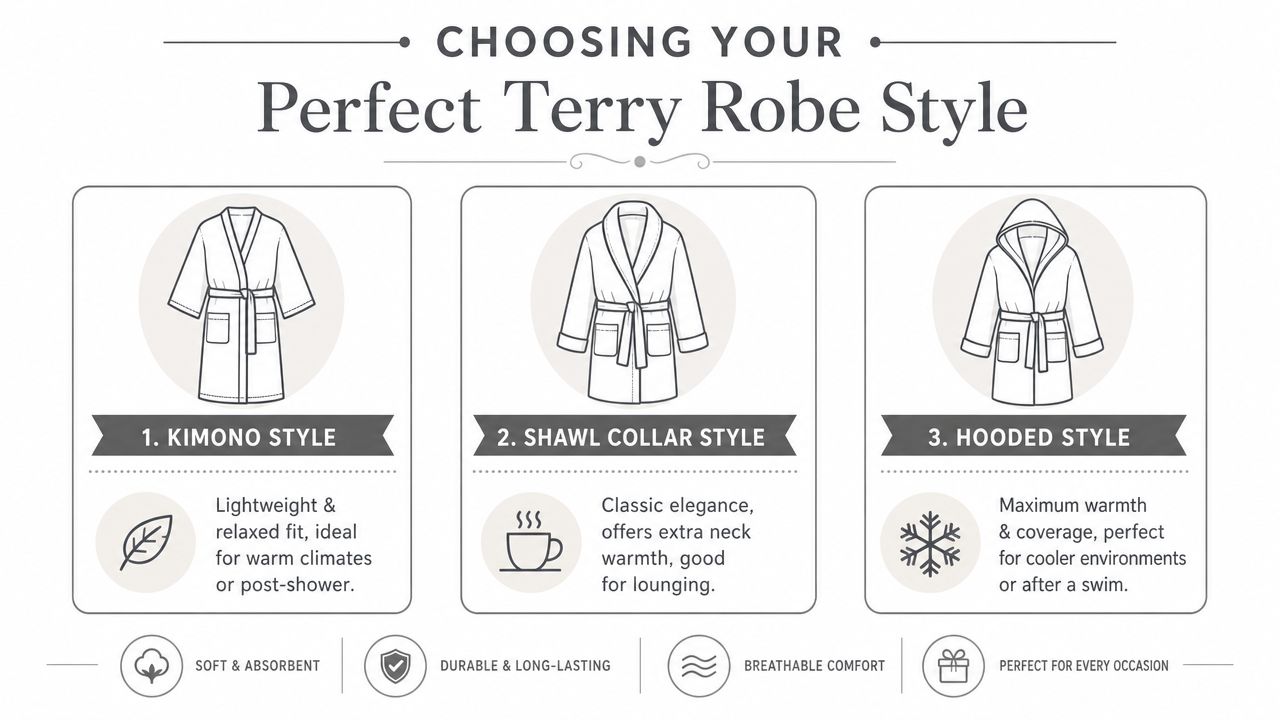
A kimono-style robe is usually the cleanest and least bulky option. It has a simpler neckline, straighter lines, and easier arm movement. If you like to wear a robe while doing skin care, drying your hair, making breakfast, or moving around the house, this style often feels less fussy.
It's also a smart choice for people who enjoy terry cloth but don't want too much visual or physical weight around the neck and chest.
The shawl-collar robe
The shawl collar is what many people picture when they imagine a classic luxury hotel robe. The rolled collar adds softness around the neck and gives the robe a more enveloping feel.
This style tends to suit slower routines. Reading on the sofa, drinking coffee, winding down at night, or staying warm after a bath all feel especially natural in a shawl-collar robe. The extra fabric near the neckline can make the whole garment feel richer and calmer.
If you want your robe to feel like part towel, part blanket, shawl collar is often the emotional favorite.
The hooded robe
A hooded terry robe solves a specific post-water problem. Wet hair and exposed necks lose heat quickly. A hood helps close that gap. It's useful after a shower, swim, or cold-weather bath when you want more immediate warmth.
The trade-off is bulk. Some people love the extra coverage. Others find the hood too warm for everyday indoor wear. This style works best when warmth and coverage outrank minimalism.
A simple way to choose
If you're deciding between styles, think less about fashion language and more about your routine:
- Choose kimono if you want movement, lighter bulk, and a cleaner silhouette.
- Choose shawl collar if you want neck warmth and a traditional lounge feel.
- Choose hooded if your robe's main job is warming you up fast after water.
Another useful question is where you'll wear it most. A robe used mostly in the bathroom has different priorities than one worn for an hour around the house. The right style should feel natural in your actual habits, not just appealing in a product photo.
The Ultimate Terry Robe Buyer's Guide
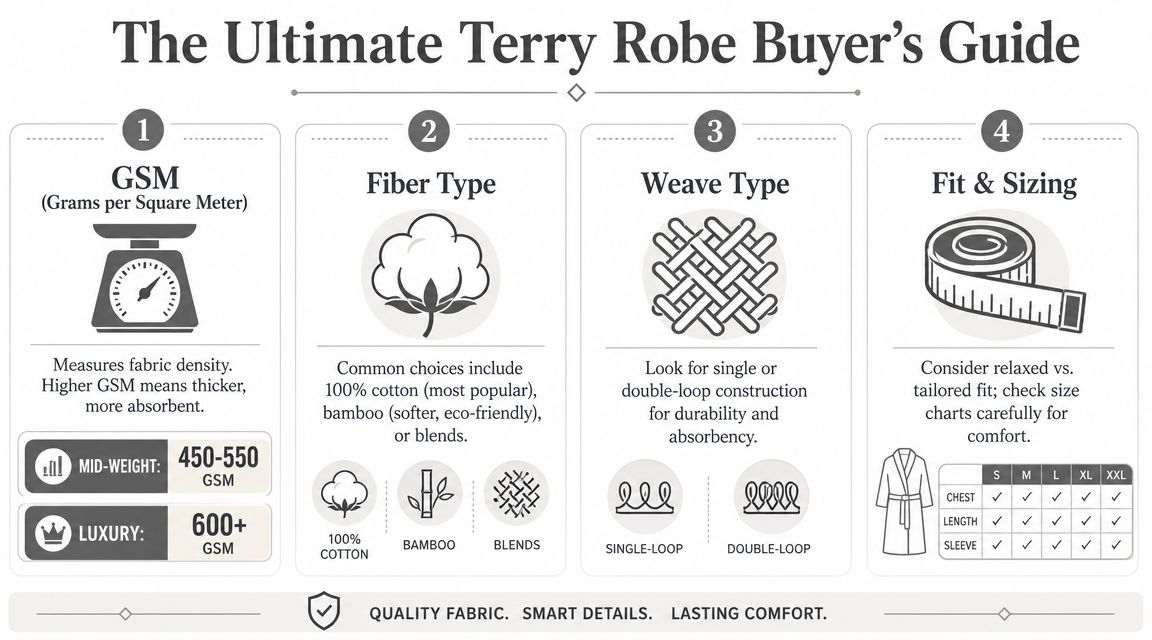
Buying a terry cloth robe gets easier when you stop asking, “Which one looks nicest?” and start asking, “How do I want it to perform?” Fabric weight, fiber, cut, and drying behavior all matter. The trick is understanding how they work together.
A useful place to start is fabric weight. In terry robes, quality is often described by GSM, or grams per square meter. Product guidance also notes that around 450 GSM provides a substantial drape without feeling overly heavy, while the looped pile structure increases surface area for absorption. The same guidance points out the central trade-off: higher loop density and mass usually increase absorbency, but they also increase drying time. You can find that explained in this terry cloth robe washing and performance guide.
Here's a quick visual summary before you compare options in detail.
Start with how you'll use it
Your best robe depends on your most common moment with it.
-
Right after a shower
You'll likely want stronger absorbency, comfortable cotton against the skin, and enough heft to feel drying rather than decorative. -
Long lounging sessions
You may prefer a softer drape, more coverage, and a cut that feels cozy rather than utilitarian. -
Daily quick wear
A lighter terry robe can feel easier to grab, hang, wash, and rewear.
Terry Cloth Robe GSM Guide
| GSM Range | Weight | Feel & Absorbency | Best For |
|---|---|---|---|
| Below 450 GSM | Light to mid-weight | Easier to wear, usually less dense and less plush | Quick routines, warmer homes, buyers who dislike heavy robes |
| Around 450 GSM | Mid-weight | Substantial drape without feeling overly heavy | Everyday use, balanced comfort, mixed drying and lounging needs |
| Above 450 GSM | Heavier weight | More plush and absorbent feel, but often slower to dry | Cooler settings, post-bath comfort, buyers who want a fuller robe feel |
The exact robe still matters, but this table gives you a reliable starting lens. If you hate damp fabric hanging around for hours, don't assume the heaviest robe is automatically the smartest choice.
Fit matters as much as fabric
A robe that's technically excellent can still disappoint if the proportions are off. Check shoulder ease, sleeve length, total length, and how much overlap you get at the front. A robe should wrap without strain and move without constant readjustment.
Use these quick checks:
- For mobility: shorter length and simpler sleeves often feel easier.
- For warmth: longer body coverage and a fuller collar help hold heat.
- For shared gifting: a slightly more relaxed fit is often easier than a trim one.
The best question to ask before buying
Ask what you want to feel five minutes after putting the robe on.
Do you want to feel dry? Warm? Light? Swaddled? Ready to move around? That answer usually points you toward the right GSM range and silhouette faster than any marketing phrase can.
How to Care for Your Terry Robe for Lasting Softness
A terry cloth robe feels luxurious because the cotton loops stay open, soft, and able to absorb moisture. Care habits can either protect that structure or gradually flatten it.
The good news is that robe care isn't complicated. It just rewards consistency.
Washing habits that help
Wash your robe with enough room for water and detergent to move through the pile. Overstuffed loads press loops against each other and can leave residue behind. A gentle detergent and a moderate wash setting usually make more sense than harsh treatment.
Keep an eye on what shares the load. Items with zippers, hooks, or rough trims can catch terry loops and create pulls.
- Wash with similar fabrics so the looped surface doesn't rub against abrasive garments.
- Use a measured amount of detergent because excess product can stay in the pile and dull the feel.
- Skip fabric softener if absorbency matters to you. Coated fibers don't take in water as well.
Cotton loops work best when they stay clean and open. Residue can make a robe feel softer for a moment but less useful over time.
Drying without flattening the pile
Terry needs enough drying to feel fresh and full, but too much heat can make cotton feel stressed and rough. A lower-heat tumble cycle is often the safer choice if you want softness without overdrying.
If the robe feels stiff after air drying, that's usually a texture issue rather than damage. A short, gentle tumble can help loosen the pile. Whatever method you use, don't leave the robe bunched up while damp.
Storage and long-term feel
How you store a robe affects how inviting it feels next time. Hang it where air can circulate, especially if you wear it right after bathing. Stuffing a damp or slightly damp robe into a crowded closet can leave it feeling stale and compressed.
For a more detailed routine, this robe care guide from SEYANTE walks through washing, storing, and maintaining softness.
Common problems and what they usually mean
A few changes in feel are normal over time, but they often have simple causes:
- Stiffness often points to detergent buildup, hard water effects, or overdrying.
- Reduced absorbency can happen when softeners or residues coat the cotton.
- Loose loops usually come from friction with rough laundry items or snagging during wear.
- Flattened texture can mean the robe needs gentler drying and less compression in storage.
Treat care as part of the ritual, not a chore. A robe that's cleaned and dried with intention keeps giving back the same calm, soft experience you bought it for in the first place.
Terry Robes for Hospitality and Gifting
A terry cloth robe has two lives beyond personal use. It works as a guest-experience tool in hospitality, and it works as a gift that feels both generous and practical.
For hotels, spas, and short-term stays, a robe signals care in a way few room amenities can. Guests feel the quality instantly. They don't need an explanation. The robe either feels thoughtful and comforting, or it feels forgettable.
Why hospitality buyers care
For operators, the robe isn't just a textile purchase. It shapes the emotional tone of a stay. A well-chosen terry robe can support a spa treatment room, a boutique suite, or a guest bath by extending the feeling of rest beyond the shower itself.
The category is also commercially meaningful. One market study estimates the global bath robes market at $3,446.48 million in 2021, rising to $4,203.6 million in 2025 and projected to reach $6,253.35 million by 2033, with a forecasted 5.09% CAGR from 2025 to 2033. The same study estimates the U.S. market at $1,182.92 million in 2021 and $1,408.52 million in 2025, which you can review in this global and U.S. bath robes market report.
That scale helps explain why robe selection gets serious attention in hospitality programs. It's a durable textile purchase tied directly to guest comfort.
For operators exploring robe presentation and guest use, this guest bathrobe article from SEYANTE offers practical context.
Why robes work so well as gifts
For gifting, a terry robe succeeds because it feels personal without being overly specific. It fits weddings, bridal parties, holidays, anniversaries, housewarmings, and recovery gifts. It says comfort, not clutter.
The easiest gift choices are usually:
- Kimono styles for broad appeal and easier fit flexibility
- Shawl-collar robes for a classic, cozy impression
- Neutral colors when you don't know the recipient's taste closely
How to reduce gifting anxiety
Sizing worries stop many people from buying robes as gifts. A few habits make the decision easier:
- Lean slightly roomy because robes are meant to wrap, not fit close like fitted clothing.
- Think about height as well as size since robe length changes the whole feel.
- Match the style to the person's routine. A parent with little downtime may prefer easy movement, while a dedicated bath-lover may want fuller warmth.
A robe gift works best when it feels usable on day one. That's what makes it memorable.
Investing in Your Everyday Comfort
A terry cloth robe is one of those objects that seems simple until you understand what makes one feel wonderful and another feel wrong. The loops matter. The cotton matters. The cut matters. The care matters.
Once you know that, shopping becomes less random. You can look at a robe and ask better questions. Will this absorb well after a shower? Will it feel too heavy for daily use? Do I want a cleaner kimono line or the extra warmth of a shawl collar? Is this a robe for drying off, lounging, or both?
The real purchase isn't only the robe
What you're really buying is a repeatable moment. A softer landing after a long day. A warmer start to a cold morning. A small buffer between bathing and everything that comes next.
That's why technical details aren't dry or fussy here. GSM, cotton staple length, and robe pattern all connect directly to lived comfort. They tell you whether the robe will support the ritual you want.
Buy for the moment you'll use most often, not for the product photo you like best.
Confidence comes from knowing what to notice
If you remember only a few things, let them be these:
- Terry loops drive absorbency
- Cotton quality shapes softness and resilience
- Cut changes warmth, movement, and coverage
- Heavier isn't always better if fast drying matters
- Good care protects the feel that made you love the robe
A well-chosen terry cloth robe doesn't feel extravagant in the shallow sense. It feels smart, grounded, and comforting. It earns its place because you reach for it again and again.
That's the quiet power of everyday luxury. It doesn't interrupt life. It improves the texture of life.
If you're ready to turn your post-shower routine into something more intentional, explore SEYANTE for terry and waffle robes designed around comfort, thoughtful construction, and daily wear.