The Psychology of Wrapping Up: Why Robes Make Us Feel Safe
- Why Does Being Wrapped Up Feel So Healing?
- Softness Has a Science of Its Own
- The Cocoon Effect: Wrapping as a Subtle Shelter
- Why Pure Fabrics Change the Whole Experience
- Deep Pressure, Deep Calm: Why Robes Help You Sleep Better
- Comfort Is Emotional, Physical, and Ethical
- An Experience That Deserves To Be Protected
- Care With Purpose
- FAQs
- Last Thought
Why Does Being Wrapped Up Feel So Healing?
There’s a tiny moment at the end of a long day when you slip into something soft, and your whole body exhales. It’s such a simple gesture that you might forget how deeply human it is. We wrap ourselves up to feel safe, warm, held… and to be fair, sometimes we just want the world to quiet down for a minute.
At SEYANTE, we’ve always believed that our bodies are far wiser than we give them credit for. The way skin reacts to softness, the way breath slows under gentle pressure, the way calm settles when a robe made of GOTS Certified Organic Turkish Cotton rests on your shoulders - Pure & Safe, Chemical Free, Ethically Made - none of this is accidental. It’s biology, memory, comfort, and a bit of ancient instinct all woven together.
Let’s walk through what actually happens when you’re wrapped up - the science, the emotion, the sensory magic - and why the right fabric matters far more than most people realize.
Softness Has a Science of Its Own
You might be wondering why the body reacts so intensely to soft textures. It turns out the answer isn’t poetic at all; it’s hormonal. When your skin meets something genuinely soothing, your body releases oxytocin, sometimes casually nicknamed the “cuddle hormone.” It’s the same hormone that encourages bonding, warmth, and safety.
And here’s where it gets interesting. That soft, steady contact isn’t just pleasant - it sends a message through your nervous system that says, basically, “you can ease up now.” Heart rate slows. Breathing becomes steadier. Your parasympathetic nervous system gets a green light to calm down.
So when people say that putting on a robe feels grounding, they’re not exaggerating. It’s your biology slipping into rest mode.
Some researchers even compare this response to the comfort babies feel when swaddled. Adults don’t outgrow that instinct; we just get better at forgetting it.
The Cocoon Effect: Wrapping as a Subtle Shelter
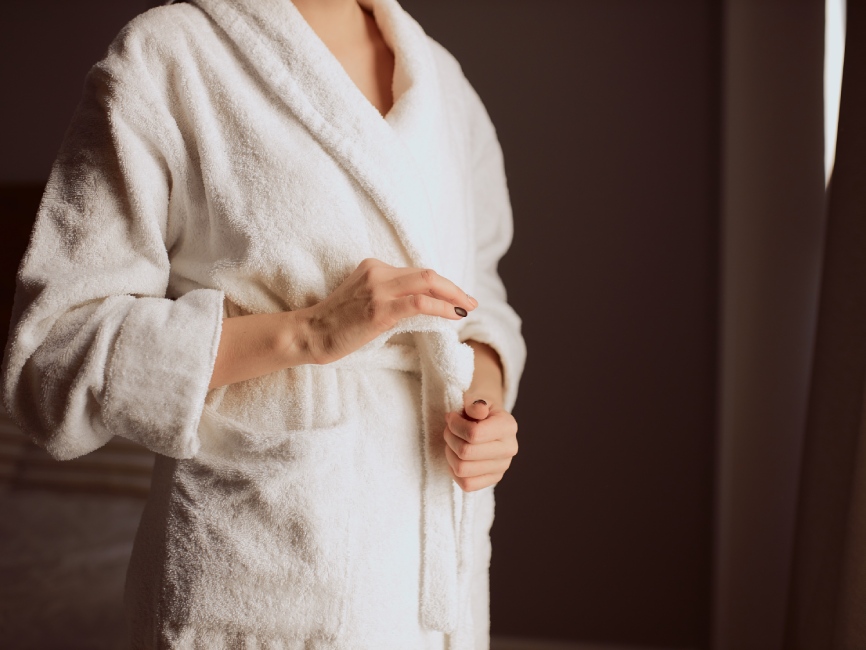
There’s something almost primitive about the desire to be wrapped up. Think of it as your personal micro-shelter - a cocoon made from fabric instead of walls. The feeling isn’t random; humans are wired to associate enclosed softness with safety.
A robe made from premium quality Turkish Cotton creates exactly that effect. Thick yet breathable fibers form a soft barrier that shields you from the cold, but also from sensory noise. Stress feels a little bit further away. Daily tension loses some of its grip.
And sure, it keeps you warm. But warmth is only half the story. The other half is this instinctive relief that arrives when you’re surrounded, lightly pressed, softly held. Ancient, simple, effective.
Anyway, back to robes…
Why Pure Fabrics Change the Whole Experience
Synthetic fabrics can mimic softness, but they rarely mimic peace. Natural fibers behave differently - and your skin knows it immediately.
SEYANTE’s materials are made from GOTS Certified Organic Turkish Cotton for a reason. Organic cotton is chemical free, breathable, gentle, and—this might sound poetic but it’s true—quiet. There’s no artificial sheen or sharp fiber edge that distracts from the experience. Just pure texture.
Here’s what your skin actually notices:
- the silk-like smoothness of long-staple Turkish Cotton
- the slow, steady way it holds warmth without overheating
- the tiny airflow between fibers that keeps your body comfortable
- the absence of chemical residues that often irritate skin
You don’t have to think about these details consciously. Your nervous system does the thinking for you.
And if you listen closely while wearing a robe, you’ll hear it - the soft hush of air slipping through the cotton. Familiar, calming, grounding. The kind of sensory detail people rarely talk about but always feel.
Deep Pressure, Deep Calm: Why Robes Help You Sleep Better
The same reason weighted blankets help people sleep applies here too. Gentle, even pressure across the body triggers something called Deep Pressure Stimulation (DPS).
DPS increases serotonin and oxytocin while lowering cortisol. One lifts your mood, the other softens stress, and together they create a feeling of “I’m okay now.”
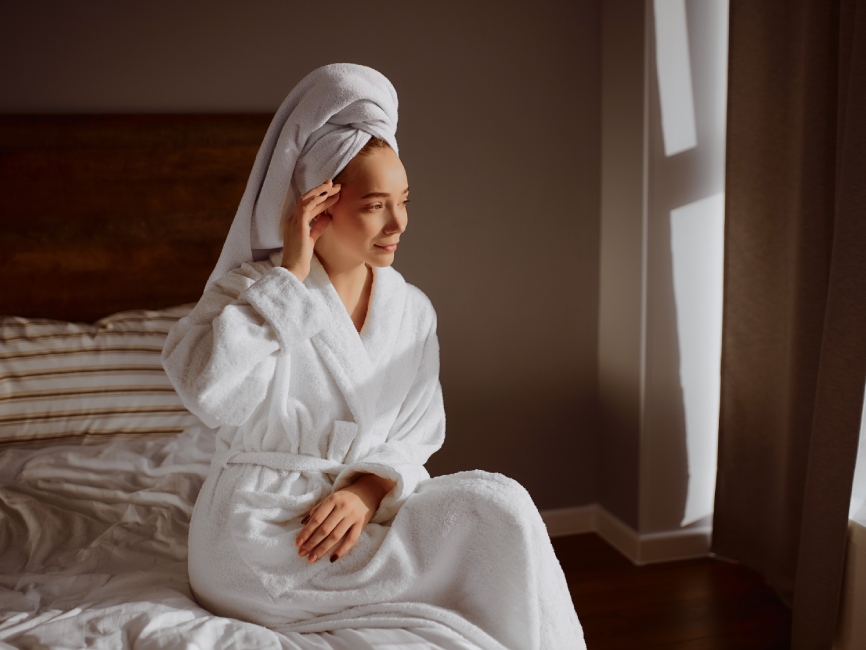
So wrapping yourself in a robe after a shower isn’t just a comfort ritual - it’s a small neurological reset. It signals your mind that the day has slowed, that rest is allowed, that your system can stop bracing.
People often say, half jokingly, that they feel like a different person after a hot shower and a robe. It’s not a joke. Their body has switched chemical gears.
And that’s why a SEYANTE robe feels like a transition point. A soft border between tension and calm.
Comfort Is Emotional, Physical, and Ethical
There’s another layer to all this: where your comfort comes from.
Real safety isn’t only about how fabric feels. It’s also about what it’s made of and how it’s produced. Every SEYANTE piece is created using sustainable practices and ethically made materials. Choosing organic Turkish Cotton isn’t just about softness; it’s about wearing something that aligns with your values.
Because comfort should never come at the expense of the planet or the people who make the things we love.
There’s a quiet kind of peace in knowing your robe is as gentle on the earth as it is on your skin. That’s a form of healing too.
An Experience That Deserves To Be Protected
Being wrapped up is one of the oldest human gestures of self-soothing. There’s nothing luxurious about needing to feel safe; it’s as essential as water and rest. And softness - honest, organic softness - helps the body remember that safety is available.
So tonight, when you pull your robe around you, let the Pure & Safe cotton glide across your shoulders. Notice how your breath shifts. Notice the warmth settling in. Let yourself enjoy the stillness for a moment.
You’re not just wrapped in fabric. You’re wrapped in peace. And strangely enough, these tiny pauses are what make us feel most alive.
Care With Purpose
To make sure your robe stays soft, breathable, and long-lasting:
- Wash separately in warm water.
- Tumble dry low.
- Use non-chlorine bleach if needed.
- Warm iron only.
SEYANTE - Luxury That Lasts. Pure & Safe. Ethically Made.
FAQs
Does wrapping up really affect the nervous system?
Yes. Soft pressure on the skin activates the parasympathetic nervous system, which calms heart rate and breathing. It’s a biological response, not a placebo effect.
Why does organic fabric matter so much?
Organic cotton avoids harsh chemicals, retains its natural softness, and breathes better. Skin responds more gently to fibers that haven’t been chemically processed.
Is Turkish Cotton better for comfort?
Turkish Cotton has naturally long fibers that feel smoother and stay durable. It holds heat just long enough while staying breathable - ideal for robes.
Can wearing a robe actually improve sleep quality?
It can help. Deep Pressure Stimulation increases serotonin and oxytocin while reducing cortisol, creating the conditions for deeper rest.
How do I make my robe last longer?
Follow gentle-care steps: warm wash, low dry, non-chlorine bleach, and warm iron. Turkish Cotton ages beautifully when treated with care.
Last Thought
Sometimes the body asks for very little - a bit of warmth, a soft texture, a quiet moment before the day rushes back in. And maybe that’s the real secret: healing isn’t always dramatic. Sometimes it begins the moment you wrap yourself in something that reminds you to breathe again.