Long Black Robe: A Practical Style and Buying Guide
Before sunrise, a long black robe can feel like the easiest decision of the day. You step onto cool tile, reach for the garment hanging by the bathroom door, and wrap it around yourself while coffee warms on the counter. The right robe doesn't just cover you. It controls moisture, warmth, movement, and the mood of the morning.
That same shape can also mean ceremony, authority, modesty, luxury, or simple comfort. A first-time buyer may be choosing between a bathrobe, a lounge layer, a spa garment, a bridal-party robe, or something closer to a formal gown. Understanding the fabric, silhouette, history, and care requirements makes the choice much easier.
A Quiet Morning in a Long Black Robe
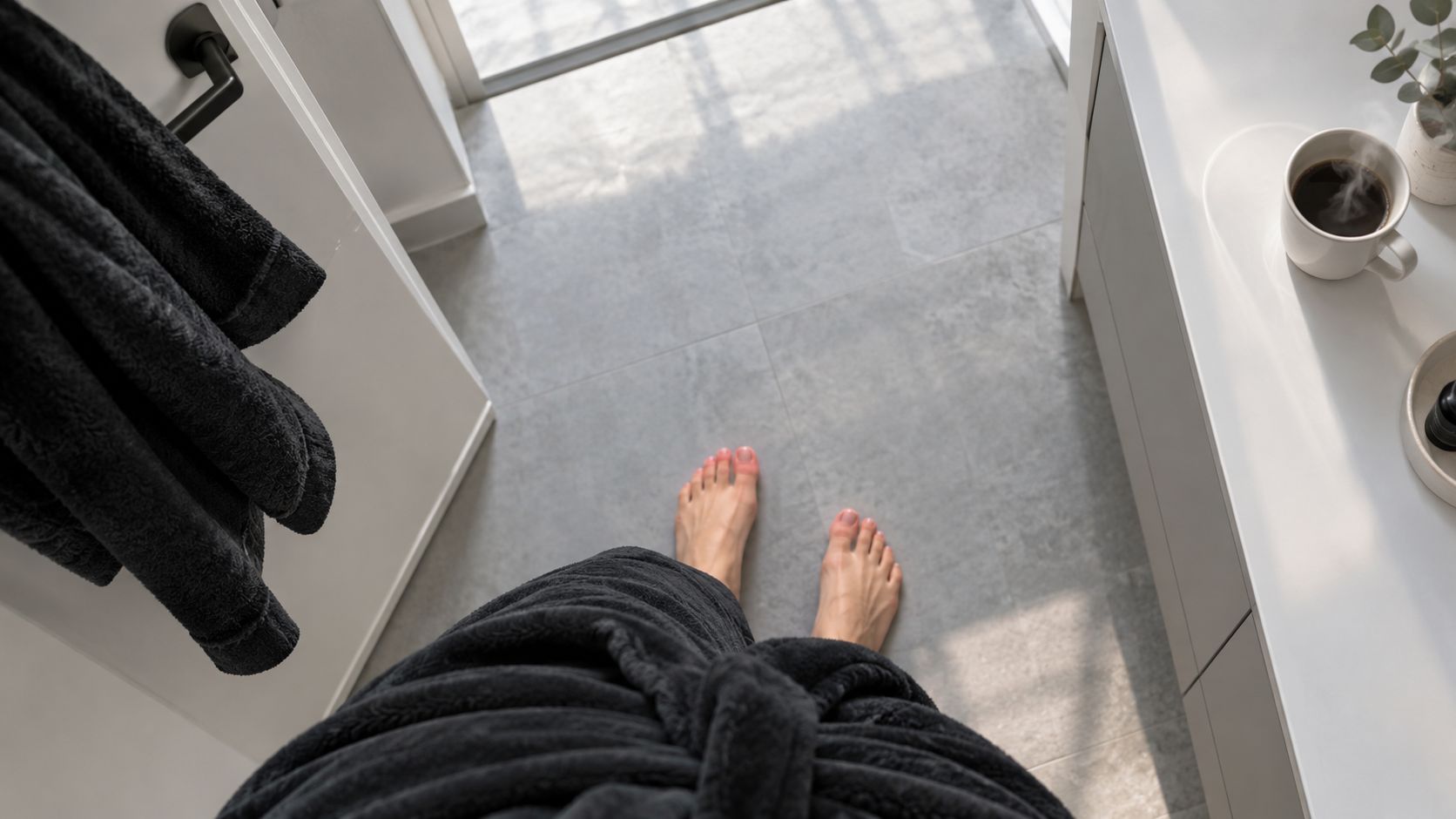
Bare feet meet the cool floor before the rest of the house wakes. A cup of coffee steams beside the sink, and a long black robe comes off its hook with a soft, heavy fold. You pull it over your shoulders, let the fabric settle across your back, and tie the belt loosely at your waist.
The feeling depends on the textile. Plush loops feel like a towel you can wear. A lighter weave hangs closer to a cardigan. A smooth black surface turns the same morning ritual into something more polished, almost ceremonial.
The garment carries centuries of meaning. Early European universities formed in the 12th and 13th centuries, when students and clerics wore dark, hooded clothing partly because buildings lacked adequate heating and partly because clergy used robes to distinguish scholars from the wider town population. In England, a significant milestone arrived in 1222, when the Archbishop of Canterbury reportedly ordered students to wear garments called the cappa clausa. By the 13th and 14th centuries, long gowns and hoods had become standard dress for clerics and scholars. (University of Toledo history of academic regalia)
The shape later moved through religious communities, courts, universities, hotels, spas, and homes. Today, a black robe might be used after a shower, during a bridal-party morning, beside a pool, or while reading on the sofa. The practical question is no longer what the robe symbolizes. It's what you need it to do.
Understanding the Fabrics That Shape a Long Black Robe
Start with the surface against your skin. A robe's fiber, weave, and weight determine whether it dries you, warms you, breathes around you, or only drapes attractively.
Terry cloth for drying
Terry cloth is a towel in robe form. Its raised loops hold water, making it the natural choice after bathing when you want to put on one garment and let it handle some of the drying. Heavier terry feels substantial across the shoulders, while lighter terry is easier to pack and less demanding to launder.
The tradeoff is drying time. More loops and more fabric hold more moisture, so terry can feel humid if your bathroom has limited airflow. Choose it for post-shower use, cold bedrooms, or anyone who prefers a plush, enveloping hand.
Waffle weave for airflow
Waffle fabric has a honeycomb-like surface. The recessed pockets reduce bulk and allow air to move through the garment, so waffle robes often feel lighter and dry faster than thick terry. They can still absorb moisture, but they won't behave like a full bath towel.
This makes waffle useful for spa visits, poolside changes, travel, and warmer rooms. If you tend to overheat or dislike a robe clinging to damp skin, its lighter structure may be more comfortable.
Kimono-style cotton or rayon for drape
A kimono-style robe usually uses a smoother fabric with a relaxed fall. Think of it as a soft jacket with a belt, rather than a towel with sleeves. It offers less absorbency, but its fluid surface layers neatly over sleepwear and looks more intentional during breakfast or getting-ready routines.
Smooth weaves also show the quality of finishing clearly. Examine the collar, sleeve edges, belt, and side seams because a clean construction matters more when the fabric doesn't hide details in a plush pile.
Knit jersey for lounge comfort
Knit jersey feels like your favorite T-shirt made long. It stretches, moves easily, and usually feels soft without the weight of terry. Jersey suits evenings on the sofa, relaxed mornings, and warm climates where a thick robe would be excessive.
It isn't the first choice for drying wet skin. Its strength is comfort and flexibility, not towel-like absorption. Wash and dry it carefully because loose knits can stretch, twist, or develop surface wear over time.
| Fabric | Typical GSM | Absorbency | Best For |
|---|---|---|---|
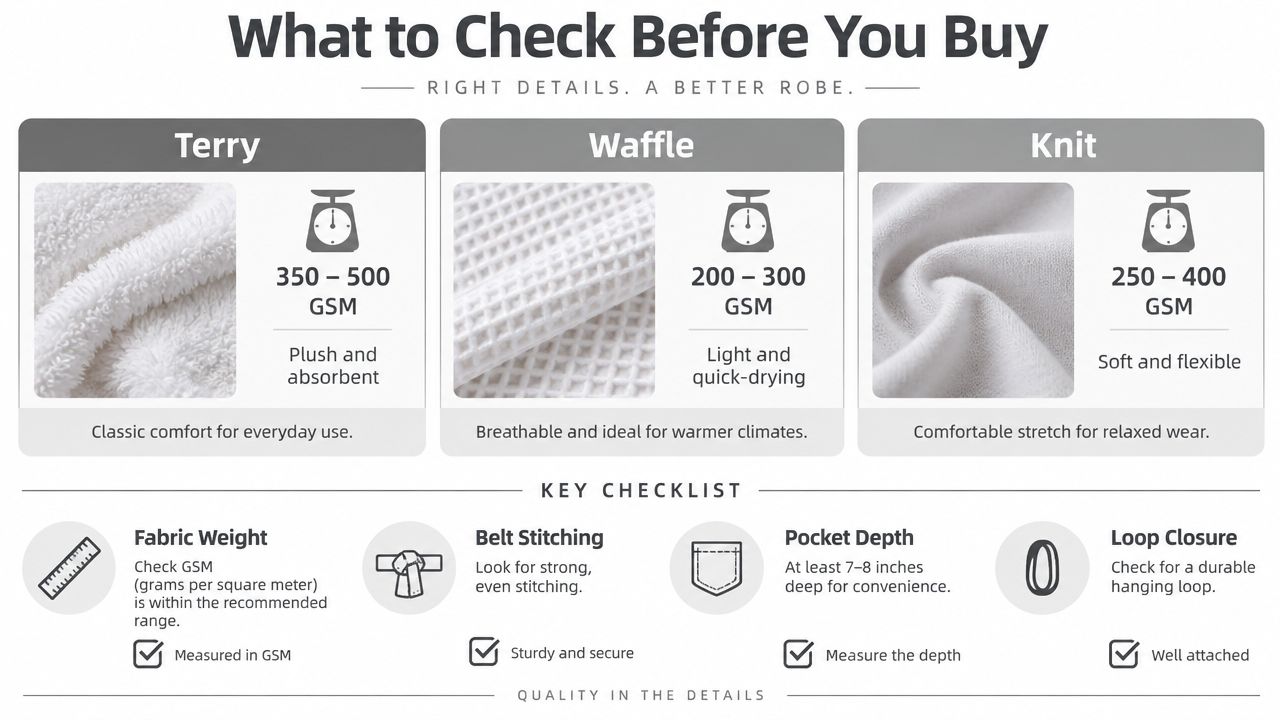
| Terry cloth | 350 to 500 GSM | High | Post-shower drying and cool rooms |
| Waffle weave | 200 to 300 GSM | Moderate | Spa use, travel, and warm climates |
| Knit jersey | 250 to 400 GSM | Low to moderate | Loungewear and layering |
For a more detailed explanation of how robe construction affects comfort, compare this guide to bathrobe materials and fabric types. GSM, or grams per square meter, helps you compare weight, but it doesn't tell the whole story. Fiber quality, loop density, finishing, and cut also change how a robe feels.
Comparing the Four Core Silhouettes
A hooded robe and a kimono robe can be the same length and color yet serve completely different routines. Look first at coverage and closure, then decide whether you want the garment to dry you, insulate you, or sit lightly over other clothes.
| Silhouette | Fit and Coverage | Closure | Best Use |
|---|---|---|---|
| Hooded | Close, warm coverage around the neck and head | Wrap belt, sometimes with an inner tie | Post-shower warmth and cold mornings |
| Kimono cut | Relaxed body, wide sleeves, usually an open neckline | Belt or minimal closure | Lounging and easy layering |
| Shawl-collar hotel style | Generous overlap with a thicker collar | Tied belt, often with an inner tie | Spa rituals, hotels, and plush home use |
| Lightweight wrap | Fluid, less bulky coverage | Slim belt and belt loops | Warm climates, travel, and sleepwear layering |
Hooded
The hood adds warmth where many robes leave the head exposed. It can feel especially useful after washing your hair, though it also adds weight and bulk near the neck. Check that the hood lies flat when you aren't wearing it.
Kimono cut
Wide sleeves and a straight hem give the kimono shape an easy, lounge-first character. It often feels less restrictive than a fitted robe and works well over pajamas. A belt that slides through secure loops keeps the front tidy without making the garment formal.
Shawl-collar hotel style
The shawl collar creates the classic spa impression. It frames the neck, adds overlap, and works best with a belt that stays tied as you move. Thick terry makes this silhouette particularly warm, so it may be too much for hot, humid rooms.
Lightweight wrap
A lightweight wrap has more movement and less insulation. It can sit over sleepwear, swimwear, or a simple base layer without overwhelming the body. Look for belt loops positioned at a comfortable natural waist, especially if you plan to wear it while walking around.
Length changes the impression. A hem around mid-calf feels practical and mobile, while a robe falling closer to the ankle looks more dramatic and ceremonial. Longer fabric also creates more warmth and more opportunities to catch on steps, so measure from shoulder to hem rather than relying on a generic “long” label. For a closer style comparison, see this hooded versus kimono robe buying guide.
Why Black Changes How a Robe Feels
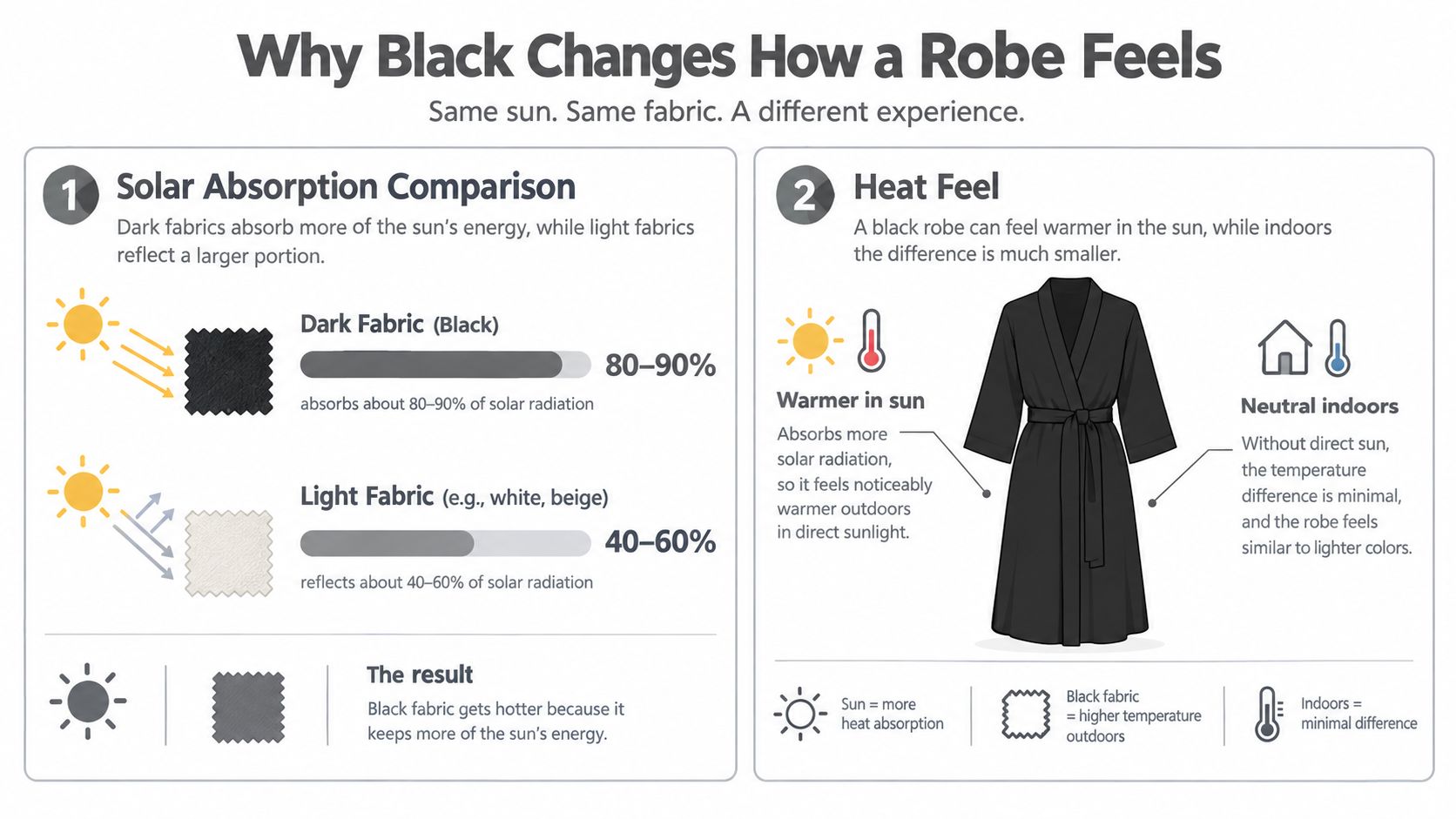
Black looks calm, refined, and easy to coordinate, but it also changes the garment's relationship with sunlight. A technical review of solar-protection fabrics found that black control fabrics reached contact temperatures about 5 to 10 K warmer than reflective fabrics in natural sunlight because darker surfaces absorb more incident radiation. (Technical review of solar-protection fabrics)
That difference matters outdoors. A long black robe on a sunny patio can feel noticeably warmer than the same shape in pale fabric, while the color has little effect in a cool bedroom with no direct sun. The garment's loose drape helps air circulate, but a dense, dark textile can still retain heat against the body.
Color is an engineering choice
Color can outweigh other construction variables in solar performance. One knitted-textile study found that color alone shifted solar heat absorption by up to about 130 W m^-2, compared with roughly 25 W m^-2 for pore structure and 65 W m^-2 for IR-active finishing. (Study of structure, color, and finish in knitted textiles)
For buyers, that doesn't mean abandoning black. It means matching it to use. Choose a breathable waffle or looser weave for sunny outdoor settings. Consider infrared-reflective or UV-finished textiles where the manufacturer provides clear information. For indoor wear, a richer, denser black may be a purely visual preference.
Dye saturation can also influence hand-feel. Some dark finishes make cotton feel firmer, especially in looped terry, and different black dye systems can produce blue-black, soft charcoal, or warmer black tones. Inspect the fabric in both daylight and indoor light if possible.
Keeping black from looking tired
Collars, cuffs, and belt edges receive repeated friction. Over time, fading may show first in those high-contact areas, creating a gray cast even when the rest of the robe remains dark. Ask whether the garment has been tested for colorfastness, whether it was pre-washed, and which care instructions protect the dye.
Practical rule: Choose black for its visual character, then solve heat with weave, drape, and setting rather than assuming every black robe performs the same way.
Matching the Robe to Your Day
The most useful robe is the one that fits an actual routine. A thick hotel-style garment may be perfect after a shower but frustrating for travel, while a smooth lightweight wrap may look elegant but leave damp skin feeling cold.
| Occasion | Best Fabric | Best Silhouette | Styling Cue |
|---|---|---|---|
| Post-shower drying | Terry cloth | Hooded or shawl-collar | Mid-calf length with secure inner tie |
| Weekend loungewear | Jersey or modal-like knit | Kimono cut | Relaxed belt and soft house slippers |
| Spa or pool day | Waffle weave | Lightweight wrap | Mid-calf hem, simple sandals |
| Bridal-party morning | Lightweight silk or satin-like fabric | Fluid wrap | Longer line, clean belt, minimal jewelry |
| Guest robe | Waffle or medium terry | Hotel style or kimono | Neutral slippers and reinforced belt loops |
Post-shower mornings
Use terry when the robe needs to absorb water. A mid-calf hem gives coverage without excessive fabric around the ankles, and an inner tie prevents the front from opening as you reach for a towel or skincare product. For a focused morning reset, pair the robe with a simple 5-minute energizing routine, then choose slippers with enough grip for bathroom and hallway floors.
Loungewear
Jersey or a smooth cotton blend works better when you want to stay dressed for several hours. A kimono cut keeps the shoulders mobile, and a belt tied slightly behind the natural waist can create a cleaner front line. Add a low-profile slipper rather than a bulky house shoe if the robe already has generous volume.
Spa and pool days
Waffle is easier to carry and less cumbersome around damp facilities. A lightweight wrap with a mid-calf hem works over swimwear, and a slim belt keeps the garment from dragging. Choose footwear that can tolerate wet floors and avoid a robe so long that the hem brushes the ground.
Bridal mornings
A smooth black robe creates a more composed photograph than plush terry, especially when several people wear coordinated garments. Satin-like surfaces reflect light, so check for unwanted shine and make sure the wrap stays closed while you move, sit, or lean forward.
For guests, prioritize easy care and a forgiving fit. A robe with sturdy belt loops, useful pockets, and a length that suits different heights will serve more people than an especially dramatic cut.
What to Check Before You Buy
Product photos hide useful information. A robe can look plush under studio lighting while feeling thin in person, or appear oversized because the model is wearing a larger size. Read the construction details before you judge the garment by color and styling.
Read GSM as a starting point
GSM tells you how much fabric weighs over a given area. A terry robe around 350 GSM should feel lighter than one around 600 GSM, with the heavier version generally offering more substance and absorbency. The number doesn't guarantee softness, because fiber length, loop construction, and finishing still matter.
For waffle and knit, lower weight often supports breathability and faster drying. Compare robes within the same fabric family rather than treating GSM as a universal quality score.
Test the practical details
- Opacity: Hold the fabric toward a bright window or lamp. Black can look opaque in photographs yet reveal more than expected in strong backlight.
- Belt security: Look for reinforced stitching at each loop. Tug gently on the belt and inspect whether the loops pull away from the side seam.
- Inner tie: An inner tie keeps the robe closed when the outer belt loosens. It matters most for active mornings and generous wrap cuts.
- Pocket depth: Place your hand inside the pocket. It should hold a phone or small essentials without pulling the robe sideways.
- Length: Measure from the shoulder seam to the hem. “Long” doesn't describe where the garment will fall on your body.
Ask what the labels mean
GOTS certification addresses organic textile processing under defined environmental and social criteria. OEKO-TEX certification concerns testing for specified harmful substances. Fair Trade labeling relates to standards for participating producers and workers. These labels answer different questions, so don't treat them as interchangeable.
Before ordering, ask whether the black fabric was pre-shrunk, how the dye was tested, and whether the care label permits machine washing. Check the return policy for dark garments, particularly if you're uncertain about sleeve length, opacity, or the amount of overlap at the front. A transparent listing should provide garment measurements, fabric composition, care instructions, and close-up images of the weave.
Caring for Black So It Stays Beautiful
Black rewards careful washing. Turn the robe inside out, wash it with similar dark colors, and follow the care label before applying any general rule. New dark garments can release excess dye during early washes, so keeping them separate protects both the robe and lighter textiles.
Match care to construction
Cotton terry usually benefits from a cold wash and thorough drying. Avoid excessive heat when the label doesn't permit it, because heat can shrink cotton and make dark fibers appear worn sooner. Low tumble drying can restore loft to terry loops, but remove the robe promptly so the belt and collar don't remain creased.
Waffle needs a gentle cycle and careful drying. Its textured cells can lose their shape when twisted aggressively, so shake the robe out and lay it flat or hang it in a well-ventilated area according to the label. Jersey should be washed cold and dried with low heat or flat, especially if the knit has a relaxed drape.
Silk and satin-like fabrics need the most restraint. Use cool water and a delicate method approved by the care label, then dry away from direct sun. Smooth kimono weaves can show UV fading at the shoulders and back if they hang in strong daylight repeatedly.
For a more detailed routine, use this robe washing and storage guide.
Prevent wear before it appears
Don't use chlorine bleach on a black robe. For lint and pet hair, a fabric brush or lint roller is safer than repeated harsh washing. If bleach creates a pale mark, a fabric-safe black dye product may disguise it, but test on an unseen seam first and follow the product instructions.
Inspect belt-loop stitching periodically. Reinforce a loose loop before it tears, and store the robe folded or hung in a dark, dry space. Avoid pressing damp terry into a crowded closet, since trapped moisture can create odor and flatten the pile.
Care habit: Wash black robes inside out, dry them away from intense direct sun, and treat belt loops as part of the garment's structure, not as decoration.
Choosing the Right Long Black Robe for You
Choose by primary use, not by the word “luxury” in a product description. If your robe begins with a shower, start with absorbent terry or breathable waffle in a weight you can dry comfortably. Select a hooded cut for head coverage or a shawl collar for a warmer, spa-like wrap.
If you want to lounge for hours, move toward jersey or a smooth kimono-style fabric. The goal is easy movement, low bulk, and a surface that feels comfortable against dry skin. If you spend time in warm rooms, a lightweight wrap will usually be easier to live with than dense terry.
A spa visitor or frequent traveler should prioritize waffle, secure belt loops, and a hem that won't drag. For a bridal party or photo-focused morning, smooth silk-like or satin-like fabric creates a more fluid line, though it won't offer the drying performance of terry. If you're choosing a robe as part of a self-care gift, practical guidance on pairing bath products can help, including this advice on a high-end bath bomb gift set.
Climate and laundering tolerance refine the decision. Humid homes favor airflow and quick drying. Cool bedrooms favor more coverage. Frequent washing calls for durable construction and clear colorfastness information, while occasional ceremonial use may justify a more delicate surface.
A long black robe becomes a daily ritual when its fabric matches your body temperature, its length suits your movement, and its closure stays secure. Trust that primary use case above a passing trend. The most beautiful robe is the one you reach for without hesitation.
SEYANTE offers long black robe options across plush Turkish cotton terry and lightweight waffle constructions, with silhouettes suited to home comfort, spa routines, gifting, and hospitality use. Explore the SEYANTE collection to compare materials, fits, and care details before choosing the robe that belongs in your daily ritual.