Luxury Dressing Gowns Long: How to Choose Fabric and Fit
- Long Luxury Dressing Gowns at a Glance
- How Fabric Weight Changes Warmth, Drying and Mobility
- Choosing Ankle, Calf or Knee Length
- How to Measure and Size a Long Robe
- Matching the Gown to Each Occasion
- Sustainability Claims and What They Prove
- Caring for a Long Terry or Waffle Robe
- Confirm Length, Fabric and Size Before You Buy
You try on a sweeping robe, admire the silhouette, then lift the hem to walk upstairs. That small adjustment tells you more about its suitability than the photograph did.
Long Luxury Dressing Gowns at a Glance
Choose cotton terry for drying off and cotton waffle for lighter everyday wear. Consider cotton velour when lounging matters more than absorbency, and silk or satin when you want a dressing garment rather than a towel you can wear. My default recommendation is a mid-calf gown, not a floor-length one.
A 2025 bathrobe industry report estimates that more than 62% of bathrobes sold globally are cotton-based. Treat that as a commercial estimate, not an official count, but it makes cotton a sensible benchmark rather than a specialist choice.
Fabric types for a long luxury gown
| Fabric | Typical weight | Feel | Drying speed | Best for |
|---|---|---|---|---|
| Turkish cotton terry | Request GSM and finished garment weight | Plush, absorbent loops | Generally slower in dense constructions | Post-shower use and cool rooms |
| Cotton waffle | Look for a lighter construction and disclosed GSM | Light, textured, breathable | Generally faster than dense terry | Warm climates and layering |
| Cotton velour | Varies with pile and backing | Soft, smooth pile | Check the individual construction | Lounging and cold rooms |
| Silk or satin | Request the fabric specification, not just its name | Smooth surface, construction-dependent feel | Check fiber content and care requirements | Dressing up and travel |
GSM means grams per square meter, so it describes fabric mass, not the weight of the complete robe. Read it alongside length and construction; silk listings may use momme, while a satin label alone doesn't establish fiber content or weight.
Buying rule: Ask what the gown weighs and where its hem falls before deciding whether it looks luxurious.
A robe de chambre dated to approximately 1690 illustrates how long, elaborate indoor robes have signaled status for centuries, as described in this historical overview of dressing gowns.
That heritage is appealing, but your decision should rest on fabric weight, usable length, fit, credible environmental information, and care requirements. Buy the gown you'll reach for, not the one that needs its own entrance.
How Fabric Weight Changes Warmth, Drying and Mobility
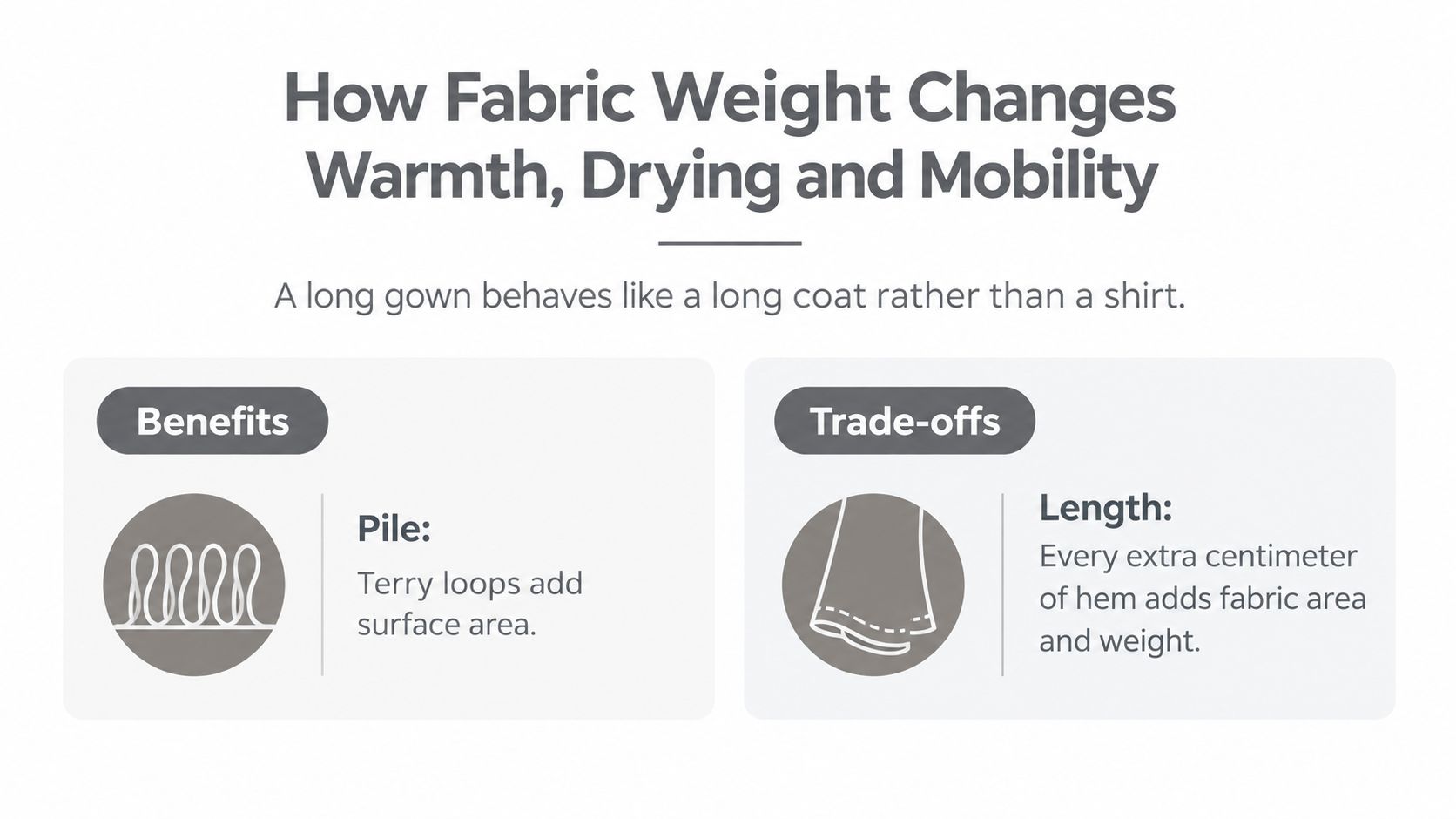
A long gown behaves more like a long coat than a shirt. Every extension of the hem adds fabric area, and a dense construction makes that addition noticeable when you bend, reach, or carry laundry.
Fiber content doesn't tell the whole story. Terry's loops increase surface area, while pile height changes how the fabric interacts with moisture. In one linen/cotton comparison, increasing pile height raised measured water-vapor absorption from 34.4 to 52.0 g/m², according to research on terry structure and moisture behavior.
That result isn't a promise about every cotton robe. It's evidence that two fabrics with similar fiber labels can behave differently because their construction differs.
Compare fabric mass with finished weight
Ask the seller for both GSM and dry garment weight in your size. GSM helps you compare fabric density; finished weight tells you how much you'll carry on your shoulders.
Don't accept a plushness description as a substitute. A generously cut robe with a hood, deep pockets, and substantial collar contains more material than a simpler gown, even when both use the same cloth.
- Choose dense terry when your priority is post-shower absorption in a cooler room.
- Choose lighter waffle when airflow, layering, and a manageable drying routine matter more.
- Question extra bulk if you plan to wear the gown while doing household tasks rather than sitting down.
For more background on constructions, the bathrobe material and fabric guide helps separate the material name from the type of robe you're considering.
Test comfort beyond the first touch
Thermal comfort also depends on finishing, fiber composition, and mass per unit area. The practical consequence is straightforward: a soft hand doesn't establish breathability, moisture handling, or useful warmth.
If you also wear your robe over sleepwear, SleepHabits' discussion of silk versus cotton for hot sleepers offers related context for thinking about fabric against the skin. Pillowcase advice isn't a robe test, so keep garment construction and coverage in the decision.
Before paying a premium, request information about drying time, laundering shrinkage, dry weight, and air permeability where available. For hospitality orders, ask for a sample and test it through the laundry process you plan to use.
Choosing Ankle, Calf or Knee Length
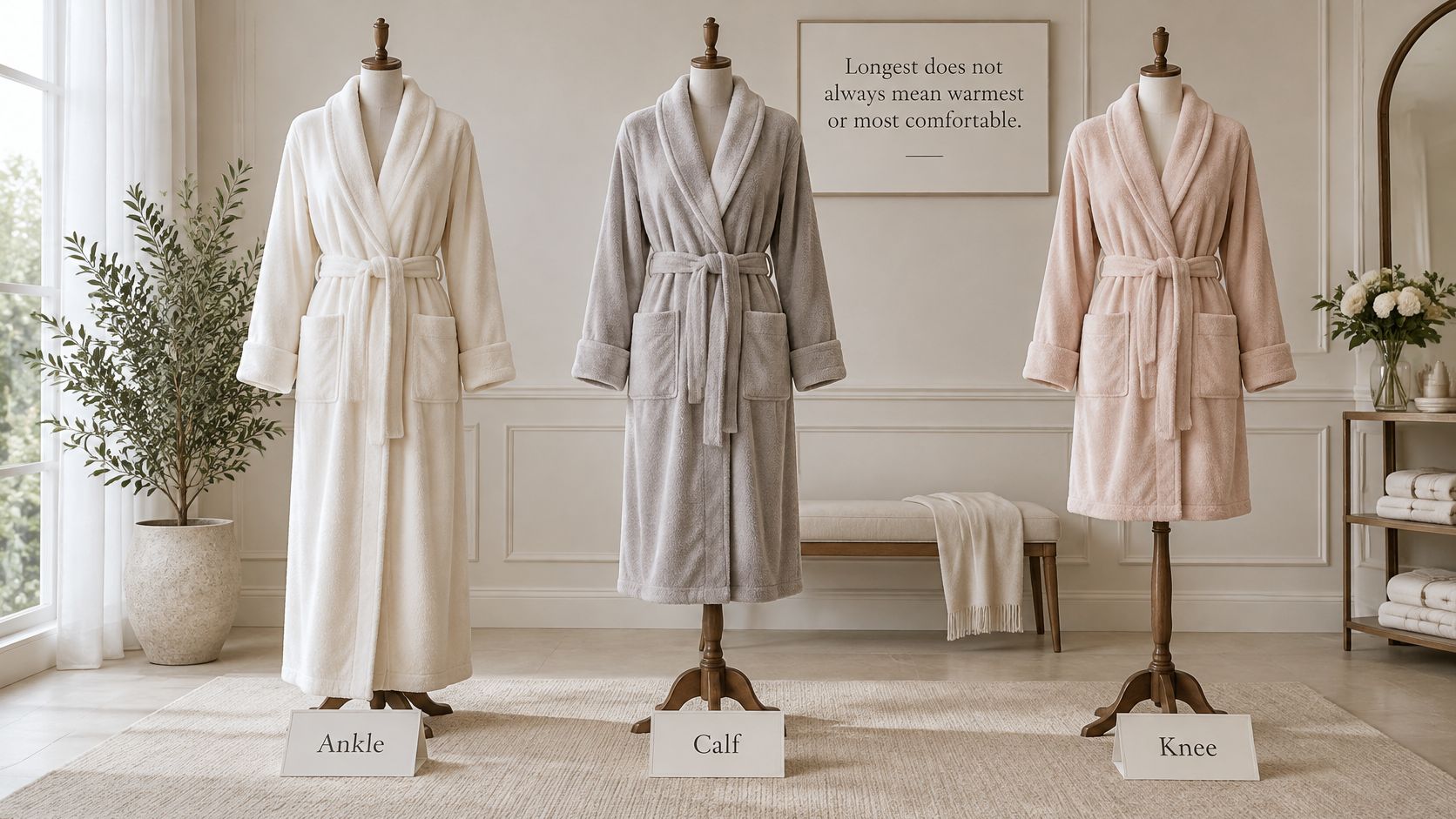
The longest robe isn't automatically the most comfortable. More coverage can feel reassuring while you're sitting still, yet become inconvenient when you're climbing stairs or moving between warm rooms.
An experiment involving 84 clothing and bedding combinations found total insulation ranging from 1.06 to 5.71 clo, with local skin temperatures differing even when overall insulation was similar, according to thermal-comfort research reported by Waseda University. This wasn't a comparison of dressing-gown lengths, but it supports an important distinction: overall coverage and comfort in each body area aren't interchangeable.
Don't use that research to declare every ankle-length gown too hot. Use it to question the assumption that adding more cloth must improve comfort.
Hem lengths and what each one trades
| Length | Hem position | Best for | Trade-off |
|---|---|---|---|
| Knee-length | Just below the knee | Kitchen routines, quick trips, warm rooms | Less calf coverage in cool rooms |
| Mid-calf | About halfway down the calf | Daily lounging, stairs, most homes | Less coverage near cold floors |
| Ankle-length | Near the ankle, clearly above the floor in intended footwear | Spa-style comfort, hosting, cool rooms | Needs careful sizing and can feel excessive in warmth |
| Floor-length | Touches or sweeps the floor | Formal dressing and boutique display | Drags and creates avoidable trip concerns |
Mid-calf is my strongest everyday recommendation. It gives you the visual substance of a long gown without asking you to manage the hem constantly.
Ankle-length is a deliberate alternative for quieter routines. Floor-length is a styling choice I'd reserve for situations where you can control your surroundings, not a practical upgrade for everyday homewear.
Try your routine, not just the mirror
During a fitting, sit in your usual chair, take a normal stride, and bend to pick something up. Check whether you need to lift the front of the gown or retie the belt after each movement.
Pay attention to sleeves too. Loose cuffs shouldn't intrude into food preparation or interfere with carrying a baby, and a shorter hem doesn't compensate for an unwieldy sleeve.
Choose the length for your most frequent morning, not your most dramatic photograph.
Before removing tags, check the gown barefoot and in your usual slippers. If the hem drags in either situation, it hasn't passed the fit test.
How to Measure and Size a Long Robe
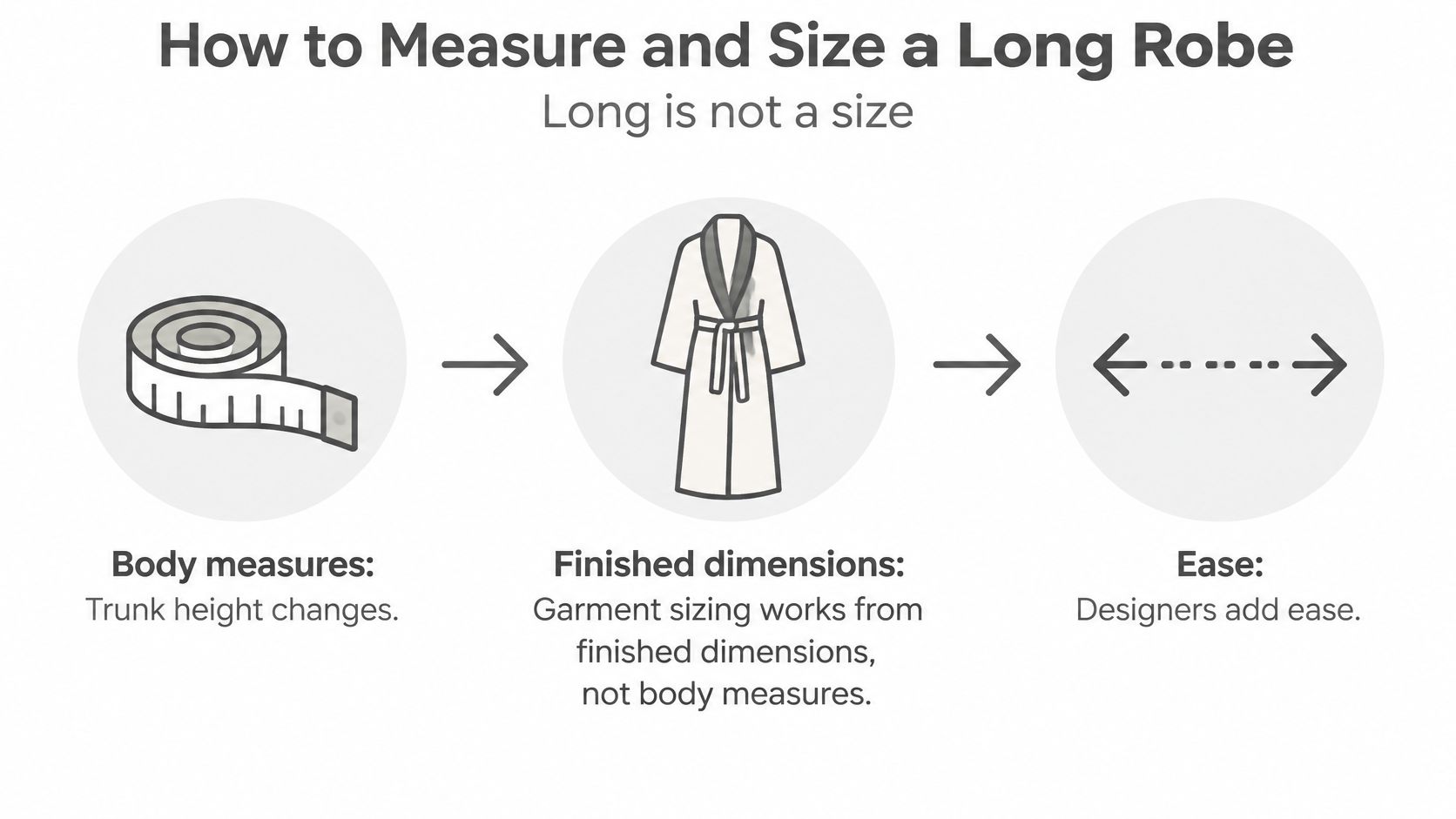
Long is a description, not a size. A garment can be long on the model and noticeably shorter on you, even when the chest fits.
Sizing research distinguishes body measurements from finished-garment dimensions because designers add ease and construction allowances; vertical proportions also affect apparent garment length, as outlined in this overview of garment sizing systems. Your height matters, but it isn't a substitute for measuring the route the robe covers.
Take measurements that answer fit questions
Record your barefoot height. Stand against a wall so you can compare your stature with the model's without guessing from the photograph.
Measure shoulder to intended hem. Wear your usual slippers for this check, then repeat barefoot to establish whether the chosen position works in both situations.
Measure center-back length. Run the tape from the base of your neck to the intended hem, and confirm that the seller uses the same starting point.
Check sleeve length. Measure from the shoulder seam position toward the wrist with your arm slightly bent, rather than judging sleeves only with your arms hanging straight.
Measure chest or bust and hips over your usual pajamas. This gives you a realistic layering reference, but remember that the finished robe still needs comfortable ease and front overlap.
Compare with the brand's garment measurements. Use the worn size and model height as supporting information, not as replacements for the size-specific dimensions.
A robe with a dropped shoulder may use a different sleeve-measurement method. Ask how the measurement was taken before comparing it with your own.
Check overlap and proportions
The belt should secure the gown, not force undersized fronts to meet. Sit down with the robe tied normally and check whether the overlap remains comfortable across your hips and thighs.
Petite wearers should look beyond the hem: shortening the bottom won't relocate low pockets or a poorly positioned belt. Tall wearers need to inspect sleeve reach as carefully as body length.
Broad shoulders deserve attention too. If the upper body feels tight, don't assume that choosing a longer version will solve it.
The robe size-chart guide is a useful reference when translating these checks into a size decision.
Fit checkpoint: More room is useful only if the shoulders, sleeves, belt, and hem still sit where you need them.
If you're between otherwise suitable sizes, favor the one that allows comfortable layering and secure overlap. Don't size up blindly when the larger option creates trailing sleeves or a dragging hem.
Matching the Gown to Each Occasion
Start with the moment you'll wear it
A long gown can look luxurious on a hanger and feel cumbersome in use. For each occasion, weigh warmth and coverage against the risk of a dragging hem, extra fabric, or restricted movement.
After a shower. If you want to replace the towel and get dressed without fuss, choose absorbent terry and keep the hem clear of the wet floor. A hood can be useful, but it does not make a gown better by itself. Mid-calf is a practical length for reaching and moving around; choose a hood only if you'll use it.
Morning coffee and lounging. Comfort seated matters as much as comfort standing. Soft terry or velour can feel pleasant against the arms, but a heavy collar may bunch behind your neck. Sit down and check the pockets before deciding. A mid-calf kimono-cut gown gives coverage without as much fabric around the neck.
A warm apartment. Dense terry can feel stifling over light sleepwear. Choose a lighter cotton waffle construction, then decide between knee and mid-calf according to how much coverage you want. The longer option adds coverage, but also more fabric to manage.
Pack, host, or give with the wearer in mind
Travel and spa time. A substantial hand feels appealing, but bulk and drying time matter more when packing. Don't assume a robe will dry overnight. A lightweight mid-calf waffle gown is a sensible travel choice; satin-look fabric can also work if its care instructions suit your routine. For a home spa pause, Skin Perfection's home spa day guide offers ideas for planning the ritual.
Hospitality and gifting. A coordinated color is easy to select; usable sizing takes more care. For guest rooms or bridal parties, request consistent garment measurements instead of relying on a hotel-grade label to establish fit or laundering performance. Choose mid-calf terry for bath-led use, or waffle for lighter lounging.
Sensitive skin or changing fit needs. Check the inside surface, cuffs, labels, and seams by touch. A smooth-looking exterior won't tell you how those details feel against skin. For maternity use, look for adjustable overlap and a belt position the wearer can reach; a larger standard size may not provide either.
Match the cut to the routine: movement, seated time, and desired coverage. Floor length is not automatically more luxurious in practice. Heat, fabric weight, and trip risk can make a shorter gown the more comfortable choice.
Sustainability Claims and What They Prove
At the product page, an organic or luxury label can look like a reason to choose one long robe over another. Treat it as a starting point, not proof of lower environmental impact. Ask what the claim covers and what evidence supports it.
A global clothing consumer insights report surveyed 12,026 people across 12 countries. It found that 21% said they bought exclusively sustainable clothing, while 54% considered sustainability desirable but not decisive. These responses reflect purchasing attitudes, and they say nothing about how a specific robe performs.
Cotton's prevalence, noted earlier, does not make every cotton gown equivalent. Fiber origin matters, and so does how the finished robe holds up through use and care.

What sustainability claims prove for long robes
| Claim | What it proves | What it does not prove |
|---|---|---|
| GOTS-certified organic | When verified, organic and processing credentials within the certification's defined scope | Long life, lighter weight, or low drying energy |
| All-cotton composition | The stated fiber composition | Low impact by itself or durable construction |
| Heavy terry | A substantial construction associated with plushness and absorption | An environmental advantage |
| Lightweight waffle | A lighter construction suited to a less burdensome drying routine | Durability or low lifetime impact |
| Luxury label | Brand positioning | A particular fiber, certification, care method, or environmental standard |
Compare the robe you will maintain
Start by asking for the certification's scope. An organic word in a product title is not enough. Then check whether the robe's practical details fit the way you will use and care for it.
- Composition and construction. Check the materials in the whole garment, not only the featured fiber.
- Weight and care. Confirm that washing and drying instructions suit your equipment and routine.
- Expected durability. Look for construction details, and inspect seams, belt loops, cuffs, and pockets.
- Repair and returns. Check how the seller handles a failed seam or a garment that arrives defective.
A heavier robe can demand more drying effort. A lighter gown is not automatically the better choice if you dislike wearing it, wash it more often, or replace it sooner. Length also involves a practical trade-off: a floor-length style may add coverage, but its extra fabric can feel cumbersome and make movement less comfortable. Choose a length and weight you will reach for and care for consistently.
Natural doesn't mean low impact by default. Choose a gown with specific, clearly explained claims that fits your routine. Don't pay more for an environmental adjective that comes without useful evidence.
Caring for a Long Terry or Waffle Robe
A stiff, flattened, or unexpectedly short robe isn't the ownership experience you paid for. Before changing detergent or heat settings, read the care label and inspect whether the problem is residue, fabric damage, or a change in dimensions.
Don't treat every symptom as proof of the same cause. The checks below are troubleshooting recommendations, not a diagnosis of an individual garment.
Long robe care problems, causes and fixes
| Problem | Likely cause to investigate | Fix to consider within label instructions |
|---|---|---|
| Stiff or scratchy after washing | Detergent or softener residue | Review detergent dosage, omit softener, and try an extra rinse |
| Flat or matted pile | Heat exposure or product buildup | Use a gentler permitted drying setting and shake out the damp robe |
| Shorter length after washing | Washing or drying conditions unsuitable for the garment | Follow the specified temperature and drying method; ask the seller about dimensional change |
| Shedding and lint | Loose fibers or damaged loops | Wash separately while shedding persists and inspect for pulled threads |
| Dull grey tone | Residue or transferred soil | Review sorting and dosage; don't improvise with bleach |
Protect the construction
For waffle, I'd use a laundry bag when washing alongside items that could catch the texture. Keep exposed fasteners and rough surfaces away from the fabric.
Don't apply terry instructions to silk or satin-look gowns. Follow their own labels, including any requirement for hand washing, a delicate cycle, or specialist cleaning.
The robe washing and storage guide can help you organize a care routine, but the garment-specific instructions should decide the settings.
A robe is only easy-care if its approved care routine is easy for you.
Let the gown dry fully before storing it. Use a supportive hanger if hanging is appropriate, and avoid leaving the hem compressed against the floor or pinched beneath other items.
If the robe changes markedly after a correctly followed wash, document the problem and contact the seller. Don't keep experimenting with hotter cycles or aggressive treatments.
Confirm Length, Fabric and Size Before You Buy
A floor-length gown can feel like the obvious luxury choice until its weight, warmth and hem get in the way. Choose by how you'll use and care for it, not by length alone.
Make the final checks
- Match fabric to routine. Choose terry for bath-led use, waffle for a lighter layer, or a dressing fabric when appearance matters most.
- Ask about fit details. If the size chart leaves questions, ask the seller how the garment is measured and how much overlap the front provides.
- Check the full garment dimensions. Compare them with a robe you already find comfortable, and confirm the return conditions before ordering.
- Confirm care requirements. Buy only if the approved washing and drying routine suits your household.
Use the occasion to break a tie. For after-bath wear, a long, heavy robe may be warmer and harder to move in than you want. The Women's White Organic Turkish Cotton Waffle Towel Wrap is described as a lightweight, white, GOTS-certified organic Turkish cotton waffle wrap, an alternative format to consider for after-bath use rather than extended lounging.
Make it a go only if the fabric, finished dimensions, return terms and care instructions all work for your routine. SEYANTE offers Turkish cotton terry and lightweight waffle robes for men and women, with cuts suited to different home routines. Visit SEYANTE to compare materials and sizing information with the garment dimensions, then choose the length you can comfortably wear without lifting the hem as you move.