Women's Luxury Spa Robes: A Practical Buying Guide
Steam clouds the bathroom mirror, and the robe hanging nearby looks inviting. But will it absorb the water on your skin, feel comfortable while you make breakfast, and still fit well after repeated washing? Those everyday tests matter more than a luxurious-sounding product description.
The best women's luxury spa robes balance moisture management, a comfortable cut, and durable finishing. They can make a post-bath pause feel easier, add warmth after a workout, or give a bridal morning a more relaxed rhythm. The spa industry provides a substantial setting for that kind of comfort: in 2024, an estimated 201,861 spas operated worldwide and generated approximately $157.4 billion in revenue, according to the Global Wellness Institute's wellness economy monitor.
A robe doesn't need a prominent logo to feel special. It needs to work for the person wearing it, the room she wears it in, and the care routine she can realistically maintain. Those are the decisions behind fabric, silhouette, fit, washing, and gifting.
What Makes a Robe Feel Like a Spa Robe
A robe earns its place in a daily routine in small moments. You step out of a hot shower and reach for something that covers you without clinging. On a slow morning, you want enough ease to sit down with tea or move around the kitchen. After a sauna session or workout, you want a comfortable layer while your body cools down.
An ordinary robe may provide coverage. A spa-worthy one makes the transition from wet or warm to comfortably dressed feel more considered. That comes down to three practical qualities: how the fabric handles moisture, how the robe fits as you move, and how well the construction holds up to laundering.
Comfort is a result, not a label
Start with what you want the robe to do. If you'll wear it straight after bathing, absorbency matters. If you'll wear it while getting ready or lounging in a warm home, breathability and lower bulk may matter more. A belt that stays tied, sleeves that don't dip into the sink, and a hem that doesn't drag can make more difference than a dramatic collar or a grand-sounding fabric name.
Finishing is part of that experience. Reinforced seams, secure belt loops, and pockets placed where they don't pull the fabric out of shape help a robe keep working through ordinary use. You don't need a garment to feel heavy to feel well made. The right weight depends on the climate and routine.
A robe can also help create a sense of occasion without requiring a trip away. If you're planning a wellness stay, find your Tulum wellness sanctuary for a change of scene, then bring home the parts of that restorative feeling that fit your own routine.
Practical rule: Choose for the moment you'll use the robe most, not for the mood a product photo creates.
The useful question is not, “Does this look luxurious?” Ask whether it will feel right after a bath, stay comfortable over pajamas, and remain easy to care for. When those answers line up, everyday comfort becomes repeatable rather than occasional.
Terry, Waffle, and Organic Fabrics Explained
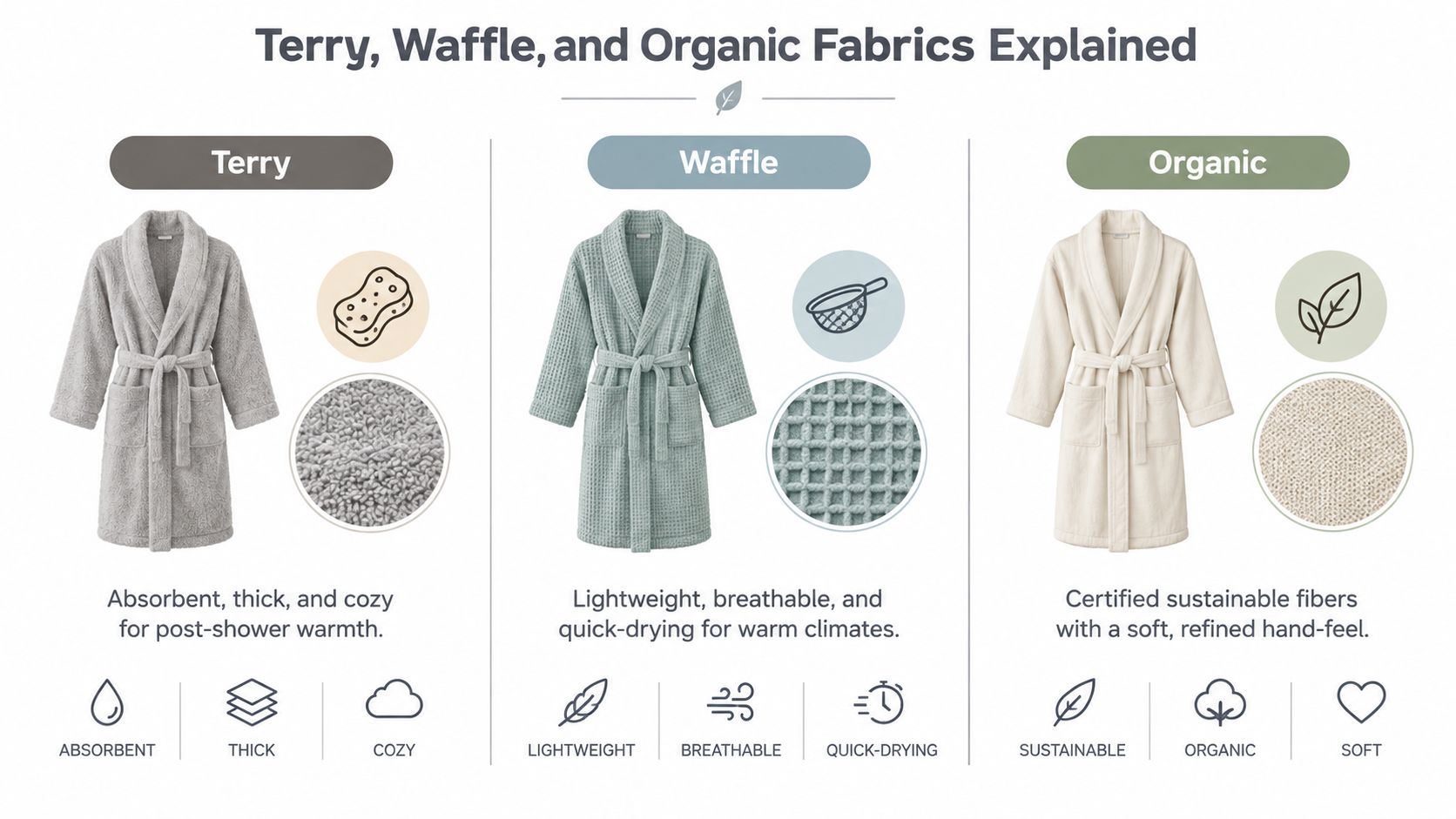
Think of terry as a sponge and waffle as a breathable lattice. Terry cloth has loops that create a larger surface to take up moisture. Waffle fabric has a raised grid that leaves a lighter, airier feel. Neither is automatically superior. They suit different routines.
Match the weave to the moment
Terry is a natural starting point for a post-shower robe or a layer after swimming. Its looped surface feels towel-like and can absorb water, but a dense terry robe may also feel heavy and take longer to dry. A thick, plush handfeel isn't a guarantee that the robe will suit a humid bathroom or a home with limited drying space.
Waffle makes sense when you want a lighter layer. The textured grid gives the robe an airy character that can feel more comfortable in warm weather, over loungewear, or when packing for travel. It can still provide coverage and comfort, but it won't feel like a thick towel wrapped around you.
Fabric weight matters, but it's only one part of performance. In cotton terry, loop structure, yarn, and fabric density can affect water absorption, airflow, water retention, strength, abrasion, and how well loops resist pulling out after washing. Lower density can increase maximum absorption, while higher density can strengthen the fabric but retain more water and slow drying. For that reason, it's useful to look beyond GSM and ask how the robe performs after laundering.
Read organic claims precisely
“Organic,” “natural,” and “chemical-free” aren't interchangeable descriptions. GOTS certification covers more than the origin of the fiber. It addresses processing inputs, wastewater, environmental management, labor protections, and traceability through the supply chain. The label grade “organic” requires at least 95% certified organic fibers; “made with organic” requires at least 70%, as described in the GOTS key features.
Certified organic cotton remains a minority of global cotton production. In the 2020/21 harvest year, it represented about 1.4% of global cotton production; by 2022/23, cotton certified under farm-level organic standards was roughly 3.2% of global output. The same fact sheet reports that 14,676 facilities worldwide were GOTS-certified in 2023, an 8% increase from 2022. These figures show why a specific certification is more useful than a broad eco claim. For a closer look at what the label means for fabric, see this guide to GOTS-certified organic cotton fabric.
Matching Silhouette to Lifestyle
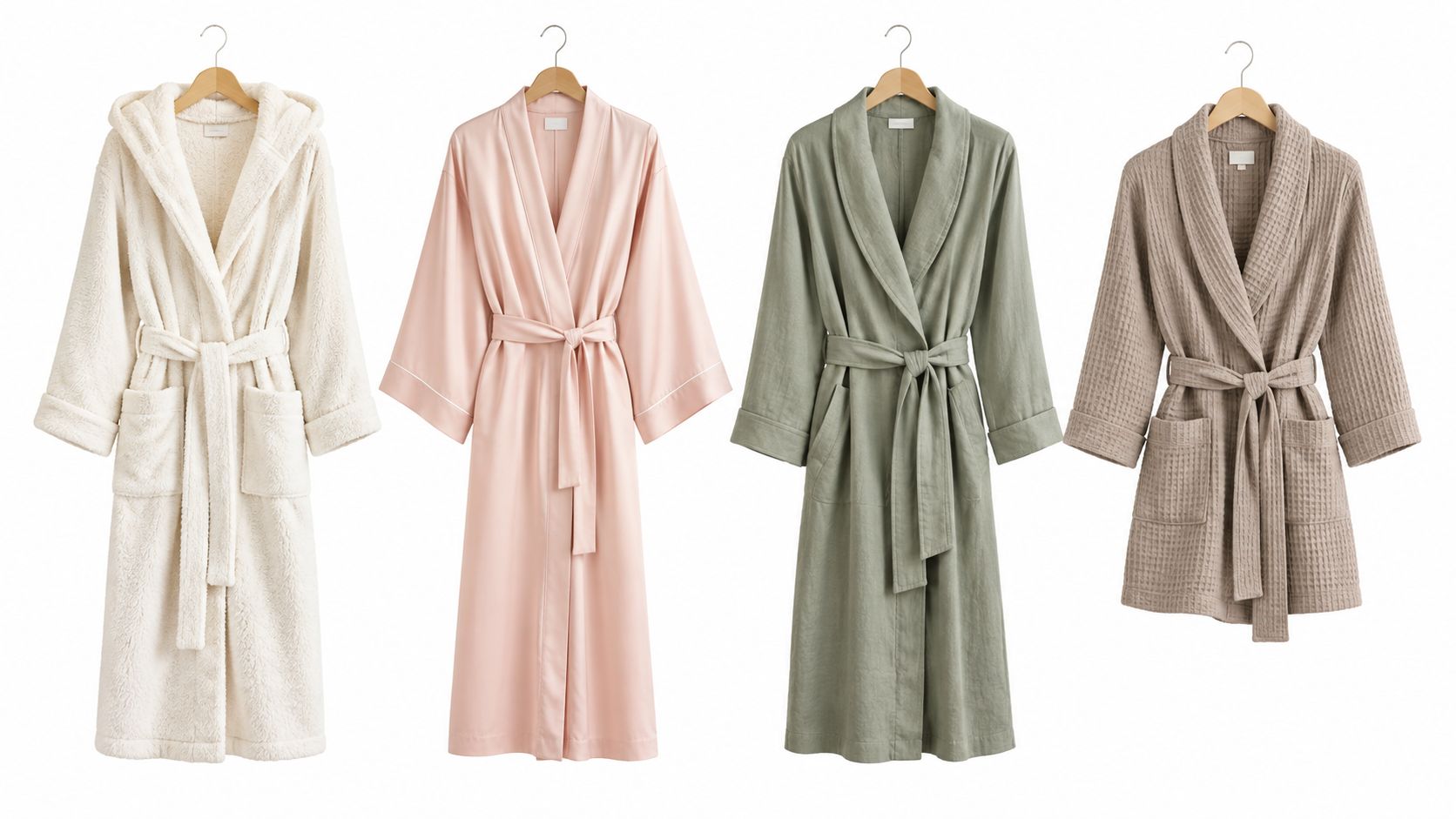
A robe's shape decides how it behaves once you're wearing it. A hood adds warmth and bulk; a flat collar keeps the neckline simpler. A wrap can adapt to changing needs, while a more structured cut may create a hotel-like feel. Rather than searching for one universally “best” silhouette, consider what the robe needs to do in your home.
Four shapes, four different strengths
Silhouette | What it does well | Think about |
|---|---|---|
Hooded | Adds coverage and warmth around the head and neck after a shower. | The hood can add weight at the back, especially if you're getting ready at a vanity. |
Kimono | Offers a clean neckline and a lighter feel for layering over sleepwear or a tee. | A lighter cut may provide less warmth than a generous shawl collar. |
Hotel-grade | Creates a more structured, substantial look for guest use or a suite-inspired routine. | Its fuller shape and weight may feel like too much in a warm or humid home. |
Maternity or adjustable wrap | Gives room to accommodate a changing body and makes the waist easy to adjust. | Check how securely the wrap stays closed as you move or sit. |
A hooded terry robe can suit someone who steps from a hot shower into a chilly room and wants a place to tuck damp hair. A kimono in a breathable weave may suit someone who wears a robe while doing skincare, packing, or moving around a warm home. A hotel-grade style can be a satisfying guest amenity, while an adjustable maternity wrap can feel more practical through pregnancy and postpartum changes.
The point is to compare the robe with the routine, not with a trend. If you're likely to wear it over pajamas for a long morning, room to move and comfortable coverage may lead. If you mainly want a post-bath layer, the feel and weight of the fabric may come first.
A Fit Framework Women Rarely See
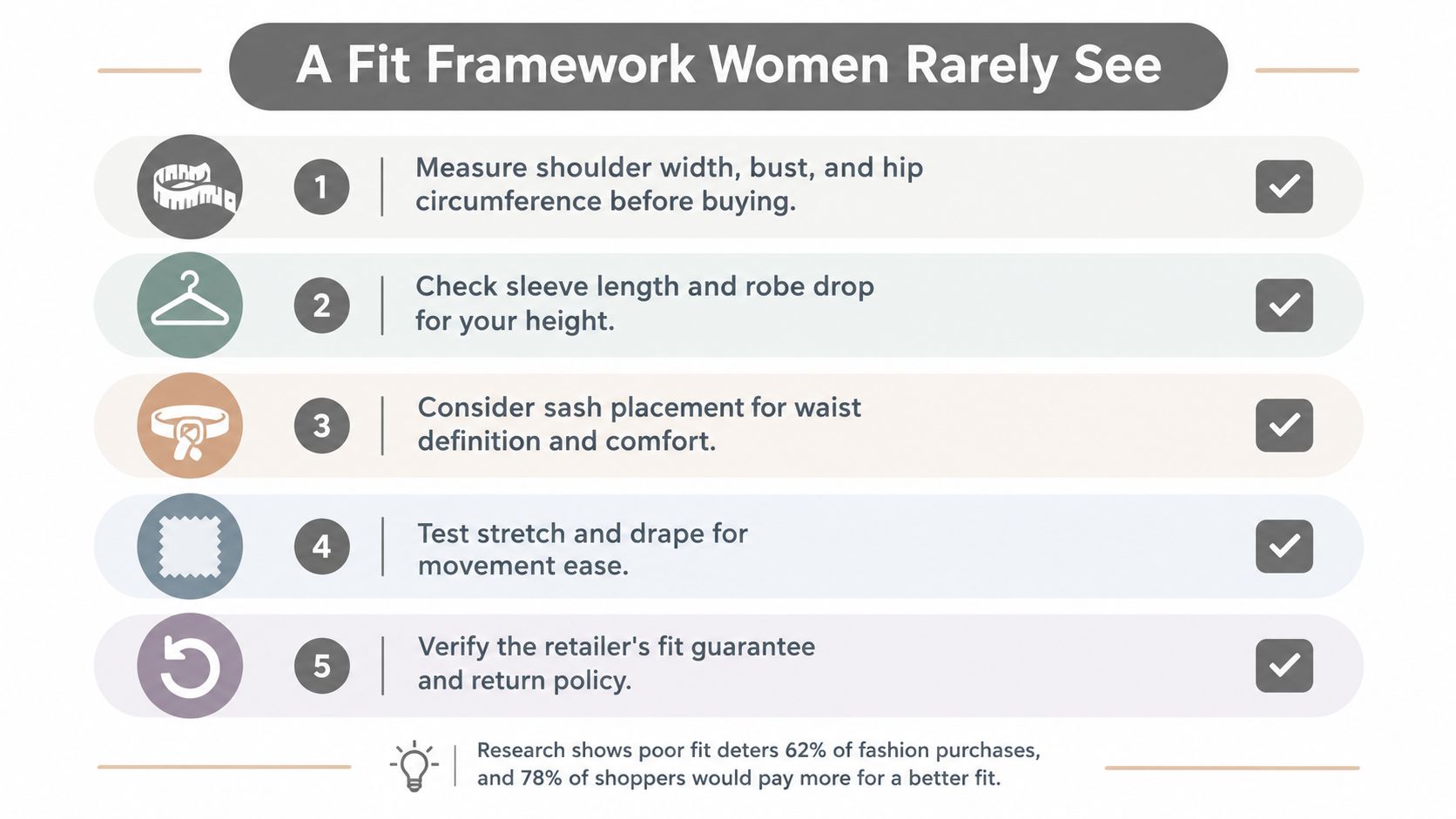
A robe can feel generously cut and still fit badly. Too much fabric can make the belt slide, pull the neckline open, or let the hem drag. Too little ease can make wrapping and sitting uncomfortable. Good robe fit means enough room to move without losing control of the shape.
Consumer research points to why fit deserves attention: poor fit deters 43% of fashion purchases, inconsistent sizing deters 36%, and 38% of consumers often return clothing because it doesn't fit properly. The same research found that 81% would pay more for garments designed to fit comfortably through adjustable features that accommodate body changes, according to Vogue's coverage of sizing and fit.
Measure the robe, not just the size label
Before choosing a size, check the garment measurements and compare them with your body and preferred layers. S, M, and L can vary between brands, so the label alone won't tell you where the robe will fall or how much wrap coverage it offers.
Focus on these points:
Bust and hips: Check that the front panels overlap comfortably when you stand, sit, and walk.
Sleeve length and opening: Consider whether the sleeves stay clear of the sink or skincare products.
Robe length: Compare the garment drop with your height and how you move at home.
Belt position: Look for a sash placement that feels natural and keeps the robe comfortably closed.
Layering room: Decide whether you'll wear it over bare skin, pajamas, or workout clothing.
The robe should have ease, but “oversized” isn't a fit plan. Excess volume can make a belt harder to secure and the hem more likely to catch underfoot. For petite shoppers, a long cut may need checking against actual garment length. Tall shoppers may want to check sleeve and hem measurements, while plus-size and postpartum shoppers can benefit from clear bust, hip, and wrap measurements rather than vague “relaxed fit” language. A bathrobe fit guide for tall women can help focus attention on proportions that standard sizing labels may not answer.
Also ask whether the care instructions mention shrinkage. A robe that fits well before washing may feel different afterward if the fabric changes shape. The most comfortable choice isn't necessarily the largest one. It's the robe whose measurements, closure, and drape work together.
Care, Wash Cycles, and How Robes Actually Age
A robe's care routine should match its construction. Terry's loops need room to move through the wash and dry thoroughly. Waffle's textured structure benefits from gentle handling that doesn't flatten or distort the weave. For either fabric, follow the garment's care label first, then keep the routine simple.
When | Terry | Waffle |
|---|---|---|
Washing | Use a gentle detergent and avoid crowding the drum so water can circulate through the loops. | Use a gentle cycle and avoid rough treatment that can distort the textured grid. |
Drying | Allow enough time for the denser fabric to dry fully; avoid excessive heat. | Use a careful, moderate drying routine and remove the robe when dry to preserve its structure. |
Between wears | Hang it open where air can circulate, especially after bathing. | Hang it in an airy spot so the lighter fabric can dry between uses. |
Common mistake | Heavy softener can leave residue that affects absorbency. | Overloading the wash or using aggressive settings can compromise the weave's feel. |
Build a routine you'll actually follow
You don't necessarily need to wash a robe after every brief wear if it remains clean and dries fully. But a robe worn after bathing, exercise, or in a shared setting needs more frequent attention. In hospitality, laundering between guests is a basic part of making each robe ready for its next wearer.
Skip heavy fabric softener, which can leave a coating on absorbent fibers. Don't pack the washer so tightly that the robe can't rinse freely, and make sure it's fully dry before storing. If your household uses robes often, rotating between two can give each one time to dry between wears.
A plush robe feels inviting at first touch, but a robe that dries reliably is more likely to stay in regular use.
Climate matters, too. In a humid home, a dense terry robe may remain damp longer than you'd like. A lighter waffle robe can be a more practical choice if drying space is limited or you want to wear the robe repeatedly through the day. The best care plan is the one that protects the fabric without turning laundry into a project.
Gifting, Self-Care Rituals, and Bridal Party Use
Saturday morning, 8 a.m.: coffee brewing, hair still damp, twenty quiet minutes before the day asks anything of you. That window is where a robe earns its keep, and it is also the simplest test for choosing one as a gift. Ask what the recipient will do inside it. Dry off after a shower? Nurse a newborn at odd hours? Sit through hair and makeup? Cool down after a run? Each ritual calls for different construction.
The hospitality world already treats robes this way, as working equipment in the same category as towels and treatment tables. Hotel and resort spas recorded 9.4% annual growth between 2019 and 2024, according to the Global Wellness Institute data cited earlier in this guide, and the robe is a large part of why that experience travels home so well. A good one recreates the pause without requiring a booking.
Match the engineering to the ritual
For a postpartum friend, the wrap closure does the heavy lifting. A belted waist works like an adjustable strap, accommodating a body that is changing week to week, where a fixed size or a zip-front would fail. Fabric weight counts here: a lighter weave means she is not wrestling a heavy, damp layer during a 3 a.m. feed, and an open neckline makes nursing or pumping simpler.
For a bridal party, the kimono silhouette is the practical choice, not just the photogenic one. An open front slips on and off without disturbing finished hair or makeup, the smooth outer surface reads cleanly in group photos, and a generous overlap lets one size range fit several bodies. Check the brand's measurements before ordering for a group. For ideas on coordinating the full getting-ready look, these bridal party looks show how robes pair with the rest of the morning.
A personal treat starts with an honest question: when will you reach for it? Straight out of the bath, terry's looped pile behaves like the towel it is. For a skincare routine or slow lounging, a lighter waffle breathes better and dries faster between wears. And if the robe is part of a planned wellness day, pairing it with restorative facial services gives the occasion a structure that staying home cannot quite match.
Boutique hosts can borrow the same logic. A guest robe should launder easily and feel comfortable across body types, with coordinated hair wraps or towel turbans completing the setup where they suit the space.
A thoughtful robe gift fits a real routine.
Smart Buying Decisions and a Final Checklist
Two robes can sit side by side on a product page, both labeled "luxury," and behave nothing alike once they reach your bathroom. One has loops dense enough to pull water off your skin after a shower. The other photographed well under soft lighting. Luxury describes a feeling a brand wants you to expect, and it tells you nothing about how a robe absorbs, dries, fits, or was made. Treat it as a first impression, then look underneath for the details that carry real information: weave type, fabric weight, measurements, care instructions, and who certified what.
That last part trips up even careful shoppers. GOTS verifies requirements across the certified textile chain, covering chemical inputs, wastewater treatment, environmental management, labor rights, and traceability. As covered in the fabrics section, GOTS separates its "organic" grade from "made with organic" by fiber percentage. What matters at checkout is a different question: does the certification apply to the finished robe, or only to a mill that supplied raw material? A certified fabric can still be cut and sewn at an uncertified facility, the way organic flour can end up in a conventional cake. Look for language that names the scope of the certification, and keep in mind that even a fully certified robe makes no promises about softness, absorbency, or drying speed.
A checklist before you buy
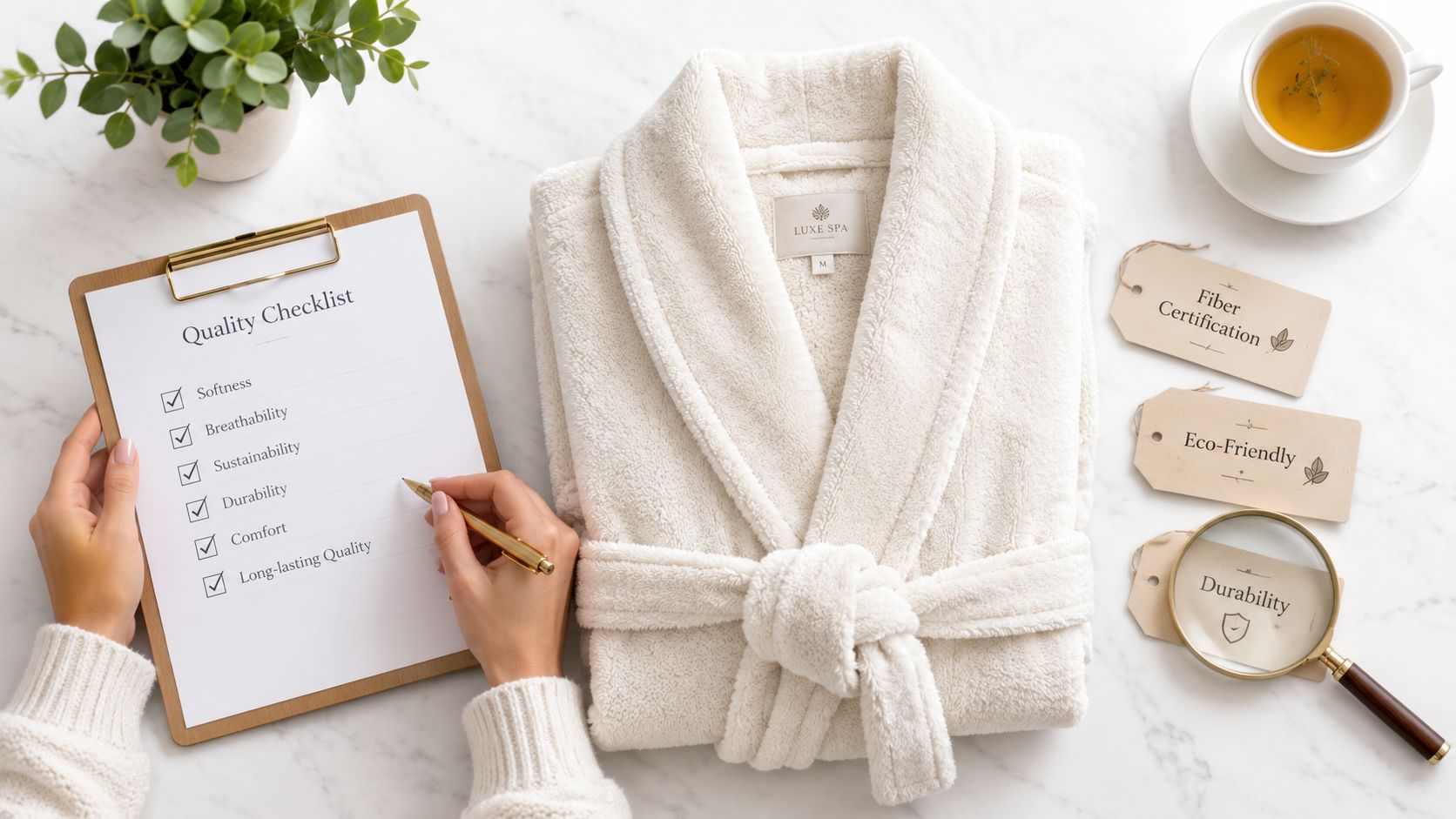
Choose the fabric for your setting: terry for towel-like absorption straight out of the bath, waffle when breathability and fast drying matter more.
Match the silhouette to your routine: hoods, sleeve shape, coverage, and how the wrap closes all change how a robe works on a weekday morning versus a slow Sunday.
Check measurements: compare bust, hips, sleeve, and robe length rather than trusting a size label alone.
Understand care: read the washing and drying instructions and ask whether your home setup can dry the fabric fully between wears.
Verify claims: look for specific certification language and separate fiber certification from chemical testing of the finished product.
Review purchase terms: check shipping and return policies so you can assess the fit at home.
If a lighter layer sounds right, a waffle kimono robe wears differently from a plush terry wrap, and a towel wrap covers the minutes just after a bath without committing to a full robe. Buy for the use you can picture repeating. A robe chosen for a real routine earns its hook on the door; one bought for an abstract promise of indulgence usually migrates to the back of it.
Smart buying here is a string of small, deliberate calls: the right weave, a workable fit, credible product information, and care you can maintain. That combination is what turns a robe into part of everyday self-care.
Browse SEYANTE for women's robes in Turkish cotton terry and lightweight waffle weaves, including GOTS-certified organic options, plus towel wraps and hair turbans. Choose a fabric and silhouette for your own routine, then review the sizing and care details before selecting a robe.