GOTS Certified Organic Cotton Fabric: What It Means
- Why Organic Cotton Labels Are Confusing
- The History and Scale of GOTS Certification
- How GOTS Defines Organic Content
- Chemical and Environmental Standards
- Verifying GOTS Certification on Finished Goods
- Real-World Examples of SEYANTE Bathrobes and Towels
- Benefits for Health and the Environment
- Common Misconceptions About GOTS
You're standing in a boutique changing room, holding a beautifully finished cotton robe. The fabric feels soft, the packaging uses words such as “natural” and “organic,” and the product appears to suit your standards. Then you notice that the label says organic cotton, but nowhere does it clearly explain whether the robe itself is certified.
That difference matters. Organic cotton describes the fiber and how it was grown. GOTS certified organic cotton fabric covers a much broader journey, including processing, dyeing, finishing, manufacturing, packaging, and labeling. For a robe, towel, or towel wrap that rests directly against freshly washed skin, knowing where certification begins and ends helps you shop with confidence.
Why Organic Cotton Labels Are Confusing
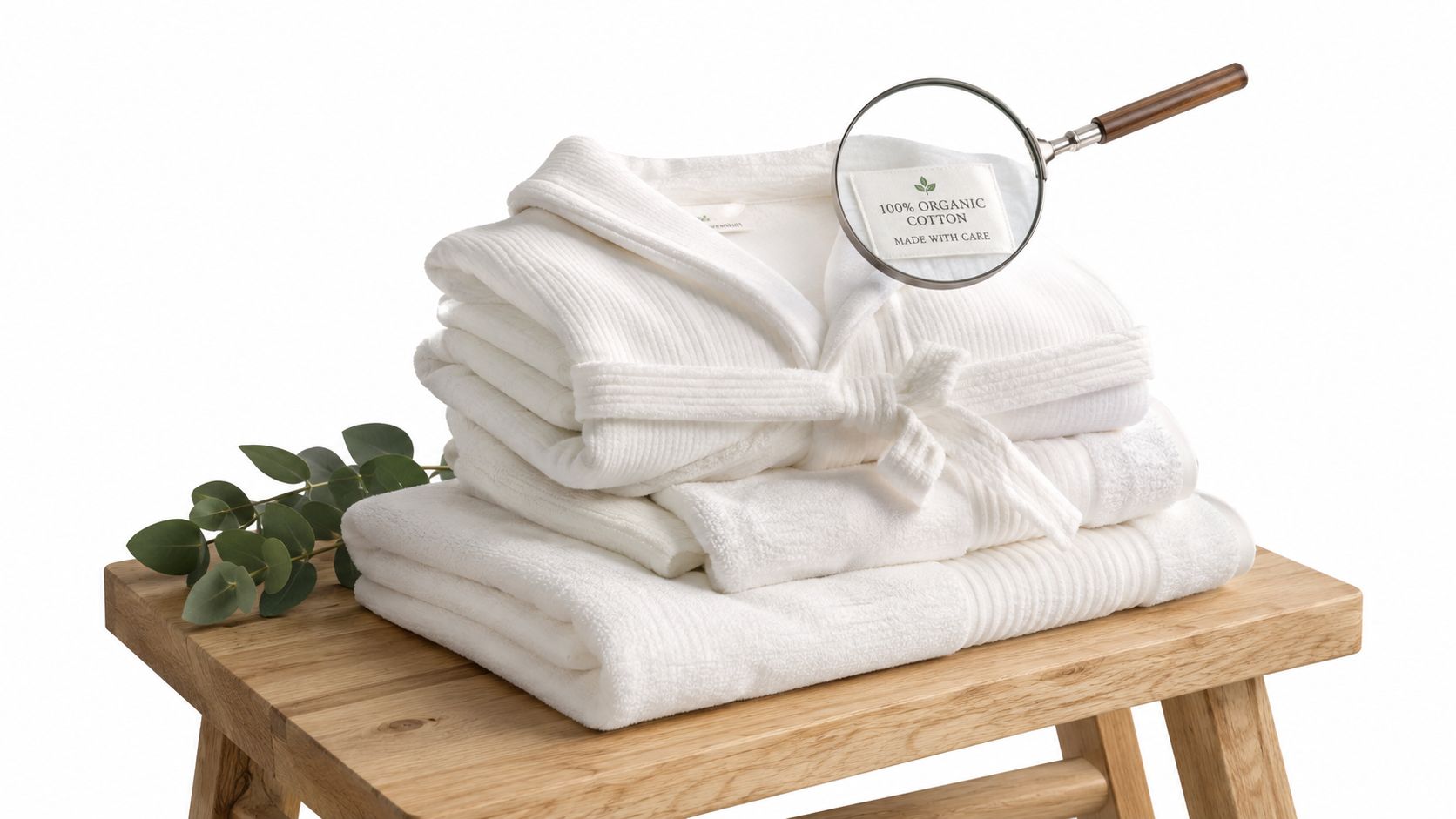
A shopper may reasonably assume that a robe made from organic cotton has been produced organically from farm to finished garment. In practice, the phrase can refer only to the raw cotton fiber. The cotton might have been grown under organic agricultural requirements, then passed to processors whose dyes, auxiliaries, finishing agents, and wastewater practices aren't covered by the same textile certification.
That doesn't make every uncertified product unsafe, but it does create a verification gap. A fiber claim tells you something important about cultivation. It doesn't, by itself, confirm how the cotton was ginned, spun, woven, dyed, sewn, packed, or labeled.
Fiber origin is only the first checkpoint
Think of the supply chain as a relay race. The farm starts with the baton, but several other businesses carry it before a robe reaches your bathroom. Organic certification of the fiber verifies the first runner. GOTS certification is designed to follow the baton through the later stages and require certified companies throughout the chain.
For luxury bath textiles, that distinction affects more than environmental messaging. Towels and robes touch the skin after bathing, often when the skin is warm and damp. Buyers may therefore care about chemical inputs, residue controls, traceability, and responsible processing as much as they care about the cotton's origin.
Practical rule: “Organic cotton” describes what the fiber is. “GOTS certified” helps verify how the textile was processed and controlled.
The distinction also helps you compare cotton qualities without confusing fiber type with certification. For a useful explanation of another cotton specification, what is Supima cotton offers helpful context. Fiber variety, staple characteristics, weave, and certification answer different questions, and a careful buyer should keep them separate.
The History and Scale of GOTS Certification
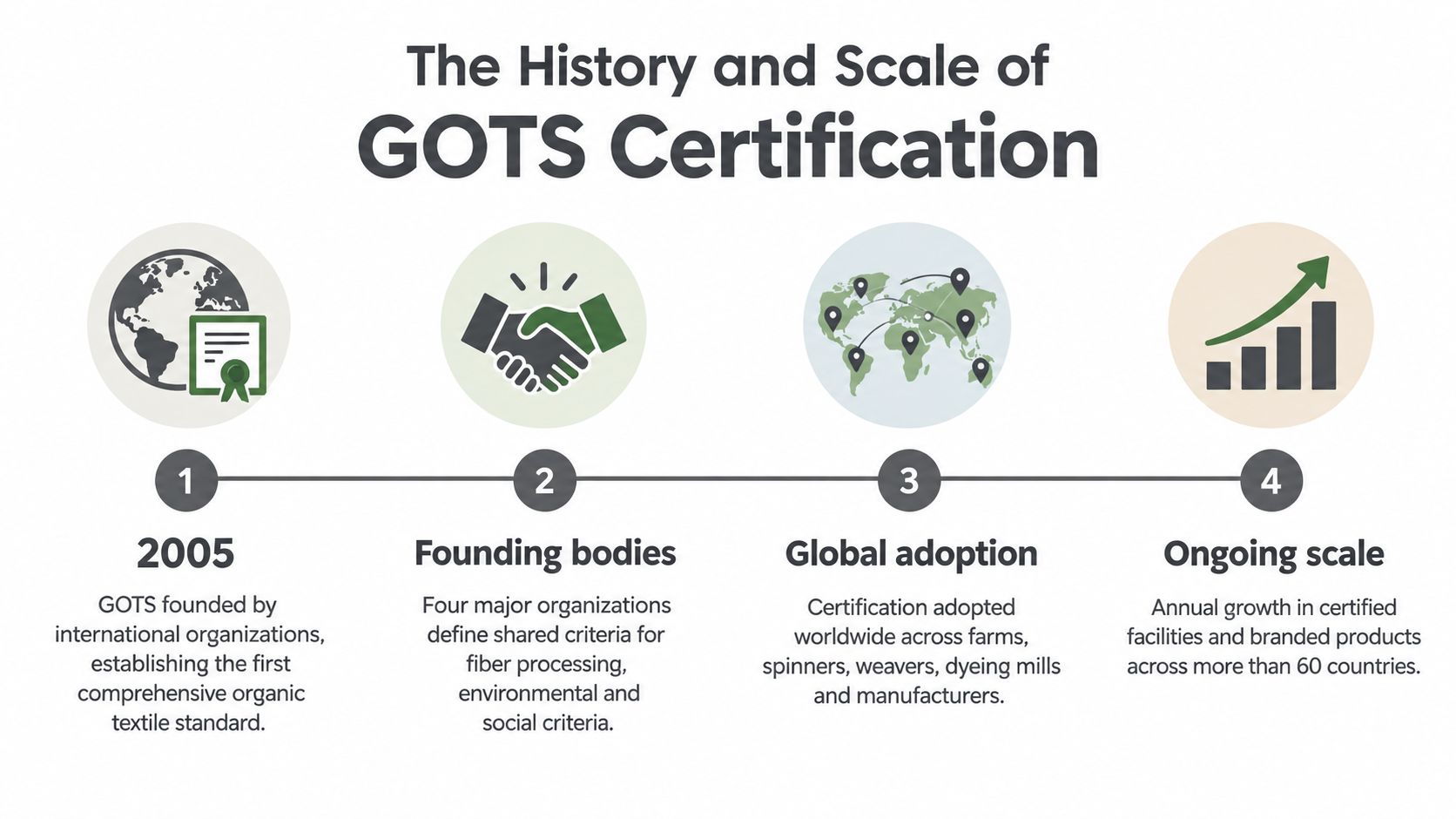
A bathrobe can begin with organic cotton and still leave unanswered questions about spinning, dyeing, finishing, and sewing. GOTS developed to address that gap by creating a shared international framework for organic textile processing. Its modern framework was developed in 2005 by the International Working Group, made up of IVN, the Soil Association, OTA, and JOCA. Third-party certification began in 2006, followed by the GOTS logo in 2008. These milestones are documented in JOCA's overview of GOTS certification.
That sequence changed how buyers could read an organic claim. Organic cotton identifies the fiber's agricultural origin. GOTS extends the question through the supply chain, examining how that fiber becomes yarn, fabric, and a finished product. For towels and robes, the distinction matters because the item is purchased as a complete textile, not as loose cotton.
From niche initiative to international infrastructure
GOTS covers certified organic natural fibers beyond cotton, including cotton, hemp, linen or flax, jute, wool, cashmere, mohair, alpaca, and silk. Cotton remains especially familiar in bath and loungewear, while the broader scope shows that GOTS is a textile-processing standard rather than a cotton-only label.
Its scale reflects the number of businesses involved in certified production. By 2025, 17,800 facilities worldwide were GOTS certified, an increase of 15.4% from 2024, according to the GOTS Annual Report 2025. Those facilities support stages such as spinning, weaving, dyeing, finishing, and other processing needed to turn fiber into usable textile goods.
| Milestone | Why it matters |
|---|---|
| 2005 framework | International organizations established shared criteria for organic textile processing. |
| 2006 certification | Third-party inspection gave the framework an auditable structure. |
| 2008 logo | Buyers gained a visible sign associated with the standard. |
| 2025 scale | Certified facilities represented a substantial global processing network. |
A guide to understanding GOTS as an organic textile standard connects this history with practical purchasing decisions. For a luxury shopper, the useful takeaway is straightforward: an organic cotton robe or towel describes its fiber, while a GOTS claim addresses controls across the processing chain.
How GOTS Defines Organic Content
A cotton robe can contain organic fiber without the finished product carrying a GOTS certification. The distinction matters at bath time: organic cotton describes the fiber itself, while GOTS certified applies to controls across the processing chain that turns fiber into a towel or robe.
The two label grades
GOTS uses label grades to show the certified organic share of a finished textile. A product labeled “made with organic” must contain at least 70% certified organic fibers. A product labeled “organic” must contain at least 95% certified organic fibers. These thresholds are explained in the official GOTS explanation of how certification works.
The remaining material is not automatically conventional cotton. The grade states the minimum certified organic fiber content, so buyers should read both the grade and the product composition. For towels and bathrobes, that check helps distinguish a high organic-fiber content from a claim that applies to the finished item more broadly.
The chain of custody behind the label
The certification follows the material through each stage, much like a documented handoff from farm fiber to finished bathroom textile:
- Raw fiber preparation, including ginning.
- Spinning, where fiber becomes yarn.
- Weaving or knitting, where yarn becomes fabric.
- Wet processing, including dyeing and finishing.
- Manufacturing and packing.
- Labeling and sale.
Every processor in the chain must be certified and undergoes annual on-site inspection, as described by the GOTS Standard Version 7.0 chain-of-custody requirements. The system also prevents conventional and organic fibers of the same type from being mixed in one product, reducing the risk of substitution.
Why percentage and traceability work together
A percentage tells you composition, not whether the material remained controlled during processing. Traceability shows that control, but without a label grade it does not tell you how much certified organic fiber the finished product contains. GOTS brings both questions together: What grade is stated, and can the supplier show that the material stayed controlled through processing?
Raw organic fiber must be certified separately before entering the GOTS chain of custody. Purchasing organic cotton alone therefore does not make a finished robe or towel GOTS certified. The finished product and the companies processing it must be covered by the relevant certification system.
Chemical and Environmental Standards
GOTS doesn't promise a textile made without chemistry. Cotton must still be prepared, dyed, finished, and made into a commercially usable product. The value of the standard lies in controlling which inputs processors may use, how wet processing is managed, and what residues remain in the finished textile.
The standard uses a positive list for dyes and auxiliaries. In plain language, processors can't assume that an input is acceptable just because it's widely used. The chemical must meet the standard's criteria before it can be used within certified processing.
A controlled chemical palette
GOTS restricts hazardous inputs, including toxic heavy metals and aromatic solvents, and sets requirements connected to toxicity and biodegradability. The official GOTS standard overview explains the environmental and chemical controls that shape processing.
This approach is more useful than the vague phrase “chemical-free.” A finished robe still needs color, stability, and a suitable handfeel. The question is whether the processor used substances allowed by a defined system and whether the finished product meets residue controls.
For buyers exploring broader material responsibility, information about sustainable joint support materials illustrates why sustainability claims need to be examined at the material and production level rather than accepted as broad marketing language.
Wastewater is part of the textile story
Dyeing and finishing use water, so GOTS requires wet-processing units to maintain functional wastewater treatment. This requirement recognizes that a textile can be made from organically grown fiber and still create environmental pressure during manufacturing if wastewater is poorly managed.
The standard therefore connects raw material, chemical selection, and factory operations. That chain is especially relevant to towels and robes because these products often use absorbent structures and finishes that require careful wet processing.
What this means against the skin
GOTS also includes residue controls on finished products. These controls don't turn certification into a promise that every person will have the same skin response, and they don't guarantee a specific level of softness or absorbency. They do provide a stronger basis for evaluating whether the fabric was processed under restrictions intended to reduce hazardous residues and improve regulatory acceptability in export-oriented supply chains.
A practical buyer should separate three questions:
- Chemical exposure: Were processing inputs restricted and finished-product residues controlled?
- Environmental management: Did wet-processing facilities use functional wastewater treatment?
- Performance: Does the robe or towel have the yarn, weave, weight, and finish needed for the intended use?
GOTS speaks strongly to the first two. The third still requires textile judgment.
Verifying GOTS Certification on Finished Goods
A finished robe is where many shoppers make the wrong assumption. They see “organic cotton” in a product description and treat it as proof that the entire textile is GOTS certified. The safer approach is to verify the finished-good claim, not just the fiber description.
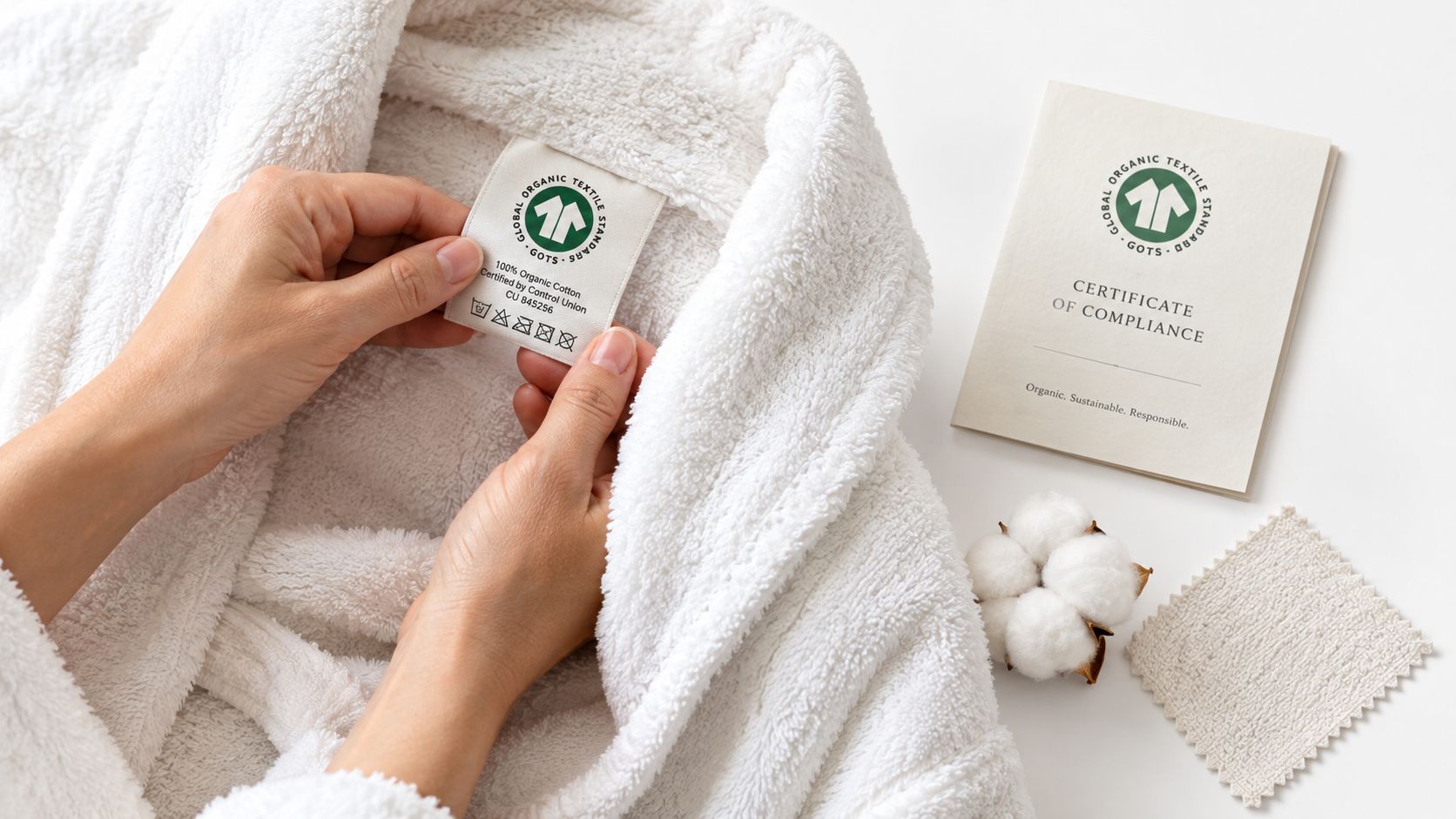
What to look for on the product
Start with the sewn-in label, hangtag, or product page. Look for the GOTS logo, the stated label grade, and a license number or other certification identifier. A credible seller should be able to connect the finished product to the certified company or supply-chain documentation behind it.
Use this quick check:
- Find the exact product claim. Is the item described as GOTS certified, or does it only say organic cotton?
- Read the label grade. “Made with organic” and “organic” indicate different minimum fiber thresholds.
- Check the fiber composition. Confirm whether the stated percentage applies to the whole product or only one component.
- Ask for the license number. If the information isn't visible, request the relevant certification details from the seller.
- Confirm product coverage. Certification of a fabric mill doesn't automatically prove that every finished robe or towel from a brand is covered.
Why a supplier claim isn't enough
GOTS certification follows the chain from raw fiber through ginning, spinning, weaving or knitting, wet processing, manufacturing, packing, and labeling. Each processor must be certified through annual on-site inspection, and the raw organic fiber must be certified before entering that chain.
That distinction is similar to the difference between a supplier saying a process was checked and an independent system documenting how checking took place. For readers who want a clearer explanation of why independent verification matters, Fillaree's explanation of third-party testing provides useful general context.
A product label should answer two questions: how much certified organic fiber is present, and whether the processing chain is covered.
For hospitality buyers, this verification step becomes even more important. A hotel or spa may order many robes or towels, so the purchasing file should preserve the product claim, label grade, supplier identity, and certification information. That documentation makes the sustainability statement easier to defend when guests, procurement teams, or business partners ask how the textile was verified.
Real-World Examples of SEYANTE Bathrobes and Towels
Finished bath textiles make the distinction easier to understand than abstract supply-chain language. A robe or towel wrap isn't just a bundle of organic fibers. It's the result of farming, ginning, yarn preparation, weaving, wet processing, sewing, and labeling.
The Women's White Organic Turkish Cotton Waffle Towel Wrap is presented as a 100% GOTS-certified waffle towel wrap. Its lightweight waffle construction suits a post-bath layer, while the certification claim addresses the textile chain behind the finished item rather than only the cotton's agricultural origin.
The Women's Terra Cotta Organic Turkish Cotton Waffle Towel Wrap uses the same kind of certification distinction in a different color choice. Comparing the white and terra cotta versions shows why color, styling, and certification are separate purchasing criteria. A buyer can choose the visual finish that suits a home, spa, or hospitality setting while still checking the same underlying questions about fiber content and certification coverage.
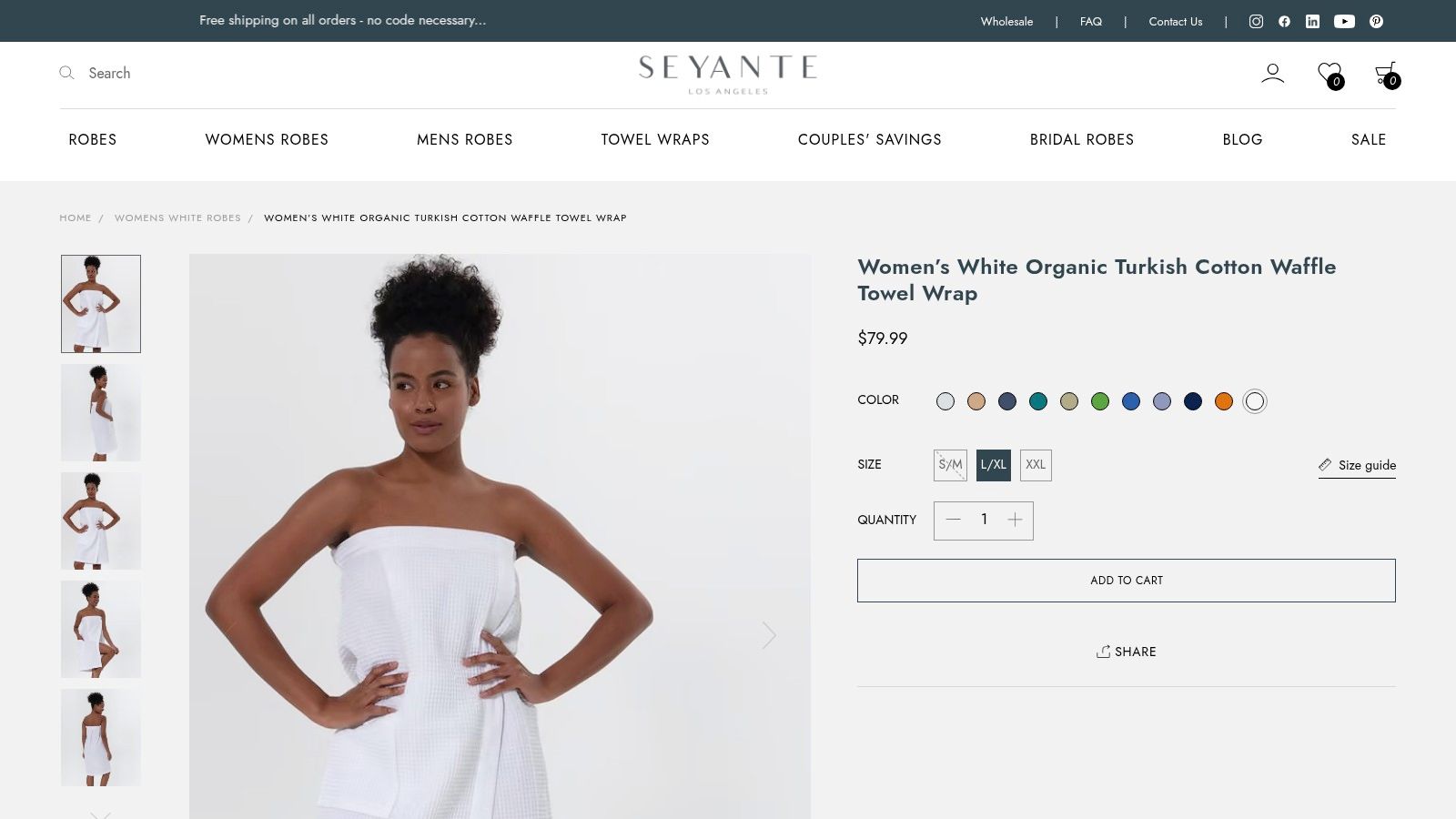
For a shopper, the useful lesson isn't that every GOTS textile feels identical. GOTS supports process confidence, while the tactile experience still depends on cotton quality, yarn construction, waffle structure, fabric weight, and finishing. Review those performance details alongside the certification label.
Benefits for Health and the Environment
GOTS-certified fabric gives buyers a more complete basis for choosing textiles that sit against the skin. Restricted processing inputs and finished-product residue controls can reduce concern about hazardous chemical exposure, while wastewater requirements address part of the environmental burden associated with dyeing and finishing.
The benefit also extends beyond the bathroom. Organic cotton represents an established worldwide segment of the market, although it remains a minority share of total cotton production. In the 2020/21 harvest year, farmers produced 342,265 tonnes of organic cotton fiber across 21 countries, according to the Organic Trade Association's organic cotton fact sheet. The same source records year-to-year variation, showing why organic cotton remains a real global supply base rather than a purely local niche.
A certified robe can therefore support a personal ritual and a more accountable sourcing decision. It won't automatically be softer, more absorbent, or more durable than every conventional alternative, but it gives you meaningful information about how the textile was made.
For a closer look at the difference between fiber origin and broader cotton choices, see organic cotton versus conventional cotton.
Common Misconceptions About GOTS
The most common misconception is that organic means chemical-free. It doesn't. Cotton processing needs dyes, auxiliaries, and finishing steps, but GOTS restricts the permitted inputs through a positive list and controls hazardous substances, wastewater, and finished-product residues.
A second misconception is that an organic cotton label automatically means the finished robe is GOTS certified. Organic cotton identifies the fiber. GOTS addresses the certified textile chain. Those claims may appear together, but they aren't interchangeable.
What GOTS doesn't promise
GOTS is a governance and compliance signal, not a complete performance guarantee. It doesn't tell you that a robe will have a particular softness, absorbency, drying speed, thickness, or service life. Those characteristics depend on choices such as yarn quality, weave structure, fabric weight, and finishing.
It also doesn't remove the need to inspect the product label. A trustworthy purchase should make the label grade and certification identity clear. If a page uses broad sustainability language but doesn't identify the finished product's certification details, ask the seller for clarification before purchasing.
The strongest claim is the one you can verify at the finished-product level.
A shopper who wants to compare another textile safety framework can review the OEKO-TEX certified bathrobe collection. The important point is to understand what each certification evaluates, then match that scope to your priorities.
SEYANTE offers Turkish cotton terry and lightweight waffle robes, towel wraps, and related bath textiles, including products presented with GOTS-certified organic claims. Visit SEYANTE to review the collection, check product details, and choose a robe or wrap with certification information that fits your self-care or hospitality needs.