Women Tall Robes: A Sizing and Fit Guide
You're standing in the bathroom, still damp from the shower, and the “one-size” robe you ordered is already failing. The hem stops higher than you expected, the sleeves leave your wrists exposed, and the belt sits in the wrong place. You haven't chosen the wrong letter size. You've chosen a garment drafted for a different set of proportions.
That's the central issue with women's tall robes. A tall robe isn't a standard robe made wider or labeled with a larger size. It needs enough back length, sleeve reach, shoulder room, and correctly placed belt coverage to follow a taller frame. The right choice starts with measurements, then moves to fabric, silhouette, and care.
Why Standard Robes Always Feel Too Short
A woman who's 5'9" can put on a generous robe and still look as though she's wearing a short jacket. The hem rises toward the knees when she walks, the cuffs hover above the wrist bones, and the wrap front may open across the chest whenever she bends. Nothing about her body is unusual. The robe's vertical pattern pieces aren't long enough.
Many standard charts focus on chest, waist, and hip measurements because those numbers help assign a letter size. For taller wearers, those measurements tell only part of the story. Independent sizing guidance recommends measuring from the neck point or shoulder area to the intended hem and checking sleeve length against the wrist, because a nominal size can conceal a short body and short sleeves.
Where the missing length causes trouble
The first problem appears at the hem. A robe that reaches mid-calf on a shorter wearer may land near the knee on a taller woman. When she bends to tie a shoe, pick up laundry, or step over a bath mat, the front lifts farther than expected and reduces coverage.
Sleeves create the second problem. A cuff that ends above the wrist lets cool air reach the forearm and can get in the way when the wearer wants the robe to feel enveloping. The third issue is wrap coverage. If the belt loops sit too high, the tie pulls the front panels toward the narrowest point of the waist instead of supporting the bust and hips, leaving a gap even when the chest measurement appears correct.
Practical rule: A tall robe should fit your vertical measurements before you worry about whether the label says S, M, or L.
Historical design helps explain why this matters. Bathrobes developed from older robe traditions, including European elite loungewear in the 17th century, while terry cloth became widely available by the late 1800s and helped make robes more practical in the early 20th century.
Treat the garment as a proportion problem. Measure the shoulder-to-hem and shoulder-to-wrist distances first, then use the letter size to check wrap width and overall room.
Measuring Your Frame for a Tall Robe
A tape measure, a mirror, and a doorframe are enough to get a useful starting point. Measure while wearing the kind of sleepwear or loungewear you'll normally wear underneath the robe. A thin camisole and shorts produce a different fit expectation from thick pajamas.
Start with shoulder-to-hem
Stand barefoot against a wall or doorframe with your posture relaxed. Keep your shoulders level, and ask someone to mark your height if possible. If you're alone, use the mirror to keep the tape straight.
Place the tape at the bony point where the shoulder seam would sit. Let it fall vertically past the knee to the place where you want the robe to finish. Mid-calf gives practical coverage without making movement difficult; a longer hem can approach the ankle, but it shouldn't catch under your feet.
A general tall-robe target often falls within 48 to 54 inches for shoulder-to-hem, but the correct point depends on your height, torso length, and preferred coverage. The tall robe sizing chart highlights a useful gap in ordinary charts, where listed robe lengths often cluster around 48 to 52 inches, while tall ranges extend toward 49 to 53 inches.
Then measure shoulder-to-wrist
Bend your arm slightly, turn your palm forward, and measure from the shoulder point to the wrist bone. Don't pull the tape tight across the arm. A sleeve that reaches the wrist while your arm hangs naturally may ride up when you reach for a cup or tie your hair.
| Height | Back length, shoulder to hem | Sleeve length, shoulder to wrist |
|---|---|---|
| 5'8" | 48–50 inches | 22–23 inches |
| 5'9"–5'10" | 49–51 inches | 22–24 inches |
| 5'11"–6'0" | 50–52 inches | 23–24 inches |
| 6'1"–6'2" | 51–54 inches | 24 inches or more |
These are sanity-check ranges, not universal rules. A long torso may need more back length than a woman of the same height with longer legs, and dropped shoulders can change how a sleeve measurement behaves.
For kimono or batwing cuts, take an optional cross-back measurement from one shoulder edge across the upper back to the other. Keep the tape flat rather than following the curve. If you're between two lengths, choose the shorter option only when the hem already reaches your intended point and the sleeve has enough reach. Extra length can add weight and drag, especially in absorbent fabric.
Fabric and GSM Choices for Tall Women
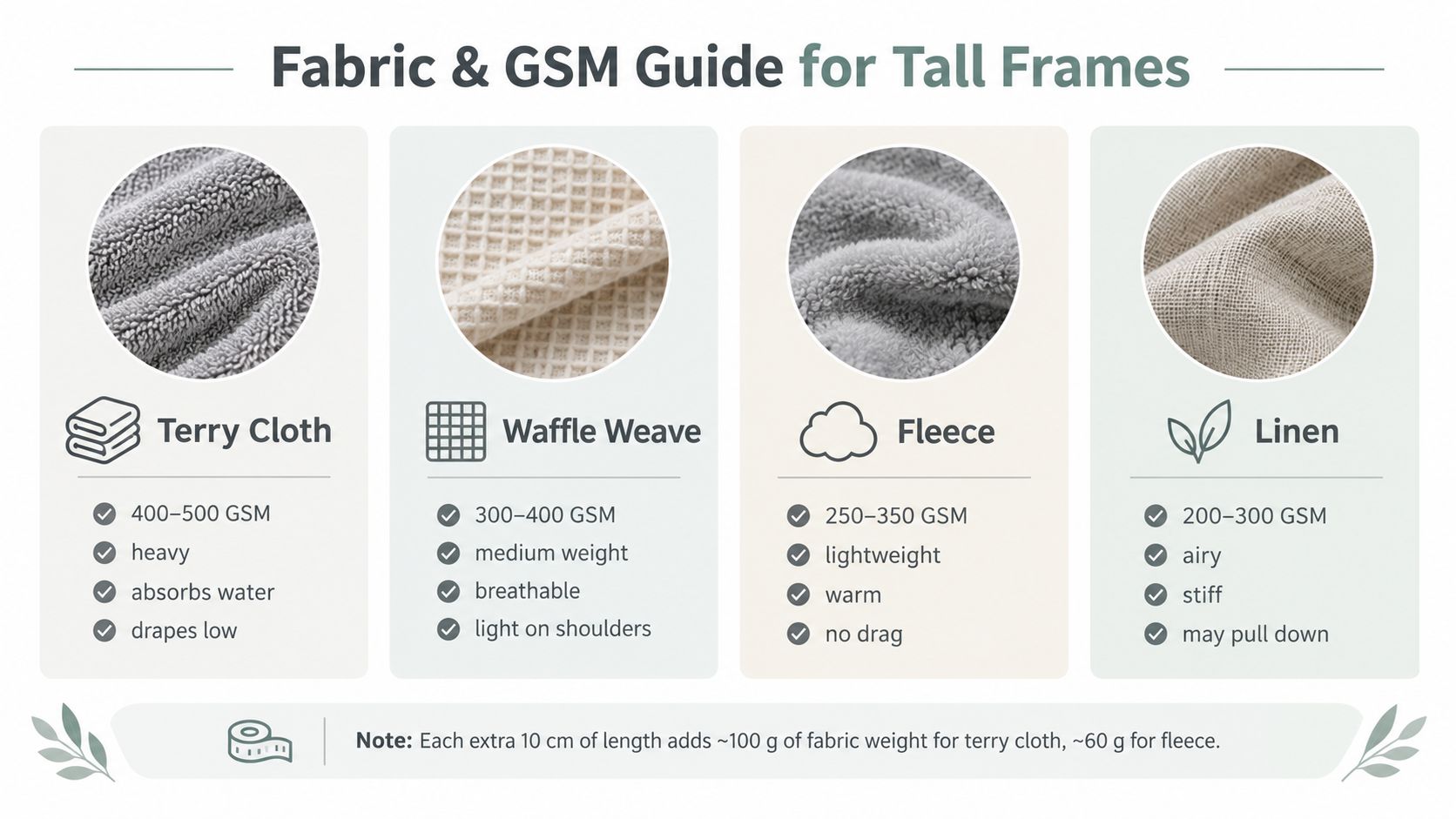
A tall robe can have the right hem and still feel wrong. Extra sleeve and body length add fabric, so the textile's density affects shoulder weight, drying time, drape, and how much support the belt must provide. Choosing fabric is therefore part of solving the robe's proportions, not a separate comfort decision.
GSM, or grams per square meter, describes fabric weight by area. Higher GSM generally means a denser textile, although weave structure and fiber type also change its feel and absorbency. Terry cloth uses looped pile, like a towel, to create more surface area and water-trapping pockets. Waffle weave relies more on capillary wicking, so it usually feels lighter and dries faster. This absorbent bathrobe guide places premium terry around 400 to 600 GSM, with lighter waffle commonly around 300 to 350 GSM.
Match density to the job
For post-shower wear, cotton terry remains a strong absorbency choice. Its loops pick up moisture across the body and create a substantial drape. That plush structure can feel comfortable, yet a long terry robe may pull at the shoulders when wet and need more time to dry.
Waffle weave gives tall wearers a different balance. Its raised grid allows more airflow and avoids the compact feel of dense pile. It suits warm bathrooms, travel, dressing, and everyday lounging when you want full coverage without a heavy layer.
Fleece provides warmth rather than water pickup. It works over dry sleepwear in a cold room, but it is less suitable for drying after a shower. Linen feels airy and develops a relaxed drape. Its surface can feel more structured, and laundering may leave it wrinkled.
Judge the whole robe
A dense terry tall robe can feel heavier than a standard-length version because the added body and sleeve fabric increase the load on your shoulders. A lighter weave can maintain the intended hem-to-height proportion without making the robe feel like a blanket.
Care needs to fit your routine too. Looped terry needs room to dry thoroughly. Waffle can snag on jewelry or rough surfaces, fleece may attract lint, and linen requires comfort with wrinkles. Choose the fabric whose weight, drying needs, and maintenance suit how you will wear the robe.
Robe Silhouettes That Work With Height
Cut changes how a tall body reads and how the robe moves. The same back length can look elongated in a narrow kimono shape, balanced in a shawl collar, or softer but more crowded in a bulky hooded design.
Compare the main silhouettes
A kimono robe usually has a flatter collar and sleeves that extend from a dropped or broad shoulder line. That construction can support a vertical impression, especially when the sleeve reaches the wrist rather than stopping high on the forearm. Check the sleeve-to-wrist distance with your arms relaxed. A cuff that ends roughly at the wrist bone gives coverage without swallowing the hand.
A shawl-collar robe adds visual width around the neck and upper chest. That horizontal band can balance broad shoulders or a long torso, but a deep collar may make the upper body appear shorter. Look for a collar that lies flat and doesn't force the neckline toward the shoulders.
Hooded robes add softness and warmth. On a tall frame, an oversized hood can crowd the shoulder area, especially when thick terry or plush fabric stacks behind the neck. A lightweight hood with a controlled shape is easier to wear than a heavy hood that pulls backward.
| Silhouette | Effect on length | Best for | Watch out for |
|---|---|---|---|
| Kimono | Emphasizes a clean vertical line | Long torsos, full coverage, easy movement | Dropped shoulders can make sleeves too long |
| Shawl collar | Adds horizontal balance | Broad shoulders or fuller wraps | Deep collars may visually shorten the torso |
| Lightweight hooded | Adds softness without much structure | Chilly mornings and relaxed lounging | Bulky hoods can crowd the neck and shoulders |
Hem placement matters as much as collar design. A mid-calf hem usually creates a deliberate long line, while a hem near the ankle offers more coverage but needs enough walking ease. Keep the garment clear of the ankle bone when you move so the lower edge doesn't interfere with your stride.
For plush or faux-fur styles, texture changes the proportion as well as the warmth. A practical guide on how to choose a faux fur robe can help you evaluate pile, softness, and overall bulk before choosing a dramatic fabric.
For more full-length examples, browse women's full-length robes and compare hem placement, sleeve shape, and collar depth in product photography.
If you want to emphasize vertical length, start with kimono. If you want to balance breadth, try a shawl collar. If you want softness without bulk, choose a lightweight hooded cut.
How to Read a Women's Tall Robe Size Chart
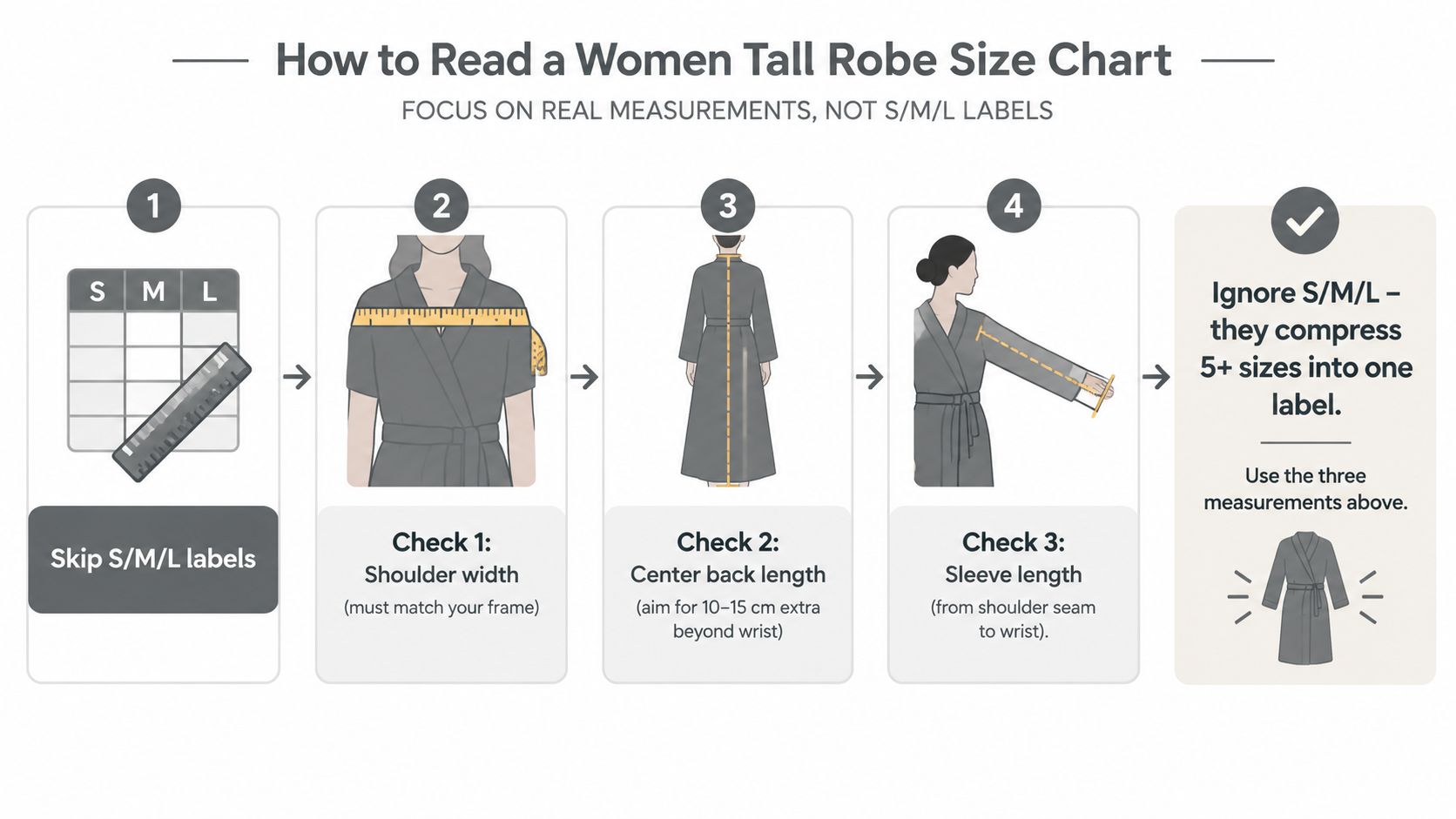
Ignore the S, M, and L until the end. Those labels compress several body proportions into one category, while tall fit depends on whether the garment's actual dimensions match your frame.
Open the product chart and find the back length, measured from the shoulder seam or neck point to the hem. Then locate sleeve length, measured from the shoulder seam to the cuff. Finally, check cuff circumference, especially if you have long forearms or prefer to push your sleeves up while washing your face.
Follow the numbers in order
Compare the back length with your shoulder-to-hem measurement. If the garment is shorter than your target, a larger chest size won't reliably fix it. The robe may become wider without becoming meaningfully longer.
Next, compare sleeve length. Allow roughly 1 to 2 inches of wearing ease when you want comfortable movement, but don't treat ease as a substitute for a tall sleeve pattern. A sleeve that reaches the wrist only when your arm is perfectly straight may ride up during ordinary activity.
Check the wrap width after length and sleeves. The front panels should overlap across the bust and remain secure when you sit or bend. Look for an inside tie as well as an outer belt when staying closed matters.
A useful robe size chart guide can help you interpret garment measurements rather than relying on a letter label.
Spot a genuine tall option
Use this checklist before adding the robe to your cart:
- Look for separate proportions: Tall, long, extended, or T sizing should come with adjusted body and sleeve measurements.
- Inspect the product code: A tall option may appear as a separate SKU or as a numeric tall size such as 14T or 16T.
- Question chest-only charts: If a chart lists only chest and hip, it doesn't give enough information for a tall-fit decision.
- Study movement photos: Product images on taller models can reveal whether the hem reaches mid-calf and whether sleeves cover the wrist.
- Read customer questions: Q&A threads often reveal whether shoppers found the robe short, narrow at the hips, or generous through the sleeves.
A brand that uses the word “tall” without publishing back length and sleeve length hasn't given you enough evidence. Save your measurements and ask for the missing dimensions before purchasing.
Why Lightweight Waffle and Terry Win for Tall Wearers
Everyday tall robes benefit from controlled weight. A longer cut already places more fabric on the shoulders, sleeves, and legs, so dense fleece, plush velour, or very heavy terry can feel cumbersome during breakfast, housework, or post-shower dressing. Length changes the balance of the garment, much like adding a longer handle to a bag: the material has more room to pull and swing.
Waffle weave helps because its textured structure lets air move through the fabric while retaining useful absorbency. Its open texture can also make a long robe easier to air after washing. Lighter terry uses looped pile to pick up more water, but those loops add bulk. The choice should match the robe's main task, whether that is quick coverage or replacing a towel.
Weight changes across a long silhouette
A tall robe's hem travels farther with every step. If that hem is wet, the absorbed water adds load at the lowest part of the garment, and the weight can tug through the belt, shoulders, and sleeves. A longer terry robe therefore feels heavier in motion than a shorter robe made from the same fabric.
Waffle is often the easier daily layer when you want faster airing, simpler packing, and less drag while reaching or sitting. Terry makes more sense when water pickup and warmth matter more than a light feel. Neither fabric automatically suits every tall wearer.
| Fabric | Typical behavior | Drying tendency | Drape on a tall frame |
|---|---|---|---|
| Waffle weave | Textured and airy | Generally faster | Easy to move in |
| Lightweight terry | Looped and absorbent | Moderate | Fuller hang |
| Dense terry | Plush and substantial | Longer | Can feel heavy across a long hem |
| Heavy terry | Very thick | Slow | Weighty through the body and hem |
The table describes broad material behavior, not every product. Fiber blend, ventilation, spin cycle, and room humidity also affect drying. A long robe may need more hanging space, so check whether you can spread the hem rather than leaving it folded over itself.
For a lighter textured option, waffle robes by material offer a practical starting point for comparing weave and intended use. Choose fabric that lets you reach, sit, layer, and launder without the robe pulling downward. A tall fit should add coverage, not turn ordinary movement into work.
Your Tall Robe Decision Checklist
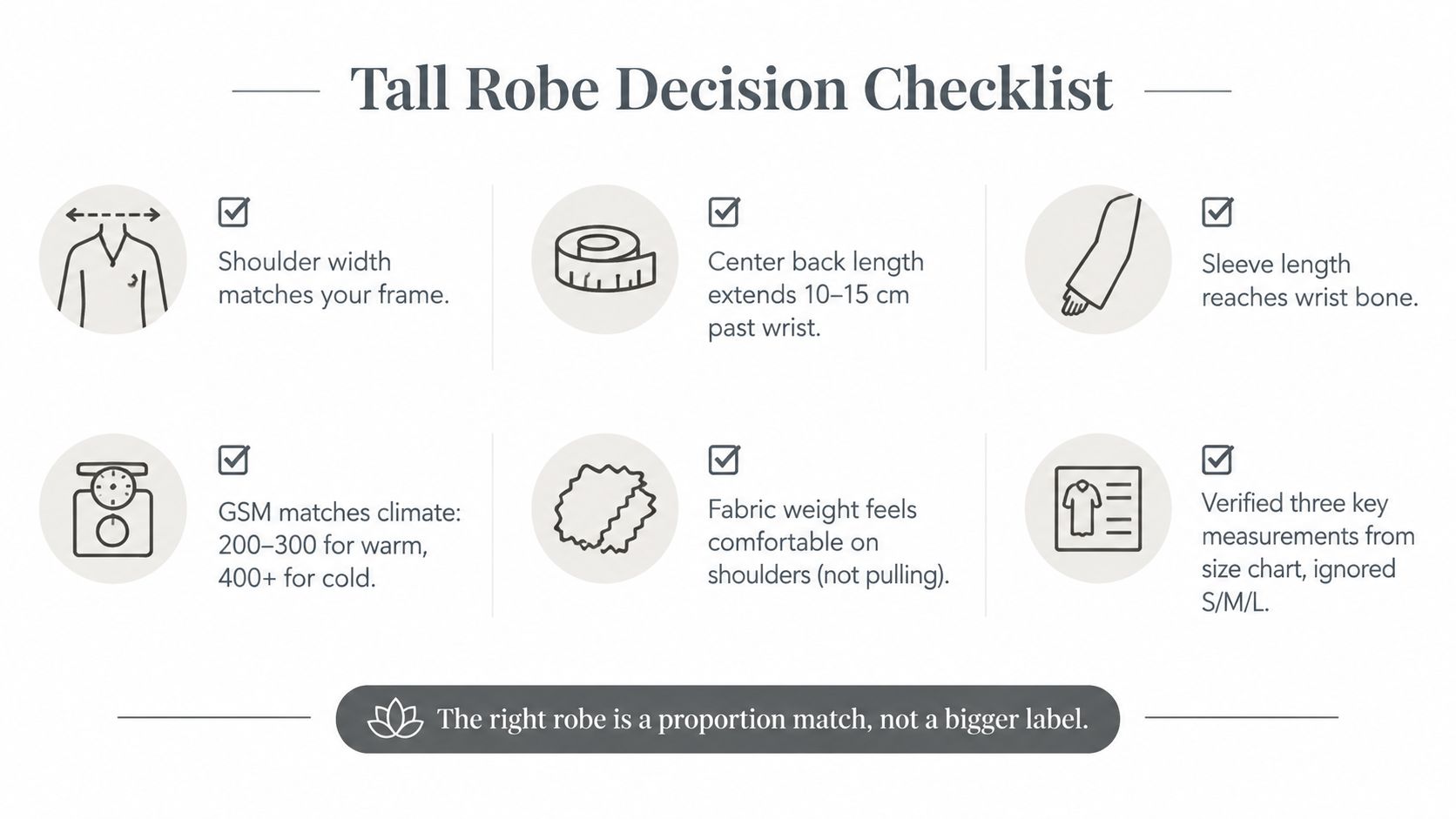
A tall robe is a proportion match, not a larger label. Before checkout, compare back length, sleeve reach, shoulder width, wrap coverage, fabric weight, and silhouette separately. A robe can fit your chest while still ending too high at the wrist or hem.
Measure before choosing size
-
Confirm shoulder-to-hem length. Measure from the top of your shoulder to the point where you want the hem to finish. Compare that result with the garment's published back length. A larger chest size cannot correct a short body length, so do not treat width as a substitute for coverage.
-
Check the sleeve against the wrist bone. Relax your arm instead of holding it straight. The cuff should reach the wrist without lifting your shoulder or pulling the robe across your back. If it stops above the wrist bone, ordinary movement will make the sleeve feel shorter.
-
Verify shoulder and wrap room. The shoulder seam should sit without pulling backward. Front panels should overlap across the bust and hips while you sit, not only while standing. For a kimono cut, check cross-back width as well as chest measurement.
Select fabric for your routine
-
Match fabric to climate and purpose. A lighter waffle or terry robe fits everyday lounging, warmer bathrooms, and travel. Denser terry suits routines where warmth and water pickup matter more than a light feel. Use the fabric guidance from the earlier section rather than choosing by the label alone. For more context, read this comparison of terry and waffle absorbency.
-
Test the weight mentally. Hold the robe's full length in mind, not just its fabric sample. A thick robe may feel comfortable at first and tiring after longer wear because extra material hangs below the waist. If shoulder pressure bothers you, choose an airy weave or lighter terry and avoid excessive pile.
-
Choose the silhouette intentionally. Kimono cuts emphasize vertical length, shawl collars add visual balance, and lightweight hoods provide softness. Short hooded cuts can reduce the coverage you want, since both the hood and hem may crowd the proportions of a long frame.
Checkout rule: If two fit checks fail, size up only when the added width will not create a belt gap. Otherwise, skip that chart and look for one showing actual tall measurements.
For women shopping for women tall robes, use this order: measure first, compare garment dimensions, match fabric to weight and drying needs, then judge the style. This takes longer than selecting a letter size, but it helps prevent a robe that looks generous on the hanger and feels short once worn.
SEYANTE offers women's robes in Turkish cotton terry and lightweight waffle weaves, including kimono, hooded, hotel-grade, and other spa-oriented styles. Visit SEYANTE to compare materials, review sizing guidance, and choose a robe suited to your proportions.