Bridal Party in Robes: A Practical Planning Guide
The most popular advice about a bridal party in robes is also some of the least practical: choose glossy satin because it looks “bridal” in photographs. That recommendation ignores the room where those photographs happen, usually a crowded suite filled with styling tools, warm bodies, garment bags, snacks, and people sitting still for hours. A robe can look polished and still leave everyone overheated, slippery, exposed, or irritated before the photographer finishes.
The better approach treats robes as clothing first and photo styling second. Fabric, coverage, fit, timing, and room management determine whether the morning feels relaxed. The photographs improve when the people in them are comfortable enough to laugh, move, drink water, and enjoy the occasion.
Choosing Fabrics for Real Getting-Ready Conditions
Start with the room, not the color palette
A robe that works beautifully in a cool hotel suite may be miserable in a humid destination room. Hair dryers, curling irons, makeup lights, closed windows, and several people sharing a small space can make lightweight clothing feel surprisingly warm. If the bridal party will wear robes from the first makeup appointment through photographs, breathability matters more than shine.
Cotton and cotton blends are sensible choices for extended wear because they feel softer and less restrictive against the skin. Lightweight waffle fabric adds texture without the slick surface of polyester satin, while Turkish cotton terry offers more absorbency and warmth for a cooler venue. The right weight depends on the environment. Warm or humid locations call for breathable waffle or lighter cotton, while a chilly venue may justify terry or a hooded style.
Satin and silk still have a place. They create movement and a formal finish, but they can feel warmer, slide around during hair and makeup, and demand more attention to wrinkles. Glossy polyester satin is especially unforgiving when sleeves bunch or a tie loosens. If the fabric looks attractive only while everyone is standing perfectly still, it isn't doing enough work.
Practical rule: Choose the robe people can comfortably wear before and after the camera arrives, not just the one that reflects the most light.
Match construction to the morning
Sleeve length affects more than appearance. Long, loose sleeves can drag through foundation, catch on chairs, or dip into a drink. Shorter sleeves improve movement, but the robe still needs enough coverage for sitting, walking through shared spaces, and changing into the dress without self-consciousness. Check the overlap at the front, the stability of the belt, and whether the collar stays flat.
A useful decision checklist includes:
- Climate: Warm, humid rooms favor lightweight waffle or breathable cotton. Cooler venues can handle terry or a hooded design.
- Schedule: A long preparation window calls for soft fabric, comfortable sleeves, and a closure that won't need constant adjustment.
- Movement: Participants should be able to sit, reach, drink, and raise their arms without exposing themselves or dragging cuffs through makeup.
- After-use: If the robe is a gift, select a texture and color that make sense for ordinary mornings, not only wedding photographs.
Photographers often help couples think about visual consistency, and resources such as custom senior portraits in Cobb County can reinforce the value of planning clothing around the finished image. For a wedding, though, the image should follow a comfortable morning rather than force everyone into a costume.
Sizing and Fit for Every Body Type
Identical robes don't guarantee an identical fit. A group can look coordinated while each person wears a different size, and that usually produces better photographs than forcing everyone into a nominally matching cut. Ordering one size for the whole party is a shortcut that creates slipping belts, tight arms, insufficient overlap, and constant tugging.
Gather measurements privately
Ask each participant for the measurements the manufacturer uses. Depending on the size chart, that may include bust, waist, hip, shoulder, and sleeve length. Give people a private way to respond, such as an individual message or a form that isn't visible to the whole group. No one should have to announce personal measurements in a group chat.
Don't rely on dress size alone. Brands grade patterns differently, and robes need enough ease for sitting, reaching, and wearing over undergarments. Compare the largest relevant measurement with the chart, then check garment length and sleeve length separately. A roomy body with a restrictive sleeve still fails during hair and makeup.
For a practical sizing process:
- Send the chart before ordering. Use the manufacturer's measurements rather than guessing from labels.
- Request current measurements privately. Ask participants to measure over light clothing and follow the chart's instructions.
- Record the selected size and cut. Keep the information in one planning document so a later exchange doesn't become a memory exercise.
- Review the closure. Tie-waists, generous front overlap, and inner ties help the robe stay secure while people move.
- Check the length. Participants should feel covered when seated and walking around the suite.
The SEYANTE robe size chart guide is useful when a group needs to interpret measurements instead of treating a size label as a universal standard. The same discipline applies regardless of the robe style.
Fit should protect confidence
A robe that gaps at the front or shifts when someone reaches for a hairbrush will make that person monitor their clothing instead of enjoying the morning. Look for enough overlap, a belt that can be tied securely without cutting into the waist, and fabric that doesn't cling in awkward places. If the group includes a broad range of heights or body shapes, a forgiving wrap design usually coordinates more successfully than a rigid, narrow cut.
Ask whether anyone needs additional coverage, a longer hem, wider sleeves, or a different closure. Those aren't aesthetic complications. They're the details that let everyone participate naturally in group photographs and candid moments.
Ordering Timelines and Personalization Options
A group robe order has more failure points than a single purchase. The planner must confirm colors, collect private sizing, approve personalization, watch production, track delivery, and leave time to inspect every piece. The safest schedule works backward from the wedding date rather than starting when the wedding party first discusses robes.
Build in decision points
Begin once the bridal party is confirmed. Choose the fabric family and color direction first, then collect measurements, settle the personalization design, and place the order while there is still time to correct a mismatch. Made-to-order and embroidered pieces need more planning than ready-to-ship garments, and group orders can be delayed by one missing size or one design approval.

Use a simple internal sequence:
- Confirm the brief: Record the wedding date, venue climate, preferred fabric, color palette, sizes, and delivery address.
- Approve a sample direction: Review the fabric, embroidery placement, thread color, and expected drape before committing to the full group.
- Place the order early: Allow room for production, shipping, inspection, and exchanges. Check the seller's current lead times because they can change.
- Inspect on arrival: Open every package, compare names and sizes with the order record, and look for loose threads, uneven embroidery, stains, or missing pieces.
- Store carefully: Hang or fold the robes in a clean, dry place away from makeup and food until the wedding morning.
A planning resource such as T-Shirt Envy's bridal shirt guide can help you think through coordinated group apparel, especially when deciding how much uniformity the event needs.
Personalization should support future use
Embroidered names, initials, or a bride designation make the gift feel intentional and help prevent mix-ups in a busy suite. Placement matters. A small chest or sleeve detail can look refined, while oversized lettering may dominate the robe and reduce its usefulness after the wedding. Test the visual scale and thread color against the fabric before final approval.
Unbranded robes often have stronger long-term value because recipients can wear them on ordinary mornings without feeling as though they're still dressed for a wedding. A shared color family can create cohesion without requiring identical shades, and coordinated textures can look more refined than a rigid uniform.
For a focused discussion of the keepsake decision, this guide to monogrammed robes for bridesmaids offers a useful reference point. The right choice depends on whether the priority is a highly specific wedding image, a personalized gift, or a robe people will reach for after the celebration.
Photography Workflows and Group Positioning
A robe is not a photography prop that can be thrown on at the last minute. In a warm, crowded getting-ready suite, cheap satin can trap heat, sleeves can catch on styling tools, and people may start changing before the photographer has useful material. Build the session around the room's physical conditions, the hair-and-makeup schedule, and the group's comfort.
Use a three-stage sequence
Begin by resetting the area the photographer will use. Remove disposable cups, open makeup bags, tangled cords, packaging, and unrelated clothing. Before the suite fills, photograph robe details, monograms, belts, textures, bouquets, invitations, and other meaningful objects. Soft, breathable fabrics usually sit more naturally than shiny material, which can reflect window light and highlight every crease.
Next, capture finishing touches and natural interactions. Photograph someone fastening an earring, a parent helping with a necklace, friends laughing between appointments, or the bride receiving a final hair or makeup adjustment. Keep sleeves clear of faces and tools, and avoid positioning anyone directly beside a hot styling station. These moments look relaxed when participants can move between appointments instead of holding a formal pose.
Finish with coordinated portraits near a window or another broad, soft light source. In my experience planning these mornings, budget at least 25 to 35 minutes for a focused session and 45 to 60 minutes when the photographer is covering the full sequence. A shorter window can force a choice between detail shots, individual portraits, and candid interactions.
| Session Phase | Duration | Key Focus |
|---|---|---|
| Room reset and robe details | 10 to 15 minutes | Texture, personalization, accessories, and clean backgrounds |
| Finishing touches and interactions | 15 to 20 minutes | Hair, makeup, relationships, and natural movement |
| Group portraits | 15 to 25 minutes | Symmetry, relaxed variations, and individual visibility |
Arrange people before the camera arrives
Place the bride or central subject at the visual center. Put the maid of honor immediately beside her when that relationship matters to the composition, then arrange the remaining participants outward. Keep bodies on one focal plane where possible, limit overlap to roughly 20 to 30% of each person's body, and use chairs or staggered rows for larger groups. A raised camera position can help keep faces visible.
Assign one person to organize the group. That person gathers missing attendants, confirms the order of combinations, and keeps the photographer from searching a hot, cluttered suite. Photograph one symmetrical, polished frame and one relaxed interaction frame. Before each exposure, check belts, collars, hoods, sleeve alignment, robe lengths, and visible size differences.
Protect a 30-minute wedding-party portrait block when the group is ready and the shot list is clear. Hair and makeup delays, overheating, and damp fabric can reduce that window quickly, so schedule the portraits before everyone becomes rushed or uncomfortable.
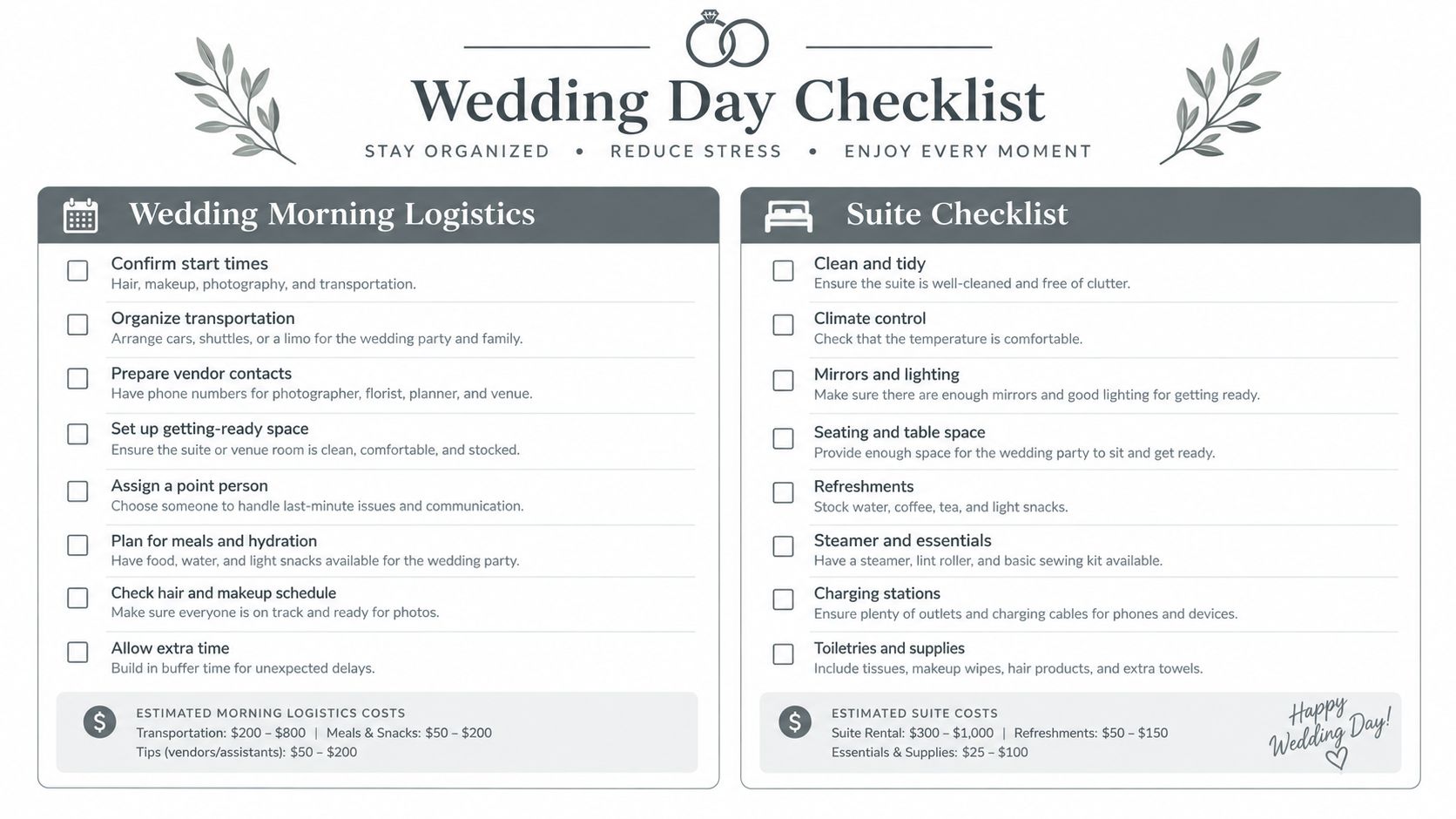
Wedding Morning Logistics and Suite Checklist
The robe photographs start long before the photographer lifts a camera. On a well-run morning, someone knows where the robes are, which people need hair and makeup next, where drinks can sit safely, and when the suite must become quiet for the bride's final transition.
Set the room before arrivals
Choose a staging area away from curling irons, open cosmetics, food, and foot traffic. Keep the robes in breathable garment bags or clean storage, and don't place them on a bathroom floor, a makeup chair, or a bed that will soon hold snacks and accessories. If the fabric is prone to creasing, hang it early enough to let the folds relax.
A small operations checklist prevents avoidable interruptions:
- Cooling and airflow: Keep the room comfortable, especially when styling tools are running. Open a window or adjust the climate control if the venue allows it.
- Hydration: Put water in one designated area so cups don't migrate into portrait backgrounds.
- Hair and makeup rotation: Keep sleeves clear of faces and tools, and schedule touch-ups so participants aren't repeatedly crossing the photography area.
- Clean staging: Gather packaging, personal bags, shoes, and spare clothing in one location.
- Emergency supplies: Keep stain treatment, fashion tape, safety pins, tissues, a lint roller, and a small sewing kit within reach.
- Transition area: Reserve a private, uncluttered place for changing out of the robes and into wedding attire.
Protect the calm during the handoff
Consider a typical sequence. The robes arrive before the group, the coordinator checks sizes and personalization, and each participant receives a robe before sitting for hair or makeup. People keep their ordinary clothes underneath until their styling is finished, then change carefully into the robe. That order prevents foundation from landing on the fabric and makes the later dress transition less frantic.
The photographer should know which rooms have the cleanest light and which surfaces are off limits. A venue guide such as Texas Old Town's getting-ready tips can help with space planning, but the principle is universal: reserve the best-lit, least cluttered area for the moments that matter most.
Before portraits, the organizer confirms attendance, the photographer reviews the shot list, and someone checks the room temperature. After portraits, collect the robes in a clean pile or individual bags, remove pins and accessories, and clear the changing area for the dress. The group shouldn't have to choose between looking polished and staying on schedule.
Post-Wedding Care and Long-Term Value
The robe earns its place as a bridal-party gift after the wedding, when the recipient decides whether it belongs in regular life or in the back of a closet. That decision depends on comfort, care, and how strongly the design announces a single event. A breathable cotton or waffle robe can move naturally into post-bath routines, slow mornings, travel, or evenings at home.
Make care part of the gift
Care instructions should match the fabric and the manufacturer's label. Cotton may need gentle washing and controlled drying to reduce shrinkage, while waffle textures benefit from being reshaped and dried without excessive heat. Embroidery deserves attention too. Harsh treatment, overloaded machines, and high heat can distort the surface or shorten the garment's useful life.
A practical handoff includes:
- Read the care label first: Fiber content and construction determine the safe wash and dry method.
- Wash thoughtfully: Use a compatible cycle and avoid treating a delicate robe like a heavily soiled towel.
- Control heat: Excessive heat can affect softness, dimensions, elastic, and embroidered areas.
- Dry completely: Store the robe only when it's fully dry, particularly in humid homes.
- Store with room to breathe: Fold or hang it in a clean, ventilated place rather than compressing it beneath heavy clothing.
The guide to washing, storing, and caring for a robe can be shared with recipients so the care advice doesn't disappear after the wedding morning.
Present usefulness, not just symbolism
Packaging should protect the garment while making the gift feel considered. Fold each robe neatly, add a simple note about the role the recipient played in the day, and explain any personalization. If the robe is intended for long-term wear, say so. That small message changes the gift from a photo prop into something connected to ordinary comfort.
A coordinated collection can include different sizes and even different cuts while maintaining a shared palette. That approach respects individual bodies and preferences without losing the visual identity of the morning. It also makes future use more likely because each person receives something selected for movement, coverage, and climate rather than a one-size costume.
SEYANTE offers Turkish cotton terry and lightweight waffle robes in styles that include kimono, hooded, and other everyday cuts, which makes the fabric and fit conversation relevant beyond the wedding itself. For a bridal party, the useful question isn't whether every robe looks identical. It's whether each person can wear it comfortably during the preparation, photograph well in the group, and keep using it afterward.
Choose robes by climate, coverage, fit, and expected wear before choosing embroidery or a glossy finish. SEYANTE offers coordinated Turkish cotton and lightweight waffle options for bridal-party gifting, and you can explore the collection at SEYANTE to plan a comfortable, useful getting-ready experience.