Terry Cloth Plus Size Robes: The Ultimate Fit and Care Guide
A well-fitting terry cloth plus-size robe should be chosen by fabric weight, seam durability, and proportion-based cut, not by a generic size chart alone. The best construction balances absorbency with manageable bulk, especially because a larger robe becomes heavier and places more stress on seams, belts, sleeves, and closures.
You've just stepped out of the shower, your skin is warm, and you want the quiet comfort of wrapping yourself in something soft. Instead, the robe pulls across your upper arms, the front separates when you sit down, and the belt lands somewhere below your natural waist. The fabric may feel plush in your hands, but on your body it can become a heavy, awkward layer that never quite settles.
That experience isn't a failure of your shape. It's usually a sign that the robe was graded outward from a standard pattern without enough attention to body proportions, terry weight, and load-bearing construction. The right robe should let you bend, reach, sit, and walk without constant readjustment.
Terry cloth is especially demanding because its looped surface gives it real moisture-handling power, but also adds thickness and weight. For plus-size shoppers, fit is therefore an engineering question as much as a style decision. You're looking for room in the places that need movement, secure coverage where the robe overlaps, and construction strong enough to support the fabric over time.
The Search for Your Perfect Post-Shower Sanctuary
The post-shower moment should feel simple. You dry your hair, slide your arms into the sleeves, tie the belt, and move toward breakfast or your skincare routine without thinking about the robe again. A good terry robe becomes part of the ritual because it handles moisture while allowing you to move naturally.
Many shoppers know the opposite experience. The armholes feel tight even though the body looks roomy. The sleeves stop short or twist when you lift your arms. The front wrap looks secure while standing, then opens across the thighs as soon as you sit. A thick fabric magnifies each problem because it doesn't flatten or glide like lightweight loungewear.
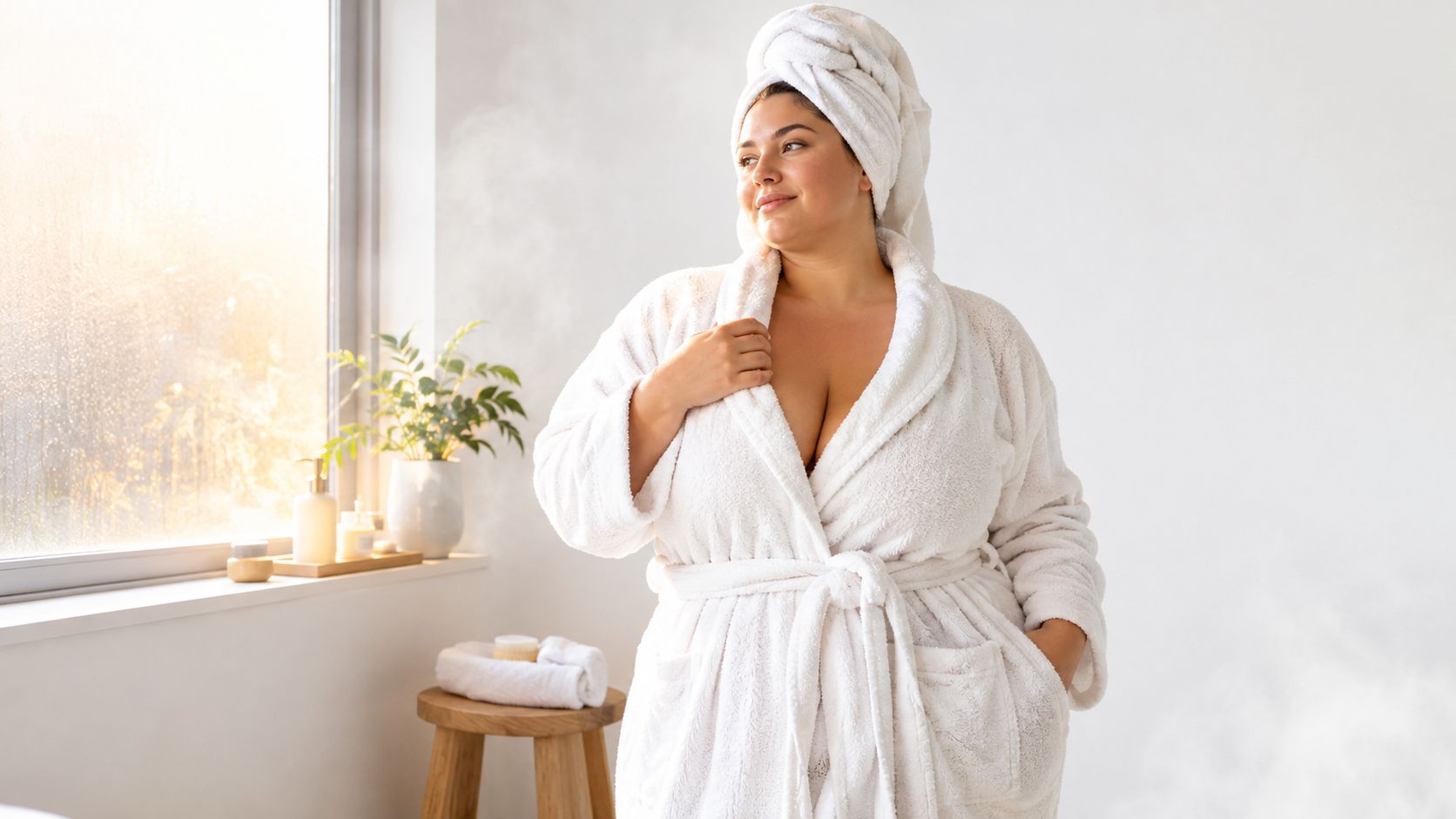
Comfort starts with movement
Try judging a robe through ordinary actions rather than a mirror pose. Reach both arms forward as if you're washing your hair. Sit in a chair and check whether the overlap stays closed. Walk several steps and notice whether the hem drags, the belt shifts, or the shoulders pull backward.
These tests reveal problems that a bust or hip measurement may miss. A fuller bust may need additional front overlap, while a broad shoulder line may require more yoke width. Someone with a shorter torso may find that a generously cut robe places the belt too low, creating excess fabric above the waist and less control below it.
A robe can be roomy without being well proportioned. Too much ease in the wrong areas adds bulk, makes the garment sag, and can expose the legs during movement. Generous should mean purposeful room, not fabric everywhere.
The bathwear connection
Terry remains strongly associated with towels, hotels, spas, and bath routines because its looped structure is designed to interact with water. If you're creating a home spa ritual, small details such as wrapped towels for spas can complement the robe without replacing its role as a wearable garment.
The important distinction is that a robe has to perform like clothing. It needs stable shoulders, functional sleeves, a belt that reaches the intended position, and enough front overlap to remain comfortable while seated. That's why the best terry cloth plus-size robes are designed around the interaction between textile behavior and human movement, not just an expanded chest and hip chart.
Understanding Terry Cloth Engineering for Plus-Size Comfort
Terry cloth has to do two jobs at once. After a shower, it needs to pull moisture away from the skin like a towel, but once it is worn as a robe, it also has to hang, wrap, and move like clothing. That second job becomes more demanding in plus-size robes, where comfort depends on proportion as much as chest or hip measurement.
Its absorbency comes from structure. Terry is woven with uncut, loosened warp-thread loops that create extra surface area for holding water, which is why it behaves so differently from a flat woven fabric. The long history of terry helps explain that purpose. Historical terry structures appeared in ancient Egypt and pre-Columbian Peru, and linen terry has been dated to approximately 4000 BCE. Industrial production in the West took shape in 1850 after the English manufacturer Christy adapted the idea from handwoven Turkish terry. The history and construction of terry cloth are documented here
What the loops change
Those loops work like a dense field of tiny arches that catch and hold moisture. As noted in Experimental research on terry-loop geometry explains this performance trade-off, taller or denser loops can improve absorbency and make the fabric feel thicker, but they also reduce airflow and add bulk. In practical terms, a robe may feel plush in the hand yet become warmer, slower to dry, and heavier during wear.
For plus-size comfort, that added weight is not distributed evenly. More fabric means more pull at the shoulders, more strain where the belt cinches the waist, and more stress at armholes and side seams when you sit, reach, or tie the robe firmly. Proportion is what matters here. A heavier robe on a shorter torso or narrower shoulder line can feel much more tiring than the same fabric on a body with more vertical length to spread that mass.
Choose enough loop density to absorb well and resist snagging. Do not assume the heaviest robe will feel best day after day.
Read beyond softness
Softness tells you how a robe feels in the first minute. It tells you much less about how the fabric is built, how it will wash, or whether the wrap will still feel balanced once the robe is damp. Cotton is common in terry, but polyester and blends are also sold, and the fiber mix affects weight, drying time, and surface feel.
Label details help you judge that construction more clearly. In the United States, covered textile products generally must disclose fiber content, country of origin, and the responsible manufacturer or marketer, with fiber names usually listed in descending order by weight. The FTC also sets rules for how those fiber declarations are presented. The Federal Trade Commission outlines these textile-labeling requirements
The same logic applies when shopping for gifts. Someone comparing the best towel bathrobes for bridal gifting still needs to look past a pretty photo and check robe weight, sleeve volume, and front overlap, because a good plus-size terry robe succeeds through balanced engineering, not softness alone.
Mastering Proportion-Based Sizing and Measurements
A size chart tells you whether a garment might fit. Garment measurements and movement tests tell you whether it will work. Plus-size bodies vary widely in bust projection, shoulder width, upper-arm circumference, torso length, and hip distribution, so a single bust-to-hip comparison can miss the point where comfort fails.
Measure over the undergarments you'll normally wear beneath the robe. Keep the tape level, avoid pulling it tight, and record the result without trying to make your body conform to a preferred size. Then compare those numbers with the robe's actual measurements, especially if the product page provides them.
Measure the areas that carry the robe
Start with bust and hips, but don't stop there. Measure across the shoulders, around the fullest part of the upper arm, from the shoulder to the intended hem, and from the base of the neck to the natural waist. The last measurement helps identify whether the belt will sit where you expect.
Use the following guide as a practical fitting framework:
| Measurement Area | Why It Matters for Plus-Size | Fit Test |
|---|---|---|
| Bust and front overlap | Fuller busts need enough wrap coverage to prevent gaping | Tie the robe while standing, then sit and lean forward |
| Shoulder width | Narrow shoulder seams can pull the sleeves inward | Lift both arms and reach forward without seam strain |
| Upper-arm circumference | Thick terry needs additional sleeve room because it doesn't compress easily | Bend your elbows and raise your arms as if washing your hair |
| Torso length and belt position | A shorter torso can place a long belt below the natural waist | Tie the belt and check whether it supports the wrap without riding down |
| Hip and thigh ease | The robe must close while walking and sitting | Take several steps, sit, and cross your legs |
| Sleeve length and cuff opening | Sleeves affect drying, grooming, and reach | Check whether cuffs stay clear while using a sink |
| Finished length | A longer hem can provide coverage but may drag when terry is heavy | Walk on a dry floor and turn without stepping on the hem |
The SEYANTE robe size chart guide can help you compare body measurements with a product's sizing information, but use it as a starting point rather than the final decision.
Avoid the oversized trap
More room isn't automatically more inclusive. Excess ease can make a heavy robe pull downward, shift the belt below the waist, and open at the front during movement. Look for strategic ease, with additional room through the upper arm, bust, and hips where you need it, while the shoulder line and belt placement remain controlled.
Pay attention to closures too. An inner tie can stabilize the robe before the outer belt is fastened. A belt that only reaches comfortably around the waist while standing may be too short once the robe is wrapped over a fuller bust or hip. A secure fit should feel relaxed, not precarious.
Choosing Between Hooded, Kimono, and Hotel Styles
Silhouette changes the way terry behaves on the body. The same absorbent fabric can feel casual and enclosed in a hooded robe, airy in a kimono cut, or structured and polished in a hotel-inspired design.
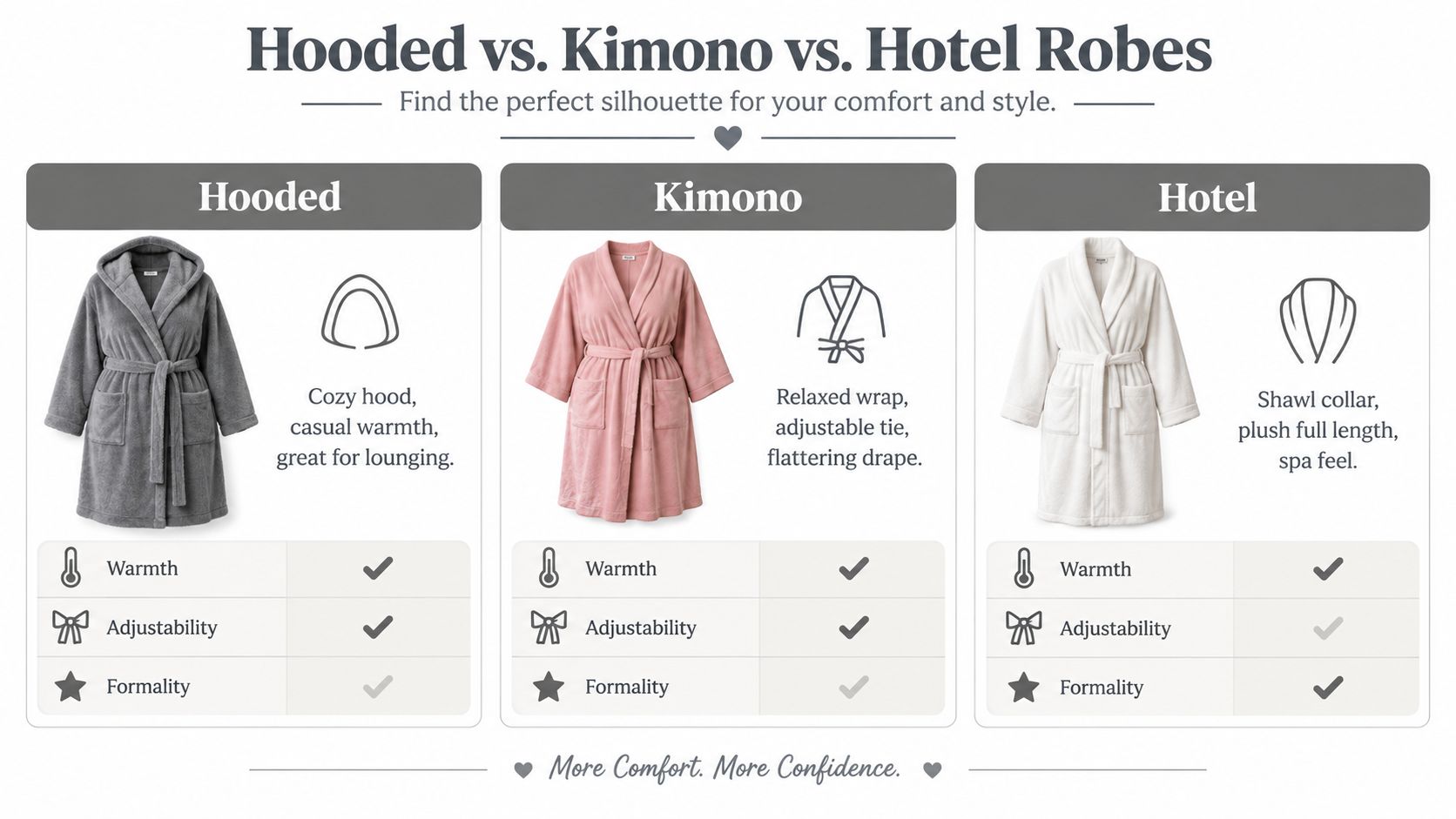
Hooded robes
A hood adds coverage around damp hair and the back of the neck. That can feel comforting after a shower or swim, particularly in a cool room. The trade-off is added weight near the neckline. If you have a shorter neck, sensitive shoulders, or don't enjoy fabric resting behind your head, a hood may feel cumbersome rather than cozy.
Check the hood's depth and attachment. A heavy hood should connect to a stable neckline, not tug the robe backward when you turn. The shoulder seams also need enough room for the hood's weight and your arm movement.
Kimono robes
Kimono styles usually offer a cleaner neckline and a more relaxed front. Their wrap construction can work well for fuller busts or changing body proportions because an adjustable tie allows you to control coverage. A wide sleeve can improve reach and ventilation, although an opening that's too generous may let in cool air or feel less secure.
For more ideas about this silhouette, see this guide to a plus-size kimono robe. Evaluate the robe while seated, because a kimono wrap that looks elegant standing may need additional overlap across the lap.
Hotel-inspired robes
Hotel styles often use a shawl collar, plush surface, and a fuller drape. They create a formal spa impression and can feel substantial in colder rooms. The same fullness may be excessive for warm weather or for someone who wants a robe that dries quickly between uses.
Choose by routine rather than status. A dense hotel-style terry robe suits slow mornings, post-bath lounging, and cooler spaces. A lighter kimono or waffle construction may be more practical when breathability, easy movement, or faster drying matters.
| Style | Strength | Potential concern |
|---|---|---|
| Hooded | Warmth and head coverage | Hood weight can pull at the neckline |
| Kimono | Adjustable wrap and relaxed movement | Front overlap needs testing while seated |
| Hotel | Structured, plush, spa-like appearance | Fullness can add bulk and heat |
Essential Care Tips for Long-Lasting Luxury
You step out of the shower, reach for your robe, and it still feels cool and slightly damp at the collar. That lingering moisture is more than a comfort issue. In terry cloth, water settles deep inside the loops, and a fuller plus-size robe has more fabric mass to hold it. The result is slower drying, more stress during washing, and extra pull on the seams, belt anchors, and hanger points.
Start with the sewn-in care label, then adapt your routine to the robe's size and weight. Before washing, secure the belt or tuck it inside the robe so it does not twist around other items. Give the robe space in the machine. Terry works like a field of tiny hands grabbing water, and if the drum is packed too tightly, water and detergent cannot move evenly through the pile.
Protect the loops and seams
Use a gentle cycle and a moderate amount of detergent. Too much soap can stay trapped in dense terry, leaving the robe stiff or less absorbent after drying. Skip fabric softener if you want the robe to keep doing its main job, which is pulling moisture away from the skin.
Pay attention to stress points. On a heavier robe, the shoulder seams carry weight when you hang it up, and the belt attachments absorb repeated pulling each time you tie and retie the wrap. Sleeve joins also deserve a quick check, especially if you often wear the robe while still wet. Proportion matters in care as much as it does in fit. A robe with more width, length, or sleeve volume needs better support while drying and storing because those extra inches change how the weight is distributed.
Dry the robe fully, either by air drying or by using low heat when the label allows it. High heat can tighten cotton fibers, shift the robe's shape, and make a once-generous wrap feel less balanced across the body. Avoid stuffing a damp robe into a hook-packed bathroom or folding it tightly right after use. Compression keeps moisture trapped in the pile.
A simple care checklist
- Read the sewn-in label: Follow its washing, drying, and temperature directions.
- Let the robe dry all the way: Hang it where air can move through the collar, underarms, and belt area.
- Use low heat when allowed: This helps protect loop texture and overall shape.
- Support the weight: Do not hang a soaked robe from one narrow hook that strains a single seam or loop.
- Check the belt area: Keep ties untangled and inspect attachment points regularly.
- Keep absorbency clear: Avoid products that coat the fibers.
For a fuller routine, see this guide on how to wash, store, and care for your robe. Good care keeps the loops, seams, and proportions working together through everyday use.
Your Inclusive Robe Buying Checklist
A good purchase starts before you choose a color. Treat the robe as a system made of fiber, loops, seams, proportions, closures, and care demands. If one part doesn't suit your routine, a luxurious hand feel won't compensate for it.
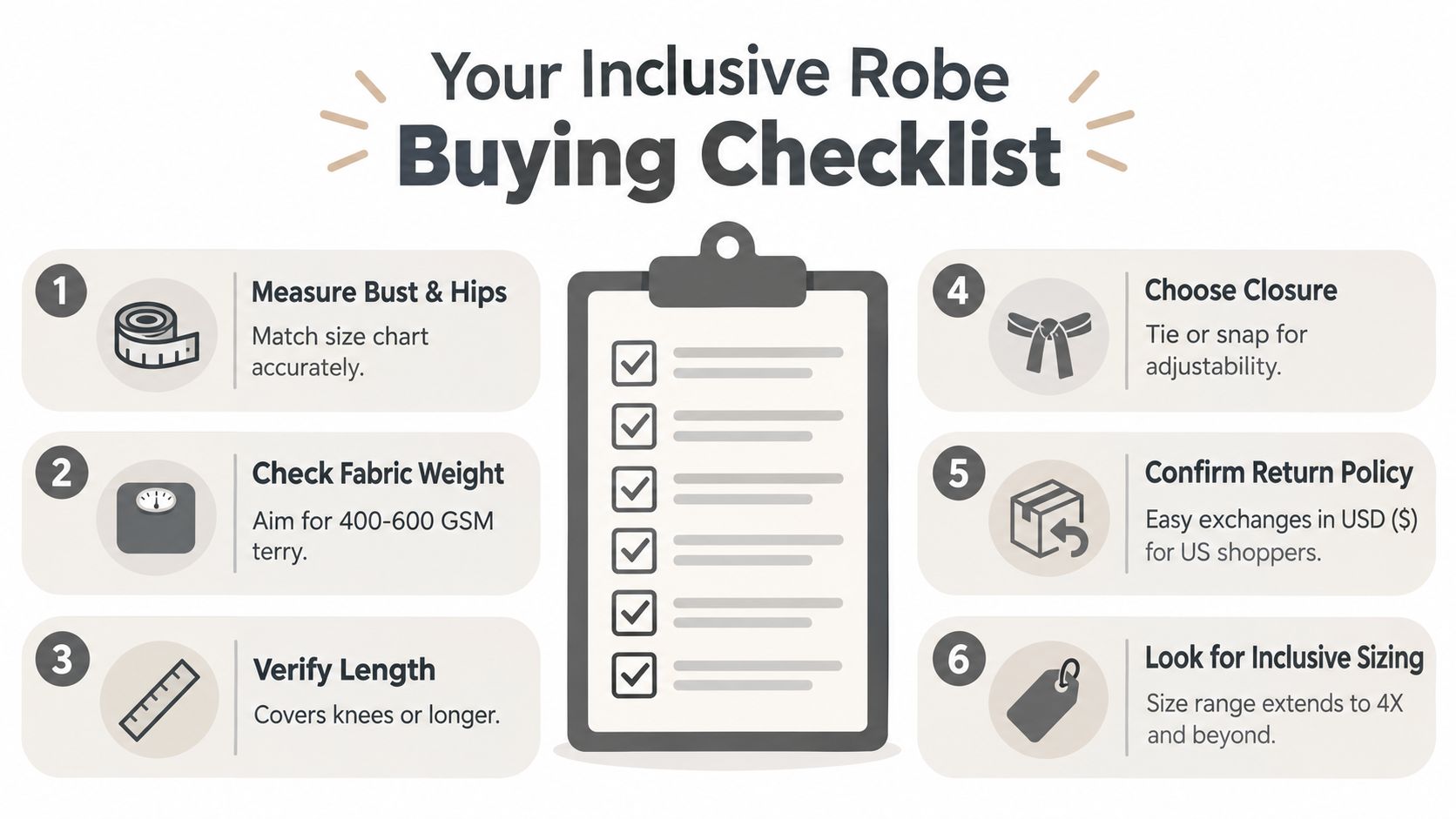
Before you order
Confirm the fiber content. Look for a clear declaration of cotton, polyester, or blended fibers. If a product claims to be 100% cotton, the sewn-in label should support that claim.
Assess the fabric balance. Dense loops can improve absorbency and plushness, but excessive pile adds bulk, warmth, and drying time. Choose a construction that matches how often you'll wear and wash the robe.
Compare garment measurements. Check bust overlap, shoulder width, upper-arm room, sleeve length, finished length, and belt length. Don't rely on the nominal size alone.
Test proportion in motion. A robe should close while seated, stay secure while walking, and allow you to reach forward without pulling at the armholes or shoulders.
Inspect the engineering. Look for stable shoulder seams, reinforced belt attachment points, generous sleeve openings, and an inner tie when you want extra wrap security.
Match the silhouette to your routine. Choose a hood for head coverage, a kimono for an adjustable wrap, or a hotel-style cut for a fuller spa feel. If you're shopping for a ceremony or newlywed home, practical comfort can sit alongside distinctive wedding present suggestions such as these wedding gift ideas.
Questions worth asking the seller
Ask whether measurements are taken from the garment or the body. Request post-laundering measurements when available, particularly for a larger robe where shrinkage and seam loading can affect comfort. Also confirm the return process before ordering, because trying the robe through sitting, reaching, and walking is more informative than judging it from a product photograph.
SEYANTE offers Turkish cotton terry and lightweight waffle robes in styles including hooded, kimono, hotel-grade, and maternity designs, with sizing and material guidance for shoppers comparing fit and fabric behavior. Visit SEYANTE to review the available robe constructions and choose a style that supports your proportions, daily routine, and preferred level of absorbency.