Kimono Robe Plus Size: A Fit Guide for Real Bodies
- Why a Kimono Robe Plus Size Search Usually Starts in Frustration
- Why the Kimono Silhouette Is Historically Size-Friendly
- Measuring Yourself for a Confident Kimono Robe Plus Size Fit
- Choosing the Right Fabric for Plus-Size Comfort
- How Plus-Size Kimono Robes Actually Differ From Standard Sizes
- Styling and Layering Moves That Solve Real Fit Concerns
- Shopping Signals That Tell You a Brand Sells Plus Size
You've just stepped out of the shower, reached for the robe hanging on the door, and found yourself negotiating with it instead of relaxing. The shoulders pull, the front panels barely meet across the bust, and the sash is too short to secure the wrap comfortably. A kimono robe plus size should make that moment easier, not turn getting dressed into a fit test.
The good news is that the problem usually isn't your body. It's the garment's proportions. A well-constructed kimono robe uses a relaxed, adjustable shape that can offer coverage and movement without relying on close-fitting seams. Once you understand the panel layout, measure the right places, and judge fabric by how it behaves in use, shopping becomes much less frustrating.
Why a Kimono Robe Plus Size Search Usually Starts in Frustration
Many robe searches begin with a very specific failure. You want something soft after bathing, comfortable while making coffee, and secure enough that you don't have to hold the front closed every time you bend down. Instead, a robe labeled “oversized” may still pull across the chest, expose the thighs, or leave a belt that barely reaches around your body.
That happens because a numeric size label tells you very little about a wrap garment. A robe can have generous sleeves but insufficient front width. It can be long enough for coverage but too narrow through the hip. It can also be cut from fabric that clings when stretched, making a technically adequate measurement feel restrictive in practice.
Fit problems usually come from proportion
Standard-size patterns often get enlarged without enough attention to the relationship between width, sleeve volume, shoulder drop, and sash length. The result may look roomy in one direction and cramped in another. Fuller-busted shoppers often notice the front gap first, while shoppers with wider hips may find that the robe opens as soon as they sit or walk.
A good plus-size kimono robe needs usable width, not just extra length. The front panels must overlap, the back must cover without pulling, and the sleeves need enough circumference for comfortable arm movement. These details matter more than whether the product page uses a flattering phrase such as “one size” or “relaxed fit.”
Practical rule: Judge a wrap robe by its coverage when you move, not by how wide it looks on a hanger.
The goal is comfort with control
You shouldn't need to size yourself down to avoid looking swallowed by fabric, and you shouldn't need to size up so far that the sleeves become cumbersome. The right robe gives you room to sit, reach, and bend while the sash lets you adjust the amount of definition you want.
The rest of this guide focuses on the checks that reveal whether a robe will work. You'll learn why the kimono structure is naturally adaptable, how to translate body measurements into garment measurements, and how to choose fabric for actual daily wear rather than product photography alone.
Why the Kimono Silhouette Is Historically Size-Friendly
The kimono's adaptability comes from its construction. The garment developed from the kosode, which emerged as outerwear in Japan during the Muromachi period, from 1338 to 1573, while the modern shape and layout were later standardized during the Momoyama and Edo periods, as described in this historical overview of the kimono. Britannica records the garment's use from the Hakuhō and Early Nara period, 645 to 710, to the present, while the wide obi associated with the familiar style dates to the 18th century, according to the same verified historical reference.
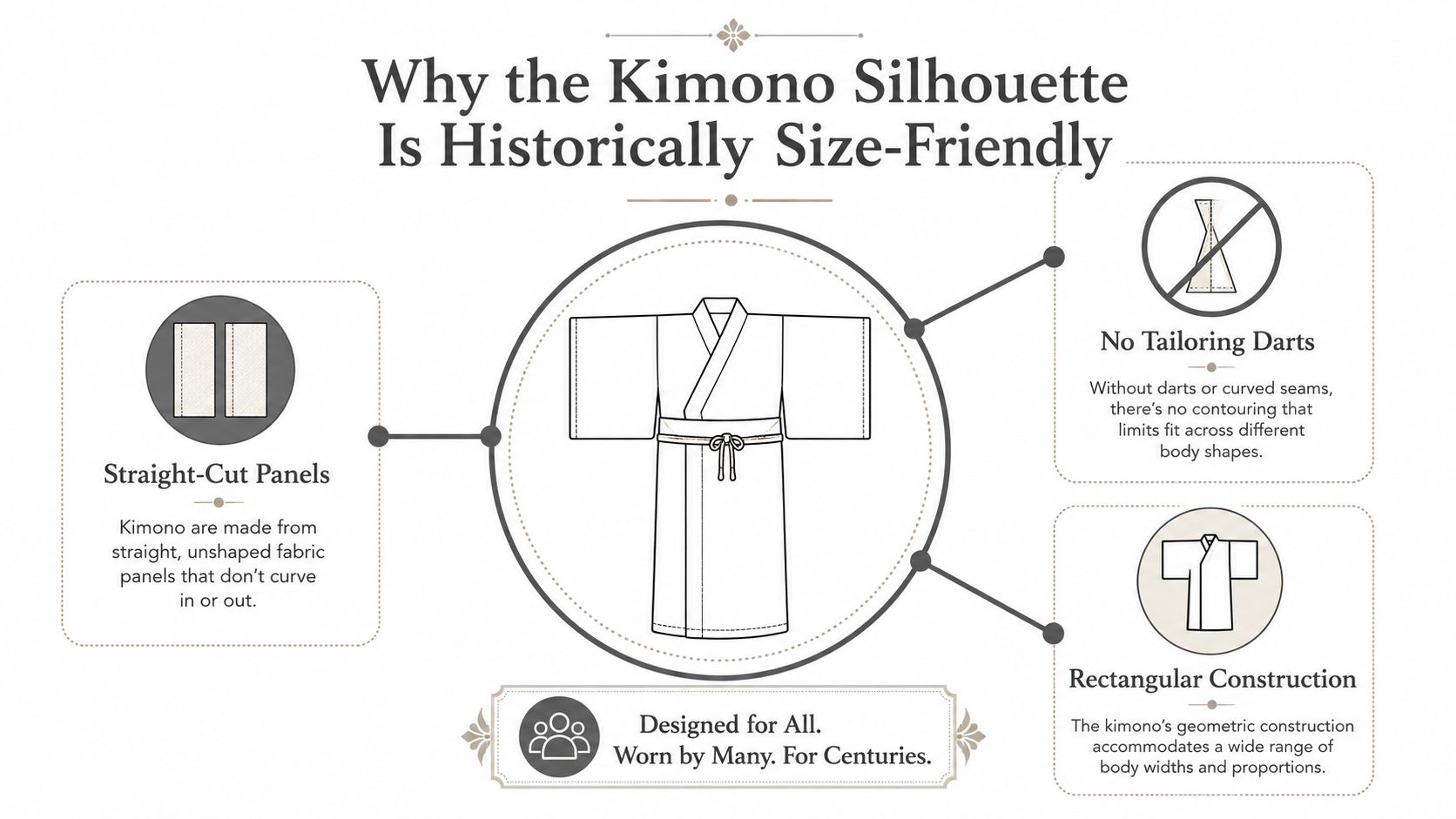
The construction is based on straight-cut panels rather than a close-fitting torso pattern. The front closes left over right and is held with a sash, so the garment relies on overlap, drape, and adjustment instead of darts or curved seams designed around one particular bust, waist, or hip shape.
Straight panels create useful flexibility
A fitted shirt needs shaping to follow the body. A kimono robe starts with a flatter architecture. To make room, a maker can widen the body panels and adjust the sleeve proportions without rebuilding a network of waist seams and bust darts. That doesn't mean every robe fits every person automatically. It means the basic design has more room for thoughtful grading.
The distinction matters. A robe with extra fabric placed across the chest and hip can drape naturally. A robe with only extra length may still feel tight where the body needs movement. Size-friendly construction depends on where the fabric is added.
The word kimono itself entered common use after the Meiji Restoration in 1868, when the earlier term kosode fell out of everyday use, according to the verified historical source above. That long continuity describes a recognizable wrap form that has evolved while preserving its essential geometry.
For a broader look at how robe silhouettes have changed over time, explore this history of the bathrobe from antiquity to the present. The useful lesson for today's shopper is simple: a kimono-style robe isn't forgiving by accident. Its straight-panel foundation gives designers a practical starting point for extended sizing.
Measuring Yourself for a Confident Kimono Robe Plus Size Fit
A robe can look spacious on a hanger and still pull across the bust or hips once you wrap it. Start with your body measurements, then compare them with the garment's measurements. Your usual dress size is only a starting point because wrap garments describe width differently from fitted clothing.
Wear a thin base layer or measure over underwear. Keep the tape level, breathe normally, and let it rest against your body without tightening it. Record each number. If you fall between measurements, round up. A kimono robe should skim the body, leave room to move, and provide enough overlap for the front panels to cross.
Take these three measurements first
-
Bust or chest: Measure around the fullest point, with the tape parallel to the floor. This shows whether the front panels can meet without strain.
-
Hips: Measure around the widest part of your hips and seat. For many plus-size shoppers, this determines whether the robe stays closed while sitting, bending, or walking.
-
Preferred length: Measure from the shoulder area to the point where you want the hem to fall. Mid-thigh, knee, mid-calf, and ankle lengths offer different levels of coverage and require different amounts of movement.
Then check the robe's flat measurements. A flat width describes the garment laid out before it wraps around you. The kimono sizing guidance uses a practical benchmark: choose a garment whose flat width exceeds your hip measurement by about 10 to 16 inches, or 25 to 40 cm. A robe at least 16 inches wider should offer a more comfortable wrap, while one 10 to 16 inches wider may fit with a closer, more traditional overlap.
Convert your numbers into a shopping check
Compare your bust and hip measurements with the listed flat chest and hip widths. You need fabric for the panels to cross, not merely touch. Check the sash too. It should reach around your body and tie without leaving the knot at the very end of its usable length.
Use these checks before ordering:
- Bust clearance: Does the chest width leave room for the front panels to overlap?
- Hip clearance: Will the robe stay closed when you sit?
- Wrap overlap: Do the panels cross securely over the body?
- Sleeve opening: Can you raise and bend your arm without the cuff pulling?
- Length: Will the hem provide your preferred coverage without catching underfoot?
- Return terms: Can you return the robe if the actual wrap feels smaller than the chart suggests?
For help converting body measurements into garment information, use this robe size chart guide. The table below is a calculation example, not a universal size chart. Replace the example values with the brand's exact measurements.
Kimono Robe Plus Size Measurement Translation
| Body measurement | Measurement to record | Shopping calculation |
|---|---|---|
| Bust or chest | Measure the fullest point | Compare with the brand's flat chest width, allowing room for overlap |
| Hips | Measure the widest point | Compare with the brand's flat hip width, allowing room to sit and bend |
| Example, 50-inch hips | 50 in | Look for a flat hip width of at least 60 to 66 inches |
| Preferred length | Shoulder to desired hem | Match the robe length to your height and coverage preference |
| Sash reach | Around the body at the tie position | Choose a sash that wraps fully and leaves enough length for a secure knot |
For example, if your hip measurement is 50 inches, a flat hip width of 60 to 66 inches gives the robe extra fabric for crossing and movement. The same principle applies to the bust. Measure your chest, find the brand's flat chest width, and look for enough additional fabric for the panels to overlap rather than stop at the center.
Independent robe size guides commonly extend plus-size coverage around US 18+ through 4XL+, with bust or chest allowances reaching approximately 58 to 62 inches, or 145 to 155 cm, and lengths ranging from mid-calf to ankle for heights around 160 to 190 cm.
Choosing the Right Fabric for Plus-Size Comfort
Fabric changes the fit experience even when the measurements look correct. A material that seems generous while standing may cling across the bust when you sit, feel warm after a shower, or become less opaque when stretched across the hips.
Think about the robe's main job. Do you want post-shower absorbency, a breathable layer for warm mornings, or a polished cover-up over sleepwear? Cotton, terry, waffle, and lightweight woven materials each solve a different problem.
Compare the common choices
| Fabric | Opacity | Breathability | Warmth | Drape on Curves | Best Season |
|---|---|---|---|---|---|
| Terry | Usually high | Moderate | High | Structured, with weight | Cool weather and post-shower use |
| Waffle | Moderate to high, depending on weave | High | Light to moderate | Soft with texture | Transitional weather and year-round layering |
| Lightweight woven cotton or blend | Varies by weave | Often high | Light | Fluid and relaxed | Warm weather and indoor layering |
Terry cloth is the practical choice when you want a robe to absorb moisture. Its looped surface adds body and weight, which can support coverage across a fuller figure, but a dense weave may feel bulky or take longer to dry. Check the care instructions and consider whether you'll wear it immediately after bathing or mainly over pajamas.
Waffle fabric gives you texture without the same heavy feel as dense terry. Its breathable structure can help prevent the robe from feeling stuffy, while the surface interrupts cling and creates a softer outline over curves. For shoppers who want a lighter spa-style layer, a waffle kimono robe may offer a useful middle ground. This waffle versus terry robe comparison can help you compare the two based on daily use.
Match material to the way you move
Lightweight woven cotton, rayon, or linen blends can create the closest relaxed drape to a casual summer robe. Their weakness is opacity. If the fabric pulls across the bust or hip, the weave may appear thinner, so check customer photos and look for lining or layering options.
Wash care matters, too. A fabric with shrinkage risk can lose the width you carefully selected. Follow the care label, wash before judging the final feel, and avoid assuming a soft first impression will remain unchanged after laundering.
Fabric test: Sit down, cross your arms, and reach forward. If the fabric pulls, clings, or becomes noticeably more transparent, the robe needs either more room or a layer underneath.
How Plus-Size Kimono Robes Actually Differ From Standard Sizes
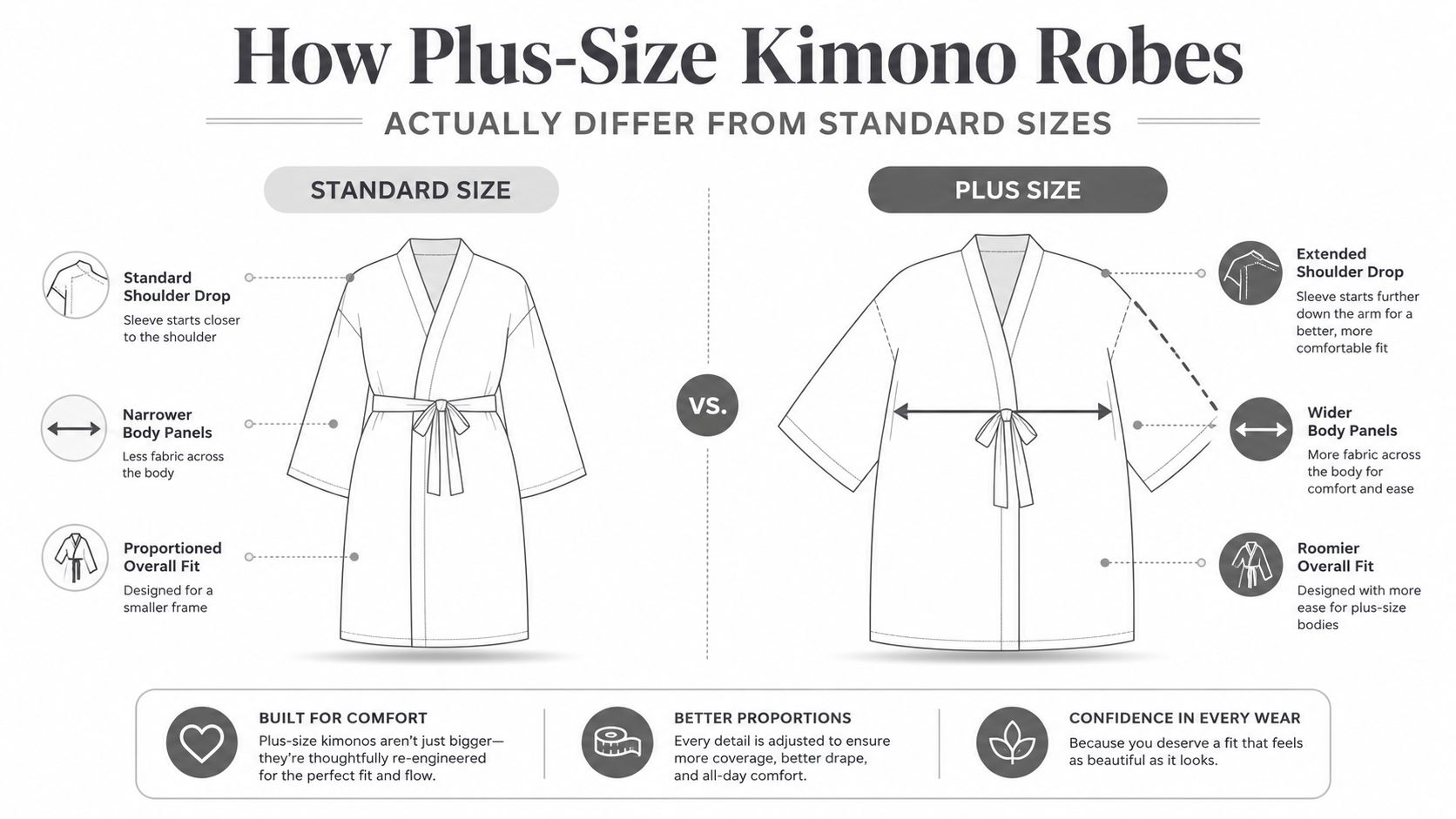
A genuine plus-size robe changes more than the letter on the tag. It adjusts the relationship between the body panels, shoulder drop, sleeve opening, front overlap, and sash. Those proportions determine whether the robe feels secure or looks large.
Independent size guidance commonly describes plus-size kimono robes with additional shoulder and torso ease, longer sashes, and lengths that can reach from mid-calf to ankle, particularly across heights around 160 to 190 cm.
Look for proportion, not exaggeration
An extended shoulder drop lets the sleeve fall without forcing the shoulder seam to sit exactly on the body's natural shoulder point. That can reduce ride-up when you lift your arms. Wider body panels give the back and front more usable room, while a fuller sleeve opening prevents the arm from feeling trapped inside a narrow tube.
The sash needs attention as well. A belt that reaches only when pulled tight defeats the purpose of an adjustable robe. Look for product pages that list sash length or show the belt tied on a model with a similar body size. Reinforced belt loops can also help keep the sash positioned, especially if you wear the robe open and closed throughout the day.
Decode the specification sheet
If a product page lists only “one size fits most,” treat that as incomplete information. A stronger listing gives finished width, total length, sleeve-to-sleeve span, cuff opening, and sash dimensions. You can then compare those details with your own measurements instead of guessing from a model photograph.
Check where the robe's width is concentrated. Extra fabric only at the hem may create a dramatic shape without solving a bust or hip closure problem. Extra sleeve length may make the garment cumbersome while the torso remains narrow.
Fit specialist's note: The best plus-size grading preserves the kimono line while increasing functional room. It shouldn't turn every dimension into an oversized version of the standard robe.
Styling and Layering Moves That Solve Real Fit Concerns
A robe can fit well and still need a small styling adjustment for your routine. Layering changes opacity, warmth, and how confidently you can move. It also lets you use one robe across different seasons without forcing the fabric to do every job alone.
Add coverage where lightweight fabric needs help
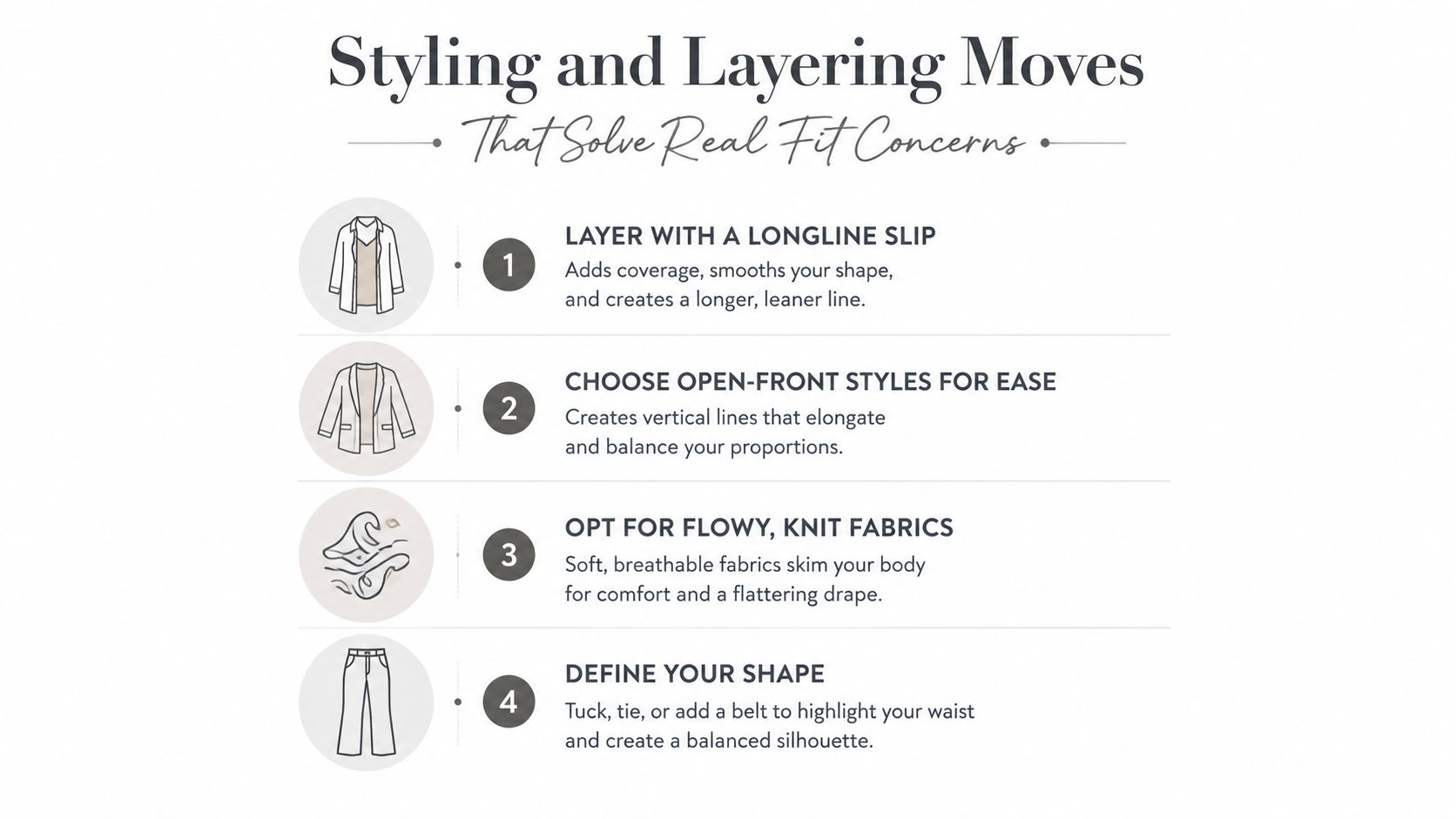
If a woven robe feels slightly sheer across the thighs, wear it over a longline slip, a jersey tank with matching shorts, or lightweight sleepwear that reaches the point where you want coverage. The underlayer should move independently, so it doesn't tug the robe closed when you sit.
For a robe that feels too open at the front, position the sash at the point where the panels naturally overlap. Pulling the belt higher can create pressure across the bust, while tying it lower may let the front fall open. Try a position slightly below your natural waist and adjust until the wrap stays closed without strain.
Change the opening instead of tightening the belt
Wearing the robe open over coordinated pajamas creates a clean vertical line and removes pressure from the closure. This works especially well with a soft tank and wide-leg sleep trousers, or with a slip that already provides full coverage.
An obi-style belt tied at the back can keep the front relaxed while giving the robe a more defined outline. It's useful when you want shape without compressing the bust or hip area. If the robe has long sleeves, roll each cuff once and smooth the fold. That shortens the sleeve without altering the garment permanently.
Try these combinations based on your concern:
- For thigh coverage: Add a longline slip or longer sleepwear underneath.
- For seated comfort: Wear the robe open or tie the sash at the back.
- For a secure wrap: Cross the panels fully before tying, then test the closure while bending.
- For excess sleeve length: Roll the cuff once and keep the fold loose.
- For cooler mornings: Layer over knit sleepwear rather than choosing a heavier robe automatically.
The point is control. You're adapting the robe to the task, not hiding your shape or accepting discomfort as the price of coverage.
Shopping Signals That Tell You a Brand Sells Plus Size
You can often tell whether a retailer understands plus-size fit before placing an order. Start with the product page rather than the headline. Look for garment measurements, panel construction, fabric details, and photographs showing how the robe sits on a fuller body. A kimono robe is already built from straighter panels instead of close body-conforming tailoring, so the key question is whether the brand gives those panels enough width and the sleeves and sash enough room.
Read the product page like a fit specialist
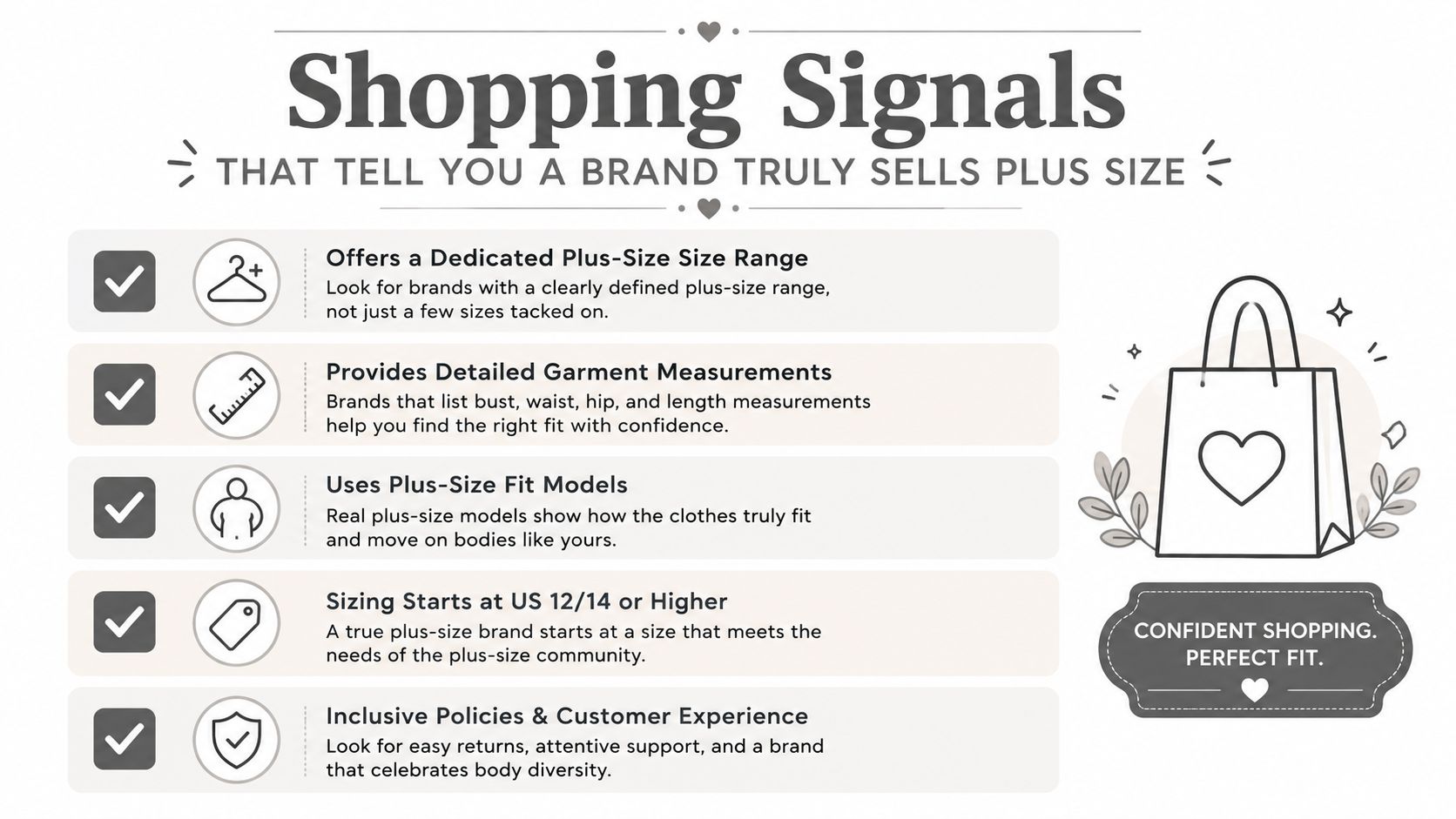
Check for a dedicated plus-size range or a clearly developed extended-size version. A copied size scale may add labels without widening the front panels, enlarging sleeve openings, or lengthening the sash. The listing should let you compare your body measurements with the finished garment. For a wrap robe, width matters because the front panels need enough overlap to stay closed without pulling.
Photos provide useful clues, but one image cannot prove fit. Look for the robe tied, open, seated, and shown in motion. Customer reviews may explain whether the fabric clings, whether the belt slips, and whether the front remains closed across the bust or hips.
Trust the details that reduce guesswork
A useful listing explains stretch, opacity, care, and intended use. A lightweight woven cover-up will not provide the same absorbency as a terry robe for after a shower. A maternity-style design may leave more room at the belly, while an all-day loungewear robe needs comfortable seated coverage and a closure that stays in place.
Before adding a robe to your cart, scan for these signals:
- Detailed garment measurements: The page lists width, length, sleeve opening, and sash information.
- Dedicated extended sizing: Plus sizes use intentional proportions, not only a new label.
- Relevant fit photography: Images show the robe tied, open, or layered on bodies with varied proportions.
- Clear fabric behavior: The listing explains weight, stretch, breathability, and opacity.
- Plain-language returns: You can see what happens if the wrap does not suit you.
- Responsive support: Customer service can answer a specific question about hip clearance or sash length.
SEYANTE offers kimono robes in various fabrics, including waffle and terry, with sizing information for shoppers comparing lighter and more absorbent constructions. Treat that as one product option, then apply the same measurement and fabric checks to every robe you consider.
A sound purchase rests on practical questions. Does the garment have enough width to overlap? Does the fabric stay comfortable while seated? Can the sash secure the robe without digging in? Does the brand provide enough information to answer these questions before ordering? Those checks translate the kimono's straight-panel construction into a fit decision you can make with confidence.