Green Robes for Women: The Complete Buying Guide 2026
- Why Green Robes for Women Deserve a Closer Look
- Green Color Heritage and Modern Market Relevance
- Choosing the Right Green Shade for You
- Turkish Terry versus Waffle Fabric and GOTS Credentials
- Sizing and Achieving the Right Fit
- Caring for Green Robes to Preserve Color
- Styling and Gifting Green Robes for Every Occasion
- Frequently Asked Questions about Green Robes
You've just stepped out of the shower, the bathroom is cool, and a towel feels like a temporary solution. You want something warmer and more polished, but the green robes for women on your screen all look different. One is soft sage, another is deep forest, and a third has a glossy finish that may look elegant but behave poorly after repeated washing.
The right choice depends on more than color. Shade, weave, fiber, dye performance, fit, care, and intended use all affect whether a robe feels spa-like for daily mornings, practical after bathing, or thoughtful as a gift. This guide translates current green color direction and cotton dye science into decisions you can make at the product page, without relying on a styled photograph alone.
Why Green Robes for Women Deserve a Closer Look
A green robe can occupy several roles in the same home. A lightweight waffle version may be comfortable over sleepwear while coffee brews. A denser terry robe can take the place of a wearable towel after bathing. A carefully chosen shade can also look composed when a guest arrives, rather than making you feel as though you're still wrapped in a random bathroom towel.
That versatility makes the purchase more personal than it first appears. You're choosing how the robe feels against damp skin, how much warmth it provides, whether the sleeves work with your routine, and whether the color complements the room where you'll wear it. A beautiful green is only useful if the robe's construction matches your habits.
Start with the moment of use
Consider the first ten minutes after a shower. If you want absorbency and warmth, a looped cotton surface may matter more than a slim silhouette. If you dress quickly, travel, or live in a warm room, a breathable waffle structure may be easier to wear. For lounging, a softer drape and manageable weight may take priority over maximum moisture absorption.
Gifting adds another layer. Sage or celadon can feel calm and coordinated for a bridal party, while olive or forest may suit someone whose home has earthy, natural colors. A robe selected for a boutique-style guest bathroom has a different job from one worn every morning while doing household tasks.
Practical rule: Choose the use case first, then select the shade and fabric that support it.
Look beyond the listing photo
Retail pages often show a single angle and a color name. They don't always tell you whether the cloth is terry, waffle, satin, or modal, how the belt sits, or what care the dye requires. A textile-aware purchase asks a few direct questions:
- Fabric construction: Is the surface looped, textured, smooth, or brushed?
- Dye information: Does the maker provide wash-fastness or care guidance?
- Certification: If organic fiber matters, is the claim supported by a recognized textile standard?
- Fit details: Are sleeve, shoulder, and length measurements available?
- Daily practicality: Will the robe be washed often, and can you care for it gently?
Those questions turn green robes for women from an impulse color purchase into a useful piece of homewear. The shade creates the mood, but the textile determines how well that mood survives real life.
Green Color Heritage and Modern Market Relevance
A green robe can look newly chosen for a calm bathroom, yet green has served women's dress for centuries. A major history of the color records its appearance in women's clothing during the first century CE, giving that association at least 2,000 years of continuity. During the Middle Ages, green was linked with youth, elegance, love, and pregnancy. Marriageable young women often wore green details such as headdresses, ribbons, belts, or hoods. These associations help explain why green can feel traditional and feminine, not merely seasonal. The history of green in Western dress documents both the early use and these medieval meanings in one reference. (green's history in Western dress)
Green continued to carry fashion authority after the medieval period. In 1868, a vibrant green silk afternoon dress combined a high neck, bustle silhouette, decorative trim, and bows. A robe does not copy that structure. It borrows the broader visual effect: green can suggest refinement, softness, and freshness when its fabric and cut suit the garment.
Why the color has commercial weight
Green women's apparel also has a substantial current market. One 2025 market report estimating the green clothing market at $15 billion projects a 12% CAGR from 2025 to 2033 and a market of about $45 billion by 2033. It estimates women's apparel at approximately 54.7% of total market revenue, or roughly $8.1 billion. These figures cover green clothing broadly rather than robes, but they indicate that women's green apparel has commercial weight beyond a narrow niche. (2025 market report estimating the green clothing market at $15 billion)
For robe shoppers, the practical point is variety. Long-standing associations with femininity and renewal support green's emotional appeal, while current demand gives retailers room to offer muted and vivid shades across different fabrics and silhouettes. A green robe can therefore feel familiar and current at once.
Color remains a personal choice. Someone who wants breathable, lightweight comfort without making green the room's visual focus may prefer a muted blue alternative. The Women's Lavender Blue Lightweight Kimono Waffle Spa Robe is described as 100% GOTS-certified organic Turkish cotton, with a lightweight, breathable construction for everyday use. Its fabric description also illustrates an important buying principle: color creates the first impression, while fiber and weave determine how the robe performs through repeated wear.
Choosing the Right Green Shade for You
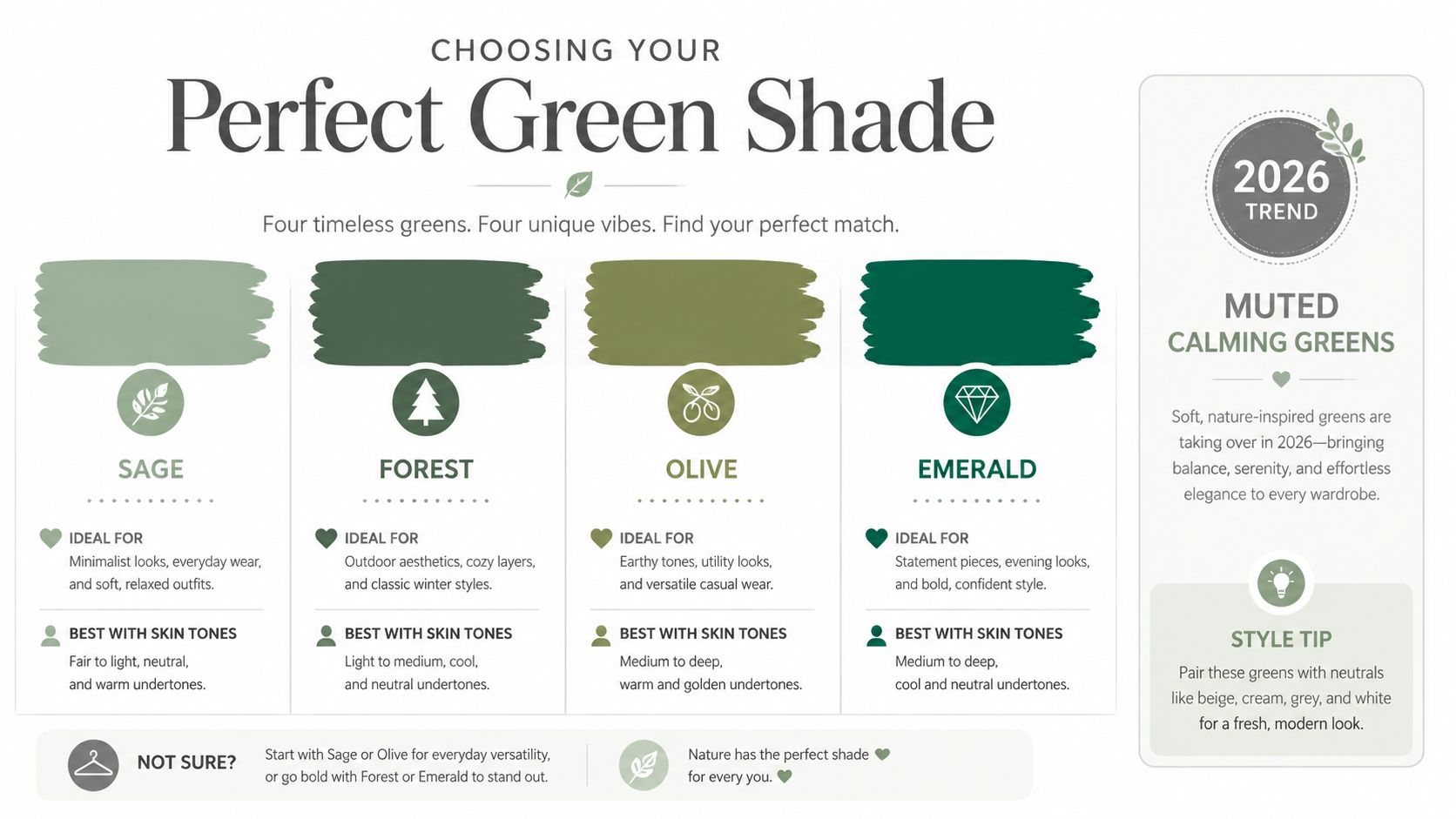
Green no longer means only bright emerald. Recent fashion coverage identifies sage, pistachio, olive, celadon, and forest as part of the wider green palette, while 2026 runway and retail direction is moving toward muted, calming greens rather than one dominant statement shade. (2026 green color direction)
Your best shade depends on three surfaces interacting at once: your skin, your bathroom, and the setting where you'll wear the robe. The following table is a starting point, not a strict color rule. Lighting changes how green looks, so check the shade in daylight if possible.
| Shade | Best Skin Tone | Interior Fit | Use Case |
|---|---|---|---|
| Sage | Light to medium complexions often suit its softened, gray-green character | White tile, pale wood, stone, and cool neutrals | Daily loungewear, self-care, and understated gifting |
| Pistachio | Warm or neutral complexions can work well with its gentle yellow-green cast | Cream, blush, light wood, and playful decor | Spring gifting and relaxed homewear |
| Celadon | Light, medium, and neutral complexions may find its pale blue-green balance easy to wear | Minimal bathrooms, white linens, and soft gray | Spa routines and coordinated gifts |
| Olive | Warm, golden, and deeper complexions often pair naturally with its earthy depth | Terracotta, walnut, brass, and natural textures | Daily wear and autumn or nature-inspired gifting |
| Forest | Deeper or high-contrast complexions can carry its saturated depth, while others may prefer it away from the face | Dark wood, marble, cream, and brass | Hospitality settings, winter lounging, and formal gifts |
| Emerald | Neutral or cool complexions may enjoy its jewel-like clarity | Simple interiors where the robe becomes the accent | Statement gifting and occasional luxury styling |
Match the mood, not just the complexion
A shade close to your face can influence how you feel in the morning, but the bathroom context matters too. Sage can blend into a calm room, while emerald creates a focal point. Olive connects with wood and warm stone, and forest can make a pale bathroom feel more dramatic.
If you're buying for someone else, muted greens are usually easier to coordinate than highly saturated shades. For a gift, ask whether the recipient prefers cool or warm neutrals, then use the room's existing colors as a practical guide.
A good robe color should look natural in the room and intentional on the person wearing it.
For more complexion-focused guidance, use this robe shade guide for skin tone and mood. Treat color names as approximate because dye lots, screens, and bathroom lighting can all change the final impression.
Turkish Terry versus Waffle Fabric and GOTS Credentials
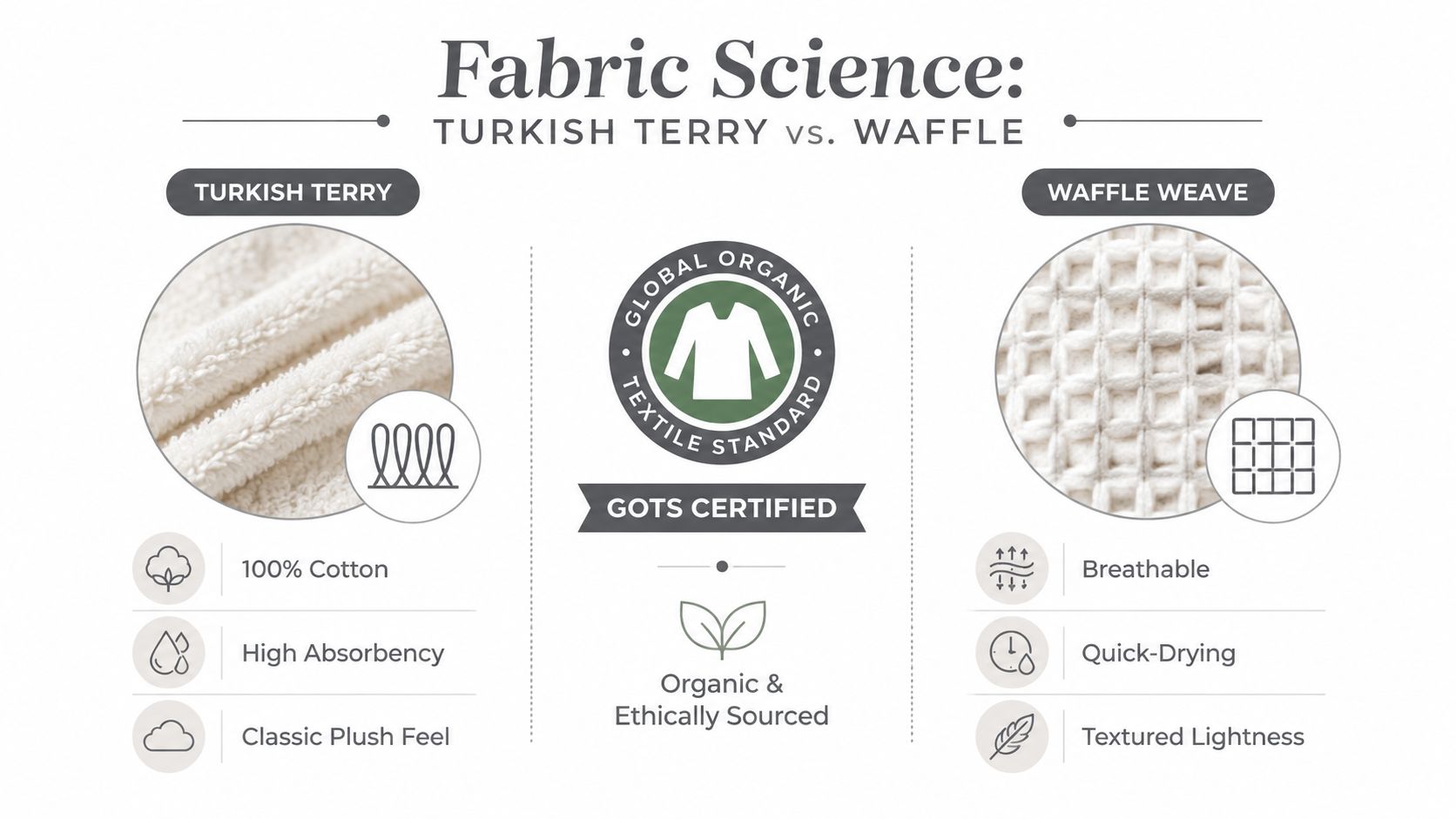
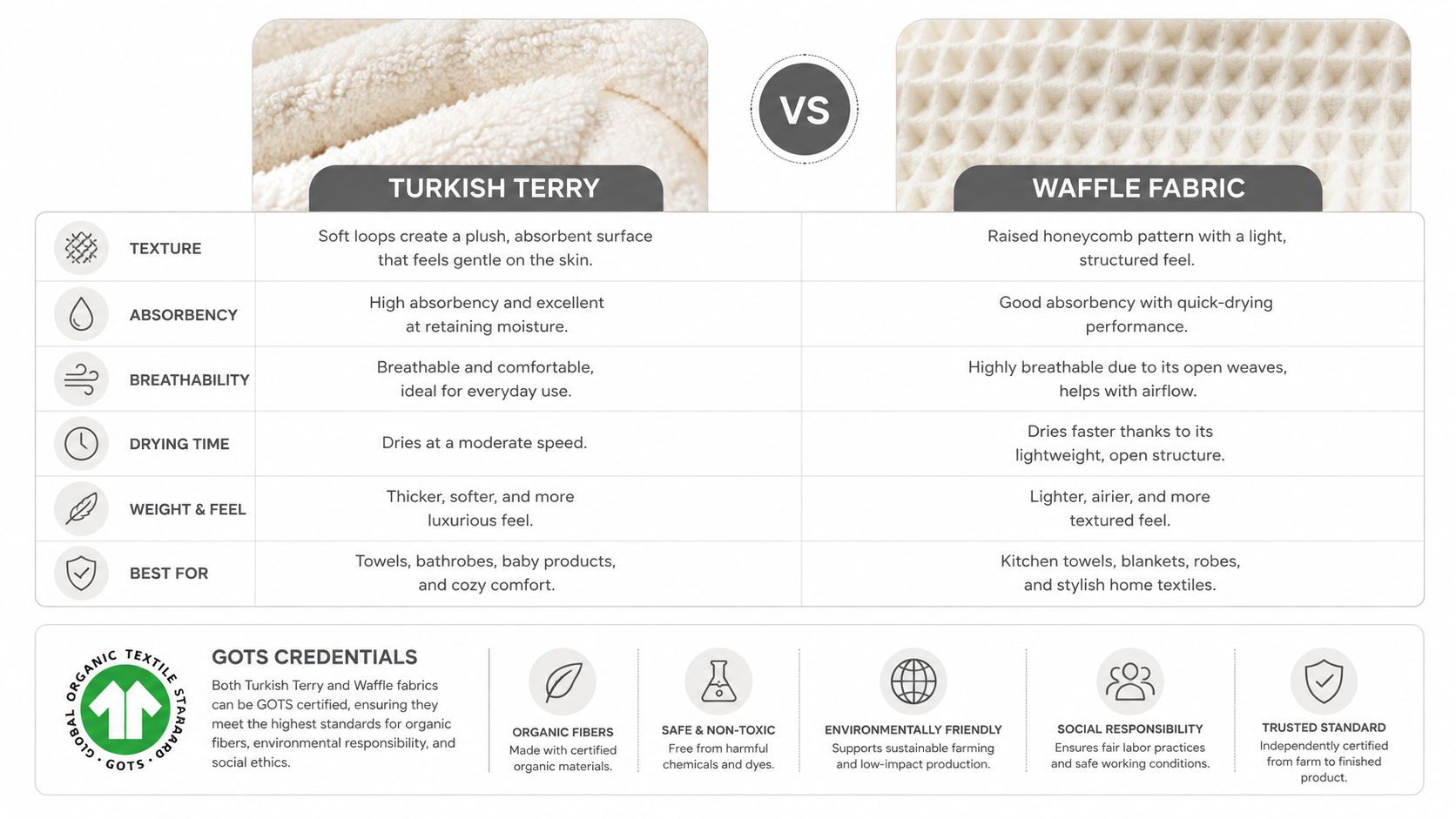
Once you step out of the shower, the fabric determines how a green robe actually feels in use. Color creates the first impression, but the weave affects absorbency, breathability, weight, and drying time. Turkish terry has a looped surface that absorbs and draws moisture away from the body, giving it a feel similar to a wearable towel. Waffle weave, on the other hand, features a raised grid texture and is generally lighter, more breathable, and visually more textured.
Neither option is automatically better - it depends on how you plan to use the robe. Right after a shower, when absorbency and a soft, substantial feel matter most, Terry is usually the better choice. If your bathroom tends to be warm, you wear a robe over pajamas, or you prefer something breathable, easy to store, and visually lighter, Waffle is often more practical.
The best choice should come down to your everyday routine rather than simply choosing whichever product description sounds more “luxurious.”
| Property | Turkish Terry | Waffle Weave |
|---|---|---|
| Surface | Looped and plush | Textured grid |
| Absorbency | Strong choice for damp skin and post-shower use | Moderate, depending on weight and construction |
| Warmth | Typically feels warmer and more substantial | Usually feels lighter and more breathable |
| Breathability | Adequate, but depends on fabric weight | A central advantage of the open texture |
| Best setting | Cold mornings, bathing, and spa-style use | Warm rooms, travel, layering, and everyday lounging |
| Main tradeoff | Can feel heavier and take longer to dry | May provide less towel-like coverage |
SEYANTE’s robe collection includes 100% Turkish cotton terry, lightweight Waffle weaves, and several GOTS-certified organic options, with styles ranging from hooded and kimono robes to hotel-grade and maternity designs. (SEYANTE robe materials and styles)
When reading a product page, start by checking the fiber content, then look at the weave, weight, and cut. For a green robe, this helps prevent the color name from being mistaken for an indication of how the robe will actually feel or perform.
What GOTS tells you
GOTS certification covers supply chain and processing requirements for organic textiles. It is not a color label, and it does not mean that every green robe meets the same environmental standards. Check the certification details provided for the specific product rather than assuming its fiber source or dyeing process based on terms such as “natural,” “eco-friendly,” or plant-inspired color names.
Colorfastness is also worth considering. The shade of green, the dyes used, and the washing method can all affect how the robe looks over time. Check the care label first and see whether the garment requires cold water, low temperatures, or separate washing. For everyday use, pilling, drying time, and ease of care matter just as much. A robe may feel wonderful, but if its care routine doesn’t fit your lifestyle, you may simply end up wearing it less often.
This daily-use comparison guide to waffle and terry robes can help you choose based on function. If post-shower absorbency is your priority, choose Terry. If you prefer a lightweight feel and better airflow, choose Waffle.
Sizing and Achieving the Right Fit
A green robe should close comfortably while leaving room for the layers you wear. If you plan to pull it over pajamas, allow more ease than you would for a robe worn directly after bathing. Fit works like a doorway: enough width lets you move through freely, while too little room creates pulling at the shoulders, bust, or hips.
Start with the product's measurement chart. Brand sizing is not universal, so your usual dress size can guide you, but it cannot replace garment measurements. Compare your body measurements with the robe's stated dimensions, especially if you prefer a relaxed fit.
Take the measurements that affect movement
Use a flexible tape. Keep it level and close to the body without pulling tight.
- Shoulder width: Measure across the back from one shoulder point to the other. This helps prevent sleeves from pulling when you reach forward.
- Bust and hip room: Measure around the fullest areas, then compare those figures with the robe's body dimensions. A wrap robe needs enough overlap to stay closed while you sit, walk, or bend.
- Sleeve length: Measure from the shoulder point to the wrist. For a dropped-shoulder design, measure from the neck instead. Sleeve length matters near sinks, counters, and cooking surfaces, where excess fabric can get in the way.
- Body length: Measure from the highest shoulder point to the hem position you want. Shorter cuts suit active mornings, while longer cuts provide more coverage for lounging.
A kimono robe usually has a relaxed shoulder and a straighter fall, which can make reaching feel easier. A hooded style adds weight around the neck and head, so check whether the shoulder and neckline still feel comfortable. Maternity cuts generally provide extra room across the front and abdomen, but the garment chart remains the better guide than an assumed size.
Check the wrap and belt placement
The belt should sit near your natural waist or the robe's intended tie point. If it sits too high, the front may open as you move. If it sits too low, the robe can feel loose through the shoulders or drag against your legs.
Stand, sit, and raise your arms while checking the wrap. The front should remain adequately overlapped, and the sleeves should not restrict movement. If you are between sizes, choose according to the underlayer and the amount of wrap coverage you want, rather than relying on the label alone.
Caring for Green Robes to Preserve Color
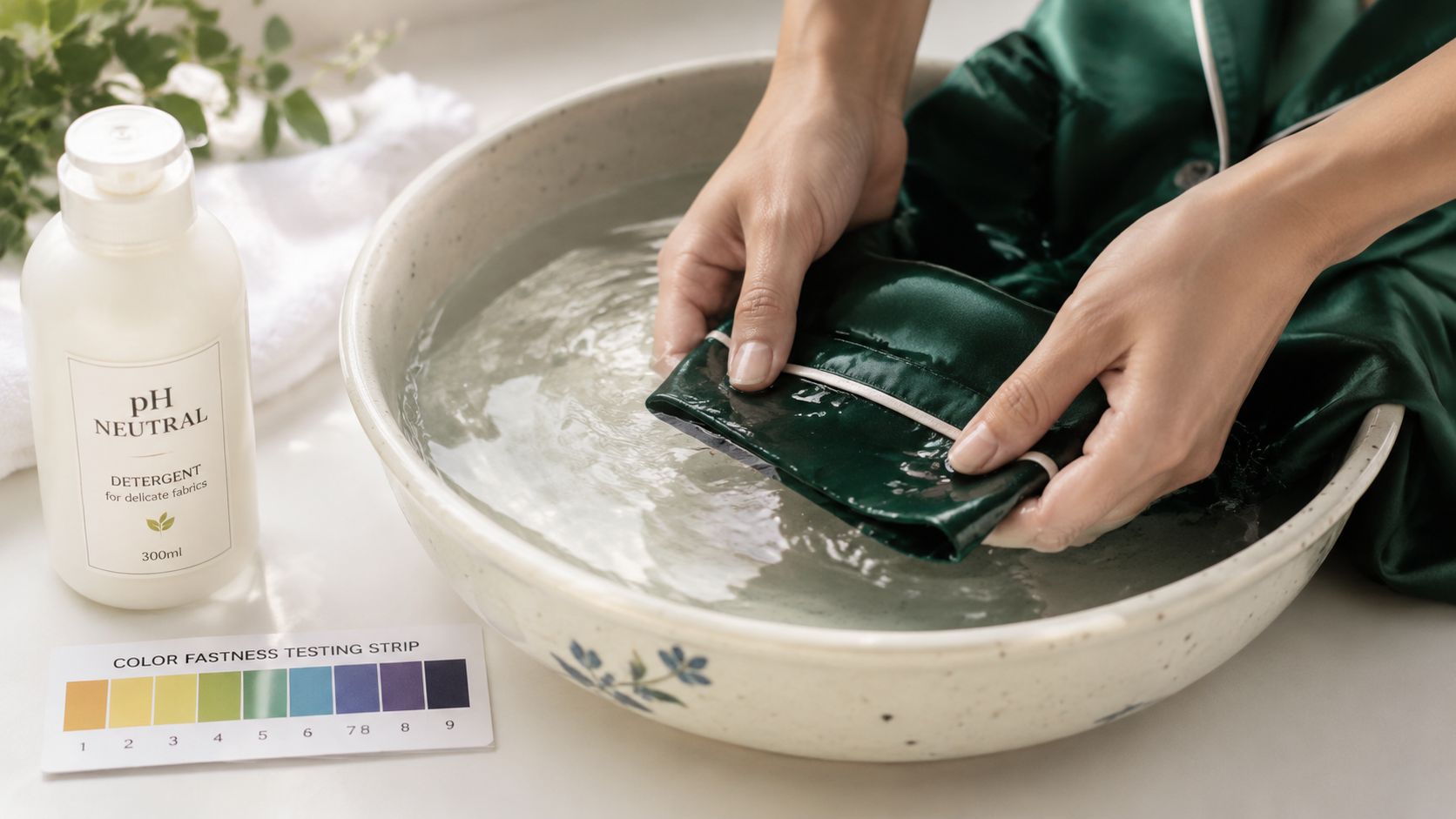
Green dye doesn't fail because it is green. The outcome depends on the dye class, how well the color is fixed to the fiber, and what happens during washing, rubbing, drying, and exposure to chemicals. Textile experts use color fastness to describe resistance to fading or bleeding under conditions such as washing, light, rubbing, and perspiration. (textile guidance on color fastness)
For cotton and cotton-rich robes, reactive dye systems can achieve wash fastness around ISO 105-C06 grade 4 to 5. A review of lower-impact dyeing reports that cold pad-batch reactive dyeing eliminated salt use, reduced water demand by at least 60%, and achieved fixation above 85%. Better fixation matters because loose dye is more likely to bleed around cuffs, collars, and belts during frequent laundering. (review of low-impact textile dyeing)
Use a gentle laundering sequence
Read the care label first, then use this general approach for dyed cellulosic robes:
- Wash with similar colors: Especially during early washes, keep a strong green away from pale towels and delicate garments.
- Choose cool to warm water: Excessive heat can accelerate shade change and stress the fiber.
- Use a neutral-pH detergent: Harsh or highly alkaline products can affect both dye appearance and fabric hand.
- Skip chlorine bleach: It can strip or alter color and may weaken the textile.
- Reduce mechanical stress: Overloading the washer increases rubbing, which can show as localized fading.
- Dry with low heat: High heat can shrink some cotton constructions and make the surface feel harsher.
- Remove promptly: Letting damp dyed fabric sit compressed can encourage uneven drying and odor.
A green robe may show shade shift before the cloth looks structurally damaged. That's why care is part of preserving the premium appearance, not an optional finishing step.
For storage, make sure the robe is completely dry, then hang it where air can circulate. Avoid compressing a damp terry robe in a hamper or sealed container. The robe washing and storage guide provides a product-care reference for maintaining the fabric over repeated use.
Styling and Gifting Green Robes for Every Occasion
A green robe works best when the setting gives its color a clear role. In a spa-style bathroom, sage or celadon can reinforce pale stone, white towels, and soft wood. The robe doesn't need extra decoration. Clean lines and a coordinated towel can make the routine feel deliberate.
For daily homewear, style depends on movement. A lightweight waffle robe can sit over sleepwear without creating much bulk, while a deeper green can add visual structure to a neutral morning wardrobe. Keep the rest of the outfit simple, such as cream, white, gray, or natural fibers, so the green remains the focal point.
Gifting with a specific purpose
A robe becomes a better gift when you explain why you chose the shade and construction:
- For a bride or bridal party: Choose a coordinated muted green palette and pair the robe with a simple note about getting ready and relaxing before the event.
- For a new home: Match sage, celadon, or olive with the recipient's bathroom colors rather than choosing the brightest green available.
- For a frequent traveler: A lightweight, breathable weave may be more practical than a thick, plush construction.
- For a hospitality setting: Select a consistent shade and construction that suits the room's visual identity and the expected bathing routine.
A lavender blue waffle robe can also sit beside green in a coordinated gift palette. The Women's Lavender Blue Turkish Cotton Waffle Hooded Robe is described as made from 100% GOTS-certified organic Turkish cotton, with a lightweight and breathable waffle construction. It offers a way to build a soft-color set without forcing every recipient into the same green shade.
For a boutique guest experience, forest or olive can feel grounded and distinctive against white linens. For personal use, choose the shade you'll enjoy seeing repeatedly. A robe isn't formalwear, so the most successful styling choice is often the one that makes an ordinary morning feel more considered.
Frequently Asked Questions about Green Robes
Is a green robe automatically eco-friendly?
No. The color alone says nothing about organic fiber, dye chemistry, or manufacturing. Check the fiber content, certification details, dye information, and care requirements.
Is organic cotton worth considering for frequent use?
It can be, particularly when the product provides a recognized certification and the construction suits regular laundering. Organic fiber doesn't replace the need to assess durability, drying, and care.
Which fabric is easiest to compare for daily wear?
Terry generally prioritizes absorbency and warmth, while waffle prioritizes breathability and lightness. Satin and modal can offer different drape and softness, but buyers should also ask about pilling, washfastness, and care demands. Existing retail coverage rarely explains these tradeoffs in detail, even though shoppers are seeking green robes across everyday and extended size categories.
SEYANTE offers women's robes in 100% Turkish cotton terry and lightweight waffle weaves, including many GOTS-certified organic options across kimono, hooded, hotel-grade, and maternity styles. Visit SEYANTE to compare robe constructions and choose the green shade, fit, and everyday function that match your routine.