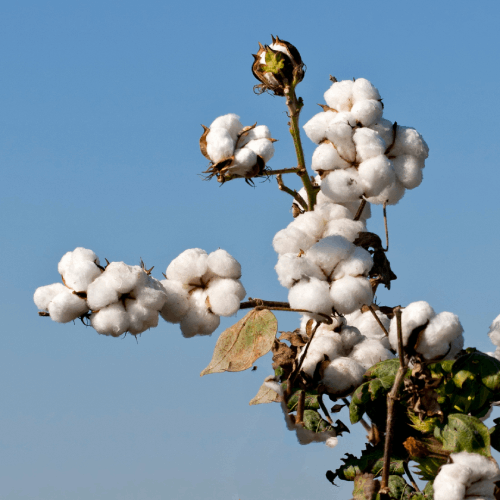
How to Dry Towels: 2026 Tips for Softness & Freshness
Many people think the answer to how to dry towels is simple: turn the dryer to its hottest setting and wait until the fabric feels warm. That approach does produce a dry towel, but it can also shorten the useful life of cotton, reduce absorbency, and create the rough texture many people mistakenly blame on the towel itself.
The better routine is controlled rather than extreme. Remove the bulk of the water with a short, low-heat tumble, then let airflow finish the job. This hybrid method protects the pile, limits unnecessary heat exposure, and works across indoor, outdoor, and bathroom drying setups.
Why High Heat Is Ruining Your Towels
Warm towels can feel luxurious, but that sensation often hides fiber damage. Repeated high-heat cycles stress cotton cellulose, the structural material that gives towel loops their bulk and helps them absorb water. Temperatures above about 65°C damage cotton cellulose and reduce water-uptake capacity. Medium heat around 55–65°C is safer for maintaining bulk and softness. The towel-care guidance on heat and absorbency explains why the temperature setting matters more than how warm the load feels when removed.
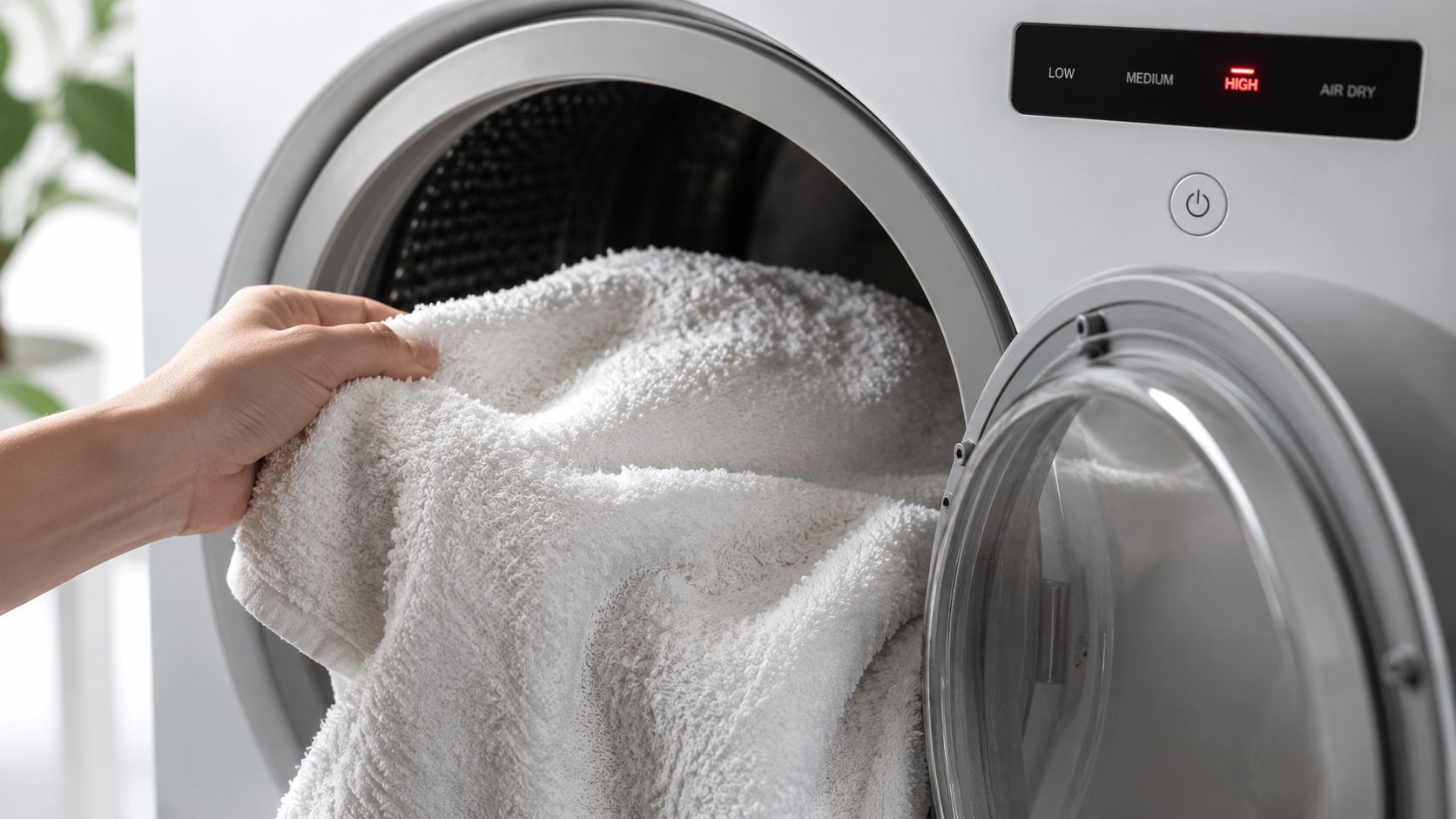
What excessive heat does to cotton
Aggressive heat combined with prolonged tumbling makes towel loops less resilient. Fibers weaken, shed more lint, and lose the spring that keeps the pile plush. Under controlled test conditions, lint shedding rose above 1.2 g per 100 g of towel after a 5-minute tumble dry, while absorbency fell below an 8.5 cm wicking-height threshold in 5 minutes. The figures describe a test result rather than every household load, but they show how quickly poor settings can affect towel performance.
Over-drying creates a repeat problem. As a towel loses softness and absorbency, it may seem to require a longer cycle or higher temperature next time. That added exposure leaves the fibers even less supple, so the towel feels rougher while drying efficiency declines.
Practical rule: Choose the lowest setting that gets the towel mostly dry, then use air movement instead of more heat to remove the final moisture.
Check the dryer before blaming the fabric
A restricted vent makes any temperature setting perform poorly. If a load takes unusually long, the dryer feels excessively hot, or airflow at the exterior vent seems weak, inspect the vent path and arrange professional cleaning where needed. The Can Do Duct Cleaning dryer vent guide offers a checklist for recognizing airflow problems before responding by increasing heat.
A fabric-friendly routine starts with brief low-heat exposure and finishes with complete air drying. This approach preserves the cotton pile while addressing the moisture that high heat alone is often used to remove.
The Hybrid Drying Protocol for Maximum Absorbency
The most reliable routine for preserving towel performance is a two-stage process. First, use a dryer briefly on low heat to remove the water that makes a towel heavy and slow to handle. Then spread the towel on a rack or line where air can reach both sides and finish drying it fully.
A summarized textile benchmark found that this approach retained about 94–97% absorbency after 30 cycles, compared with 63–72% for full tumble drying under the reported conditions. The same guidance placed total drying time for the hybrid method at roughly 25–40 minutes, compared with 45–65 minutes for full machine drying and 4–8 hours for air drying alone. The absorbency comparison for air drying and tumble drying supplies those benchmarks.
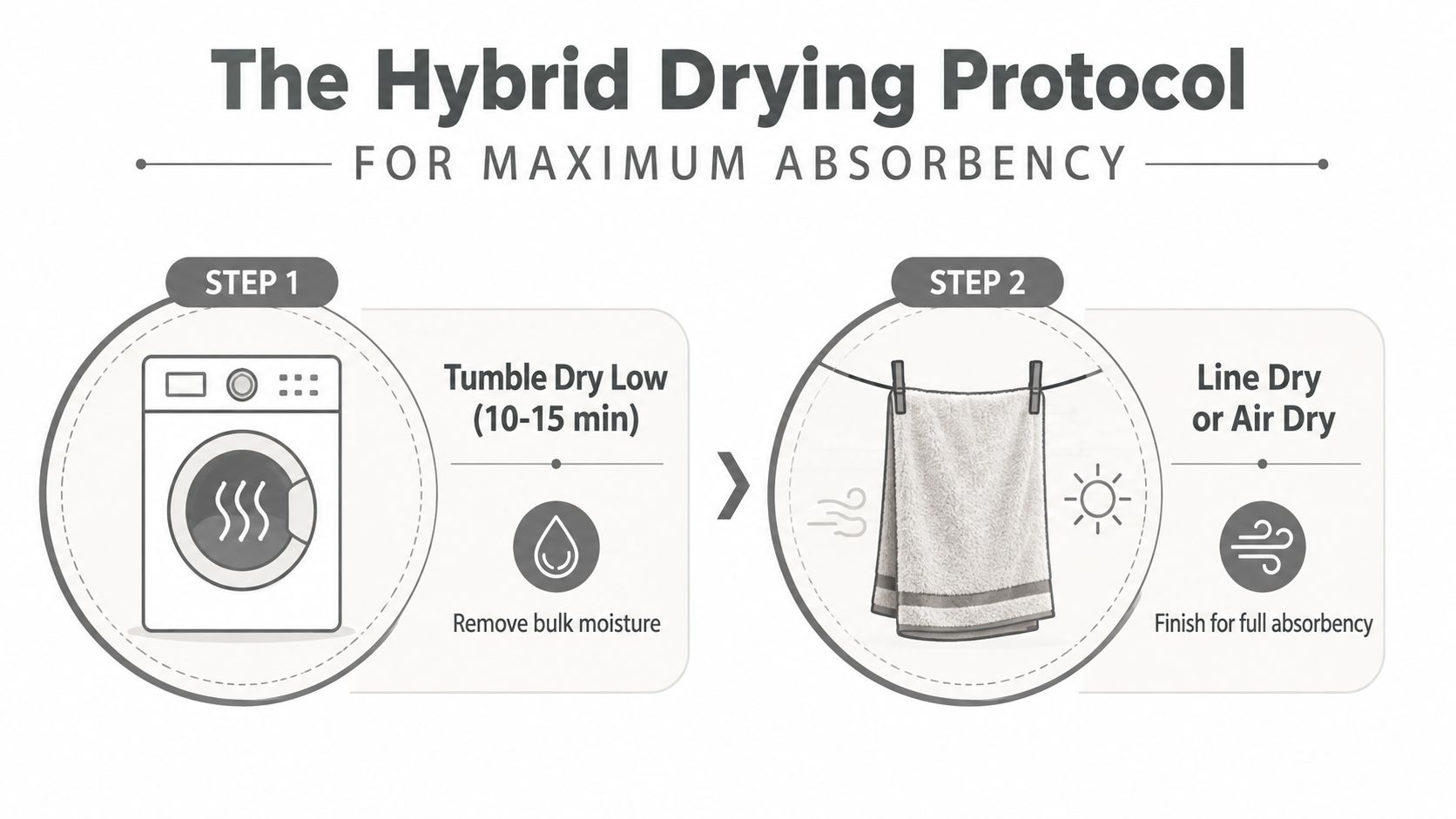
Step one removes bulk moisture
Start with towels that have completed a strong spin cycle. Shake each one open so the loops aren't compressed into a dense bundle, then place the towels in the dryer without overcrowding them.
Set the dryer to low heat and run it for 10–15 minutes. The purpose isn't to finish the load. You're removing the heaviest moisture so the towel becomes easier to hang and so the rack doesn't have to handle a sodden, compact mass.
At the end of this stage, the towel should feel warm and substantially lighter, but it may still feel cool or slightly damp in the thickest areas. Don't add time just because the center isn't completely dry. Move to the second stage while the fabric still has some flexibility.
Step two finishes with open airflow
Hang each towel over a rack bar or line so the fabric isn't folded into several thick layers. Leave visible space between towels, keep the bathroom door open when practical, and use a fan to move air across the surface rather than pointing intense heat directly at one spot.
Turn or reposition dense towels partway through the air-drying stage. They're ready to store only when the center, hems, and folded edges feel fully dry. Surface dryness isn't enough, especially for thick terry cloth.
This method works because it separates moisture removal from fabric heating. A short low-heat tumble handles the difficult first stage, while ventilation completes drying without forcing cotton through a full high-temperature cycle.
Comparing Machine Drying, Line Drying, and Heated Racks
The trade-off is clear: machine drying saves time but can stress cotton, line drying protects the fabric but depends on weather, and heated racks extend indoor drying without matching a dryer's speed. The best choice depends on how quickly the towel must be ready and how much heat the textile can tolerate.
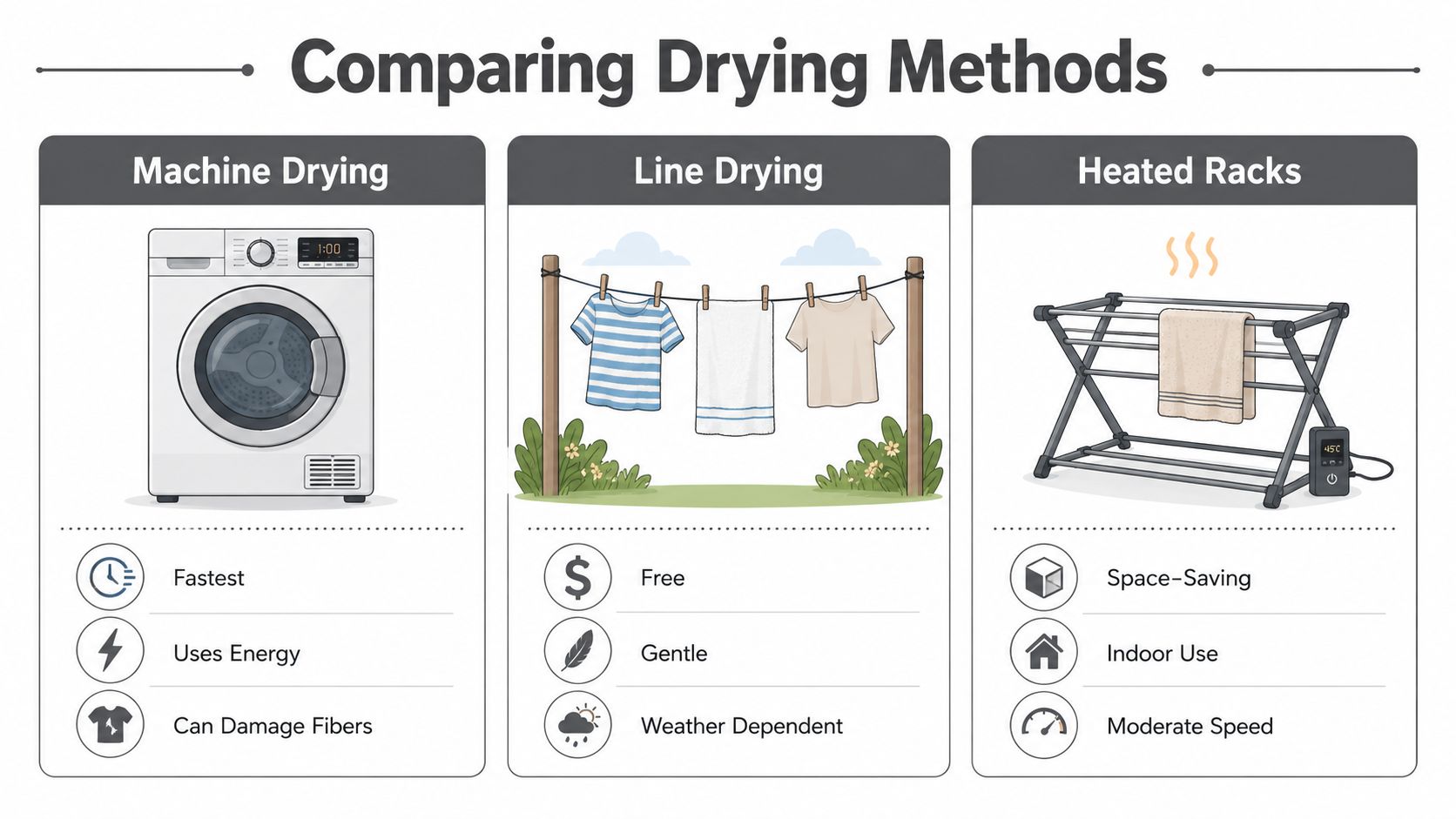
| Method | Where it excels | Main limitation |
|---|---|---|
| Machine drying | Fast turnaround and predictable results | Energy use and fiber stress, especially with high heat |
| Line drying | Gentle finishing with strong airflow outdoors | Weather and humidity determine the result |
| Heated rack | Indoor drying between bathroom uses | Slower than a machine and still needs adequate spacing |
Machine drying
A dryer suits households, gyms, and hospitality operations that need clean towels on a tight schedule. Use low heat for the initial moisture removal. If a controlled machine finish is necessary, medium heat within the safer 55–65°C range limits exposure compared with hotter settings.
A towel may still feel soft after a long cycle while its cotton cellulose has experienced unnecessary heat and friction. Repeated exposure can weaken the fiber structure and reduce the towel's ability to absorb water. The practical compromise is a short, controlled tumble followed by open-air drying, rather than treating a full high-heat cycle as harmless.
Dryer use also carries an energy cost. Household dryers account for about 3% of residential energy use in the United States, roughly six times the energy used by washing machines, according to the source cited in the original guidance. The water- and energy-saving bathroom habits guide outlines related ways to reduce waste in the bathroom.
Line drying
Outdoor drying works best when air is warm, dry, and moving. A high-performing window combines at least 1 hour of sun, sustained wind of 8–12 mph, a temperature around 21°C or higher, and relative humidity below 70%.
A lightweight waffle textile, such as the Women's White Organic Turkish Cotton Waffle Towel Wrap, exposes less dense material to the air than a heavy looped towel. Hang every towel fully open, and bring it inside before outdoor humidity rises. Damp, still conditions can leave fabric cool on the surface while moisture remains within the weave.
Heated racks
Heated racks help in bathrooms where towels otherwise stay on hooks in stagnant air. Under the study conditions, heated racks produced 94% lower bacterial growth than unheated storage. The towel microbiome research supports the broader point that drying conditions affect microbial growth, including concerns discussed around Pseudomonas aeruginosa in commercial facilities.
Use one towel per open rack section. Overlapping layers trap moisture and reduce the rack's benefit, so spacing and room ventilation still determine how well the towel dries.
Drying Guidelines by Towel Fabric Type
Absorbency depends on more than the final surface feel. Dense loops can remain wet inside after the exterior seems dry, while open waffle textures release moisture faster. Choose the setting from the towel's structure and care label, then use a short tumble only to remove bulk water. Finishing in moving air limits heat exposure and helps protect cotton fibres from becoming less absorbent.
| Fabric Type | Heat Setting | Machine Time | Air-Dry Finish | Key Tip |
|---|---|---|---|---|
| Terry cloth | Low, or controlled medium | 10–15 minutes | Hang fully open until the pile is dry throughout | Separate thick layers and turn the towel |
| Waffle weave | Low | 10–15 minutes | Finish on a rack or line with space around the texture | Stop before the fabric becomes overheated and brittle |
| Organic cotton | Low | 10–15 minutes | Air-dry completely with steady ventilation | Skip dryer sheets and rinse thoroughly |
Terry cloth needs the most patience
Terry loops create plushness and depth, so water can remain below the surface. Shake the towel before hanging it, then place it over a wide bar rather than folding it repeatedly. Check the centre and thick edges before storing. If the bathroom stays humid, move the towel to a room with better ventilation or outdoors instead of leaving it beside the shower.
Waffle weave rewards restraint
Waffle towels usually release moisture readily because their open texture gives air more contact. The lighter construction still does not make high heat safe. Use a short low-temperature tumble to remove bulk water, then finish on a rack or line with space around the fabric. This approach preserves the towel's hand while reducing thermal stress.
For a closer look at what makes Turkish cotton special, consider how fibre quality and weave affect drying behaviour. The Women's White Organic Turkish Cotton Waffle Towel Wrap illustrates why a lightweight waffle textile can dry efficiently when it is spread fully open. Material choice helps, but the finishing stage still determines whether moisture remains trapped.
Organic cotton should stay clean of coatings
Avoid dryer sheets on absorbent towels. Their residue can coat fibres and interfere with water uptake. Use a thorough rinse, keep heat gentle, and let the towel air-dry completely before putting it away. A towel that feels dry on the outside may still need more time at seams, hems, and folded areas.
Troubleshooting Musty Smells and Stiff Towels
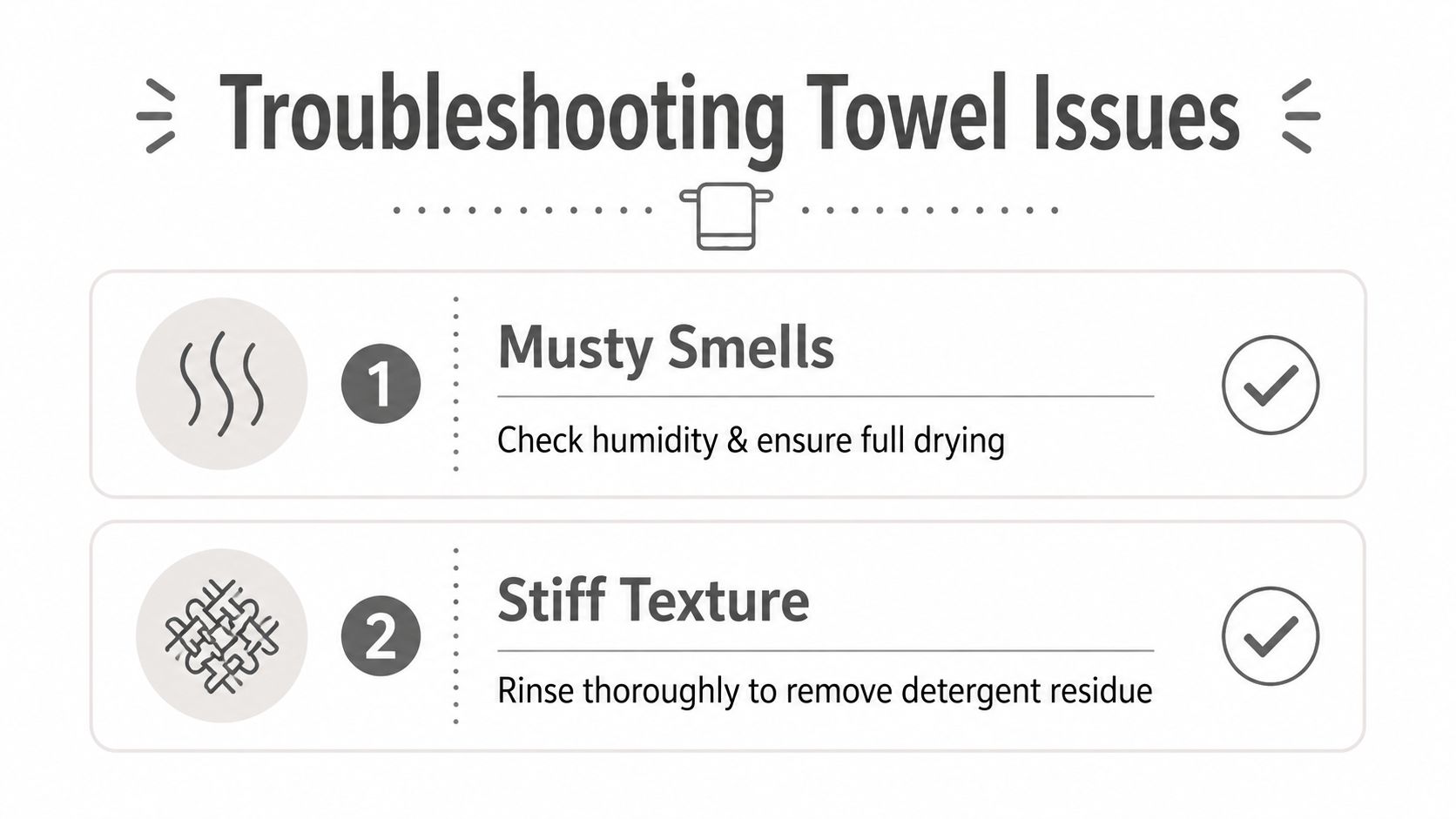
Musty odor usually means the towel stayed damp too long, not that it needs fragrance. Start by checking the room rather than adding more detergent or fabric softener. Indoor-drying guidance places below 60% relative humidity as a practical threshold for efficient drying, describes 30–50% as ideal, and identifies conditions above 70% as a mold-risk zone. The indoor drying and humidity guidance connects those conditions with slower towel drying.
Fix the room before changing the cycle
A drying load adds moisture to indoor air. Independent indoor-drying references estimate that one load can release about 2 litres of water into the room, while a typical 5 kg load may retain roughly 1.5–2.5 litres after spinning. The laundry moisture and airflow reference explains why a closed bathroom can become a poor drying chamber.
Use this sequence:
- Open the air path. Leave the door open and run the exhaust fan during and after showering.
- Add movement. Position a fan so air crosses the towel, not so close that it collapses the fabric against the rack.
- Reduce moisture. Use dehumidification when the room remains damp, especially during wet weather.
- Increase spacing. Hang towels in a single open layer, with the hem and center exposed.
- Move the rack. A dry bedroom or utility area may outperform a warm bathroom filled with steam.
Restore softness without coatings
Stiffness often comes from detergent residue, mineral deposits, or overdrying. Run a rinse-focused wash with the correct detergent dose, then use a plain-water rinse until the fabric no longer feels slick. A white vinegar rinse can help remove residue when compatible with the care instructions, but don't mix vinegar with chlorine bleach.
If the towel smells musty, wash it before drying again. A fresh load won't stay fresh if it returns to the same damp hook or crowded rack.
Storing and Timing Towels for Lasting Freshness
Storage begins before the linen closet. In a humid climate, leave towels spread out after washing until the room no longer feels damp, then let them cool before folding. Warm fabric can hold residual moisture that becomes trapped in a stack.
A shared linen closet needs clear separation. Keep freshly laundered towels on a dry shelf, and place used towels in a ventilated hamper rather than beside clean textiles. This prevents odor transfer, especially when several people return towels to the same storage area.
Use a simple rotation: assign each person or bathroom a small working set, keep the next clean set behind it, and move the oldest clean towels forward after each wash. For example, launder the used set, dry it fully, and return it behind the set already in use. This keeps one set from remaining buried for long periods while reducing rushed storage.
Leave folded stacks loose enough to remove one towel without compressing the rest. If the closet borders a steamy bathroom, store towels in a drier room or open the door periodically. For related advice, see how to wash, store, and care for your robe. Dry completely, store loosely, and rotate consistently.
SEYANTE offers Turkish cotton terry and lightweight waffle bath textiles, including options made with GOTS-certified organic cotton. Visit SEYANTE to explore towel wraps and robes suited to a gentler drying routine.