How to Wear a Kimono Robe the Right Way
You've just stepped out of the shower, your skin is warm, and the robe on the hook with the relaxed V-neck and wide sleeves looks far more inviting than a bulky wrap. You slip it over your shoulders, but the front shifts, the belt twists, and one sleeve dips into the sink. A few small adjustments turn that awkward first try into a comfortable, polished wrap.
Learning how to wear a kimono robe is mostly about understanding what the garment is designed to do. A casual robe borrows the visual language of a Japanese kimono, but it's made for everyday self-care, spa use, hospitality, gifting, and relaxed layering. Once you separate those uses from traditional dress, the practical sequence becomes straightforward.
What a Kimono Robe Actually Is
A kimono robe makes sense when you want coverage without the stiffness of a fitted dressing gown. Its T-shaped silhouette, straight seams, wide sleeves, and V-neck front create a generous fall of fabric. A sash holds the panels in place, so fit comes from wrapping and folding rather than darts, buttons, or close tailoring. That construction suits post-shower routines, slow mornings, guest hosting, and gifting.
The garment borrows the visual language of a Japanese kimono, but it is not a traditional kimono. Traditional dress has a specific cultural and historical context, with forms shaped over centuries. The recognizable structure developed through earlier Japanese dress, including the Heian period from 794 to 1185 and the Edo period from 1603 to 1867. The term “kimono” became common after the Meiji Restoration in 1868, when “kosode” was replaced as Japan's four social classes were formally equalized. The history of kimono construction and wearing provides further background.
Traditional construction helps explain the robe's straight, overlapping panels. A kimono is typically cut from one tanmono bolt measuring about 36 centimeters wide and 12 meters long. Its long panels manage fit through folds and a belt rather than body-contouring seams. A modern robe adapts that logic for comfort and easy handling, without carrying the layers, ties, obi, or formal expectations of traditional dress.
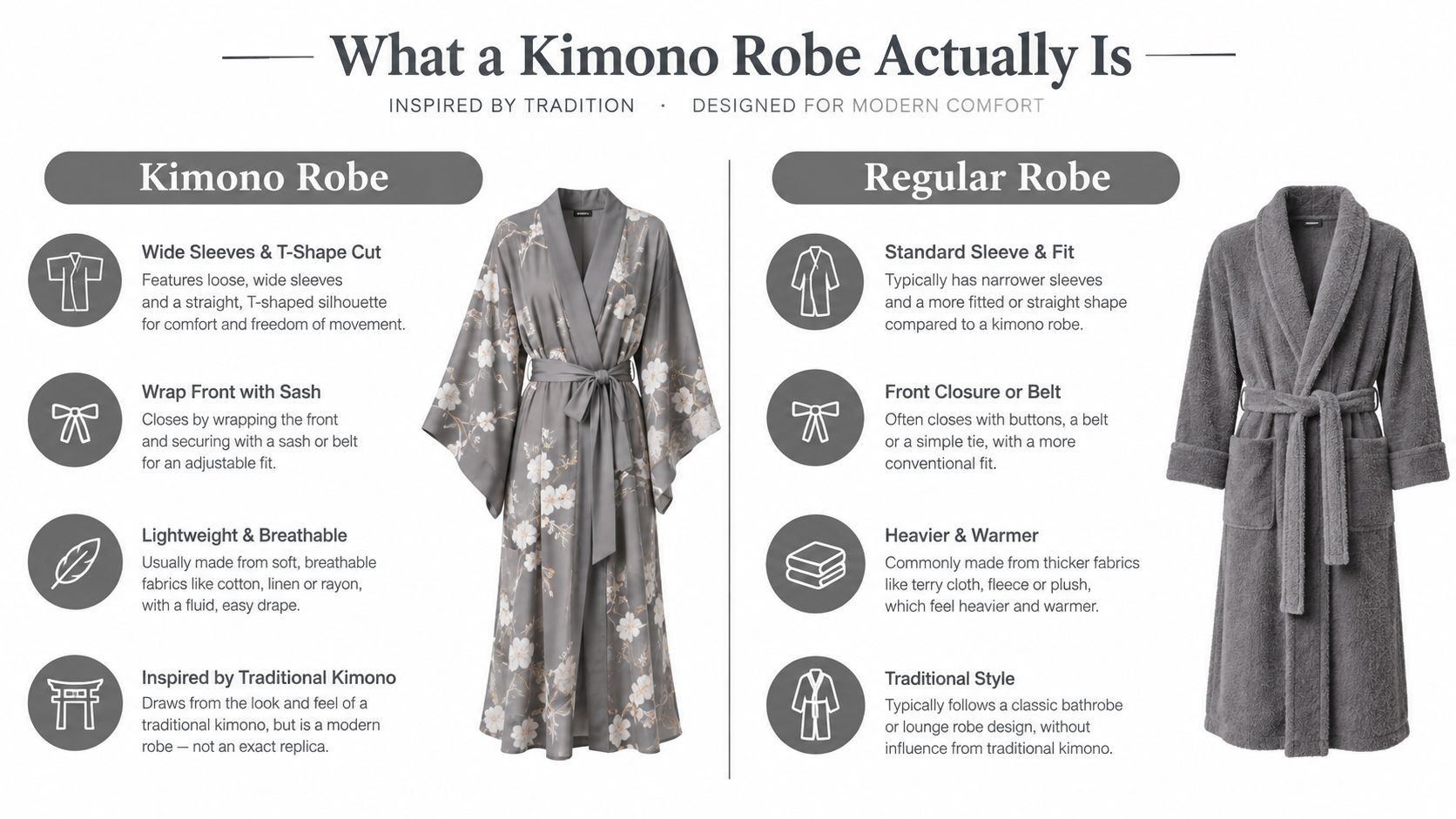
Robe, yukata, or traditional kimono
A kimono-style robe is generally softer, simpler, and less formal. Fabric changes how it behaves against the body. Cotton waffle offers texture and airflow with less weight than plush terry. Rayon and silk move smoothly over sleepwear and give a fluid drape. Brushed fleece adds warmth, though it can make the crossed front feel bulkier.
A yukata is a traditional lightweight Japanese garment associated with warm weather, bathing contexts, and festivals. It is not another name for a Western bathrobe. A traditional kimono follows its own dressing sequence and standards of formality, while a casual robe is designed for uncomplicated everyday use.
For a closer look at the modern category, read this guide to kimono robes. Check the sleeve length, hem length, lining, and finishing before buying. Sleeves should leave your hands free. The hem should provide coverage without catching underfoot. A lining can make the inside feel smoother and give the robe more structure, but it may also add warmth and weight. Clean seams, secure belt loops, and a sash that lies flat are practical signs of a well-made robe rather than a costume-like piece.
Wrapping the Robe Step by Step
After a shower, while preparing breakfast, or before welcoming a guest, put the robe on with the shoulders aligned first. Hold it by the shoulder seams, slide your arms into the sleeves, and let the fabric settle across your back. The center-back seam should run straight down your spine. If the robe pulls toward one shoulder, remove it and recenter it before closing the front.
Check the collar at the nape of your neck. It should run evenly from shoulder to shoulder, without bunching beneath your hair or folding inward. Let both front panels hang at similar heights before crossing them.
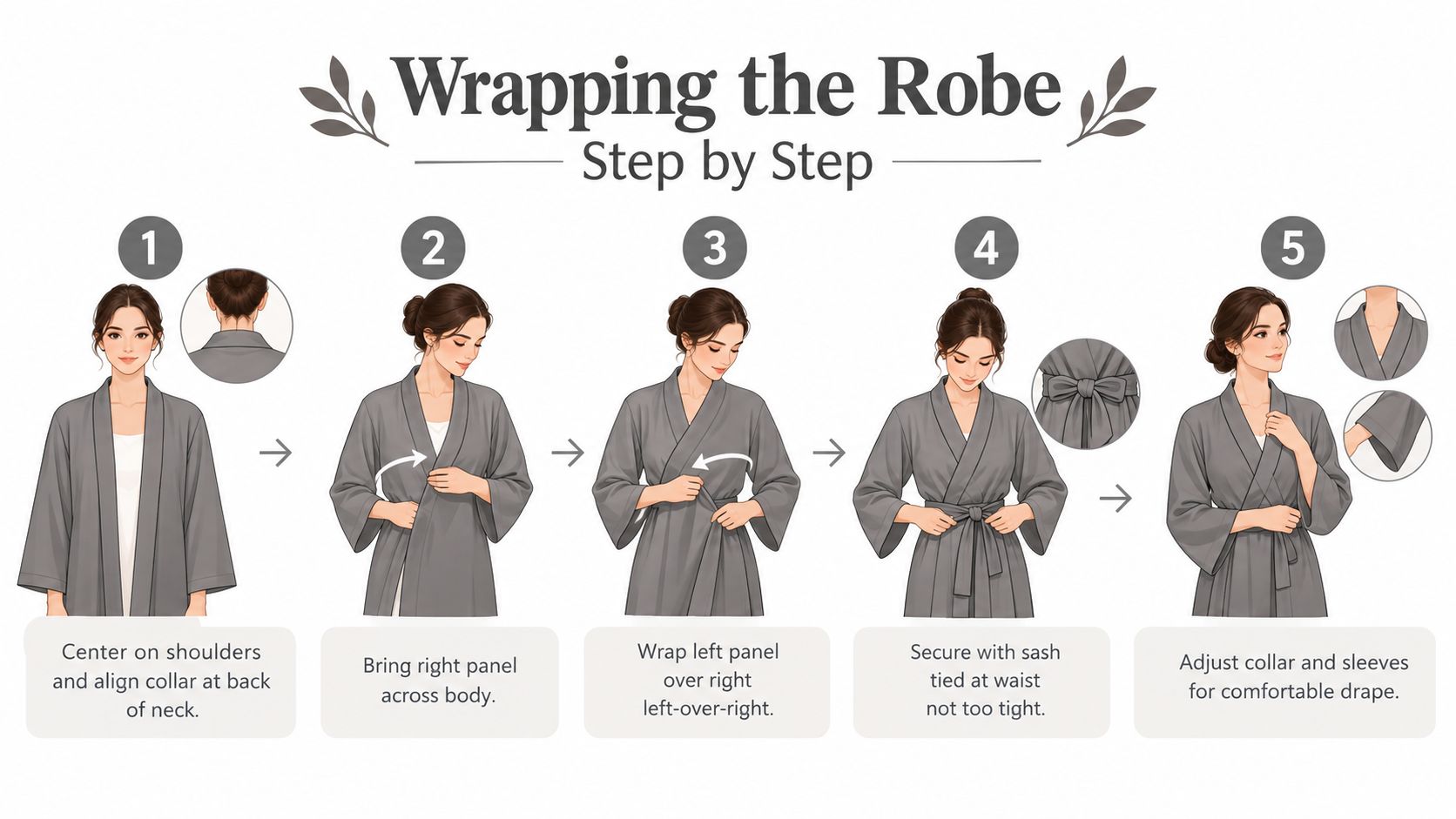
Follow the closure sequence
Center the shoulders. Let the robe's weight rest evenly on both sides. The sleeve seams should face down rather than rotating toward the front.
Set the length. Pull the robe gently downward until the hem falls around ankle level for a traditional-inspired look. For everyday floor safety, keep it about 3 to 4 centimeters above the floor or instep. A casual robe may also finish at mid-calf, which helps when you are moving around a bathroom or kitchen.
Bring the right panel across your body. Keep the fabric flat from chest to opposite hip. Use steady tension rather than a sharp pull, since strain here can make the neckline gape later.
Place the left panel over the right. This left-over-right direction suits living wear. Extend the overlap far enough across the torso to keep the front closed while sitting, bending, or carrying a cup.
Align the neckline. Set the V just below the collarbone unless the robe has a deliberately open cut. Smooth both collar edges until they meet cleanly, without a twisted fold.
Pause before adding the sash. Shake each sleeve once so the fabric falls freely, then choose the cuff position for the task. Leave the cuffs loose for reading or resting. Push them to mid-forearm for skincare, breakfast preparation, or hair styling. The panels should lie flat across the chest, and the shoulders should feel balanced.
Practical rule: The wrap should feel secure before the belt goes on. The sash holds the arrangement in place. It should not correct a twisted shoulder seam, uneven collar, or poorly placed overlap.
Tying the Belt or Sash
The belt changes both the comfort and the visual balance of a kimono robe. A tie placed high creates a shorter-looking skirt and can pull the hem upward. A lower, softer tie gives a relaxed drape but may loosen when you walk, bend, or carry something.
| Tie Style | Placement | Best For | Trade-off |
|---|---|---|---|
| Simple front tie | Natural waist, slightly to the front or side | Everyday lounging and quick dressing | Easy to use, but a loose knot can shift |
| Double-wrapped obi-style tie | Firmly around the natural waist | A defined silhouette or polished hosting look | Holds well, but can feel restrictive if tightened too much |
| Loose draped sash | Lower natural waist or relaxed side position | Spa use and post-shower comfort | Soft and forgiving, but more likely to slip during movement |
For a simple front tie, wrap the sash once around your waist and bring both ends forward. Keep the belt flat, cross the ends, and form a compact knot or soft bow. This works well when you're moving between the bedroom and bathroom and want a closure you can undo with one pull.
An obi-style tie gives the robe more structure. Wrap the sash twice if its length and width allow it, keeping each pass smooth and level. Place the knot at the back or slightly off-center rather than directly over the spine if you'll be sitting for a long period. The goal is definition, not compression.
A loose draped sash suits a post-bath routine. Tie it with enough tension to stop the panels from opening, then leave room for comfortable breathing and movement. A soft self-fabric sash usually feels more natural than a rigid decorative belt.
For a heavier waffle option, you might encounter a style such as the Men's Black Luxury Long Waffle Bathrobe - L. With a long, textured robe, keep the sash level and avoid cinching high, because the fabric's weight can exaggerate pulling at the chest and hem.
Layering and Everyday Outfit Ideas
A robe earns its place when it works through ordinary transitions, not just when it looks attractive on a hanger. The right underlayer, sleeve position, and belt tension depend on whether your skin is still damp, you're settling in with coffee, or someone has just arrived at the door.
Post-shower comfort
After a shower, use a waffle or terry cotton robe over a simple bralette and cotton shorts. Cotton handles the practical side of this moment, especially when you want a breathable layer with a little absorbency. Push the sleeves to mid-forearm before applying skincare or making breakfast, then tie the belt loosely enough that the robe doesn't feel sealed tightly around a warm body.
A robe that's too thick over damp skin can feel heavy. A lightweight waffle weave usually gives you easier movement, while plush terry prioritizes coverage and a towel-like feel.
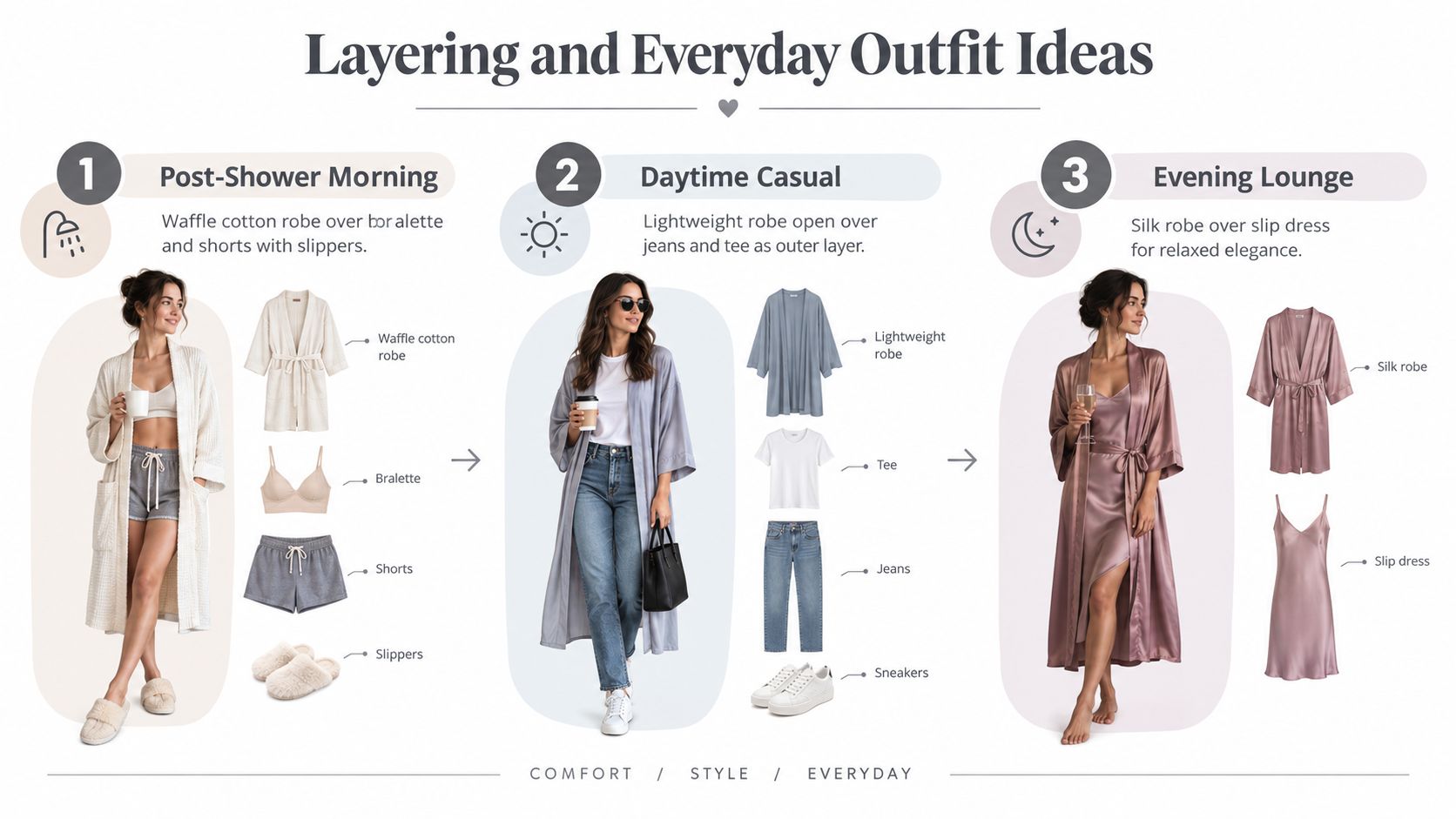
Slow morning at home
For coffee, reading, or working from the sofa, choose a silk or rayon robe over a soft tank and leggings. The smooth fabric glides over stretchwear and makes the wrap feel light. Bare feet work indoors, though house slippers add warmth and keep the hem away from the floor.
Tie the belt neatly at the back in a compact hanamusubi-inspired shape if the sash is long enough. Keep the knot comfortable while seated. A bulky knot at the front can press into the stomach and disturb the robe's fall.
Hosting or answering the door
A structured cotton robe can look intentional over a slip dress, linen tee, or lightweight trousers. Smooth the collar flat, close the panels fully, and wrap the sash firmly at the natural waist. The result is more composed than an open robe, without pretending to be formal traditional dress.
Pay attention to proportions. The cuff should sit around the wrist when your arms are relaxed. The hem should hover two to three inches above the floor so it doesn't catch underfoot. Silk under a thick robe can bunch at the waist, while lightweight linen usually glides more cleanly beneath a cotton layer.
Styling for Specific Occasions
The same wrap can feel completely different when you change the fabric, underlayer, and belt position. Treat the robe as a practical layer first, then adjust the finish for the setting.
| Occasion | Best Fabric | Belt Style | What to Layer Underneath |
|---|---|---|---|
| Bridal morning | Silk or satin | Soft front bow | Simple slip |
| Spa night | Waffle cotton | Snug back knot | Matching wrap dress |
| Travel | Midweight jersey or linen blend | Simple side knot | Tee and leggings |
| Gifting setup | Cotton waffle or smooth rayon | Self-fabric sash | Folded presentation, no outfit required |
For a bridal morning, an ivory or blush silk robe over a slip keeps the look light and photograph-friendly. Tie a monogrammed sash in a soft front bow at the waist, pin the hair loosely, and leave the feet bare. The front bow works visually, but slippery silk can move over freshly moisturized skin, so keep the knot secure without pulling the fabric sharply.
A spa night calls for a waffle cotton robe over a matching wrap dress. Twist the hair up, knot the sash snugly at the back, and keep slides nearby. The back knot creates a clean front and is more practical than a decorative bow if you'll be walking between rooms.
For travel, choose a midweight jersey or linen-blend robe over a tee and leggings. A simple side knot is easier to manage while seated and won't create a hard lump against your back. Avoid floor-grazing hems on planes or trains, where the garment can catch around bags and footrests.
A gifting setup benefits from presentation rather than elaborate styling. Fold the robe inside-out so the pattern is visible, place tissue paper between the layers, and tuck a small card beneath the sash. If you're collecting photographs and messages from a bridal event, a service that helps guests gather wedding memories can complement the robe as part of the gift experience.
For a satin-specific approach, see this guide to satin kimono robes. Choose a short or mid-length cut when the wearer will be traveling, and reserve longer silhouettes for controlled indoor settings.
Common Mistakes and Quick Fixes
Most first-time problems come from treating the robe like a loose cardigan. The panels need an intentional order, the hem needs clearance, and the sash needs to support the fabric without crushing it.
Five corrections that make the difference
Wrong overlap: Wrapping right over left conflicts with the standard living-wear convention and is associated with funerary dress in Japan. Reverse the panels so the left side closes over the right, including when you're wearing a casual robe inspired by traditional design.
Dragging hem: A floor-length edge collects moisture, dust, and stray threads, and it can catch beneath your feet. Lift the excess at the waist or choose a mid-calf robe that clears the floor during movement.
Twisted belt: A sash that rolls over itself creates uneven tension and pulls one side of the collar open. Lay the belt flat, smooth it around your body, then cross and knot it.
Overtight waist: Cinching across the ribs restricts comfortable breathing and crushes the robe's natural folds. Tie it firmly enough to stay put, but leave room for a flat hand to slide underneath.
Unmanaged sleeves: Sleeves that cover your hands make simple tasks awkward and can make the robe look borrowed. Keep cuffs at the wrist for lounging, or push them to mid-forearm for handwork.
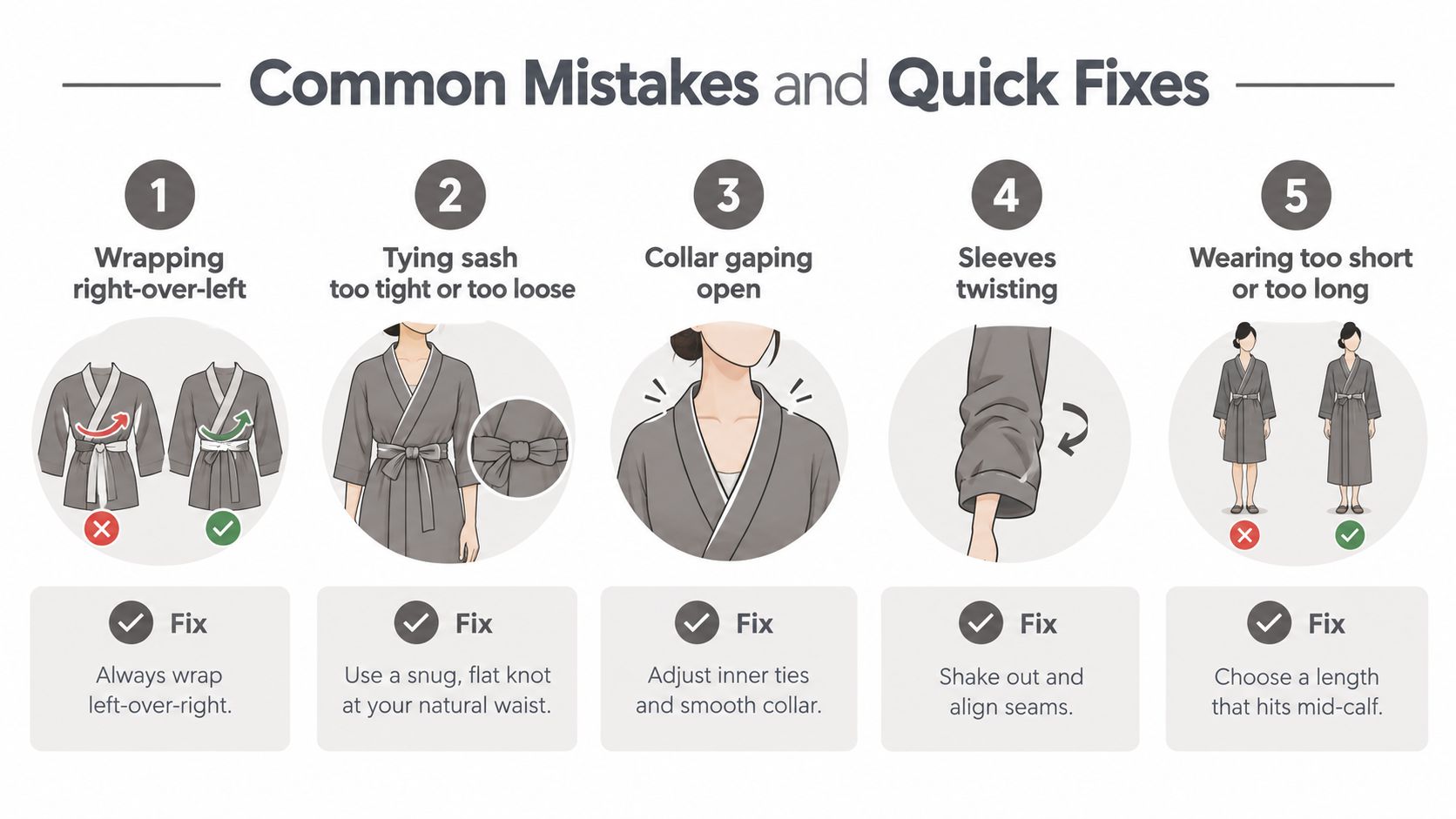
The etiquette of a casual robe is softened, but the underlying habits still help. Correct overlap, a clean collar, a controlled hem, and a flat sash show care for the garment and make the robe more comfortable to wear.
Final Checklist and Care Notes
Use this sequence whenever the robe feels uneven:
- Center the collar across the back of your neck.
- Set the hem at ankle level or mid-calf, with clear space above the floor.
- Bring the right panel across first.
- Wrap the left panel over the right.
- Square the collar so the V sits neatly below the collarbone.
- Tie the sash at the natural waist, snug enough to hold without restricting.
- Settle the sleeves at the wrist, or push them to mid-forearm for tasks.
Care depends on the fiber and finish. Cotton and linen can generally be machine-washed cold and tumble-dried low, but always check the garment label before using heat. Silk and satin need cooler, gentler treatment, usually hand washing or dry cleaning according to the care instructions. Terry cloth benefits from a vinegar rinse when appropriate for the garment, helping the loops remain soft and fluffy without relying on heavy fabric softener.
Storage affects the robe's shape as much as washing does. Hang a structured robe on a wide padded hanger to protect the shoulder seams. Fasten inner ties before folding so they don't tangle or pull against the outer sash. Store delicate pieces away from direct light and use cedar blocks in the closet rather than compressing the robe beneath heavy clothing.
For a fuller routine, follow this guide to washing, storing, and caring for your robe. Proper storage preserves the belt knot shape and hem drape, so the robe keeps the silhouette you created instead of developing permanent creases in the wrong places.
SEYANTE offers kimono-style, waffle, terry, hotel-grade, hooded, and maternity robes for everyday self-care, gifting, and hospitality use. Browse the SEYANTE collection to choose a robe whose fabric, sleeve shape, and hem length fit the way you plan to wear it.