Luxury Waffle Bathrobe Guide for Everyday Spa Comfort
- Introduction to the Luxury Waffle Bathrobe Experience
- What Makes Waffle Weave Feel Luxurious
- Waffle vs Terry Choosing the Right Texture for Your Routine
- Weight Seasonality and Travel Considerations
- Sizing Fit and Styling Your Waffle Robe
- Care Guide to Keep Waffle Soft and Structured
- Finding Your Perfect Luxury Waffle Bathrobe
You've just stepped out of a warm shower, your skin is still damp, and the robe hanging behind the door looks inviting. The question is whether it should dry you, replace your towel, or give you a comfortable layer while you make coffee. That small distinction determines whether a luxury waffle bathrobe feels perfectly suited to your routine or slightly disappointing.
A waffle robe has a raised grid texture, a light hand, and an open structure that lets air move through the fabric. Compared with a dense terry robe, it usually feels less bulky, more breathable, and easier to pack. Its appeal isn't limited to appearance. The weave connects directly to how the robe handles moisture, warmth, laundering, and everyday movement.
Waffle fabric also has a meaningful textile history. The concept traces back to traditional Middle Eastern and Mediterranean textiles, while Turkish textile traditions influenced later absorbent bathing fabrics. Commercial development accelerated in the late nineteenth century, and waffle bathrobes and blankets became common adaptations around the 1920s, according to documented bath-textile history.
Introduction to the Luxury Waffle Bathrobe Experience
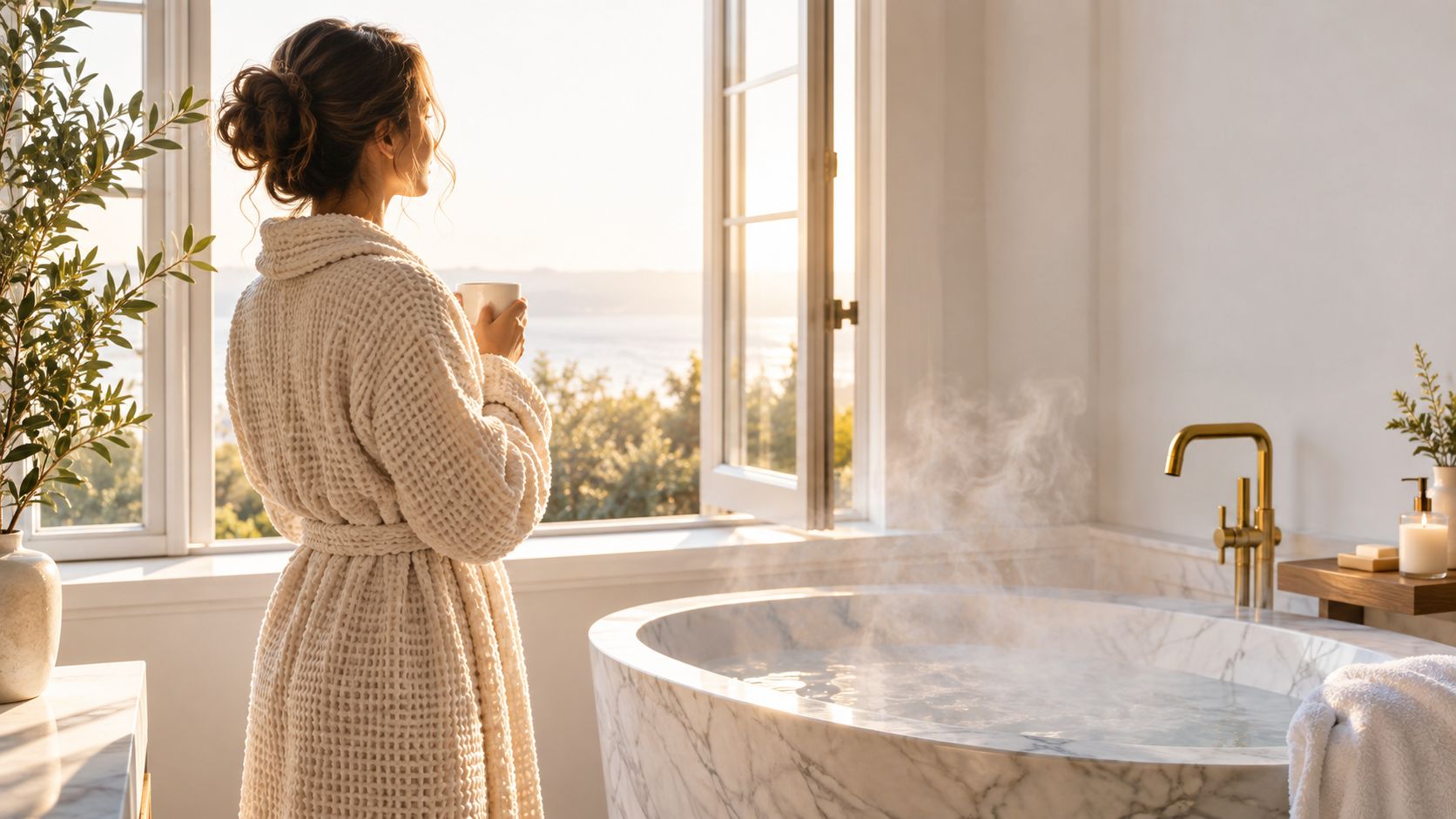
A good waffle robe changes the feeling of a post-bath routine without trying to behave like a giant towel. You towel off first, pull the robe around your body, and notice that it settles lightly across your shoulders instead of hanging with the dense weight of soaked terry. The texture feels gently structured, almost like a soft honeycomb, while the silhouette gives you room to move from bathroom to bedroom.
That makes the luxury waffle bathrobe especially appealing for people who want comfort without overheating. It works well after a morning shower, during a slow skincare routine, beside a hotel pool, or over sleepwear on a relaxed weekend. The surface looks polished enough for a spa setting, yet the fabric remains practical for frequent use.
The wider bathrobe category provides a substantial commercial backdrop for this style. One market report values the global bathrobe market at USD 4.2 billion in 2025 and projects USD 6.5 billion by 2034, with an implied 4.89% CAGR from 2026 to 2034. Another estimates USD 4,240.00 million in 2025, rising to USD 5,876.28 million by 2031, at a 5.59% CAGR during 2026 to 2031. These projections appear in independent bathrobe market coverage.
Start with the robe's job
Before choosing color, collar, or trim, decide what you expect the garment to do.
- Dry the body: Choose a robe with meaningful absorbency, but remember that waffle performs differently from a towel.
- Layer over a towel: This is the classic waffle use. Dry yourself first, then use the robe for coverage, airflow, and lounging.
- Replace a towel: A denser terry construction is generally better suited to this task because its loops hold more water.
This guide follows that practical order. You'll learn how the waffle grid creates its characteristic feel, where terry has the advantage, how weight changes with climate, and which fit and care details preserve the robe's comfort.
Practical rule: Buy the robe for the routine you'll repeat, not the product photograph you'll admire.
What Makes Waffle Weave Feel Luxurious
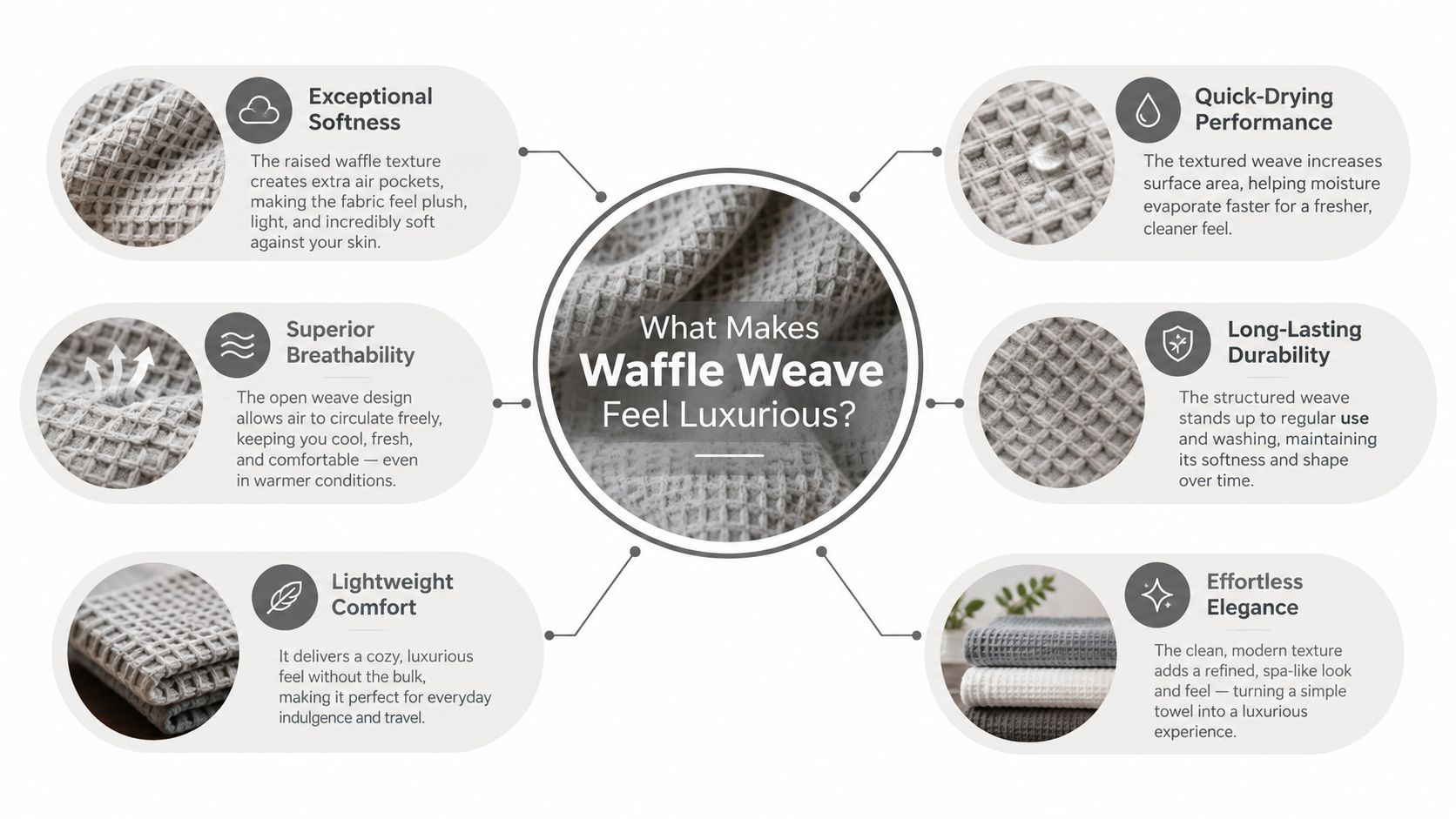
Think of waffle weave as a fabric made of small valleys and raised ridges. Like the pockets in a breakfast waffle, those recessed squares create space between parts of the yarn structure. That space gives the material more exposed surface and allows air to circulate through the robe.
The structure matters in four connected ways:
- The grid increases surface area. More exposed texture gives moisture room to spread across the fabric rather than remaining in one concentrated spot.
- The recesses hold air. Air pockets help the robe feel breathable instead of dense and sealed against the skin.
- The open construction supports airflow. Air can move through the texture, which helps the garment release moisture during drying.
- The raised pattern adds visual depth. Even a simple cotton robe looks more refined when light catches the alternating ridges and squares.
This explains the distinctive sensory balance. A luxury waffle bathrobe can feel soft without being fluffy, crisp without being rough, and substantial without becoming cumbersome. The fabric has a little visual architecture, so it drapes more like a considered garment than an oversized bath towel.
Why cotton works so well
100% cotton waffle is prized because cotton combines skin-friendly comfort with breathability and moisture handling. Independent textile guidance describes cotton waffle as highly absorbent, while its open structure supports moderate-to-fast drying by improving airflow. The same guidance places many hospitality waffle robes around 220 to 320 GSM, a range that keeps the garment relatively light while preserving a satisfying sense of substance. Those material properties are outlined in this cotton waffle fabric guide.
GSM means grams per square meter. You can think of it as a fabric-density clue rather than a complete quality score. A higher figure generally means more material in the robe, but construction, cotton quality, finishing, and fit still shape the final experience.
A waffle robe's luxury comes from balance. The grid catches a little moisture, spreads it across channels, and lets air reach more of the surface. Terry's loops can take on more total water, but waffle often makes more sense when you want a robe that feels light and becomes ready for its next use without the same dense, damp sensation.
Waffle vs Terry Choosing the Right Texture for Your Routine
The simplest decision is this: waffle is usually a breathable layer, while terry is closer to a wearable towel. Neither texture wins every situation. The right choice depends on what happens immediately before you put the robe on.
If you dry thoroughly with a towel, waffle gives you a light covering for skincare, breakfast, or getting dressed. If you want the robe to absorb water straight from your skin after a bath, terry's looped pile has the clearer advantage. Terry retains more total moisture, while waffle tends to release moisture more readily because air moves through its grid.
Waffle vs Terry at a Glance
| Feature | Waffle Weave | Terry Cloth |
|---|---|---|
| Primary job | Layering, lounging, and light moisture pickup | Drying the body and holding more water |
| Texture | Structured, crisp, and honeycomb-like | Plush, looped, and cushioned |
| Weight | Generally lighter and less bulky | Generally denser and heavier |
| Absorbency | Good initial pickup, with lower total capacity | Higher total water capacity |
| Drying behavior | Moderate-to-fast because the open grid supports airflow | Slower because dense loops retain moisture |
| Warmth | Breathable and comfortable in warmer rooms | More insulating in cool rooms |
| Travel feel | Packs more easily and takes less space | Bulkier in a suitcase |
| Visual character | Modern spa or kimono styling | Classic hotel or cocooning comfort |
The key tradeoff is absorbency versus drying speed. Raised waffle ridges and recessed channels can spread liquid quickly across the surface, but terry loops store more water overall. Practical sourcing guidance discusses this distinction and recommends treating waffle as the lighter, faster-drying option when total towel capacity isn't the priority. You can explore the same decision in this waffle versus terry robe comparison.
Match texture to a real moment
Choose waffle if you often:
- Shower, towel off, and then move around the house.
- Live in a warm or humid climate.
- Visit spas, saunas, pools, or fitness spaces.
- Pack a robe for travel and want less bulk.
- Prefer a clean kimono line over a plush wraparound feel.
Choose terry if you often:
- Put the robe on while your skin is still noticeably wet.
- Get cold easily after bathing.
- Want maximum warmth for slow winter mornings.
- Prefer a thick, cushioned texture.
- Expect one garment to handle both drying and lounging.
A mixed household may reasonably use both. The waffle robe can serve morning and travel routines, while terry handles cold evenings or a bath where towel replacement matters more than quick drying.
Weight Seasonality and Travel Considerations
Fabric weight becomes useful when you connect it to your surroundings. A robe that feels pleasantly airy in a warm bathroom may seem too light in a chilly bedroom. Conversely, a thick robe can feel comforting in winter but cumbersome after a workout or inside a suitcase.
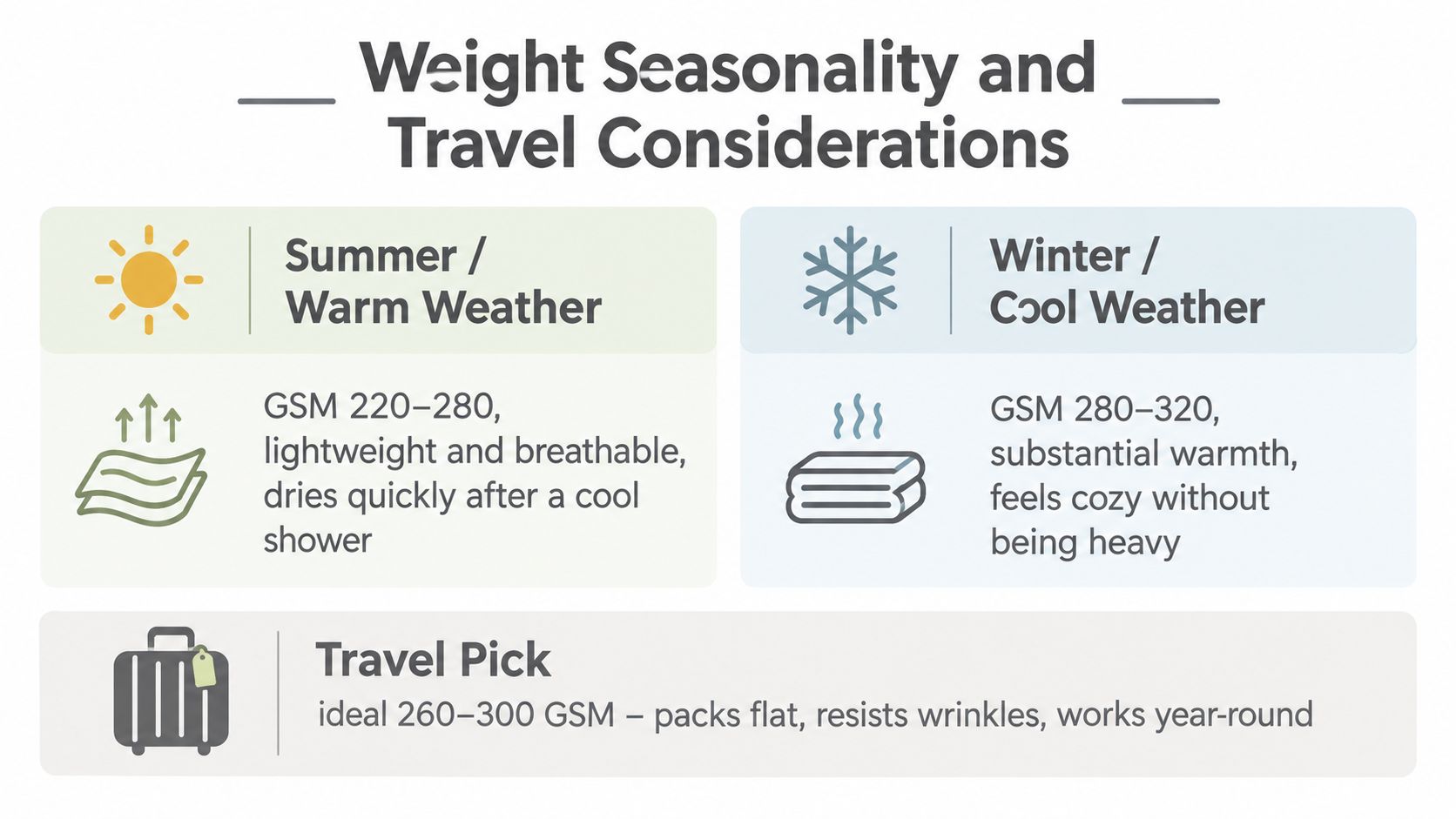
Hospitality guidance commonly specifies waffle robes around 220 to 320 GSM, according to sourcing information on cotton waffle fabric. That range is popular because it offers enough body to look and feel premium while remaining manageable for warm climates, spas, and repeated laundering.
Read GSM as a comfort direction
A lower-weight waffle robe tends to suit warm rooms, summer mornings, and people who dislike heavy layers. A robe toward the upper end of the common range gives you more substance and modestly greater insulation, without automatically becoming a plush winter robe.
For cool weather, the most flexible approach is layering. Wear the waffle robe over pajamas or a lightweight base layer rather than choosing excessive fabric weight solely for occasional cold mornings. In warm weather, let the weave do the work. Air circulation matters as much as the robe's thickness.
Build a travel-friendly routine
Travel exposes the practical strengths of waffle. The robe folds with less bulk, works as a cover-up after a shower, and can be easier to refresh between uses when you have limited hanging space. Pack it near sleepwear rather than at the very bottom of the suitcase, so you can use it immediately after checking in.
A robe around the middle of the hospitality weight range often offers the most adaptable compromise for travel. It won't provide the deep insulation of dense terry, but it can work across seasons when you add or remove the layer underneath.
If you're assembling a broader sleep and recovery kit for a trip, a SleepHabits eye mask guide can help you think through compact comfort accessories alongside your robe.
For shoppers focused specifically on ease of movement and packability, this lightweight robe guide offers a useful companion perspective. The main test remains personal: hold the robe, consider your climate, and ask whether you'll wear it damp after bathing or dry after toweling.
Sizing Fit and Styling Your Waffle Robe
A waffle robe should feel relaxed, but relaxed doesn't mean shapeless. The shoulders should sit comfortably without restricting your arms, the sleeves should allow movement, and the belt should close securely without forcing the front panels to overlap awkwardly.
Start with the brand's measurement chart rather than relying only on your usual clothing size. Robe sizing often allows more ease than a shirt or dress, but the amount of ease varies by cut. Compare your body measurements with the garment's listed chest, hip, sleeve, and length details when available.
Choose the silhouette first
A kimono collar creates a clean line. It lies flat around the neck and works well for warm climates, minimalist styling, and layering over sleepwear. A shawl collar gives the upper body more visual softness and can feel cozier around the neck, especially when you lounge in cooler rooms.
Length changes the robe's purpose:
- Above-knee or knee length: Easy to move in, practical after a workout, and comfortable for warm weather.
- Mid-calf length: A balanced option for home spa routines, offering coverage without the full sweep of a long robe.
- Long length: More enveloping and visually dramatic, though it can feel less convenient on stairs or while packing.
Belt placement deserves attention. A belt that sits at your natural waist creates shape and helps the robe stay closed. If it lands too high, the robe can pull across the chest. If it sits too low, the front may loosen as you walk.
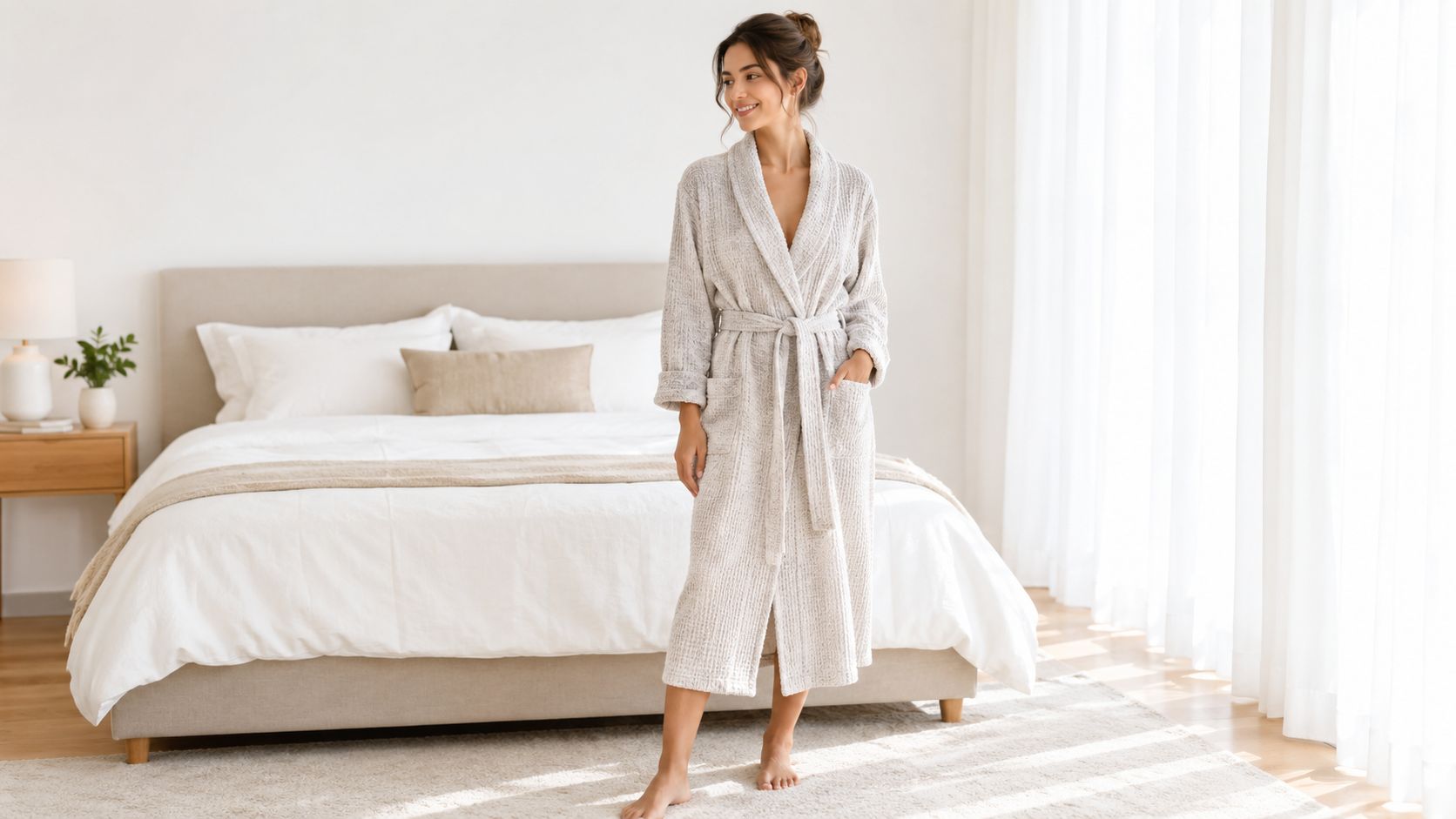
Style the texture with intention
Waffle already provides pattern, so simple colors tend to look especially polished. White, stone, soft gray, muted green, and warm earth tones reinforce the spa association without making the robe feel sterile. For couples, coordinated neutrals can look intentional without requiring identical cuts.
For bridal parties or gifting, matching color families often feel more refined than forcing every person into the same silhouette. A kimono cut suits a crisp getting-ready photograph, while a longer wrap creates a softer, more relaxed mood.
If you plan to wear the robe over thick pajamas, choose enough room through the chest and hips rather than sizing only by sleeve length. If you'll wear it over bare skin after a shower, prioritize the hand of the fabric, seam comfort, and how securely the belt closes.
Care Guide to Keep Waffle Soft and Structured
The waffle grid is both the robe's visual signature and part of its performance. Care should protect the shape of that grid, preserve cotton's absorbency, and prevent the fabric from becoming stiff through excessive heat.
Read the garment label first, especially if the robe includes contrast trim, embroidery, or a blended component. For a standard cotton waffle robe, a gentle wash and controlled drying routine is usually the safer starting point than a harsh, high-heat cycle.
Wash with the weave in mind
Use a mild detergent and avoid packing the machine too tightly. The robe needs room for water to move through the pockets and for the textured surface to rinse clean. Washing similar colors together helps protect pale waffle fabric from dulling and reduces friction from heavy garments with zippers or rough fasteners.
Avoid treating fabric softener as a shortcut to luxury. Coating the fibers can interfere with moisture handling, leaving a robe that feels slick but performs less naturally. Skip bleach unless the care label specifically permits it, because strong additives can weaken fibers and alter color.
For a first wash, expect the texture to settle into its finished character. Don't judge the final hand while the robe is still saturated or pressed flat in the washer.
Control the drying stage
Over-drying on high heat is a common cause of stiffness and shrinkage in cotton waffle. Practical care guidance recommends low-to-medium tumble drying and removing the robe while it's still slightly damp, then allowing it to finish drying with airflow. That approach helps protect loft, texture, and fit stability, as explained in this waffle fabric care and sourcing guide.
Give the robe a gentle shake before hanging it. This separates compressed pockets and helps the garment regain its drape. Use a broad hanger or a well-supported drying rail so the shoulders don't develop sharp points.
Laundry habit: Slightly damp removal is kinder to the grid than leaving cotton waffle in a hot dryer until every trace of moisture disappears.
For a fuller routine covering washing, storage, and long-term garment handling, consult this robe care guide. Store the robe fully dry, loosely folded or hung in a ventilated space. Don't press it beneath heavy bedding, since prolonged compression can flatten the texture and make the fabric feel less airy.
Finding Your Perfect Luxury Waffle Bathrobe
The best luxury waffle bathrobe is the one that performs the right job at the right moment. If you want a wearable towel, prioritize absorbency and consider terry. If you towel off first and want a breathable layer, waffle becomes the more natural fit. If travel, warm rooms, and frequent laundering shape your routine, the waffle grid's low-bulk structure may matter more than maximum plushness.
Use this final checklist before buying:
- Fiber: Look for clear fiber disclosure, especially 100% cotton when natural breathability and absorbency matter.
- Cotton quality: Turkish cotton is often selected for its smooth, durable feel. Treat the fiber name as one quality cue, not a substitute for checking construction.
- Certification: If organic sourcing is important, look for GOTS-certified organic options and verify that the certification applies to the relevant product.
- Weight: Use GSM to compare substance, then match it to your climate, indoor temperature, and layering habits.
- Construction: Inspect seams, belt attachment, collar finishing, cuffs, and pocket placement. These details affect daily convenience.
- Fit: Compare measurements, not just labels. Check shoulder ease, wrap coverage, sleeve length, and total length.
- Care: Confirm that the recommended washing and drying routine suits your household or hospitality laundry setup.
A waffle towel wrap can complement the robe when you want a more direct post-bath layer. A wrap handles coverage close to the body, while the robe adds sleeves, pockets, and a more complete lounging silhouette. Together, they can create a Turkish-bath-inspired ritual without requiring the robe itself to absorb every drop of water.
For a brand option that offers both 100% Turkish cotton terry and lightweight waffle styles, SEYANTE also provides robes, towel wraps, and related bathing accessories across home, gifting, and hospitality use cases. Choose by routine first, then by weave, weight, fit, and care requirements.
Visit SEYANTE to compare breathable waffle robes, Turkish cotton terry styles, and coordinating towel wraps for your daily routine. Choose the weight and silhouette that match how you dry, layer, travel, and unwind, then make your home spa ritual a comfortable habit.