Long White Robe Guide: Fabrics, Uses, and Fit
You're standing in front of a rack of white robes, comparing pieces that look almost identical until you touch them. One feels thick and towel-like, another has a raised grid, and a third has a smooth, polished surface. The label may mention cotton, GSM, or waffle weave, but it doesn't tell you which robe will dry quickly, stay opaque, survive repeated washing, or look right in bridal photographs.
A long white robe is best chosen as a use-case decision, not an impulse purchase. Fabric structure controls absorbency and drying, length affects coverage and movement, fit determines whether the robe drapes neatly or strains at the belt, and care requirements decide whether the white stays fresh. The right choice for a hotel guestroom may be the wrong one for a warm home bathroom or a bridal party.
What Makes a Long White Robe Worth Choosing
A useful buying decision starts with four questions. What is the robe made from, how heavy is it, how long should it be, and how will it be washed? Those questions matter more than a product photo showing a model in a bright bathroom.
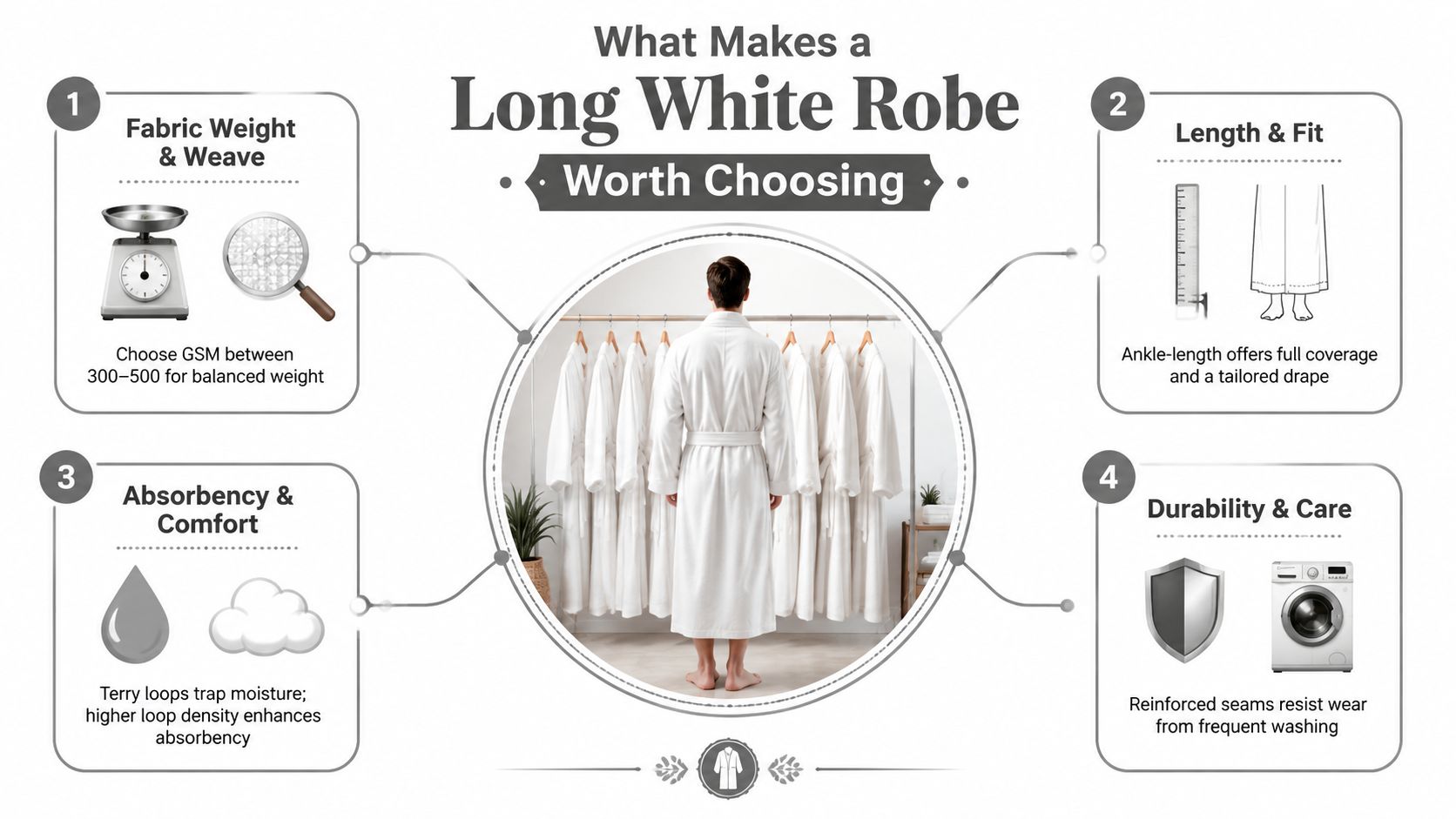
Start with fabric weight and weave
A looped terry robe is built for moisture. Its uncut loops increase surface area and hold water, so the robe feels plush after a shower. A waffle robe uses an interlocking honeycomb structure, which keeps the fabric lighter, more breathable, and quicker to dry. Color doesn't create absorbency. The weave and fabric mass do the work, as explained in this guide to terry cloth structure and GSM.
Then decide how you'll wear it
A full-length robe offers coverage and a more formal silhouette, but it can feel cumbersome on stairs or near a wet floor. A mid-calf cut is easier for everyday movement. For a hotel, spa, or bridal setting, the robe also needs to look consistent across different bodies, so shoulder room, sleeve length, and belt placement matter.
Finally, respect the care routine
White makes stains, makeup, body oils, and detergent residue visible. That's useful in hospitality because staff can inspect the garment, but it also means the owner must follow the care label and avoid practices that damage the weave. A robe that feels wonderful but can't tolerate its intended washing routine isn't a good purchase.
Practical rule: Choose the robe for the hardest job you expect it to perform, not the prettiest moment in the product listing.
Where the Long White Robe Comes From
The long white robe carries two histories that eventually met. In Christian baptism and Easter observance, a white garment has traditionally represented a renewed identity and purity. Newly baptized believers traditionally wear white, and some communities once expected the garment to remain on throughout the Easter season until Pentecost. In clergy use, the garment is commonly called an alb, a loose outer robe designed to be worn over other clothing while emphasizing office rather than body shape. This history of the bathrobe from antiquity to the present helps place the modern garment within a much older robe tradition.
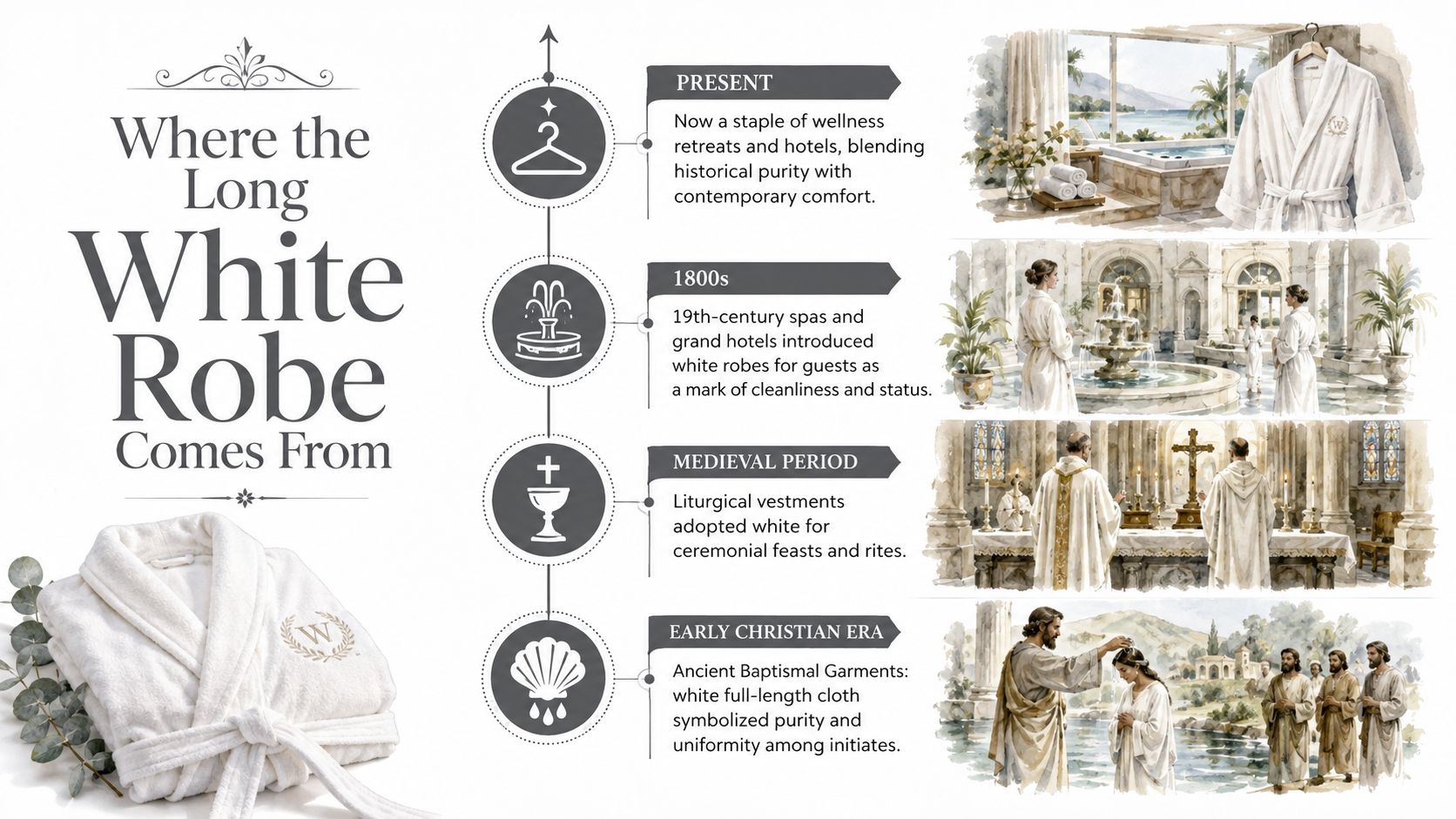
Symbolic clothing became practical clothing
The Christian white vestment connects to older Greco-Roman robe forms and became standardized in Christian liturgy as a simple outer garment associated with baptismal renewal and spiritual cleanliness. Its loose construction also created visual uniformity. The robe covered personal clothing and body shape, making the garment communicate belonging and role rather than fashion.
Modern hospitality adapted a similar silhouette for a different setting. Hotel bathrobes developed alongside modern hotels in the early 1900s, and by the 1950s and 1960s they had become a standard amenity in properties adding spas, saunas, and pools.
Why white became the hospitality default
White suited commercial laundering because operators could bleach it, wash it at high temperatures, and inspect it for stains. Earlier post-bath garments also influenced the hotel robe, including Japanese kimono and yukata and the Ottoman peshtemal used in Turkish baths. These traditions helped establish the long robe as a garment for covering the body after bathing.
The result is a distinctive combination. A long white robe can suggest ceremony, cleanliness, hospitality, relaxation, or preparation for a special event. Its appearance isn't only decorative. The color and silhouette continue to carry both symbolic and operational meaning.
Terry vs Waffle Fabrics at a Glance
A long white robe can serve as a towel, a warm cover-up, or a light layer between treatments. Fabric determines which job it handles well. Terry prioritizes water-holding capacity and plushness, while waffle prioritizes airflow, low bulk, and faster drying.
Quality bath and hotel terry commonly falls around 400 to 600 GSM, while luxury spa-grade terry can reach 650 to 800 GSM. Higher GSM generally produces a thicker, softer robe that holds more water. The tradeoff is extra weight and a longer drying time, which matters in a hotel laundry cycle or a small home bathroom.
Waffle fabric uses a honeycomb structure to create texture without the same dense pile. Lightweight robe examples commonly sit around 230 to 290 GSM. The lower mass suits travel, warmer rooms, bridal-party preparations, and home spas where the robe may be worn over dry skin rather than used to absorb a full shower.
| Attribute | Terry | Waffle |
|---|---|---|
| Surface structure | Uncut loop pile | Interlocking honeycomb texture |
| Primary advantage | Plush absorbency and warmth | Breathability and faster drying |
| Typical quality range | Around 400 to 600 GSM for bath and hotel terry | Commonly around 230 to 290 GSM for lightweight robe examples |
| Wet-feel | Can become heavy after absorbing water | Usually remains lighter against the body |
| Best setting | Hotel rooms, cooler bathrooms, intensive post-shower use | Home spa, travel, warm climates, frequent use |
| Main compromise | Takes longer to dry | Offers less loft and plushness |
| Layer choices | Dense or lighter loop pile | Single-layer or more substantial layered construction |
Cotton terry feels cushioned and substantial. Turkish-style terry can offer a smoother hand while retaining absorbency. Waffle feels more structured, with texture that remains noticeable through the robe.
Choose terry when the robe must manage substantial moisture, such as after bathing in a cool hotel room. Choose waffle when quick moisture release, lighter packing, and easier repeated use matter more. This waffle versus terry robe comparison helps connect that fabric choice to everyday routines.
Length, Hem, and Fit Decisions That Matter
Length changes how the robe behaves. A robe that reaches the ankle offers strong coverage and a more dramatic drape, but a shorter long robe can be safer and easier to move in around a home bathroom.
Match the hem to the setting
For daily home wear, a mid-calf hem keeps more fabric away from the floor. For hotel rooms, spa corridors, and bridal photographs, an ankle-length hem creates the familiar enveloping silhouette. Check the finished measurement rather than relying only on labels such as “long” or “full length,” because those terms vary by manufacturer.
The hem itself affects appearance and durability. A folded, sewn hem looks crisp and formal, while reinforced stitching helps the edge handle repeated laundering. A shawl collar gives a robe a fuller, traditional outline. A kimono collar lies flatter and creates a cleaner visual line, which can suit bridal portraits or minimalist home wear.
| Use Case | Recommended Length | Hem Style | Fit Through Shoulders |
|---|---|---|---|
| Home bathing | Mid-calf to long midi | Folded, sewn hem | Roomy enough to wrap without pulling |
| Hotel guest use | Ankle length | Reinforced sewn hem | Consistent ease for varied guests |
| Bridal photography | Ankle length or a controlled sweep | Clean, polished hem | Relaxed fit that allows posing and movement |
| Home spa lounging | Mid-calf to ankle | Light, neatly finished hem | Comfortable without excessive bulk |
Sleeves should reach the wrist without covering the hand. Through the shoulders, allow enough ease for the fronts to overlap when the belt is tied. A size guide such as this robe sizing reference is useful, but compare its garment measurements with your own shoulder width, sleeve length, and preferred layering.
A robe should close comfortably while you stand, sit, and raise your arms. If the belt only works when you hold your posture perfectly, the fit is too restrictive.
Matching the Robe to the Occasion
A hotel robe, a bridal robe, and a home spa robe may all be white, but they solve different problems. The best choice follows the setting rather than the color.
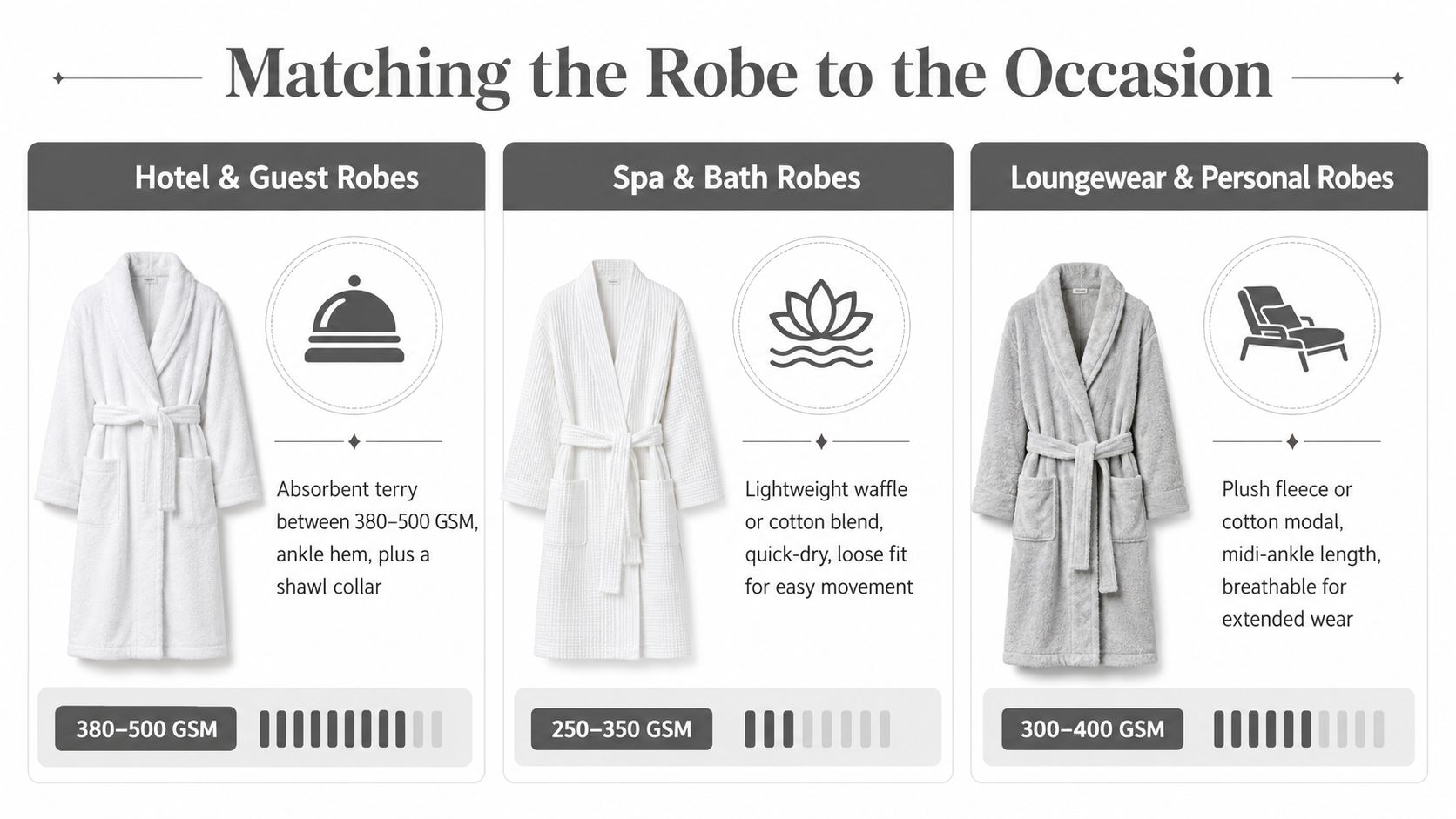
Hotel and guest use
A guest robe needs to withstand frequent laundering, repeated handling, and varied body shapes. Absorbent terry is a logical choice for rooms connected to pools, saunas, or showers. An ankle hem provides coverage, while a self-fabric belt and firmly attached loops reduce the chance of parts disappearing during turnover.
The robe should also look consistent after washing. Inspect collar edges, sleeve cuffs, belt loops, and side seams. A garment intended for hospitality use needs construction that remains presentable, not merely a soft hand on the first touch.
Bridal parties and photography
Bridal robes prioritize appearance, movement, and group coordination. A smooth satin-like alternative, crepe, or lightweight waffle can create a cleaner photographic surface than thick terry. A knee-to-mid-calf cut may be easier for walking, sitting, hair and makeup appointments, and coordinated group images.
Opacity deserves attention here. White fabric can look different under indoor lighting, daylight, and camera flash, so inspect the robe over the underwear or base layer that recipients are likely to wear. A lined front, denser weave, or doubled closure can create a more polished result.
Home spa and extended lounging
A home spa robe sits between the two. Lightweight waffle offers post-shower comfort without the bulk of dense pile, and it can dry more readily between uses. If you'll wear the garment for breakfast, reading, or evening relaxation rather than only for drying off, prioritize breathability and shoulder comfort over maximum absorbency.
Gift buyers should also consider care. A robe with secure seams, a stable belt, and a white fabric suited to ordinary laundering is more useful than a delicate garment that requires special handling. White looks coordinated in a guest suite or wedding package, but it rewards careful construction.
Keeping a White Robe Bright and Clean
White fabric makes care mistakes visible. That's inconvenient when makeup transfers to a collar, but it's helpful when a hospitality team needs to identify stains before a robe returns to service. The washing routine should protect both the color and the fabric structure.
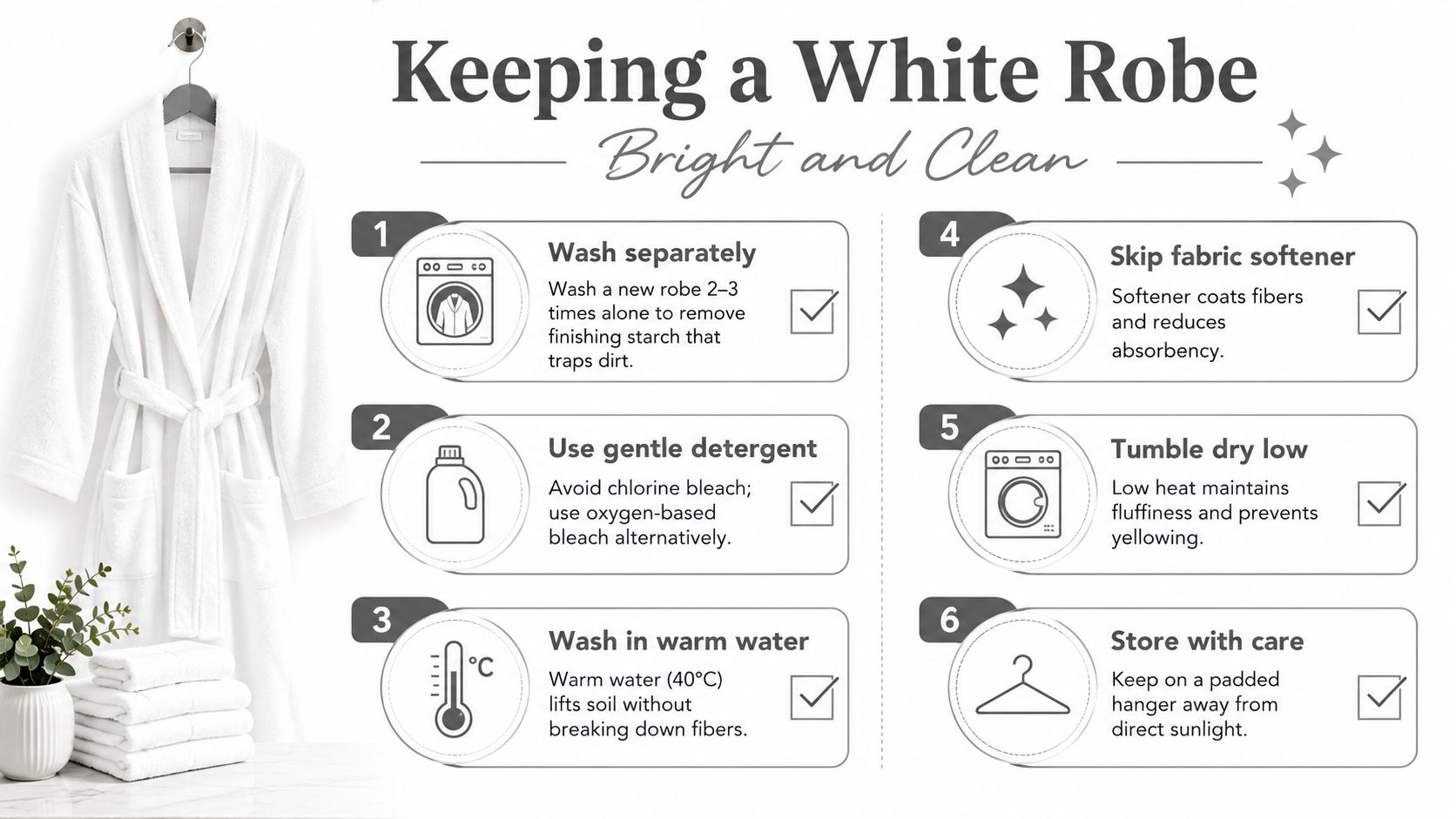
A practical wash sequence
Wash a new robe separately for the first few washes to remove finishing materials that can hold detergent residue. Use warm water, around 40°C, with a detergent formulated for whites. Follow the garment label if it specifies a colder temperature or a different cycle.
Avoid fabric softener on terry. It can coat the loops and reduce the very absorbency that made you choose terry in the first place. If the robe is heavily soiled, an oxygen-based whitening product may be appropriate, but check the care label and avoid treating decorative trims or delicate fibers casually.
- Separate the garment: Keep a new robe apart from colored laundry and lint-producing fabrics.
- Use measured detergent: Excess detergent can remain in dense cotton and make the robe feel stiff.
- Skip routine softener: Preserve terry's open loop structure.
- Dry gently: Use low tumble heat or line dry away from harsh direct exposure.
- Check before storing: Make sure stains have been removed before folding.
- Protect the shape: Fold heavy robes or use a padded hanger rather than a thin wire hanger.
For stains that need professional attention, consult Tumble Laundry's fabric care guidance before applying a strong treatment at home. That's especially sensible for robes containing satin, embroidery, trims, or mixed fibers.
Drying and storage
Dense terry retains more water and may need more drying time than waffle. Don't pack either fabric away while damp, since trapped moisture can create stale odors and encourage discoloration. Store the robe folded in a dry cupboard, or hang it on a broad, padded hanger that supports the shoulders.
Keep the garment away from direct sunlight during long-term storage. Gentle drying and adequate airflow help preserve softness, opacity, and a clean white appearance.
A Simple Buying Checklist
Start with the use case, then work toward the specifications. This order prevents a beautiful but unsuitable robe from winning the comparison.
- Choose the fabric path. Select terry if drying off and warmth are central. Select waffle if you want a lighter robe with more airflow and less bulk.
- Set the length. Pick mid-calf when floor clearance and movement matter. Pick ankle length when coverage, hotel presentation, or bridal styling matters more.
- Read the construction details. Look for a stated GSM, a clear weave description, secure belt loops, and finished seams. If the seller provides no fabric weight, inspect photos and request a measurement before ordering for a group or property.
- Test the opacity. Hold the robe against light and check the front overlap, armholes, and lower panels. White fabric needs enough density to look composed over skin and undergarments.
- Review the wash instructions. A hotel or guest-suite robe must tolerate its real laundering process. A delicate bridal garment may need different handling than a cotton robe used after every shower.
- Confirm the fit range. Compare shoulder, sleeve, chest, and length measurements rather than choosing only by a letter size.
A hotel-grade terry option generally favors substantial fabric and durable finishing, while a bridal or spa choice often benefits from lighter construction. For travel planning, a practical packing checklist such as these Tulum travel tips can also prompt you to consider bulk, drying time, and whether the robe earns space in your luggage.
Quick Questions Buyers Ask First
Will a long white robe be opaque?
Opacity depends on weave density, fabric mass, construction, and layering, not on the robe's white color. A dense terry usually provides more coverage than a very lightweight open weave, but even a heavier robe can reveal more at the front overlap, sleeve openings, or under strong light.
Check the garment against a window or bright lamp. Look at the chest, side seams, hem, and armholes. A doubled front panel, overlapping closure, or tested inner layer can make the difference between a robe that photographs confidently and one that requires careful posing.
What makes a robe suitable for hospitality?
A true hospitality robe must handle more than occasional home use. Buyers should look for absorbent construction, secure stitching, consistent sizing, a belt that stays attached, and a care label compatible with the property's laundering process. White remains useful because commercial teams can inspect it for stains and process it consistently.
Ask whether replacement pieces can be matched later. A guest program needs reliable measurements and repeatable construction, not only a luxurious first impression.
Is a white robe a good gift?
Yes, provided you reduce fit and care risks. Choose a flexible wrap, useful shoulder room, and a fabric weight that won't overwhelm someone who lives in a warm climate. For weddings, coordinated lengths and simple personalization can make the gift feel intentional without compromising movement.
For housewarmings, retreats, or everyday self-care, a mid-weight robe is often more adaptable than an extremely plush one. Check monogram placement before ordering, especially if the recipient may wear the belt tied at different positions.
SEYANTE offers long white robe options in Turkish cotton terry and lightweight waffle, including styles suited to home spa routines, hospitality settings, and gifting. Visit SEYANTE to compare fabric structures, robe silhouettes, and sizing details before choosing the garment that fits your use case.