8 Luxury Bath Ideas for Spa-Worthy Home Retreat
- 1. Freestanding and Ofuro Soaking Baths
- 2. Spa-Style Rainfall Shower
- 3. Curbless Walk-In Shower
- 4. Radiant Heated Floors and Heated Towel Rails
- 5. Natural Stone and Marble Finishes
- 6. Wet Room Design
- 7. Integrated Robe and Towel Station
- 8. Layered Ambient Lighting and Chromotherapy
- How the Eight Luxury Bath Upgrades Compare at a Glance
- Start With One Upgrade and Build the Ritual
The bath can look beautiful and still feel unfinished. You step out of a hot shower into a cold room, reach for a thin towel on a distant hook, and lose the comfort you were trying to create. A spa-worthy bathroom works differently: it carries warmth, calm, and convenience from the moment you prepare the space to the moment you wrap up afterward.
These luxury bath ideas follow that ritual rather than a shopping list of fixtures. Start with the room's warmth and access, choose the surfaces and water features that suit your home, then make the transition back to lounging feel as considered as the bath itself. Each upgrade comes with practical trade-offs, because a striking design still needs to work with your floor, plumbing, electrical setup, and cleaning routine.
You don't need to take on every project at once. Pick the change that solves the most persistent daily annoyance, then build around it.
1. Freestanding and Ofuro Soaking Baths
A primary bath beneath a west-facing window can make a soaking tub the focus of the room. Leave enough space around a freestanding model to clean its sides, and keep the route to the shower and vanity clear. A Japanese-style ofuro is designed for seated immersion. Judge it by interior depth and seat height, then confirm the shape fits the room.
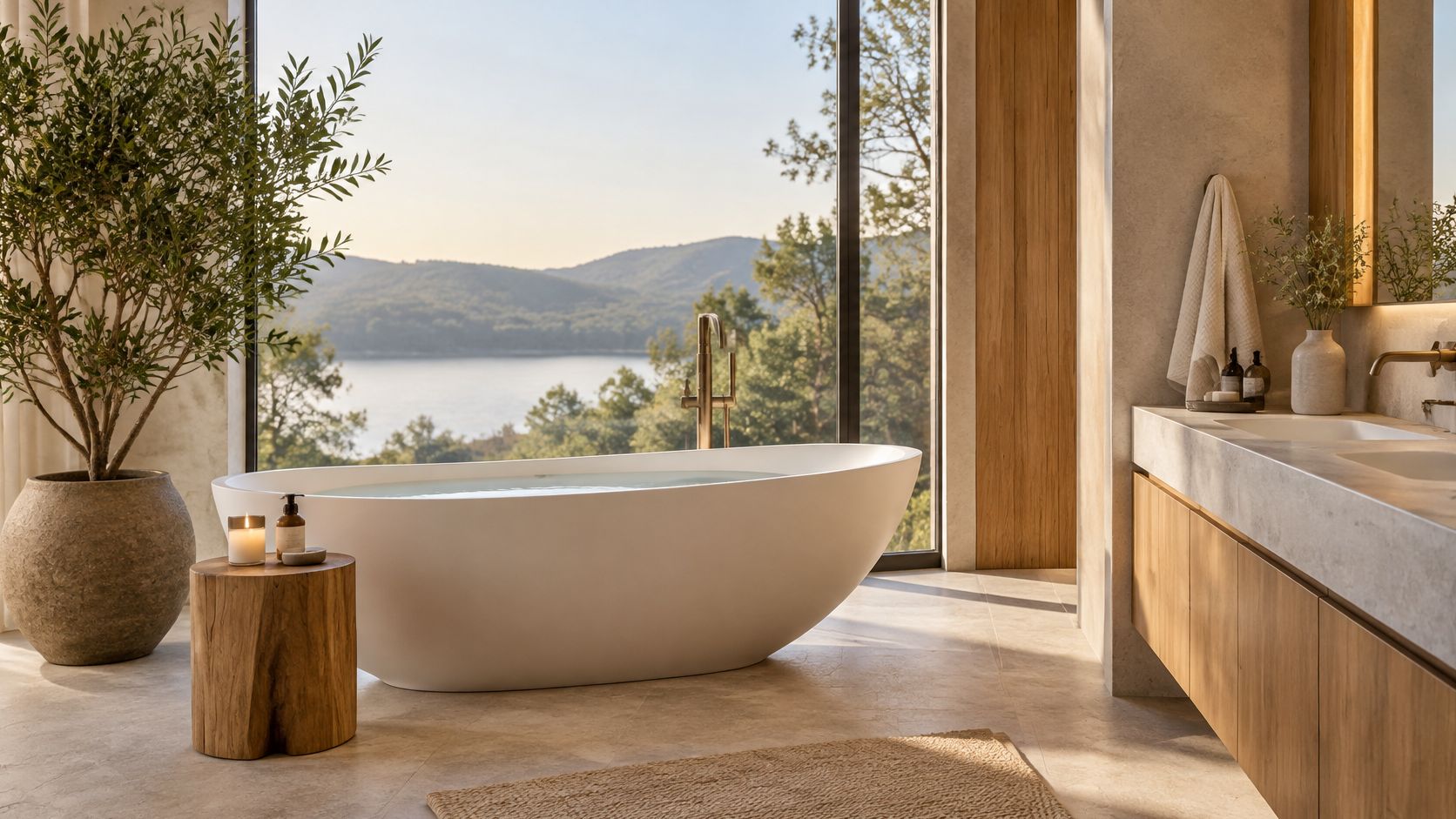
Before you order: Ask a structural professional to confirm the floor can support the tub, water, and occupant. A filled bath concentrates substantial weight in one area, and a visual inspection isn't enough to establish capacity.
If you're planning a tub filler, check its reach and placement against the selected tub before rough-in. A thermostatic filler can help maintain a consistent temperature, but it must suit the plumbing and be installed accordingly. Allow for the required plumbing access as you plan the tub's position.
An ofuro-style routine usually starts with a thorough shower to keep the soaking water clean. Put a robe hook or towel rail within reach of the exit, and choose a comfortable seat or ledge if you expect to sit upright.
Next step: Measure the tub footprint, access path, and cleaning clearance. Have a professional review the floor and plumbing requirements before you buy.
2. Spa-Style Rainfall Shower
A rainfall shower changes the feel of water on your skin, but a large overhead head can't make up for an underpowered supply. Before choosing the fixture, ask a plumber to check the home's available flow and pressure. A thermostatic valve is also worth considering: it helps keep the temperature steady when another fixture draws water, which matters more to comfort than adding multiple spray features.
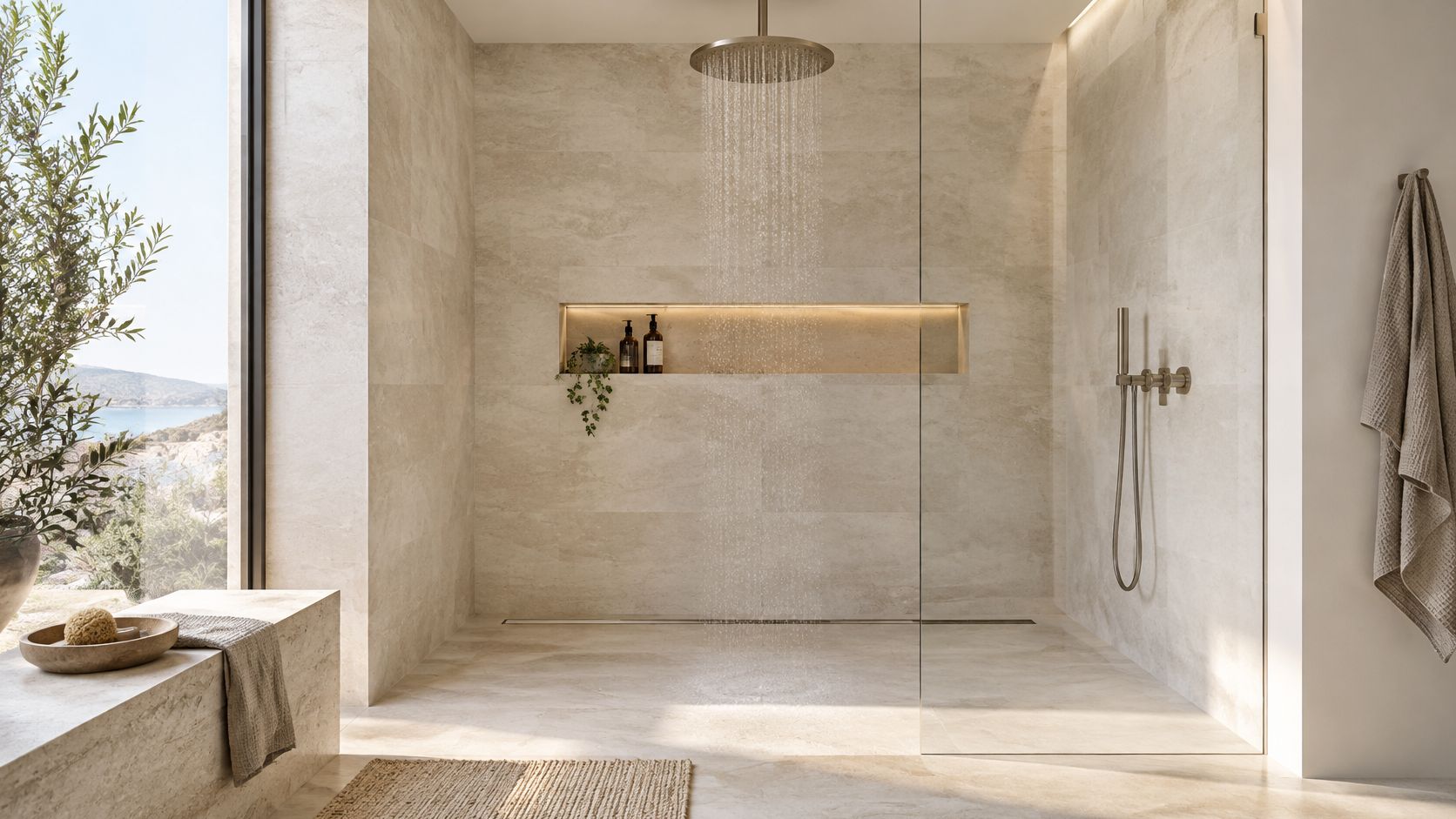
The trade-off is straightforward. A broad overhead spray feels enveloping, but it may use more water than a smaller efficient showerhead, and it doesn't suit everyone's hair-washing or rinsing preferences. A hand shower paired with the rainfall head gives you a useful option for cleaning the enclosure, rinsing hair, or washing a child or pet. For an efficiency benchmark, the EPA's WaterSense bathroom-faucet guidance says labeled faucets use no more than 1.5 gallons per minute, at least 30% below the conventional standard, while maintaining adequate performance. Use certified fixtures where they fit the design, rather than assuming that luxury requires unrestricted flow.
In a daily-use shower, place a recessed niche where you can reach it without stepping out of the spray. A bench can make the space more comfortable, but plan its position so it doesn't block the showerhead or create a water-trapping corner. Mineral deposits can clog the faceplate over time, so choose a model with easy-clean nozzles and wipe it down with a mild cleaner suited to its finish.
Next step: Have the plumber assess water delivery before finalizing the head, valve, and hand-shower combination.
3. Curbless Walk-In Shower
A curbless shower removes the step at the entrance, giving the floor a continuous appearance and making entry easier. It's a useful choice for a household that wants a more accessible bathroom now and fewer barriers later. Houzz's 2025 U.S. Bathroom Trends Study found that 68% of bathroom renovators considered special needs, while 47% were planning for needs expected at least five years in the future. That points to a practical design principle: plan for changing mobility without making the room feel clinical.
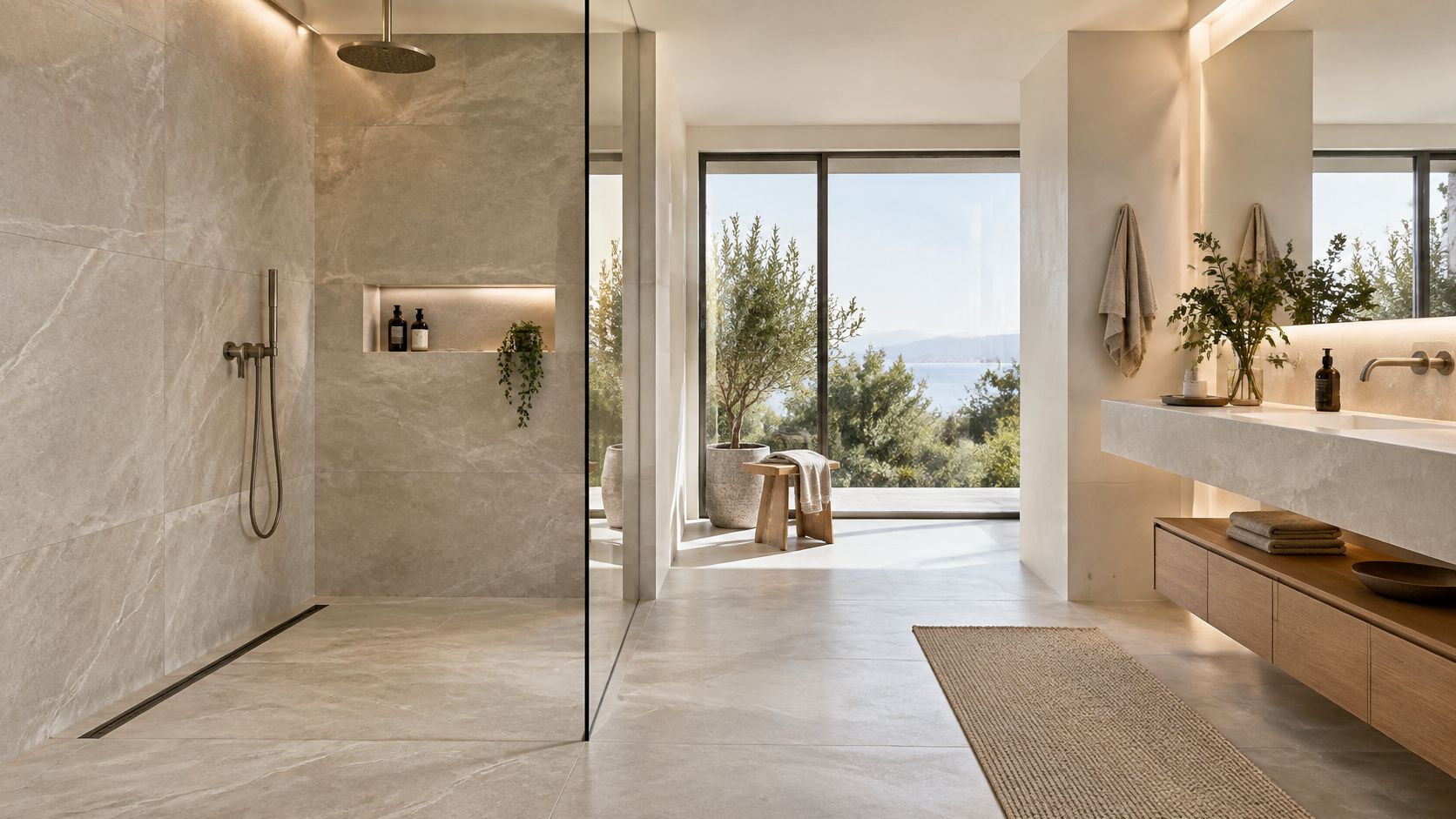
The key trade-off is construction complexity. The floor needs a continuous waterproofing system and carefully formed slope to direct water to the drain. A poor transition or shallow slope can leave standing water beyond the shower zone. Hire an installer experienced with curbless waterproofing, and have the drain location and finished floor height settled before work begins.
For a household planning ahead, combine the flush entry with a slip-resistant floor, a reinforced wall for future grab-bar installation, and a shower seat that looks integrated rather than temporary. A clear opening can also help someone using a mobility aid, but the layout needs enough turning and transfer space to remain usable. Large-format tile can create a quieter look, though the installer must select a tile and layout suited to the floor's slope.
Next step: Ask your contractor to draw the shower floor build-up, drain, slope, and waterproofing details before approving the tile plan.
4. Radiant Heated Floors and Heated Towel Rails
Where the shower sits at one end of the bathroom and the door at the other, a heated towel rail near the exit can make the post-bath handoff to a robe easier. Keep it close to the robe hook, but out of the walking route. Bathroom electrical fittings must suit their location and meet local requirements.
Electric radiant heat must go in before the finished floor. Plan it during a remodel, confirm circuit capacity with an electrician, and use a thermostat with a floor sensor. Test the system before tile covers it. A programmable thermostat can warm the floor around your usual routine instead of leaving it on all day.
For a comfortable layer on the route from the bath to the exit, consider a lightweight robe such as SEYANTE's Women's Lavender Blue Turkish Cotton Waffle Hooded Robe, made from 100% GOTS-certified organic Turkish cotton. Coordinate the robe hook with the towel rail so both are within reach without crowding the path.
Review these bathroom underfloor heating tips for 2026 alongside the electrician's installation plan. Follow the heating product's instructions and local electrical requirements.
Next step: Mark where you'll stand and reach for a towel after bathing, then place the floor heating controls, rail, and robe hook on the plan before electrical work begins.
5. Natural Stone and Marble Finishes
Stone gives a bathroom variation that printed patterns can't reproduce, but its character comes with care requirements. Marble can stain or etch when it meets acidic products, and some stones need sealing to help protect their surfaces. For a vanity top or wall, that upkeep may be manageable; on a busy shower floor, it can be a bigger commitment.
Before committing, look at the actual slabs rather than relying only on a small sample. Veining and color can vary across a large surface, so plan how the stone will be cut and matched at corners or around a tub. A honed or textured finish often gives better traction than polished stone underfoot, though the precise slip performance depends on the tile and installation. On a shower floor, discuss the surface and grout layout with the installer rather than choosing solely for appearance.
A realistic use case is a marble vanity paired with a simpler, durable shower floor. You get the stone's character where it's easy to wipe and maintain, without putting polished marble where wet feet need dependable grip. Clean stone with a pH-neutral product, and follow the supplier's sealing and care instructions. If hard-water deposits cloud a surface, use guidance for restoring cloudy marble surfaces safely before reaching for an abrasive pad or acidic cleaner.
Next step: Take home a sample of your chosen finish and test its look under your bathroom lighting, then ask the supplier for care and sealing instructions in writing.
6. Wet Room Design
A wet room lets the shower and bathroom share an open, waterproofed floor, creating a spacious feel without a separate shower enclosure. It can work especially well when the layout is awkward or when a conventional curb would interrupt the room. But “open” doesn't mean “no planning.” The whole wet zone needs suitable waterproofing, effective drainage, and a clear strategy for controlling splash.
Start by deciding which parts of the room are expected to get wet. A glass screen can keep spray away from the vanity and doorway while preserving the open look. A linear drain along the shower edge can simplify the visual line, but it needs to match the floor slope and waterproofing design. A point drain can work just as well when the floor is shaped correctly. Don't choose a drain by appearance before the installer has confirmed the layout.
Humidity is another trade-off. Because more of the bathroom is exposed to water, specify an exhaust fan appropriate for the room and keep it working after showers to help remove moisture. Heated flooring can make bare feet more comfortable, but it doesn't replace ventilation or careful drying. If the bathroom has timber details, protect them from repeated splashes and prolonged dampness.
Next step: Have the installer map the wet area, screen position, drain, waterproofing, and ventilation before you select finishes.
7. Integrated Robe and Towel Station
A narrow bathroom works with a robe hook beside the shower, an open shelf for folded towels, and a cabinet for spare textiles. Keep the hook clear of the door swing, and leave enough room for a robe to hang freely. Thick terry needs more space to dry than a lightweight waffle weave.
In a larger room, a heated towel rail can warm the daily towel, while a separate hook holds the robe. Either setup needs breathable storage and airflow around damp fabric. A basket or closed cupboard can trap moisture and leave textiles smelling unpleasant.
Choose a robe style that suits the available hanging space, and use this guide to plan a luxury bathroom routine with bathrobes. For organic textiles, check the product's certification and care instructions. SEYANTE's Organic Turkish Terry bathrobes are made from 100% Turkish cotton and are GOTS-certified.
Next step: Trace your route from tub or shower to the bathroom door. Place the robe hook and towel storage within reach, without requiring you to cross a wet floor.
8. Layered Ambient Lighting and Chromotherapy
Lighting should support both practical tasks and a slower bathing mood. A single ceiling fixture often makes the room feel flat and can cast shadows at the mirror. Instead, combine ambient light for general visibility, task lighting at the vanity, and a softer accent near the tub or shower. Put the ambient and accent circuits on dimmers where the fixtures allow it, and use a separate bright setting for grooming and cleaning.
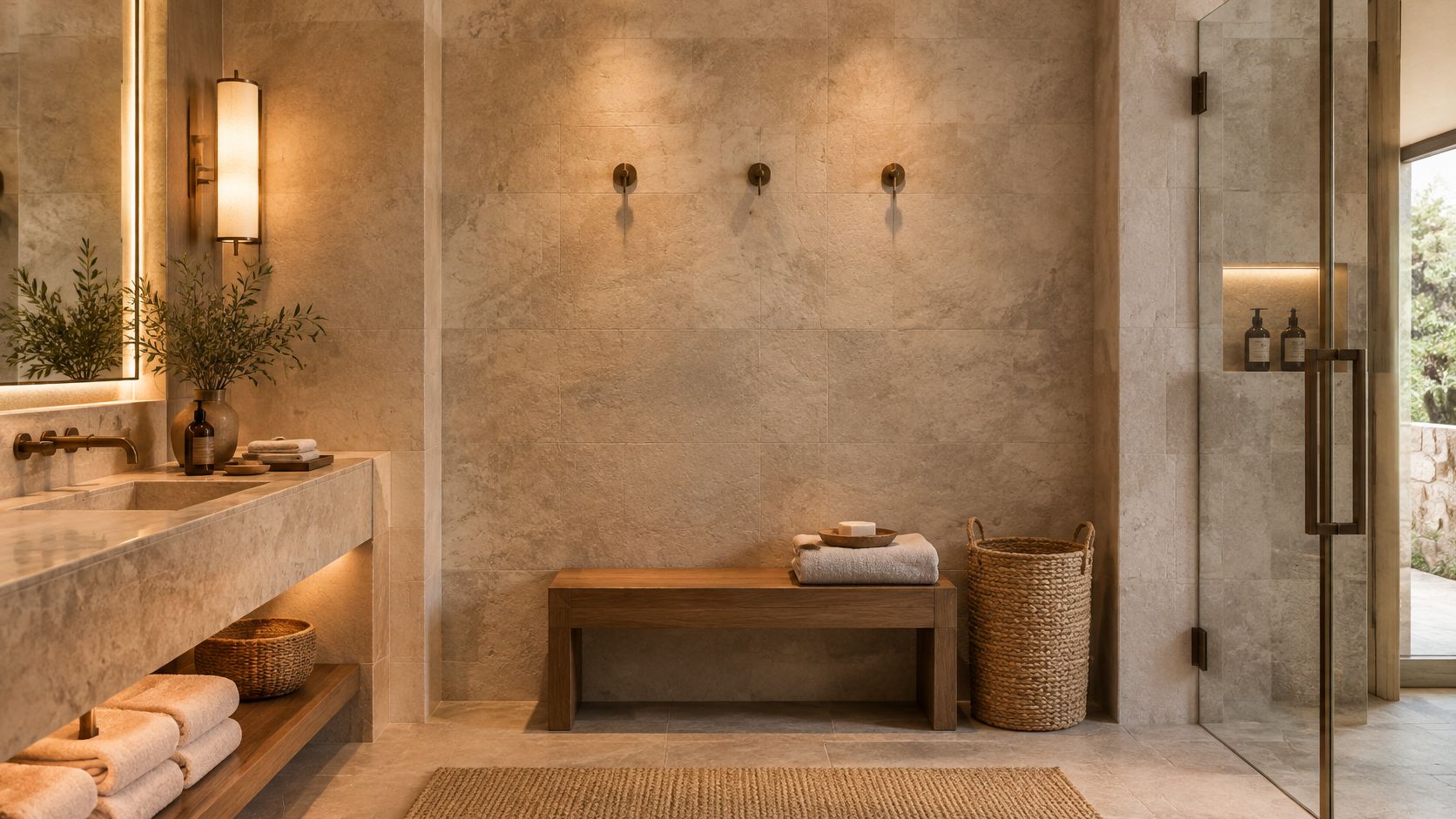
For the mirror, sconces on either side can give a more even light on the face than an overhead source alone. Keep fixtures rated for the damp or wet location where they'll be installed, and have an electrician confirm placement and wiring. Color-changing lighting, sometimes called chromotherapy, is an optional mood feature, not a substitute for dependable white task lighting. If it feels distracting rather than calming, leave it out.
A workable evening scene might use dimmed ceiling light, a soft accent near the tub, and enough task light to move safely around the room. For ideas on making shower lighting practical as well as atmospheric, read this guide to balancing style and function in shower lighting. You can also use spa-inspired ideas for home to think through the wider ritual, not just the fixtures.
Next step: Sketch the light sources and controls on a plan, then ask an electrician to confirm fixture ratings, switching, and dimmer compatibility.
How the Eight Luxury Bath Upgrades Compare at a Glance
Use the bathing ritual to choose what to prioritize: prepare the room before the water, improve comfort during the soak, or make the transition afterward easier. This table highlights the decision each upgrade addresses, rather than repeating material and installation details.
| Upgrade | Choose this if... | Practical trade-off |
|---|---|---|
| Freestanding and Ofuro Soaking Baths | You want soaking to be the main event. | Check the tub's footprint and filled weight against available space and floor support. |
| Spa-Style Rainfall Shower | You prefer a broad, relaxing shower before or instead of a bath. | Confirm that the plumbing can support the shower's water flow and overhead placement. |
| Curbless Walk-In Shower | You want an accessible entry with a flush floor. | The shower floor needs carefully planned drainage and waterproofing. |
| Radiant Heated Floors and Heated Towel Rails | Warmth underfoot or a warm towel would make the routine more comfortable. | Electrical or hydronic work may affect the floor and wall plan. |
| Natural Stone and Marble Finishes | Natural variation and distinctive surfaces matter more to you than minimal upkeep. | Stone surfaces may need sealing and ongoing care. |
| Wet Room Design | You want the bathing area to feel open and connected to the rest of the room. | Water management and professional waterproofing need careful coordination. |
| Integrated Robe and Towel Station | You want towels and a robe within reach when you finish bathing. | Reserve wall space; heated storage also needs electrical planning. |
| Layered Ambient Lighting and Chromotherapy | You want adjustable light for relaxing, grooming, and moving around safely. | Use bathroom-rated fixtures and plan controls and wiring with an electrician. |
Start With One Upgrade and Build the Ritual
You don't need to renovate everything at once. Choose the upgrade that fixes your biggest daily friction: a cold floor, an awkward shower entry, a damp towel, or harsh overhead light. Those small discomforts interrupt the ritual every day, so resolving one of them can make the room feel more considered before you change a single surface.
Build in a practical order. If the shower needs waterproofing or the floor needs to be opened, settle those decisions before you choose decorative finishes. If the plumbing and tile are already sound, a towel station, robe hook, or dimmer may be a simpler place to begin. For a larger project, ask your contractor to coordinate structural review, plumbing, waterproofing, electrical work, and tile installation before fixtures are ordered. A beautiful tub or heated floor can become an expensive frustration if the room isn't ready for it.
Keep textiles in mind as you plan. A warm, breathable GOTS-certified robe or waffle towel wrap, ready on a reachable hook, completes the transition from bath to lounge. SEYANTE's robes are made from 100% Turkish cotton with GOTS certification, and its site includes a robe size chart guide and a bathrobe materials guide. Choose a fit and fabric that suit the way you use the room, whether you want a lighter layer after a shower or a thicker robe for lingering at home.
Care keeps those textiles comfortable. Wash robes on a gentle cycle with cold water and a mild detergent free of harsh chemicals, bleach, or fabric softeners. Air-dry them or use the lowest tumble-dryer heat setting. A robe that dries properly between uses is more pleasant to reach for and easier to keep in good condition.
Start with the change you'll notice on your next ordinary morning or evening. Measure the space, check the installation needs, and make one deliberate improvement. Once that part of the routine works better, you can decide whether the next step is a soaking bath, a warmer floor, better lighting, or a more useful towel station.
SEYANTE offers Turkish cotton robes in terry and lightweight waffle styles, including GOTS-certified options, to make the after-bath routine more comfortable. Explore the SEYANTE collection and choose a robe that suits the way you unwind.