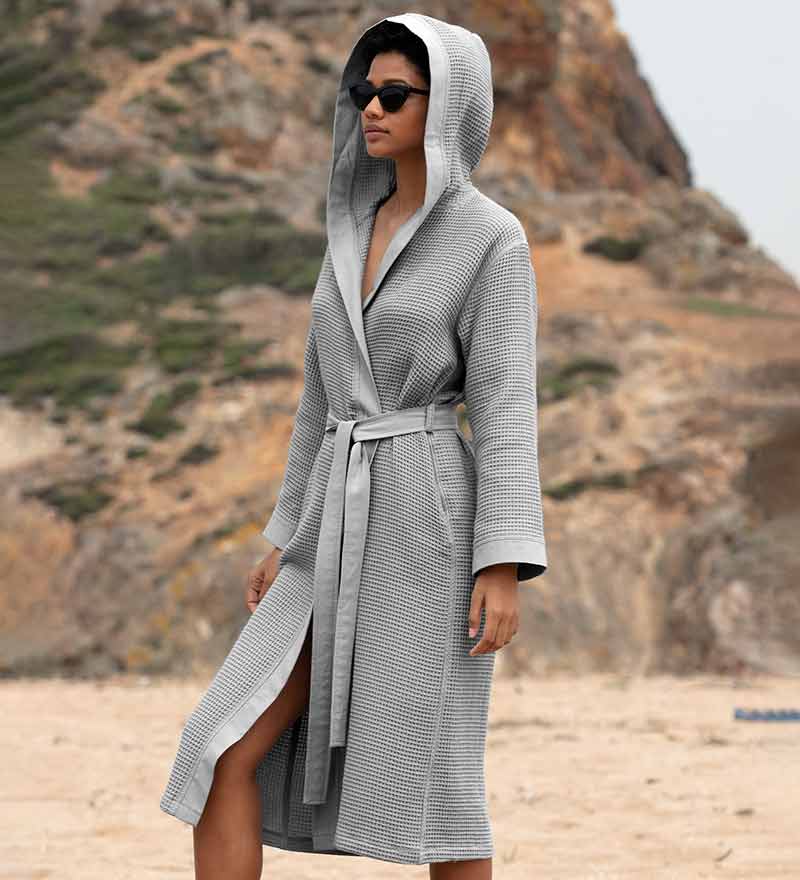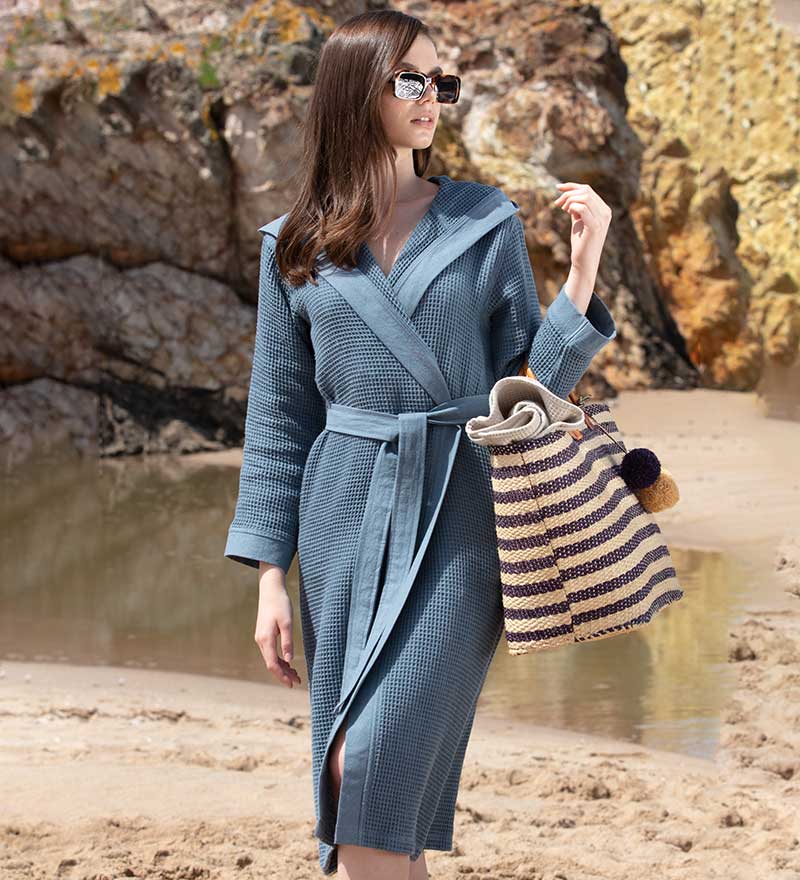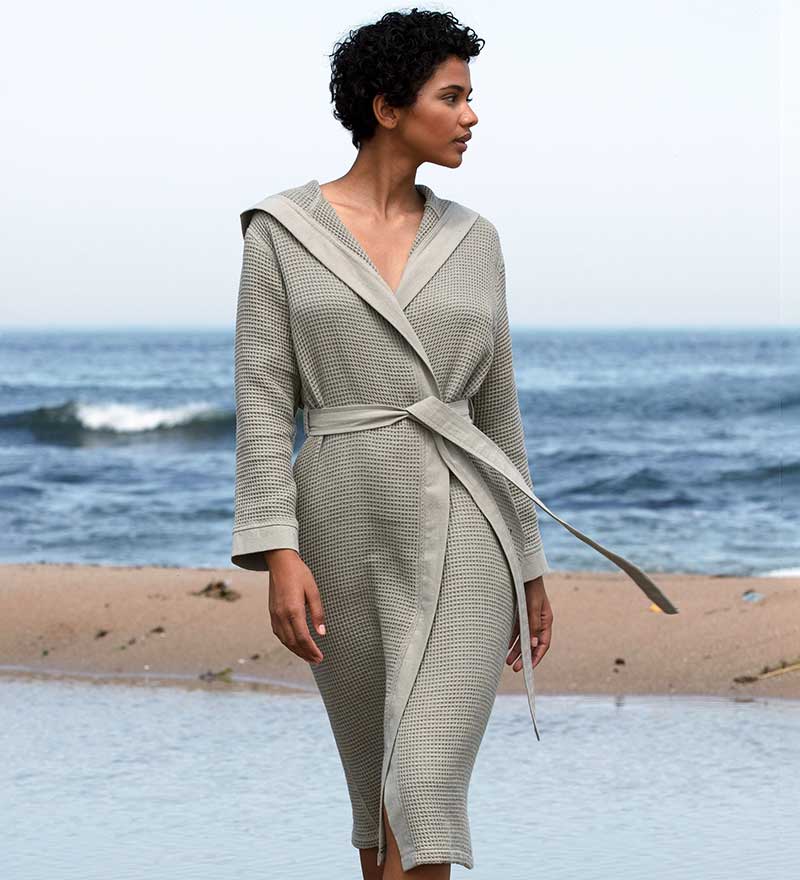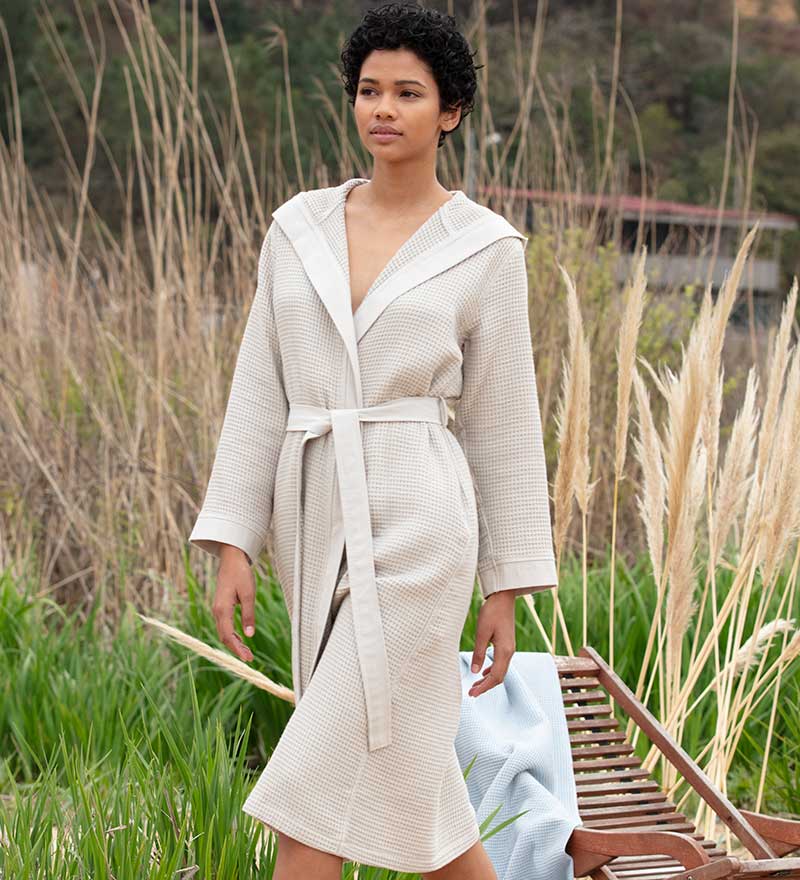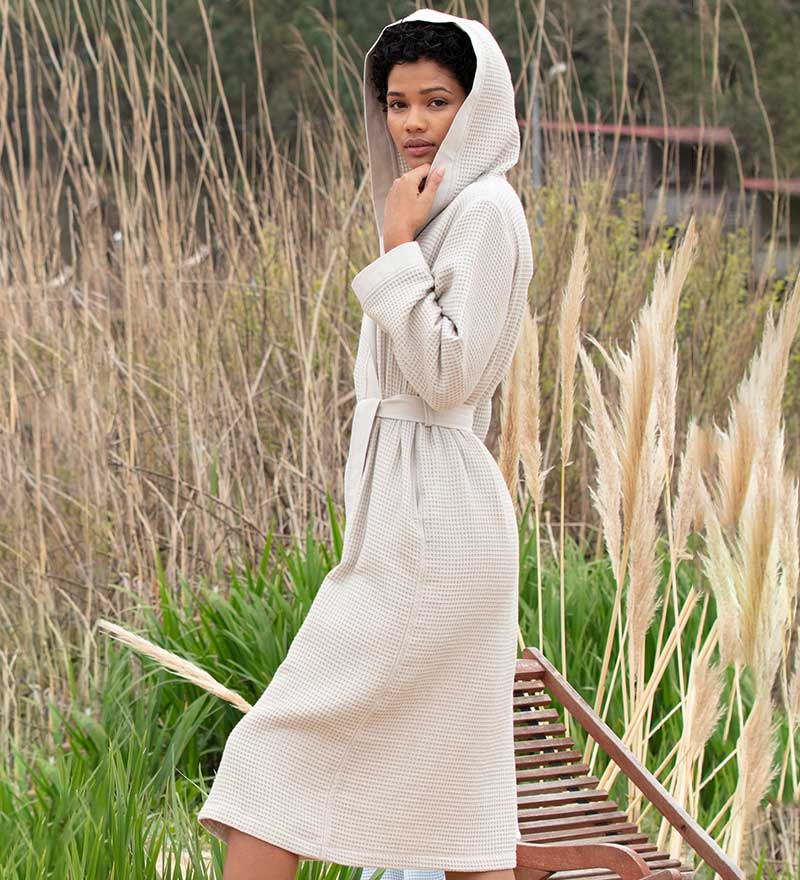



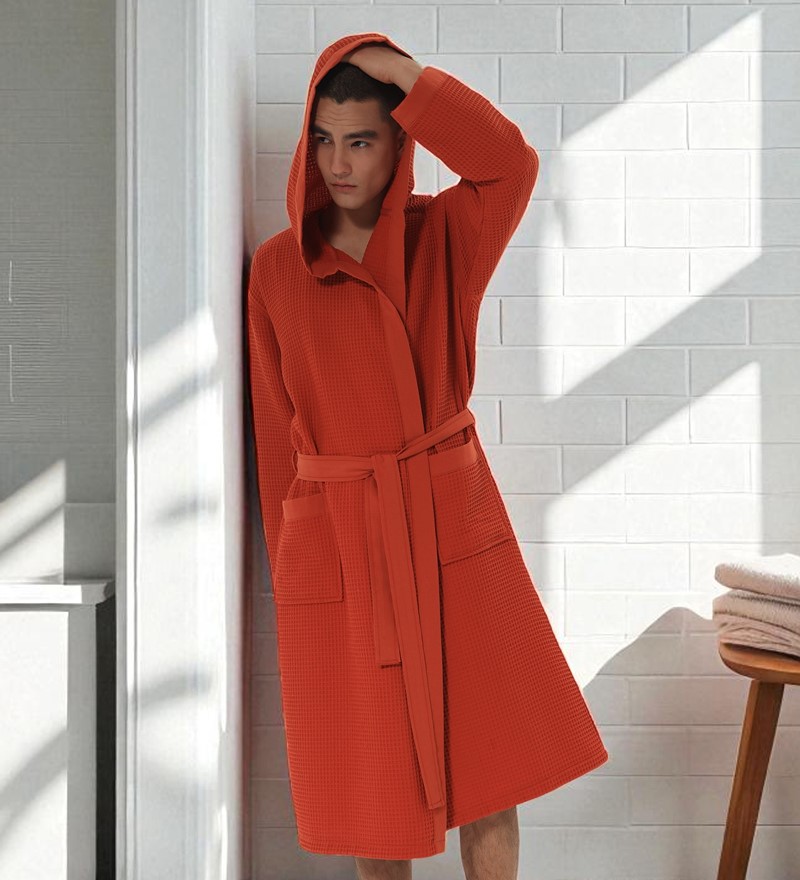
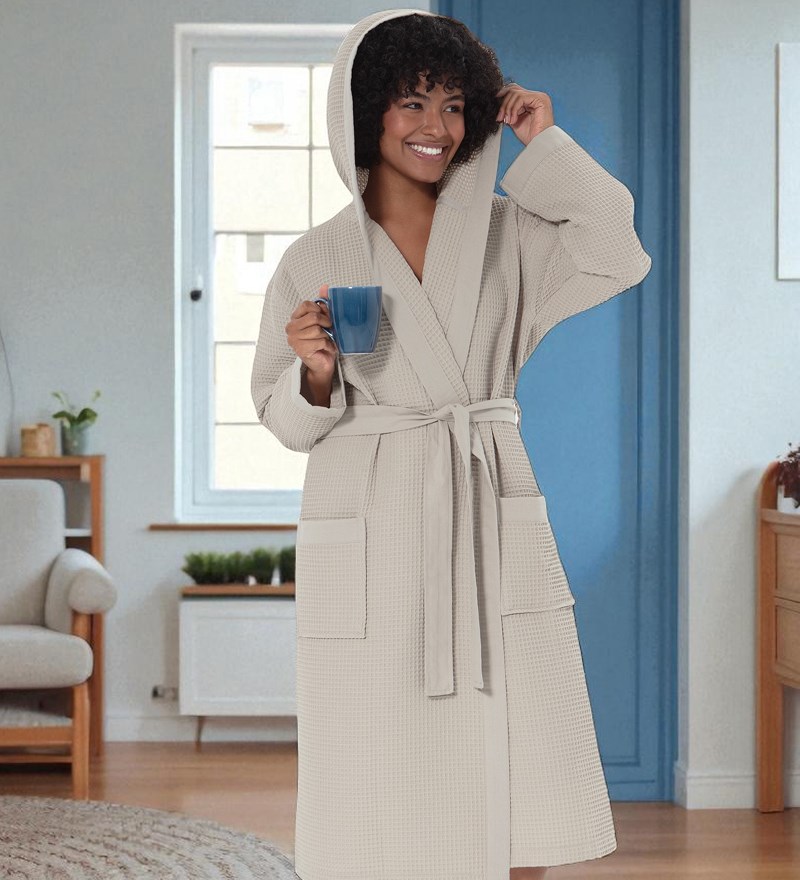
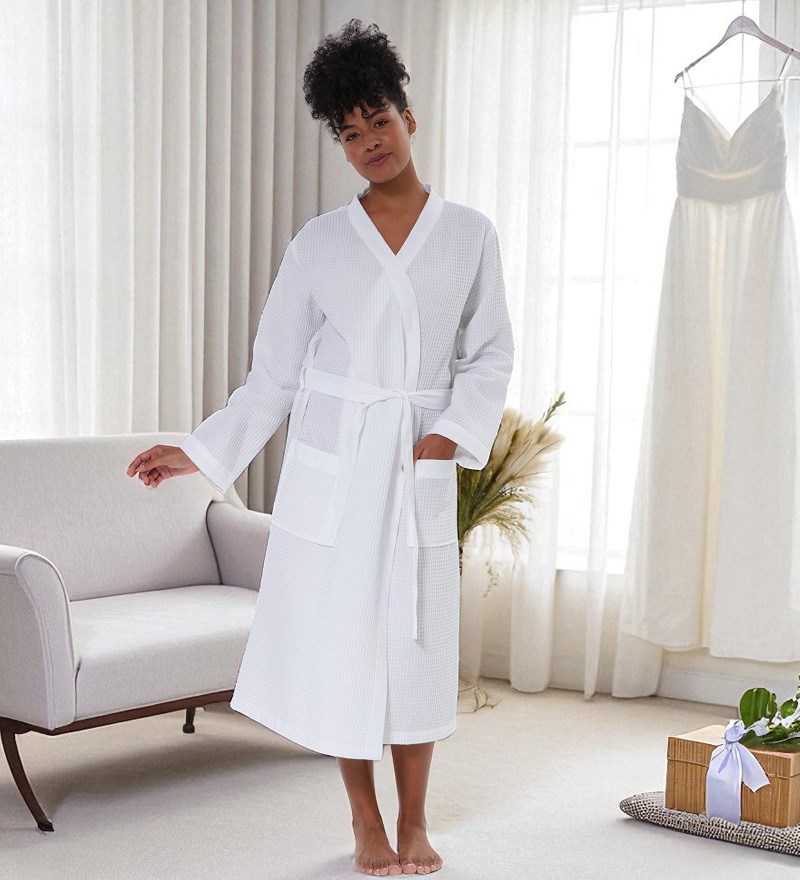
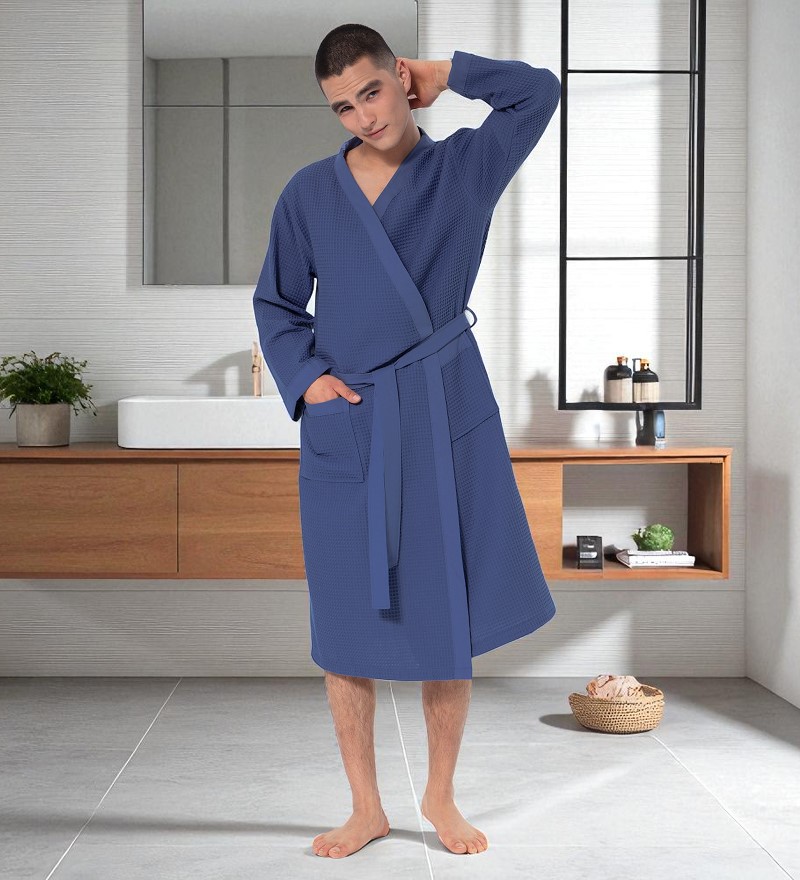
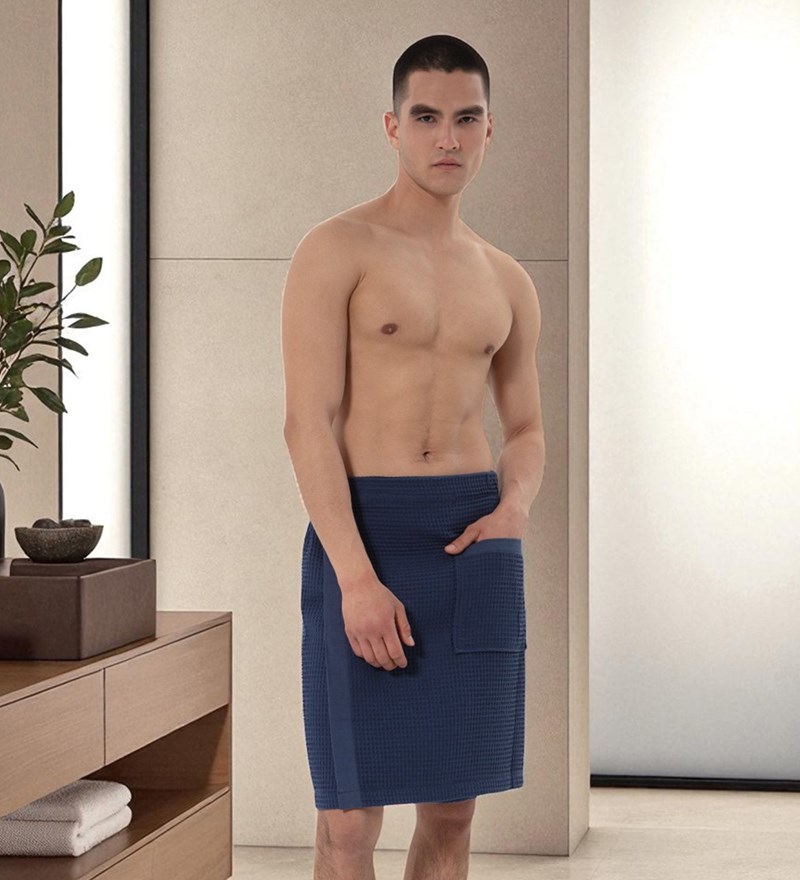
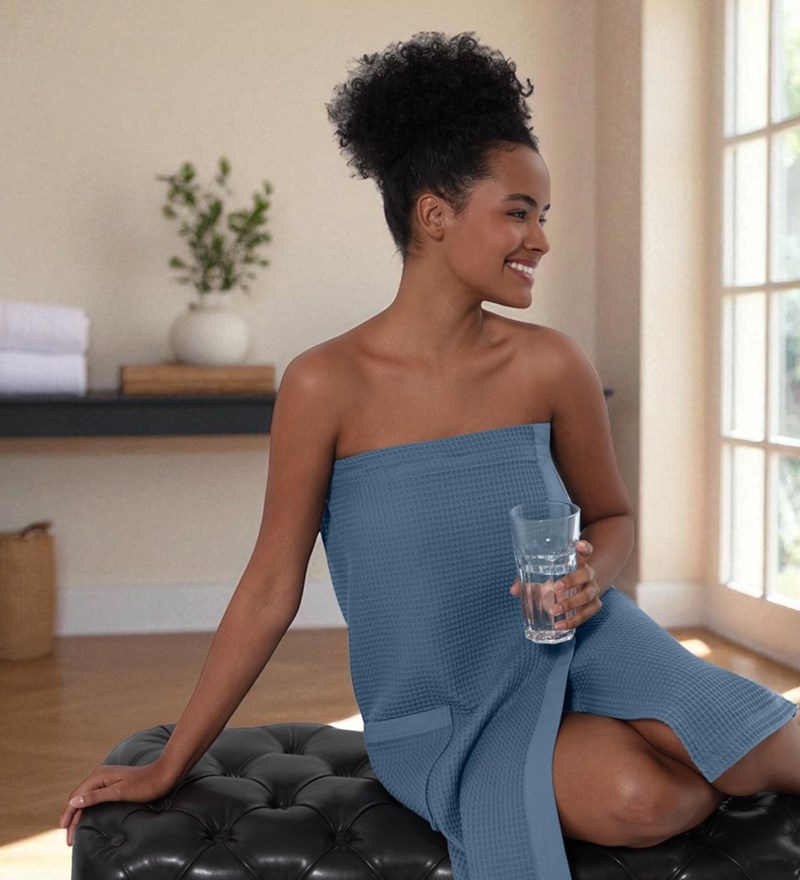


- Waffle Robes
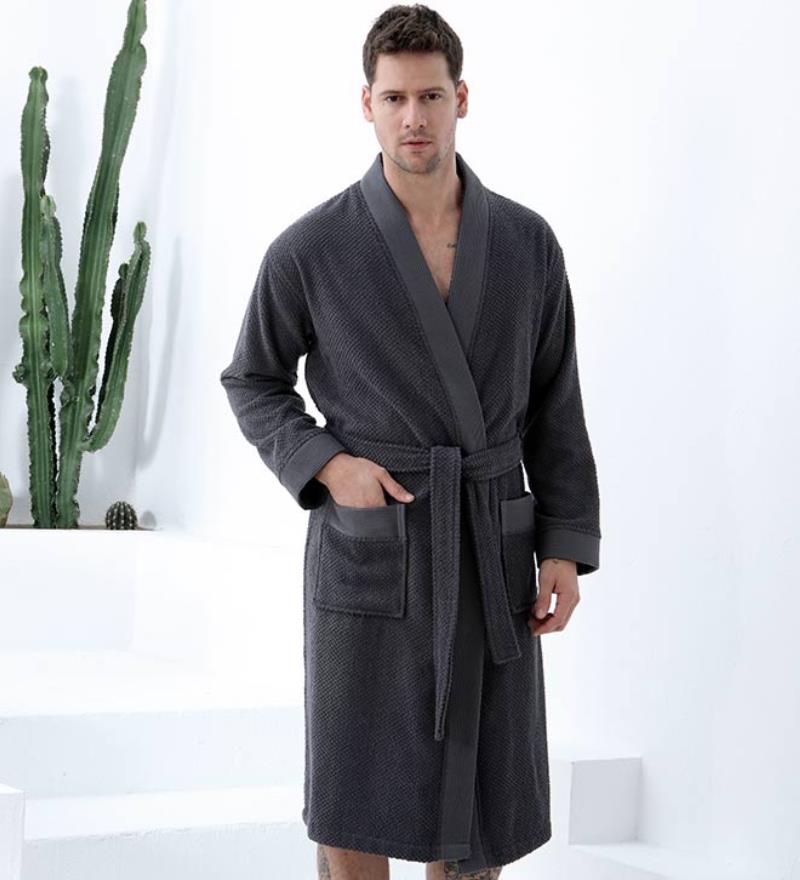
- Terry Cloth Robes
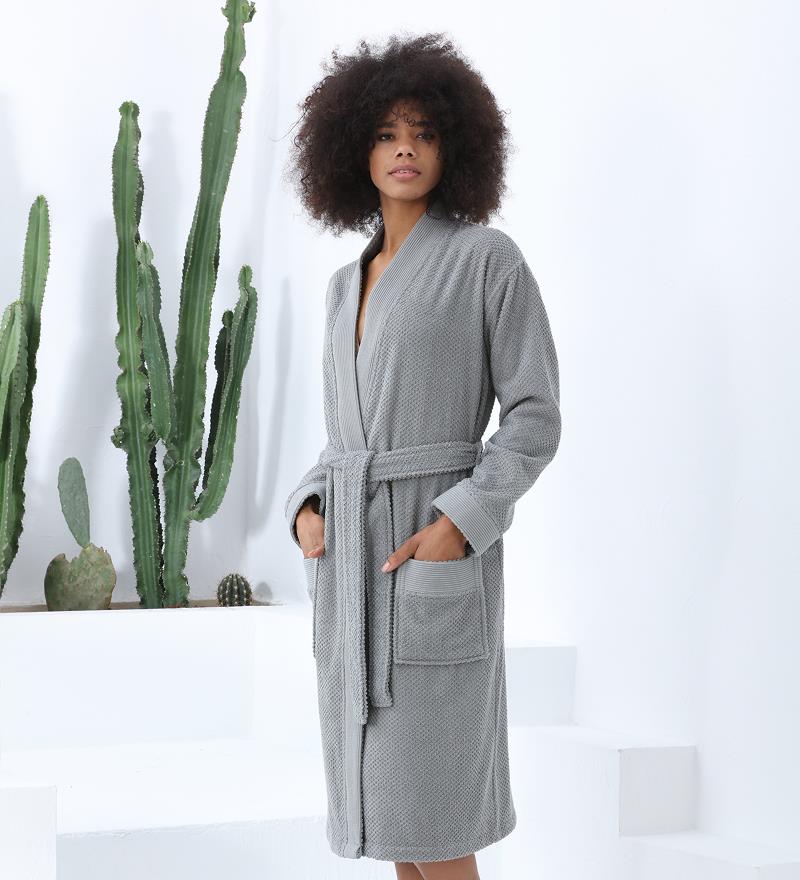
- Microfiber Robes
- Turkish Cotton Robes
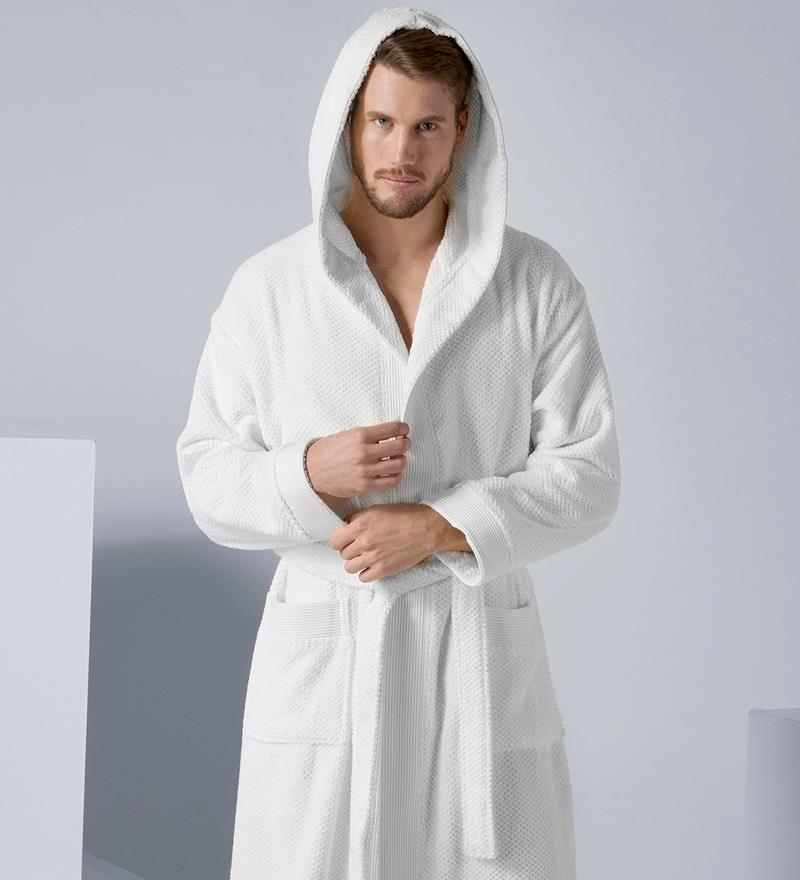
- Towel Robes
- View All Robes by Material
Luxury Bathrobes His and Hers: A Complete Buying Guide - Seyante
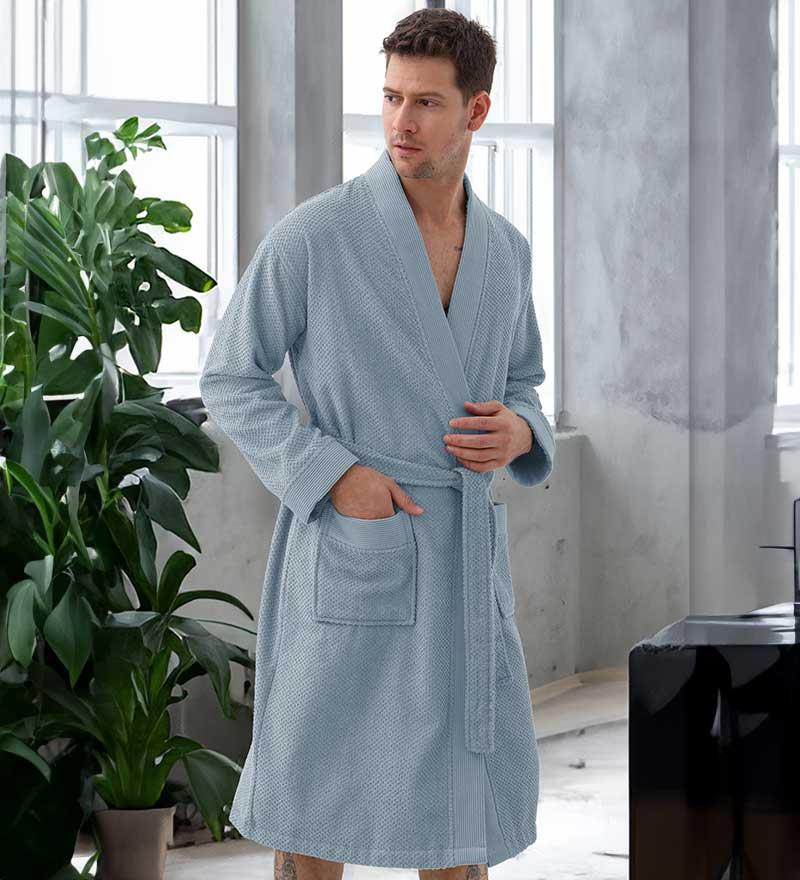
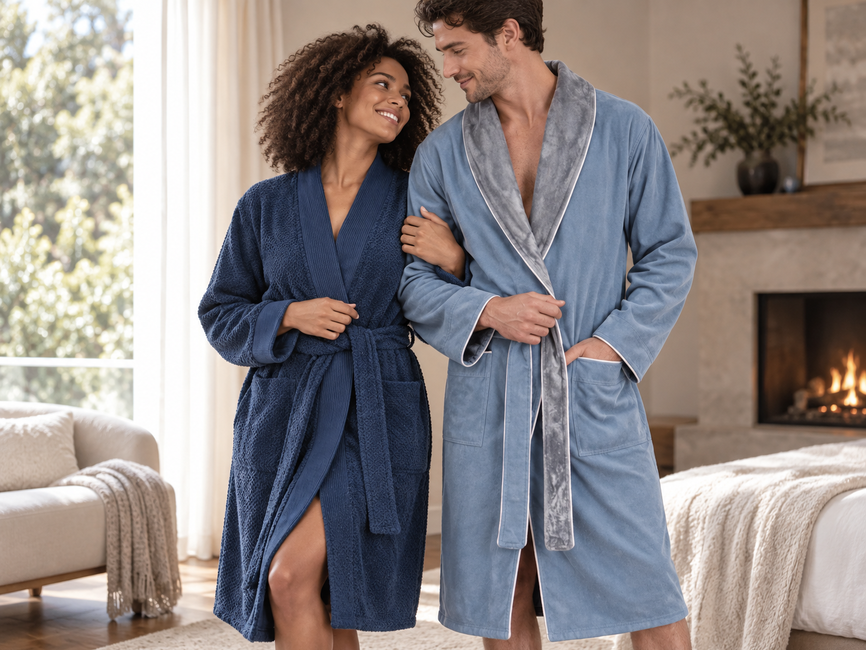
You and your partner are standing outside the shower, comparing two beautiful robes that look perfect together online. One of you wants a thick, warm layer for slow weekend mornings. The other wants something breathable that won't stay damp after every shower. That's the challenge with luxury bathrobes for his and hers: you're coordinating two routines, two bodies, and often two completely different ideas of comfort.
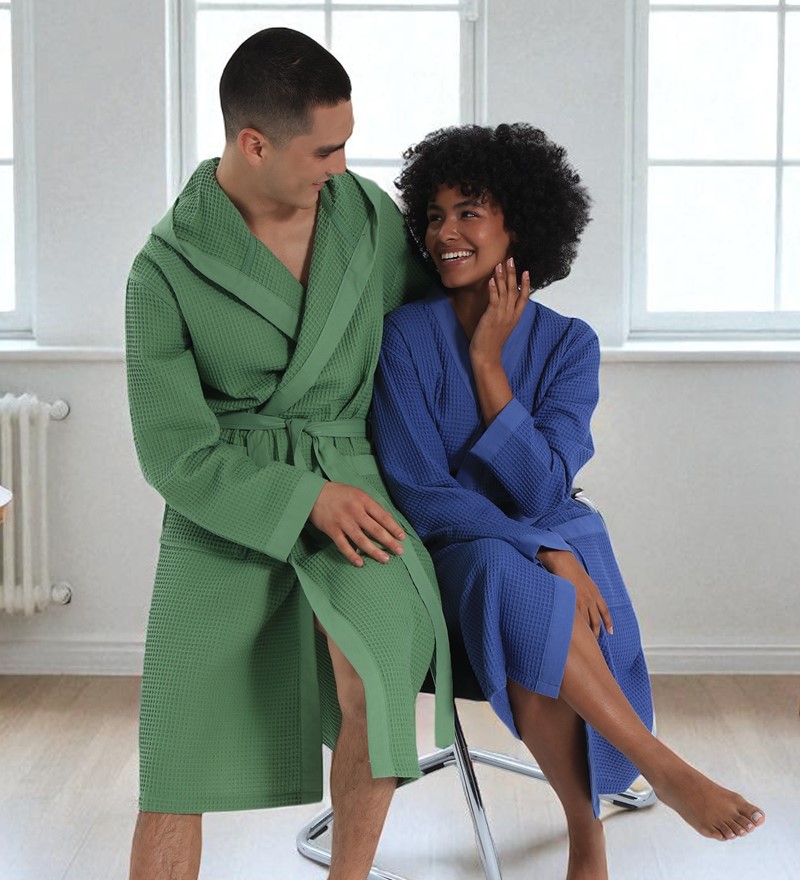
The smartest choice isn't always a cloned pair. It's a coordinated specification, with the right weave, fit, weight, and finish for each person. Terry and waffle can share a color palette without serving the same purpose, and a men's longer cut can look intentional beside a women's fitted or shorter silhouette.
Why His and Hers Luxury Bathrobes Are a Different Decision
Buying two robes isn't buying one robe twice. A couple in a cold bathroom may want a shared hotel-style look, but one partner may step out of the shower and want immediate absorbency while the other spends more time lounging, styling hair, or moving between a bedroom and a warm bathroom.
A hospitality buyer faces the same problem at a larger scale. Guests expect a consistent visual experience, yet they won't have identical heights, shoulder widths, or preferences. A robe that looks polished on a display bed still has to feel comfortable on different bodies and perform through repeated use.
Matching should mean coordinated, not cloned
A successful pair usually shares three visual cues:
- Color story: Choose one palette, such as ivory and dove gray or charcoal and a soft blush.
- Material family: Pair cotton terry with cotton terry, or waffle with waffle, when you want a uniform hand feel.
- Trim language: Use the same piping, belt finish, embroidery style, or collar treatment.
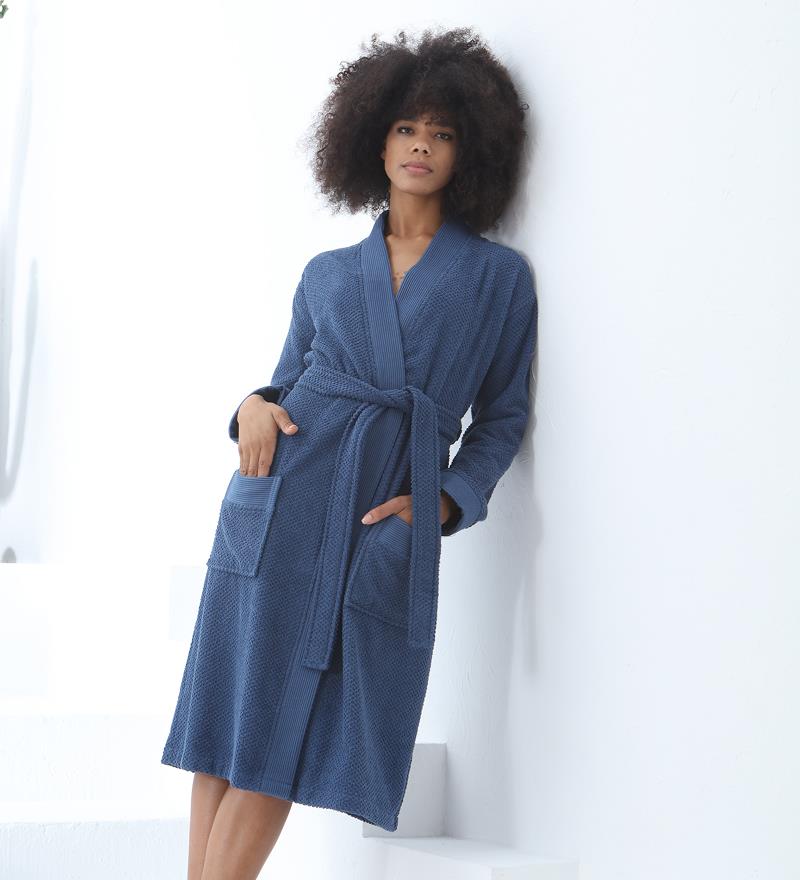
The cuts can differ. A shawl-collar robe may suit the person who wants warmth around the neck, while a kimono-style robe may work better for someone who prefers less bulk. That difference doesn't weaken the set. It makes the set more useful.
Practical rule: Match the visual identity first, then match each robe to the person wearing it.
Start with the routine, not the romance
Ask what happens immediately after bathing. Does the wearer use the robe as a towel, or put it on only after drying? Does the robe stay in a cool bedroom, a heated bathroom, a spa locker, or a guest room? Will it be washed often, shared with other linens, or reserved for occasional gifting?
Those answers determine the fabric more reliably than gender labels. Men's and women's collections can help with proportions and styling, but performance comes from construction. Luxury bathrobes for his and hers should be selected as two matched solutions, not as identical garments chosen for a photograph.
The Heritage and Performance Logic of Cotton Terry
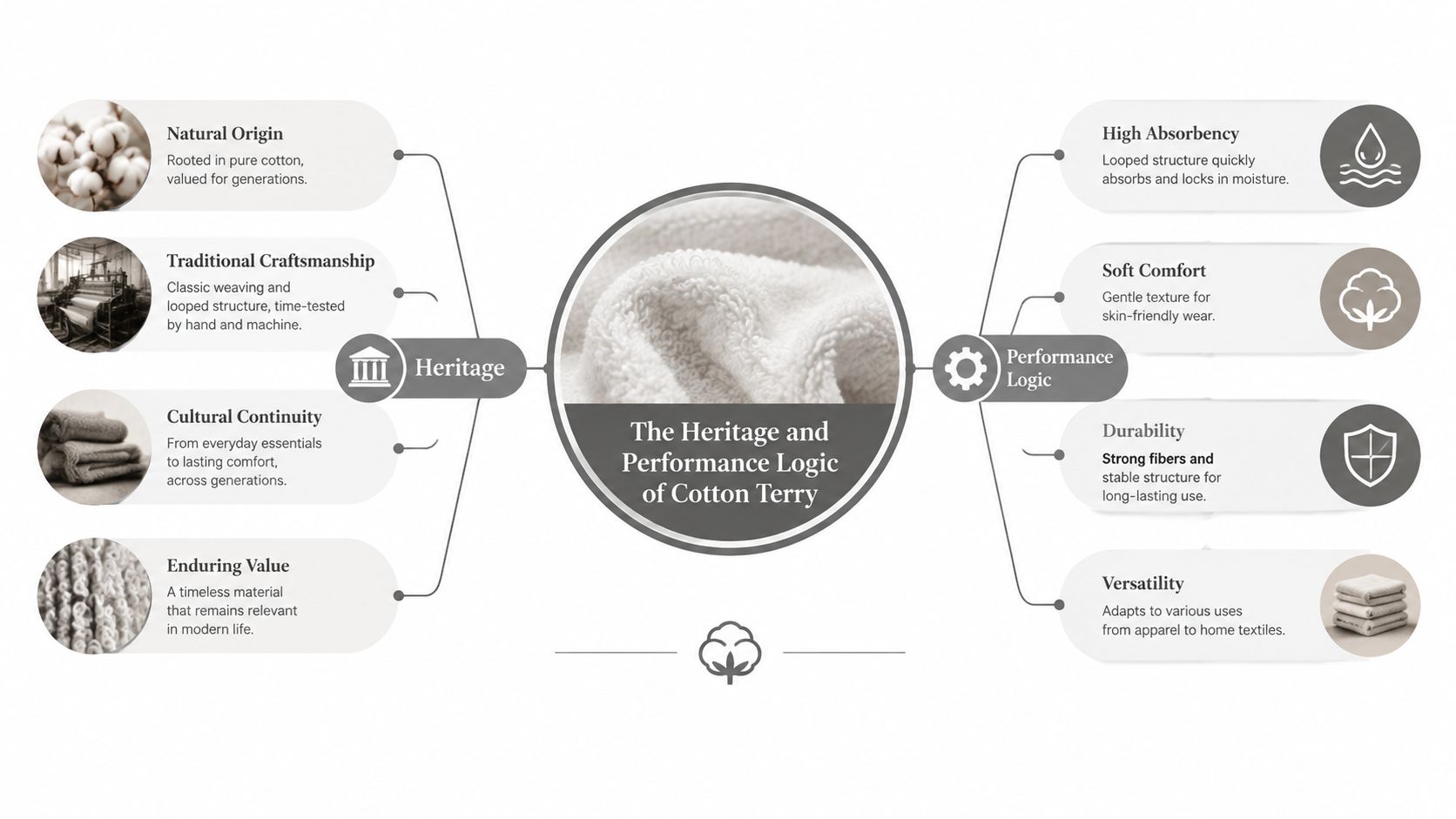
Cotton terry became associated with bathrobes because its uncut loops create a fabric built to manage moisture. The history reaches back to Ottoman bathing culture. A historical account traces the peştemal used in hammams to Henry Christy's observations in Istanbul during the 1840s, where looped-pile fabric helped inspire what became terry cloth. That development shaped the absorbent bathrobe format later adopted in luxury and hotel settings, as described in this historical and market account of hotel bathrobes.
Terry isn't defined by cotton alone. It's a family of pile constructions in which loops stand above the ground cloth. Each loop adds surface area and creates a small space for moisture to move into the fabric. That's why a robe can feel plush and dry efficiently even when its surface appears soft and dense.
Read the pile, not just the fiber label
GSM, or grams per square meter, tells you about fabric mass. It doesn't tell you everything about absorbency, drying behavior, or long-term loft. Independent textile research found that pile height, loop density, and loop length strongly influence water absorption. The same research reported that 100% cotton terry generally absorbed more effectively than a cotton blend, including one comparison of approximately 70% absorbency for 100% cotton terry versus 58% for a blend at similar GSM levels, documented in this textile study on terry structure and absorbency%20415-420.pdf).
Loop length matters after laundering, too. The study found that terry fabrics with loop lengths around 15 to 17 millimeters could maintain good performance through repeated washing. That gives buyers a better way to assess quality: ask how the pile is engineered, not only how heavy the robe feels in a product photograph.
Why hotel-style terry feels different
Traditional Turkish terry is prized for a dense, substantial hand, while lighter terry constructions reduce bulk and may dry more readily. The ground weave also matters. A stable ground supports the loops and helps the robe retain its shape as it moves through regular washing.
For a couple choosing robes, the practical reading is simple:
- High pile and dense loops favor plushness and moisture management.
- Lighter pile favors easier handling and faster drying.
- 100% cotton terry is the safer choice when absorbency is the priority.
- GSM alone shouldn't decide the purchase.
The worldwide hotel bathrobe market was estimated at USD 2.33 billion in 2025, with cotton terry representing 55.3% of material share and luxury hotels representing 48.2% of demand, according to the same market estimate. The signal is clear: luxury robes are anchored in textile performance and hospitality expectations, not just decorative styling.
Terry vs Waffle Weave Which Fabric Wins for Which Use Case
Terry and waffle solve different problems. Terry is the better tool when you want the robe to absorb water and provide insulation. Waffle is the better tool when you want a lighter layer that breathes, packs easily, and dries between uses.
The cells in waffle fabric create a textured surface with more open space than dense loop pile. That construction can feel less bulky against the skin and works well in warm climates, steam rooms, travel settings, and guest bathrooms where drying speed matters.
| Attribute | Cotton Terry | Waffle Weave |
|---|---|---|
| Moisture handling | Strong absorbency from looped pile | Wicks and releases moisture with a lighter texture |
| Warmth | Better for cool rooms and extended lounging | Better for warm rooms and transitional seasons |
| Drying behavior | Takes longer when densely woven or heavy | Usually easier to dry because it uses less bulky structure |
| Weight | Ranges from light to substantial | Typically lighter and more packable |
| On-skin feel | Plush, cushioned, towel-like | Textured, breathable, and less enveloping |
| Best role | Post-shower drying and cold-weather lounging | Travel, spas, warm climates, and frequent turnover |
For a deeper construction comparison, use this guide to waffle versus terry cloth robes for daily use.
My verdict by use case
Choose cotton terry when the robe needs to function as part of the drying routine. It's also the stronger choice for cold bathrooms, early mornings, and anyone who wears a robe as primary loungewear.
Choose waffle weave for warm climates, post-spa use, travel, and households where robes must dry quickly between wearings. Waffle also suits couples who want a contemporary look without the weight of a dense hotel robe.
A mixed pair makes sense. One partner can wear heavyweight terry while the other chooses waffle, provided the color, trim, and overall finish remain aligned. That's not a compromise. It's a performance-matched set.
Sizing and Fit Differences for Men and Women
A robe should let you move freely without cuffs covering your hands or hems collecting around your ankles. Measure first, then check the size chart. Premium labels use different grading systems, so an S, M, or L cannot replace the garment's chest, shoulder, sleeve, and length measurements.
Men's cuts often provide broader shoulders and a straighter body. Women's cuts may taper at the waist or use a shorter sleeve and body length. Treat these as design tendencies, not fitting rules. Actual proportions decide comfort, especially when a robe is worn over bare skin or lighter sleepwear.
The measurements that control comfort
Measure the chest at its fullest point, shoulder width across the back, and height from head to floor. Check sleeve length separately. The cuff should finish close to the wrist bone, particularly if the robe is used around wet floors or while preparing breakfast.
| Dimension | Men's Robe | Women's Robe | Adjustment Tip |
|---|---|---|---|
| Chest | Often broader through the torso | Often more shaped through the waist | Choose by chest comfort first |
| Shoulder | Usually wider and straighter | Often narrower or more contoured | Check shoulder seams for pulling |
| Body length | Commonly longer | Often shorter or more tapered | Match warmth needs, not labels |
| Sleeve shape | Roomier through the upper arm | May use a shorter or closer sleeve | Keep cuffs near the wrist |
| Waist | Straight or generously relaxed | More likely to taper | Use the belt for final adjustment |
Keep the look consistent while changing the cut
Coordinate the color, fabric family, and trim, then let each person choose the silhouette that fits. A longer shawl-collar robe can pair with a shorter kimono cut when both use the same ivory cotton and matching piping. Matching the finish matters more than forcing identical proportions.
Height differences need a separate check. If one partner is much taller, giving both robes the same length can make one appear oversized while the other looks too short. Choose different silhouettes when needed, then connect the pair through color, fabric, and detailing.
For couples comparing options, this guide to matching men's and women's luxury robes can help organize the choice. Use the robe in motion before deciding. Raise your arms, sit down, tie the belt, and check that the sleeves and hem remain practical. Fit should support the robe's job, whether that means drying after a shower, staying warm, or lounging comfortably.
Why GOTS Certified Organic Cotton Matters for a Luxury Robe
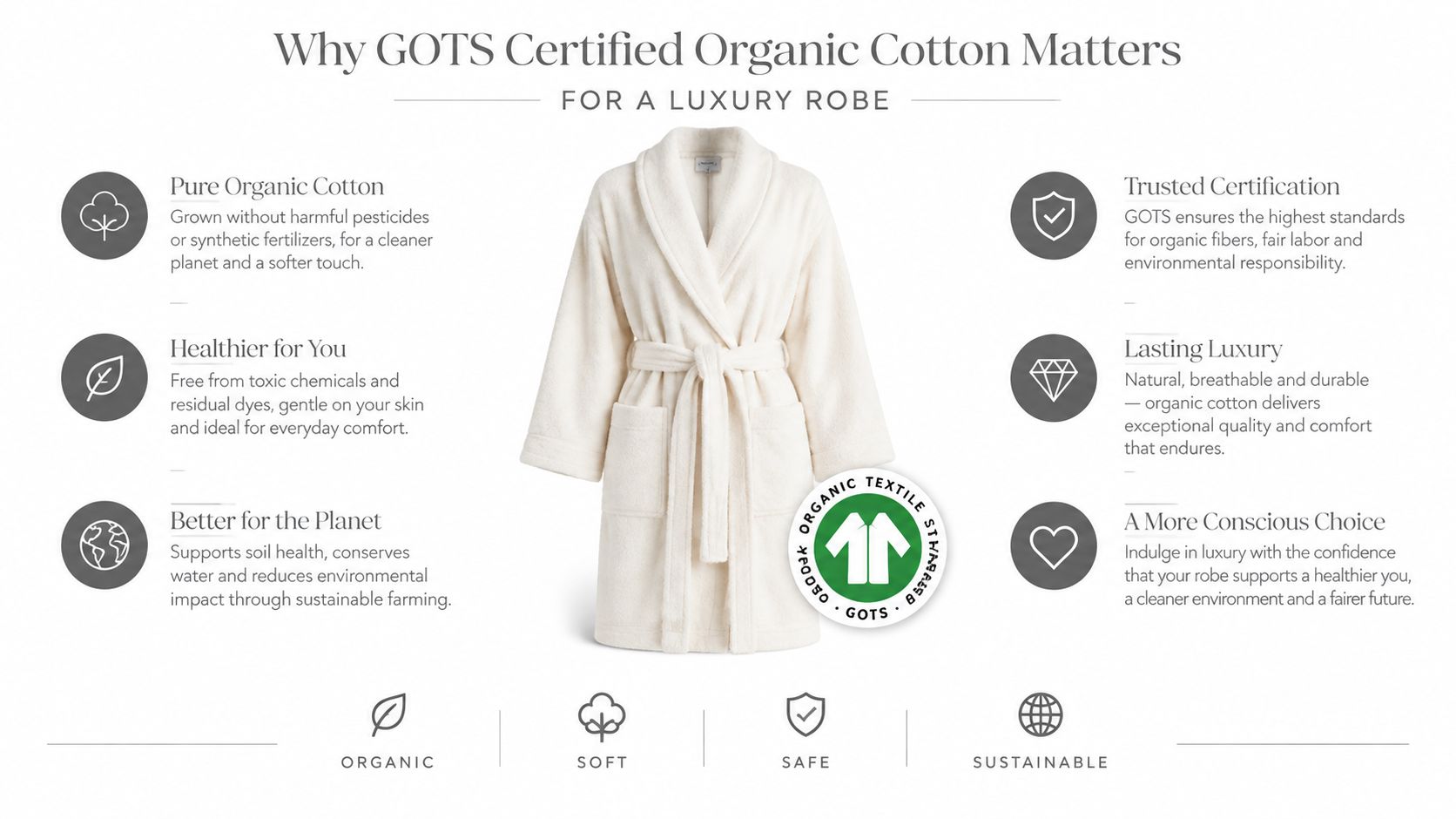
For a robe used after every shower, certification matters as much as the cotton itself. The Global Organic Textile Standard, or GOTS, covers textiles made with at least 70% certified organic natural fibers. Its “organic” label grade requires at least 95% certified organic fibers, plus controls for traceability, chemical inputs, and product-flow documentation, as set out in the GOTS standard.
That distinction matters because a finished robe passes through spinning, weaving, dyeing, finishing, and labeling. A farm-level organic claim verifies the fiber source, not necessarily the later processing. GOTS assesses that wider textile route, giving buyers clearer evidence that the product's sustainability claim extends beyond the raw cotton.
Why scarcity makes verification important
Organic cotton represents a small share of global cotton production. Textile Exchange and the Organic Trade Association reported that the 2020/21 harvest produced 342,265 tonnes of organic cotton fiber across 621,691 hectares of certified organic land in 21 countries, about 1.4% of cotton grown worldwide, according to the Organic Cotton Fact Sheet. The same source recorded 56,717 bales of organic Upland and American Pima cotton production in the United States in 2024, compared with 39,259 bales in 2023.
Those figures do not make every organic robe superior. They do make verification worth checking. A documented supply chain separates a traceable product from a vague “natural” or “clean” label.
For a daily-use pair, choose finished-garment GOTS certification over an unsupported raw-cotton claim. Review the certification scope, fiber percentage, processing details, and care instructions in this GOTS-certified organic bathrobe guide.
Coordinated Styles Colors and Bridal Gift Set Ideas
A coordinated robe set should look intentional without making two adults dress like matching stage costumes. Use the same fabric family, a connected color story, and similar trim proportions. The silhouettes can then reflect each wearer's preferences.
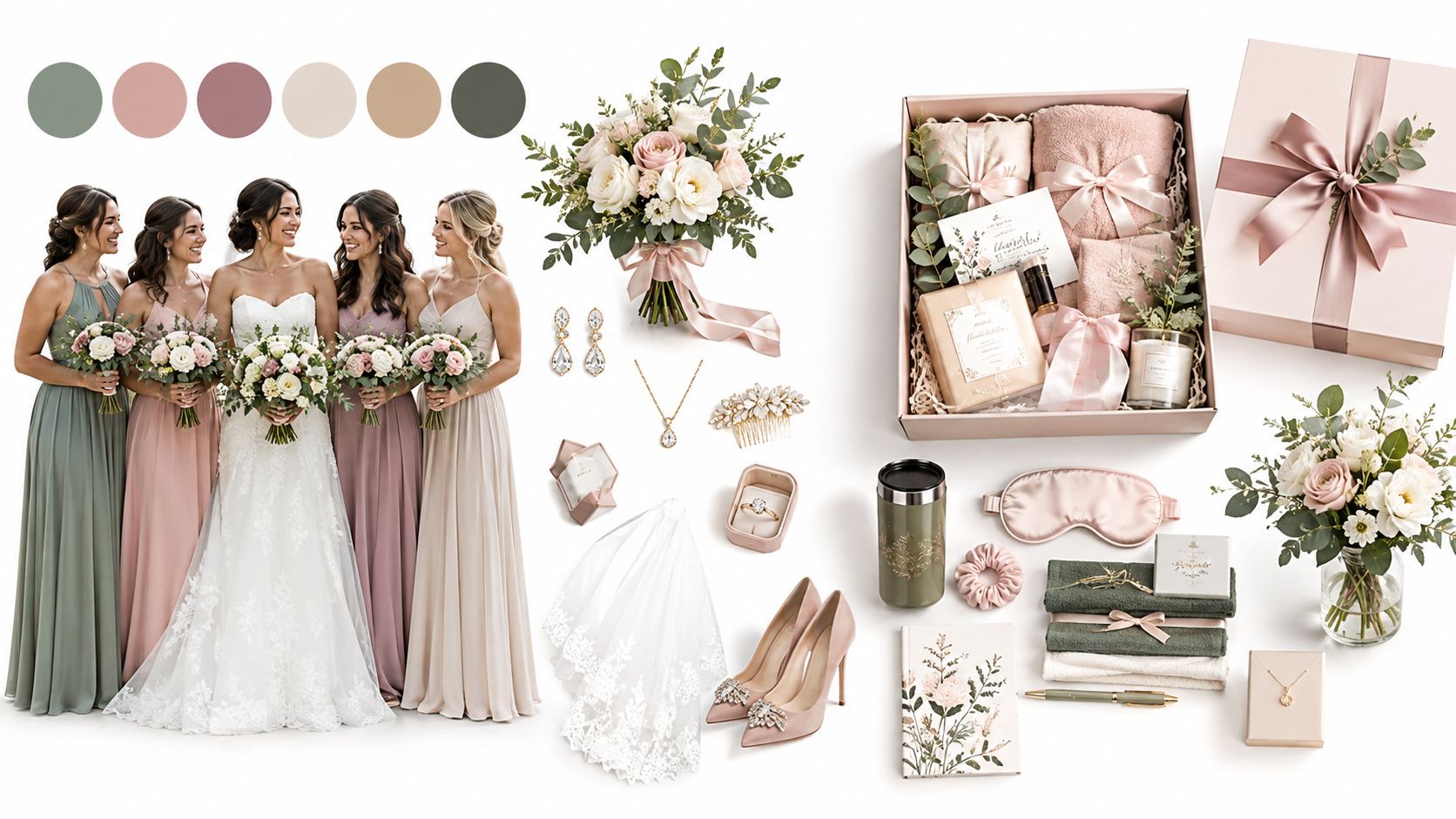
Soft neutrals such as oat, ivory, and dove gray create a quiet hotel aesthetic. Charcoal with blush feels more graphic, while navy with champagne reads polished for evening lounging. For bridal parties, white, ivory, and pale tonal shades photograph cleanly, but the most useful robe is still the one the wearer will reach for after the event.
Build the set around the occasion
For a bridal gift, pair a women's shorter robe with a men's longer cut in matching waffle or lightweight terry. Add initials in thread that echoes the wedding palette. Keep the embroidery away from dense functional areas, such as the belt loop or a high-friction pocket edge.
For hospitality gifting, uniform color matters more than identical cuts. A discreet monogram on the inside hem can personalize the robe without changing the guest-facing design. Boutique properties can also coordinate robes with towels and room textiles through tonal color rather than loud contrast.
Anniversary gifts give you more freedom. One partner can wear a solid robe while the other wears a tonal stripe. The connection remains visible, but each robe has its own personality.
Match by performance before decoration
Use this order:
- Choose the routine. Decide whether the set is for drying, lounging, spa use, or a guest amenity.
- Choose the weave. Terry prioritizes absorbency and warmth. Waffle prioritizes breathability and easier drying.
- Choose compatible weights. They don't need identical fabric mass, but they should belong to the same visual and seasonal category.
- Choose the palette. Neutral shades make mixed silhouettes easier to coordinate.
- Add personalization last. Monograms should support the robe, not interrupt its texture.
Couples looking for a practical gift format can review matching robe ideas for men and women. My strongest recommendation is to give each person a robe they'll use, then make the pair feel connected through color, piping, and thoughtful placement of initials.
Caring for Luxury Cotton Robes So They Last for Years
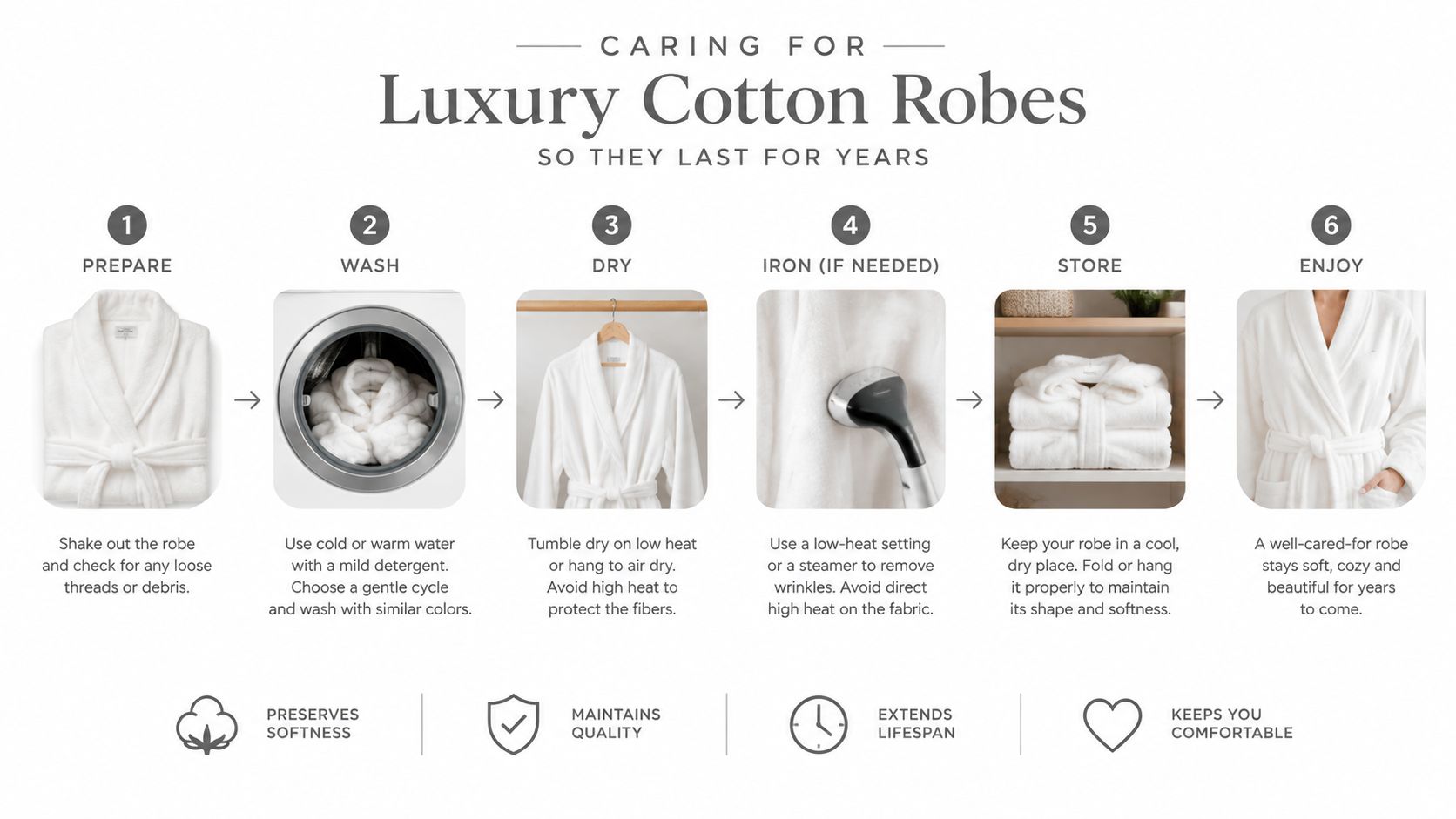
Luxury cotton needs a consistent care routine. The wrong wash cycle can flatten pile, weaken texture, and leave a robe feeling less absorbent even when the fibers themselves remain intact.
Protect the fabric in the wash
Follow the garment label first, then use these defaults:
- Water temperature: Choose cold or warm water, not hot water.
- Detergent: Use a mild liquid detergent without optical brighteners.
- Fabric softener: Skip it. Coating agents can flatten terry loops and reduce the openness of waffle pockets.
- Load composition: Wash terry separately from zippers, hooks, and rough hardware that can snag loops.
- Stain treatment: Rinse oil stains promptly with cool water. Blot wine and treat it before the wash rather than letting the mark set.
Don't overload the machine. A robe needs space for water and movement, especially when the fabric has a dense pile. Close belts and ties loosely so they don't wrap around other garments.
Dry according to the weave
Terry benefits from low tumble drying or an air-fluff cycle, which helps restore loft without excessive heat. Waffle fabric can be line-dried when possible, preserving its geometric texture and reducing unnecessary mechanical stress.
Store robes folded when they won't be worn for a while. Hanging heavy terry from a narrow hanger can distort the shoulders. A breathable cotton storage bag and cedar blocks can help keep the storage area fresh and discourage moths. Avoid sealing a robe in plastic while it's even slightly damp.
For a shared bathroom, rotating two robes per person is sensible. It gives each robe time to dry fully and reduces the pressure on one garment to handle every shower, lounge session, and laundry cycle.
Your Final Decision Framework for Choosing the Right Pair
Use this five-minute checklist before buying:
- Name the main job. Is the robe for post-shower drying, warm lounging, spa use, travel, or a combination?
- Assign the weave. Choose terry for absorbency and cool rooms. Choose waffle for breathability, warm climates, and faster turnover.
- Measure each wearer. Check chest, shoulders, sleeve length, and body length. Ignore generic size labels until the measurements agree.
- Verify the textile claim. If organic sourcing matters, look for finished-garment GOTS certification and traceable documentation.
- Coordinate the appearance. Use shared color, trim, and material language. Don't force identical cuts.
- Accept the care requirement. A high-performance robe still needs appropriate washing, drying, and storage.
| Couple profile | Recommended pairing | Color strategy |
|---|---|---|
| Post-gym household | Cotton terry for strong moisture handling and warmth | Shared charcoal, ivory, or another practical neutral |
| Warm-climate retreat | Lightweight waffle for breathability and easier drying | Tonal whites, sand, or soft gray |
| Wedding-prep pair | Coordinated lightweight terry or waffle with different cuts | Wedding palette, restrained trim, discreet initials |
For luxury bathrobes for his and hers, my default recommendation is coordinated rather than identical: choose terry when drying and warmth lead, waffle when breathability and quick drying lead, and let each partner's measurements determine the cut. The best pair looks unified on the hook and feels individually right after the shower.
SEYANTE offers men's and women's luxury robes in Turkish cotton terry and lightweight waffle constructions, including GOTS-certified organic options and coordinated couples' selections. Visit SEYANTE to compare fabrics, silhouettes, and sizing before choosing the pair that fits your shared routine.
Related Posts


Featured Products
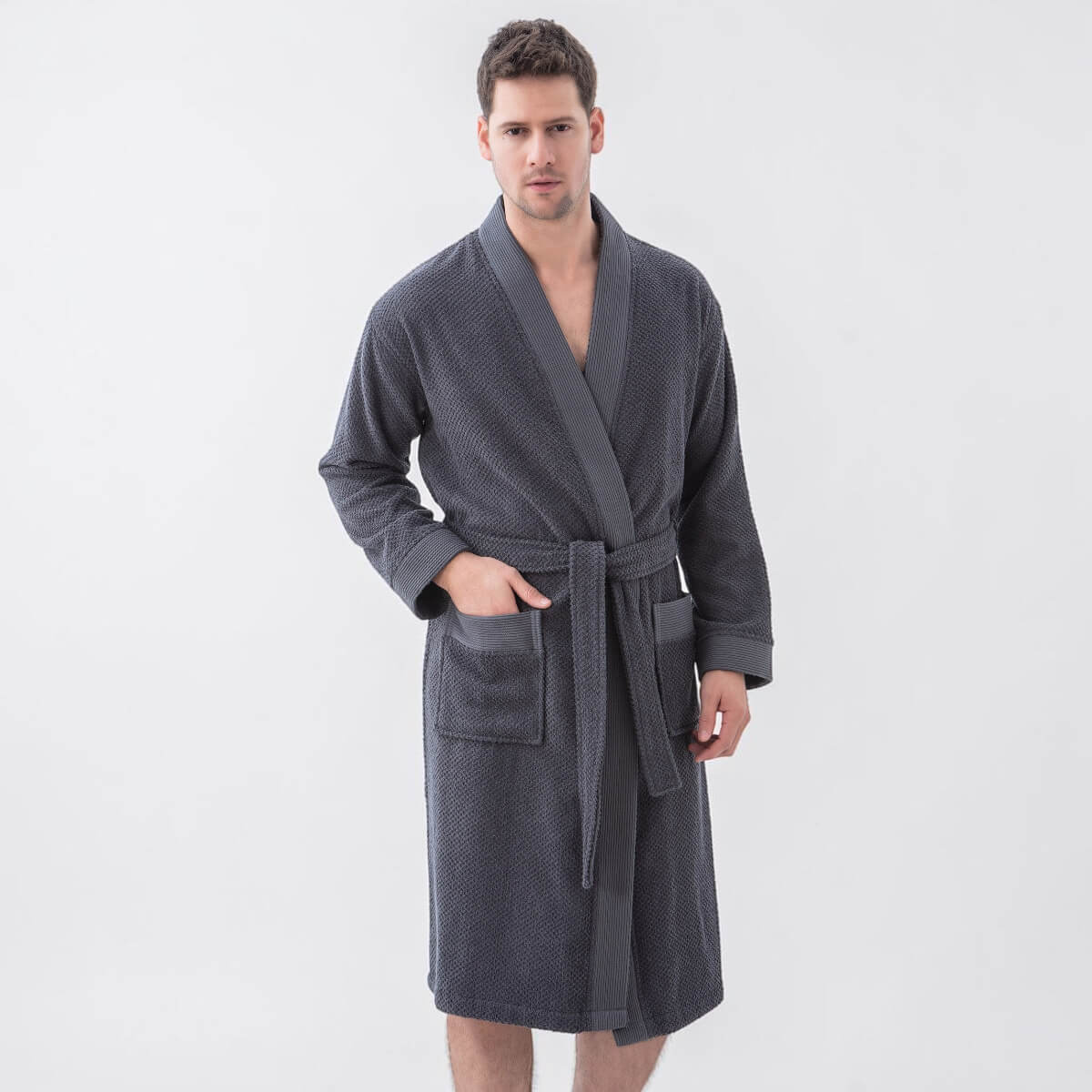

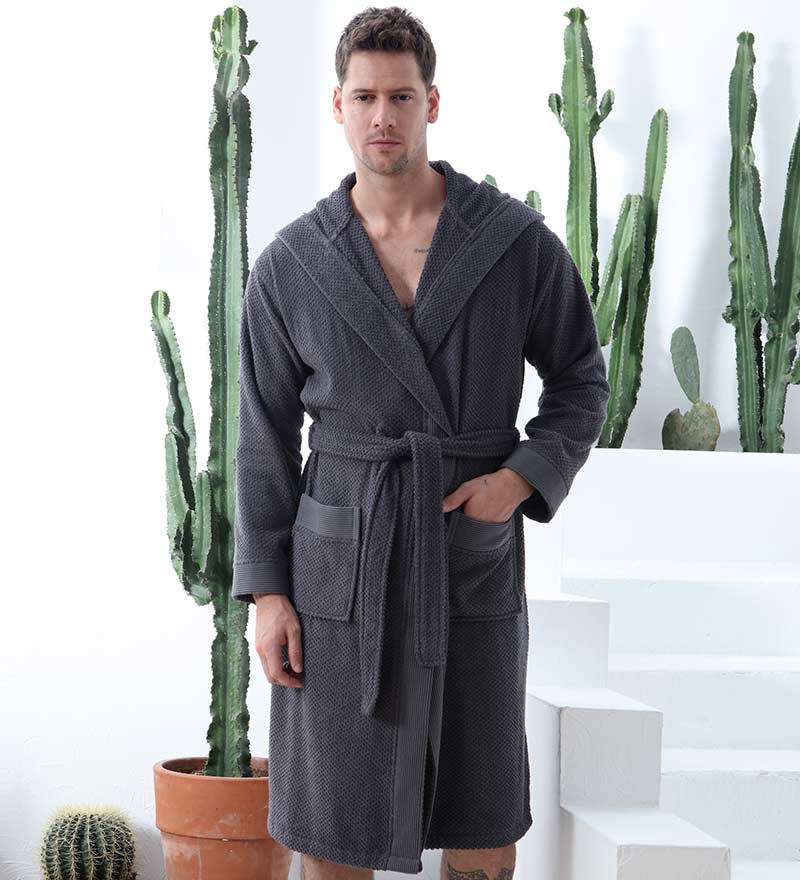
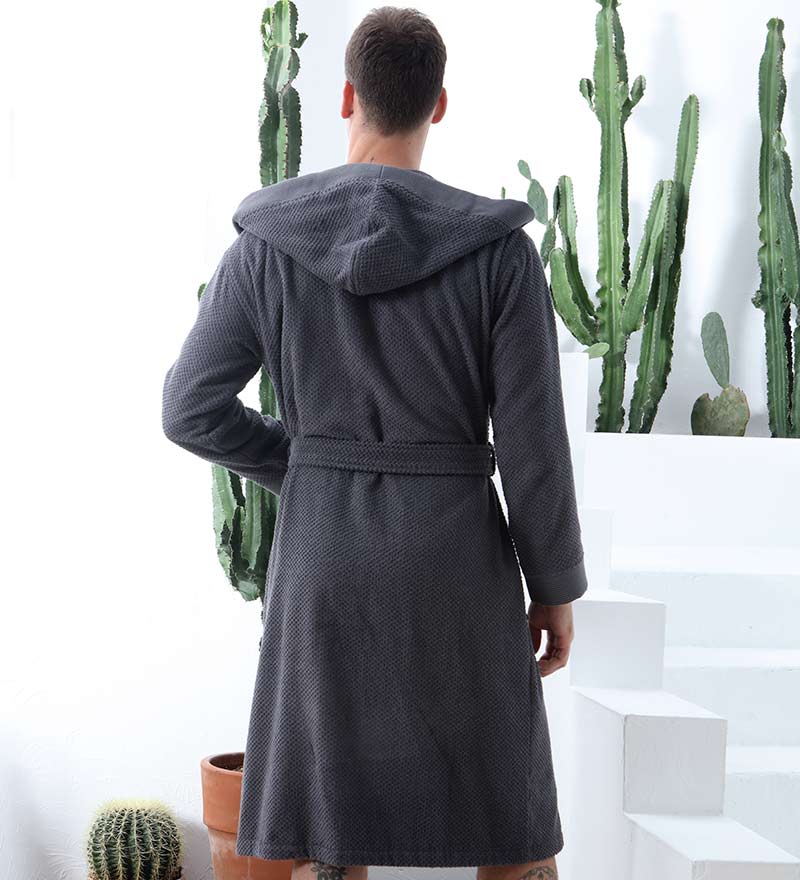
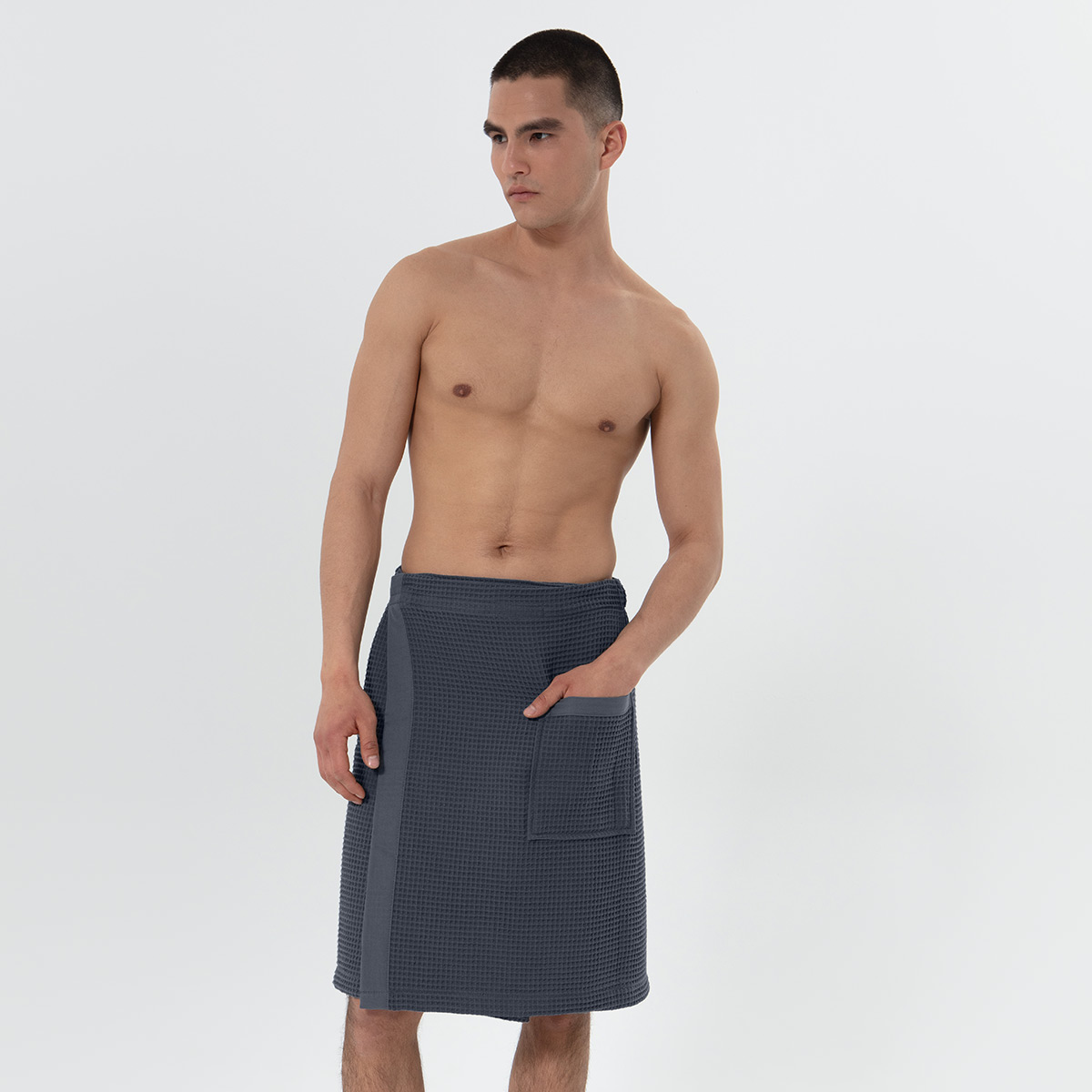

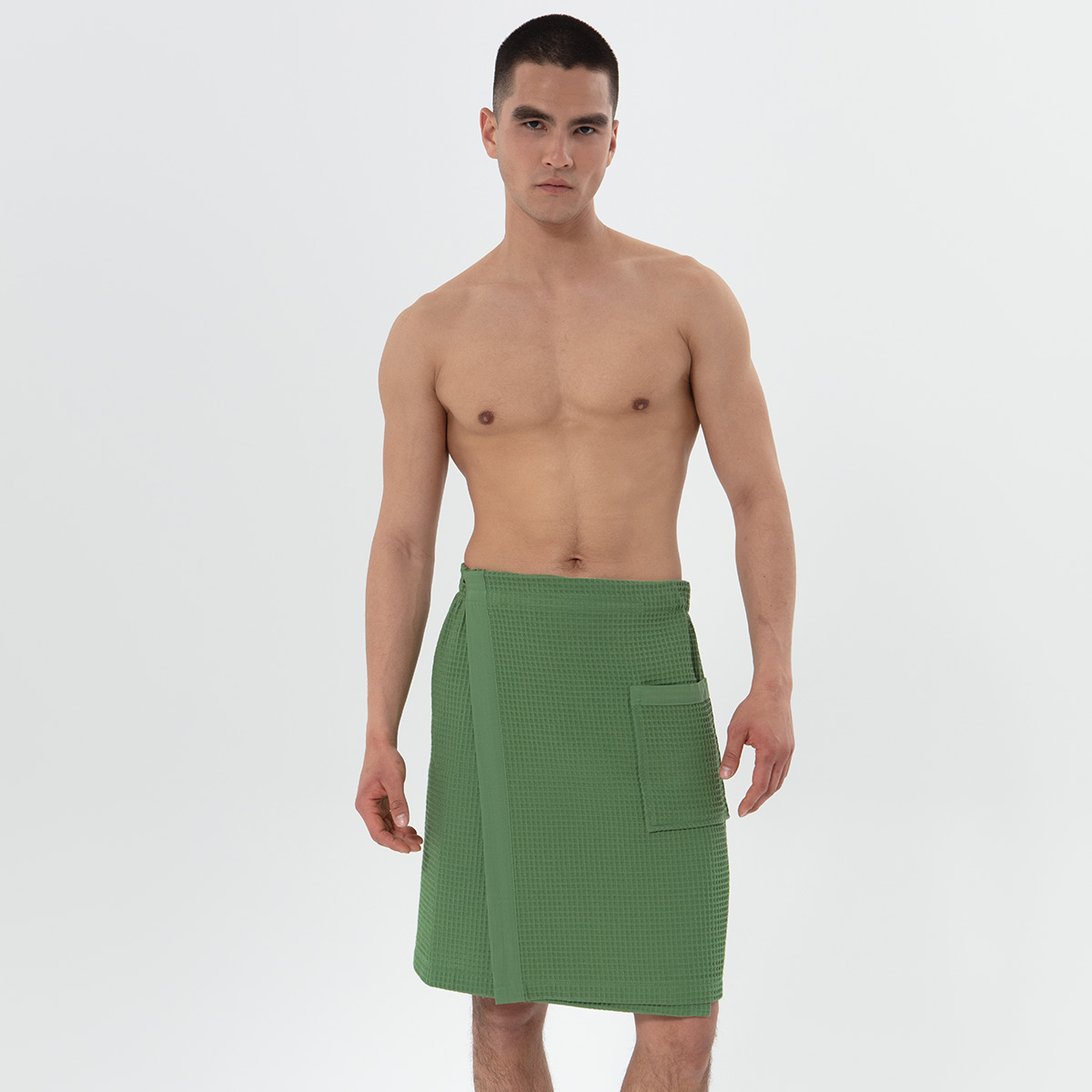

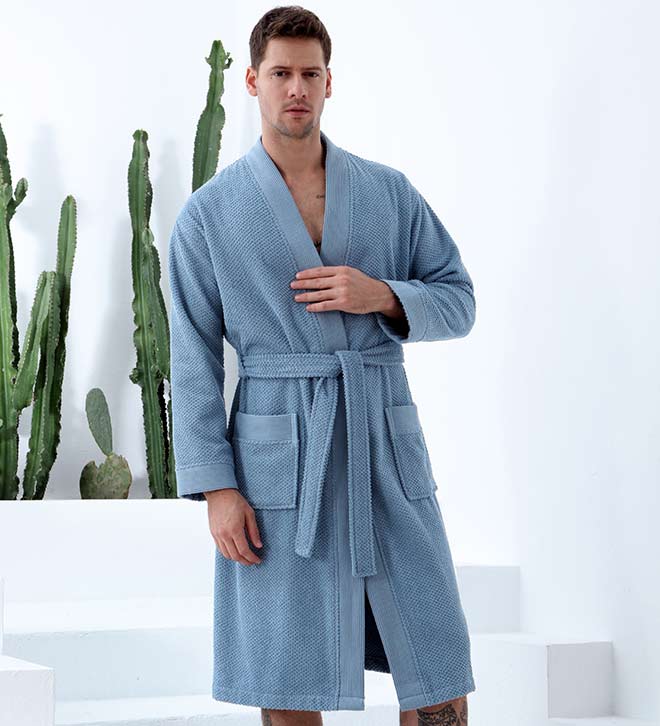

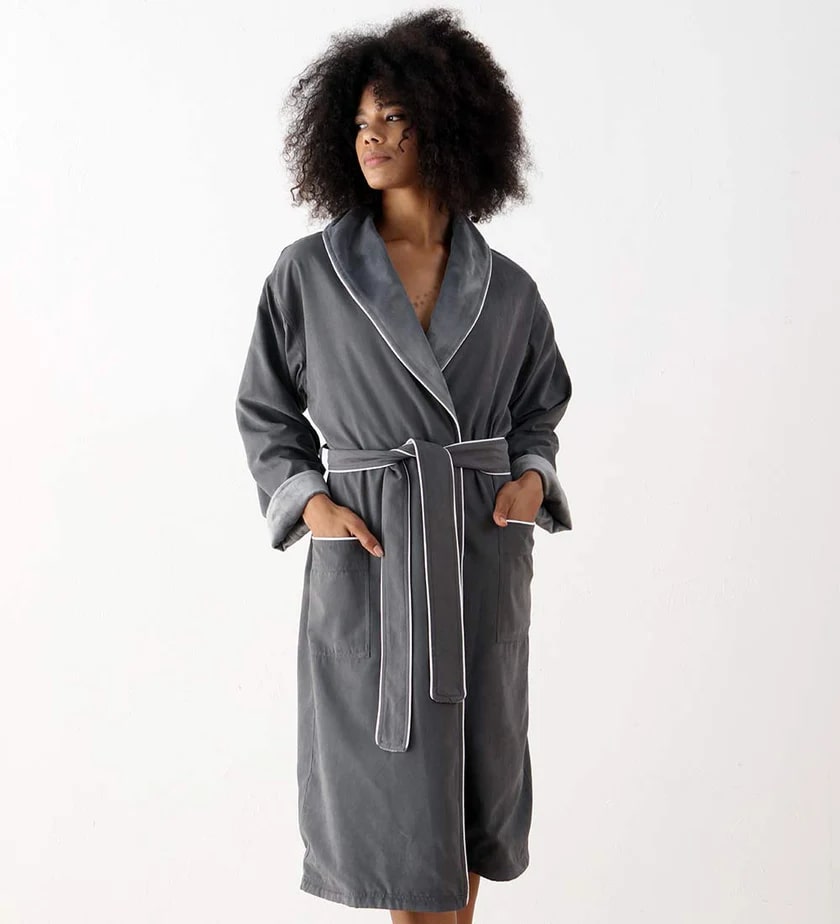

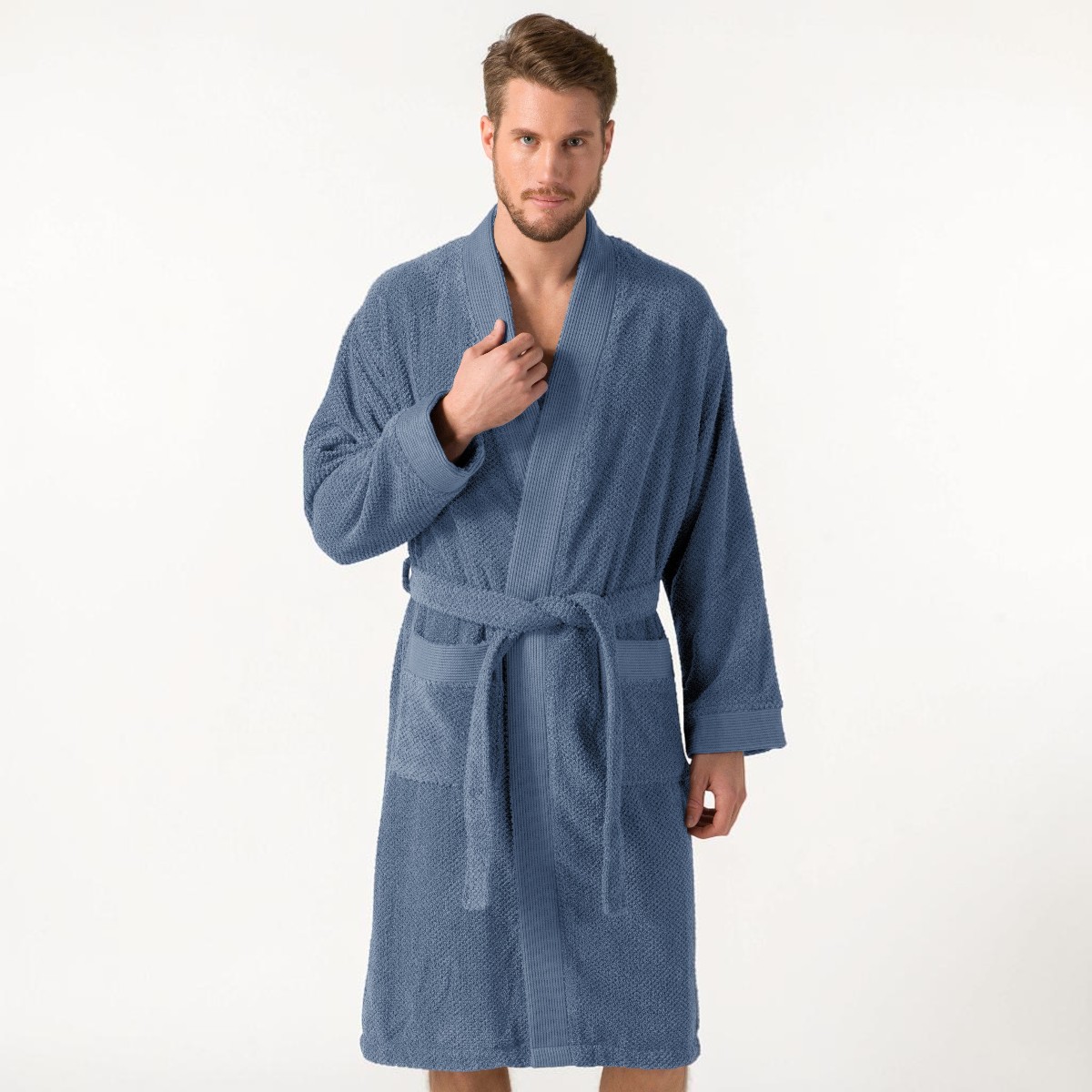

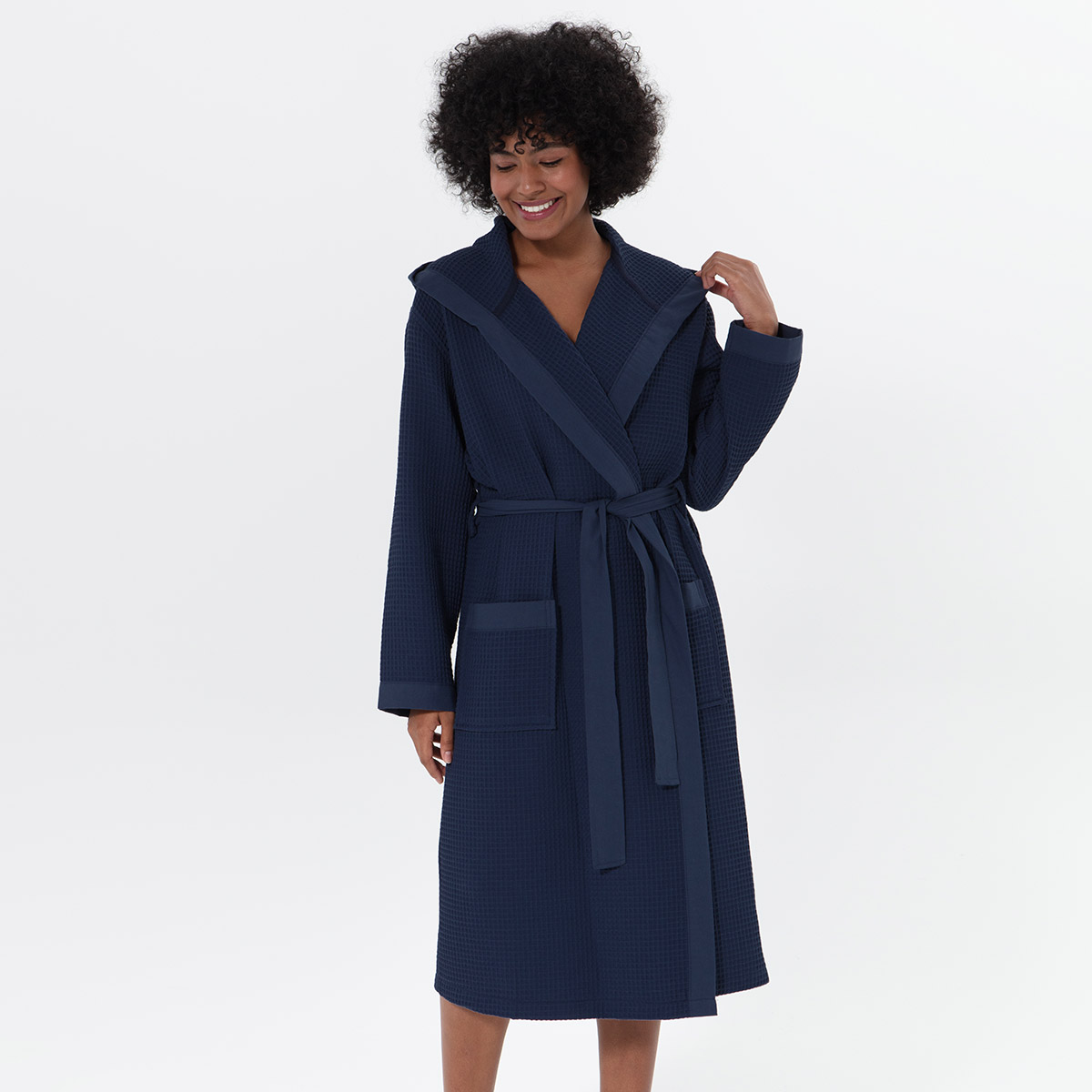


Offering high-quality bathrobes for both women and men with GOTS certification
Our commitment to excellence is reflected in our use of the Global Organic Textile Standard (GOTS) certification for our products. GOTS is a benchmark for organic textiles, ensuring environmentally friendly and socially responsible manufacturing processes.





FREE STANDART DELIVERY
STRESS-FREE SHOPPING
ONLINE CUSTOMER SERVICE