The Ultimate Luxury Red Dressing Gown Guide
A red dressing gown can look magnificent on the first morning and still disappoint you by the third wash. So what makes a luxury red dressing gown luxurious, the dramatic colour, the softness in the shop, or the way the fabric, dye and construction perform over time?
A robe sits close to the skin during some of the quietest parts of the day. It needs to absorb moisture when worn after bathing, retain a comfortable shape while you move, and keep its colour without becoming harsh or dull. That makes the purchase less about decoration and more about textile engineering.
Introduction to Elevating Morning Rituals
A bright red robe catches attention immediately. That visual impact often leads shoppers to overlook the details that determine whether the garment feels refined after repeated use. A robe may have an attractive silhouette yet feel clammy because the fabric lacks absorbency, or appear plush while its fibres become rough after careless laundering.
Luxury begins with the experience against the body. A well-made dressing gown should feel comfortable when you put it on, distribute warmth without unnecessary bulk, and move naturally when you reach for a cup or walk around the room. Its colour should also remain intentional, whether you choose a deep garnet, a warm wine shade, or a cleaner scarlet.
The dressing gown has a long connection with domestic luxury. Historical accounts trace the modern garment back to the early 18th century, when the banyan became fashionable as a loose coat for home and informal office wear. By the mid-19th century, it had become primarily an at-home garment worn by both men and women, while related forms continued into the 20th century through hostess dresses, peignoirs and robes, as documented in this history of the bathrobe and dressing gown.
That evolution explains why the robe now belongs to a private ritual rather than a public wardrobe. It represents retreat, comfort and personal presentation, whether you're preparing for work, winding down after a bath, or hosting a relaxed morning at home. Guidance on starting the day with a fresh bath ritual reflects that broader role.

Before buying, decide whether the garment is mainly for after-bath performance, leisurely lounging, visible homewear, gifting, or hospitality use. That single decision affects the best fabric weight, shape and finish. The most elegant robe isn't necessarily the thickest or brightest. It's the one whose construction suits the ritual you'll repeat.
Defining Luxury Through Material and Construction
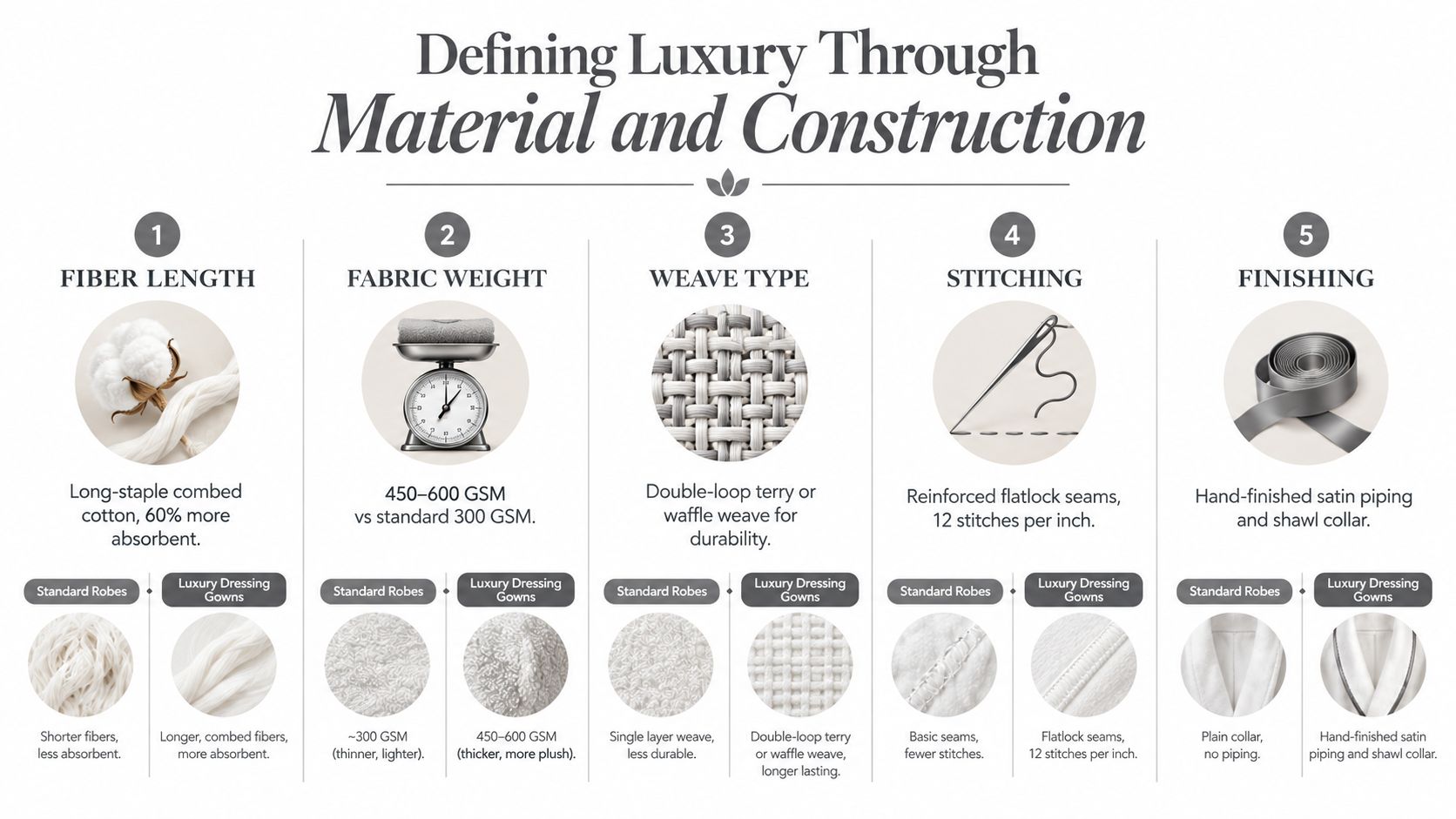
What should a luxury red dressing gown feel like before its colour catches the eye? Start with the fabric and construction. A premium robe should feel considered in the hand, with a surface suited to how you will wear it.
The first practical distinction is between terry, which uses loops to absorb moisture, and waffle weave, which creates a lighter, more textured surface with greater breathability. Terry loop piles expose more fibre to water, producing the cushioned handfeel associated with spa robes. Choose terry for post-shower use and towel-like comfort. Choose waffle for travel, warm interiors, or relaxed mornings when a lighter layer is more useful.
The cotton terry fabric guide identifies 400 to 600 GSM as a useful benchmark range for premium robes, while our bathrobe material and fabric types guide explains how terry and waffle constructions differ in practice. GSM means grams per square metre, so it describes fabric density, not softness by itself. Around 450 GSM can provide a balanced everyday weight. Lighter fabric dries faster, while heavier fabric feels more enveloping but holds more moisture and takes longer to dry.
Read the fabric before the label
Inspect the robe rather than relying on the label alone. Terry loops should sit evenly across the surface, without flattened sections, bald patches, or irregular pile. Run your hand over both faces. A velvety outer surface may look formal, but the inner face still needs to manage moisture effectively after bathing.
Check these construction details:
- Pile consistency: Stable, evenly formed loops support a more uniform feel and reduce early surface wear.
- Seam behaviour: Flat, comfortable seams limit rubbing around the shoulders, underarms, and sides.
- Edge finishing: A secure collar, belt loop, and cuff finish help the robe hold its shape through regular wear.
- Pocket placement: Deep, well-positioned pockets add practical value without pulling the front out of alignment.
- Fabric recovery: Press the material gently, then release it. The surface should regain its shape rather than remain visibly crushed.
Choose weight according to the ritual
A robe for a cold bathroom needs different performance from one worn in a warm bedroom. Dense terry provides warmth and absorbency, but can feel excessive over sleepwear. Lightweight waffle layers more easily and feels less cumbersome, though it cannot offer the same plush, towel-like embrace.
| Priority | More suitable construction | Main trade-off |
|---|---|---|
| After-shower absorbency | Mid- to heavier-weight terry | Takes longer to dry |
| Breathable lounging | Lightweight waffle | Less plush and less absorbent |
| Hotel or spa use | Durable terry with reinforced finishing | More fabric care and storage space |
| Travel and warm climates | Light waffle or light terry | Reduced warmth |
The best luxury red dressing gown balances fibre quality, loop structure, weight and finishing. Weight alone does not guarantee refinement. A dense robe that traps heat, sheds heavily, or relies on weak seams turns additional fabric into a burden. Choose the construction that supports the way you will wear, wash, and dry the garment.
Selecting the Perfect Red Shade and Colorfastness
Red places unusual demands on a robe because the colour is doing much of the visual work. A deep saturated shade can look expensive when the dye is evenly distributed, but it can also reveal poor processing quickly through fading, streaking or transfer onto lighter fabrics.
The right question isn't just whether the robe is “red.” Ask whether the shade suits the setting. A wine or garnet tone feels restrained in a bedroom or boutique guest room. A vivid scarlet creates a stronger fashion statement and may suit gifting or coordinated bridal use. A softened brick red can feel more relaxed and less theatrical in everyday homewear.
Why saturated colour needs scrutiny
Deep shades require careful dyeing and finishing. If the dye isn't adequately fixed to the fibre, repeated washing can weaken the colour. Friction during laundering can make the surface look tired, while heat can accelerate the loss of visual depth. These problems are especially noticeable on a large garment, where uneven fading appears across the body, cuffs and collar.
Ask the seller or manufacturer for colourfastness information rather than relying on a product photograph. ISO 105-C06 is the international laundering benchmark used to assess resistance to colour change and staining. For apparel, a typical acceptable target is colour change grade 4 to 5 and staining grade 3 to 4 minimum, as outlined in this guide to wash colourfastness under ISO 105-C06.
Separate colour from surface finish
A glossy or velvety surface can make red appear deeper under shop lighting. That finish may be attractive, but it shouldn't distract from the underlying fabric. Check the inside as well as the outside, because the inner construction tells you more about absorbency, comfort and likely laundering behaviour.
Before purchasing, check for:
- A clear shade description. Terms such as garnet, claret, ruby or scarlet are more useful than a generic “red” if you're matching accessories or gifting to a group.
- Care instructions that suit your routine. A robe that requires delicate handling may not be practical as a daily post-shower garment.
- Testing or quality information. A manufacturer willing to discuss colourfastness is giving you more useful information than one relying only on visual claims.
- A stable handfeel. The fabric should remain soft without depending entirely on a temporary surface treatment.
Practical rule: Buy the red shade for the room and ritual, but judge the robe by the dye discipline and fabric performance underneath it.
A premium colour should age gracefully. It may soften subtly with use, but it shouldn't turn patchy, stain adjacent textiles or lose the depth that made the garment appealing. Dye quality then becomes part of luxury rather than a purely visual concern.
Finding the Right Fit for Body Types and Occasions
Fit changes the way a red robe is perceived. A loose wrap can look deliberately relaxed on one person and shapeless on another, while a more structured hotel-style cut can feel polished but restrictive if the shoulders or sleeves are wrong.
Start with the use case, then assess the silhouette. For after-bath wear, allow room for movement and layering. For a bridal morning or visible homewear, a cleaner shoulder line and controlled sleeve length can make the robe feel more considered. For maternity wear, an adjustable wrap and generous front overlap matter more than a close fit.
A practical fit matrix
| Style | Best for | Strengths | Watch for |
|---|---|---|---|
| Kimono wrap | Relaxed lounging and warm interiors | Easy movement, adjustable waist, clean neckline | Can open at the front if the overlap is narrow |
| Hotel-grade wrap | After-bath use and guest settings | Comfortable coverage and familiar structure | May feel bulky in a heavier fabric |
| Hooded robe | Cool mornings and post-shower warmth | Extra coverage around the head and neck | Hood weight can pull at the back |
| Maternity wrap | Changing body shapes and nursing-friendly wear | Flexible fit and generous front coverage | Belt position needs careful adjustment |
| Lightweight waffle robe | Travel, layering and warm climates | Breathable, compact and easy to wear | Offers less plushness than terry |
Body shape matters, but movement matters more than conventional sizing language. Check shoulder width, sleeve length, back length and the amount of overlap at the chest. A robe that fits the bust but restricts the upper arms won't feel luxurious, and a long hem can become inconvenient around stairs or wet floors.
Match proportion to the occasion
A full-length red gown creates a dramatic, enveloping effect and works well for private lounging or formal guest presentation. A shorter cut feels more casual and can be easier to wear over sleepwear. The belt should sit where it naturally defines the waist, not where it forces the fabric to bunch.
If you're creating a coordinated sleepwear set for a bridal group, hospitality team or branded event, consider pairing the robe with custom sleep pants for your brand. The robe can remain the statement piece while the matching trousers create a more complete and practical outfit.
Caring for Your Investment and Styling Tips
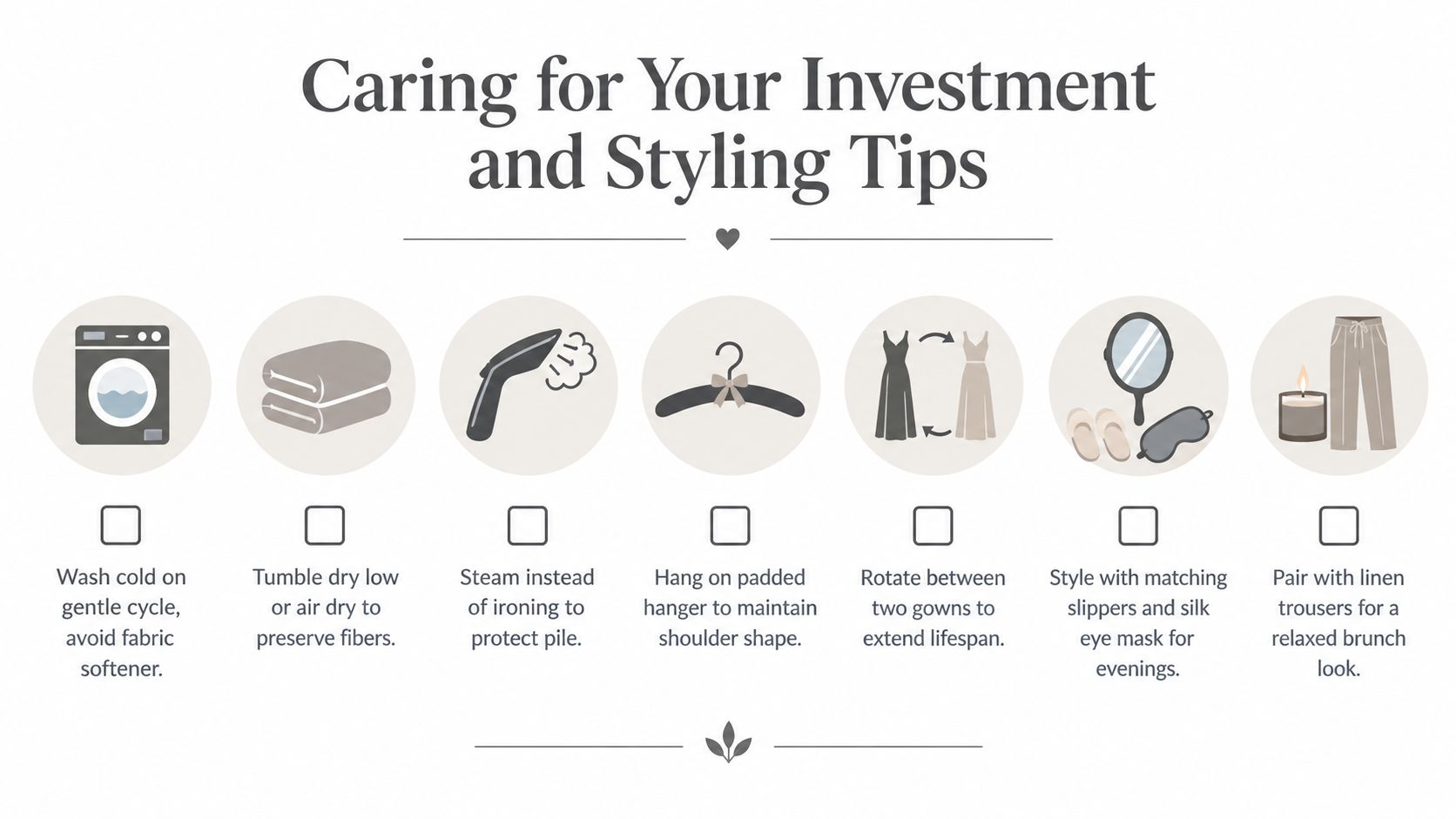
Red fabric needs a gentler routine than a pale neutral if you want to preserve its original depth. Begin by following the care label, then favour cool water and a gentle cycle whenever the construction allows it. Washing the robe inside out can reduce surface friction, while separating it from pale garments helps prevent unwanted colour transfer during early washes.
Avoid overloading the machine. A dense terry gown needs room to rinse properly, and overcrowding increases rubbing between garments. Fabric softener can coat cotton fibres and interfere with the absorbent quality that makes terry useful, so it's better to let the cotton soften through appropriate washing and drying.
Dry with less heat and friction
High heat can stress fibres and accelerate the tired appearance of saturated colour. Use a low-temperature tumble setting where permitted, or air dry the robe in a well-ventilated place. Don't leave a wet red gown compressed in a basket, because moisture, pressure and poor airflow can all make the garment smell stale and place unnecessary strain on the fabric.
A reliable care sequence looks like this:
- Wash gently: Use cool water and a mild detergent suitable for coloured cotton.
- Protect the surface: Turn the garment inside out and avoid washing it with abrasive items.
- Skip softener: Preserve the natural absorbency of the loops.
- Dry carefully: Choose low heat or air drying, depending on the care label.
- Steam rather than press: Direct ironing can flatten a loop pile or create unwanted shine.
- Store with support: Use a broad hanger or fold the robe loosely to avoid shoulder distortion.
Style the colour with restraint
A red robe doesn't need competing decoration. Pair a deep red gown with neutral slippers, a simple sleep set or a silk eye mask for an evening ritual. For a relaxed brunch at home, a lighter red waffle robe can sit comfortably over linen trousers or a plain cotton top.
Use texture to keep the look refined. Smooth accessories balance plush terry, while matte natural fabrics prevent a saturated robe from appearing costume-like. If the robe is a gift, coordinated accessories can make the colour feel intentional without turning the package into a theme.
The Role of Sustainable Sourcing in Luxury
Does a luxury red dressing gown remain luxurious once the colour fades, the pile loses its feel or the fabric needs replacing sooner than expected? Sustainability gives buyers a practical way to judge that question. Fabric weight, red dye chemistry, construction and sourcing all affect how long the garment remains comfortable and useful.
For skin-contact textiles, many buyers look for organic cotton and credible certification. GOTS-certified organic cotton can help shoppers identify products made within a recognised organic textile framework, and our guide to why you should choose robes made with sustainable materials explains how to read those claims at product level rather than assume them from broad marketing language.
Cotton contributes a natural handfeel, moisture management and increasing comfort when it receives suitable care. Weight changes the trade-off. Dense terry absorbs water and feels substantial after bathing, but it can be warmer and slower to dry. Waffle cotton feels lighter and more breathable, making it easier to layer and more suitable for relaxed homewear.
Colour deserves equal scrutiny. A saturated red depends on controlled dyeing and finishing, and poor colour performance quickly makes an otherwise premium robe look tired. Buyers should seek clear information about fibre origin, dye management, finishing, certification and care requirements as one connected picture. Sustainability includes the resources used to produce the textile, the durability of the colour and the effort required to keep the robe in service.
Independent guidance on cotton bathrobes and dressing gowns in Europe shows that buyers commonly assess robes through material feel, absorbency and sustainability. It also highlights the relevance of organic cotton for skin contact and wellness. That leaves a useful decision for red robes: will the garment serve mainly as a wellness layer, a fashion statement or visible homewear?
Match the fabric to the routine. Choose absorbent terry when the gown replaces a towel after bathing. Choose lighter waffle when breathability and easy layering matter more. A controlled wine or garnet shade gives colour with restraint, while a brighter red makes a more confident visual statement.
Responsible sourcing, suitable weight and careful dye management can coexist with a long-standing domestic-luxury feel. The result earns its place through repeated use, stable colour, reliable performance and lasting comfort, rather than appearance in a photograph.
For premium cotton terry, breathable waffle construction and red colour options, explore the collection at SEYANTE. Select the weight and silhouette around your routine, then follow the care requirements to protect the robe's colour, softness and structure.