Hooded Zipper Bathrobe Buying Guide: What to Know
- Why a Hooded Zipper Bathrobe Feels Different the Moment You Put It On
- The Three Features That Define a Hooded Zipper Bathrobe
- Terry vs Waffle and Why It Changes the Whole Experience
- Getting the Fit Right Across Heights and Body Shapes
- Matching the Robe to How You Actually Use It
- Zippers, Care, and the Small Habits That Extend a Robe's Life
- Finding the Hooded Zipper Bathrobe That Fits Your Routine
You step out of a warm shower onto cold tile, your hair is dripping down your neck, and the robe tie loosens as soon as you bend to pick up a towel. A hooded zipper bathrobe addresses those small frustrations at once. It covers your head, closes securely across your chest, and lets you move through the first part of the morning without holding the robe together.
The right choice still depends on more than appearance. Fabric construction, zipper reliability, hood shape, drying speed, and fit all affect whether the robe becomes part of your daily routine or stays on a bathroom hook. This guide connects those details to real moments, from post-shower comfort to travel, workouts, and repeated laundering.
Why a Hooded Zipper Bathrobe Feels Different the Moment You Put It On
The difference starts at the edges of the robe. A traditional tie style can leave the neck exposed, open across the chest, or shift when you sit down. A hooded zipper bathrobe brings fabric around the head and neck, then closes the front in one continuous line, so warmth stays closer to the body while your hands remain free.
That matters on a cold morning. You can pull up the hood while brushing your teeth, zip the robe before unloading the dryer, and keep the front closed while carrying coffee. The robe doesn't need constant adjustment, which makes it feel less like a loose cover-up and more like practical clothing for the transition between bathing and getting dressed.
The design has a longer history than it seems
The hood and zipper serve different purposes, but they reflect the robe's broader shift from display to utility. The modern bathrobe's roots are commonly traced to 17th-century Europe, where it appeared as aristocratic loungewear. In the 19th century, the spread of terry cloth helped move the robe toward post-bath use, after looped-pile towel fabric encountered in Istanbul was brought back to England, as described in this history of the bathroom robe.
The hood preserves an older protective feature, while the zipper adds modern control. Together, they suit people who want coverage without a belt that shifts or a front that falls open.
Practical rule: Choose the robe for the five minutes after bathing, not only for how it looks while standing still.
Fit decides whether that promise holds. A robe that's too short can expose the legs when you sit, while a narrow hip sweep can pull against the zipper. If you're comparing measurements or unsure how much ease you need, this guide to better sizing decisions offers a useful way to think about body measurements, movement, and garment proportions. For the emotional side of wrapping up, SEYANTE also explores why robes can make us feel safe.
The Three Features That Define a Hooded Zipper Bathrobe
A hooded zipper bathrobe works through three connected parts: the closure, the hood, and the fabric surface. Assess them separately before judging the robe as a whole.
Start with the zipper
A center-front zipper keeps the robe closed from the chest downward. Unlike a tie, it doesn't depend on tension at the waist, so it stays in place when you walk, sit, stretch, or reach overhead. A smooth molded or metal zipper can feel reassuring, but the teeth, slider, and surrounding fabric need equal attention.
Look for a zipper path that begins low enough to avoid pressing against the throat. The front should close without pulling the hood backward or creating tension across the bust, chest, or stomach. A zipper that catches terry loops will eventually become a daily irritation, so inspect whether the tape sits cleanly against the fabric.
Then inspect the hood
The hood should cover the crown of the head and provide warmth around the neck without sliding over the eyes. A deeper hood can accommodate damp hair, but excess volume may obstruct your view when you move around the kitchen or bedroom. Lining also changes the experience. A smoother lining can glide over hair, while a terry interior may absorb more moisture but add bulk.
Finally, understand the fabric
Terry cloth uses raised loops that create more exposed surface area for water uptake. It feels closer to a wearable towel and generally suits someone who wants to put the robe on directly after bathing. A smoother or more open construction sits lightly against dry skin and can feel less bulky during travel or extended lounging.
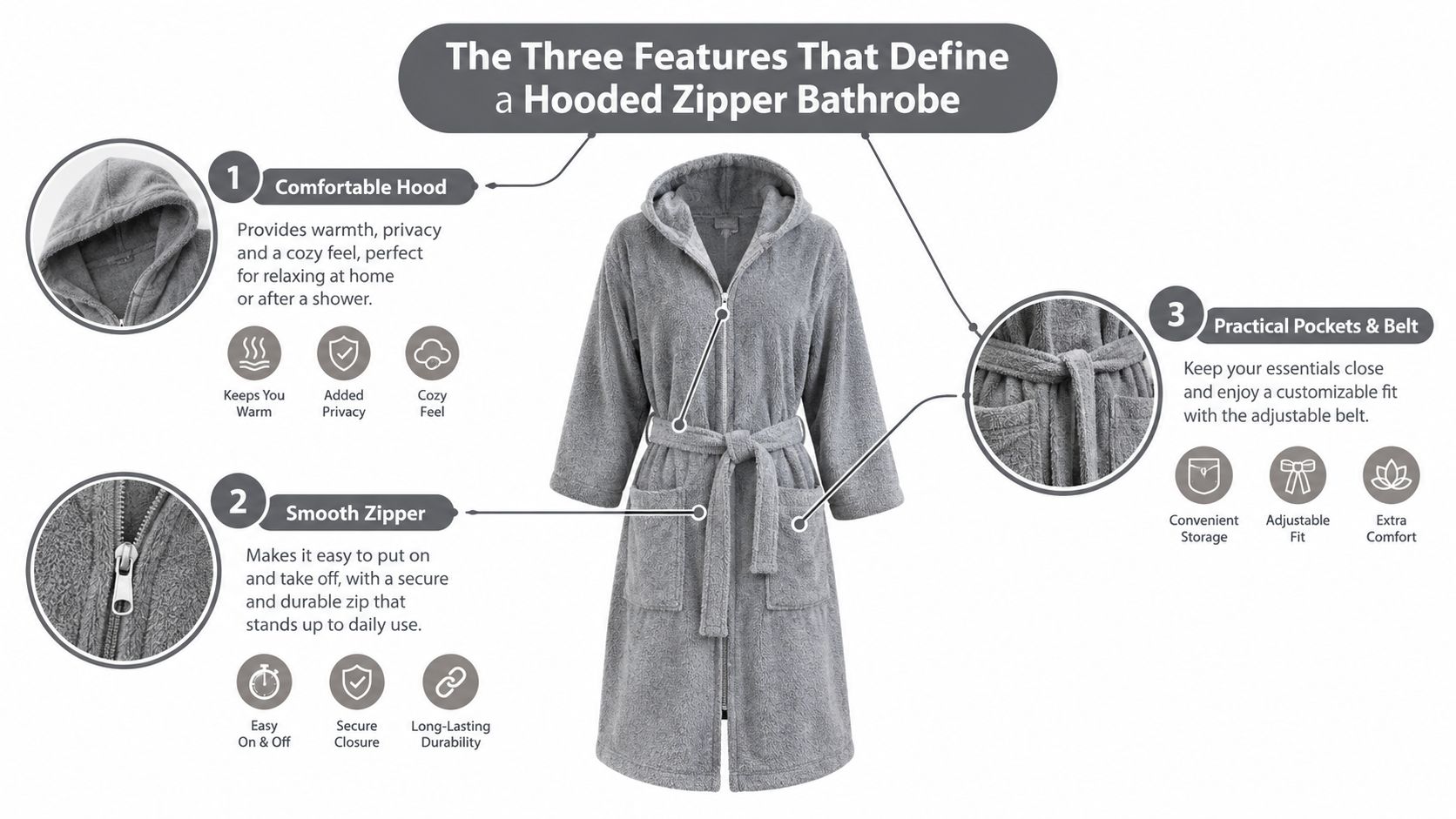
The combination determines the personality of the garment. A dense looped fabric with a substantial hood feels warm and towel-like. A lighter weave with a stable zipper feels breathable and travel-ready. If you prefer a closure with a softer opening experience, compare the mechanics with this guide to robes with snaps, while remembering that snaps and zippers behave differently during movement.
Terry vs Waffle and Why It Changes the Whole Experience
Terry and waffle fabrics can both work in a hooded zipper bathrobe, but they solve different problems. Terry is the moisture-first choice, while waffle favors lightness, airflow, and easier handling. The right one depends on whether you put the robe on while still wet or wear it later over dry sleepwear.
Terry's looped pile gives water more fiber surface to contact. Independent robe reviews describe cotton-terry robes as absorbent enough to dry the body while remaining comfortable for lounging, which makes the construction useful after a shower or workout. The trade-off is weight. More fabric and more retained moisture can make laundering and drying more demanding.
Waffle weave has a raised grid rather than a dense towel-like pile. It typically feels lighter and more breathable, making it suitable for warm rooms, layering, travel, and routines where the robe needs to dry between uses. It won't create the same plush, enveloping feel as dense terry.
| Attribute | Terry | Waffle |
|---|---|---|
| Surface | Raised looped pile | Textured grid |
| Main strength | Absorbency and warmth | Breathability and lighter handling |
| Feel | Cushioned and towel-like | Airy and structured |
| Drying behavior | Can dry more slowly when dense | Generally easier to dry |
| Useful setting | Home showers, cold mornings, post-workout use | Warm rooms, travel, layering, frequent handling |
Weight changes the balance
Fabric mass affects both performance and comfort. Premium terry robes commonly use long-staple Turkish cotton and may be made around 360 GSM, with zero-twist or combed constructions balancing softness, absorbency, and dry-down, as outlined in this organic terry bathrobe material guide. Higher GSM can increase thermal buffering and absorbency, but it also adds weight and can slow evaporation.
That makes the heaviest robe an imperfect default. If your bathroom is cool and you want to dry in the robe, terry makes sense. If you travel, exercise, or live in a warm room, waffle may feel more practical. SEYANTE's waffle versus terry comparison can help you weigh that trade-off against your actual routine.
Getting the Fit Right Across Heights and Body Shapes
Fit determines whether the robe feels enveloping or restrictive. Reviews of hooded styles report inconsistent length, oversized cuts, short sleeves, snug hips, and hoods that vary from roomy to inadequate. Those complaints point to a simple problem: shoppers often check the chest measurement and ignore the rest of the garment.
Measure the parts that move
Length affects coverage first. Shorter wearers may prefer a hem around the upper or mid-thigh area to avoid excess fabric, while taller wearers often need a longer body so the robe doesn't pull upward when seated. A knee or mid-calf silhouette offers more coverage, but only if the hem doesn't interfere with walking.
The shoulder seam also matters. A dropped shoulder creates a relaxed appearance but can make the sleeves feel too long or the upper body bulky. A closer shoulder line may improve control but feel restrictive when you layer sleepwear underneath.
Check the hip sweep in a seated position, not only while standing. A zipper can close perfectly across the torso and still bind at the hips when you sit. The zipper should begin low enough to avoid neck strain, and the hood should move with your head rather than pulling backward.
| Height Range | Body Shape | Recommended Length | Sleeve Length | Hood Depth |
|---|---|---|---|---|
| Shorter frame | Petite or narrow hips | Short to upper-thigh | Wrist to slightly above wrist | Moderate |
| Average frame | Balanced proportions | Knee area | Wrist bone | Moderate to deep |
| Taller frame | Long torso or legs | Knee to mid-calf | Wrist bone with arm movement | Deep |
| Fuller hip shape | More room through the seat | Knee or longer, with generous sweep | Wrist bone | Moderate to deep |
| Broad shoulders | Relaxed upper-body cut | Knee area or longer | Full wrist coverage | Deep enough to avoid pull |
A relaxed unisex cut gives room for pajamas, movement, and changing underneath, but it can overwhelm a smaller frame. A contoured silhouette looks neater and may reduce excess fabric, though it requires more careful checking across the chest, shoulders, and hips.
A good hood covers your head without making you lower your chin to see.
Compare your body measurements with the garment chart rather than relying on a familiar clothing size. Robosize's body measurement and fitting tips can help you measure consistently before ordering. For SEYANTE options, check the published sizing approach, then allow enough ease for the layers and movement you expect.
Matching the Robe to How You Actually Use It
A hooded zipper bathrobe earns its place by performing well in a specific moment. The robe you want immediately after a shower may not be the one you want in a gym bag, and a hospitality robe faces more laundering than a personal lounge garment.
Post-shower drying
For direct use after bathing, terry usually has the clearest advantage. The looped surface pulls moisture from the skin while the hood covers damp hair and the zipper reduces openings across the chest. Choose a fabric that feels absorbent without becoming so heavy that you avoid wearing it.
The best test is practical. Can you put it on, move through your morning, and hang it somewhere with enough airflow afterward? If yes, a terry hooded zipper robe can replace part of the towel-to-dressing transition.
Post-workout recovery
After exercise, the robe needs to handle movement and moisture without feeling like a heavy blanket. A lighter waffle construction can make sense when you're walking between a changing area, a shower, and your next activity. The zipper should close smoothly even when you're bending or stretching, and the hood should stay secure without blocking your view.
Travel and water-related routines
Travel adds a packing problem. A bulky terry robe takes more room and can be inconvenient when it must dry in a hotel bathroom or shared changing space. Waffle is often the more manageable path because the open texture feels lighter and is easier to handle between uses.
A stable hood also matters in a travel robe. It should keep its shape after being packed, while the zipper should open fully enough to make changing simple. Pockets become more useful here, especially when you need to keep a room key or phone close.
Hospitality and shared guest use
Hospitality buyers should focus on repeatable care rather than plushness alone. The robe needs secure seams, a dependable zipper, stable color, and fabric that continues to feel comfortable after repeated washing. A front closure that catches easily can create more service issues than a missing decorative detail.
Use this care visual as a reminder of the small habits that protect the closure:
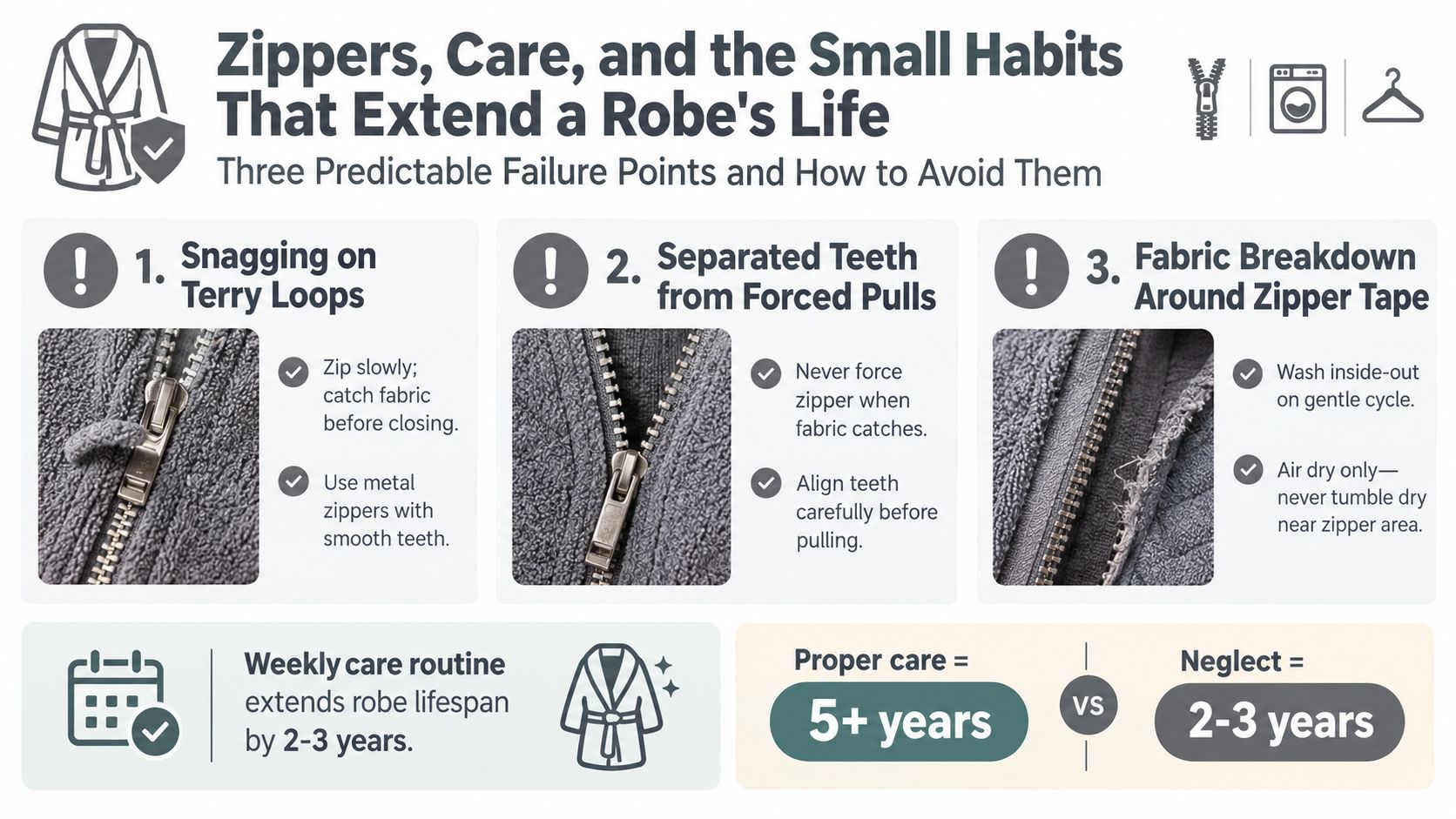
The construction decision is therefore contextual. Terry suits moisture and warmth at home. Waffle suits movement, warm spaces, and easier packing. The zipper makes either option more secure, but it also introduces a component that deserves careful inspection and maintenance.
Zippers, Care, and the Small Habits That Extend a Robe's Life
Zipper problems tend to appear at predictable contact points. Review snippets for zip-front robes mention sticking, breakage, difficult reattachment, and fleece or lining caught in the track. These failure modes matter because the robe may still feel warm while becoming frustrating to close.
Prevent snags before they happen
Terry loops can sit close to the zipper teeth. Close the zipper slowly and keep nearby fabric flat. If a loop catches, stop rather than pulling harder. Forcing the slider can distort the teeth or separate the zipper from the surrounding tape.
A garment bag can reduce contact with rough items during washing. If the robe has a zipper, close it before placing it in the machine, but don't assume closure alone prevents every snag. Check the hood, pockets, and zipper tape after washing so a small issue doesn't become a larger one.
Protect the fabric around the closure
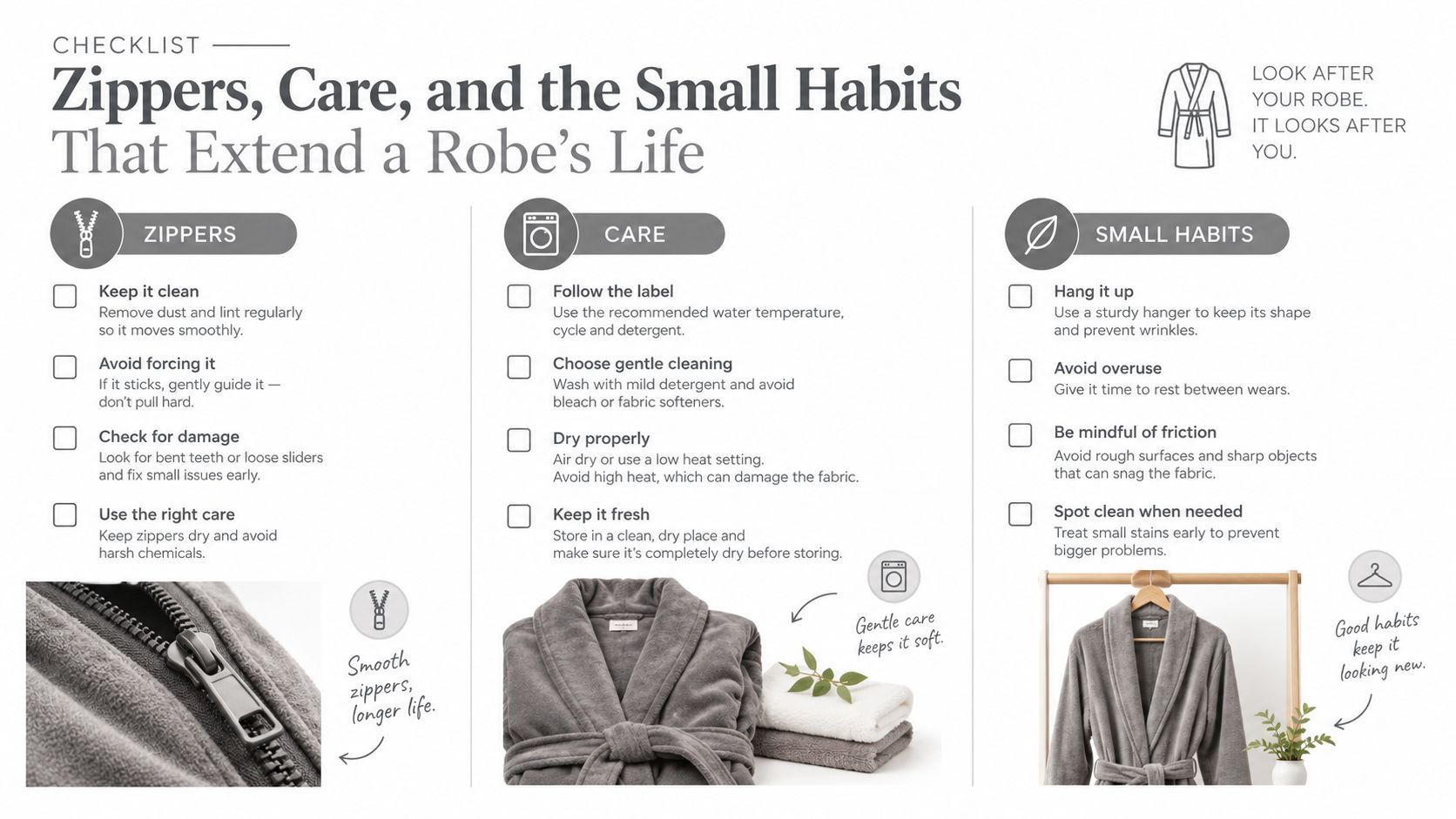
Cool water and mild detergent help preserve cotton loops and reduce unnecessary stress on the zipper area. Fabric softener can coat terry fibers and reduce their ability to take up moisture, so skip it when absorbency matters. Follow the care label rather than treating every robe as if it can withstand the same temperature.
High heat can flatten loops, tighten cotton, and place repeated stress on zipper teeth and tape. Air drying or low heat is gentler, and good airflow helps the hood and thicker seams dry completely. Never store the robe while the hood or zipper area is still damp.
Store it without flattening the shape
Use a wide hanger when possible, especially for a robe with a structured hood. A narrow hanger can create pressure points across the shoulders and leave the hood folded awkwardly. Keep the garment away from radiators and other direct heat sources, which can dry cotton unevenly and stress the zipper tape.
A quick inspection after each wash is enough to catch many problems early:
- Check the zipper track: Remove caught loops gently instead of forcing the slider.
- Feel the hood seam: Make sure it has dried fully before hanging the robe.
- Inspect the belt and pockets: These areas can remain damp or pull against the main body.
- Trim loose loops: Cut them carefully rather than pulling them out.
Care won't change the basic quality of a zipper, but it can prevent avoidable damage. The aim is simple: keep the closure aligned, keep the terry surface open, and let every thick section dry before the next wear.
Finding the Hooded Zipper Bathrobe That Fits Your Routine
The final decision is a match between fabric behavior and daily context. Start with the moment that matters most, then choose the length, hood depth, and fit that support it.
| SEYANTE Robe | Best-Fit Routine | Key Tradeoff |
|---|---|---|
| Waffle Robe Cotton Bathrobe with Hood | Warm rooms, light lounging, travel | Lighter and easier to handle, with less towel-like absorbency |
| Turkish Cotton Terry Robe | Direct post-shower use and cooler mornings | More absorbent and warm, but potentially heavier to dry |
| Women's Waffle Robe with Hood | Shorter lengths, warm rooms, lighter coverage | Easier movement and lighter warmth, with less dense moisture handling |
| Unisex mid-length terry silhouette | Shared use, layering, everyday home wear | Flexible coverage, though a relaxed cut may feel broad on smaller frames |
| Longer terry silhouette | Fuller coverage and cooler environments | More warmth and coverage, with more fabric to launder and dry |
Choose terry when moisture comes first
A Turkish cotton terry robe is the practical direction for someone who steps directly from the shower into the garment. The looped surface supports drying, while the hood and zipper extend coverage around the head, neck, and front of the body. Expect a more substantial feel and plan a drying space with good airflow.
This option can also suit post-workout use when warmth matters more than compact packing. Check the zipper path carefully, especially if you'll stretch, sit, or layer clothing underneath.
Choose waffle when handling matters most
The Waffle Robe Cotton Bathrobe with Hood fits a lighter routine. It makes sense for warm bathrooms, travel, short periods of lounging, and anyone who dislikes the weight of dense terry. The trade-off is a less towel-like surface, so it may not replace a separate drying towel as effectively after a shower.
The Women's Waffle Robe with Hood follows the same logic for shoppers who prefer a shorter silhouette and lighter warmth. Check sleeve and hood proportions independently, since a shorter body doesn't automatically mean a smaller hood or shorter sleeves.
Choose coverage by movement, not appearance
Unisex mid-length options give more room for pajamas and varied body shapes. Longer terry silhouettes provide fuller coverage, but they need enough hem clearance for walking and sitting. For hospitality, prioritize consistent fit, a zipper that resists snagging, and care instructions that staff can follow reliably.
A useful buying order is straightforward:
- Choose the construction: Terry for absorbency and warmth, waffle for breathability and easier handling.
- Choose the length: Shorter for movement and lighter coverage, longer for warmth and privacy.
- Check the body fit: Measure chest, shoulders, hips, and sleeve reach.
- Inspect the hood and zipper: Confirm clear vision, comfortable neck movement, and a smooth closure.
- Review care needs: Make sure your laundry and drying setup can support the fabric weight.
SEYANTE offers hooded robes in Turkish cotton terry and waffle constructions, including options for lighter travel use, direct post-shower drying, shorter women's silhouettes, and fuller unisex coverage. Visit SEYANTE to compare the construction, fit, and closure details against the routine you want the robe to serve.
Choose a terry hooded zipper bathrobe if your priority is stepping warm and dry from the shower, or choose a waffle version if you need lighter handling for travel, workouts, and warm rooms. Visit SEYANTE to explore those options and select the hood, length, and fabric weight that fit your everyday routine.