Terry Towelling Bath Robe with Hood: The Ultimate Guide
You've just stepped out of the shower, your skin is still damp, and a standard towel has already started to feel cold. A terry towelling bath robe with hood changes that transition. Instead of drying one area at a time, it wraps your body in a moisture-absorbing layer while the hood protects wet hair and the back of your neck from a sudden chill.
That makes this robe more than soft loungewear. It's a wearable drying system, built around looped cotton, warmth retention, and construction details that determine how well it performs after repeated use. The right choice should feel comfortable on a quiet morning, recover well after swimming, and remain absorbent after many laundry cycles.
The Practical Value of a Hooded Terry Robe
A hooded terry robe earns its place in the first few minutes after bathing. Pull it on, cover damp hair, and continue with skincare, shaving, or dressing without carrying a second towel. The looped surface gathers residual moisture, while the robe's enclosed shape keeps a layer of warm air close to the body.
The hood addresses a specific gap in ordinary robe design. Hair and the back of the neck can remain wet after the rest of the body feels dry, so they lose warmth quickly. Adding absorbent fabric around these areas works like extending the towel upward, helping the robe manage moisture and comfort together. What a terry robe is explains the garment's basic purpose and construction.
A practical layer for everyday routines
The value becomes clearer when the robe fits the task:
- Morning preparation: After showering, you can keep both hands free for skincare, grooming, or preparing breakfast while the robe handles remaining moisture.
- Post-workout recovery: After swimming or exercise, it provides coverage and warmth as you move from a changing area to a lounge, bedroom, or car.
- Guest comfort: In a hotel or spa, a hooded terry robe supports the transition from bathing or treatment to relaxation, including the period when hair is still damp.
Terry towelling is not the right choice for every moment. Someone who dries completely before dressing may prefer a lighter woven robe with less bulk. Someone who wants one garment to absorb water and retain warmth immediately after a shower will generally benefit more from terry loops.
Practical rule: Choose a hooded terry robe when you need help during the first stage after water, rather than only a comfortable layer for already-dry skin.
Why the design has lasted
The modern form of terrycloth reached the West in the 1840s, after Henry Christy observed looped-pile fabric in Istanbul. His company began industrial production of “Royal Turkish Towels” in 1850 with Queen Victoria's approval. Much older looped-pile textiles, including linen terrycloth dated to around 4000 BCE, show that the absorbent structure predates the bathrobe.
The hooded version developed later from robes that were often floor-length and made with large hoods for warmth. That history connects the garment with bathing, swimming, spa treatments, and cold-weather comfort. This history of terry cloth hooded bathrobes traces how those uses shaped the form still familiar today.
Understanding Terry Towelling Construction
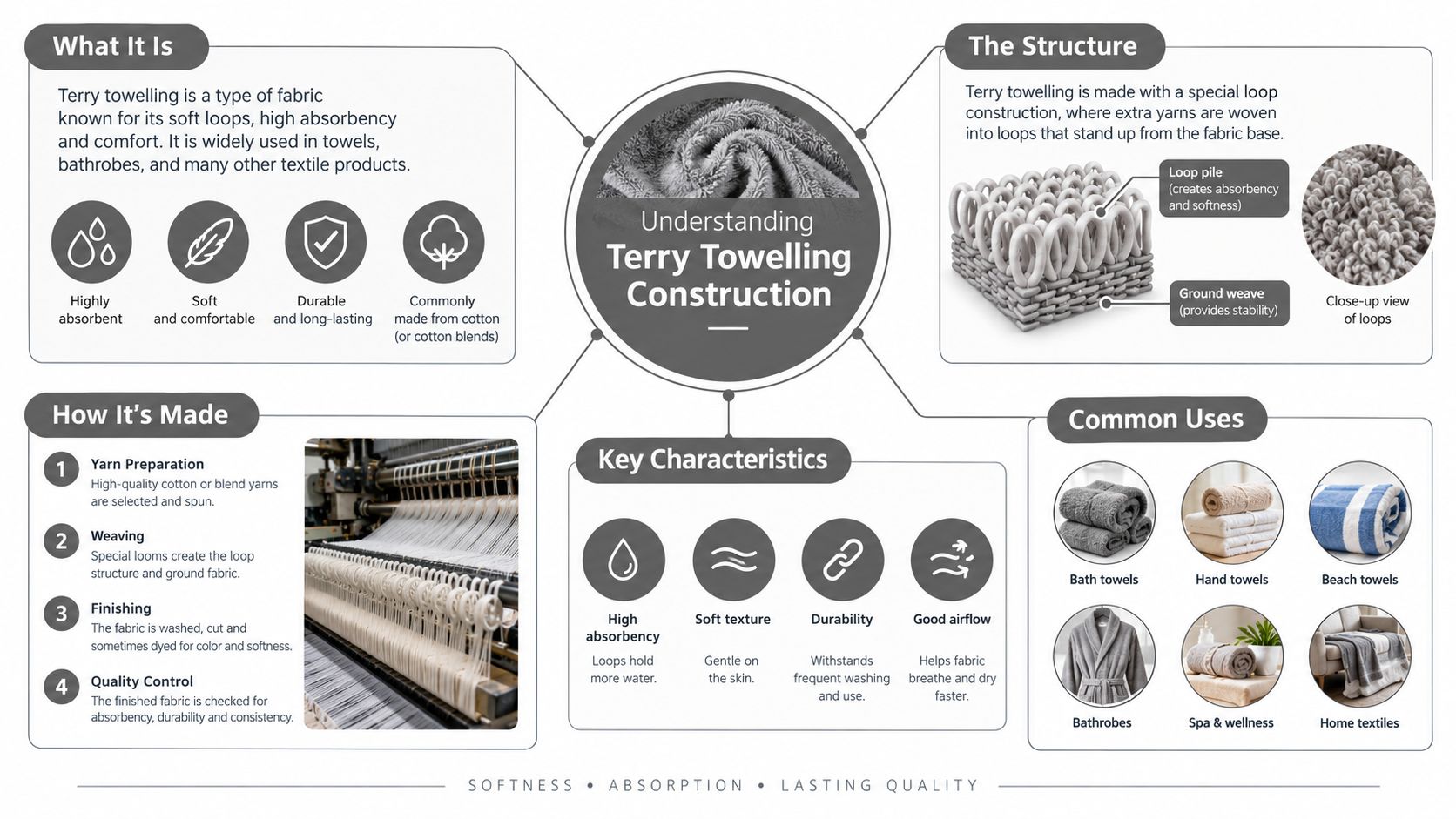
Uncut loops, not the cotton fiber itself, define terry towelling. A flat woven cotton surface offers comparatively smooth contact points. Terry introduces raised loops on one or both sides, increasing the area where water can meet the yarn. Each loop also creates a small space around the fibers, so the fabric can draw moisture away from damp skin rather than just pressing a flat surface against it.
The structure explains why two cotton robes can behave differently. Terry holds moisture around and between yarn loops, much like a field of flexible, shallow reservoirs. A looped surface offers more exposed yarn than a flat weave, giving water more places to adhere and spread through the pile.
The loop is the working component
A terry robe's performance depends on the way loops are formed, anchored, and distributed across the fabric. Longer and denser loops generally hold more water, while pile height strongly influences absorbency. Textile research indicates that increasing pile height can increase water absorption, while very tight warp and weft densities may reduce it by closing the spaces through which moisture and air move. This technical explanation of terry-cloth construction explains why robes with similar cotton labels can still feel and perform differently.
A shopper comparing how a terry robe is constructed should examine the pile, not only the fiber content. Softness may come from finishing treatments, brushing, or a loose surface, but it does not show how readily the robe will absorb water. Look for clearly formed, consistent loops and a fabric that feels substantial without looking matted or compressed.
Why structure affects drying as well as absorption
Absorbent loops can retain water after the outer surface feels dry. Deep pile, thick fabric, and a hood folded over the shoulders all create inner areas with less air circulation. The hood matters because its doubled layers can behave like a small pocket of damp fabric, especially when it rests against the robe instead of hanging open.
That trade-off connects water handling, warmth, weight, and drying speed. A robe intended to replace a towel may benefit from a deeper, more absorbent pile. Someone in a humid home may prefer a more open structure that releases moisture faster between uses. Spread the hood and robe apart while drying so air can reach the loops on both sides.
How to Evaluate GSM and Fabric Weight
GSM means grams per square meter. It describes fabric weight and gives shoppers a more useful point of comparison than vague words such as “luxurious” or “premium.” A higher GSM usually indicates more material in the fabric, but it doesn't tell the whole story because loop height, yarn quality, weave openness, and finishing also influence performance.
Think of GSM as the robe's load-bearing specification. It helps you estimate how substantial the garment may feel, while the pile tells you more about how the surface will interact with water. A heavy robe with compressed loops may not dry or absorb in the same way as a lighter robe with a more open pile.
Match weight to the routine
Start with the way you'll use the garment.
A lighter terry robe can suit warm rooms, frequent washing, and shoppers who want easier movement. A medium-weight style often offers a practical balance for everyday home use. A heavier robe can feel more enveloping in colder conditions or in a spa setting, but it may take more time to dry and occupy more space in the wash.
The best specification depends on what happens after you put the robe on:
- You step out dripping wet: Give absorbency and pile height priority over minimal weight.
- You towel-dry first: A lighter structure may provide enough comfort without unnecessary bulk.
- You use the robe in a cool room: A denser fabric can supply more warmth around the torso and shoulders.
- You wash it frequently: Consider whether your laundry setup can accommodate a substantial garment and dry it thoroughly.
For a deeper explanation of how fabric weight is used in towel selection, see this guide to GSM in towels. The same principle applies to robes, but the garment's sleeves, hood, belt, and seams also add weight beyond the main fabric panel.
Don't treat GSM as a quality score
A higher number isn't automatically better. It may produce a plush, warm robe, yet it can also increase drying demands. A well-made lighter robe may be more practical for daily use than a very heavy one that stays damp between washes.
Check the product description for fabric weight, fiber composition, pre-shrinking information, and care instructions together. Those details provide a more reliable picture than GSM alone.
Why Choose GOTS-Certified Organic Terry
Organic certification matters most to shoppers who care about the journey from fiber to finished garment. A certification such as GOTS is intended to address more than the cotton plant itself. It provides a framework for reviewing the fiber, processing stages, environmental controls, and social conditions involved in textile production.
That makes certification different from a simple “organic cotton” statement. A product description may identify the raw material, while a recognized certification can provide a broader chain-of-custody framework. Shoppers should still check whether the finished product and the specific supplier are covered, rather than assuming that every item from a brand carries the same certification.
The fabric mechanics remain familiar
Organic terry doesn't absorb water through a different physical principle. Its performance still comes from the same looped-pile construction discussed earlier. The practical differences concern the starting fiber, processing choices, and the level of documentation behind the product.
This is why a comparison between conventional Turkish cotton terry and certified organic terry shouldn't focus only on absorbency. Both can be soft and functional when properly constructed. The meaningful questions include:
- What is certified: Is the certification attached to the finished textile, the raw fiber, or a particular production chain?
- What matters to your skin: Do you prefer a product with documented processing standards because the robe sits against your body for extended periods?
- What matters to your purchasing values: Are environmental and labor requirements part of your decision, alongside weight and comfort?
- What trade-off are you accepting: A certified option may have a higher purchase price, limited color availability, or fewer construction choices.
The guide to understanding GOTS certification can help clarify what to look for in certification language before you compare individual robes.
Make the decision personal
Choose certified organic terry if traceability and documented production standards are central to your purchase. Choose based on construction and care information if your primary concern is absorbency, warmth, and long-term use. Ideally, the product offers both transparent certification information and a clearly described terry structure.
Hood Construction and Drying Mechanics
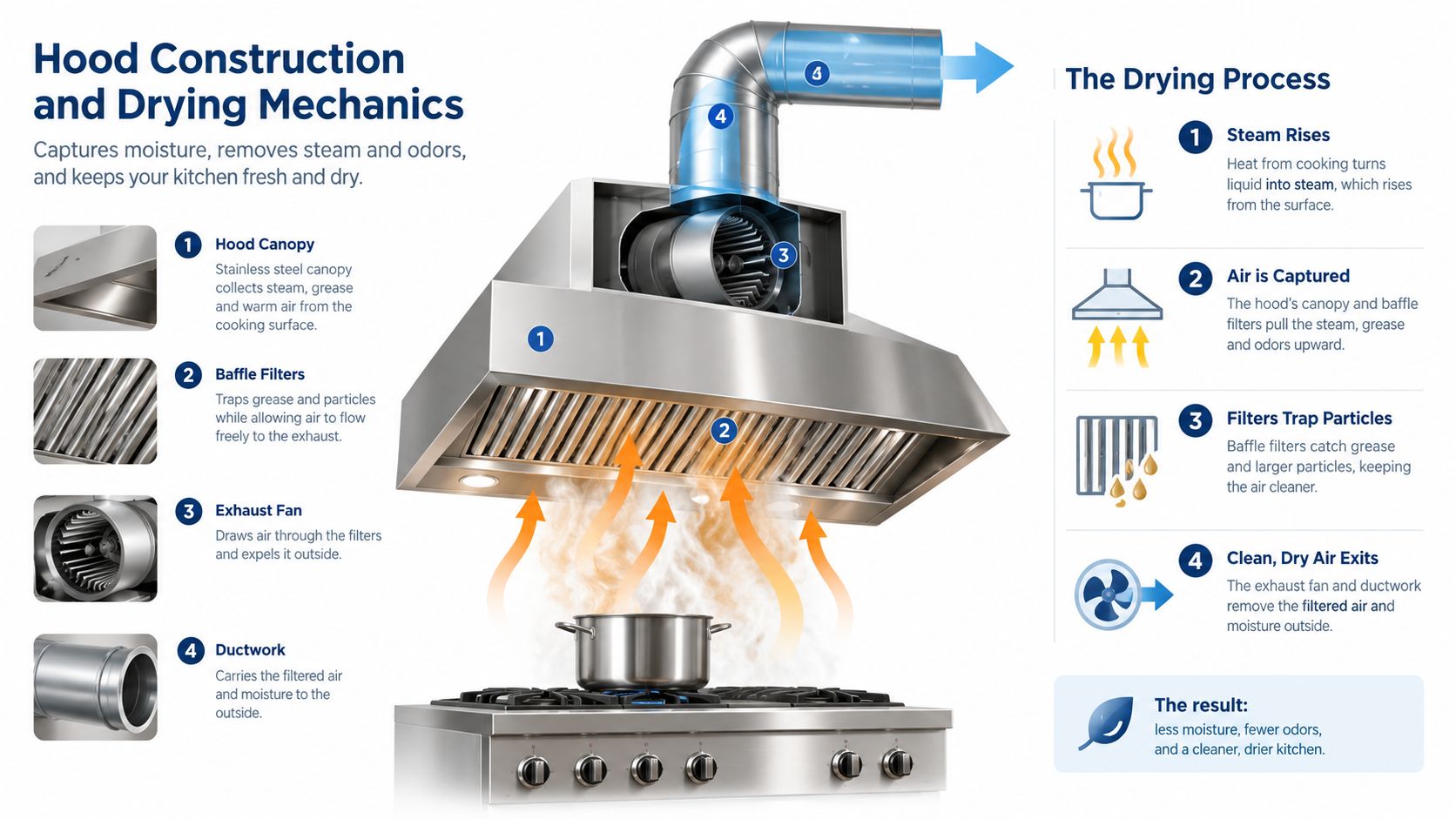
A hood adds useful coverage, but it also creates a separate drying zone. It has extra fabric, additional seams, and a curved shape that can trap moisture when folded against the robe. That means hood design affects the garment's drying efficiency just as much as the body fabric does.
A shallow hood tends to feel less intrusive while walking, grooming, or carrying items. A deeper hood can provide more coverage for wet hair, but it may hold more moisture and feel heavy if it's made from the same thick terry as the body.
Inspect the hood as a separate component
A hood that sits directly against wet hair can absorb effectively, but it can also become the dampest part of the robe. A lining or a lighter inner layer may reduce bulk around the face and make the hood more comfortable during movement. It can also prevent the full thickness of the terry pile from resting against your cheeks and forehead.
Look for a shape that stays open when the robe hangs. If the hood collapses into a thick fold, it will need deliberate spreading after every use. A robe with a more structured opening may release moisture more readily on a hook.
Focus on the stress points
The hood joins the robe at the neck and shoulder area, where movement creates tension. Examine the seam from the inside if product images allow it. Dense, even stitching and reinforced joins are more reassuring than a seam that looks stretched or lightly finished.
The belt loops, cuffs, and shoulder seams deserve the same attention. These areas experience repeated pulling, tying, and movement. A well-designed terry towelling bath robe with hood should balance softness with enough structural support to keep its shape after laundering.
Construction check: A hood isn't functional merely because it's deep. It should cover wet hair comfortably, avoid excessive bulk, and hang open enough to dry between uses.
Care Instructions to Preserve Absorbency
A terry robe can look clean and feel soft while losing its ability to absorb water. The loops work like a field of small textile hooks: their open spaces catch moisture. Fabric softener coats those loops and partly fills the gaps, so surface smoothness can increase as absorbency declines.
Use a mild detergent and follow the garment's care label. Leave enough space in the washing machine for the robe to move and rinse properly. A tightly packed drum can compress the pile and trap detergent, while the hood may remain folded inside the garment instead of opening during the cycle.
A dependable washing routine
- Separate heavily soiled items. Wash the robe with compatible textiles. Keep it away from items that shed lint or carry oils that can settle into the terry pile.
- Use mild detergent. Excess detergent can remain between the loops, leaving the surface coated and less receptive to water.
- Skip fabric softener. Terry loops need to stay open and uncoated to collect moisture efficiently.
- Check the label before choosing heat. For commercial or hygiene-sensitive settings, wash at 60°C when the care label permits it. In other cases, follow the lower temperature specified for the robe's construction.
- Dry thoroughly without excessive heat. Medium tumble-dry heat is preferable to repeated high heat, which can weaken cotton fibres more quickly.
After washing, treat the hood as a separate drying zone. Pull it open, lift it away from the collar, and check the inner fold for lingering dampness. Hang the robe with the hood spread so air can reach both sides without placing unnecessary strain on the shoulder seams. Check the cuffs and belt area as well, since dense folds can hold moisture after the rest of the robe feels dry.
Protect against shrinkage
Cotton terry may shrink when washing or drying conditions exceed what the garment can tolerate, especially if the robe was not properly pre-shrunk. Hot cycles, repeated high-heat drying, and leaving the robe damp for long periods can also change the pile's feel and reduce comfort. Controlled heat and the care label provide the safest reference for preserving fit.
Laundry rule: Avoid fabric softener, use mild detergent, and choose controlled drying rather than the hottest available setting.
If the robe feels less absorbent after earlier washes, do not add more softener to restore softness. Wash it according to the label with a suitable detergent, rinse thoroughly, and let the loops dry fully. A robe that remains damp inside the hood or cuffs can develop a stale smell, so complete drying matters as much as the wash itself.
For shared textiles, facility managers must consider moisture, laundering, and bacterial risks together. This Pseudomonas aeruginosa guide for facility managers provides relevant hygiene context. Household users can apply the same principle by washing shared or heavily used robes regularly and never returning a damp robe to a closed cupboard.
Buying Considerations for Every User
A hooded terry robe should match its user and working conditions. A robe for quiet mornings faces different demands from one washed repeatedly in a hotel or spa. Judge the loops, hood, seams, and care requirements together, because comfort on day one does not guarantee reliable performance over time.
For personal daily use
Begin with fit. The shoulders should rest naturally, sleeves should allow free movement, and the hood should cover wet hair without pulling the collar backward. Check the length and belt position both standing and sitting. Extra fabric may feel comfortable, yet become awkward while grooming, cooking, or moving through a small bathroom.
Consider how the robe will handle moisture. If you put it on immediately after bathing, choose absorbent terry with loops that can contact the skin and hold water. If you towel-dry first, breathability, mobility, and drying speed may matter more than maximum fabric weight. A dense robe that stays damp between uses can be less practical than a lighter one that dries fully.
For gifts and bridal groups
Gift buyers need to check presentation and daily usability. Coordinated colors, consistent sizing, a functional hood, and clear care instructions make the robe easier to adopt as part of a routine.
For group orders, confirm that the same construction is available in every required size. Ask whether the fabric weight, stitching, and finish remain consistent across the order. A matching appearance is useful, but dependable fit and easy care have greater long-term value.
For hotels, spas, and facilities
Hospitality buyers should assess the robe as working linen. Look for reinforced stress points, durable seams, repeatable sizing, and washing instructions that suit the facility's process. A facility-grade specification should state the robe's GSM or fabric weight, not merely describe it as thick or luxurious. That detail helps buyers compare absorbency, drying time, storage burden, and expected handling more accurately.
Commercial hygiene routines may require terry robes to tolerate washing at 60°C. Controlled drying still matters because excessive heat can stress cotton fibers and shorten service life. The cited terry towelling care guide explains this balance.
Ask about replacement stock, consistent availability, and construction at the hood, belt loops, cuffs, and shoulder seams. A robe that changes shape during routine laundering creates extra work and an uneven guest experience.
SEYANTE offers hooded Turkish cotton terry robes for men and women, plus lightweight waffle styles for home self-care, gifting, and hospitality use. Review the fabric details, sizing guidance, and care information at SEYANTE, then match the robe to your moisture, warmth, and laundering priorities.