Maternity Bathrobe Sets: Ultimate Comfort Guide
You're comparing robe sets late at night, one hand on your growing belly and the other scrolling through size charts. The softest option looks tempting, but you're also wondering whether it will still close comfortably after delivery, when your chest may feel fuller, your body is recovering, and easy nursing access matters more than coordinated styling.
That's the hidden difficulty with maternity bathrobe sets. A robe can feel perfect during pregnancy and become awkward in the immediate postpartum period, or it can work well for hospital use but feel too heavy for daily lounging. The right choice depends on fabric behavior, wrap coverage, adjustability, and how you expect to use the set after birth.
Why Maternity Bathrobe Sets Deserve More Thought
A maternity robe is easy to treat as an indulgence. You may already own an oversized cardigan or an old sweatshirt, so buying a dedicated set can feel unnecessary until you're trying to get dressed after a shower, prepare a hospital bag, or nurse during the night without fully undressing.
Consider the shopper who buys a robe midway through pregnancy. She chooses her usual size, prioritizes a plush texture, and feels comfortable for several weeks. Later, her bump needs more room, the wrap tie sits higher than expected, and the robe no longer gives reliable coverage when she walks or reaches. After delivery, her body changes again, and the garment that accommodated her belly may not provide enough room across the chest.
Comfort has a longer history than a trend
Maternity clothing developed from a need to conceal pregnancy into a category centered on practical fit and comfort. Lane Bryant launched one of the first ready-to-wear maternity lines in the United States in 1904, and by 1911 the company is described as having created the first ready-to-wear maternity clothes. Its mail-order catalog had passed $1 million in sales by 1917, evidence that pregnancy-specific clothing addressed a substantial and recurring need. (Vox's history of maternity clothing)
The broader category remains commercially significant. The U.S. maternity-clothing segment was reported at $2.4 billion in 2015, while pregnant shoppers spent about $480 on maternity wear in 2014, according to the same historical overview. Those figures aren't specific to robes, but they show why comfort-oriented layers, loungewear, and postpartum clothing deserve more attention than a last-minute purchase.
Practical rule: Choose a robe for the body you expect to have during recovery, not only the body you have while shopping.
Temporary softness versus lasting usefulness
The most attractive robe isn't automatically the most useful. Plush fabric may feel comforting but become too warm during hormonal temperature changes. A loose cut may fit a bump but gape across the chest after delivery. A fixed tie may look polished but offer little flexibility when your proportions change.
Look for a set that earns repeated use in several situations:
- Pregnancy lounging: The wrap should sit securely without pressing into the abdomen.
- Hospital preparation: Sleeves and openings should allow movement, checks, and layering.
- Early recovery: The robe should maintain coverage while you sit, stand, rest, and nurse.
- Longer-term wear: Fabric and styling should remain comfortable after the bump is gone.
The most valuable maternity bathrobe sets aren't defined by decoration alone. They combine adaptable fit with a fabric suited to your climate, washing routine, and postpartum comfort needs.
Choosing Between Terry and Waffle Fabrics
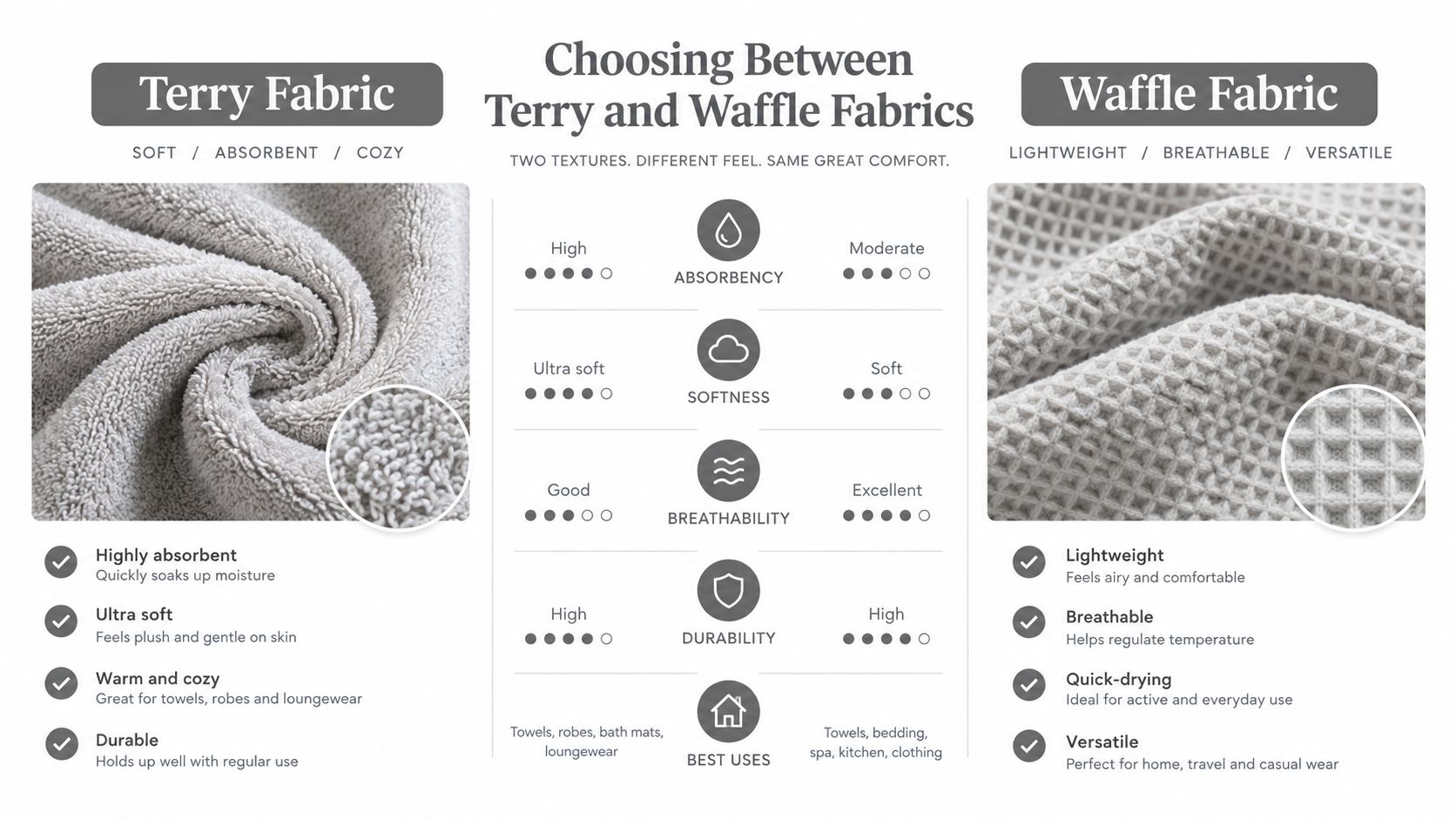
Fabric determines how a robe handles moisture, heat, weight, and repeated washing. Terry and waffle weaves may both look appropriate in product photographs, but they solve different problems.
Terry cloth uses looped yarns that create a soft, absorbent surface. It works well after showers, during hospital stays, and on recovery nights when moisture management matters. Terry also tends to soften through repeated washing, provided you care for it properly.
Waffle weave has a lighter, textured structure. It feels cooler and less bulky, which makes it useful for warm rooms, warmer climates, and everyday home wear. Its trade-off is lower absorbency, so it won't perform like terry when you want the robe to dry you after bathing.
A practical fabric comparison
| Feature | Terry cloth | Waffle weave |
|---|---|---|
| Absorbency | Strong moisture absorption | More limited absorption |
| Weight | Generally fuller and more substantial | Lighter and easier to layer |
| Temperature feel | Warmer and cozier | Cooler and more breathable |
| Best use | Showering, hospital bags, early recovery | Daily lounging, warmer conditions, year-round layering |
| Post-wash behavior | Can soften with repeated washing | Keeps a lighter hand but may need gentle reshaping |
Postpartum robe guidance also identifies a useful hybrid, a microfiber exterior with a terry interior. The outside feels smooth and sleek, while the inside provides absorbency without the bulk of a fully looped robe. That construction can suit someone who wants a polished appearance but still needs practical moisture control.
Match the weave to the moment
For a hospital bag, terry is usually the more forgiving choice if you expect frequent showering or want a robe that feels substantial during rest. For warm-weather home wear, waffle can prevent the wrapped-up feeling that heavier cloth creates. Neither is universally superior, because the right answer depends on whether you value absorbency or low bulk more.
If you're also choosing relaxed clothing for the same period, a guide to everyday shorts that feel soft can help you think about fabric hand feel and movement beyond robes. For a more focused weave comparison, see this waffle versus terry robe guide.
How to Size a Maternity Robe That Lasts
You may choose a robe late in pregnancy, then find that the same fit behaves differently after delivery. Your abdomen changes, breast fullness can fluctuate, and you may need more front coverage while nursing or sitting. Size a maternity bathrobe set for both stages rather than fitting only the bump you have today.
Take the measurements that control coverage
Use a flexible tape measure and keep it level without pulling it tight. A robe needs enough ease for wrapping, sitting, and wearing over sleepwear.
- Measure the chest. Place the tape around the fullest part of your bust while wearing the undergarments you expect to use with the robe. This measurement matters after delivery, when nursing can change bust fullness and coverage needs.
- Measure shoulder to hem. Start at the top of your shoulder and measure to the point where you want the robe to finish. Too little length can expose your legs when you sit, while excessive length may drag or twist around your feet.
- Measure sleeve length. Check the distance from your shoulder to your wrist or preferred sleeve endpoint. Sleeves that extend too far can interfere with feeding, washing, or handling a newborn.
- Check the tie position. The belt should overlap the front securely without resting directly across the most sensitive part of your bump. Its position should also remain workable as your abdomen becomes smaller after birth.
A brand-specific chart is more reliable than your usual clothing label. Guidance for maternity robes recommends checking the manufacturer's measurements and choosing natural fibers such as cotton, bamboo, or linen when breathability and lower heat retention matter.
Plan for two different bodies
Pregnancy fit and postpartum fit require different allowances. During pregnancy, the abdomen and hips need room. Immediately after delivery, adaptable chest coverage, a repositionable tie, and sufficient front overlap help you stay covered while nursing, standing, or changing position.
Use your current measurements with the brand's chart, then inspect how the robe is built. A generous wrap, inner tie, and adjustable outer belt can accommodate more body changes than a fixed front. Use this robe size chart guide to read garment measurements before ordering, especially when the chart lists body size separately from finished garment dimensions.
Fit should feel secure when you move, not merely acceptable when you stand still.
Avoid sizing up automatically. A robe that is too large may have sleeves that obstruct your hands, shoulders that slide backward, and a belt that cannot keep the front closed. Aim for planned ease: enough room for pregnancy, recovery, and a light layer underneath, with proportions that still keep the garment controlled.
Design Features That Support Nursing and Recovery
A robe that feels comfortable over a pregnant abdomen can become awkward after delivery. You may wear it while holding a baby, nursing in a chair, receiving visitors, or walking to the bathroom. Each situation tests coverage, access, and control in ways a product photograph cannot show.
An open-front wrap generally works better across both stages than a restrictive pullover. During pregnancy, loosen the tie around the abdomen. After birth, reposition it as your shape changes and open one side for nursing without removing the entire garment. The front should still close securely when you stand or sit.
Evaluate the robe as a working layer
Assess the features against the tasks you will handle during recovery:
- Nursing access: Choose a front that opens with one hand or minimal adjustment, especially when the other arm is supporting the baby.
- Coverage: Check that the panels overlap across the chest and stay closed when you sit, bend, or reach.
- Pocket placement: Pockets should remain reachable instead of sitting behind a fuller bust or close to a side seam.
- Sleeve control: Shorter or adjustable sleeves make handwashing, feeding, and baby care easier.
- Layering room: Leave space for sleepwear without pulling across the shoulders or causing the wrap to gape.
Check the robe while moving, not only while standing still. A tie that sits comfortably over a late-pregnancy abdomen may need a different position after delivery, while a narrow overlap can expose the chest whenever you lean forward.
Fabric affects recovery comfort as well. Cotton, bamboo, and linen are commonly valued for breathability and lower heat retention, which can help when your temperature feels unpredictable. They cannot correct poor coverage or a badly placed tie, but they may reduce the clammy feeling that makes a robe unpleasant to wear for long periods.
Use a simple priority test
Start with the situation that will matter most after delivery. Frequent nursing makes access and coverage more important than plushness. In a cool home, a warmer robe can help, provided the sleeves and neckline stay clear while feeding. In a warm climate, a lighter weave may be easier to wear during the day than thick fabric.
A coordinated set may include slippers, a nightgown, or matching pieces. Treat those extras as secondary. The robe must open quickly, stay in place during movement, and avoid overheating you. Styling cannot compensate for poor function.
Real-Life Uses for Maternity Bathrobe Sets
A robe set often starts as something for the hospital bag and becomes part of a much larger daily routine. One expectant parent may wear it over sleepwear during late-pregnancy mornings, then pack it for labor and recovery. Another may use it for late-night nursing because the wrap opens easily and offers more coverage than a loose cardigan.
The hospital bag test
A useful hospital robe needs to handle movement and access. It should open for checks without forcing you to remove a full outfit, stay wrapped while you walk, and work over a nursing top or nightgown. Terry is a sensible choice when showering and absorbency are priorities, while a lighter waffle robe may be preferable if the room is warm or you dislike bulky luggage.
At home, the same garment can support a short recovery ritual. Put it on after bathing, use the pockets for small essentials, and keep it nearby for feeding sessions. The value comes from reducing small decisions when you're tired, not from reserving the robe for special occasions.
Gifting and shared occasions
Coordinated robes also work as gifts for bridal parties, new parents, or someone assembling a thoughtful care package. The recipient may appreciate the polished presentation, but the gift becomes more useful when the fabric, sizing flexibility, and washability suit real life. For broader ideas that pair comfort with practical support, browse this guide from That Blanket Co.
The maternity apparel category continues to support specialized comfort wear. One industry estimate places the global maternity apparel market at USD 10.4 billion in 2025, with a projection of USD 15.6 billion by 2035, at a 4.2% CAGR from 2026 to 2035. These figures cover maternity apparel broadly rather than bathrobe sets specifically, but they reflect durable international demand for clothing designed around pregnancy and recovery. (Global maternity apparel market estimate)
Choose for the routine you'll actually follow
A robe set earns its space when it works across ordinary moments:
- Morning dressing: It provides a comfortable layer while you prepare for the day.
- Post-shower use: It replaces the scramble for towels and restrictive clothing.
- Nursing sessions: It keeps the chest accessible while preserving warmth and modesty.
- Receiving visitors: It looks more intentional than worn-out sleepwear.
- Gifting: It combines visual appeal with a function the recipient can use immediately.
Don't buy a set only because it photographs well. Consider where it will live, how often it will be washed, and whether you can reach for it without adjusting every seam.
Caring for Your Maternity Robe Through Postpartum
Frequent washing can expose weak construction quickly. A robe used during recovery may encounter sweat, milk, skincare products, and food spills, so care should preserve both softness and performance rather than making the garment look clean.
Wash according to the weave
Start with the care label, then use a gentle routine whenever the fabric allows it. Cold or cool water helps limit unnecessary stress on fibers, and a mild detergent is generally preferable to an aggressive formula. Separate the robe from rough items such as heavily textured towels if you want to reduce friction and surface wear.
Terry requires special attention to absorbency. Skip fabric softener when possible, because residue can coat the loops and reduce their ability to take up moisture. A full rinse helps remove detergent buildup, especially if the robe is washed often.
Waffle fabric benefits from gentler handling because its textured structure can lose definition when it's stretched or overheated. Avoid cramming the washer, and reshape the robe lightly after washing so the shoulders, sleeves, and hem dry in their intended alignment.
Dry with less heat
Tumble-dry on low heat if the care label permits it. High heat can encourage shrinkage and place unnecessary stress on seams, ties, and textured surfaces. Air-drying is another useful option, but support the robe across a broad surface or sturdy hanger so the wet weight doesn't pull the shoulders out of shape.
If a waffle robe feels less supple after drying, gentle steaming or careful ironing can restore a smoother hand. Use the lowest suitable setting and protect textured areas when the care instructions call for it. Terry generally benefits more from thorough drying and occasional airing than from pressing.
Store it without stretching
Once completely dry, fold the robe rather than leaving it hanging for long periods. Hanging can place stress on the shoulder seams, especially when the fabric is heavy. Keep the belt loosely tied or folded with the robe so it doesn't become misplaced or pull against one side.
For a fuller garment-care routine, follow this guide on how to wash, store, and care for your robe. A robe that retains its shape, absorbency, and wrap coverage will remain useful well beyond the first weeks of recovery.
Care principle: Clean the robe often, but treat the fibers gently. Performance depends on what you leave out of the wash as much as what you put in.
SEYANTE offers maternity robe styles in Turkish cotton terry and lightweight waffle constructions, giving shoppers a choice between absorbency and lower-bulk breathability. Visit SEYANTE to review maternity options, sizing guidance, and robe-care resources before choosing a set for pregnancy and postpartum use.