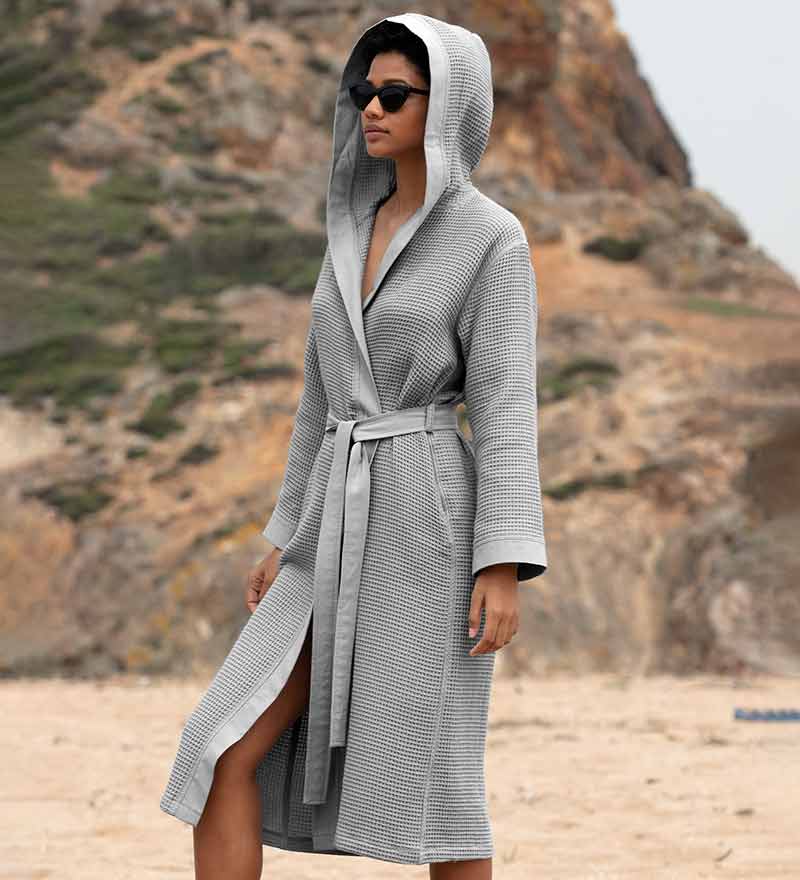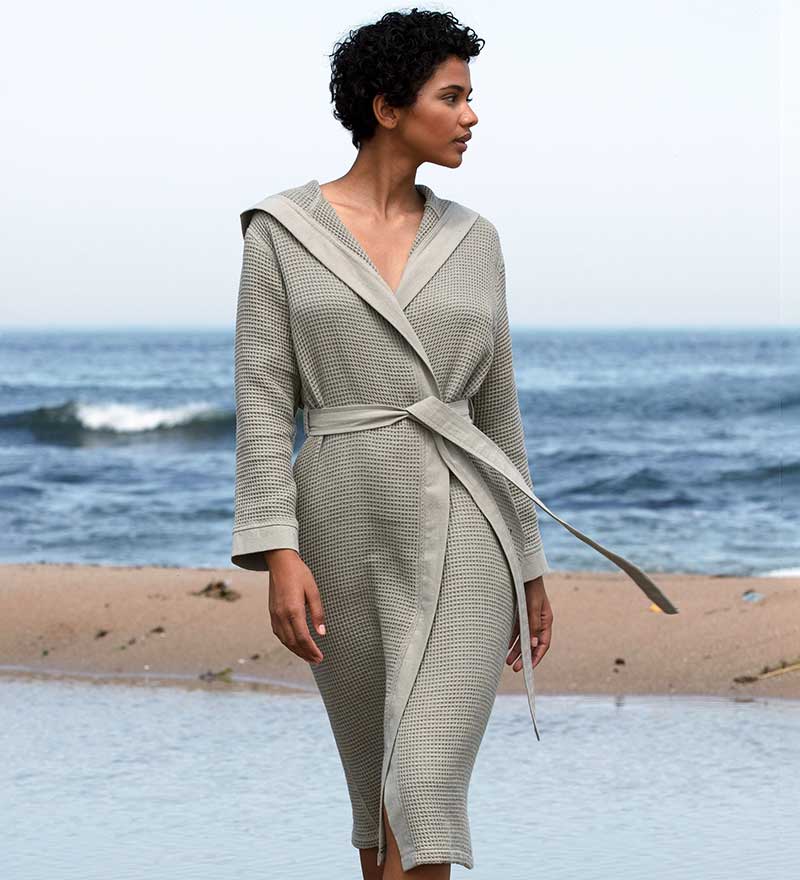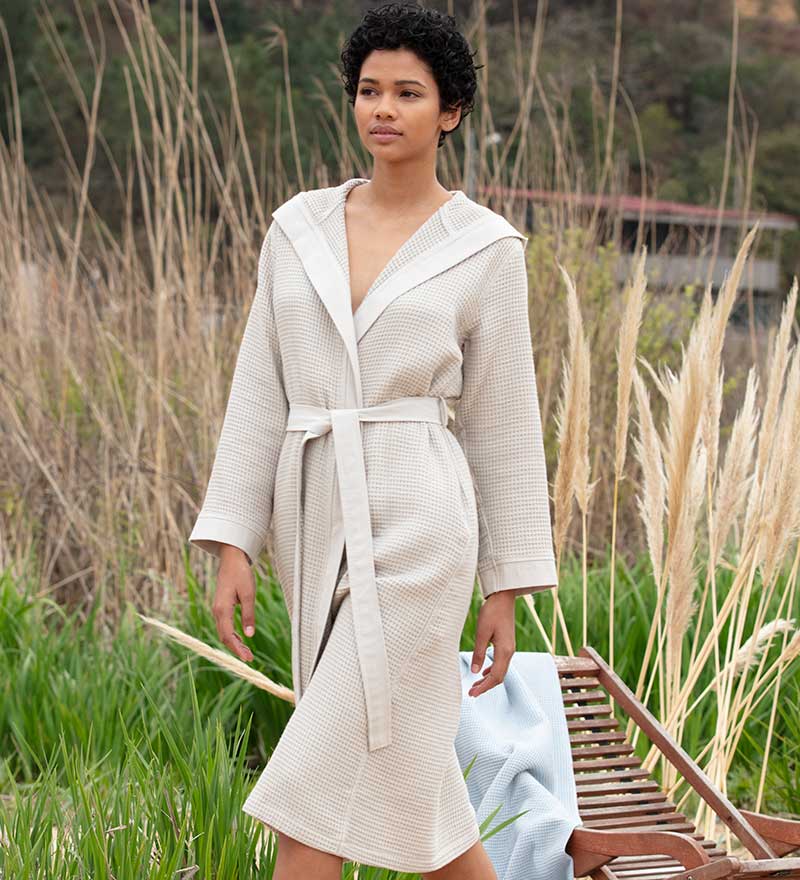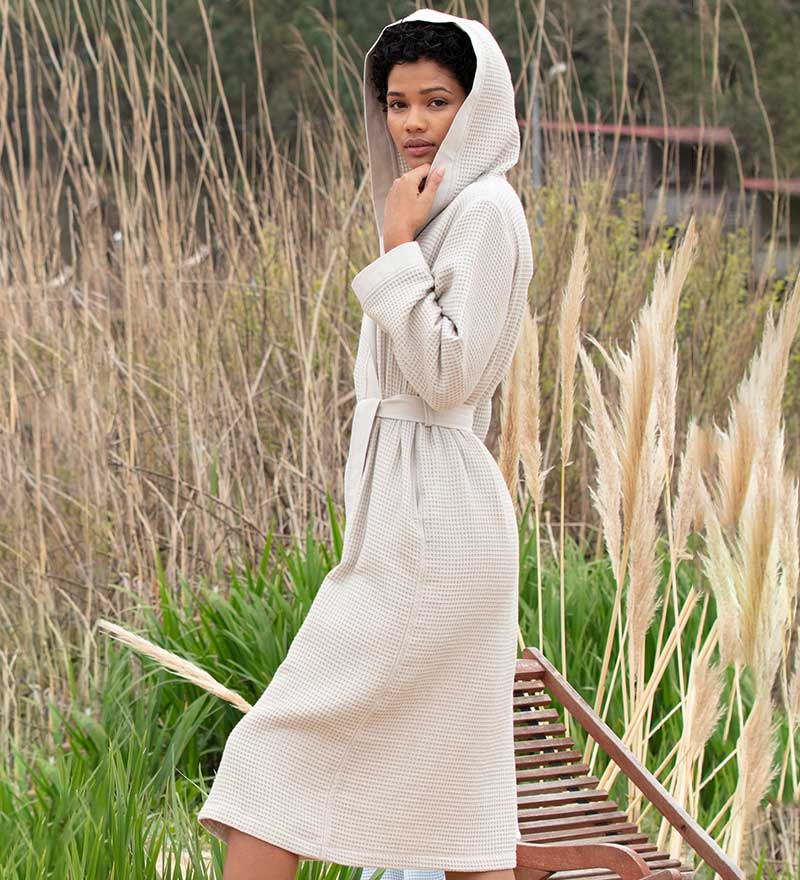



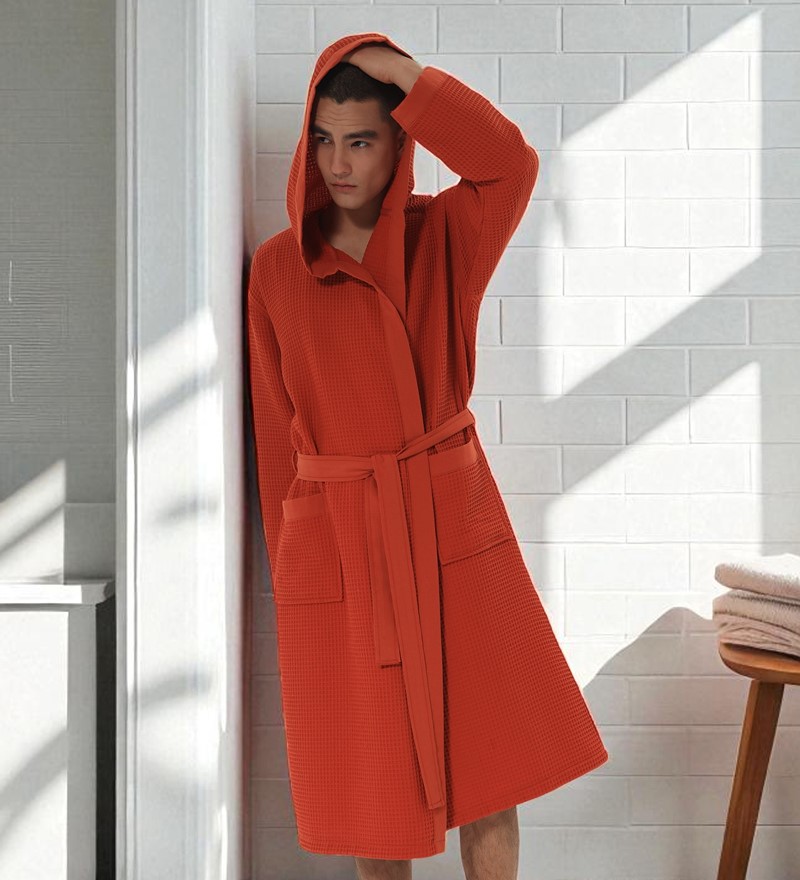
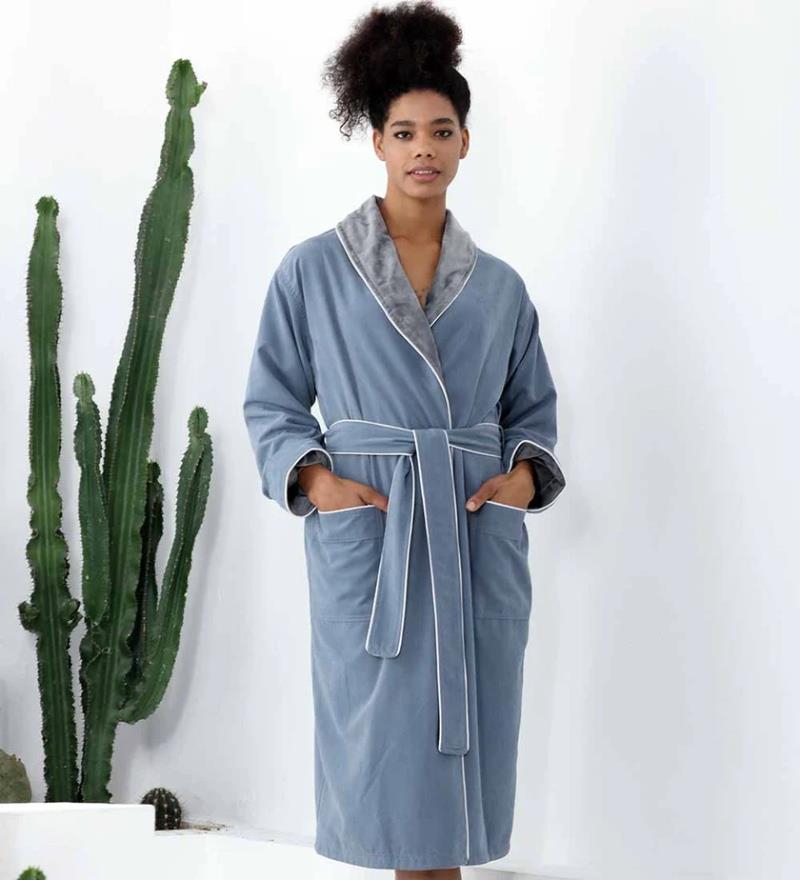
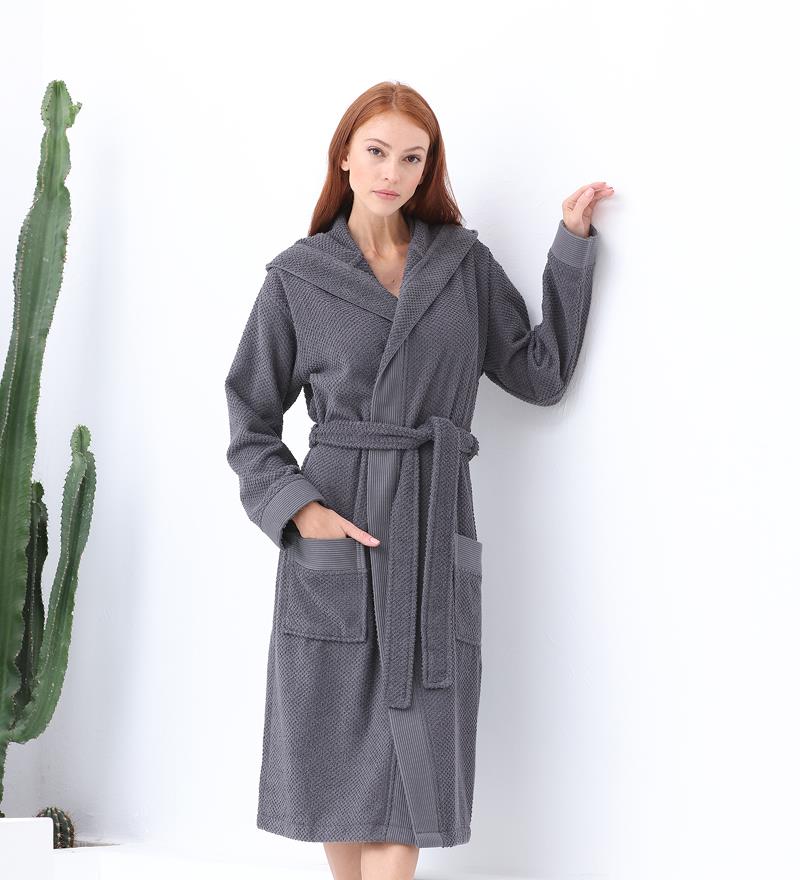
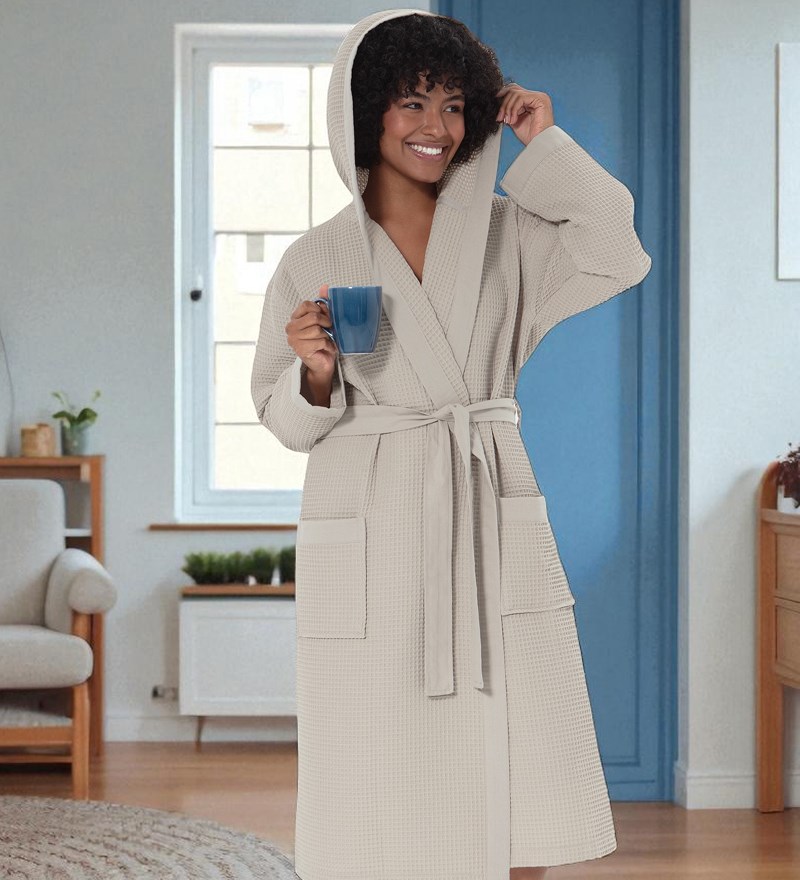
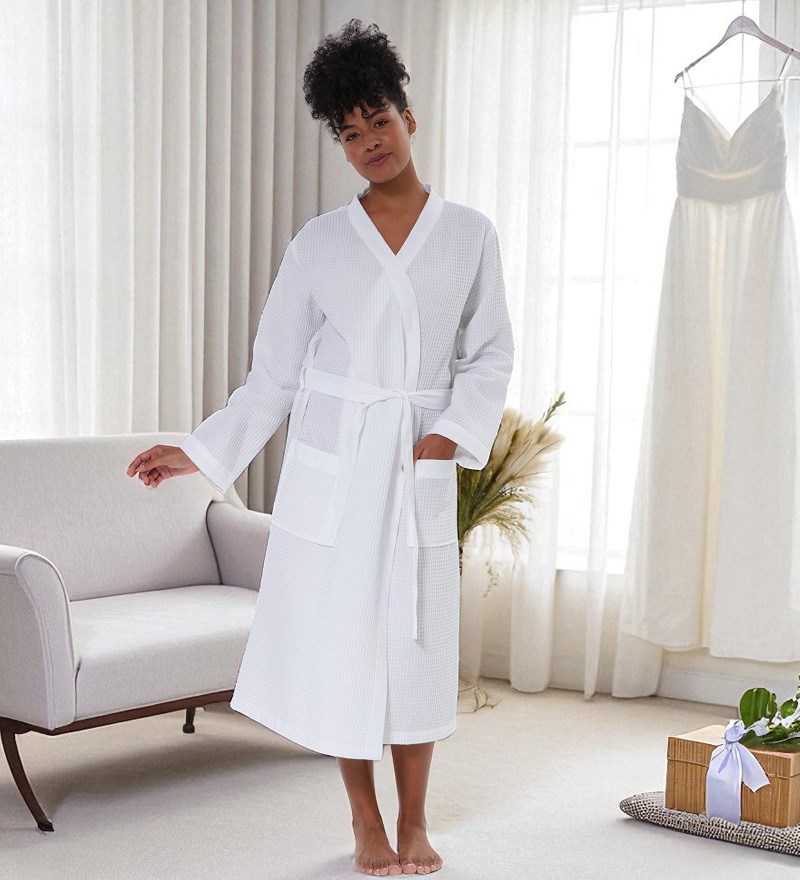
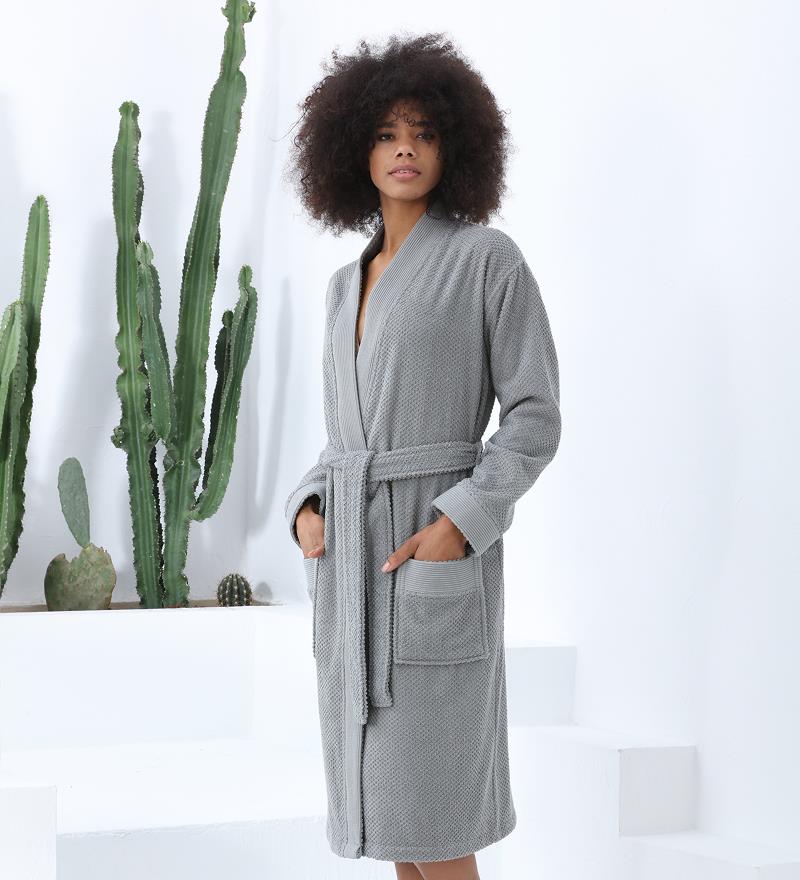
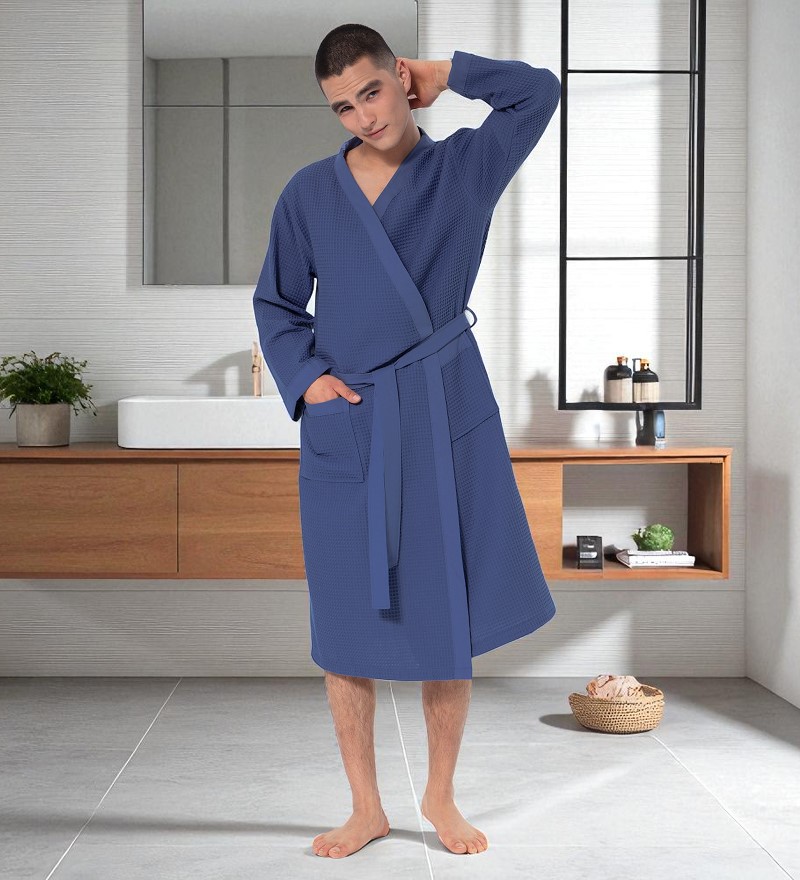
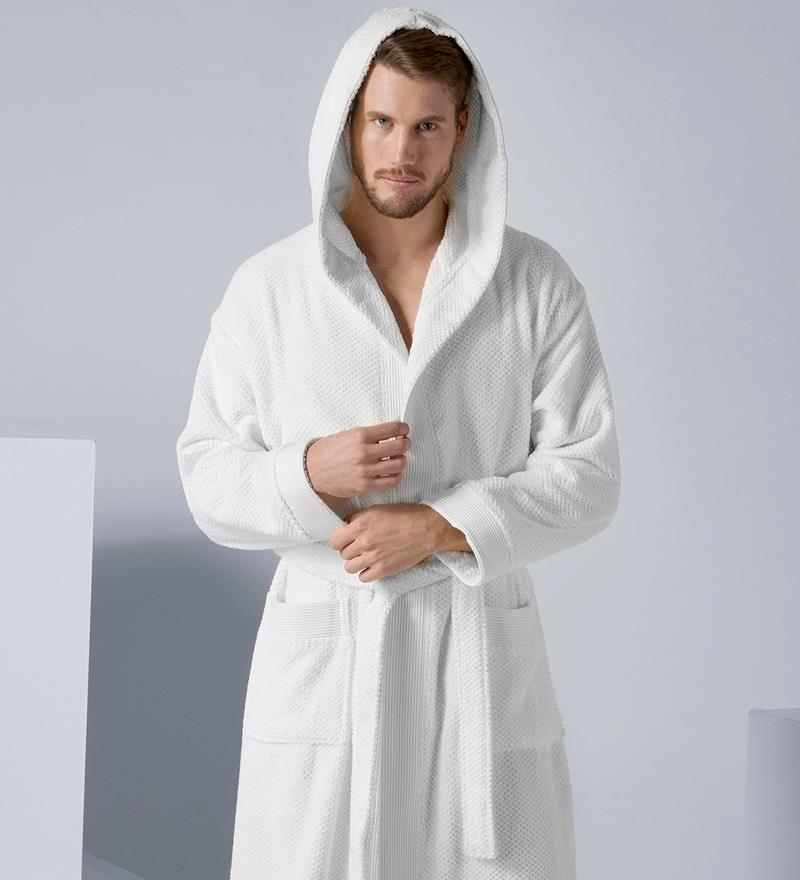
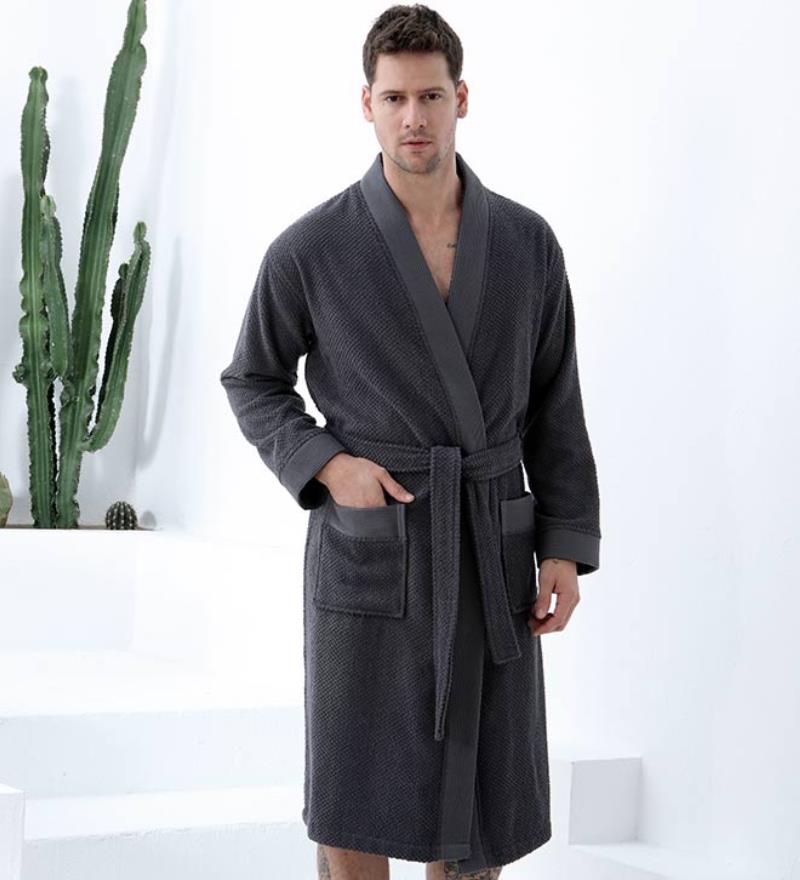
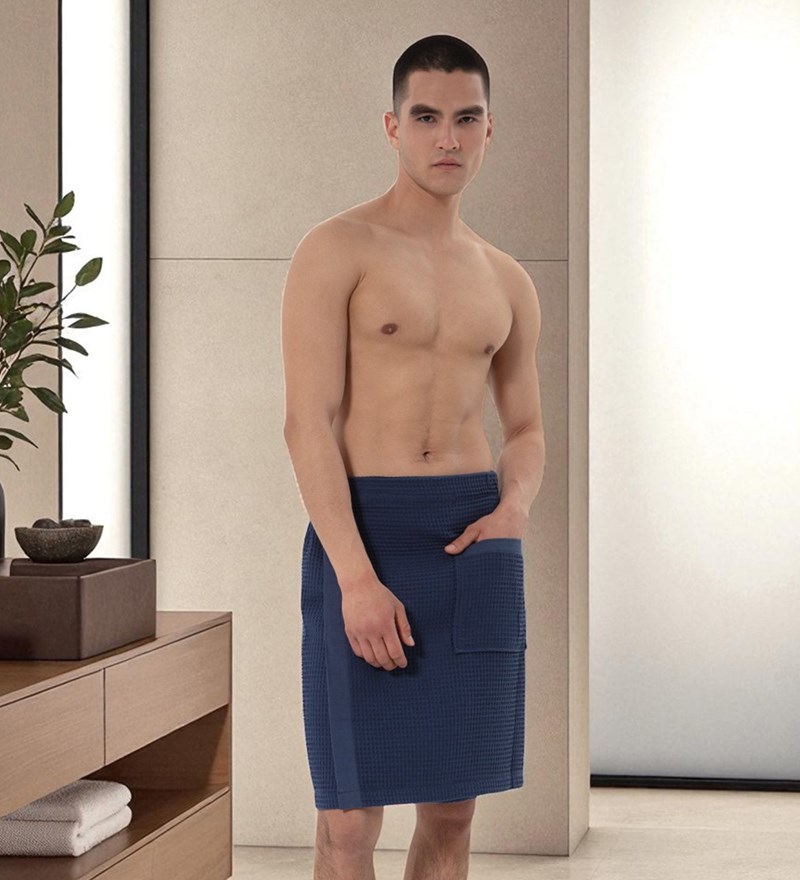



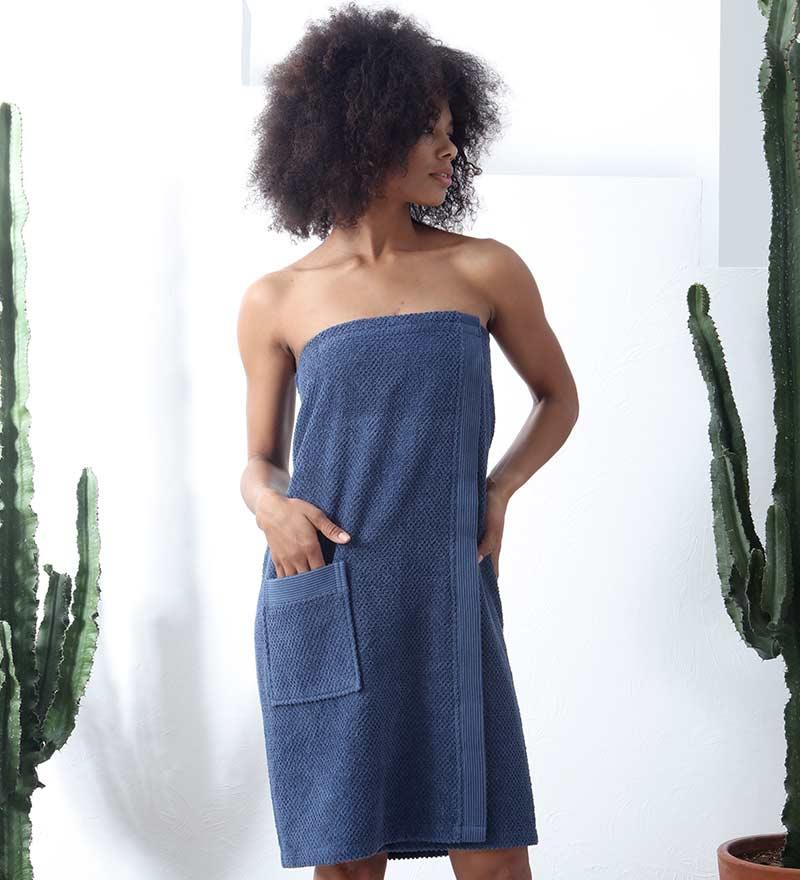

- Waffle Robes
- Terry Cloth Robes
- Microfiber Robes
- Turkish Cotton Robes
- Towel Robes
- View All Robes by Material
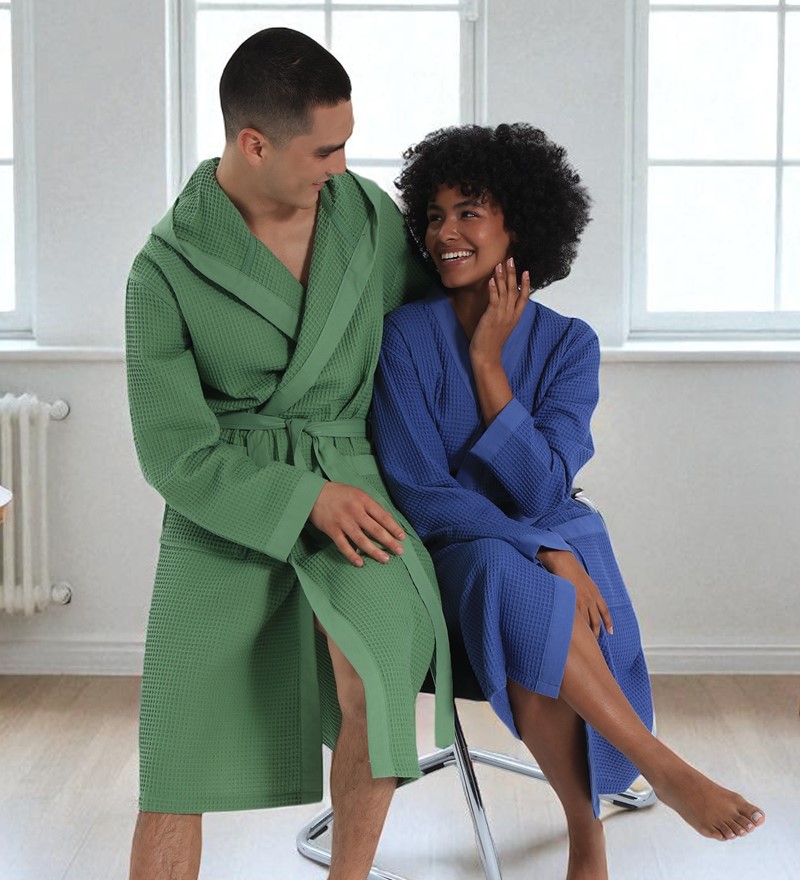

Terry Cloth Hooded Bathrobe Mens Buying Guide 2026 - Seyante
You've just stepped out of a hot shower, your hair is dripping, and the towel you grabbed is already sliding off one shoulder. A terry cloth hooded bathrobe for men solves that awkward gap between shower and dressed by wrapping your body, covering your head, and keeping both hands free.
The purchase only works if you make the decisions in the right order. Choose the fiber, then the GSM weight for your routine, then the fit with shrinkage and layering in mind. After that, inspect the hood, belt, pockets, and collar, then follow care instructions that protect the loops. A robe that feels plush but dries too slowly, shrinks across the shoulders, or loses its absorbency after a few washes isn't a good buy.
Why a Hooded Terry Robe Belongs in a Man's Routine
You step out of the shower with wet hair, a towel that keeps slipping, and a cool bedroom ahead. A terry cloth hooded bathrobe for men closes that gap by covering your body, catching moisture around your head, and keeping your hands free for coffee, a phone, or the morning routine.
Its value depends on matching construction to use. A lighter robe may dry faster and suit a warm bathroom, while a denser one offers more warmth but can take longer to dry. Sizing also matters after washing. Leave room for pajamas and likely shrinkage, or a robe that fits in the fitting room may pull across the shoulders by the third wash.
Terry cloth works well here because its looped cotton structure gives water many exposed fibers to contact. The loops act like a small pile of absorbent springs, holding moisture while the fabric wraps the body. Commercial terry production is commonly traced to Henry Christy's encounter with looped-pile fabric in Istanbul in the 1840s. His company began industrial production of “Royal Turkish Towels” in 1850, with Queen Victoria's approval. These developments helped establish the looped structure later used in terry robes. The history of the bathroom robe also notes much older looped-pile linen examples, including pieces dated to around 4000 BCE.
Make the decisions in the right sequence
Use this order:
- Fiber origin: Compare conventional cotton, Turkish cotton, and certified organic cotton. Fiber quality affects yarn strength, loop stability, and the feel after washing.
- GSM weight: Match fabric density to room temperature, drying conditions, and frequency of use. GSM is a more useful guide than a general “luxury” label.
- Fit: Check your chest measurement against the brand's chart, then size up enough for pajamas and expected shrinkage.
- Functional details: Inspect hood depth, sleeve length, pockets, collar shape, belt attachment, and front overlap.
- Care discipline: Follow washing and drying guidance so the loops stay open instead of becoming flattened or coated.
Practical rule: Decide the fiber and GSM before focusing on the cut. Perfect shoulder fit cannot fix fabric that stays damp too long or feels too heavy for your routine.
A well-matched robe can serve after showers, during cold mornings, or as a cover-up after swimming. The payoff comes from choosing the right weight and allowing fit room, not buying the thickest or softest option.
What Makes Terry Cloth Actually Absorbent
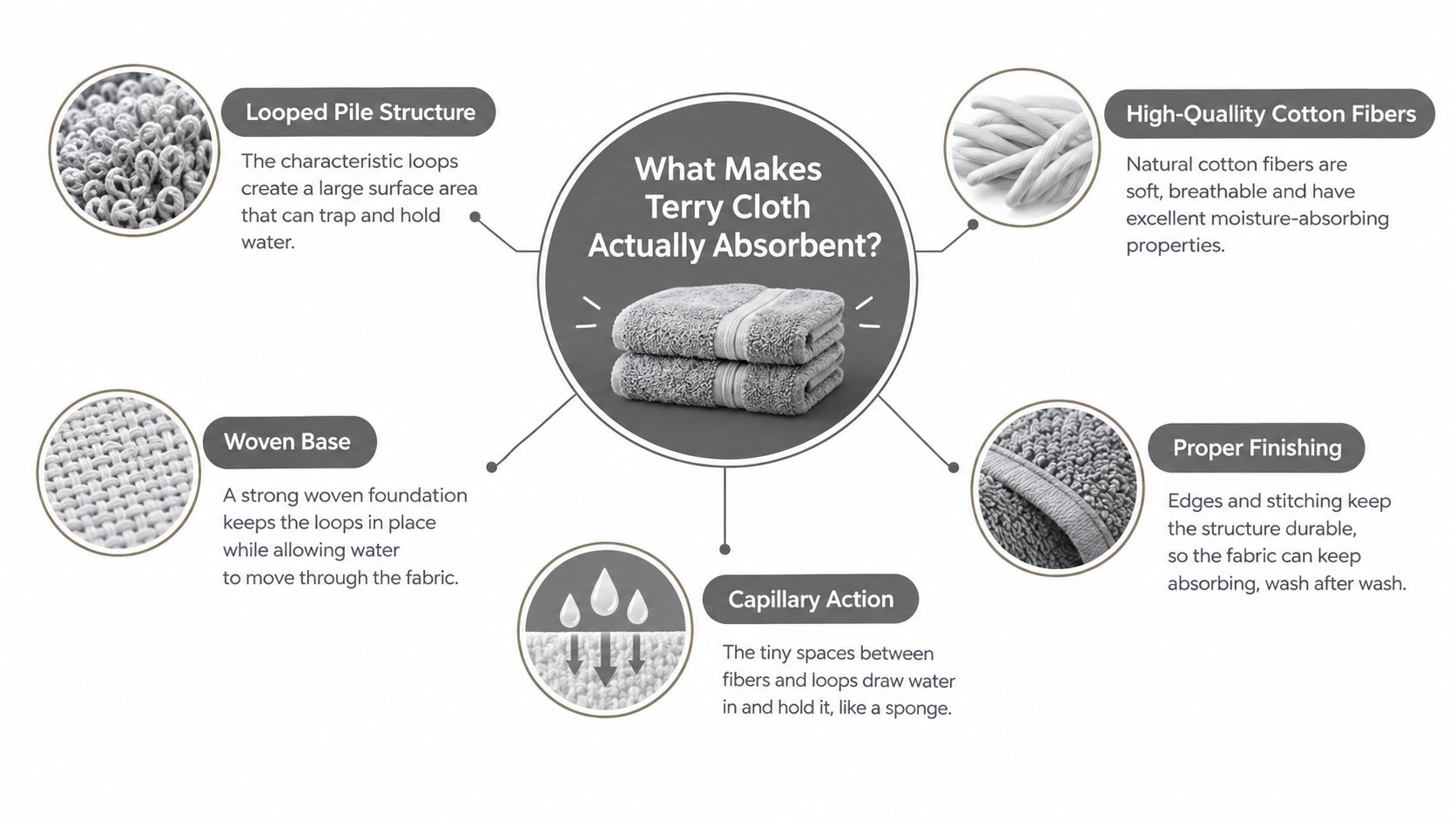
After a shower, a men's hooded terry robe works because its surface is built to catch water, not merely spread it. Terry cloth uses thousands of raised loops. Each loop adds exposed fiber and a small pocket where moisture can collect, while the curved yarns create capillary paths that draw water away from your skin. Flat-woven fabric has less exposed surface, so water tends to travel across the surface before it is absorbed.
Independent textile summaries describe terry cloth as capable of absorbing up to seven times its weight in water. That capacity helps explain why terry robes suit post-shower routines, poolside cover-ups, and cold mornings. The trade-off is straightforward: more absorbent fabric usually carries more moisture into the laundry and needs better airflow to dry.
Terry Cloth Absorbency Anatomy
| Component | Function | Material Note |
|---|---|---|
| Uncut loops | Hold moisture and increase surface area | Stable loops generally support better wicking |
| Cotton yarn | Provides the absorbent fiber base | Ring-spun yarn can offer a smoother, durable hand |
| Pile geometry | Controls contact with skin and water | Taller or denser piles feel more towel-like |
| Fabric backing | Anchors the loops | Strong backing helps the robe tolerate repeated washing |
Fiber quality changes the experience
Conventional cotton can deliver dependable absorbency, but fiber length and yarn quality affect how the robe feels after repeated washing. Turkish cotton is often used as a quality reference because longer fibers can form smoother, stronger yarns. That supports stable loops without making the surface harsh. A well-made robe should feel substantial, while its loops remain flexible, secure, and free from scratchiness.
GOTS-certified organic cotton describes the textile process, not only where the cotton was grown. The Global Organic Textile Standard covers harvesting, processing, and dyeing, with documented controls related to chemicals and wastewater. For a robe worn directly after bathing, that process information can matter to shoppers who prioritize skin contact and a consistent feel over time.
Loop performance also depends on care. Heavy detergent or softener residue can coat the fibers, leaving the surface less able to pull moisture from skin. Compare fiber content, loop construction, and care requirements in a guide to terry cloth robes by material, then judge “plush” by the fabric details behind the label.
GSM, Weight, and Weave Explained
You step out of the shower on a cold morning, pull on the hooded robe, and want warmth without carrying a soaked blanket to the laundry room. GSM means grams per square meter, a measure of fabric weight and density. It helps predict how much cotton is present, how much moisture the robe can hold, and how heavy it will feel. It does not measure quality by itself.
For most daily use, 400 to 600 GSM offers a practical middle ground. A robe in this range usually feels substantial while remaining manageable after washing. Weights around 500 to 700 GSM and above create a denser, towel-like surface. They suit colder rooms and spa-style comfort, but retain more water and usually dry more slowly.
GSM Weight Bands Compared
| GSM Range | Feel | Drying Time | Best Use |
|---|---|---|---|
| 300 to 400 GSM | Light and flexible | Relatively quick | Gym bags, travel, warm rooms |
| 400 to 600 GSM | Balanced and substantial | Moderate | Daily post-shower wear |
| 500 to 700+ GSM | Dense and hotel-like | Slower | Cold rooms, spa-style comfort |
Use these bands as guideposts, not guarantees. Airflow, humidity, washing-machine spin speed, dryer settings, and the robe's size can change drying time considerably. The trade-off is straightforward: lighter terry reduces laundry effort, while heavier terry adds warmth and moisture capacity.
Loop construction is the refinement choice
Terry cloth works like a field of small water-catching loops. Single-loop and double-loop structures change how full the surface feels and how much moisture it can hold. Double loops can provide a plusher, more towel-like hand, while simpler construction may feel lighter and less bulky. Check the backing and the points securing the loops, because a tall pile is less useful if it loosens during frequent washing. A practical terry cloth guide
Yarn twist also changes the balance between softness and resilience. More tightly twisted pile yarns generally maintain spring and structure well. Low- or zero-twist yarns can feel exceptionally soft at first, though that softness may fade sooner as the pile loses its shape. Woven terry used for apparel and hospitality commonly falls within the approximate 380 to 700 g/m² range. This textile construction reference explains how yarn, pile, and backing choices affect absorbency, durability, and hand feel.
Choose GSM according to the room and drying setup first. Then compare loop height, yarn twist, backing stability, and stitching. That order helps you judge whether a robe will still earn its keep after repeated washes, not merely feel plush on the first try.
How to Size a Men's Hooded Terry Robe
You step out of the shower, pull on the hooded terry robe, and find the sleeves tight after the first wash. The problem was not softness. It was choosing a size without allowing room for wrapping, movement, layering, and shrinkage. For men's robes, GSM matched to use case matters, but so does deciding how much to size up before wash three.
A jacket or T-shirt size is only a starting point. Robe cuts usually include extra ease, while terry loops add bulk around the body and arms. Use the brand's measurement chart, then check how the robe is expected to fit after laundering.
Make three measurement decisions
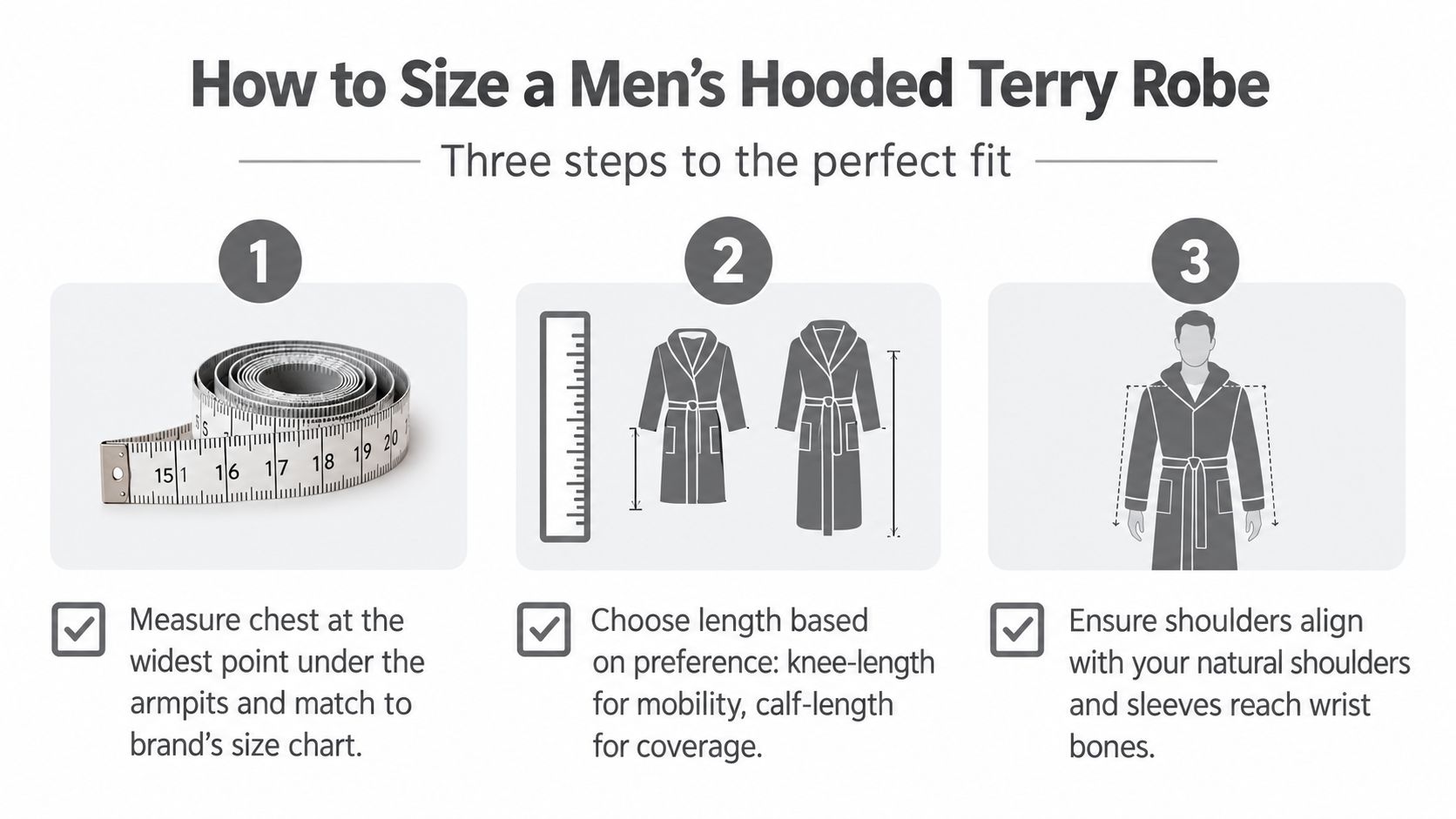
First, measure your chest. Place the tape around the fullest point below your armpits, keeping it level and relaxed. Match the result to the brand's body-measurement chart. If the chart gives garment measurements, look for the added ease. A robe should close comfortably without compressing your chest or pulling across the shoulders.
Second, match the size to your routine. Choose one size up when you want a closer fit after bathing. Choose two sizes up if you plan to wear pajamas underneath, need broad arm movement, or prefer a generous wrap. Cotton terry may shrink, so an exact pre-wash fit can become restrictive later. Sizing up functions like leaving slack in a drawstring: it gives the fabric room to change without making the robe unusable.
Third, check the safety points. With your arms slightly bent, sleeves should reach the wrist bone. Once belted, the front should overlap by at least 15 cm, or 6 inches, so it stays closed during movement. The hood should cover the crown of your head without pulling toward your eyes.
Treat shrinkage as part of the fit
Terry robes can shrink, and the first wash may change both length and width. Check the care label for a shrinkage warning, and look for post-wash measurements when the seller provides them. The robe size guide for small through XXL offers a practical way to compare measurements before ordering.
If you fall between two sizes, size up for shrinkage allowance or layered comfort. Size down only when the chart supports it and you want minimal room underneath. The finished fit should give you a secure wrap, clear floor clearance, free shoulder movement, and sleeves that do not drag through sinks or food.
Terry vs Waffle vs Cotton Blends
After a shower, a men's hooded robe can either dry you while keeping you warm or leave you carrying a damp, bulky layer. The difference comes from GSM, loop structure, and your routine, not the fabric name alone. A heavy waffle robe may feel warmer than thin terry, while a cotton blend may dry faster and pack more easily.
| Fabric | Absorbency | Weight & Warmth | Drying Time | Best Use |
|---|---|---|---|---|
| Terry cloth | Highest of the three for direct post-shower use | Heavier and warmer | Slowest, especially at higher GSM | Baths, showers, cold bedrooms |
| Waffle weave | Moderate and less plush against damp skin | Lighter and more breathable | Generally faster | Gyms, warm rooms, shorter wear |
| Cotton blend | Lower loop absorbency, depending on construction | Often lighter and easier to pack | Fastest in many blends | Travel, humid climates, frequent laundering |
Terry cloth works like a wearable towel. Its raised loops hold water and create a cushioned barrier against cool air, which makes it the strongest choice for stepping straight out of the shower. Higher GSM usually adds warmth and substance, but also bulk, slower drying, and more luggage space. Match the GSM to use rather than choosing the heaviest robe automatically.
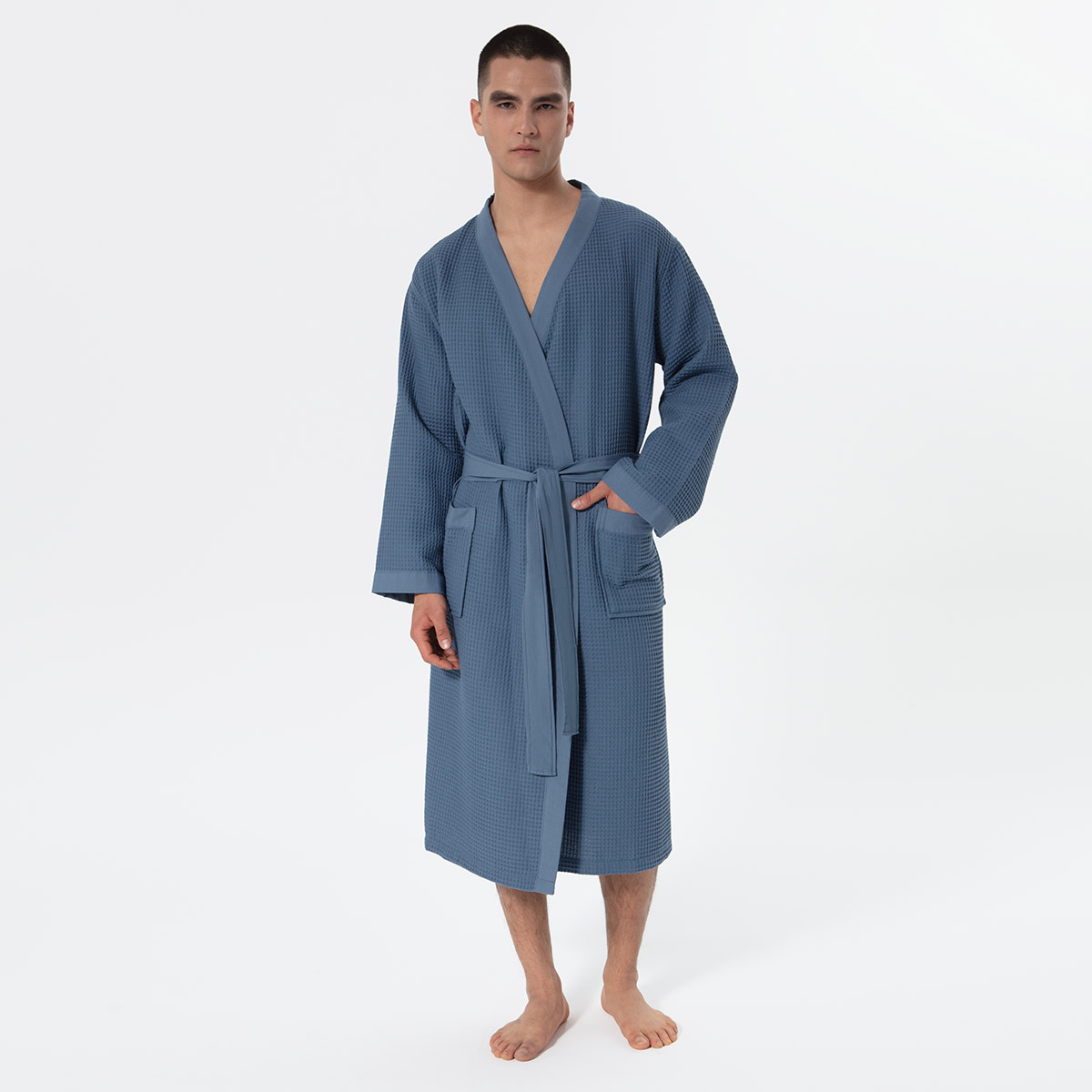
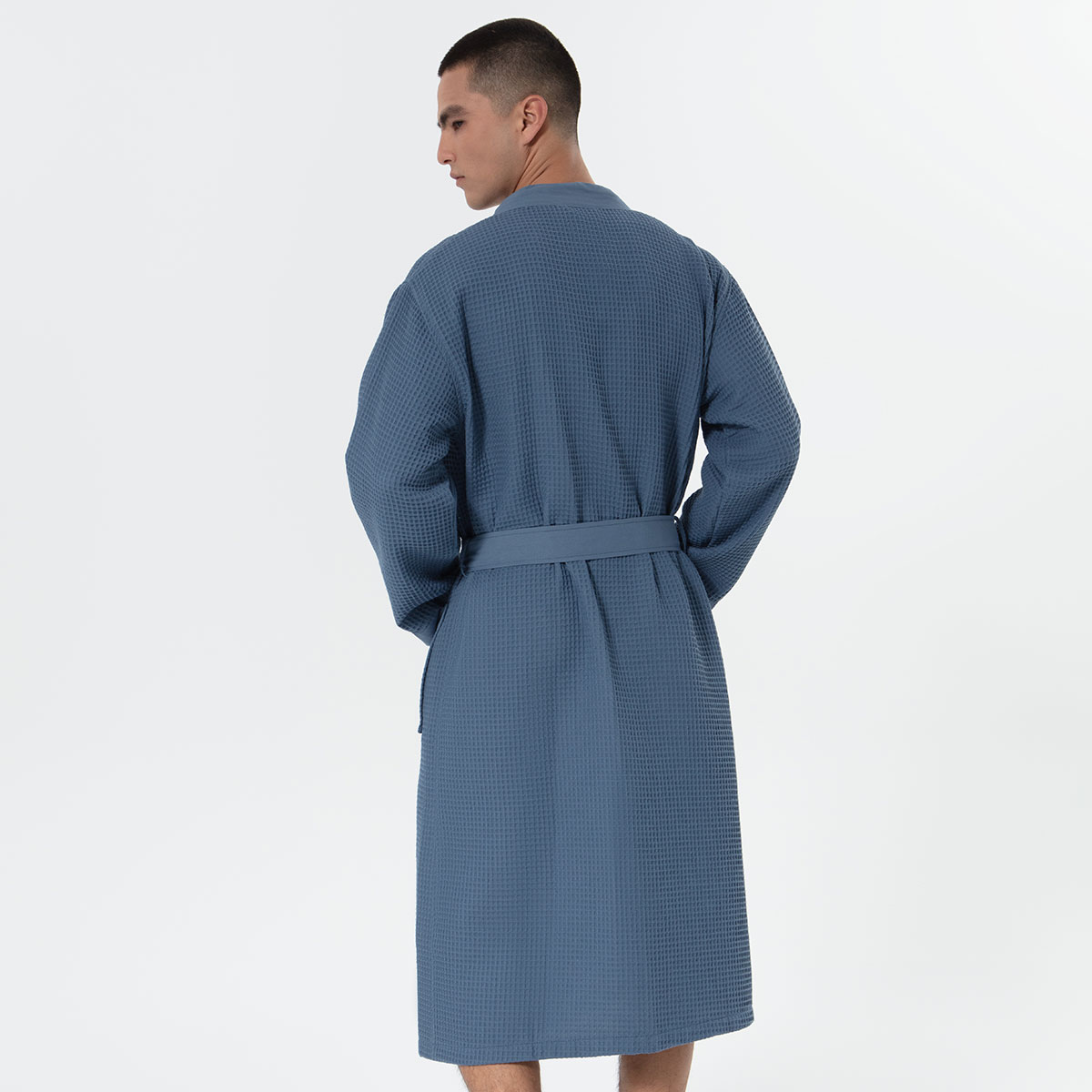
Waffle weave uses a more open texture. It feels lighter, breathes well, and generally dries sooner, so it suits warm rooms, short periods of wear, and gym bags. Its surface has less towel-like contact with wet skin. Review this waffle versus terry comparison when deciding between post-shower absorbency and easier daily handling.
Cotton blends trade some loop absorbency and plushness for easier laundering, packing, and often better resistance to shrinkage. They can be practical in humid homes or during travel, especially when the robe must dry between uses. Check the blend's construction, since fiber content alone does not show how absorbent the finished fabric will feel.
Choose by routine:
- After every shower: Medium or heavier terry, with GSM suited to your room temperature and drying setup.
- Warm bedroom: Lightweight terry or waffle.
- Gym and short wear: Waffle or terry-waffle construction.
- Travel and limited laundry access: A lighter cotton blend.
The right choice also protects the fit you set before washing. If you size up for shrinkage or layering, avoid adding unnecessary bulk by choosing a fabric weight your routine can dry comfortably.
Features Worth Paying For and Ones to Skip
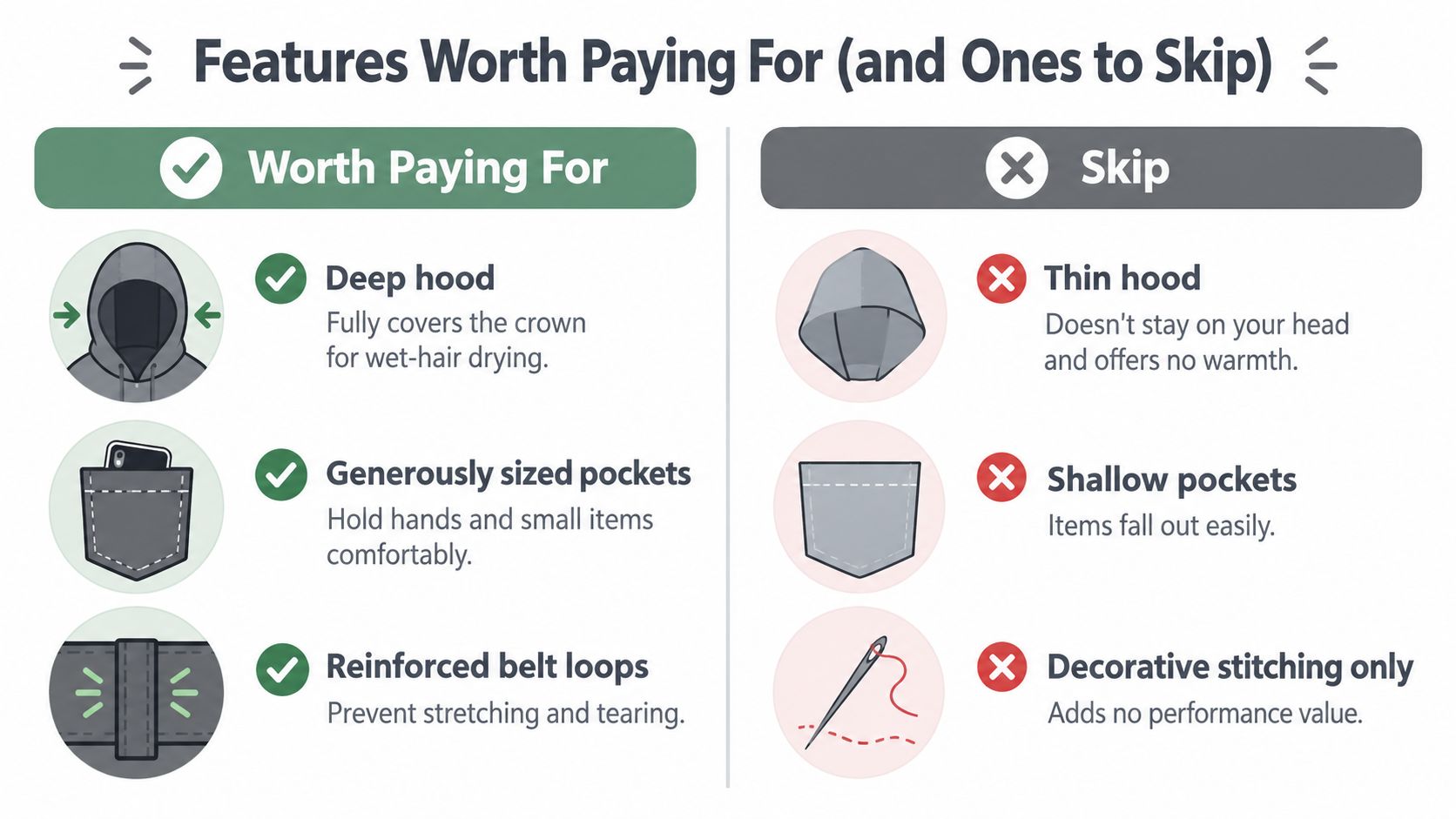
You step out of the shower, pull the hood over damp hair, and reach for your phone. A good men's hooded terry robe should handle that routine without slipping, dragging, or opening at the waist. Pay for features that manage moisture, movement, and fit. Skip details that only decorate the garment.
A deep hood should cover the crown while leaving your eyes clear. Hip-level pockets need enough depth for your hands and small essentials, and their openings should stay usable when you sit. Terry loops add weight, so pocket stitching and hems should look firm rather than lightly tacked.
A securely anchored belt matters more than contrast trim. Look for belt loops joined with reinforced stitching. An inner tie can add closure when you bend or move, but it should support a reliable outer belt, not replace one. A shawl collar gives more neck coverage and warmth; a kimono collar feels less enclosing.
A quick inspection checklist
- Deep hood: It stays in place without covering your eyes.
- Generous pockets: Your hands fit, and contents remain secure when seated.
- Reinforced belt loops: Strong attachment reduces strain where the belt pulls.
- Strong hems: Even, stable stitching supports repeated washing.
- Comfortable collar: Choose shawl for coverage or kimono for a lighter feel.
Embroidered chest logos may rub against damp skin. Contrast piping is mostly cosmetic, while an inner tie without a dependable outer belt provides weak closure. An extra-long belt can twist in the wash, so practical length and firm attachment deserve priority.
Inspect the robe in person by testing pocket depth and giving the belt a gentle tug. Online, examine close photographs of the belt loops, hood seam, pocket opening, and hem. These details show whether the robe is built for movement rather than styled only for a product photograph.
Care That Keeps the Loops Working
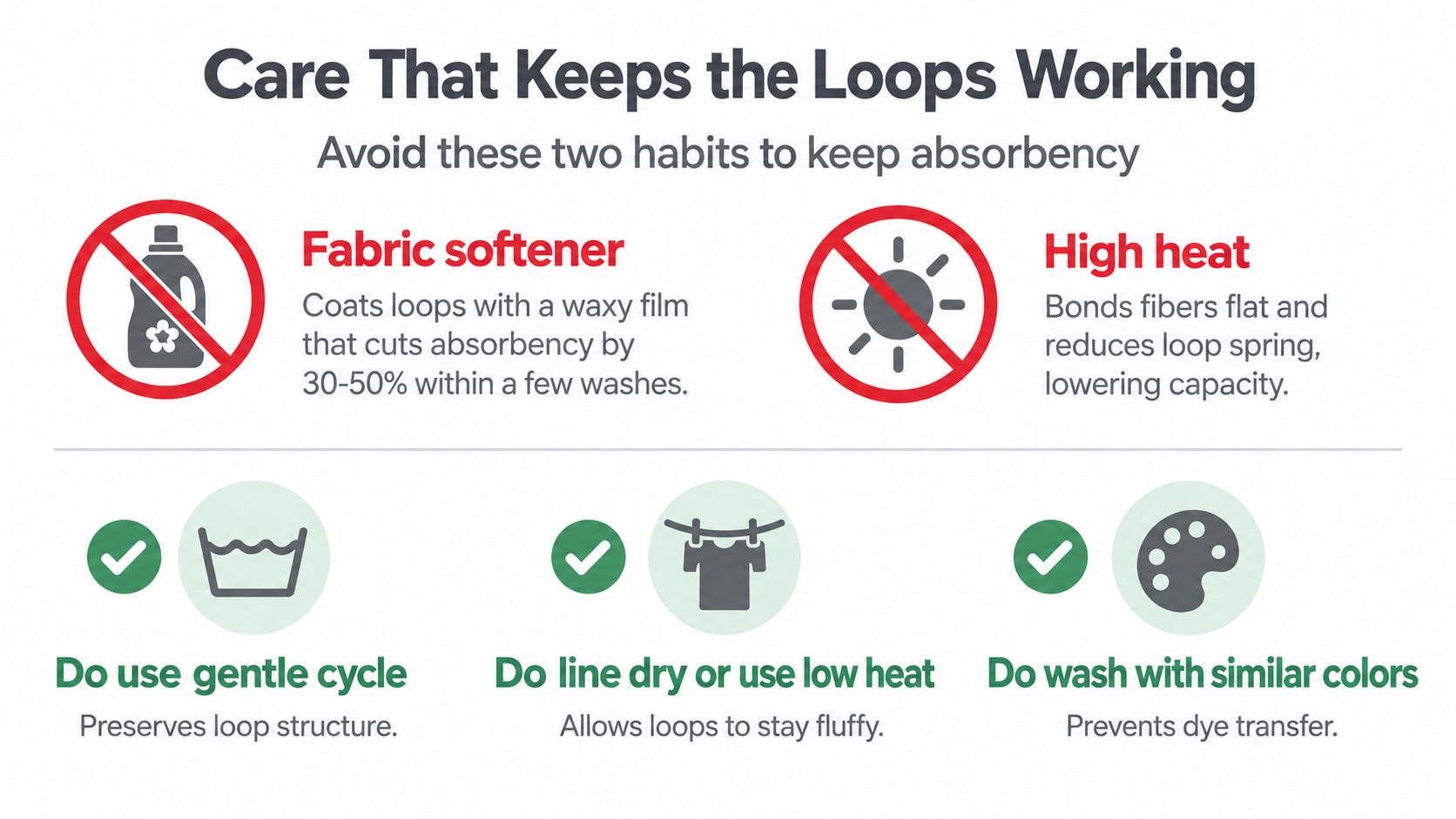
A terry robe can lose absorbency through routine washing mistakes before its cotton wears out. Fabric softener and excessive heat deserve attention first. Softener leaves residue on loop fibers, so the surface may feel slick while wicking less moisture. High heat can flatten the pile, tighten the fabric, and add stress to stitching.
Use mild detergent and follow the care label's temperature guidance. Skip chlorine bleach unless the manufacturer allows it, since harsh bleaching can weaken cotton fibers. A gentle cycle helps protect the loop structure and backing, while low heat reduces repeated thermal stress.
A simple wash routine
- Wash the robe separately at first. Zippers, hooks, and rough garments can catch exposed loops, particularly during the early washes.
- Use mild detergent without softener. Residue can interfere with the capillary action that draws moisture through terry.
- Dry gently. Choose low tumble heat or line drying instead of repeated high-heat cycles.
- Check the hood and belt. Their thicker layers can retain moisture, so dry them fully before storage.
- Trim loose loops carefully. Use scissors rather than pulling, which can distort nearby pile.
A brief low-heat tumble after air drying can restore some loft. It should not become a substitute for sensible drying on every load. Before folding the robe, check the hood, pocket seams, and belt area for dampness. Stored moisture can leave the fabric musty and keep cotton wet longer than intended.
Judge the robe by what it does after washing. Flat loops, unusual density, or weaker blotting suggest the pile is losing performance. Replace it when careful laundering no longer brings back the absorbency and comfort you bought it for.
Choosing the Right Robe for Your Use Case
A robe can feel perfect in the fitting room and frustrating after the third wash. The two decisions that matter most are GSM matched to your routine and how much room to allow for shrinkage and layers. Start with use, then check fiber, length, closures, and fit.
Match the Robe to the Routine
| Use Case | GSM Range | Length | Collar | Budget |
|---|---|---|---|---|
| Home daily user | Around 450 to 550 GSM | Knee to mid-calf | Shawl | Mid-market |
| Gym and post-workout | Around 350 to 450 GSM | Shorter | Kimono | Lightweight purchase |
| Hospitality and bulk use | Around 500 to 600 GSM | Practical guest length | Shawl or structured collar | Commercial sourcing |
For daily home use, medium-weight Turkish cotton terry offers a practical balance of warmth and drying time. A hood with enough depth to cover wet hair, two usable patch pockets, and a stable belt support regular use. Choose knee to mid-calf coverage without enough extra fabric to hinder stairs. A shawl collar suits cooler rooms, while a lighter collar may feel better during a long morning.
Gym use changes the priority. A lighter terry or terry-waffle hybrid takes up less bag space and dries sooner, while a shorter cut makes movement easier. Secure belt loops and an inner tie help keep the front closed during stretching. Pack the robe only after it is dry. This men's gym packing guide can help you plan the rest of a practical workout kit around it.
Hospitality buyers need consistency across repeated laundering. Check stable dye lots, reinforced hems, durable loops, and a hood that keeps its shape. Certification such as GOTS or another recognized textile standard may matter when many guests use the robes. Verify the specific certification and its scope, rather than relying on a general “organic” label.
Use This Decision Filter
- Choose medium-weight terry for daily home showers, warmth, coverage, and steady absorbency.
- Choose lighter terry or waffle for travel, gym use, warm rooms, or shorter drying times.
- Choose denser commercial terry for guest use and demanding laundry routines.
- Choose certified organic cotton when documented processing standards guide your purchase.
- Size up when uncertain if you wear pajamas underneath, need layering room, or want to reduce post-wash tightness.
Sizing deserves a deliberate check. If the robe already fits closely before washing, shrinkage can turn normal movement into shoulder or sleeve restriction. A little extra room is useful, but excessive width adds weight and slows drying. Compare the garment measurements with a robe you already wear, then allow room for the intended layers and likely wash change.
GSM is the first filter, fit is the second, and your drying setup decides whether the weight remains practical. A robe earns its place when its loops, coverage, and fit still suit your routine after washing.
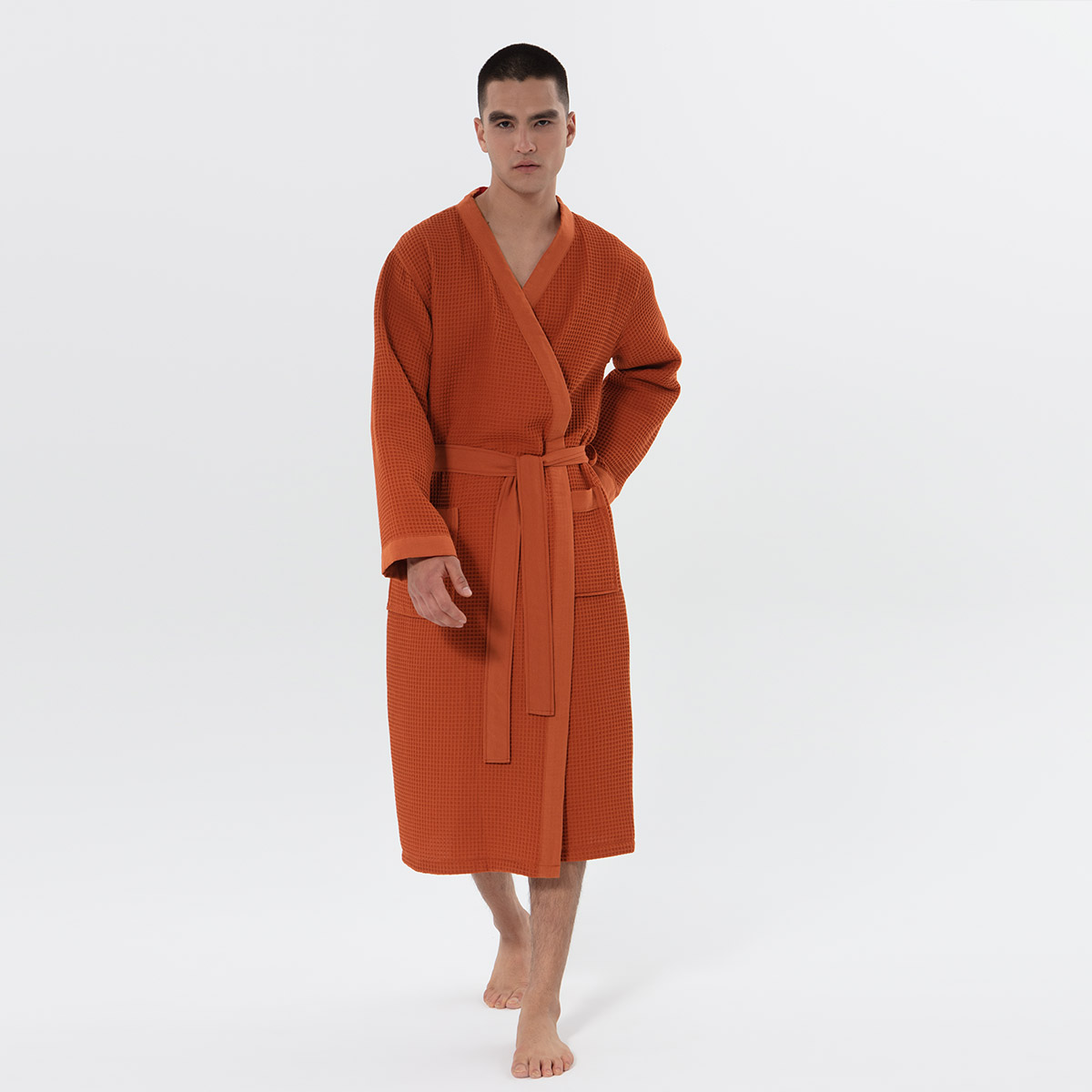
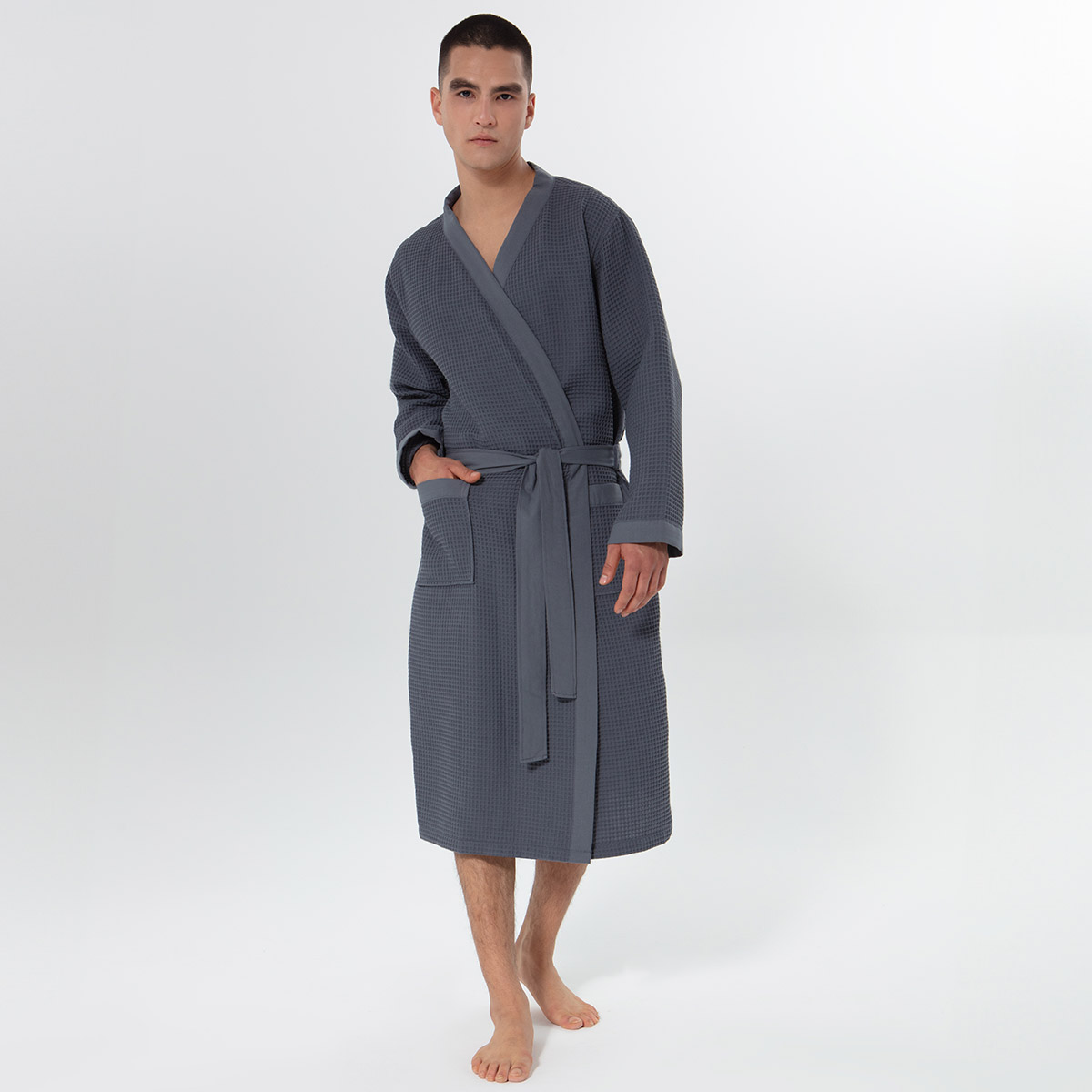
SEYANTE offers men's hooded robes in Turkish cotton terry and lightweight waffle constructions, with sizing and material guides for comparing GSM, fit, and care needs. Visit SEYANTE to explore options for daily post-shower comfort, travel, or hospitality use.
Related Posts

Featured Products








Offering high-quality bathrobes for both women and men with GOTS certification
Our commitment to excellence is reflected in our use of the Global Organic Textile Standard (GOTS) certification for our products. GOTS is a benchmark for organic textiles, ensuring environmentally friendly and socially responsible manufacturing processes.


FREE STANDART DELIVERY
STRESS-FREE SHOPPING
ONLINE CUSTOMER SERVICE