Luxury Terry Bathrobes How to Choose Plush Comfort
- Why Luxury Terry Feels Different From the First Wear
- What Terry Cloth Is and Why It Works So Well
- What Makes a Terry Bathrobe Truly Luxurious
- How Weight Loop Density and Sustainability Compare
- How to Choose the Right Size Style and Fit
- Care Instructions That Keep Terry Plush Wash After Wash
- Where Luxury Terry Bathrobes Shine Most
You're probably here because you've had that exact robe moment. You step out of the shower, pull on something that looked plush online, and within minutes it feels oddly cold, heavy, flimsy, or too bulky to live in comfortably. A good robe should solve a simple problem. It should dry you, warm you, and make the next half hour feel better.
That's why luxury terry bathrobes deserve a closer look. The difference isn't only softness. It's fabric structure, robe weight, loop construction, and how well the robe holds its shape after repeated washing. Those details decide whether your robe feels spa-level for years or only for the first weekend.
Why Luxury Terry Feels Different From the First Wear
The first time you wear a well-made terry robe, you notice it before you think about it. Your shoulders feel warm quickly. Damp skin stops feeling exposed. The robe doesn't just sit on your body like a layer of clothing. It behaves more like a towel and a wrap combined.

That's the difference many shoppers mean when they say a robe feels “luxurious,” even if they can't explain why. Real luxury here isn't sparkle or branding. It's the moment a robe does several jobs at once. It absorbs leftover moisture, takes the chill off, and feels substantial without turning clumsy.
Luxury you can feel, not just see
A thin robe can look elegant on a hanger but disappoint after a shower. A heavy robe can feel impressive at first touch but become annoying if it stays damp too long. The sweet spot is more practical than dramatic. You want a robe that feels generous in the hand and dependable in use.
A luxury robe should make you feel finished after a shower, not half-dry and waiting.
That's one reason terry remains so closely tied to spas, hotels, and slow home routines. It gives immediate feedback. You feel the absorbency. You feel the warmth. You feel whether the collar sits nicely at the neck or fights you every time you move.
Why buyers often get stuck
Most confusion starts with a few familiar words:
- Plush: Can mean thick, soft, lofty, or brushed on the surface.
- Spa-quality: Often suggests comfort, but doesn't tell you how fast the robe dries.
- Hotel-style: May describe appearance more than performance.
Those labels aren't useless, but they don't answer the questions that matter at home. Will the robe dry your forearms after washing your face? Will it feel too hot while you do your hair? Will it still fit the way you want after laundering?
If you want a brand-level look at how robe comfort connects back to fabric origin and construction, SEYANTE shares that story in this journey from cotton fields to your wardrobe.
What Terry Cloth Is and Why It Works So Well
Terry cloth looks simple from a distance. Up close, it's a smart little machine for handling water.
The loop structure does the work
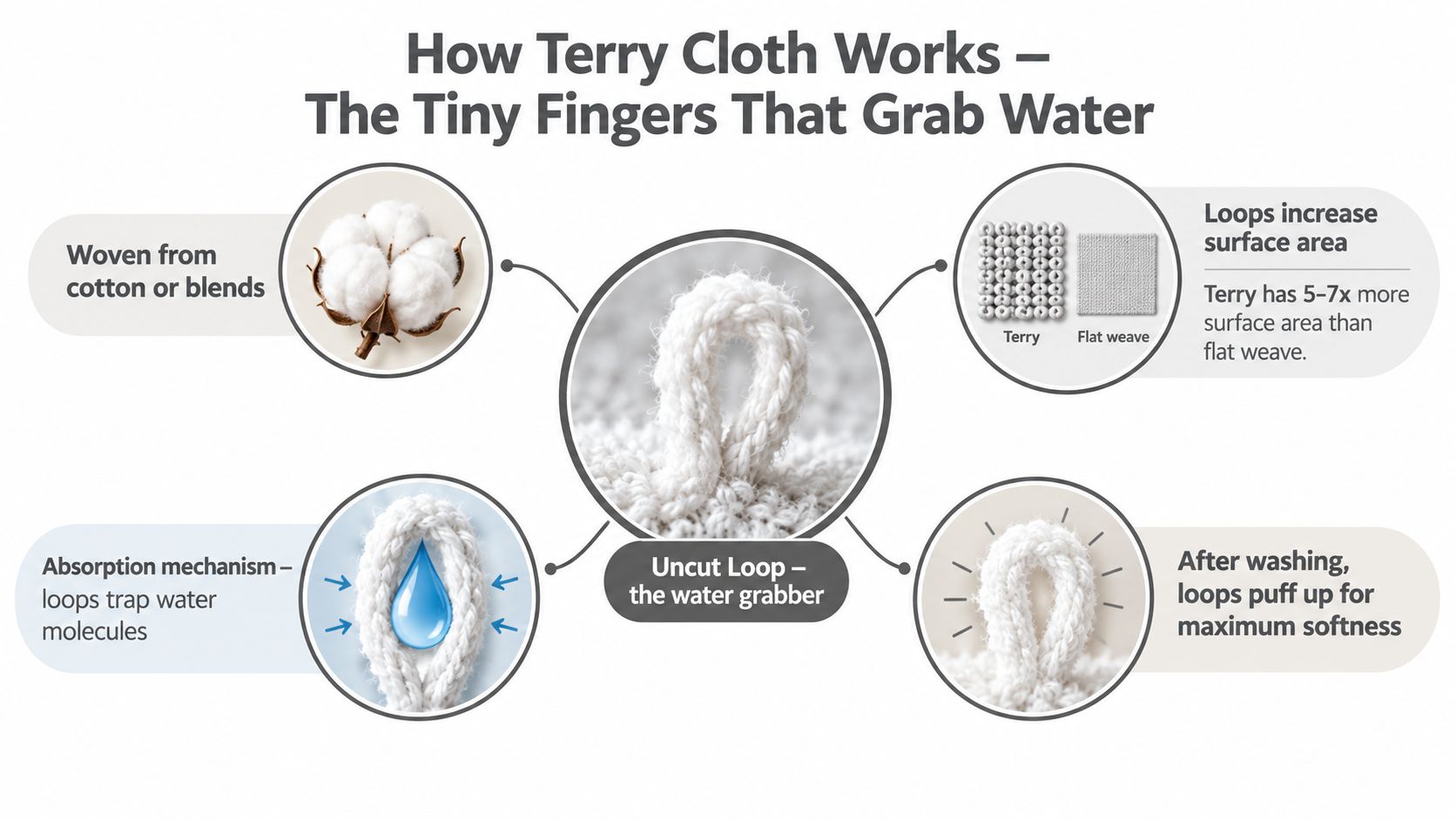
Think of terry as a field of tiny cotton fingers. Those uncut loops stand up from the fabric and grab water from your skin. A flat fabric can feel smooth, but it doesn't have the same gripping surface. Terry does, and that extra surface area is what makes it so effective after bathing.
Absorbency depends on more than weight alone. Loop density, loop height, yarn twist, fiber quality, and finishing all affect performance. One textile guide notes that a 650 GSM towel with sparse loops can absorb less effectively than a 550 GSM towel with dense, well-formed pile, and it also links a minimum commercial pile height around 3.5 mm with hotel-grade performance in terry products, including robes according to this loop and pile explanation.
Why cotton terry became the standard
Cotton works well here because it handles moisture naturally and feels comfortable against the skin. Put that together with terry's looped structure and you get the robe you want after a shower, not just the robe you admire in a product photo.
Terry also has a long fabric history. Modern terrycloth's industrial development is traced to the mid-19th century, with first commercial cotton terry production placed around 1848 to 1850. Earlier looped fabrics are associated with ancient Egypt and Peru, and one cited linen terrycloth example dates to around 4000 BCE in this terrycloth history overview. That history matters because it explains why terry moved from skilled textile craft into everyday use. Once production became industrial, absorbent robes became accessible as practical comfort items, not rare specialty textiles.
How terry differs from other robe fabrics
If you're comparing robe materials, this is the simplest way to separate them:
- Terry: Built for absorbency, warmth, and post-shower use.
- Velour: Soft on the outside, but usually less effective for drying because the loop surface is cut.
- Waffle weave: Lighter and airier, often easier to dry, but less towel-like.
For a robe-focused explanation of terry specifically, SEYANTE also breaks it down in this guide to what a terry robe is.
What Makes a Terry Bathrobe Truly Luxurious
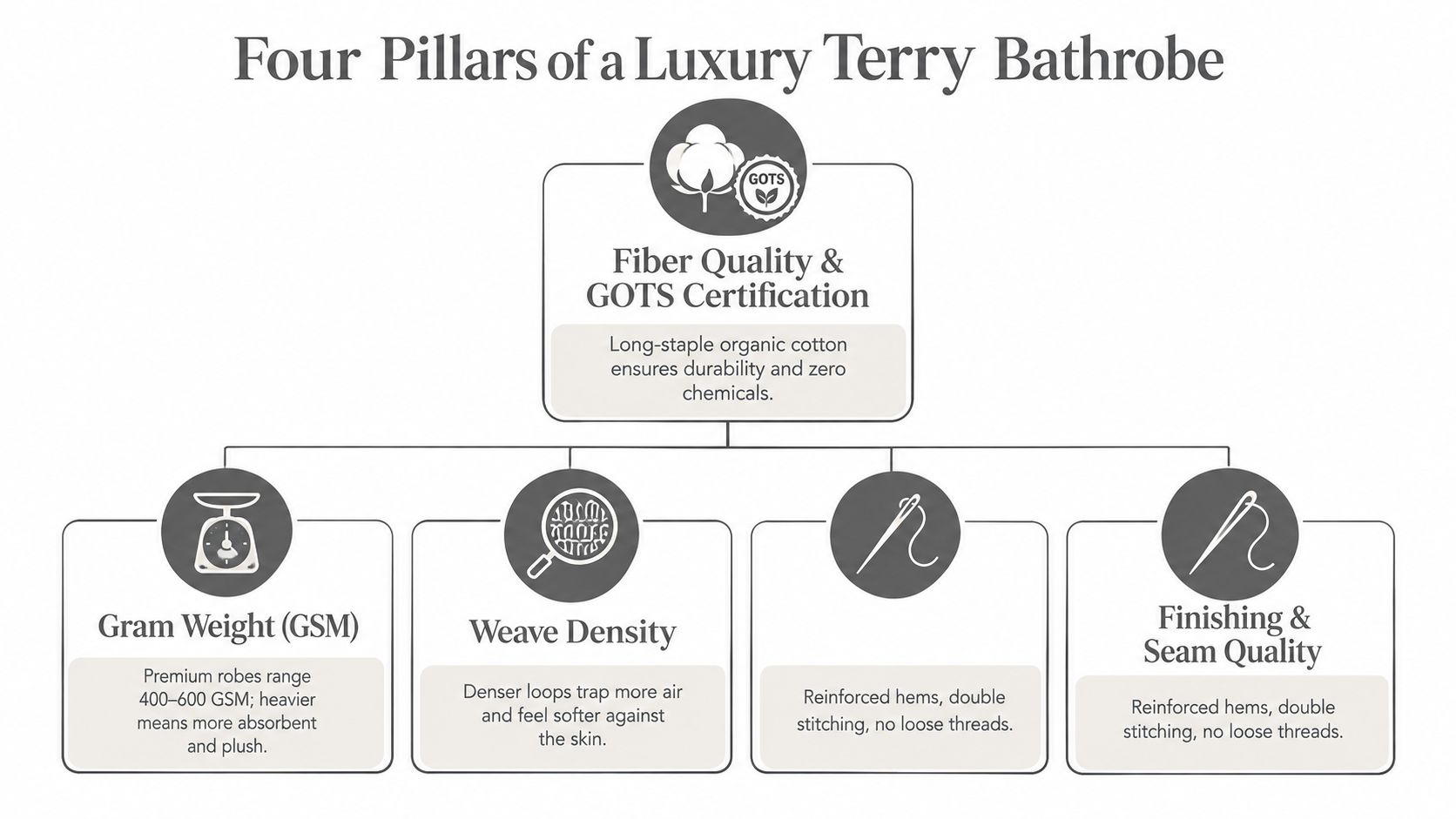
A luxury terry robe isn't defined by one feature. It's a combination of fiber, weight, loop construction, and finishing. When those work together, the robe feels calm, useful, and expensive in the best sense of the word. It doesn't need to shout.
Fiber quality comes first
You feel fiber quality before you know the technical term for it. Better cotton tends to feel smoother, more settled, and less harsh on damp skin. For buyers who care about sustainability as much as feel, this is also where certifications start to matter.
Recent market coverage points to stronger demand for sustainable materials such as organic cotton and recycled fibers, with GOTS-certified organic cotton increasingly specified by buyers in 2025 to 2026. The same report says demand for Oeko-Tex Standard 100 and GOTS-certified cotton terry products has increased in North America and Western Europe according to this bathrobe market research report.
That doesn't mean every good robe needs every label. It means sustainability claims are worth reading carefully. A robe should feel good to wear and make sense over time.
GSM matters, but only in context
GSM means grams per square meter. It's a weight measure, and it helps you estimate how substantial a robe will feel.
Independent textile guidance places 400 to 600 GSM as a practical bathrobe sweet spot, while 600 to 800+ GSM falls into a heavier luxury tier in this cotton terry guide. For luxury terry bathrobes, many shoppers land happily in the 500 to 700+ GSM range because that's where plushness and absorbency often feel richest.
But there's a trade-off. More yarn per square meter usually means more plushness and water-holding capacity. It also means slower drying and longer laundering turnaround.
Practical rule: Don't treat the highest GSM as an automatic upgrade. Treat it as a choice.
Loop construction separates good from great
This is the part shoppers miss most often. Two robes can have similar GSM and feel very different in use. Dense, well-formed loops tend to absorb better and feel fuller than sparse loops, even when the numbers look close on the product page.
That's why “heavy” and “luxurious” aren't identical words. Weight can impress your hand. Loop quality decides how the robe performs.
Finishing tells you how long the robe will feel premium
Look closely at the details that don't usually appear in the hero photo:
- Seam quality: Double-stitched seams tend to hold shape better through repeated laundering.
- Collar design: A shawl collar usually adds warmth around the neck and a more cocooning feel.
- Belt loops and tie placement: These affect whether the robe sits neatly or shifts all day.
- Hem stability: Clean finishing helps the robe drape better and resist looking tired.
If you want to compare product styles built around these features, SEYANTE offers a straightforward example in its luxury robe collection.
How Weight Loop Density and Sustainability Compare
Most buyers start with one question: should I choose a lighter robe or a heavier one? The better question is what kind of comfort you want most often.
A robe that feels amazing for ten minutes after a bath may be too slow to dry for daily use. A robe that dries quickly may not give you that wrapped-up spa feeling. And a robe with moderate weight can outperform both if the loops are denser and the construction is better.
Why heavier isn't always smarter
Weight changes the whole experience.
A lighter terry robe usually feels easier to throw on, easier to wash, and less likely to overwhelm you in a warm home. A mid-weight robe often balances absorbency and practicality. A heavyweight robe can feel cozy, but it asks more from your laundry routine and more patience between wears.
What matters most is that loop density can beat raw heft. A robe with better-formed loops may pick up water more effectively than a heavier robe with looser construction. That's the hidden trade-off many product descriptions skip.
Choosing Your Ideal Terry Weight and Build
| GSM Tier | Feel and Absorbency | Drying and Care Trade-off | Best For |
|---|---|---|---|
| 400 to 600 GSM | Balanced feel, towel-like absorbency, easier everyday wear | Faster to dry than very heavy robes, simpler to launder regularly | Daily post-shower use, mixed lounging and drying |
| 500 to 700+ GSM | Plush, substantial, spa-like handfeel when well constructed | More bulk, longer drying time, takes up more laundry space | Buyers who want a richer robe feel at home |
| 600 to 800+ GSM | Heavy, enveloping, very substantial in hand | Slowest drying, more demanding for frequent wash cycles | Cooler settings, slower routines, statement-level coziness |
Where sustainability fits into the decision
For eco-conscious shoppers and hospitality buyers, the fabric story doesn't stop at comfort. Material sourcing, certifications, and durability all matter because they affect how long a robe stays usable and whether the purchase aligns with broader values.
Here's a practical way to consider it.
- If you want lower-maintenance luxury: Choose moderate-to-plush weight with strong loop construction.
- If sustainability is a priority: Look for organic cotton and clear certification language, especially GOTS and Oeko-Tex when available.
- If the robe will be washed often: Put durability and dimensional stability ahead of dramatic heft.
SEYANTE is one example of a brand in this category that offers robes in 100% Turkish cotton terry and also includes GOTS-certified organic options, which is useful if you want to match comfort with clearer material standards.
How to Choose the Right Size Style and Fit
A beautiful robe can still disappoint if the fit is off. Sleeves that creep up, a hem that feels too short after washing, or a chest overlap that never sits right can make a robe feel less luxurious than its fabric deserves.
Start with how you actually wear a robe
Think about your routine before your size.
If you wear a robe for ten minutes after a shower, you may prefer easier movement and less bulk at the sleeves. If you stay in it for an hour while reading, getting ready, or winding down, more length and collar coverage may feel better. A robe for quick use and a robe for lingering aren't always the same garment.
A few style cues help:
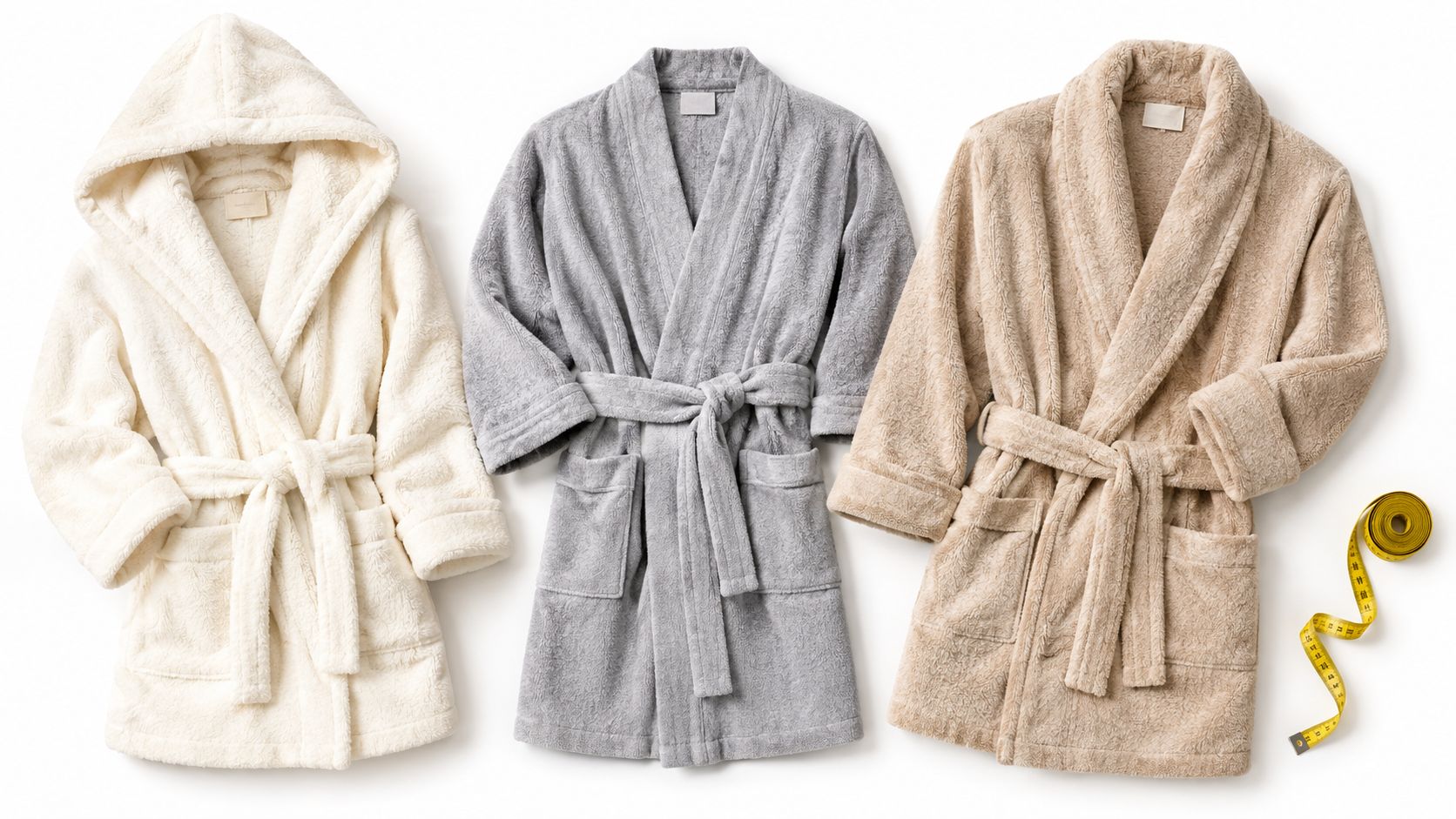
- Kimono style: Cleaner lines, lighter feel around the neck, easier movement.
- Shawl collar: More warmth around the chest and neck, classic hotel feel.
- Hooded robe: Useful if wet hair and fast warmth matter most.
Measure for ease, not precision tailoring
Robes aren't meant to fit like structured clothing. You want room to wrap, sit, and move.
Use these checks before buying:
- Shoulders: The shoulder line shouldn't feel tight when you reach forward.
- Front overlap: The robe should wrap comfortably without constant tugging.
- Sleeves: Check where they'll hit after laundering, not only before.
- Length: Think about height, not just size label. A long robe can feel elegant on one person and cumbersome on another.
If you're choosing a gift, it's usually safer to lean slightly roomy than slightly trim.
Don't ignore shrinkage reliability
This is one of the most practical differences between a robe that stays satisfying and one that becomes frustrating. Independent textile guidance notes that unstabilized cotton terry can shrink about 3 to 8% after initial washing, while pre-shrinking or sanforization can reduce residual shrinkage to roughly 1 to 3% according to this terry fabric characteristics guide.
That may sound small, but it can change sleeve length, hem placement, and overall drape enough to matter. A robe that fit perfectly out of the package can feel shorter, tighter, or less balanced after the first wash if the cotton wasn't stabilized well.
When product descriptions mention pre-shrunk fabric, sanforization, or clear care guidance, that's worth paying attention to. Reliable sizing after laundering is part of luxury.
Care Instructions That Keep Terry Plush Wash After Wash
A terry robe stays inviting when the loops stay open, clean, and springy. Most care mistakes do the opposite. They press the loops down, coat them, or stress the cotton until the robe feels flatter and less absorbent.
Wash to protect the loops
Use a gentle routine rather than an aggressive one. Warm water usually makes more sense than hot water for cotton terry because it cleans well without pushing shrinkage harder than necessary.
A few habits help more than people expect:
- Give the robe room: An overpacked washer compresses the pile and makes rinsing harder.
- Wash with similar items: Rough trims, hooks, and zippers can catch loops.
- Use detergent carefully: Too much product can leave residue in the fabric.
- Skip fabric softener: It can coat the loops and reduce absorbency.
Dry for loft, not stress
Low tumble drying is usually kinder to terry than high heat. The goal is to dry the robe thoroughly without baking the cotton. If the robe feels a little stiff after air drying, a short low-heat tumble can help relax the pile.
Before hanging or folding it away, give it a shake. That small step helps the loops lift back up instead of drying in a flattened position.
Clean, open loops absorb better than coated, compressed ones. Softness and performance usually rise and fall together.
Store it like a textile, not an afterthought
A damp robe shoved into a crowded corner won't feel fresh next time. Let it breathe. Hang it where air can move around it, especially if you wear it right after bathing.
Good care doesn't make a mediocre robe luxurious. But it does help a good robe stay good much longer.
Where Luxury Terry Bathrobes Shine Most
Luxury terry bathrobes earn their keep in the parts of life that repeat. Not the dramatic moments. The ordinary ones. Cold bathroom tiles in the morning. Hair-wash nights. Slow Sundays. Guests staying over. The few minutes after a bath when you want comfort without thinking about it.
That repeated use helps explain why this isn't a tiny niche category. The global luxury bathrobes market is estimated at about USD 3.46 billion to USD 3.9 billion in 2024 to 2025, with projections ranging from roughly USD 5.8 billion by 2030 to USD 6.36 billion by 2035, implying annual growth in the 5% to 6.5% range in this luxury bathrobes market report. The takeaway is simple. People aren't buying premium robes as a novelty. They're buying into a daily comfort ritual that overlaps with home, wellness, and hospitality.
The best use cases for different buyers
At home, a terry robe shines when you want one piece that handles both drying and lounging. In spas or boutique stays, it helps create that familiar cocooned feeling guests associate with being cared for. As a gift, it works because it feels personal and useful at once.
Here's a simple filter:
- For self-care at home: Choose the robe that matches your routine, not the heaviest robe on the page.
- For hospitality use: Focus on laundering reliability, durability, and consistent sizing.
- For eco-conscious buying: Weigh certifications, material transparency, and long-term wear.
- For gifting: Prioritize forgiving fit, classic styling, and easy care.
If you're pairing a robe with other comfort-focused gifts, this ultimate gifting guide for bath sets offers helpful ideas for building a more complete at-home ritual.
A simple final decision rule
Choose by lifestyle first. Then by weight. Then by finishing details.
If you want quick practicality, don't chase maximum bulk. If you want cocooning warmth, accept that more plushness often means slower drying. If you want a robe that still feels premium after many washes, pay special attention to loop quality and shrinkage reliability. That's often what separates a robe you admire from a robe you keep reaching for.
SEYANTE offers terry and waffle robes designed around the choices that matter here, including Turkish cotton construction, practical style options, and fit guidance for everyday use. If you want a robe that balances plush comfort with real-world wearability, visit SEYANTE.