Monogrammed Robes for Men: The Ultimate Gift Guide
- The Enduring Appeal of Personalized Mens Loungewear
- Choosing the Right Fabric for Embroidery
- Design Rules for Placement Font and Thread Color
- Sizing Fit and Silhouette Considerations
- Navigating Gifting Timelines and Return Policies
- Caring for Embroidered Turkish Cotton
- Finalizing Your Monogramming Strategy
You've found the right kind of gift: useful every morning, luxurious without being showy, and personal enough to feel chosen rather than pulled from a shelf. The complication is that a monogrammed robe isn't just a plain robe with initials added at checkout. Fabric, stitch density, placement, fit, delivery time, and return terms all affect whether the finished garment feels refined or regrettable.
For men, the strongest choice is usually restrained. Start with a robe that performs well before you personalize it, then choose embroidery that supports the garment's shape and texture. The right monogram should look as though it belongs there, not as though it was added as an afterthought.
The Enduring Appeal of Personalized Mens Loungewear
A thoughtful buyer usually reaches the same crossroads. A birthday, anniversary, wedding morning, or holiday is approaching, and a standard robe feels too anonymous. A personalized robe seems more meaningful, but only if the recipient will actually wear it. That's why monogrammed robes for men work best when treated as everyday luxury rather than novelty gifts.
The dressing gown has a substantial place in Western menswear history. Historical accounts place European dressing gowns at least as far back as the 17th century, when gentlemen wore gowns influenced by Persian and Indian styles. By the 18th and 19th centuries, the robe had developed into a recognized leisure garment for affluent men, and late-19th-century dressing gowns and smoking jackets were associated with the modern gentleman. Velvet, quilted silk, piping, tassels, and embroidered initials all belonged to that visual language of private comfort and cultivated taste. A history of men's robes traces that progression from imported inspiration to domestic luxury.
Personalization started as ownership
Monogramming is older still. Initials and letter marks appeared on coins, seals, and royal signatures in ancient Greece and Rome. During the Middle Ages, embroidered initials served a practical purpose as laundry markers. By the Victorian era, wealthy and aristocratic households had turned initials on linens, shirts, robes, and handkerchiefs into visible signs of ownership and status. This history of machine monogramming shows why embroidery on a robe feels more established than a modern retail gimmick.
The men's tradition also has its own visual character. Traditional male monograms commonly used letters of the same size in a row, rather than the larger center initial often associated with women's monograms. That format still suits contemporary menswear because it reads clearly and avoids excessive ornament.
Buyer's principle: Personalization should make the robe feel more specific, not more theatrical.
A monogrammed robe earns its place when the base garment already has the right hand-feel, weight, and construction. Initials can signal ownership, mark a private ritual, and make a practical item feel intimate. They can't rescue thin fabric, poor sizing, or an awkward cut.
Choose the garment first. Then choose the embroidery as a finishing detail. That order produces a better gift and prevents the initials from distracting you from the qualities the wearer will experience every day.
Choosing the Right Fabric for Embroidery
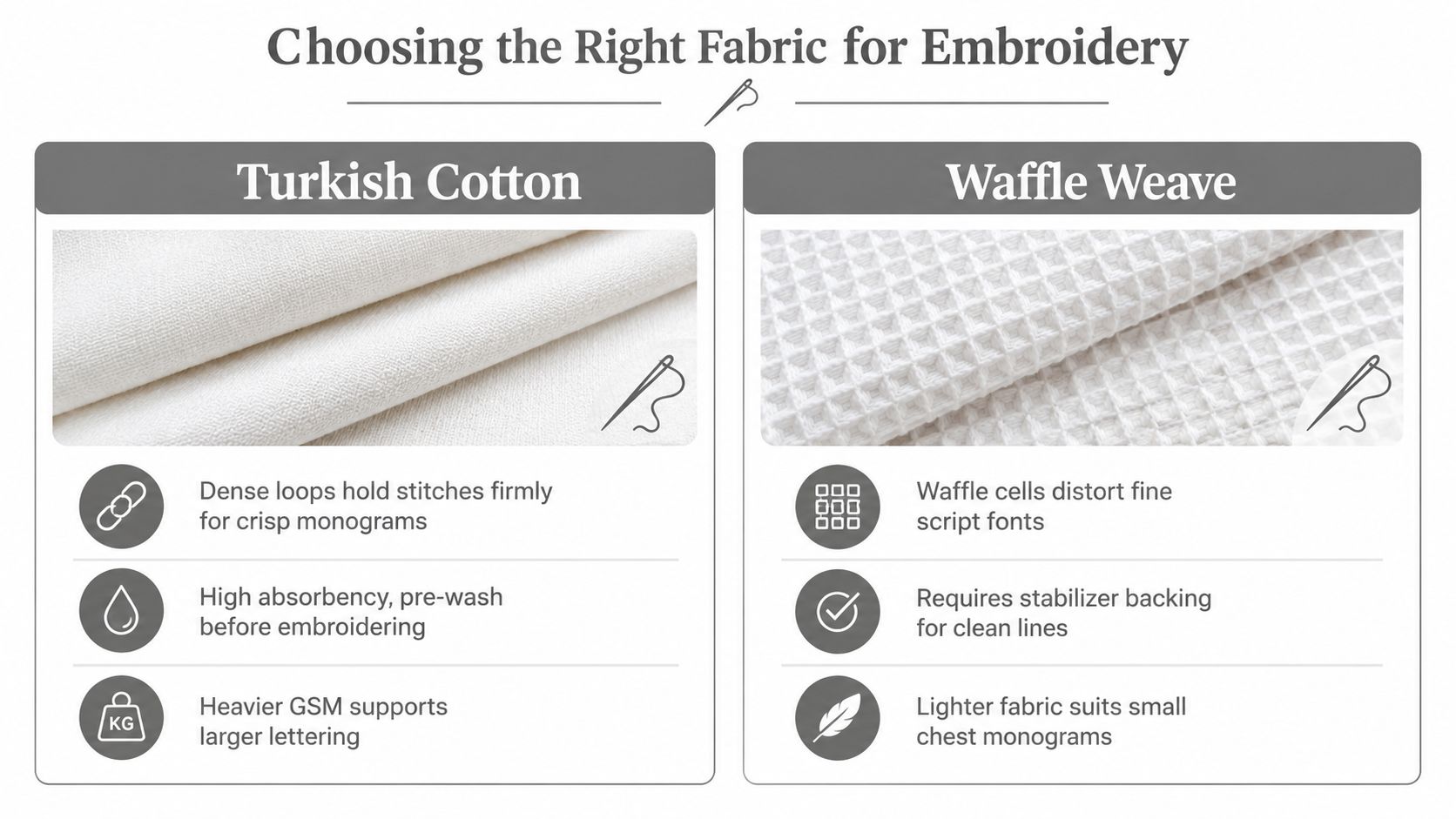
Fabric determines whether embroidery looks crisp, sinks into the surface, or creates unwanted stiffness. For men's robes, the practical decision usually comes down to cotton terry for absorbency and plushness or waffle weave for lighter weight, airflow, and faster drying.
Terry cloth manages moisture through its raised loops. The looped pile increases the surface area available for water uptake, while cotton's hydrophilic cellulose helps draw in moisture. One textile-industry explanation reports that practical terry can retain moisture equal to 5–7 times its dry weight and that constructions with roughly 4 mm pile height can absorb in 1–2 seconds, compared with 3–5 seconds for versions with 2 mm pile height. Terry fabric's moisture-management properties explain why a dense, well-made terry robe behaves more like a wearable towel than ordinary loungewear.
Embroidery changes that surface locally. Dense stitching can compress loops beneath the monogram, reducing the effective area available for water uptake in that small region. The effect is most relevant when the embroidery is oversized or heavily filled. A denser terry base helps limit the visual and functional disruption, while a smaller chest monogram keeps the change localized.
Match the fabric to the ritual
A terry robe is the direct recommendation for someone who steps out of the shower and wants the garment to help dry him. It also suits cooler rooms and buyers who associate luxury with substantial weight and a springy, enveloping texture. Before embroidery, ask how the fabric will be prepared and whether the maker accounts for its pile when setting stitch density.
You can read more about the construction and feel of Turkish cotton bathrobes when comparing terry options.
Waffle weave uses a raised grid rather than a continuous plush pile. The cells trap still air, which supports insulation while preserving breathability. A technical guide places still air's thermal conductivity at about 0.025 W/m·K and states that a 200 gsm waffle knit can provide warmth comparable to a 280 gsm fleece. Waffle-knit fabric guidance supports its use when the buyer wants a lighter, airier robe rather than maximum plushness.
The grid also changes the embroidery decision. Fine script can lose clarity when it crosses the raised cells, and the fabric may need stabilizer backing to keep narrow strokes clean. Small block letters or a single initial are safer choices. Waffle is especially suitable for warm climates, post-shower airflow, and men who dislike bulky garments.
My fabric recommendation
Choose dense cotton terry for post-shower use, colder rooms, and bold but controlled lettering. Choose waffle weave for breathable lounging, lighter packing, and a minimalist monogram. Don't select a fabric for its appearance alone. The best embroidery is the one that preserves the robe's main job.
Design Rules for Placement Font and Thread Color
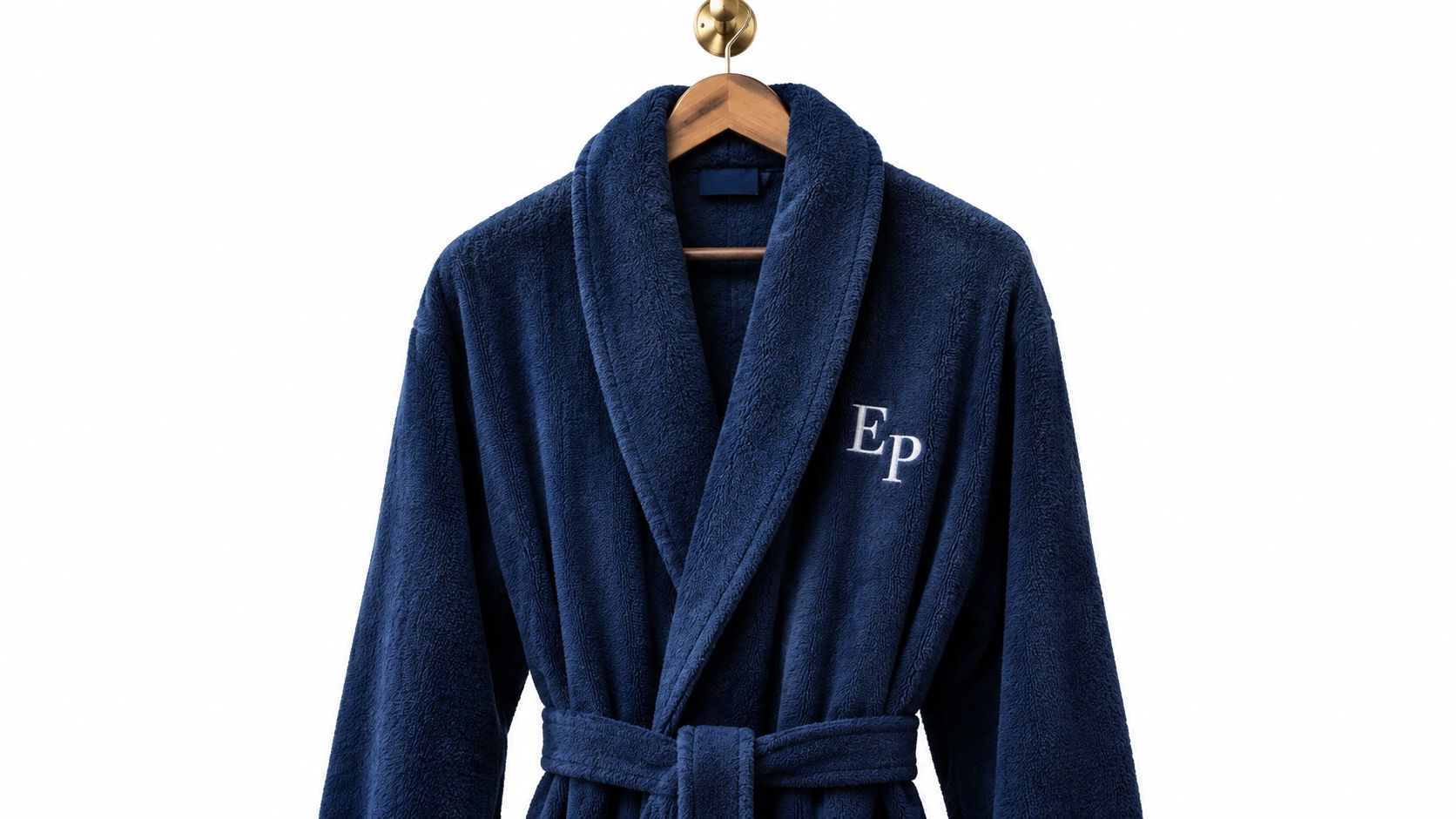
A monogram can make a robe look sharp, or it can make an expensive garment resemble promotional merchandise. The difference usually comes down to restraint. For men's loungewear, the left chest remains the safest and most polished placement because it's visible without dominating the garment.
Oversized back embroidery is rarely necessary on a personal robe. Sleeve lettering can be difficult to see and may distort as the arm bends. Belt embroidery is more discreet, but it can disappear when the belt is tied or removed. The left chest gives the initials a stable visual location and works with both shawl-collar and kimono-style robes.
Use the robe's character as your design brief
A clean, contemporary robe calls for clean lettering. Block letters are my first recommendation for most men because they remain legible on textured cotton and look composed on modern spa-style silhouettes. A restrained serif can add heritage without becoming decorative.
Script has a place, particularly on a formal gift or a robe with traditional tailoring. It's less forgiving, though. Thin strokes can disappear against terry loops, while ornate capitals may become difficult to read when several initials overlap. On waffle weave, small script is an especially risky choice because the grid can interrupt fine curves.
The letter format should also reflect the recipient. A single initial is the most discreet option and eliminates uncertainty about sequencing. Three initials in a same-size row feel modern and clear. A traditional arrangement with a larger family-name initial creates a more formal impression, but only use it when you're certain about the recipient's names and preferences.
Choose contrast with discipline
Thread color should either blend deliberately or contrast softly. White embroidery on a white robe creates a quiet hotel-style finish. A dark thread on a pale robe is more visible and more personal. Navy on slate gray, charcoal on stone, or ivory on deep blue can create definition without looking loud.
Avoid contrast that overwhelms the fabric. Bright metallic effects and highly saturated thread can work for theatrical gifting, but they're harder to live with. A robe is worn repeatedly, often in relaxed settings. Tonal or low-contrast embroidery tends to remain elegant after the excitement of unboxing has passed.
Before approving the order, request a digital proof or inspect the retailer's letter examples. Check the initials in their final sequence, the font at its actual size, and the thread against the robe color. For a practical comparison involving personalized textile accessories, review this guide to a towel wrap with monogramming.
Sizing Fit and Silhouette Considerations
The monogram sits on a moving body, not a flat display panel. A robe that is too large can pull the chest embroidery out of alignment when belted. A robe that is too small can cause the initials to pucker as the wearer reaches, sits, or wraps the front closed.
Traditional men's robes often use generous proportions, broad shawl collars, long sleeves, and substantial lengths. That shape feels luxurious when the wearer wants warmth and coverage, but excess fabric can make a chest monogram look lost. Modern spa-style robes usually rely on cleaner lines and lighter drape, which gives a small monogram more visual authority.
Compare the fit before the decoration
Start with the shoulder and chest measurements, not the usual letter on a clothing label. The wearer needs room to wrap and move, but the robe shouldn't hang so broadly that the front panels collapse into folds. Check sleeve length carefully, especially if the recipient is shorter or prefers to work, cook, or prepare coffee while wearing the robe.
A shawl collar frames the upper chest with a continuous curved edge. It suits traditional terry and gives the embroidery a stable surrounding structure, provided the monogram sits clear of the collar seam. A kimono-style neckline offers a flatter, cleaner frame and pairs especially well with waffle weave and understated block letters.
Length affects the overall impression. A longer robe feels ceremonial and warmer, while a shorter cut looks lighter and more mobile. Neither is automatically superior. Match the silhouette to how the man uses a robe, rather than choosing the most dramatic version for the photograph.
Keep scale proportional
Small lettering usually looks more intentional on a robe. A large monogram needs enough uninterrupted fabric around it, so it can become awkward on narrow chests, textured grids, or robes with prominent piping. Ask the embroiderer how the design will sit relative to the pocket, collar, and belt line.
Fit check: Tie the robe closed in your mind, then imagine the chest initials moving with the wrap. If the placement would sit on a fold, choose a cleaner area or reduce the design.
For a gift, use the recipient's measurements whenever possible. If that isn't practical, choose a cut with forgiving wrap proportions and verify the exchange policy before adding initials. Personalization removes much of the flexibility that makes sizing mistakes easy to correct.
Navigating Gifting Timelines and Return Policies
The assumption that monogramming is a quick add-on is the most expensive mistake in this category. Personalization commonly adds about 5–10 business days before shipping, according to current retail examples collected in monogrammed robe ordering guidance. That production window comes before the carrier's transit time and doesn't account for weekends, holidays, approval delays, or an item that becomes unavailable.
A robe ordered for a wedding, anniversary, or holiday needs a real delivery plan. If the gift date is fixed, treat embroidery as a production stage rather than a checkout option. A standard robe may be easy to replace if delayed. A personalized one is tied to a specific recipient and usually can't be swapped casually.
Decide whether the personalization is worth the risk
Many personalized robes are non-returnable, because the embroidered garment can't be resold as a generic item. That policy makes the sizing chart, letter sequence, spelling, font, thread color, and delivery estimate part of the purchase decision.
Before submitting the order:
- Confirm production timing: Ask whether the stated lead time begins when you place the order or after proof approval.
- Check the final-sale rule: Read the personalized-item policy, not only the general returns page.
- Proof every letter: Verify names, initials, order, capitalization, and punctuation before production.
- Leave delivery room: Build in time for carrier delays and any correction process.
- Use a backup plan: If the deadline is tight, give the unmonogrammed robe first and add personalization only when the timeline is reliable.
The right answer isn't always “add the initials.” If the gift date is close, the recipient's size is uncertain, or the retailer won't confirm production timing, a high-quality robe without embroidery may create a better experience. You can still make it personal with presentation, a handwritten note, or a coordinated accessory.
For teams arranging thoughtful outreach rather than a single personal gift, resources on branded gifting for creators can help frame personalization as part of a broader gifting plan. The same principle applies here: confirm recipient details and fulfillment constraints before promising a finished item.
Caring for Embroidered Turkish Cotton
Embroidery needs the same disciplined care as the robe around it. Cotton and thread can respond differently to heat, agitation, and drying, so careless laundering may leave the initials puckered, frayed, or distorted even when the robe itself still feels usable.
Read the maker's care label first. For premium cotton terry or waffle weave, a conservative routine is the right default.
Wash with less aggression
Turn the robe inside out before washing when the construction allows it. Use cold water and a mild detergent, and separate it from garments with zippers, hooks, or rough hardware that can catch the embroidery. Avoid harsh bleach, which can weaken or discolor thread and disturb the surrounding cotton.
Don't overload the machine. Terry needs room for water and movement to pass through the loops, while waffle weave can snag if compressed against abrasive items. Wash the robe with similar soft textiles and remove it promptly at the end of the cycle.
For a detailed maintenance reference, follow this guide on how to wash, store, and care for your robe.
Control heat during drying
Tumble dry on low if the care label permits it, or air dry the robe in a way that supports its weight without stretching the shoulders. Excess heat can shrink the cotton unevenly and may affect embroidery backing or adhesive stabilizers. High heat also works against the softness you bought the robe to provide.
Skip fabric softener if absorbency matters. Coating the loops can reduce the fabric's ability to take up water, especially in a robe selected for post-shower use. Don't iron directly over raised embroidery. If the fabric needs smoothing, use gentle steam from a safe distance and avoid pressing the initials flat.
Inspect the monogram after washing. Loose threads should be trimmed carefully, never pulled. If the letters begin to lift or the base fabric puckers sharply, stop escalating the wash temperature and ask the maker for care advice. Early intervention is less damaging than repeated laundering under the wrong conditions.
Finalizing Your Monogramming Strategy
A successful personalized robe balances performance, proportion, and timing. Ignore any one of those, and the gift can underperform. Get all three right, and a simple set of initials turns a familiar garment into part of the recipient's daily routine.
Use this decision sequence:
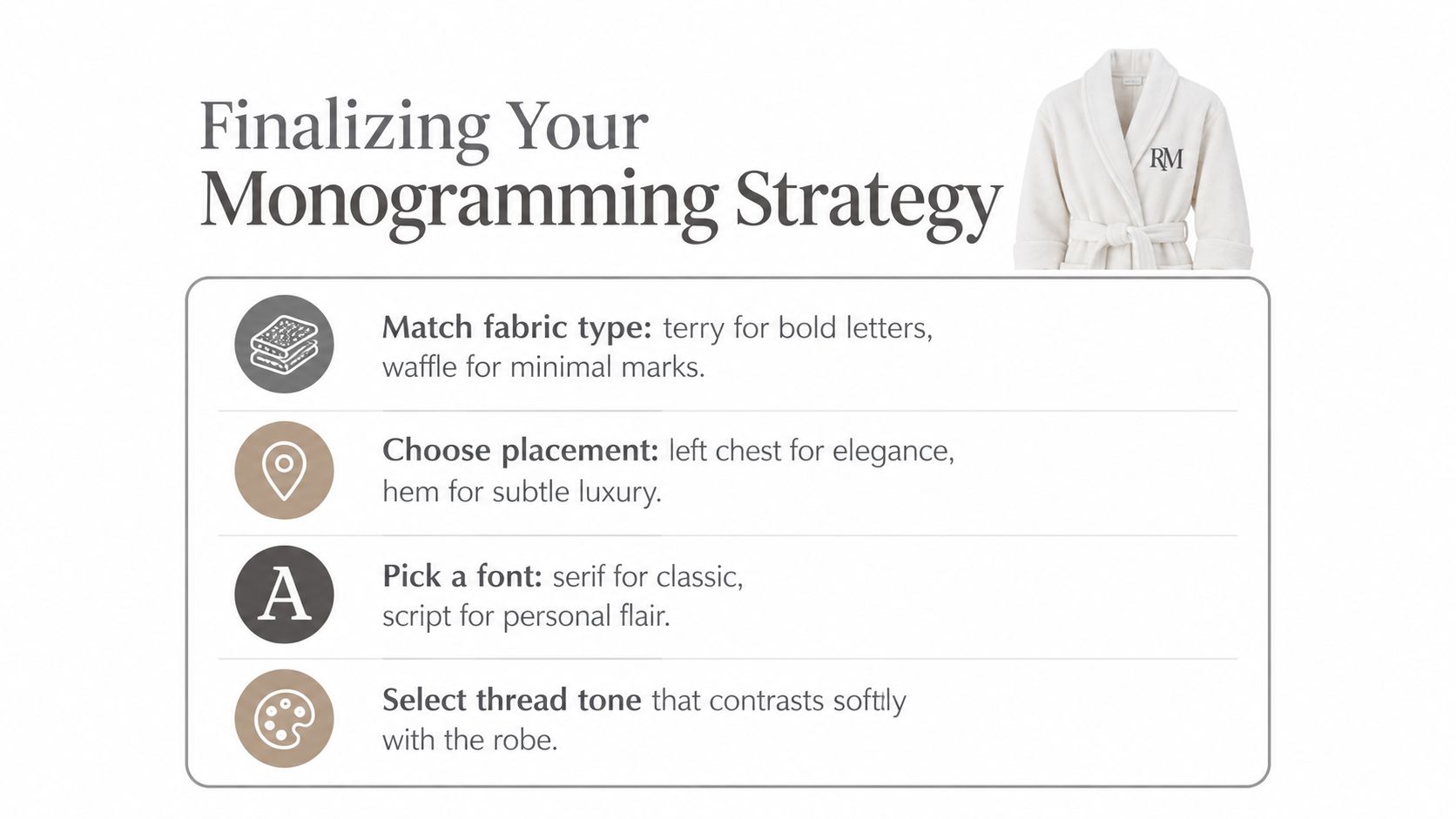
- Choose the robe's job. Select terry when post-shower absorbency and substantial warmth matter most. Choose waffle weave when the wearer prefers airflow, a lighter feel, and quicker drying.
- Inspect the embroidery canvas. Dense terry supports firm, visible stitching. Waffle requires a simpler design and careful stabilization so the raised grid doesn't disrupt fine lettering.
- Keep the placement quiet. The left chest is the dependable choice for a visible but controlled finish. A hem or belt can work when the recipient prefers personalization that's almost private.
- Match font and thread to the silhouette. Block letters or a restrained serif suit modern men's robes. Script belongs on more formal designs and should be tested at its actual size. Choose tonal or softly contrasting thread rather than decoration that competes with the garment.
Treat ordering as part of the design
A beautiful robe delivered after the occasion is a logistics failure, not a luxury experience. Confirm the embroidery lead time, shipping method, sizing guidance, and personalized-item return policy before you pay. If you're shopping for several recipients, create a written list of names, initials, sizes, robe colors, thread colors, and delivery addresses, then proof it twice.
The same care applies when pairing a robe with another considered present. For a recipient who enjoys spirits and ritual, a guide to ultimate whiskey gifts for experts can help you build a coherent relaxation-focused gift rather than a collection of unrelated objects.
A monogrammed robe for men should feel deliberate the moment it's opened and remain comfortable long after the gift occasion. Buy the fabric for the wearer's habits, choose embroidery that respects the robe's structure, and order early enough that personalization adds meaning instead of pressure.
SEYANTE offers men's and women's robes in Turkish cotton terry and lightweight waffle weaves, along with sizing and material guidance for choosing confidently. Visit SEYANTE to find a robe that suits the recipient's daily routine, then confirm personalization and delivery details before placing a time-sensitive order.