White Cotton Bath Robe Guide for Everyday Luxury
- Why a White Cotton Bath Robe Still Wins After the Shower
- Reading the GSM Number on the Label
- Terry vs Waffle at a Glance
- What GOTS Certification Actually Means
- Care Routine for Lasting Softness
- Sizing and Fit by Body and Use
- Where a White Robe Shines Beyond Home
- Choosing Your White Cotton Robe With Confidence
You've just stepped out of a hot shower, your skin is damp, and the towel on the hook is already slightly wet. A white cotton bath robe seems like the obvious upgrade, but the label can raise more questions than it answers. Is terry better than waffle? Does a higher GSM always mean better quality? What does GOTS certification change, and which robe will dry before your next shower?
The useful way to shop is to treat a robe as a piece of textile engineering, not just a color or style choice. Weave structure, GSM, fiber quality, certification, fit, and care all shape how the robe feels against wet skin and how it performs after repeated washing.
Why a White Cotton Bath Robe Still Wins After the Shower
The best robe earns its place in the few minutes after bathing. You want coverage without the loose, slipping bulk of a towel, enough absorbency to handle leftover water, and enough airflow that your skin doesn't feel sealed inside a damp layer. Cotton meets that brief because it can feel soft, breathable, and absorbent at the same time.
The white color adds a practical visual cue. In a bathroom, crisp white makes moisture, makeup, body oils, and other marks easy to notice, so you know when the robe needs laundering. Hotels and spas also favor white because it creates a clean, consistent appearance across guest rooms and treatment spaces. That visual association doesn't make every white robe hygienic, but it makes maintenance more visible.
The construction underneath the color matters more than the color itself. Cotton became more accessible during the Industrial Revolution as fabric production expanded, and terry cloth with looped fibers was widely available by the late 1800s. That history helps explain why the classic white cotton bath robe is a practical household garment, not merely a decorative luxury. Cotton's affordability and terry's absorbency helped move the robe into everyday post-bath routines across major markets.
The fabric structure you can feel
Terry cotton is easiest to understand by looking at a bath towel. Uncut loops rise from the base cloth, creating extra surface area, small air pockets, and a cushioned hand feel. Those loops catch and hold water, which is why terry feels substantial when you wrap it around freshly washed skin.
Loop design changes the experience. Single-loop and double-loop constructions differ in how the pile is formed, while lower-twist or zero-twist yarns can create a softer, more open, plush feel. A denser pile may feel luxurious, but it also holds more water and can take longer to dry. Technical textile research connects absorbency with fabric weight, thickness, pile structure, and yarn twist, so the label and the hand feel should be judged together. The technical review of terry absorbency is useful if you want the textile explanation behind that sensation.
Waffle weave looks more like a honeycomb than a towel. Recessed cells create texture and channels that draw moisture away from the skin while leaving more open space for air circulation. The result is usually a lighter robe that feels less like wrapping yourself in a second towel.
French terry sits between lounge fabric and towel fabric. It has flat loops on the inside and a smoother outer face, so it works well for relaxed layering but isn't usually the first choice when maximum post-shower drying matters.
Practical rule: Choose terry when absorbency and cushion come first. Choose waffle when lightness, airflow, and faster drying matter more.
For a fuller comparison of what to wear immediately after bathing, see this guide to bathrobe versus towel after a shower.
Reading the GSM Number on the Label
GSM means grams per square meter, the fabric weight used to describe how much material is packed into a square meter of cloth. It isn't a complete quality score, but it gives you a practical clue about drape, density, absorbency, and drying behavior.
Lower GSM robes generally feel lighter and release moisture more readily. Higher GSM robes usually feel denser and more towel-like, with greater water-holding capacity. The tradeoff is simple: more material can mean more plushness, but it can also leave the robe heavier when wet and slower to dry. Industry guidance places lightweight terry around 200 to 350 GSM, all-purpose bath fabrics around 350 to 500 GSM, and premium spa or hotel-style robes around 500 to 700 GSM or higher.
| GSM Range | Feel and Performance | Best For |
|---|---|---|
| 200 to 350 GSM | Light, airy, and easier to dry | Warm rooms, summer use, and quick post-shower wear |
| 350 to 500 GSM | Balanced softness, coverage, and absorbency | Everyday home use and general hospitality |
| 500 to 700+ GSM | Dense, plush, and towel-like | Cool bathrooms, soaking routines, and spa-style comfort |
GSM still needs context. A well-spun, longer-staple cotton robe at a moderate weight can feel smoother and more durable than a heavier robe made with weaker, shorter fibers. Don't buy the largest number automatically. Ask whether you can comfortably dry and store that construction in your own home.
A medium-weight robe often makes the most practical daily choice because it balances water pickup with manageable drying.
If you're buying for a hospitality operation, medium GSM can simplify laundry turnaround and reduce the burden of keeping thick pile fully dry. A home buyer with a cold bathroom may prefer heavier fabric because the robe's warmth and substantial drape matter more than quick drying. Buyers also tracking textile documentation can use this ESPR textile compliance timeline to understand why product information and supply-chain details are becoming more important.
For seasonal selection, compare the weight and fabric guidance in this bathrobe guide for different climate zones.
Terry vs Waffle at a Glance
Terry and waffle can both be made from cotton, but they solve different problems. Terry behaves like a wearable towel, while waffle behaves more like a textured, breathable layer that can also remove surface moisture.
Terry loops increase surface area and create spaces that hold water against the fabric. That construction gives a deeper, more enveloping sensation after a long bath or shower. Waffle cells create a recessed texture that can lift moisture from the body while leaving more room for evaporation between wears.
| Criterion | Terry Cotton Robe | Waffle Cotton Robe |
|---|---|---|
| Absorbency | Strong water pickup from raised loops | Good surface drying with a lighter structure |
| Weight | Usually feels denser and more towel-like | Usually feels lighter and less bulky |
| Drying speed | Can remain damp longer, especially at heavier weights | Generally releases moisture more readily on a hook |
| Seasonal fit | Suits cool bathrooms and colder mornings | Suits warm climates, humid rooms, and year-round indoor use |
A terry robe works well when you want to step out of the bath and stay wrapped without reaching for a separate towel. It can also feel reassuring in winter, when a thin layer doesn't provide enough warmth. The drawback appears after use: thick loops and higher fabric weight increase the amount of moisture that needs to leave the garment.
Waffle makes more sense for someone who showers quickly, lives in a warm or humid environment, or has limited ventilation. The robe feels less bulky while moving around the bedroom, and its textured cells can dry more easily between wears. It won't provide the same thick, cushioned wrap as dense terry.
If your priority is maximum absorbency, start with terry. If your priority is airflow and easier drying, start with waffle.
Construction details still vary within each category, so read the product description rather than relying on the weave name alone. A light terry can feel quite different from a dense terry, just as a tightly woven waffle can feel more substantial than a very open version. Browse terry cloth robes when you want to examine that towel-like category more closely.
What GOTS Certification Actually Means
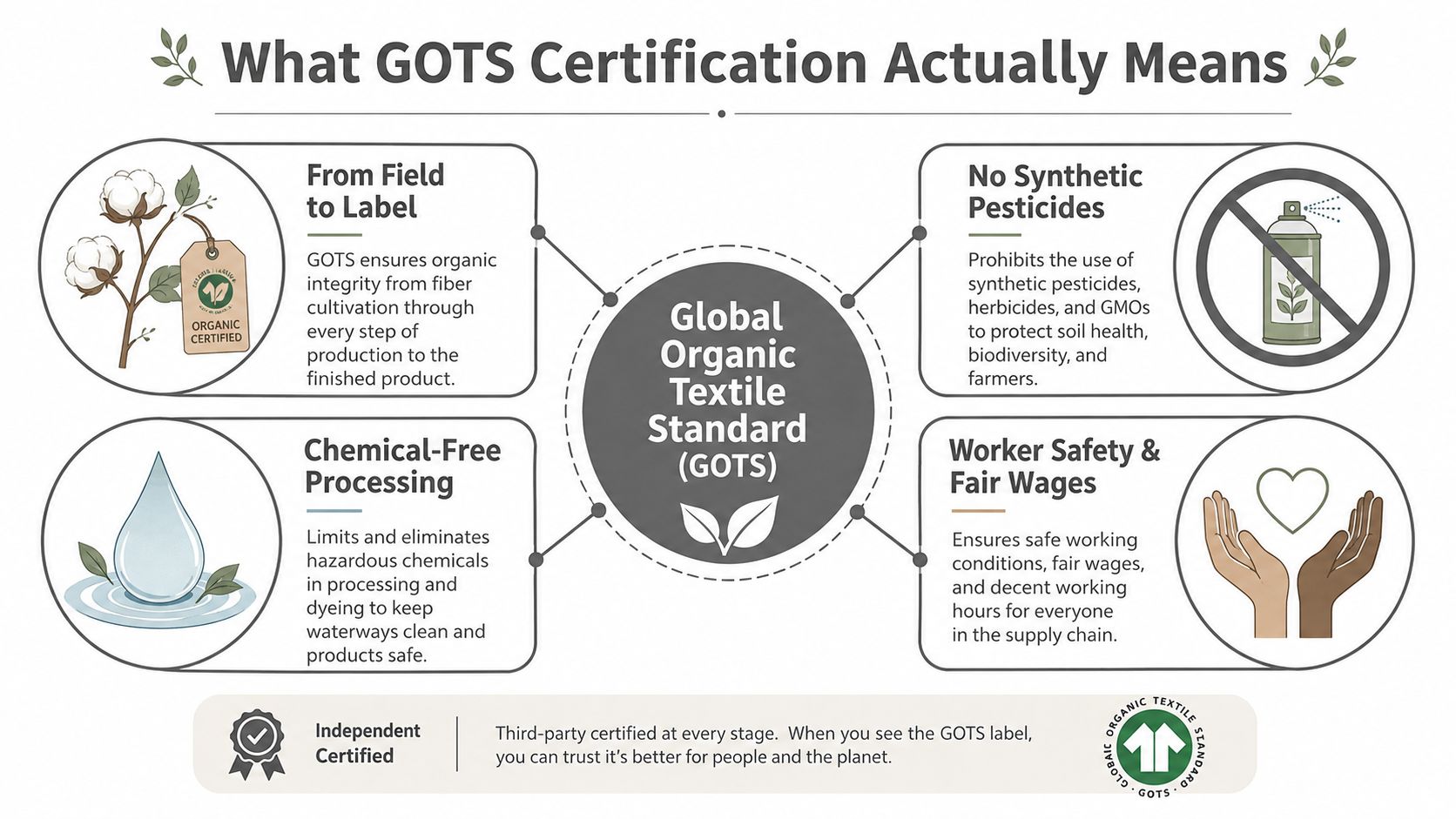
GOTS, the Global Organic Textile Standard, is a supply-chain certification for organic textiles. In plain terms, it looks beyond the cotton fiber and asks how the material was grown, processed, dyed, finished, and handled through production.
That matters on a white robe because bright white isn't created by cotton alone. Manufacturers may use bleaching, brightening, or finishing treatments to produce a crisp shelf appearance. A certification standard places restrictions on chemical inputs and checks more of the production chain than a simple “organic cotton” statement does.
Following the robe from field to label
For the shopper, GOTS is easiest to understand as a series of questions:
- How was the cotton grown? GOTS-certified organic sourcing excludes synthetic pesticides and genetically modified seeds within the relevant organic production requirements.
- How was the fabric processed? Spinning, weaving, dyeing, bleaching, and finishing must follow restrictions on harmful chemical inputs.
- Who made it? The standard includes social criteria covering worker protections and basic labor expectations.
- Can the claim be checked? Look for certification information that identifies the applicable standard and certified operation, rather than treating an unqualified “natural” claim as equivalent.
Restricted finishing inputs can also affect the first-use experience. A robe that isn't overloaded with stiffening or brightening treatments may develop a softer hand after washing, and shoppers with sensitive skin may prefer a product with clearer chemical controls. Certification doesn't guarantee that every wearer will have the same reaction, but it narrows the field for people who care about organic sourcing and responsible processing.
GOTS may also raise the purchase price because certification requires controls, records, and verification across production. That makes it a priority-based decision. If organic fiber, chemical screening, and supply-chain accountability matter to your household, certification gives you a more meaningful filter than color or thread-count-style marketing language.
Care Routine for Lasting Softness
A cotton robe becomes rough when its pile is abused, coated, overheated, or left damp. The care routine should protect the loops or waffle cells while removing body oils and moisture from regular wear.
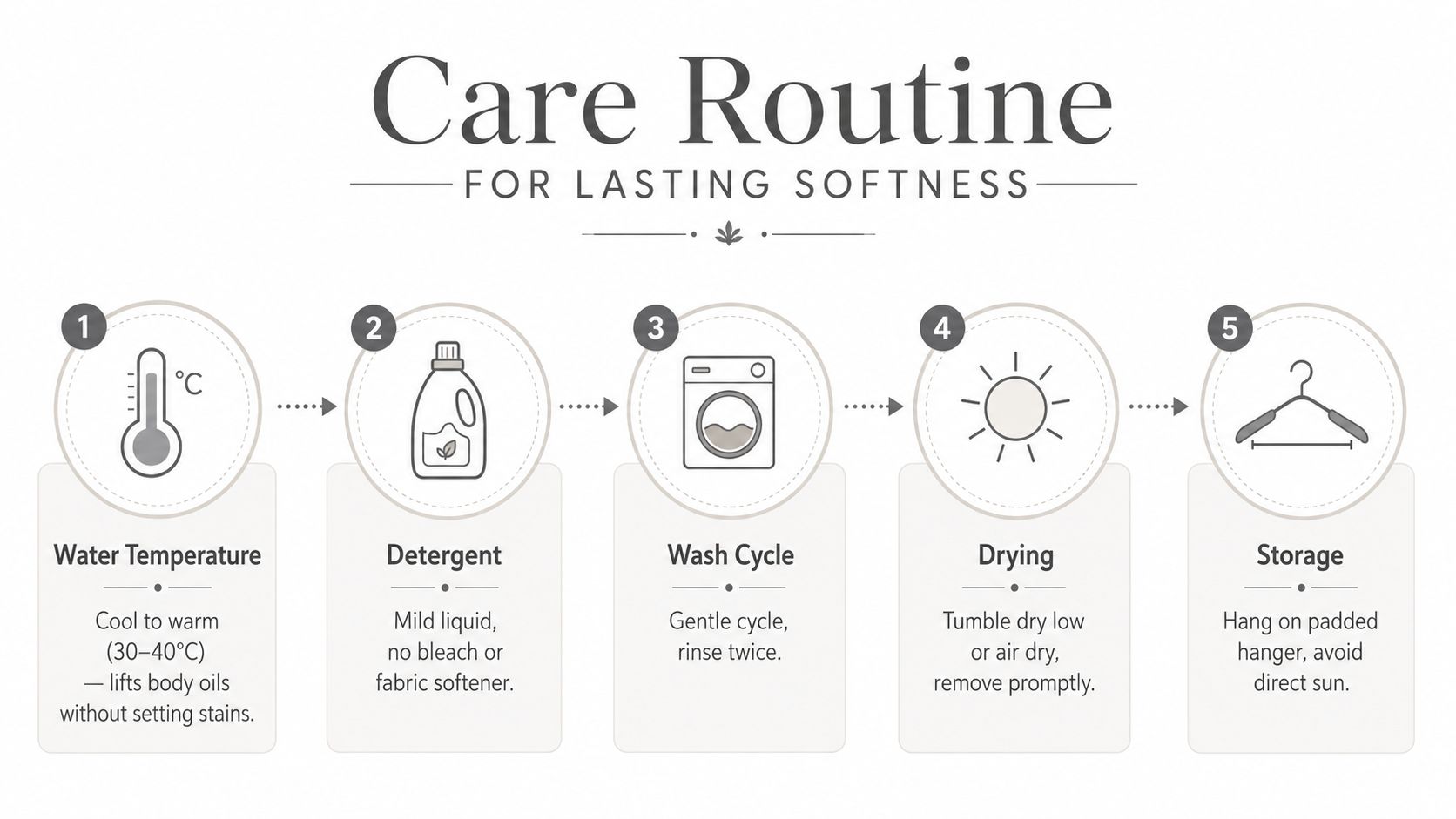
Start by checking the sewn-in care label, then use cool to warm water, around 30 to 40 degrees Celsius, for routine washing. This range can lift everyday oils without exposing cotton to unnecessary heat. A mild liquid detergent is a sensible choice, especially if you want to avoid residue that can stiffen the fabric.
Skip fabric softener. Its coating can cover cotton loops and reduce the absorbency you bought the robe to provide. Also avoid treating “whiter” as automatically better. Strong bleaching or brightening products can change the hand feel and may weaken fibers over repeated use, so follow the garment's instructions instead of adding aggressive products by habit.
A simple wash-day sequence
- Separate the robe. Wash white cotton with other light items and keep it away from colored towels that may transfer dye.
- Use a gentle cycle. Give the fabric enough room to move so water and detergent can pass through the pile.
- Rinse thoroughly. Extra rinsing can help remove detergent from thick terry.
- Dry with restraint. Tumble dry on low heat or hang the robe in a well-ventilated space. High heat can shrink cotton and flatten the pile.
- Refresh the texture. Shake the robe out after washing and after each wear so the loops or cells aren't left compressed.
Don't leave a damp robe bunched on a bathroom floor or closed hook. Hang it wide enough for air to move through the body and sleeves. If the bathroom stays humid, move the robe to a ventilated room until it's dry.
Fold the robe for long-term storage rather than leaving its full weight on a narrow hanger, which can stretch the neck and shoulders. Keep it away from direct sunlight if preserving an even white appearance matters.
Sizing and Fit by Body and Use
A robe's size label is only the starting point. Fit depends on your shoulder width, sleeve reach, preferred overlap, layering habits, and the distance between the hem and the floor.
A slim cut stays closer to the body and creates less excess fabric around the waist. It suits athletic builds, quick changes after workouts, and smaller bathrooms where loose sleeves can catch on counters. A classic cut gives more room through the torso without becoming dramatically oversized. It works well for daily wear over bare skin or light sleepwear.
A wrap style depends heavily on overlap and belt placement. If you want a secure cover while walking around, look for enough front coverage and a belt that sits near your natural waist. A shawl collar adds a lounge-focused silhouette and can feel warmer around the neck, but it may add bulk in a steamy room.
| Fit Category | Best For | Length Guidance | Primary Use |
|---|---|---|---|
| Slim | Athletic builds and active routines | Shorter hem supports movement | Post-workout use and quick dressing |
| Classic | Everyday wear and mixed layering | Knee to mid-calf depending on height | Daily post-bath comfort |
| Relaxed wrap | Pajamas, slow mornings, and spa-style lounging | Longer hem provides more coverage | Extended home relaxation |
Height changes the way length behaves. A hem that lands around mid-calf on a tall wearer may sit much lower on a shorter frame, increasing the risk of dragging or feeling cumbersome. Check the garment's length measurement, sleeve length, and shoulder width instead of trusting S, M, or L alone.
Unisex charts can provide a useful starting point, but they often leave more ease through the shoulders and torso. Size up if you want a loose, spa-like wrap or plan to wear substantial sleepwear underneath. Choose the smaller suitable size if you have an athletic build and want the robe to stay close rather than swing open as you move.
Where a White Robe Shines Beyond Home
A well-constructed white cotton robe can move through several settings without changing its basic job. The difference lies in what each setting demands from the fabric, fit, and maintenance routine.
In a hotel or spa, white communicates consistency. Guests can see that the robe has been laundered, while staff can identify marks before the garment returns to service. A medium-weight construction often makes operational sense because it balances guest comfort with the need to wash and dry robes reliably.
For a bridal party, the appeal is visual as much as practical. Coordinated white robes create a clean group look in photographs, and a wrap silhouette accommodates different outfits underneath while hair and makeup are completed. If the event uses a custom social tag, a wedding hashtag generator can help the group organize shared images without changing the robe selection itself.
As a gift, white feels neutral and considered. It suits different personal styles, fits naturally into a bathroom routine, and can be paired with personalization such as embroidery where the fabric and construction allow it. A waffle robe makes a lighter gift for someone who travels or lives in a warm climate, while terry offers a more enveloping experience for someone who enjoys long baths.
Personal care creates another useful test. After exfoliation, waxing, or other treatments, a soft cotton layer can provide coverage without the slippery sensation of some synthetic fabrics. The bright color also makes residue and product transfer easy to see, which encourages timely washing.
The same robe won't be ideal for every scenario. A hotel buyer may prioritize durability and repeatable care, a bride may prioritize coordinated appearance and fit flexibility, and a home user may care most about the robe's feel after a single morning shower. Start with the setting, then select the construction.
Choosing Your White Cotton Robe With Confidence
A product page should answer more than “Is it white?” Before you buy, match the robe's construction to the room, routine, and laundry setup that will determine whether you enjoy it or avoid it.
Run this checklist before checkout
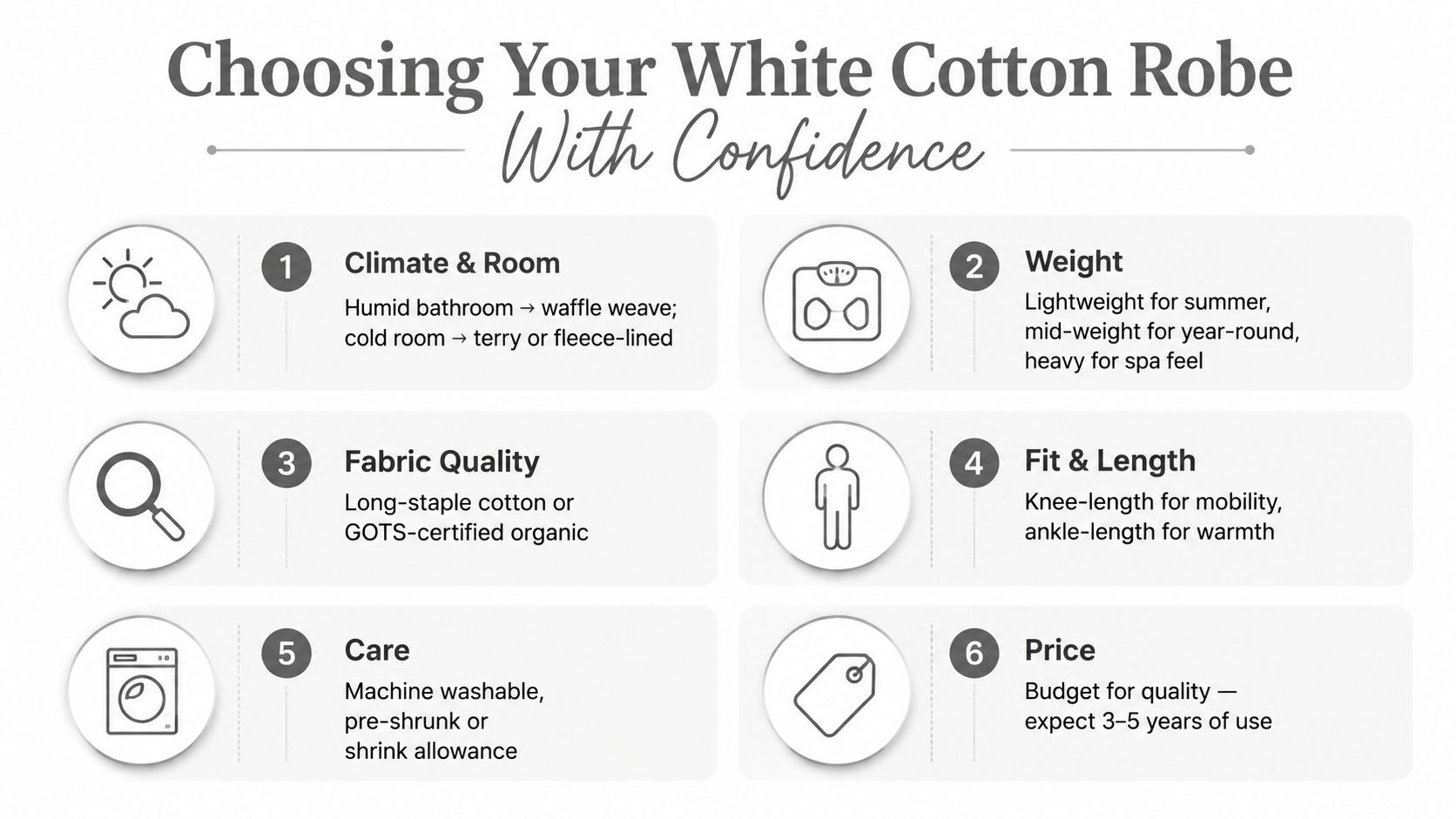
- Start with climate. A humid bathroom or warm house points toward a breathable waffle structure. A cold bedroom favors the enveloping feel of terry.
- Read the construction. Look for the weave type, cotton content, pile description, and GSM. If the listing only says “luxury,” you still don't know how the robe will behave when wet.
- Match weight to your routine. Lightweight fabric suits quick showers and frequent use. Mid-weight fabric balances comfort and maintenance. Heavy fabric creates a deeper spa sensation but demands more drying capacity.
- Verify the fiber claim. Long-staple cotton can improve smoothness and strength, while GOTS certification matters if organic sourcing and chemical controls are central to your decision.
- Check measurements. Compare shoulder width, sleeve length, chest or wrap allowance, and hem length with a robe you already like.
- Read the care instructions. A robe that needs careful drying may not suit a small household laundry setup or a bathroom with weak ventilation.
Certification should be treated as a buying filter, not a substitute for construction. A GOTS-certified waffle robe may still feel too light if you want towel-like absorbency. A dense terry robe may feel wonderful but become frustrating if it remains damp between wears.
Use a simple tie-breaker. For hotel-grade use, choose a durable, washable cotton construction with a moderate weight and dependable sizing. For gifting, favor a flexible wrap, neutral styling, and care instructions the recipient can manage. For everyday personal use, let your bathroom climate and drying habits decide between terry and waffle.
SEYANTE offers white cotton options including 100% Turkish cotton terry and lightweight waffle weaves, with selected robes made from GOTS-certified organic cotton. Visit SEYANTE to compare construction, fit, and care details before choosing the robe that matches your daily routine.