Green Hooded Bathrobe Guide: Material, Shade and Care
The usual advice is to choose a green hooded bathrobe that matches your bathroom and feels soft. That's not enough. A robe can look beautiful on arrival yet shed lint, pull at the neck, or leave you guessing about dye transfer after washing.
Buy for your routine first, then judge the shade, dye performance, certification and fit. Green describes the colour, not the environmental credentials or colour safety. A good purchase needs evidence beyond a flattering product photograph.
Choosing the Right Material and Weave
Choose Turkish cotton terry for drying after a shower, cotton waffle for warm rooms, cotton velour for winter lounging, fleece for cold bedrooms, and microfiber for packing. These aren't interchangeable versions of the same garment. They solve different problems, especially once you add a hood.
A plush robe that feels comforting beside an open window can become cumbersome in a heated bathroom. A lightweight travel robe can pack neatly but feel disappointing if you expect thick towel-like coverage. Start with the job you need it to do.
Green hooded bathrobe materials by feel and use
Material | Feel and weight | Absorbency | Best for |
|---|---|---|---|
Turkish Cotton Terry | Thick loops, plush and heavy | High | Drying after a shower, premium gifts |
Cotton Waffle | Light grid texture, breathable | Moderate | Warm rooms, year-round lounging |
Cotton Velour | Dense soft pile, luxurious | High when backed with absorbent terry | Cosy winter wear |
Fleece or Polar Fleece | Brushed, warm, light | Low to moderate, not a towel replacement | Cold rooms and bedtime lounging |
Microfiber | Smooth, very light, quick-drying | Moderate for absorbent robe constructions | Travel, packing, gym use |
Read construction as well as fibre content. Cotton velour has a cut-pile surface that feels smooth, but its usefulness after bathing also depends on the inside face. Look for terry loops against the skin if you want both a velvety exterior and practical drying.
Fleece is a warmth-first choice. Put it over dry skin or sleepwear rather than expecting it to replace a bath towel. Microfiber also needs closer inspection: the term describes fine synthetic fibres, not a guarantee that every robe absorbs or feels the same.
Match drying time to your room
Within comparable cotton constructions, heavier fabric generally holds more water and warmth, but takes longer to dry. Waffle fabric uses a textured grid with less bulk than plush terry, making it a sensible choice when you need the robe ready again soon. Its airy structure feels different from the enveloping weight of dense loops.
The hood makes that difference more noticeable. A heavy terry hood is comforting around damp hair, but it can tug backwards at the neckline, especially when wet. A lighter waffle hood usually lies flatter when lowered and is easier to dry thoroughly.
Practical rule: If you dislike weight around your neck, choose the hood construction before choosing the plushness.
Ask yourself:
Where will I wear it? A bathroom-to-bedroom robe needs different qualities from something you wear while reading.
How soon must it be dry? Frequent use in a poorly ventilated room favours a lighter construction.
How cold is the room? Choose warmth for the actual room, not the season printed on a shopping category.
For a broader construction comparison, our guide to bathrobe materials and fabric types helps separate weave from fibre. If you're also considering fluid, dressier alternatives, Get Spliced's guidance on caring for silk and viscose robes is useful because those fabrics need a different care approach from everyday cotton.
Cotton terry and waffle can both be sold as conventional or certified organic textiles. Don't let that distinction obscure the practical choice: terry for shower drying, waffle for warm rooms, velour for winter lounging, fleece for cold bedrooms, microfiber for packing.
Choosing the Right Shade of Green
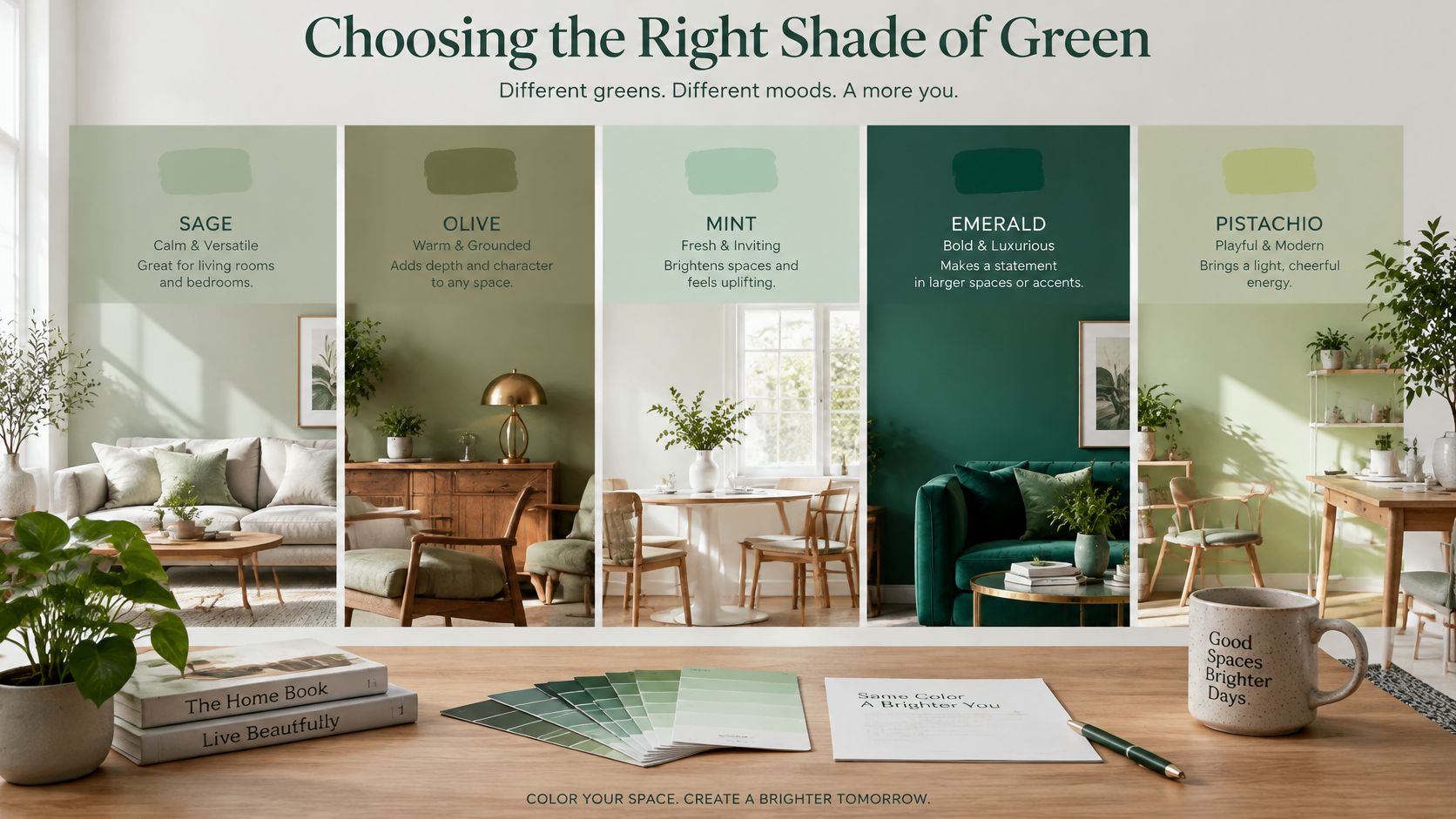
Sage is the easiest starting point for most neutral bathrooms. Olive is a stronger choice if you want an earthy shade that doesn't demand matching accessories. Choose emerald or forest because you enjoy their depth, not because you expect dark fabric to hide everything.
Lighting changes the answer. Sage can look greyer under cool bathroom lighting, while olive may look warmer beside cream tiles. Emerald can appear vivid in daylight and much darker in a room with little natural light.
Green shades by look, setting and visible wear
Shade | Look | Best for | Shows |
|---|---|---|---|
Sage green | Soft grey-green | Neutral bathrooms, everyday lounging | Contrasting lint on light fabric |
Olive green | Muted, earthy | Men's everyday wear, neutral decor | Relatively little everyday wear |
Emerald green | Saturated jewel tone | Gifts, boutique guest use | Dye marks if colourfastness is poor |
Forest green | Deep, near-dark | Cold months, dim bathrooms | Pale lint and edge fading |
Mint green | Light and fresh | Spa-style bathrooms | Water spots and stains |
Forest and emerald can disguise some everyday marks, but pale lint is conspicuous against them. Worn edges can also become more obvious when they contrast with a rich body colour. Mint gives a fresh appearance, yet it's less forgiving of cosmetic residue or a breakfast spill.
Check the colour where you'll use it
Place a swatch beside your towels and tiles, then view it in daylight and with the bathroom lights switched on. If you only have photographs, request an ordinary room image rather than relying entirely on studio photography. Screens still aren't a substitute for fabric.
Check whether the robe is solid green or has contrasting piping, cuffs or hood lining. Trim can make coordination easier, but it also introduces another colour to assess. Our robe shade and styling guide offers additional pairing ideas.
For gifts, choose a green the recipient already wears or uses at home. Don't turn their robe into an experiment in your preferred palette. A flattering shade is an aesthetic choice, not evidence of safer dye or responsible production.
Will the Green Fade? Colorfastness Tests Explained
Washable doesn't mean colour-stable. A robe may survive laundering structurally while losing colour or staining another fabric. Washing, rubbing, perspiration and light exposure are separate performance questions, so a generic machine-wash instruction can't answer all of them.
For accelerated laundering, AATCC TM61 guidance describes option 2A as approximating five home machine washes at 38 ± 3°C, and option 3A as approximating five vigorous washes at 60 ± 3°C. It also includes chlorine-containing options and recommends reference detergents without optical brighteners, which can interfere with judging dye-related colour change.
ISO 105-C06 evaluates resistance to domestic or commercial laundering, including colour loss and staining; more severe test conditions can approximate up to five household washes. A named method is useful, but the chosen conditions and reported result matter just as much.
Colorfastness tests and what to ask for
Test or claim | What it simulates | What to ask for |
|---|---|---|
AATCC TM61 option 2A | Accelerated home laundering | Exact option and reported rating |
AATCC TM61 option 3A | More vigorous, hotter laundering | Test temperature and result |
AATCC TM61 chlorine option | Additional bleach exposure | Whether the care label permits chlorine |
ISO 105-C06 | Laundering-related colour loss and staining | Named procedure and separate results |
Rubbing and perspiration tests | Friction-related transfer and sweat exposure | Named methods and results, otherwise treat performance as unverified |
Read the result, not just the standard
A specification sheet that says tested isn't enough. Ask whether the report distinguishes colour change in the robe from staining of adjacent fabric. You can have an acceptable-looking garment that still transfers colour.
Check that the report covers the green colourway and relevant fabric, rather than an unrelated white robe or different weave. Saturated shades deserve particular attention because uneven fading can be conspicuous.
A test method describes the assessment. It doesn't, by itself, tell you that the robe passed.
Before buying, request the method, wash temperature, detergent and acceptance rating, plus the actual result. If the seller can't provide them, treat colour durability as unknown rather than assuming failure or accepting an unsupported promise.
Is a Green Robe Actually Eco-Friendly?
The colour green proves nothing about environmental impact. Neither does a cotton leaf graphic or a Turkish-cotton description. You need to distinguish agricultural origin, processing controls and certification coverage.
A textile report hosted by UNCCD states that cotton can require 10,000–20,000 litres of water per kilogram, while dyeing and finishing can require up to 200 tonnes of water per tonne of textiles. These are broad production figures, not a water-footprint calculation for an individual robe.
Turkey's manufacturing base explains its relevance to bath textiles, not an automatic environmental advantage. An International Cotton Advisory Committee country report describes Turkey as producing nearly 1 million metric tons of cotton annually, reflecting an established agricultural and textile supply chain.
Check what the certificate covers
The GOTS standard requires traceable organic materials, controls against mixing with conventional fibres, approved colourants and environmental and labour criteria, including a wastewater limit of 20 grams of chemical oxygen demand per kilogram of processed textile output. That scope reaches beyond how the cotton was grown.
For a dyed robe, examine the documentation carefully:
Product coverage: Look for the relevant finished-product category and processing activities.
Certified organisation: Match the certificate holder to the documented supply chain.
Claim wording: Separate organic-fibre content from certification of subsequent textile processing.
A farm or fibre certificate alone doesn't establish that the dyed, finished robe is certified. Our guide to understanding GOTS explains the distinction; our bathrobes are made with GOTS certification.
Buying standard: Require documentation for the environmental claim and separate evidence for dye performance.
Certification and colourfastness answer different questions. Neither should be used as a substitute for the other.
How to Size the Body and Hood Right
A body size label won't tell you whether the hood fits. You need enough headroom to turn comfortably, sufficient depth for coverage, and a neckline that doesn't tighten when the hood is raised. Compare chest, garment length and hood measurements, not just small, medium or large.
Use a flexible tape measure and the brand's chart together. First establish whether the chart lists body measurements or finished-garment dimensions, because confusing them can leave you with too little wrap overlap.
Measure for the way you'll wear it
Measure your chest over your usual layer. Keep the tape level around the fullest area without pulling it tight. A robe worn over pyjamas needs room for them.
Choose your finished length. Measure from the shoulder towards your preferred hem position, using the chart's stated measurement point.
Check hood depth and opening. Compare these with a comfortable hood you own. Head width alone won't establish whether the hood reaches forward or accommodates your hair.
Compare like with like. If the chart gives flat garment measurements, measure an existing robe flat using the same method.
Size up selectively. Extra room can help with layering, but check sleeve and hem lengths before moving up.
Confirm the return window. Keep labels attached while checking shoulder movement, belt position and coverage when seated.
Don't mistake oversized for well fitted
With the hood lowered, the neckline should remain comfortable rather than sliding backwards. Raise it, turn your head, and sit down with the robe tied. The front should stay overlapped without needing an excessively tight belt.
Pattern design also affects manufacturing efficiency. A textile-engineering study comparing bathrobe constructions identified 158 centimeters as the most efficient fabric width for the hooded robes it evaluated. That's a production finding, not a consumer sizing rule, but it illustrates why hood shape and garment dimensions deserve deliberate design.
For gifts, measurements from the recipient's comfortable robe are more useful than a guessed clothing size. Record how you took them so you can compare them accurately with the new garment.
Caring for and Styling Your Green Robe
Start with a dye-conscious wash routine, not a stain-removal rescue. For our SEYANTE robes, use a gentle cycle, cold water and mild detergent free of harsh chemicals, without bleach or fabric softener. Air-dry or tumble-dry on the lowest heat setting.
Keep the load simple. Rough garments can abrade the surface, and pale lint-producing laundry can leave a dark green robe looking dusty even when it's clean.
A practical wash-and-dry routine
Before washing: Read the garment label and test your intended detergent solution on a concealed area. Let it dry before judging any change; a home patch check isn't a laboratory colourfastness test.
During early washes: Wash separately until you're comfortable with its behaviour. Don't use pale clothing as a test for loose dye.
Sort by texture: Keep the robe away from denim, exposed zips and items that shed heavily.
Dry with space: Open the hood and avoid bunching it against the back. Keep saturated green fabric out of prolonged direct sunlight.
Store completely dry: Hang our robes on a sturdy hanger and check the hood, belt and pocket seams before putting them away.
Fabric softener can coat absorbent loops, so it isn't the right solution for a terry robe that feels less absorbent. Don't increase detergent to compensate for odour either. Check whether the garment is drying fully and whether detergent is rinsing out.
Keep styling uncomplicated
Green works comfortably with cream, grey and white. Wear the hooded robe over a plain long-sleeved top for a deliberate layered look, with cuffs that don't bunch inside the robe sleeves.
A coordinating towel can create a spa-like feel without matching every bathroom textile. For forest green, cream gives contrast; for sage, soft grey keeps the palette restrained.
Care card to copy: Gentle cold wash. Mild detergent. No bleach or fabric softener. Separate from abrasive and lint-producing items. Air-dry or use the lowest tumble heat. Dry the hood fully before storage.
Choose Your Green Hooded Robe Before You Buy
Make the decision in a practical order: material for your routine, shade for your room, documented colorfastness', certification coverage and measured fit. Don't let a beautiful colour compensate for missing garment dimensions or vague care instructions.
Use a checklist rather than relying on a product's lifestyle photograph:
Routine: Will it mainly dry your skin, keep you warm or travel with you?
Appearance: Have you checked the shade against the room and existing textiles?
Evidence: Can you identify the dye test method and relevant certificate coverage?
Fit: Do the body and hood dimensions suit how you'll wear it?
Adjust the checks to the buyer
For personal use, settle the fabric and fit before choosing the shade. For gifts, use the recipient's existing colour preferences, compare a robe they already like, and include a care card.
Hospitality buyers should request test reports, assess shade and sizing consistency across the order, and agree on a replacement plan. A sample needs to work with the property's actual laundry routine, not merely look good in a guest-room photograph.
Our Women's Green Turkish Cotton Waffle Hooded Robe is made from GOTS-certified organic Turkish cotton in a lightweight, breathable waffle construction. It's a relevant option for buyers seeking lighter everyday coverage rather than dense terry.
Before committing, check the scope certificate and named test method, then confirm the material, shade and measurements you want.
SEYANTE offers Turkish-cotton terry and lightweight waffle robes for different bathing and lounging routines. Visit SEYANTE to compare constructions and sizing, and request the certification coverage and colourfastness details that matter for your green hooded robe.