Waffle Robes Personalized: What to Check Before You Order
- Personalization Methods Compared Side by Side
- Why Waffle Cotton Suits a Personalized Robe
- Placing Monograms Without Hiding the Label
- Fit, Sizing and Pre-Order Checklist
- Care Steps That Keep Personalization Crisp
- Separating Verified Organic Claims From Vague Eco Language
- Who Should Personalize and When a Plain Robe Works
The name field on a robe order looks harmless. You type a first name, choose a font, pick a thread color, and check out. Then the robe goes through the wash, and the letters either pucker into a stiff little ridge or fade into a pale outline of the design you approved.
Most buying guides treat personalization as a styling decision: which font, which color, monogram or full name. A robe buyer with forty orders behind them treats it as a durability and care decision first. The wrong method on the wrong fabric looks tired long before the robe itself does, and a monogram that cracks at the edges can't be repaired by re-stitching.
A personalized waffle robe that survives is one where the method, the fabric, the placement and the laundering routine were chosen together. Choose the method by wash count. Match it to a light waffle weave. Keep the permanent care label readable. Measure before you commit. And know when a plain robe or a removable tag is the smarter buy.
Personalization Methods Compared Side by Side
Forty robes for a boutique hotel. Six for a bridal party. Two buyers, one question, and very different thresholds. The hotel's monograms have to hold through years of guest turnover and a commercial laundry. The bride's have to survive one wedding morning and a handful of gentle washes afterward.
Embroidery suits robes that get washed every week
Stitched thread is the method I'd put on any robe facing frequent laundering. The thread is sewn through the fabric rather than fused to its surface, so repeated agitation doesn't lift it.
Density is what you specify, not just thread color. A light, open stitch on a waffle weave stays soft after the first wash. A thick satin-stitch fill on a lightweight waffle adds a firm patch that reads as cheap the moment the robe is worn open.
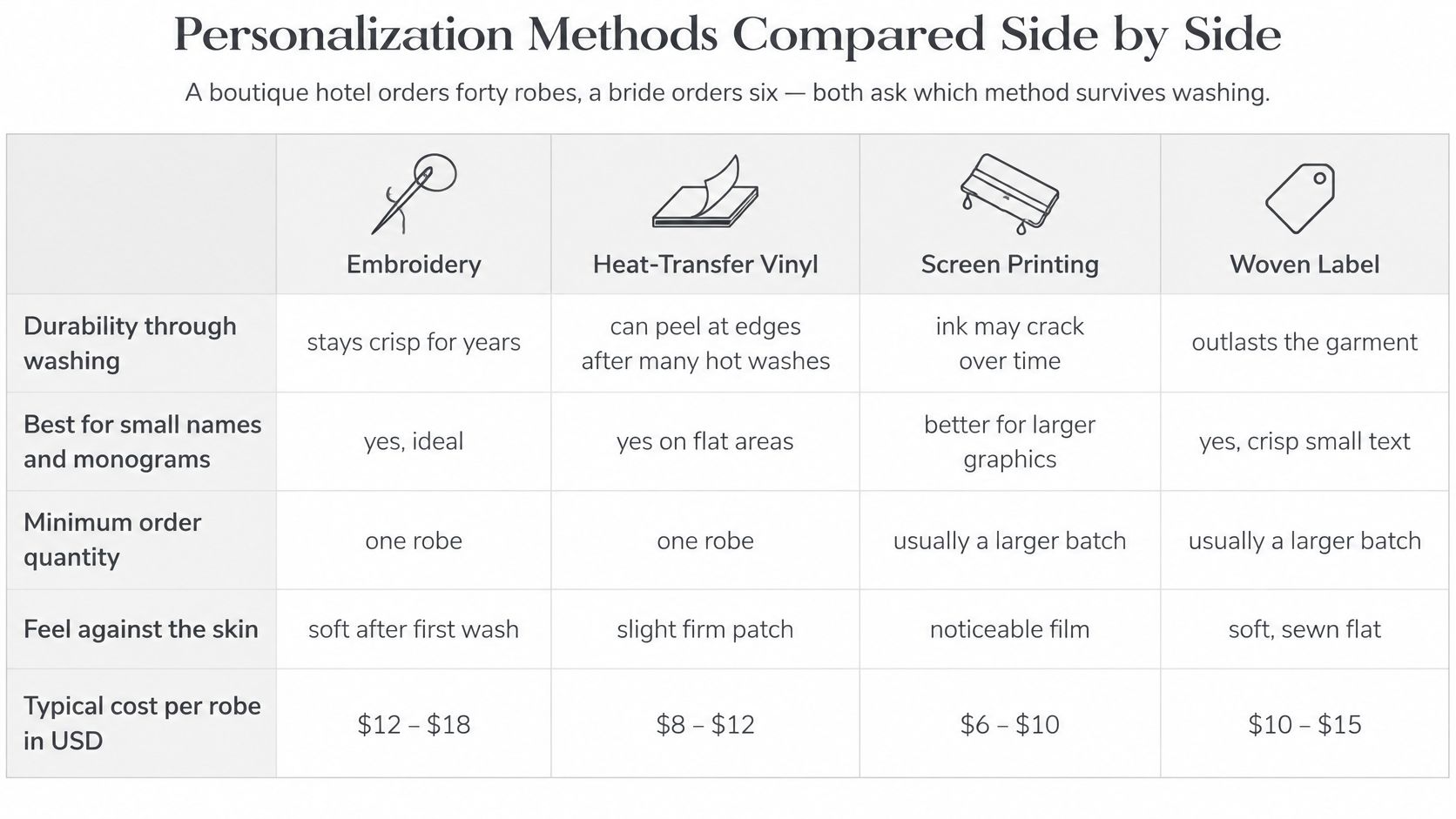
The chart below lays out the four realistic options on durability, order minimums, feel and cost per robe.
Print belongs on gifts, not guest robes
Direct-to-film (DTF) printing reproduces fine detail and clean edges on cotton. A textile-printing study published in Advances in Materials Science and Engineering found direct-to-film superior to screen printing in clarity and durability under the tested conditions, and reported that screen-printed labels on cotton failed after approximately two to three washes. That single finding draws the line: screen printing is cheap per unit and gives bold single-color text, but it's the wrong choice for a robe meant to last years.
Wash-count rule: count how many times the robe will be laundered over twelve months, then pick the method that clears that number with room to spare.
| Method | Best for | Wash durability | Detail level |
|---|---|---|---|
| Embroidery | Hotel, spa and daily-use robes | High; holds through repeated laundering | Sharp letters, slightly raised |
| Direct-to-film print | Small names and initials on gift robes | Clearer and more durable than screen print in tested conditions | Fine detail, clean edges |
| Screen print | Bold single-color text on gift or bridal robes | Failed after about 2 to 3 washes in a tested study on cotton | Bold, simple shapes only |
| Woven or removable tag | Temporary names, shared or resold robes | High; no stress on the fabric | Limited; sits off the robe surface |
Woven tags and removable tags take the pressure off entirely. Nothing is stitched into or bonded onto the fabric, so there's no puckering risk and no stiffness at the chest. A tag can come off before a robe is donated, resold or handed to the next guest. For temporary group names, that's often the smarter buy.
Before any bulk order, wash one finished sample five times at the temperature you'll use, then judge adhesion, edge definition, color change, puckering and hand feel. If you're weighing a heat-transfer route, this guide to the durability and cost of DTF is worth reading first, because film and ink behave very differently on a raised waffle surface than on a flat cotton tee.
Why Waffle Cotton Suits a Personalized Robe
What the honeycomb structure does for the mark
The raised cells of a waffle weave work like a honeycomb of trapped air. The robe feels warm without terry's weight, and a lighter fabric drains and dries faster once the wash is done. That matters for durability more than most buyers realize: a robe that stays damp and heavy in the drum keeps tumbling against itself, and the monogram sits right on that surface.
Weight is the variable that decides how much stress the decoration takes. A damp terry robe carries far more water and stays wet longer, so the same embroidery faces more mechanical wear and more time in contact with a hot dryer wall than it would on a light waffle robe.
| Fabric | Weight | Drying speed | Warmth | Best use |
|---|---|---|---|---|
| Cotton waffle | Light, breathable | Fast | Mild, airy warmth | Year-round lounging, warm rooms, spa use |
| Cotton terry | Heavy, plush | Slow | Warm and highly absorbent | Post-shower drying, cold climates |
| Cotton flannel | Medium | Moderate | Warm | Winter gifts and evening wear |
| Microfiber | Very light | Very fast | Low warmth | Travel and budget gift sets |
Fiber claims are checkable as well. The Global Organic Textile Standard's 2021 annual press release records 4,642 GOTS-certified facilities worldwide in 2016, up 21.2% from 3,814 in 2015, spread across 63 countries, with Turkey ranking second by certified entities at 423 facilities behind India's 1,488; by 2020 the count reached 10,388 facilities across 72 countries, covering more than 4 million workers. Certification is now checkable supply-chain infrastructure. A hospitality buyer can evaluate a robe on a verified standard rather than on softness alone, and SEYANTE's bathrobes carry GOTS certification under that standard.
If you want the construction basics before you compare claims, the guide to waffle robe weights, weaves and fit covers what separates a light spa weave from a heavy hotel weave. The Women's Lavender Blue Lightweight Kimono Waffle Spa Robe is a useful reference point: lightweight, breathable and cut in a kimono style, which is exactly the kind of blank that keeps a small chest monogram comfortable against the skin.
The practical split comes down to the room. A waffle robe suits year-round lounging, warm houses and spa use, where the robe goes on over dry skin and stays on for an hour. Terry wins for post-shower drying in a cold climate, where absorbency matters more than drying speed. Pick the fabric for the room first, then let the personalization method follow. A monogram on the wrong fabric fails no matter how clean the stitching is.
Placing Monograms Without Hiding the Label
The label is the part of the robe nobody photographs, and it's the part that carries legal weight. A monogram is decoration. It never replaces a disclosure.
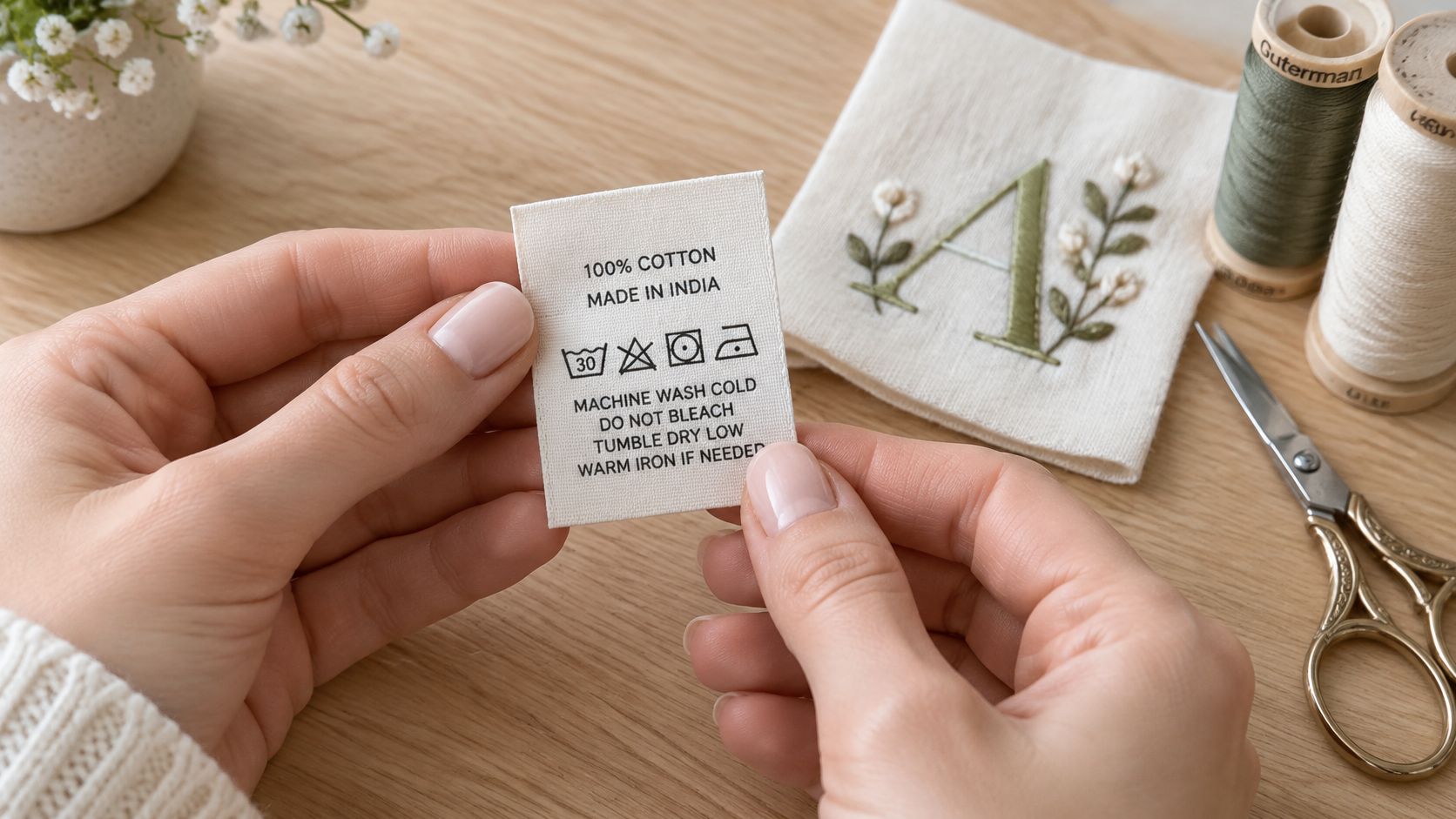
For robes sold in the United States, the Federal Trade Commission's Threading Your Way guide sets out the requirements: textile products disclose fiber content by generic name and percentage, country of origin, and the identity of the manufacturer, marketer or responsible business, and apparel also carries care instructions. If the robe is marketed as 100% cotton, the label has to state the true cotton content, and a stitched name doesn't change that.
Where the mark can sit
| Zone | Best for | Watch for |
|---|---|---|
| Left chest | Classic monogram | Keep clear of the belt line and the hood seam |
| Sleeve cuff or lower hem | Initials | Hem and cuff take the most friction in the wash |
| Pocket area | Small name | Pocket seam must not cover the permanent label |
| Permanent label area | Not for decoration | Fiber, origin, maker and care disclosures must stay readable |
A left-chest monogram reads as classic because the eye lands there first when a robe is worn closed. Sleeve cuffs and the lower hem suit initials on robes that will be worn open, though both zones take the heaviest friction in the drum, so a print there wears first.
The sitting test you can run before you order
Pin the design on the finished robe, tie the belt, sit down, and reach forward. A mark that disappears under the belt when you sit, or that drags at the hood seam when you raise your arms, is in the wrong place. Do this on the actual size you'll order, not on a flat lay photo.
There's a size trade-off worth stating plainly: a design that covers a third of the chest panel adds weight to a light weave and pulls the fabric down when the belt is tied. Small and high-contrast beats large and tonal every time, especially in a script font at low contrast on a pale robe.
Ask the supplier whether care instructions were validated on the finished, personalized robe rather than only on the blank. Heat, agitation and incorrect drying affect dimensional stability and surface texture on waffle structures, and the personalization changes how the garment behaves in the wash.
Fit, Sizing and Pre-Order Checklist
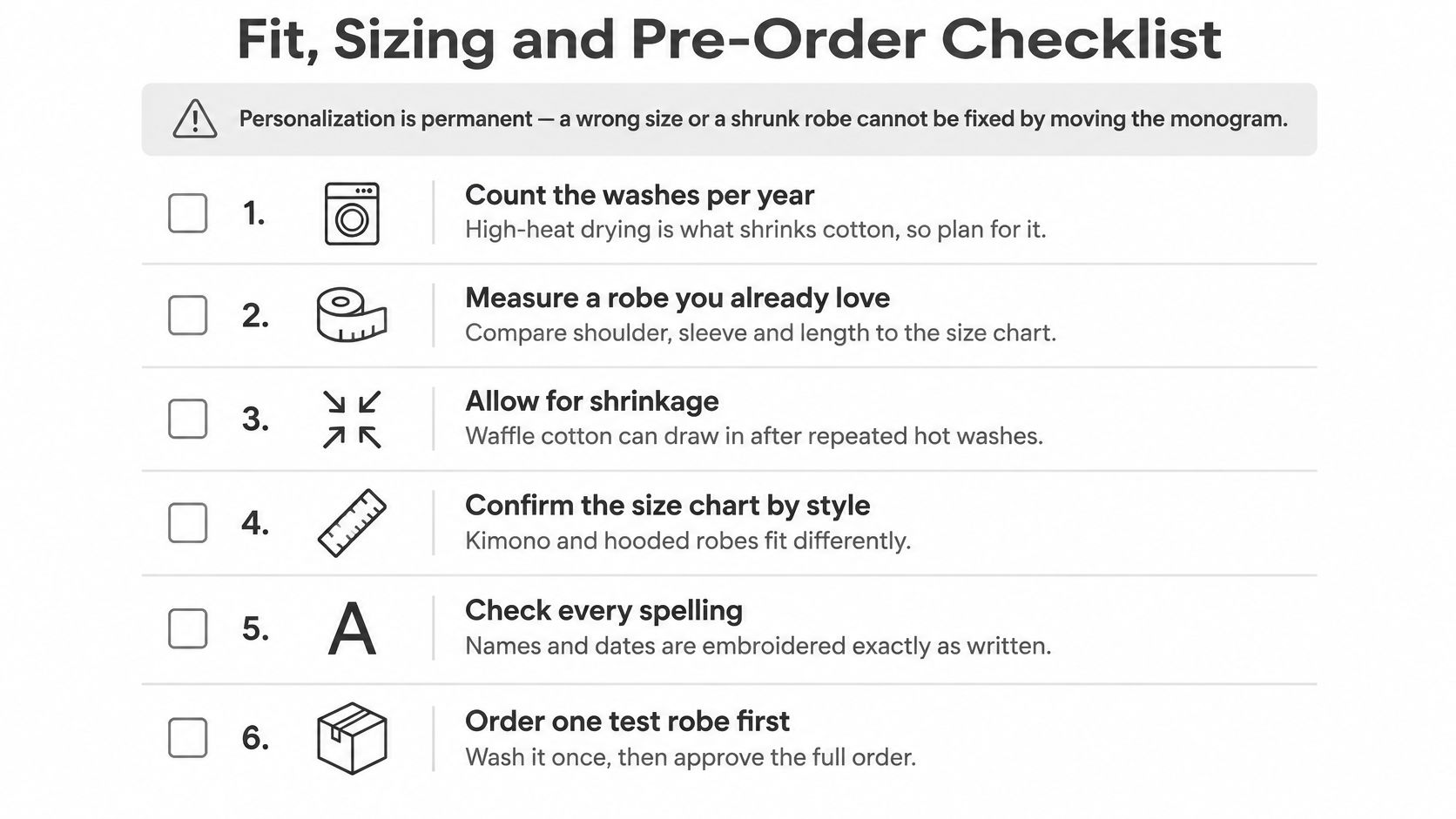
Personalization is permanent. A wrong size or a robe that draws in two inches in a hot first wash can't be fixed by moving the monogram, so every check happens before you pay.
The one-order rule: for any group bigger than one, order a single robe with the finished design, wash it the way the buyer will wash it, and approve the full run from that sample.
Six checks before you pay
- Match the method to the wash count. The method comparison earlier in this article lays out which technique suits weekly commercial laundering, occasional home washing or temporary use. Settle that question here, because it decides how much wear the personalization can take.
- Measure a robe you already like. Shoulder to hem for length, shoulder to cuff for the sleeve, and belt length laid flat. Compare all three against the seller's posted size guide rather than a generic size letter.
- Fix the zone against the belt, pocket and hood seam. Confirm in writing that the zone clears the permanent label, then check it on the finished robe.
- Ask whether personalization goes on before or after garment finishing. A mark applied after finishing sits on fabric that has already been washed or pressed, and the two paths behave differently after ten washes.
- Ask whether the blank is pre-shrunk and at what temperature the supplier recommends washing it. Independent care guidance in Selvane's cotton shrinkage and longevity guide notes that unpreshrunk cotton can shrink substantially in a hot first wash, while lower-temperature washing improves dimensional stability.
- Check every letter, then check the size chart for that specific style. Kimono and hooded cuts hang differently on the same body, and a name is embroidered exactly as written. Read it aloud.
Group orders and one-size risk
Generic one-size robes are risky for gifts, maternity wearers and hotel guests, because fit varies more than buyers expect and shrinkage plus embroidery placement are both irreversible. A maternity buyer needs extra room through the middle. Hotel guests span a wide range of builds. The same one-size label serves neither well.
Group orders raise the stakes, since one wrong sizing decision repeats across every robe in the run. We sell matching bridal robes for bridal parties, and buying four or more robes with code BRIDE20 saves 20%, which makes a single test robe cheap insurance before the full run. Our blog also carries a robe size chart guide if you're choosing between cuts for a mixed group.
One sizing consequence is easy to miss: embroidery that pulls at the fabric doesn't just look tired, it changes how the robe hangs, and a size approved on the blank may fit shorter or tighter once the stitching settles after washing. When in doubt, order the sample in the size you plan to buy and judge the fit only after that first wash. If the run includes recipients whose sizing you're unsure of, restrained stitching or a removable monogram tag keeps a sizing mistake correctable. Restraint protects the investment.
Care Steps That Keep Personalization Crisp
A monogram doesn't wear out from age. It wears out from heat, agitation and rubbing, which is why the routine matters more than the thread brand. Five steps cover it, each with a reason.
- Turn the robe inside out and close the belt and ties. Embroidery and print then rub against the drum or other laundry instead of against the surface that gets photographed, which keeps edges sharp.
- Wash on a gentle cycle in cold water. Heat and agitation alter the waffle cells and distort the design, and cold water is the single cheapest protection for both.
- Use a mild detergent free of harsh chemicals, and skip bleach and fabric softener. Softener coats the fibers and cuts absorbency, which on a waffle weave means a robe that stops drying you off.
- Air-dry, or tumble on the lowest heat setting. High heat is a common cause of shrinkage and of puckering around embroidery, and a low setting protects both the weave and the thread.
- Hang it on a sturdy hanger and confirm it's bone dry before storing. Folding a damp robe invites mildew and sets creases right across the monogram.
That's the same routine we give for SEYANTE robes: gentle cycle, cold water, mild detergent without bleach or softener, then air-drying or the lowest tumble setting, and a sturdy hanger until the robe is fully dry before it goes in the cupboard. Our guide to washing, storing and caring for a robe walks through the full sequence.
A healthy robe after a year should still show crisp waffle texture and clean edges on the personalization. If the cells have flattened and the letters have a soft halo, the dryer ran too hot, not the thread.
Separating Verified Organic Claims From Vague Eco Language
"Organic" is easy to print and hard to prove. A checkable claim names a standard, identifies what the certification covers, and gives a buyer something to file. Vague language uses words such as eco-friendly, natural, pure or premium cotton without pointing to evidence.
GOTS is the benchmark most robes can be tested against. SEYANTE's bathrobes are made with GOTS certification, and the brand's Organic Turkish Terry bathrobes are made of 100% Turkish cotton and are GOTS-certified. Certification works through a supply-chain system, so the claim can be looked up instead of taken on trust. Our explainer on GOTS-certified organic cotton fabric covers what the standard does and doesn't cover.
What to request in writing
- The certificate name, number and scope. A certificate for the fiber isn't the same as one for dyeing and finishing.
- Factory and dyeing information. Where the robe was cut and sewn, and who dyed the yarn.
- Care instructions validated on the personalized garment. Not the blank, but the finished robe.
- Durability evidence. Wash-test results for the exact decoration and fabric pairing.
- Repair, reuse and removal options. Whether the monogram can be taken out before the robe changes hands.
For procurement, the scope matters as much as the logo. Fiber certification can support an organic claim, while dyeing, finishing and garment processing need their own coverage if the claim reaches beyond the raw material. A supplier that cannot separate those stages is asking the buyer to treat a broad word as a complete answer. That is risky with personalized robes, because the finished piece carries both the textile claim and a decoration that has to survive laundering.
The trade-off personalization creates for circularity
The European Union has named textile apparel a priority product group for future Digital Product Passports under its 2025 to 2030 Ecodesign working plan, per the European Commission's textile and apparel product passport page. That page frames passports as a way to improve traceability, circularity and transparency, while flagging the need for harmonized regulation and market surveillance. Treat a passport as an emerging requirement that buyers should monitor.
Ask in writing: the certification name, the certificate number, and the exact scope it covers.
Personalization cuts both ways on longevity. A name can build attachment and delay replacement, which supports a longer useful life. The same name can complicate resale, donation, fiber recycling and the removal of trims and threads, which is why a removable tag is often the greener choice. The Women's Lavender Blue Turkish Cotton Waffle Hooded Robe gives a buyer a specific robe to evaluate on construction, care and personalization fit. A robe that only says "eco" gives them nothing to check.
Who Should Personalize and When a Plain Robe Works
Four orders, four answers. Find yours before choosing a method.
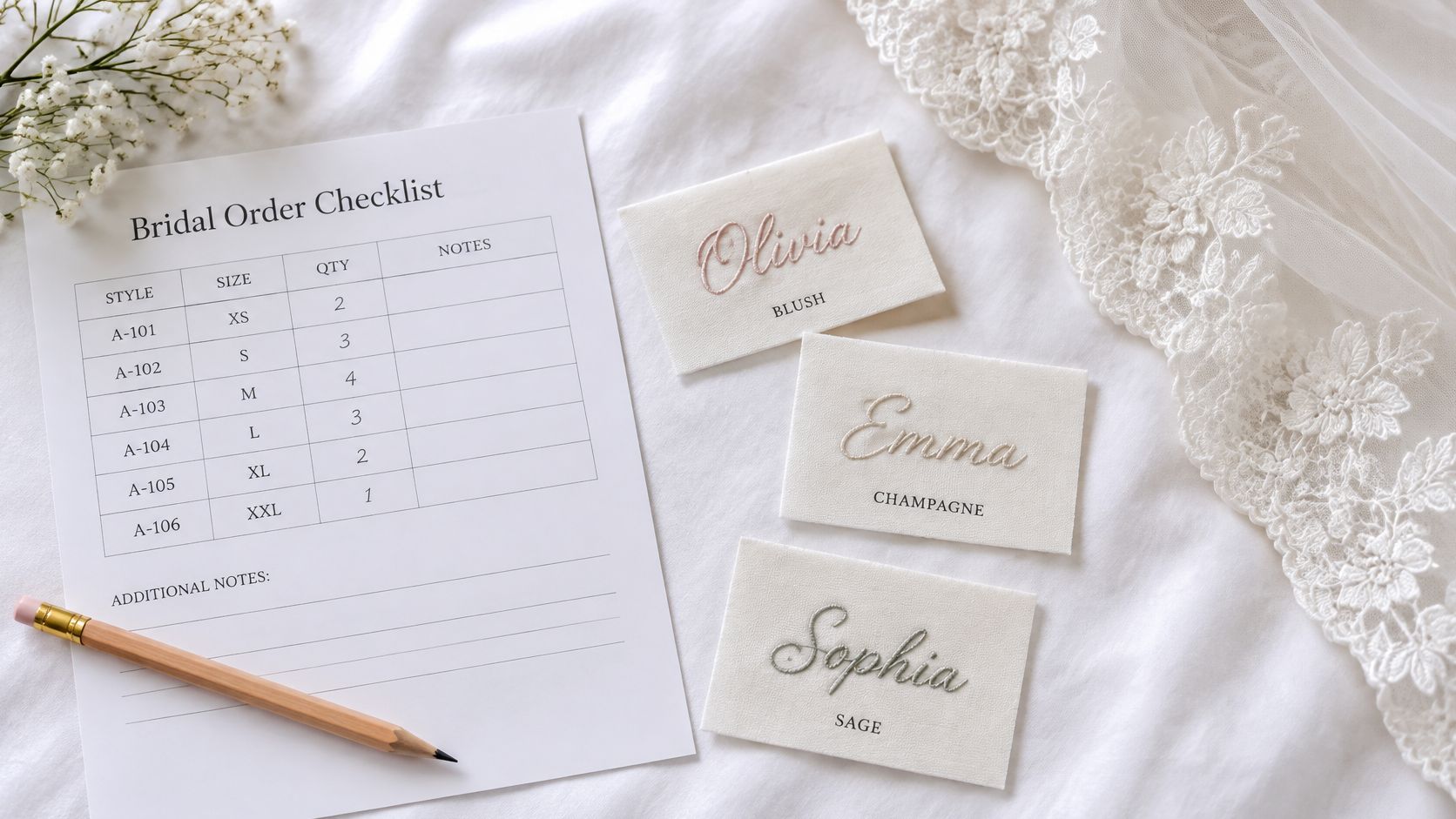
For a bride ordering for a bridal party, small monograms and matching names work, and restraint pays off twice: the robes photograph well on the morning and still get worn on weekends afterward. A thick satin-stitch block name looks great in a photo and stiff on the shoulder six months later.
The personalization category is large and growing. One published estimate valued the U.S. personalized-gifts market at $9.69 billion in 2024 and projected it to reach $14.56 billion by 2030, per Modelworks Direct's personalized gifts statistics, an increase of $4.87 billion, or about 50.3% over six years. Read that as direction, not gospel: the figure comes from a commercial source and lumps robes in with every engraved, printed and stitched gift on the market.
For a boutique hotel or spa, durable embroidery tested through repeated laundering is the only defensible option, because guest robes see the wash far more often than gift robes ever will. Specify stitch density, test a sample, and keep the mark small and off the belt line.
The case for a plain robe
A maternity or gift buyer should prioritize fit and a removable tag. Sizing varies, personal taste varies, and a tag lets the recipient decide. A buyer who expects to resell or donate the robe should choose plain or removable, because heavy decoration narrows the second-hand market and complicates fiber recycling.
A plain robe also works for the buyer who wants one robe for years and doesn't want to think about it again. Nothing puckers, nothing cracks, nothing dates.
If you're assembling bundles for a bridal party, a hotel welcome program or a maker's gifting round, programs like High Country Quilts' quilting brand PR package sign-up show how a structured sign-up page turns personalized pieces into a repeatable program rather than a one-off favor.
Personalization works when it raises attachment and extends the life of the robe. It fails when it adds stiffness, puckering or a logo in an awkward spot. Pick the situation that matches your order, then pick the method. Not the other way round.
SEYANTE makes lightweight waffle and Turkish cotton terry robes, many in GOTS-certified organic cotton, across hooded, kimono, hotel and maternity cuts, so you can match the fabric to the laundry your robe will face. Start with one robe and the monogram you've chosen, wash it the way the rest will be washed, and approve the group run only after that sample holds. Compare the weights and check the size chart for each style at SEYANTE before you type a name into a cart.